Wallpaper has undergone a remarkable transformation, evolving from a secondary decorative layer into a primary design element that shapes how spaces are experienced. Today, it plays a critical role in defining mood, scale, and visual identity, offering far more than surface-level appeal. As interior design continues to prioritize personalization and functionality, wallpaper has emerged as a versatile solution that adapts to both aesthetic and practical demands.

The Rise of Statement Walls in Modern Interiors
Statement walls have transitioned from decorative accents into defining architectural features that anchor a room’s visual identity. In contemporary interior design, wallpaper is strategically used to create hierarchy, guiding the eye and establishing a focal narrative within a space. This approach allows you to introduce bold stylistic elements without committing to a fully saturated environment, resulting in interiors that feel curated rather than overwhelming.
Large Scale Murals as Focal Points
Large-scale murals function as immersive design elements that can dramatically alter spatial perception. By incorporating panoramic landscapes, abstract compositions, or architecturally inspired graphics, these murals create depth and dimension, often making compact rooms appear more expansive. In bedrooms and living areas, they serve as a visual anchor, replacing traditional artwork with a seamless, wall-to-wall composition. The effectiveness of murals also lies in their ability to unify color schemes and establish a cohesive narrative, particularly when coordinated with surrounding finishes such as upholstery, flooring, and lighting.
In the setting shown above, the Vista Mural, 312" x 132", exemplifies how a large-scale mural can anchor the entire room through its atmospheric landscape composition. The soft gradient of earthy tones and abstract mountain forms draws the eye across the wall, creating a sense of depth that visually extends the space beyond its physical boundaries. At the same time, its muted palette seamlessly integrates with the warm wood ceiling, natural textiles, and understated furnishings, reinforcing a cohesive and grounded aesthetic.
Maximalist Patterns and Bold Color Pairings
Maximalist wallpaper introduces a layered visual language characterized by saturated hues, intricate motifs, and high-contrast palettes. As a result, interiors are becoming more expressive, allowing individuality to take precedence over minimal restraint. To achieve balance, you need to consider visual weight carefully, pairing bold patterns with subdued furnishings, matte finishes, and controlled lighting conditions. In addition, applying color theory principles such as analogous or complementary schemes helps maintain cohesion while preserving vibrancy. This approach ultimately creates a dynamic environment that feels intentional rather than chaotic.
Strategic Placement for Visual Impact
The placement of statement wallpaper plays a critical role in achieving visual equilibrium within a room. Rather than applying bold designs indiscriminately, identify architectural focal points such as headboards, feature walls behind seating arrangements, or vertical surfaces in dining areas. This targeted application enhances spatial zoning and reinforces the room’s functional layout. Additionally, alignment with structural elements like built-in cabinetry or ceiling transitions ensures continuity and precision. By confining statement wallpaper to a single surface or clearly defined zone, the design maintains clarity, allowing the feature wall to stand out while supporting the overall composition.

Nature-Inspired Designs and Biophilic Influence
Biophilic design continues to shape wallpaper trends by integrating natural elements into interior environments in a deliberate and sensory-driven manner. Beyond aesthetics, these designs support psychological well-being by fostering a connection to nature, which is particularly valuable in urban settings where access to greenery may be limited.
Botanical Prints and Tropical Themes
Botanical and tropical wallpaper patterns introduce layered foliage, oversized leaves, and intricate floral compositions that replicate the visual complexity of natural ecosystems. These designs often utilize high-definition printing techniques to achieve realistic shading and depth, enhancing their immersive quality. In spaces with minimal daylight, such as interior bedrooms or enclosed living areas, botanical motifs can visually compensate for the absence of outdoor views, creating a restorative ambiance. To maintain proportion and visual balance, you should scale the pattern according to the room size, using larger motifs in expansive areas and more refined detailing in smaller spaces.
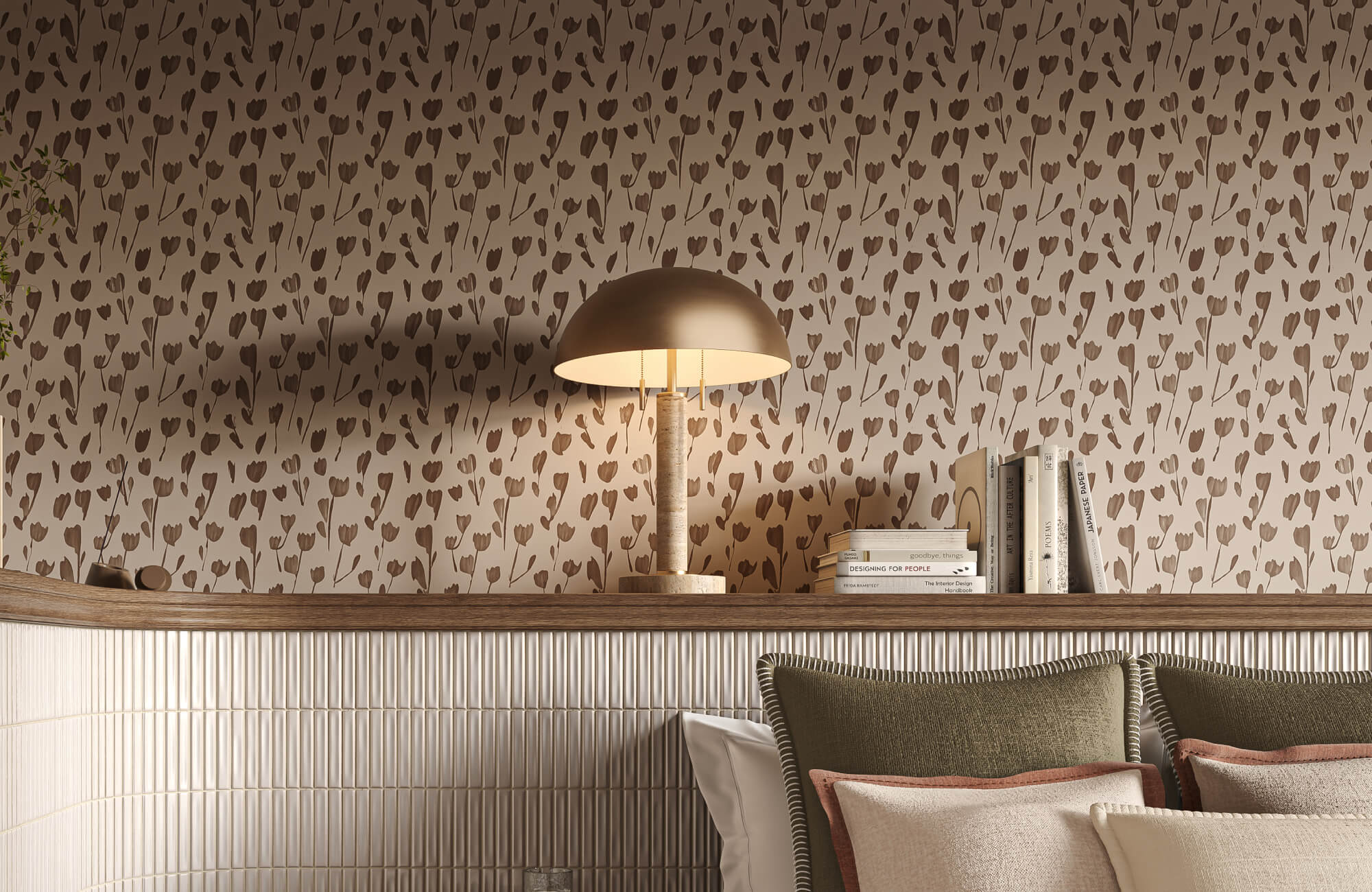
Edward Martin’s Bower Wallpaper in Taupe II, 52" x 132", as seen in the image above, demonstrates how botanical patterns can subtly enrich an interior without overwhelming it. The delicate foliage motif, rendered in a soft neutral palette, introduces organic movement while maintaining a refined and understated presence. Its scale works harmoniously with the room’s proportions, allowing the natural light from the window to enhance the pattern’s depth and texture, while complementing the warm wood cabinetry and classic finishes for a balanced, inviting atmosphere.
Earth Tones and Organic Color Palettes
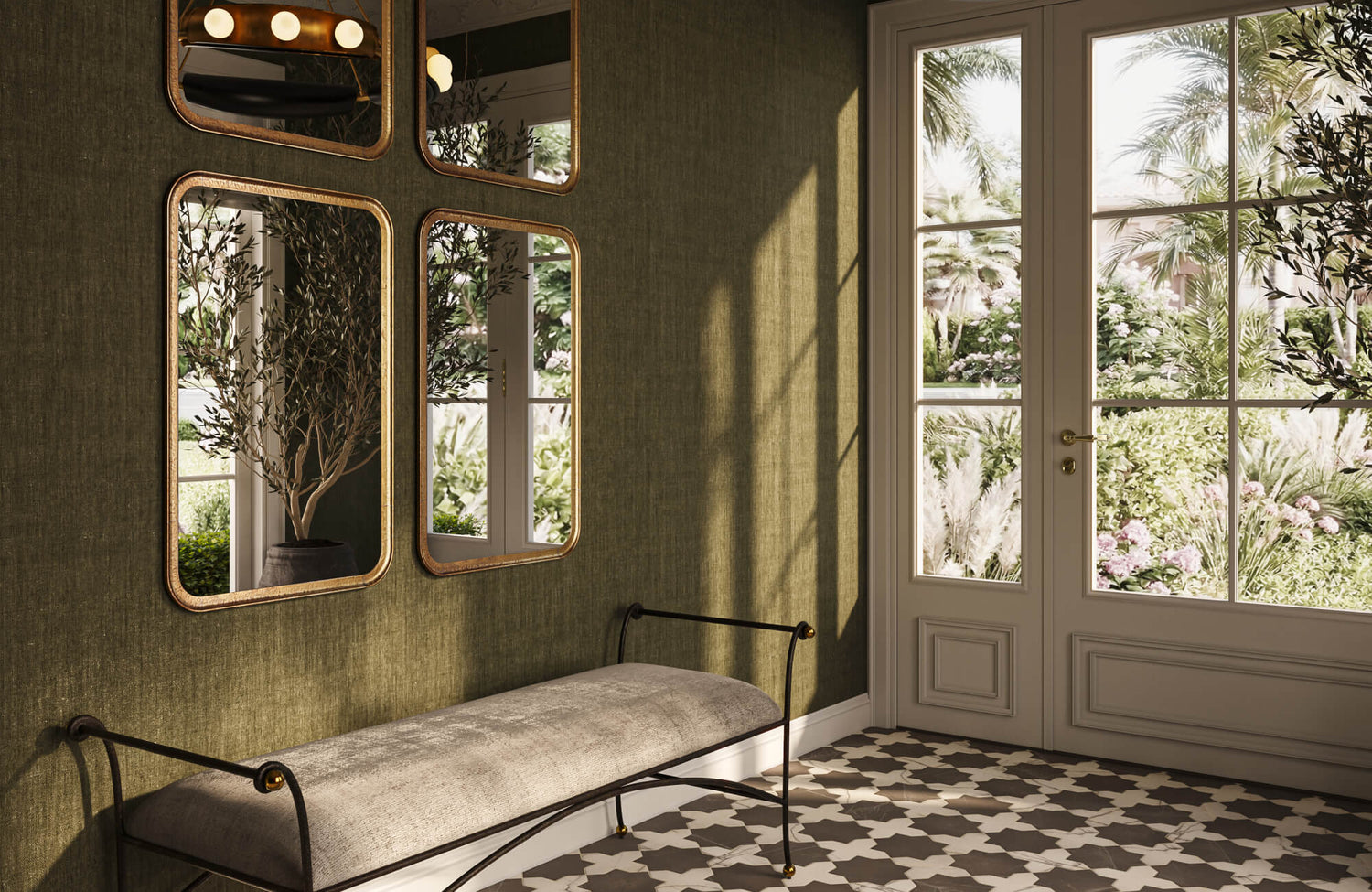
Earth-toned palettes are central to biophilic wallpaper design, drawing inspiration from natural landscapes and geological elements. Shades such as terracotta, clay, moss green, and warm taupe establish a grounded and harmonious environment, often reducing visual fatigue compared to high-contrast color schemes. For example, the Downland Wallpaper in Olive Night II, 52" x 132" introduces a deep, nature-inspired green that adds richness while maintaining a calming, organic feel. These tones are particularly effective when integrated into a broader material palette that includes timber finishes, stone surfaces, and woven textiles. The strategic use of low-saturation hues and matte finishes further enhances the organic aesthetic, allowing light to diffuse softly across the surface and reinforcing a sense of calm continuity throughout the space.
Textures that Mimic Natural Materials
Textural wallpapers that emulate natural materials provide a tactile dimension that enhances spatial depth without relying on overt patterning. Advanced embossing and printing technologies enable convincing reproductions of surfaces such as grasscloth, linen, cork, and weathered wood. For instance, the Franklin Wallpaper in Charcoal, 52" x 132" captures a refined, fabric-like texture that introduces subtle movement and depth while maintaining a modern, understated look. These finishes introduce subtle variations in tone and surface irregularity, which contribute to a more authentic and layered interior composition. In minimalist or contemporary settings, such textures serve as a primary design element, replacing decorative motifs with nuanced materiality. When paired with appropriate lighting, particularly grazing or directional illumination, these wallpapers reveal their surface detail, adding visual richness while maintaining a restrained and sophisticated aesthetic.

Technological Advancements in Wallpaper Materials
Technological innovation has transformed wallpaper from a purely decorative finish into a high-performance interior solution. Modern manufacturing processes now integrate advanced substrates, improved adhesion systems, and precision printing techniques, allowing wallpaper to meet both aesthetic and functional demands. These developments have broadened its application across residential and commercial settings, making it more adaptable to varying environmental conditions and user preferences.
Peel and Stick Convenience
Peel-and-stick wallpaper, also known as self-adhesive wallcovering, utilizes pressure-sensitive adhesive backing that eliminates the need for traditional paste. This innovation simplifies installation, reducing labor time and minimizing the technical skill required for application. It is particularly advantageous for renters or temporary installations, as it can be removed cleanly without damaging painted surfaces when applied correctly. Advances in adhesive formulation also ensure improved repositionability during installation, allowing for precise alignment of patterns and seams. This flexibility supports iterative design updates, making it an ideal solution for evolving interiors or seasonal styling.
Digital Printing and Customization
Digital printing technology has significantly enhanced the level of detail and customization available in wallpaper design. Using high-resolution inkjet systems, manufacturers can produce intricate patterns with precise color accuracy, gradient transitions, and photographic realism. This capability enables fully bespoke designs, ranging from personalized graphics to scaled architectural imagery tailored to specific wall dimensions. Moreover, the use of CAD-based design tools and color management systems ensures consistency across production batches, which is critical for large-scale applications. As a result, you can achieve a higher degree of creative control, transforming walls into highly individualized design elements.
Durable and Washable Surfaces
Modern wallpaper materials are engineered for durability, incorporating protective coatings such as vinyl laminates or acrylic finishes that enhance resistance to moisture, abrasion, and staining. These performance-grade surfaces are particularly suited for busy zones, including kitchens, bathrooms, corridors, and commercial environments. Many products are now classified as scrubbable or washable, allowing for routine maintenance without compromising the integrity of the design. Additionally, advancements in non-woven substrates improve dimensional stability, preventing issues such as shrinkage or warping over time. This combination of resilience and low maintenance makes contemporary wallpaper a practical choice for spaces requiring both longevity and visual appeal.

Sustainability and Eco-Friendly Choices
Sustainability has become a defining consideration in contemporary wallpaper design, influencing both material selection and manufacturing processes. As environmental awareness grows, consumers and designers are prioritizing wallcoverings that align with green building standards while still delivering high-end visual appeal. This shift has encouraged the industry to adopt cleaner production methods, reduce emissions, and develop materials that support healthier indoor environments.
Non-Toxic Inks and Materials
The transition toward non-toxic inks and materials represents a significant advancement in eco-conscious wallpaper production. Many manufacturers now utilize water-based or latex inks that emit low or zero volatile organic compounds, commonly referred to as VOCs. This reduction in airborne pollutants contributes to improved indoor air quality, which is especially important in enclosed residential spaces. Additionally, the move away from polyvinyl chloride and other synthetic additives minimizes long-term environmental impact. Specifying wallpapers that meet certifications such as Greenguard or FSC ensures that both the product composition and production processes adhere to rigorous health and sustainability standards.
A strong example of this approach is displayed above, featuring the Bower Wallpaper in Taupe I, 52" x 132", which pairs refined botanical design with environmentally conscious material innovation. Made with Terralon, a PVC-free substrate, it supports improved indoor air quality while maintaining durability and visual integrity. This material also offers enhanced dimensional stability, making it particularly well-suited for moisture-prone environments like bathrooms. As a result, you can achieve a sophisticated, nature-inspired look while prioritizing healthier and more sustainable interior conditions.
Recycled and Renewable Resources
The incorporation of recycled and rapidly renewable materials reflects a broader commitment to circular design principles within the wallpaper industry. Substrates made from post-consumer recycled paper or natural fibers such as jute, bamboo, and hemp reduce reliance on virgin resources while maintaining structural integrity. These materials are often processed using energy-efficient methods, further lowering their environmental footprint. You can also evaluate product transparency through environmental product declarations or third-party certifications, ensuring responsible sourcing and ethical manufacturing practices. This approach not only conserves resources but supports sustainable supply chains as well.
Longevity Over Fast Trends
A focus on longevity encourages more intentional design decisions that extend the lifecycle of wallpaper installations. Rather than following short-lived trends, selecting enduring patterns and high-quality materials reduces the frequency of replacement and associated waste. Durable substrates, combined with fade-resistant pigments, ensure that the wallpaper maintains its visual integrity over time, even under varying lighting conditions. This philosophy also aligns with sustainable design principles by promoting durability, adaptability, and timeless aesthetics. In practice, it allows interiors to evolve through complementary décor updates rather than complete redesigns, ultimately minimizing material consumption and environmental impact.

Cultural and Artistic Influences in Wallpaper Design
Wallpaper design has increasingly become a medium for cultural expression and artistic storytelling, elevating interiors beyond purely functional spaces. By drawing from historical references, fine art, and global traditions, contemporary wallpaper introduces narrative depth and contextual richness. This approach allows walls to serve as visual canvases that reflect identity, heritage, and creative interpretation, making interiors more personalized and intellectually engaging.
Heritage Patterns with Modern Twists
Traditional motifs rooted in historical design movements are being reinterpreted through a contemporary lens. Patterns such as damask, toile, and chinoiserie are simplified in form, refined in scale, and updated with modern color palettes to suit current design sensibilities. This evolution preserves the symbolic and ornamental value of heritage designs while making them compatible with minimalist or transitional interiors. You can also use these updated motifs to create a sense of continuity between past and present, integrating them with modern furnishings and architectural elements for a balanced, layered aesthetic.
Artist Collaborations and Limited Editions
Collaborations between wallpaper manufacturers and visual artists have introduced a new level of exclusivity and creativity into the market. These partnerships result in limited-edition collections that blur the line between functional surface treatment and collectible art. Techniques such as hand-drawn illustration, mixed media translation, and experimental color application are often preserved through advanced printing processes, ensuring the integrity of the original artwork. Incorporating these designs allows you to curate interiors with a gallery-like quality, where walls become focal points that showcase artistic vision and craftsmanship.
Global Design Inspirations - H3
Global influences play a significant role in shaping contemporary wallpaper aesthetics, drawing from diverse cultural traditions and regional design philosophies. Elements such as the restrained composition of Japanese minimalism, the clean lines and muted tones of Scandinavian design, and the intricate geometric patterns found in Moroccan architecture contribute to a rich and varied design language. Successfully integrating these influences requires a thoughtful approach to proportion, color harmony, and material compatibility. When applied cohesively, globally inspired wallpaper can create interiors that feel both culturally informed and visually unified, offering depth without compromising design clarity.

Functional Wallpaper for Multi-Purpose Spaces
As residential interiors increasingly accommodate multiple functions within a single footprint, wallpaper has evolved to support both spatial efficiency and user comfort. Beyond its decorative role, modern wallcovering technology now integrates performance-driven features that respond to acoustic needs, interactivity, and spatial organization. These functional adaptations enable you to enhance usability without introducing additional structural elements, preserving both flexibility and visual cohesion.
Acoustic and Insulating Wallpaper
Acoustic and thermally insulating wallpapers are engineered to improve indoor environmental quality through specialized material composition. These wallcoverings often incorporate layered substrates, such as foam-backed vinyl or fibrous composites, which help absorb sound waves and reduce reverberation within a space. This makes them particularly valuable in home offices, media rooms, or shared living areas where noise control is essential. In addition to acoustic performance, certain variants offer thermal resistance, contributing to energy efficiency by minimizing heat transfer through walls. This dual functionality supports a more comfortable and controlled interior environment without compromising aesthetic intent.
Writable and Interactive Surfaces
Writable and interactive wallpapers introduce a dynamic element to interior surfaces by transforming walls into usable workspaces. These products are typically finished with specialized coatings that allow for repeated writing and erasing, similar to whiteboard or chalkboard surfaces. In residential settings, they are especially effective in children’s rooms, study areas, and creative studios, where adaptability and engagement are priorities. From a design perspective, these wallpapers can be seamlessly integrated into the overall scheme, maintaining visual consistency while adding a layer of functionality that supports productivity and creativity.
Zoning Open Plan Areas
In open-plan layouts, wallpaper serves as a non-structural tool for spatial delineation, helping to define functional zones without interrupting flow. By applying distinct patterns, textures, or color variations to specific wall sections, you can visually separate areas such as dining, lounging, and working spaces. This technique relies on principles of contrast and continuity, ensuring that each zone is identifiable while still contributing to a cohesive overall design. When executed with precision, wallpaper-based zoning enhances spatial clarity and organization, allowing multifunctional environments to remain both practical and aesthetically unified.
Contemporary Wallpaper Trends Reflect Design Innovation and Lifestyle Needs
Current wallpaper trends are defined by a convergence of bold visual expression, nature-inspired aesthetics, advanced material technology, and functional adaptability. Together, these elements illustrate how wallpaper has become an integral component of modern interior design, capable of enhancing both form and function. By embracing statement-making designs, sustainable practices, cultural influences, and performance-oriented features, wallpaper now addresses the evolving needs of contemporary living. Ultimately, the trend is not confined to a single style but rather a multidimensional approach that prioritizes customization, durability, and experiential design. This shift positions wallpaper as a strategic design tool that supports creativity while responding to practical considerations, making it a central feature in shaping sophisticated and future-ready interiors.
To bring these trends into your own space, having access to expert guidance and reliable resources can make a significant difference. For tailored recommendations, product inquiries, or design support, you can explore the Edward Martin contact page to connect directly with our team. This allows you to make informed decisions and confidently select wallpaper solutions that align with both your aesthetic vision and functional needs!