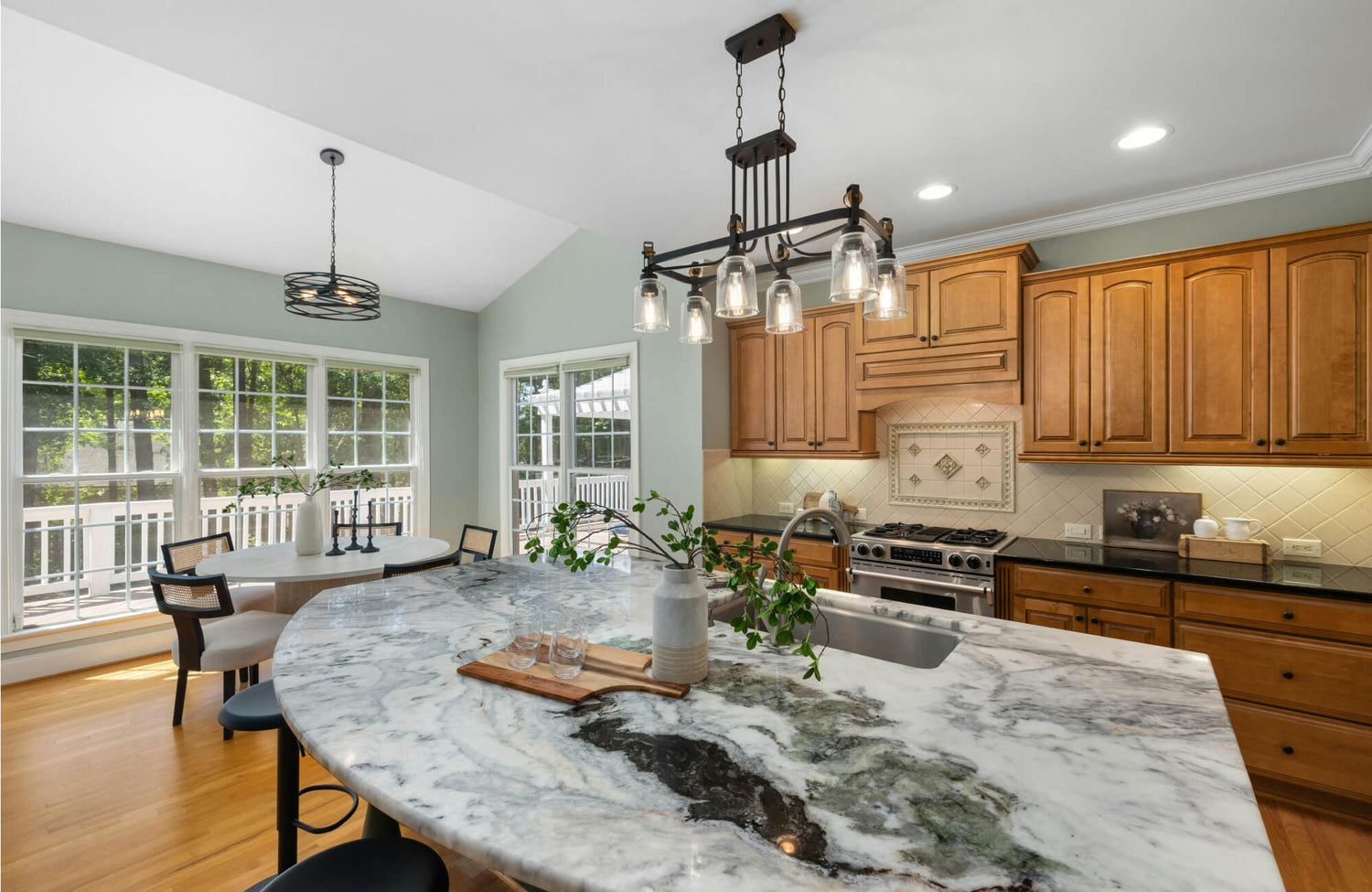
Marble has long been a favored choice for kitchen countertops, valued for its natural beauty, distinctive veining, and ability to elevate any space. However, selecting the right marble goes beyond appearance, as kitchens demand surfaces that can withstand daily use, spills, and constant exposure to heat and moisture. Not all marble types perform the same, with differences in density, porosity, and resistance to etching affecting their long-term durability and maintenance needs.
From subtle, classic varieties to bold, high-contrast options, each marble type offers unique characteristics that suit different design preferences and lifestyles. Understanding these differences is essential to finding a surface that balances elegance with practicality. This guide explores the most popular marble types for kitchen countertops, key factors to consider before choosing, and how marble compares to marble-look alternatives. By the end, you’ll have a clear understanding of which option best fits your kitchen and daily needs.

Best Types of Marble for Kitchen Countertops
Marble varieties differ in appearance, durability, and maintenance requirements, making each option suited to different kitchen needs. Choosing the right type depends on your design vision, lifestyle, and the level of upkeep you are prepared to maintain.
Carrara Marble
Carrara marble is characterized by its soft white-to-light gray background, accented with delicate, feathery veining that suits a wide range of kitchen styles. As one of the most widely available marble types, it offers a more accessible option for homeowners seeking a classic natural stone look. Its subtle, understated pattern allows it to integrate effortlessly into both traditional and modern interiors. However, because it is more porous than denser marble varieties, it requires regular sealing and attentive maintenance to preserve its appearance over time.
Calacatta Marble
Calacatta marble is distinguished by its bright white base and bold, dramatic veining, creating a striking visual statement in any kitchen. It is often featured in luxury spaces where the countertop serves as a central design focal point. The strong contrast and pronounced patterns give it a more exclusive, high-end appeal compared to subtler marble varieties. Despite its elegance, it requires consistent care and proper sealing to protect against etching and staining over time.
Danby Marble
Danby marble strikes a balance between aesthetic appeal and durability, making it one of the more practical choices for kitchen countertops. It typically features a white-to-cream-toned background with soft veining in subtle, neutral hues. Unlike many Italian marbles, it is denser and less porous, enhancing its resistance to staining. Though it still requires regular care, it generally performs more reliably under everyday kitchen use.
Statuario Marble
Statuario marble is valued for its bright white background and refined, well-defined veining, offering a clean and elegant appearance. Its patterns feel more controlled and balanced, unlike more dramatic marble varieties, making it well-suited for sophisticated interiors. This marble is often chosen for upscale kitchens that prioritize a polished and timeless aesthetic. Like other premium marble types, it requires careful maintenance and regular sealing to preserve its beauty over time.
Arabescato Marble
Arabescato marble is distinguished by its flowing, dynamic veining, which introduces movement and visual depth to a space. Its expressive patterns can serve as a striking focal point, particularly in minimalist or understated kitchen designs. The intricate veining also helps to subtly disguise minor wear over time compared to more uniform marble surfaces. To maintain visual balance, its bold character is best complemented by simpler surrounding elements.
Nero Marquina Marble
Nero Marquina marble is defined by its deep black background and striking white veining, offering a bold alternative to traditional white marble. It is particularly well-suited for modern kitchens that emphasize contrast and statement design. The dark surface adds visual depth and sophistication, creating a dramatic focal point within the space. However, it can also make dust, scratches, and etching more noticeable, making consistent maintenance essential to preserve its appearance.

How to Choose the Best Marble for Your Kitchen
Choosing the right marble involves balancing visual appeal with practical performance to suit your everyday needs. Factors such as usage, finish, maintenance, and budget all play a key role in determining the most suitable option for your kitchen.
Consider How Often You Use the Kitchen
The level of daily kitchen activity plays a significant role in determining the most suitable type of marble. For busy kitchens, denser options such as Danby are better equipped to handle regular wear and tear. In contrast, lighter-use spaces allow for more delicate, visually striking marbles like Calacatta or Statuario. Aligning your material choice with your lifestyle helps ensure both long-term performance and satisfaction.
Choose the Right Finish
The finish of marble plays a key role in both its visual appeal and overall performance. A polished finish offers a glossy, reflective surface that enhances the stone’s color and veining. In contrast, a honed finish provides a softer, matte appearance that helps minimize the visibility of etching and minor scratches. For most kitchens, honed marble offers a more practical balance between aesthetics and everyday usability.
Think About the Maintenance
Proper maintenance is essential for preserving the beauty and longevity of marble countertops. While sealing helps reduce the risk of staining, it does not make the surface completely resistant to damage. Spills—particularly acidic ones—should be cleaned promptly to prevent etching or discoloration. Using gentle, pH-neutral cleaners will help maintain the surface while protecting its natural finish over time.
Set a Realistic Budget
Budget planning should go beyond the initial cost of the marble slab. Prices can vary significantly based on factors such as rarity, origin, and fabrication requirements. Additional expenses, including installation, sealing, and potential refinishing, should also be considered. Accounting for these costs upfront helps ensure a more accurate budget and minimizes unexpected expenses later on.

Marble vs. Other Kitchen Countertop Materials
Comparing marble with other countertop materials helps highlight its unique strengths and potential limitations. Each option offers distinct advantages in terms of durability, maintenance, and overall appearance, making it important to choose based on your priorities and lifestyle.
Marble vs. Granite
Granite is typically harder and more scratch-resistant than marble, making it a more durable option for high-traffic kitchens. It also offers better resistance to acidic substances, resulting in lower maintenance over time. Marble, in contrast, offers a softer, more refined aesthetic that many homeowners find appealing for its timeless elegance. Ultimately, the choice comes down to prioritizing durability or visual sophistication.
Marble vs. Quartz
Quartz is an engineered material valued for its non-porous surface and low-maintenance performance. It resists staining and does not require sealing, making it a highly practical option for busy kitchens. Marble, on the other hand, offers a more natural and distinctive appearance, with subtle variations that add depth and character. The choice between the two ultimately depends on your preference for convenience versus authentic, organic beauty.
Marble vs. Quartzite
Quartzite is a natural stone that closely resembles marble in appearance but generally offers greater durability. It provides better resistance to scratching and etching, making it well-suited for busy kitchens. Marble, however, remains a preferred choice for its classic elegance and softer, more refined visual appeal. The decision ultimately comes down to prioritizing performance or the authentic character of natural marble.

Alternative That Mimics The Look of Marble
For those who appreciate the elegance of marble but prefer a more practical surface, marble look porcelain offers a compelling countertop alternative. Designed to replicate the visual appeal of natural stone, it delivers enhanced durability and easier maintenance for everyday kitchen use.
Calacatta Marble Look Tiles
Calacatta marble look tiles replicate the bold veining and bright white background characteristic of natural Calacatta stone. They are designed to create a striking focal point, making them well-suited for kitchen countertops aiming for a refined, high-end aesthetic. As porcelain surfaces, they resist staining and do not require sealing, allowing for easier day-to-day maintenance. They also offer better resistance to acidic substances, helping minimize the risk of etching over time.
A great example is Edward Martin’s Leona 24x48 Matte Porcelain Tile in Calacatta, which captures the dramatic veining and crisp white tones of natural marble while providing a durable, low-maintenance surface. This makes it a practical choice for achieving a sophisticated, high-end look with less upkeep than natural marble.
Carrara Marble Look Tiles
Carrara marble look tiles replicate the soft white and light gray tones with subtle veining characteristic of natural Carrara marble. Their understated appearance makes them highly versatile, allowing them to blend seamlessly with a wide range of kitchen styles. As a porcelain alternative, they offer improved resistance to moisture, stains, and daily wear. They are also easier to clean, making them well-suited for busy kitchens with frequent use.
A great example is our Blair 24x24 Polished Porcelain Tile in White Carrara, which delivers the classic marble aesthetic with a smooth, reflective finish while maintaining a low-maintenance surface. This makes it a reliable choice for achieving a timeless marble look with minimal upkeep.
Nero Marquina Marble Look Tiles
Nero Marquina marble look tiles recreate the deep black background and striking white veining of the natural stone. They offer a bold, contemporary aesthetic that works especially well in modern and high-contrast kitchen designs. As a porcelain material, they offer greater resistance to scratches, stains, and etching compared to natural marble. Their durable surface helps maintain a clean, polished appearance even in high-use areas.
Edward Martin’s Leona 24x48 Polished Porcelain Tile in Nero Marquina is a great example, offering a refined take on the timeless marble look while enhancing durability and ease of maintenance. This makes it an excellent choice for homeowners seeking dramatic style with improved long-term performance.
Choosing the Right Marble for a Kitchen That Lasts
The best marble for kitchen countertops is typically Danby marble, thanks to its balance of durability, lower porosity, and classic appearance. For most homeowners, it offers a practical balance of beauty and performance, while Carrara marble remains a popular choice for its affordability and timeless appeal, and Calacatta marble stands out for its bold, high-end presence.
While these natural marble options bring lasting elegance, they do require regular care to maintain their condition over time. For those seeking a lower-maintenance option, marble look porcelain surfaces offer a durable alternative that closely replicates the appearance of natural stone. Ultimately, the right choice depends on your design preferences, maintenance expectations, and how you use your kitchen each day.
To help you visualize how different marble or marble look tiles will appear in your space, you can also explore our AR tool, which allows you to preview materials directly in your kitchen before making a decision. If you’re exploring options and want guidance tailored to your space, feel free to contact us for expert advice on selecting the right marble or alternative surface for your kitchen.