In the world of refined interiors, the difference between a styled sofa and a truly curated living space often lies in the smallest details. Among these, decorative pillows hold an outsized influence. They soften architectural lines, introduce texture, and offer an opportunity to layer color and personality without permanence. Yet, achieving that effortless, editorial look seen in high-end interiors is not as simple as placing a few cushions at random. It requires a thoughtful approach grounded in proportion, balance, and visual storytelling.
The 2-2-1 pillow rule has emerged as a trusted styling principle among interior designers and home enthusiasts alike. At its core, it provides a structured yet flexible formula for arranging throw pillows in a way that feels both intentional and relaxed. Whether you are styling a minimalist sofa with premium upholstery or enhancing a richly textured living room filled with curated décor, understanding this rule can elevate your space from ordinary to exceptional. This guide explores the nuances behind the 2-2-1 method, breaking down its aesthetic logic and offering insights into how it can be adapted for various sofa types and design preferences.

Decoding The Mathematics Of Perfect Sofa Styling
Before diving into specific pillow choices and arrangements, it’s important to understand the underlying logic that makes the 2-2-1 rule so effective. This approach is not arbitrary—it’s rooted in proportion, balance, and visual rhythm, all of which are essential to achieving a polished, designer-level look.
The Psychology Of Odd Numbers In Interior Design
The inclusion of a single pillow at the center is not arbitrary. Odd numbers have long been favored in design because they create visual intrigue and prevent compositions from feeling overly symmetrical or predictable. When the eye encounters an odd grouping, it naturally moves across the arrangement, engaging with each element rather than perceiving it as a static whole.
In the context of the 2-2-1 rule, the final “one” serves as a focal point. It disrupts the symmetry established by the pairs, introducing a subtle tension that makes the arrangement more compelling. This psychological effect is particularly valuable in living spaces designed for relaxation and conversation, where visual interest should feel inviting rather than overwhelming.
Establishing Depth Through Strategic Layering
Layering is fundamental to the success of the 2-2-1 approach. By placing larger pillows at the back and progressively smaller ones in front, the arrangement gains depth and dimension. This layered effect mimics the principles used in other areas of interior design, such as rug placement or lighting schemes, where multiple elements are combined to create a cohesive yet dynamic environment.
Depth is not achieved through size alone. Texture, color, and material are equally important in shaping the overall effect. A velvet pillow placed against a linen one, for example, introduces contrast that enhances the layered effect. Similarly, subtle variations in tone can create a gradient that draws the eye inward, making the sofa feel more inviting and thoughtfully styled.

The First Two Establishing A Solid Foundation
The first pair of pillows forms the foundation of the entire arrangement. Positioned at the outer edges of the sofa, these pillows anchor the composition and provide a visual frame for the layers that follow. Their size and presence should be substantial enough to define the structure without overpowering the overall design.
Sizing Up For Corner Placement
Corner placement demands pillows that are both generous in scale and supportive in structure. Larger square pillows are typically preferred, as they fill the corners effectively and provide a comfortable backdrop for the layers in front. In premium interiors, these foundational pillows often feature high-quality inserts that maintain their shape while offering a plush, inviting feel.
The dimensions of these pillows should be proportionate to the sofa itself. A deep, oversized sofa calls for equally substantial cushions, while a more compact design benefits from slightly scaled-down versions. Achieving the right balance ensures that the arrangement feels integrated rather than imposed.
Grounding The Look With Solid Colors Or Large Patterns
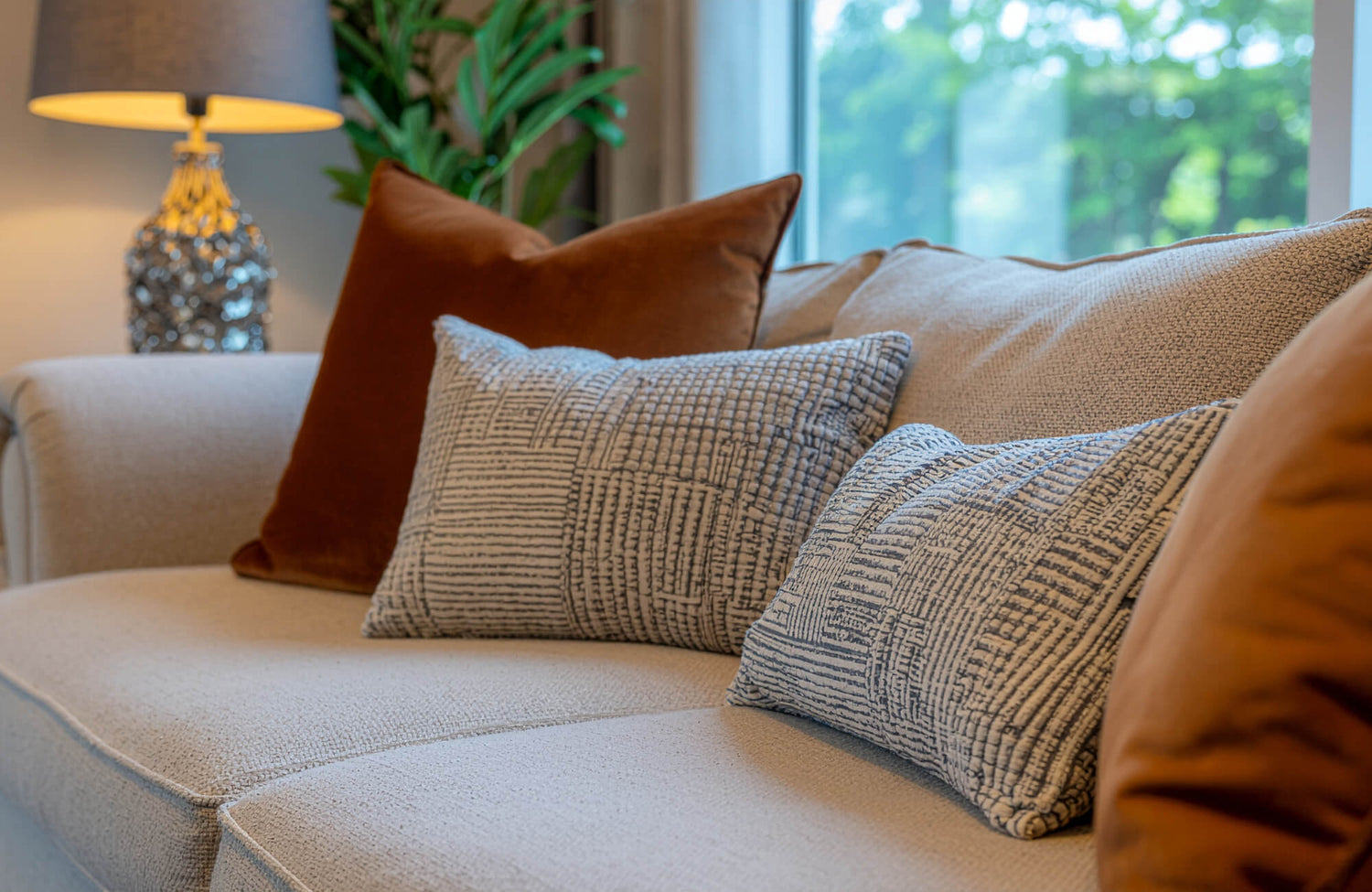
The first two pillows set the tonal direction for the entire arrangement. As such, they are often chosen in solid colors or large-scale patterns that provide a sense of stability. Neutral tones, such as warm taupes, soft greys, or muted creams, create a sophisticated base that allows subsequent layers to shine. This effect is beautifully illustrated by Edward Martin’s Merelle 22" x 22" Down Pillow in Tan and Merelle 22" x 22" Down Pillow in Terracotta in the image above, where the interplay of earthy hues establishes both warmth and visual grounding.
Alternatively, a bold, large-scale pattern can serve as a statement while still grounding the composition. In this case, the pattern should be cohesive with the broader color palette of the room, echoing elements found in rugs, wall finishes, or upholstered furniture. This continuity reinforces the sense of a well-curated space.

The Second Two Introducing Texture And Personality
The second pair of pillows builds upon the foundation, introducing variation and personality. Positioned in front of the larger pillows, these cushions are typically slightly smaller and more expressive in their design.
Stepping Down The Scale Proportionally
Proportion is key when transitioning from the first layer to the second. The size reduction should be noticeable but not drastic, maintaining a sense of continuity while adding visual interest. This subtle shift in scale creates a tiered effect that enhances the overall composition, as seen with Edward Martin’s Brielle 18'' x 18'' Down Pillow in Natural / Mustard paired alongside the elongated Merelle 13" x 21" Down Pillow in Terracotta in the image above, where the variation in dimensions introduces both structure and flow.
In high-end interiors, attention to proportion extends beyond size to include thickness and fill. A well-chosen insert ensures that the pillows maintain their shape and contribute to the layered aesthetic without appearing flat or underfilled, though the level of comfort and support can vary depending on the insert type and individual preference.
Mixing Tactile Fabrics For Visual Friction
Texture is essential in elevating the second pair of pillows. By introducing materials such as boucle, velvet, silk, or embroidered fabrics, the arrangement gains a tactile richness that invites interaction. This interplay of textures creates what designers often refer to as visual friction, a dynamic contrast that adds depth and sophistication.
Color and pattern can also become more expressive at this stage. While the foundational pillows may be restrained, the second layer offers an opportunity to introduce subtle patterns, tonal variations, or even artisanal details that reflect personal style. The key is to maintain harmony, ensuring that each element complements rather than competes with the others, while also considering how different fabric types may require specific care to maintain their texture and appearance over time.

The Final One Breaking The Grid With A Focal Point
The final pillow is where the arrangement comes to life. Positioned centrally, it acts as both a visual anchor and a statement piece, drawing attention and tying the composition together.
Utilizing A Lumbar Shape To Elongate The Sofa
A lumbar pillow is often the preferred choice for this central position. Its elongated shape contrasts with the square forms of the preceding pillows, introducing a new dimension that enhances the overall design. This horizontal orientation can also visually extend the length of the sofa, making it appear more expansive and balanced.
In addition to its aesthetic benefits, a lumbar pillow offers practical comfort, supporting the lower back and enhancing the functionality of the seating area. This dual purpose aligns with the principles of premium design, where beauty and usability are seamlessly integrated.
Injecting A Bold Accent Or Bespoke Detail
The central pillow is the ideal place to introduce a bold accent or bespoke detail. Whether through a striking color, an intricate pattern, or a unique material, this element serves as the focal point of the arrangement. It can echo a statement piece elsewhere in the room, such as a decorative mirror or a piece of lighting, creating a cohesive visual narrative.
For those seeking a more personalized touch, custom or handcrafted pillows can add a layer of exclusivity. Embroidery, fringe, or artisanal weaving techniques can transform a simple cushion into a conversation piece, elevating the entire composition.

Adapting The Formula For Sectionals And Loveseats
While the 2-2-1 rule is traditionally associated with standard sofas, its principles can be adapted to suit a variety of seating configurations. The key lies in understanding the underlying logic of balance and proportion, rather than adhering rigidly to the numbers.
Scaling Down To The 2 1 Rule For Compact Spaces
In smaller spaces or on loveseats, a simplified version of the rule can be more appropriate. The 2-1 arrangement maintains the essence of layering and focal emphasis while accommodating the reduced scale. Two foundational pillows are paired with a single accent, creating a balanced yet uncluttered look.
This approach is particularly effective in compact living areas where every element must serve both aesthetic and functional purposes. By reducing the number of pillows, the seating remains comfortable and accessible, while still benefiting from a curated appearance.
Expanding To The 3 2 1 Rule For Large Sectionals
For expansive sectionals, the arrangement can be extended to a 3-2-1 configuration. This variation introduces an additional layer, allowing for greater complexity and richness. Three larger pillows anchor the corners and central sections, followed by two medium-sized cushions, and finally a single focal piece.
The expanded arrangement works well in larger rooms where the sofa serves as a central feature. It allows for a more elaborate interplay of textures, colors, and patterns, creating a luxurious and inviting atmosphere. Care must be taken, however, to maintain cohesion and avoid visual overload.
Mastering The Art Of Effortless Curation
The 2-2-1 pillow rule is more than a styling guideline; it is a framework for thoughtful design. By combining principles of proportion, layering, and visual psychology, it transforms a simple arrangement of cushions into a refined composition that enhances the entire living space. Its versatility allows it to be adapted to different sofa types and design aesthetics, making it a valuable tool for anyone seeking to elevate their home.
Ultimately, the success of this approach lies in its balance between structure and creativity. It provides a clear starting point while leaving room for personal expression through color, texture, and detail. For those looking to refine their space further, Edward Martin offers design consultation services that bring expert perspective and tailored solutions to your interiors. Whether you are reimagining a single room or an entire home, you can also contact Edward Martin to explore how thoughtful curation can translate into a cohesive, elevated living environment.