Minimalist lighting embodies the art of refinement, where illumination is stripped to its purest form to celebrate simplicity and function. Instead of overwhelming a room with ornate fixtures, it relies on clean lines, subtle geometries, and discreet architectural integration to create spaces that feel serene and timeless. Every detail is intentional—light is carefully layered to enhance textures, define structure, and highlight natural materials without visual clutter. By combining advanced LED technology, smart lighting systems, and energy-efficient design, minimalist lighting achieves both aesthetic elegance and sustainable performance. The result is a philosophy of illumination that transforms interiors into harmonious environments, where atmosphere, clarity, and architectural beauty coexist seamlessly.

Core Principles of Minimalist Lighting Design
Minimalist lighting is built on restraint and clarity, where every fixture and placement is carefully considered. The goal is to achieve visual harmony, ensuring illumination enhances architecture without creating a distraction.
Visual Simplicity
Visual simplicity ensures the eye is drawn to the light itself rather than the fixture. Slimline recessed fittings, linear LED profiles, and geometric pendants quietly deliver illumination without overwhelming the environment. By avoiding ornate detailing, architectural forms and material textures are allowed to remain the true focal points. Designers also often favor indirect washes of light or shadow play to enhance depth and create visual interest without clutter. This approach results in interiors that feel calm, balanced, and contemporary.
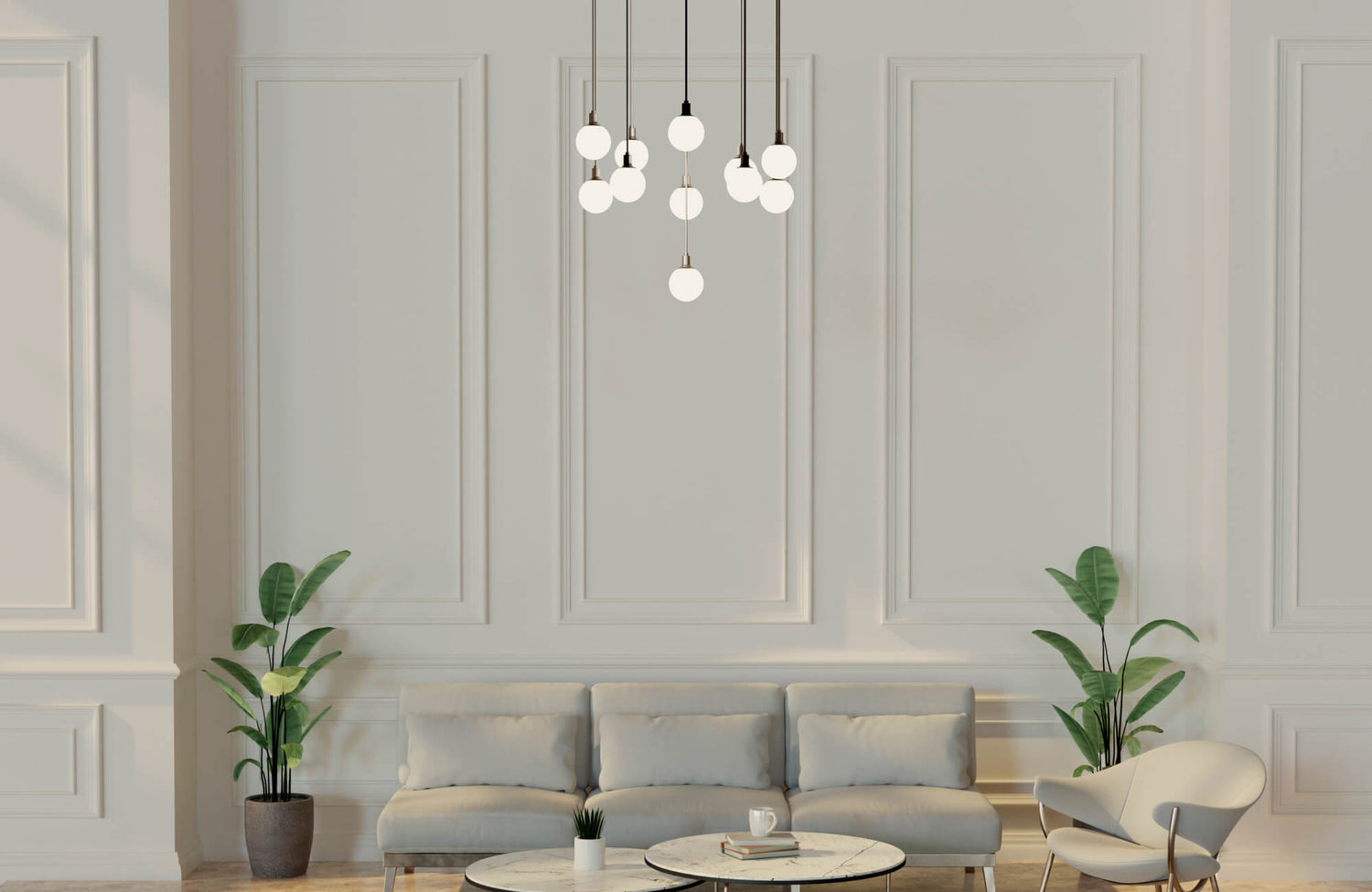
Edward Martin’s McKay Chandelier in Black Gunmetal, as shown in the photo above, perfectly illustrates this principle. With its cluster of airy glass globes and slim black stems, it creates a sculptural presence that feels weightless, allowing the glow of the bulbs to take center stage. Its refined silhouette also highlights architectural textures without distraction, making it a striking yet understated example of minimalist visual simplicity.
Purposeful Illumination
Purposeful illumination layers light sources to support both utility and ambience. Ambient lighting establishes a consistent baseline, while task lighting ensures functionality in work areas and accent lighting draws subtle attention to architectural details. Rather than relying on excess brightness, designers use controlled light levels to achieve balance and avoid glare. To achieve this, fixtures are positioned strategically to maximize comfort while maintaining a cohesive distribution of light. Careful selection of beam spreads further refines visual consistency throughout the space. Together, these techniques create lighting schemes that feel both practical and artfully considered.
Spatial Harmony
Spatial harmony is achieved when lighting aligns with architectural geometry and flow. For example, recessed coves, integrated wall channels, and discreet floor-level luminaires emphasize structure while blending seamlessly with the design. Consistent placement also reinforces order and strengthens the sense of cohesion. In addition, fixtures often mirror the lines of ceilings, furniture, or circulation paths, ensuring light feels like an extension of architecture. This integration prevents visual fragmentation and instead produces a unified spatial rhythm. As a result, illumination feels effortless, guiding the eye naturally through the environment.

Fixture Types and Configurations
Minimalist lighting relies on a carefully curated selection of fixtures that prioritize subtlety, efficiency, and architectural integration. Each configuration is designed to balance function with aesthetic refinement.
Recessed Downlights
Recessed downlights remain one of the most versatile solutions in minimalist lighting, seamlessly blending function with subtlety. Set flush into ceilings or walls, they deliver uniform ambient illumination while keeping a discreet presence. Beyond general lighting, adjustable modules also allow designers to highlight artwork, furniture, or textured surfaces without creating visual clutter. At the same time, high-efficiency LED technology extends performance, ensuring longevity while reducing energy consumption. For an even more refined look, trimless versions create seamless finishes that eliminate visible edges and preserve architectural clarity. When placed with precision and calibrated for the right beam angle, recessed downlights achieve a balance of functionality and atmosphere, making them indispensable in both residential and commercial spaces.
Linear LED Systems
Linear LED lighting offers continuous ribbons of illumination that enhance architectural geometry. Installed in coves, stair risers, or under cabinetry, these fixtures define edges and add depth while maintaining a seamless look. Advances in LED flexibility also allow ultra-slim designs that integrate into the narrowest architectural details. Designers frequently employ dimmable drivers to shift from bright task lighting to softer ambient settings. Moreover, continuous runs eliminate visual interruptions, reinforcing the minimalist principle of clean lines and uninterrupted form. Especially in open-plan layouts, linear LEDs clarify space without introducing visual distraction.
As displayed in the picture above, the McAvoy 24" Picture Light in Aged Brass exemplifies how linear illumination can be both functional and elegant. Its slender profile casts an even wash of light across artwork, enhancing textures and tones without adding visual clutter. The minimalist form also blends seamlessly into the wall, while the aged brass finish introduces warmth that complements contemporary and classic interiors alike. This balance of precision and subtlety highlights how linear systems can deliver both focus and atmosphere in a refined way.
Streamlined Pendants and Tracks
Streamlined pendants and track systems introduce definition while preserving the essence of simplicity. With their slim suspensions or bare bulbs suspended from refined cords, they create a subtle sculptural presence that feels elegant yet restrained. In dining areas, linear pendants not only provide clear task illumination but also serve as visual anchors that ground the space. Meanwhile, track lighting enhances flexibility in galleries, retail spaces, or offices, allowing fixtures to be repositioned with ease as needs evolve. To maintain a minimalist aesthetic, these systems are designed with slender rails and concealed wiring, enabling them to blend effortlessly into their surroundings. This balance of adaptability and restraint ensures that lighting continues to support spatial functions without ever straying from minimalist design principles.

Materiality, Finishes, and Light Quality
The material, finish, and performance of minimalist fixtures are as significant as their form. Each decision contributes to durability, subtlety, and the overall refinement of the design.
Material Selections
Aluminum is frequently chosen for its strength, lightweight properties, and ability to manage heat effectively. Glass and acrylic, on the other hand, are valued for their ability to diffuse light softly, enhancing comfort without adding bulk. Brass, with its timeless warmth and durability, is also often used to elevate minimalist fixtures with a touch of refined elegance. In environmentally conscious projects, recycled metals provide both sustainability and modern appeal. Moreover, precision fabrication allows housings to remain slim, ensuring fixtures integrate cleanly with architecture. With this, designers avoid decorative excess, favoring functional, minimalist forms that support clarity.
A striking example is our Halsey 13" Pendant in White & Aged Brass, as featured in the photo above. Its dome silhouette captures the purity of minimalist form, while the aged brass accents introduce subtle warmth that balances contemporary restraint with timeless sophistication. This thoughtful pairing of materials demonstrates how brass can enrich minimalist design without detracting from its clean, architectural simplicity.
Neutral Finishes
Neutral finishes reinforce the understated quality of minimalist lighting. For instance, matte black fixtures disappear into darker interiors, while powder-coated white blends effortlessly with pale architectural surfaces. Brushed nickel also introduces a subtle metallic sheen that feels refined without drawing attention. These finishes enhance durability and reduce unwanted reflections or glare. Maintaining finish uniformity across fixture types further creates cohesion within a project. By employing a restrained palette, designers allow illumination—not hardware—to define the space.
Light Temperature and CRI
Light temperature directly influences the mood and functionality of minimalist interiors. In residential settings, warm white (2700K–3000K) is often preferred, as it creates an inviting and comfortable atmosphere. By contrast, neutral white (3500K–4000K) is commonly chosen for commercial spaces, where clarity and focus are essential. Designers generally avoid overly cool temperatures, since they can disrupt the calm and balanced feel that minimalist design seeks to achieve. To further refine the experience, high Color Rendering Index values (CRI 90+) ensure that finishes and materials appear authentic and true to life. When color quality remains consistent across all fixtures, visual harmony is preserved. Together, these thoughtful choices result in interiors that are both aesthetically serene and technically precise.

Technological Integration and Energy Performance
Minimalist lighting seamlessly incorporates technology that enhances performance while preserving aesthetic purity. These advancements balance precision, flexibility, and energy-conscious design.
LED Advancements
LEDs have become the backbone of minimalist lighting due to their efficiency and adaptability. Their compact form makes it possible to integrate illumination into concealed channels, slim pendants, and architectural recesses. In addition, long lifespans and low heat emissions reduce maintenance demands and extend fixture durability. Advanced optics further allow designers to direct light precisely while avoiding glare. LEDs are also highly energy-efficient, aligning with sustainable building practices. This combination of form and function makes them essential for contemporary minimalist applications.
Edward Martin’s Esme 26" Wall Sconce in Aged Brass, as shown in the picture above, illustrates how these LED advancements elevate design. Its slender silhouette and integrated LED source deliver a warm, even glow while maintaining an ultra-minimalist profile. The aged brass finish also enhances the fixture’s architectural presence without overpowering the space, proving that technology and timeless materiality can coexist seamlessly in modern lighting.
Smart Lighting Systems
Smart lighting systems introduce intuitive control that enhances the minimalist environment without adding visual complexity. Through dimmable drivers, spaces can transition effortlessly from bright task-oriented illumination to softer ambient atmospheres. Building on this flexibility, tunable white technology adjusts color temperature throughout the day, supporting circadian rhythms and overall well-being. App-based and voice-activated controls further simplify operation, giving users seamless flexibility without detracting from design purity. At the same time, wireless integration minimizes excess cabling, helping to preserve clean architectural lines. When combined, these innovations not only elevate the user experience but also ensure that technology aligns harmoniously with minimalist design integrity.
Energy-Saving Strategies
Energy-conscious solutions form an essential part of modern minimalist design, ensuring efficiency complements elegance. For example, daylight harvesting sensors automatically adjust artificial illumination in response to changing natural light, reducing waste while maintaining comfort. In tandem, occupancy sensors activate lighting only when a space is in use, preventing unnecessary energy consumption. High-efficacy drivers further enhance performance by maximizing lumen output while minimizing wattage demands. For larger projects, integration with comprehensive building automation systems allows centralized control of energy use, streamlining both operation and sustainability. Together, these strategies not only lessen environmental impact but also uphold the minimalist principle of thoughtful, purposeful efficiency.

Applications Across Residential and Commercial Interiors
Minimalist lighting demonstrates versatility across residential, commercial, and public environments. Its adaptability lies in creating clarity, atmosphere, and focus without unnecessary ornamentation.
Residential Interiors
In residential interiors, minimalist lighting strikes a delicate balance between comfort and function. In living areas, recessed ceiling fixtures deliver uniform illumination that enhances clarity while avoiding visual clutter. Kitchens also benefit from under-cabinet linear LEDs, which provide practical task lighting while preserving clean architectural lines. Meanwhile, bedrooms often rely on warm wall sconces that create intimacy without overwhelming the space, fostering a sense of calm. Above dining tables, linear pendants serve as subtle focal points, anchoring both the room’s function and its design. Even bathrooms embrace this philosophy, where concealed cove lighting and glare-free downlights establish a spa-like serenity that feels cohesive and thoughtfully composed.
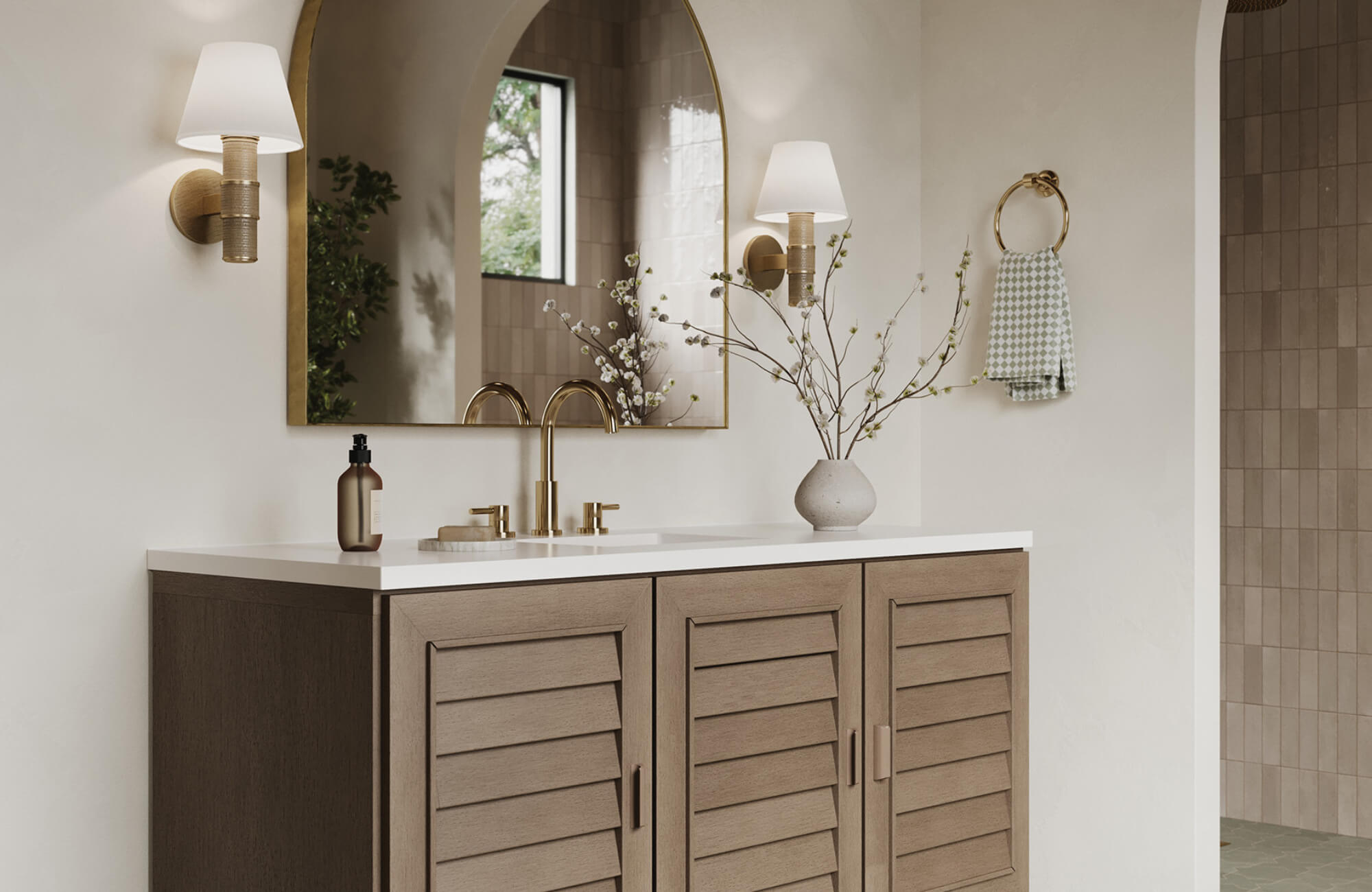
As featured in the photo above, our Noelle Wall Sconce in Vintage Brass illustrates how minimalist fixtures can enhance residential bathrooms with both style and function. Its globe diffuser casts a soft, flattering glow that works beautifully for mirrors and vanities, while the vintage brass finish introduces a touch of warmth that complements modern simplicity. By combining elegance with practicality, this wall sconce demonstrates how wall-mounted lighting can elevate everyday spaces, creating bathrooms that feel serene, cohesive, and refined.
Commercial Environments
Commercial interiors benefit from minimalist lighting’s clarity and precision. In open-plan offices, glare-free linear LED systems foster productivity while maintaining visual comfort throughout the workspace. Retail environments, on the other hand, rely on adjustable track lights that highlight merchandise with both flexibility and accuracy, adapting easily to evolving displays. In larger public settings such as airports, malls, and hotels, recessed downlights guide circulation while preserving clean, uncluttered ceilings. To maintain consistency, fixtures also often feature neutral finishes that blend seamlessly with brand-neutral design identities, avoiding distraction. By combining adaptability with restraint, commercial lighting solutions achieve efficiency while remaining true to minimalist aesthetics.
Hospitality and Public Spaces
Hospitality and cultural environments frequently turn to minimalist lighting to enhance atmosphere and elevate the overall experience. In hotels and lobbies, concealed coves introduce soft washes of light that accentuate architectural volume and create a welcoming sense of scale. Galleries, by contrast, depend on discreet track systems with high CRI to ensure artwork is presented faithfully and without distraction. Restaurants also often incorporate dimmable pendants, which foster intimacy while harmonizing with surrounding finishes. In public libraries and museums, recessed systems are favored to deliver uniform navigation lighting with minimal intrusion, supporting clarity and ease of movement. Complementing these approaches, uplighting techniques highlight natural materials such as wood, stone, and metal, enriching the environment with subtle depth. Together, these strategies establish immersive, elegant spaces that remain visually calm and thoughtfully composed.
The Enduring Appeal of Minimalist Lighting
Minimalist lighting continues to define modern interiors by balancing architectural clarity with understated elegance. Through carefully chosen fixtures, refined materials, and advanced technology, it creates spaces that feel both purposeful and timeless. Its seamless integration also ensures that light enhances rather than competes with architecture, allowing interiors to breathe with calm sophistication. In every application, minimalist lighting stands as a testament to the power of simplicity in shaping environments of enduring beauty.
At Edward Martin, our design services help you bring this vision to life, tailoring minimalist lighting concepts to suit your unique home or commercial project. From fixture selection to full-space planning, our team ensures every detail aligns with your aesthetic and functional goals. If you’re ready to transform your interiors with the enduring beauty of minimalist design, we invite you to contact us and begin creating a harmonious space of your own!