
)
)
)
)
)
)
)
)
How Many Pendant Lights Should You Use Over A Kitchen Island?
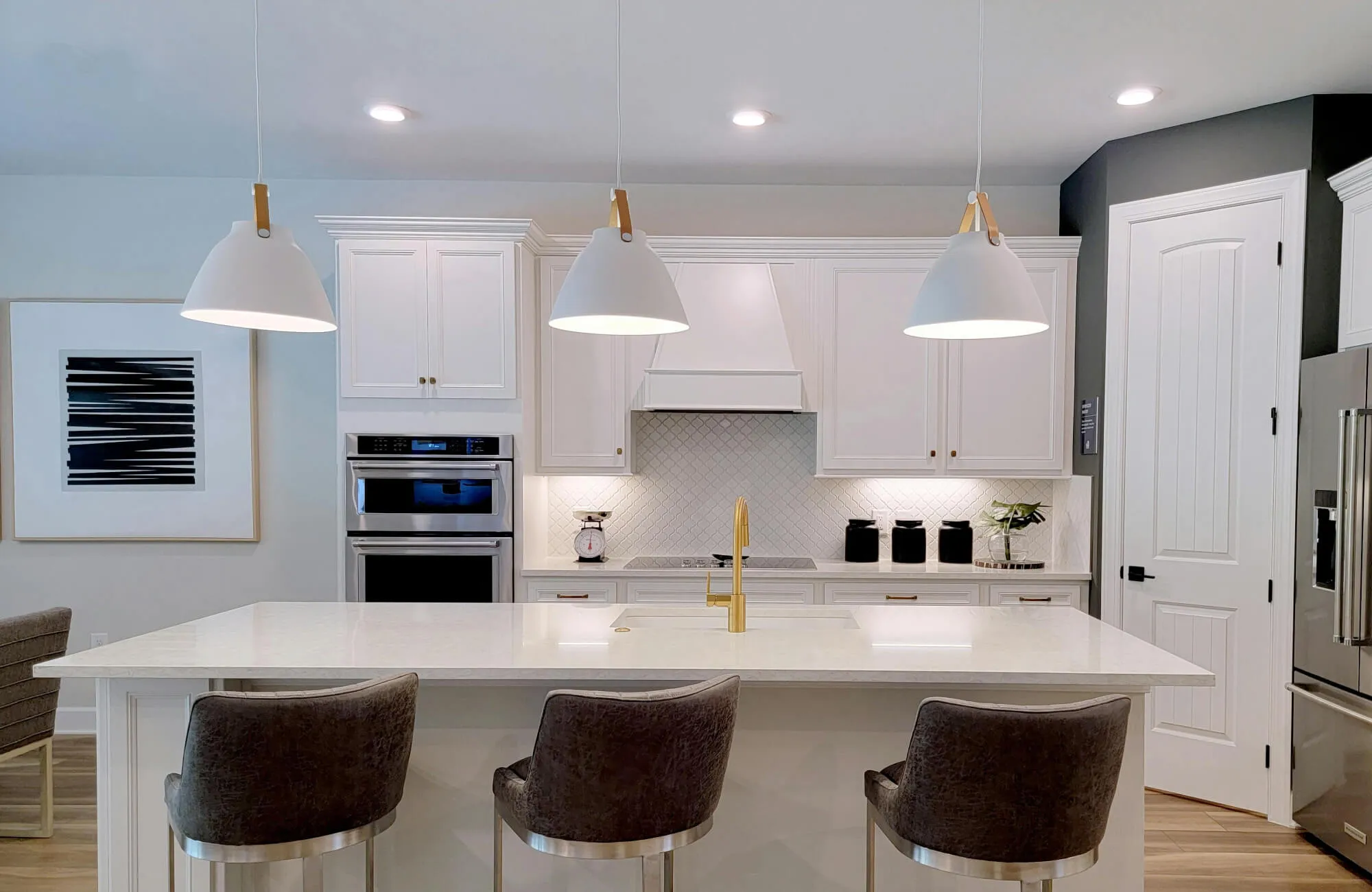
A kitchen island is more than just a countertop. It is where meals take shape, conversations unfold, and design choices set the tone for the entire room. Because the island plays such a central role, the lighting above it deserves careful attention. The right number of pendant lights can also transform the island into both a functional workspace and a welcoming focal point.
Deciding how many pendants to install is not a matter of guesswork but of thoughtful consideration. From the island’s size and ceiling height to your daily routines and overall style, several factors come together to determine the perfect arrangement. With the right balance, your pendants will not only illuminate the surface but also elevate the kitchen into a space that feels complete.
Sizing and Scaling Pendant Lighting for Kitchen Islands
The size and shape of your kitchen island set the foundation for how many pendants you should use. A longer or wider surface requires more fixtures to spread light evenly, while compact islands can often be illuminated with fewer. When you consider dimensions carefully, you create both balance and functionality in your lighting plan.
Standard Dimensions and Pendant Distribution
If your island is six feet or shorter, two pendants typically provide the right amount of coverage without overwhelming the space. Hanging them evenly and centering them over the island keeps the light balanced and the design cohesive. When your island stretches to seven or nine feet, adding a third pendant helps close the gaps and ensures no section feels dim or underlit. For larger spans, anything beyond nine feet, you may need four or more pendants to maintain consistent brightness across the full surface.
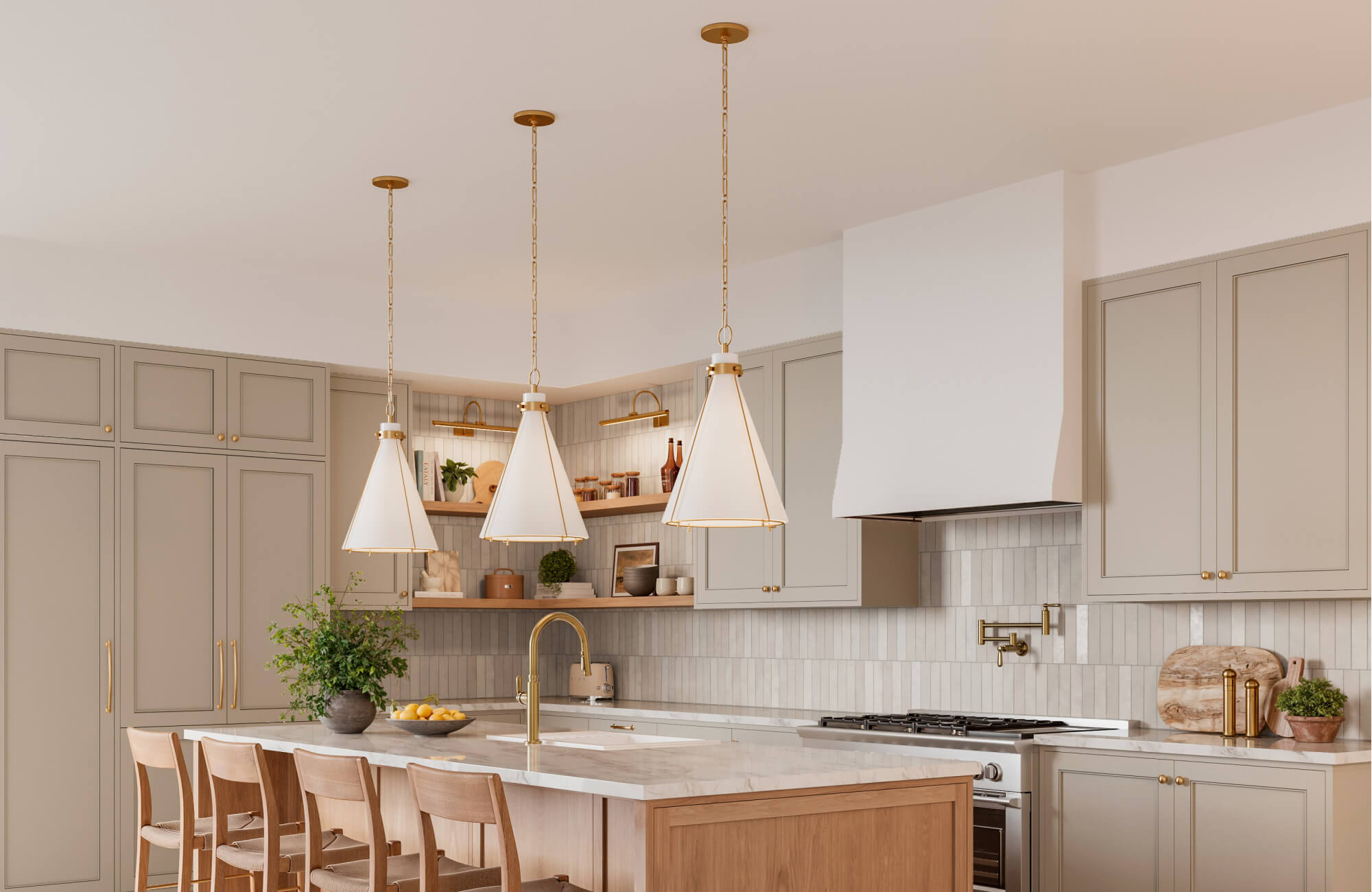
Additionally, spacing matters as much as quantity. Keeping pendants 24 to 30 inches apart usually creates a rhythm that looks natural and functions well. At the same time, you’ll want to maintain about 12 to 18 inches between each end pendant and the island’s edge. This not only prevents crowding at the corners but also ensures the light feels intentional rather than crammed into place. In the kitchen image shown above, three Rosa Triangular Pendants in Aged Brass perfectly illustrate this balance. Their warm gold tone finish complements the natural wood and stone textures while providing consistent light across the entire island. Together, these pendants highlight how thoughtful sizing and spacing can turn functional lighting into a design feature that elevates the entire kitchen.
Square and Irregular-Shaped Islands
When your island is square, linear placement doesn’t always deliver the best results. A single oversized pendant centered above the island creates a bold focal point, while a grid of four smaller fixtures spreads light evenly to every corner. Both options emphasize proportion, giving your square layout definition without leaving pockets of shadow. A piece like our Robbins Pendant in Aged Brass/Soft Black works beautifully in this type of setup. Its two-tone finish blends the warmth of brass with the depth of matte black, offering contrast that enhances both contemporary and transitional kitchens.
In contrast, an L-shaped island calls for a different approach since light has to cover two distinct surfaces. The longer side benefits from pendants arranged in a clean row, while the shorter leg can be brightened with a smaller fixture or recessed lighting. This layered strategy prevents one side from looking neglected and allows you to work comfortably at any part of the island. By tailoring your pendant arrangement to the island’s geometry, you ensure every area feels purposeful and well-lit.
Matching Pendant Scale and Proportion
How big or small your pendants are will strongly influence how many you need. Choosing fixtures that are scaled correctly ensures they fit the island’s dimensions, align with the ceiling height, and enhance the overall aesthetic. When scale and proportion are handled thoughtfully, your pendants feel intentional rather than either overpowering or underwhelming.
Large Pendants for Bold Statements
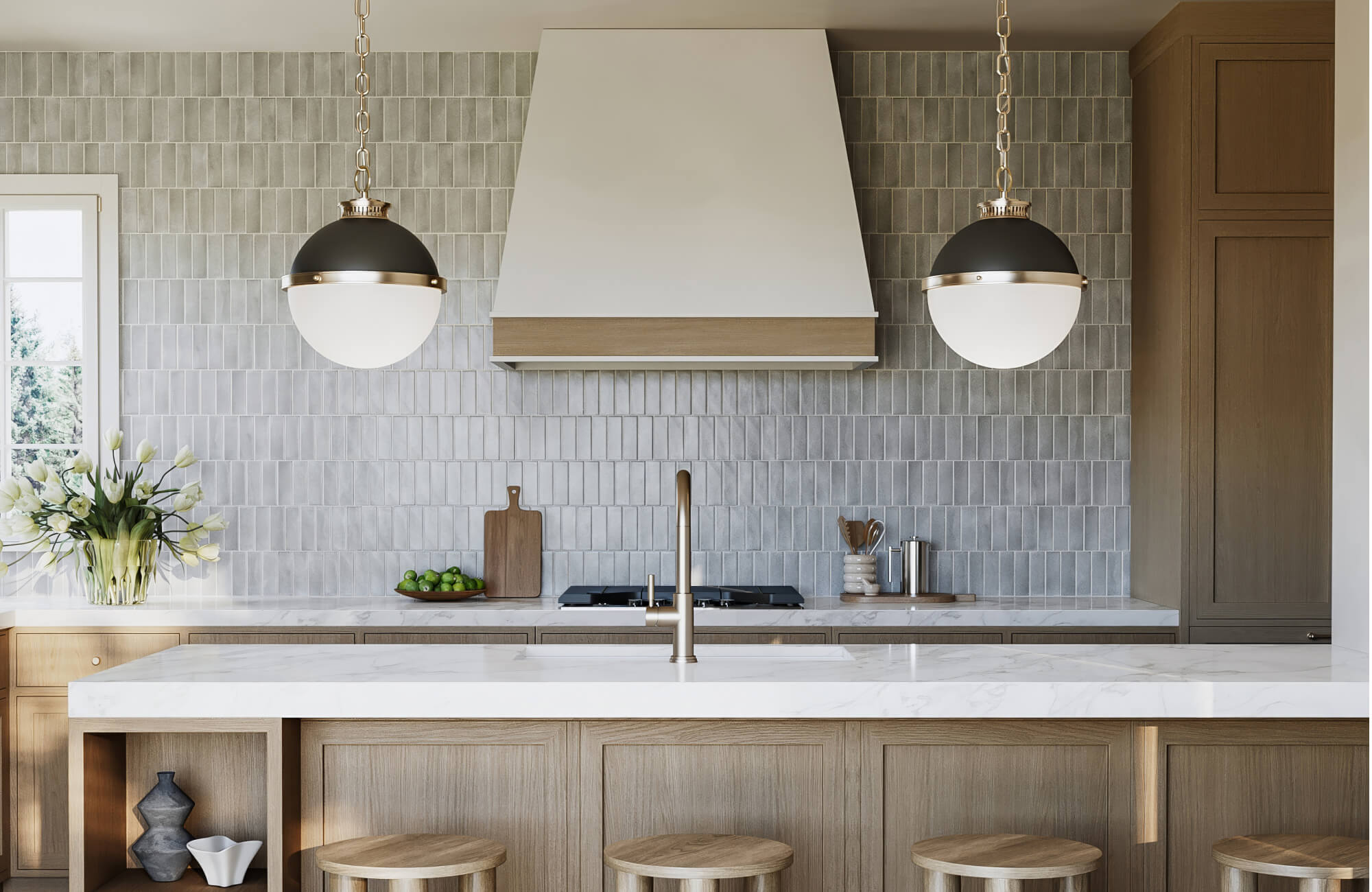
If you want a striking, simplified look, one or two oversized pendants can provide both style and functionality. A large pendant instantly commands attention while casting broad light across the surface, making it a natural fit for expansive islands. As a general guideline, aim for each pendant’s diameter to measure about one-third to one-half the width of your island. This ratio also keeps the fixtures substantial without letting them overwhelm the space.
When you use two oversized pendants, placement is key. Keeping them about 30 to 36 inches apart ensures symmetry and leaves enough visual breathing room so they do not appear cramped. This spacing also distributes light evenly, creating a bold yet balanced effect that feels harmonious with the island’s scale. As shown in the photo above, our Barnes 14" Pendant in Aged Antique Distressed Bronze demonstrates this principle beautifully. Its dark bronze finish, with warm undertones, offers contrast against the lighter cabinetry and countertop, while its generous size provides broad illumination that enhances both function and design.
Small Pendants for Rhythm and Repetition
Smaller pendants bring a different kind of beauty, one built on repetition and rhythm. Instead of dominating the view, they add detail and subtle texture that enrich the kitchen’s atmosphere. Multiple small pendants work best when you apply the rule of thirds, dividing your island into even sections and placing a light over each. This simple guideline also creates order and prevents the fixtures from looking either sparse or cluttered. In many kitchens, pieces like our Kane Pendant in Matte White Plaster are especially effective, since their clean white finish and sculptural form complement lighter palettes while adding a touch of modern refinement.
For proportions, aim for each pendant’s diameter to measure about one-eighth to one-tenth of your island’s total length. This keeps the lights delicate while still being large enough to cast useful light across the counter. With thoughtful spacing, smaller pendants create a sense of flow that guides the eye naturally along the island’s surface. Beyond function, this rhythmic arrangement adds an inviting energy to the room, making the island feel both practical and visually engaging.
Aligning with Ceiling Height and Room Architecture
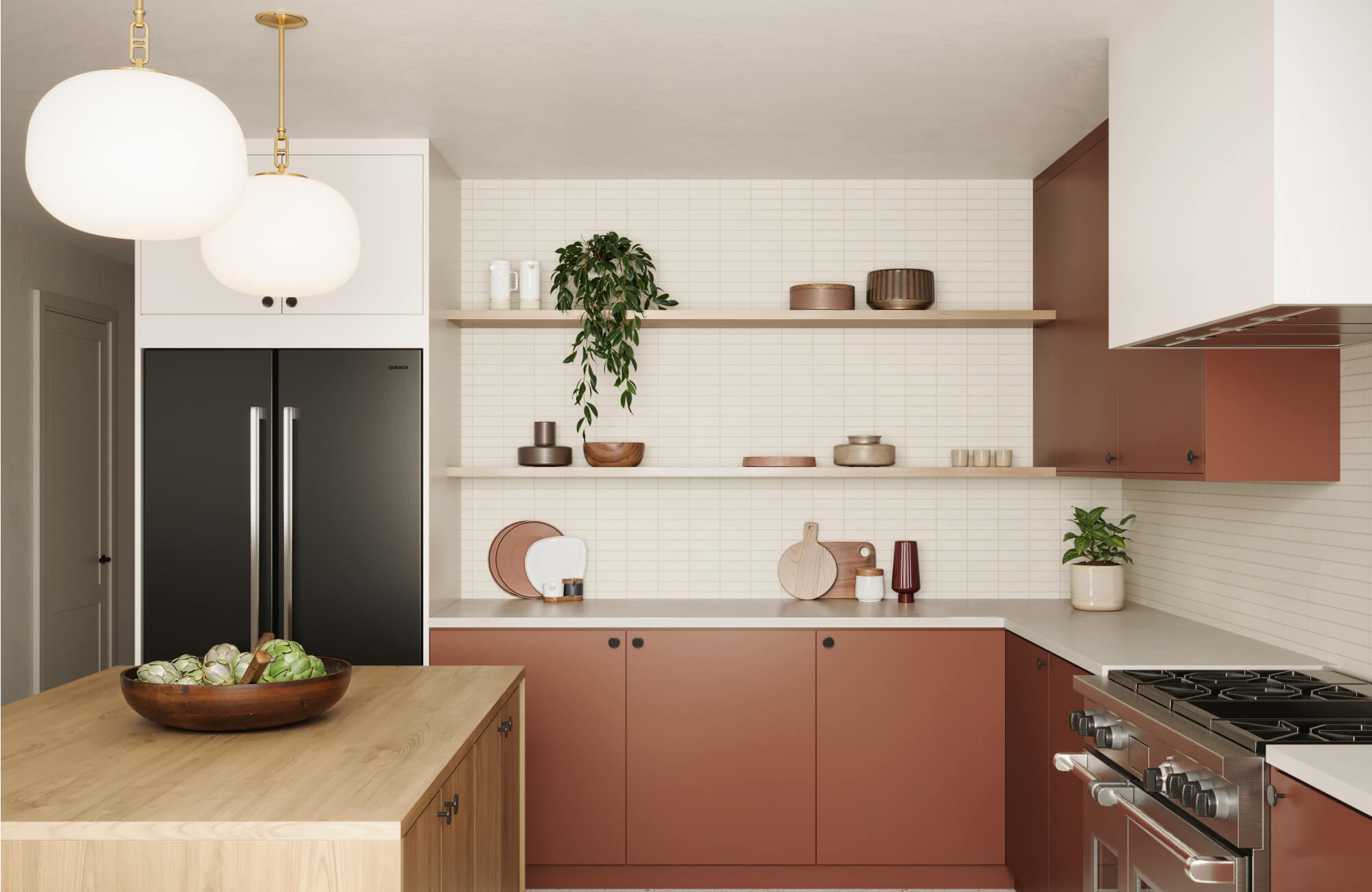
Your ceiling height and architectural features strongly influence how pendants look and function in your kitchen. High ceilings, for example, often call for larger fixtures or longer drop lengths to keep the lights visually connected to the island below. Adding a few extra inches of hanging length for every foot above the standard ceiling height ensures balance, while multi-light chandeliers or pendant clusters can fill vertical space with both illumination and sculptural interest. These choices not only brighten the surface but also emphasize the room’s architecture, creating a sense of drama and sophistication. A great example is our Kaley 16" Pendant in Aged Brass, displayed in the image above, whose round globe design and warm brass finish stand out beautifully in rooms with generous vertical space, grounding the island while accentuating height.
Lower or angled ceilings, on the other hand, require a more restrained approach. Compact or shallow pendants hung about 30 to 36 inches above the countertop provide the necessary light without overwhelming the room. For sloped ceilings, adjustable rods or chains make it possible to level pendants evenly, keeping the design cohesive and functional despite uneven architecture. By aligning pendant size, height, and placement with your ceiling’s structure, you achieve lighting that feels both practical and naturally integrated into the space.
Adapting to Functional Lighting Needs
How you use your kitchen island should guide your lighting decisions. Whether the island serves as a prep zone, a casual dining spot, or a social gathering hub, the number and style of pendants must support those daily activities. Purposeful lighting ensures that the island is not only well-lit but also adaptable to the way you live.
Task Lighting for Prep Zones
When your island doubles as a primary prep area, focused and even illumination becomes essential. Two or three pendants hung about 30 to 36 inches above the countertop provide ample coverage while minimizing shadows that could interfere with chopping, mixing, or measuring. The placement should also feel natural, with light spilling evenly across the work surface so every corner is usable.
The quality of light matters just as much as the quantity. Choosing pendants with a high lumen output guarantees that the brightness is strong enough for detail-oriented tasks. Look for a color rendering index (CRI) of 90 or higher, which ensures accurate color perception, a critical factor when cooking meats, cutting vegetables, or judging doneness. With the right fixtures, your island becomes a functional workstation that keeps your tasks clear and comfortable.
Ambient and Decorative Considerations
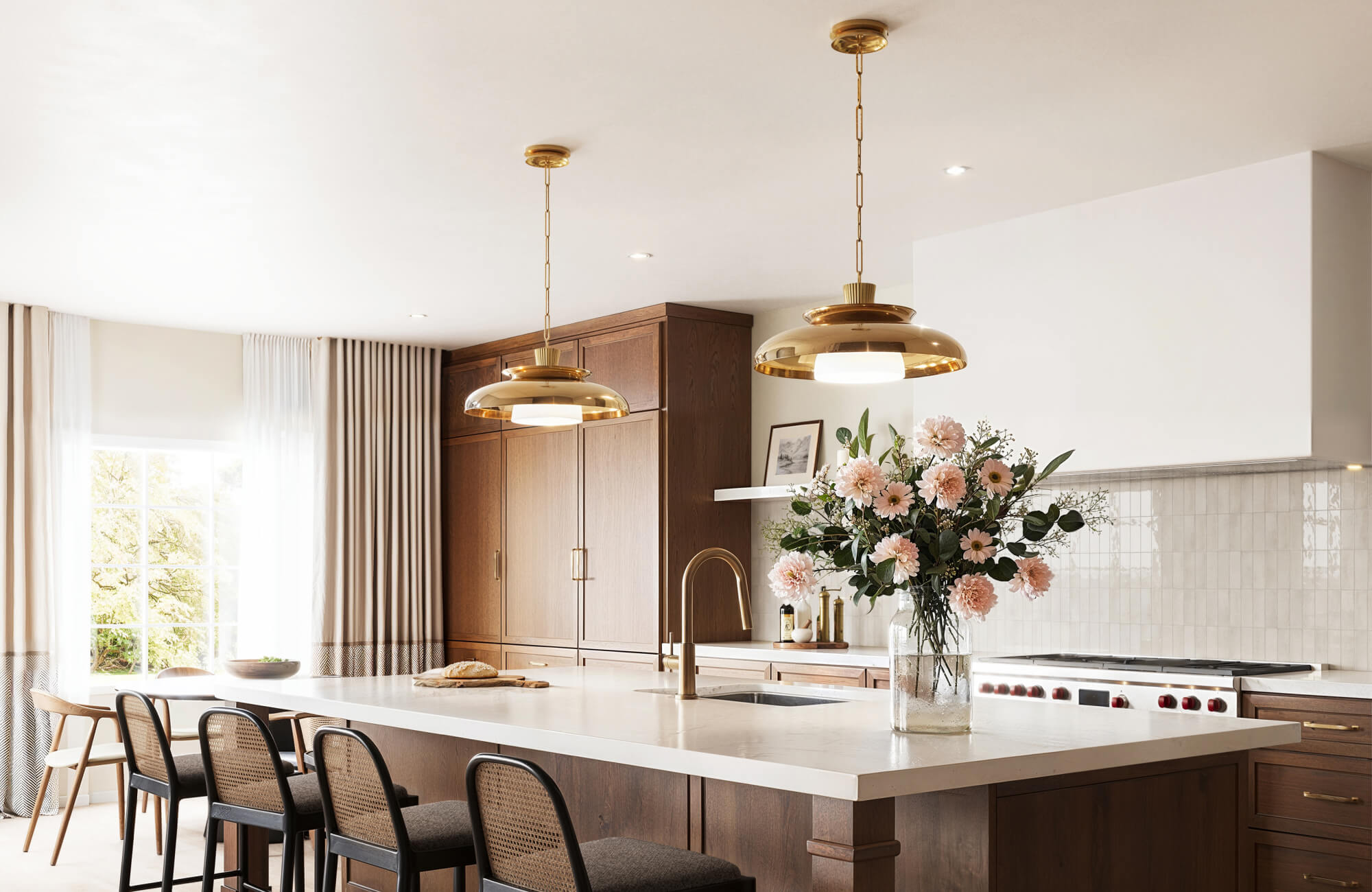
If your island is more about conversation, casual dining, or entertaining, your lighting can lean toward atmosphere rather than intensity. In this case, fewer pendants may be needed, and you can select designs that emphasize style, warmth, and character. A standout design like our Carly 22" Pendant in Vintage Brass, featured in the picture above, is a perfect example. Its generous scale and golden brass finish create a sense of elegance while also serving as a striking centerpiece that encourages gathering around the island.
To keep the island versatile, pair ambient pendants with supporting light sources such as recessed ceiling lights or under-cabinet strips. This layering approach allows you to switch between functional and decorative modes depending on the occasion. Adding dimmable controls makes the transition even smoother, letting you brighten the space for serving or dim it down for a relaxed dinner. With this flexibility, your island becomes equally suited for everyday use and special gatherings.
Balancing Style and Visual Symmetry
Pendant lights do more than brighten your island; they act as visual anchors that shape the character of your kitchen. The way you arrange them can create order, emphasize minimalism, or showcase a bold, modern personality. By thinking beyond function and focusing on alignment, you can turn your pendants into design statements that complement the entire room.
Symmetry with Two or Three Pendants
A symmetrical arrangement is timeless because it brings a sense of calm and order to your space. With medium-sized islands, two pendants spaced evenly from the center offer just the right balance. They also frame the surface gracefully, ensuring light is distributed without overpowering the view.
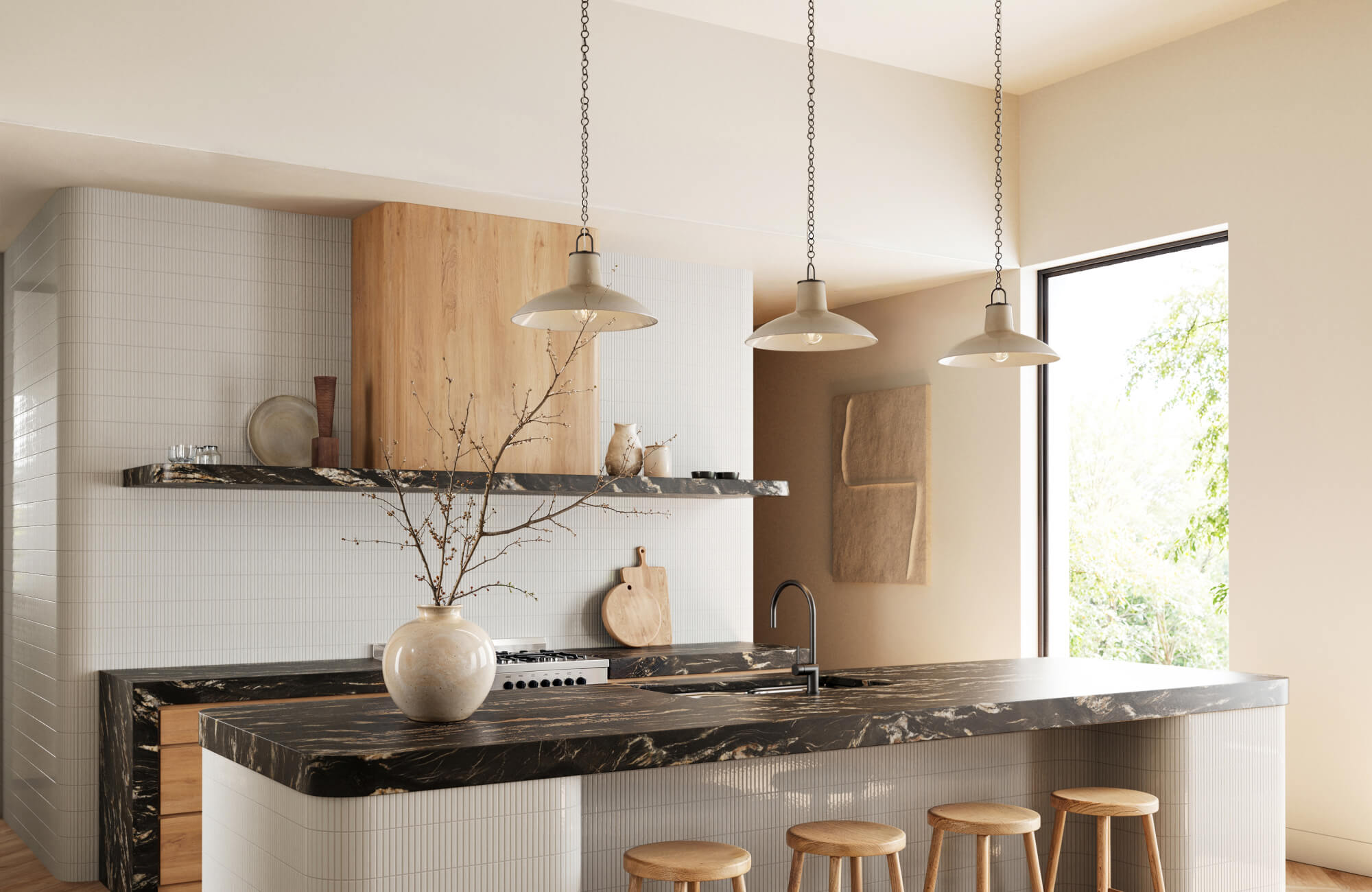
For longer islands, the classic three-pendant setup works beautifully. By placing a pendant at each visual third, you create a rhythm that guides the eye naturally across the island. This even spacing not only delivers consistent brightness but also reinforces proportion in the overall design. To achieve this look, many turn to pieces like our Sable Pendant in Distressed Bronze/Ceramic Ivory Crackle. As seen in the image above, its handcrafted ceramic shade and distressed bronze details offer a mix of rustic charm and timeless elegance, proving that symmetry can feel both balanced and full of character.
Embracing Asymmetry and Modern Layouts
Not every kitchen needs to follow the rules of symmetry. Modern and eclectic spaces often shine when you embrace intentional imbalance. Hanging one oversized pendant over a key feature, such as a sink or central prep zone, can create a striking focal point while still serving a practical role.
Clusters of pendants at varied heights add another layer of artistry. This approach introduces movement and texture, making the island feel dynamic and less formal. Asymmetry works particularly well in open-concept layouts or kitchens with unique architectural features that naturally offset balance. By leaning into this creative freedom, you can design lighting that feels fresh, expressive, and perfectly attuned to your kitchen’s personality.
Form Meets Function
The number of pendant lights you choose for your kitchen island ultimately comes down to harmony between design and practicality. By considering size, scale, ceiling height, function, and aesthetic value, you can create a setup that feels intentional and timeless. The best lighting plan is one that brightens your tasks while also adding character to the heart of your kitchen. When chosen with purpose, your pendants will do more than provide light—they will bring your island to life and make it shine for years to come.
If you are ready to explore pendant lighting options or need guidance tailored to your space, our team is here to help. You can easily reach out through our Contact Us page to connect with our specialists. Whether you are searching for inspiration, product details, or personalized advice, we are committed to helping you find the perfect lighting solution that balances beauty and function!
Follow us on Instagram
@EDWARD.MARTIN
)
)
)
)
)
)
)
)
)
)
)
)
)
)
)
)