When you start exploring farmhouse style lighting, you start to see how light contributes to comfort, function, and a familiar sense of ease within the home. Rooted in practicality, this lighting style emphasizes thoughtful placement, balanced illumination, and materials that feel honest and enduring. Rather than focusing solely on decoration, farmhouse lighting is designed to support how spaces are used daily. In this article, we explore what defines farmhouse style lighting, from its origins to its key characteristics. By the end, you will be able to recognize farmhouse lighting with confidence and understand how it functions across different areas of the home.

The Roots of Farmhouse Lighting
Farmhouse lighting begins with necessity rather than style. Long before it became a design term, this type of lighting existed to support work, routine, and daily living in rural homes.
Agricultural Origins - H3
Farmhouse lighting can be understood by looking at how early farmhouses were originally lit. Lighting depended on sturdy fixtures placed exactly where illumination was needed for cooking, cleaning, or repairing tools. The priority was reliability rather than decoration. That practical mindset continues to influence farmhouse lighting today, resulting in fixtures that feel purposeful and grounded even in modern home settings.
Evolution Into Home Design
As rural living evolved, those practical fixtures gradually transitioned indoors and became an integral part of everyday home design. You can see this shift in how farmhouse lighting began to incorporate glass shades, improved wiring, and more refined proportions. Even so, the emphasis remained on clarity and function, which is why these fixtures still feel timeless rather than trend-driven. Over time, this evolution allowed farmhouse lighting to combine improved comfort and safety with the straightforward character that made the original fixtures dependable.
Modern Farmhouse Influence
Today, farmhouse lighting reflects a balance between heritage and contemporary living. You are no longer choosing fixtures out of necessity alone, but the influence remains visible in the restrained forms and familiar materials. This is why farmhouse lighting works well in both traditional and modern interiors without feeling out of place. By preserving these core design principles, the style adapts easily to modern lifestyles while still feeling rooted and intentional.

Key Design Features That Define the Style
Once you understand the origins of farmhouse lighting, it becomes easier to recognize the visual elements that define it. Together, these features create a cohesive look that feels comfortable, balanced, and thoughtfully composed.
Natural Materials
Farmhouse lighting places a strong emphasis on materials that feel familiar and functional. Wood adds warmth, metal provides structure, and glass allows light to remain open and visible. When these materials are used openly rather than concealed, fixtures tend to feel more authentic and enduring. This straightforward use of materials also helps the lighting integrate naturally with surrounding finishes, reinforcing a cohesive feel throughout the space.
That balance is reflected in the photo featured above, where Edward Martin’s Jodie Wall Sconce in Antique Brass Iron pairs a solid metal frame with glass shades, allowing the materials to remain visually present while blending comfortably with the surrounding surfaces.
Simple Silhouettes
Farmhouse lighting avoids complicated shapes. Instead, you will notice clean outlines that are easy to understand at a glance. This simplicity allows the fixture to integrate seamlessly into the space while still performing its function effectively. It also allows the light itself to take center stage, rather than the fixture competing for attention. By keeping forms straightforward, these fixtures stay visually relevant as interiors evolve.
Soft Aged Finishes
Finish choice plays a subtle yet meaningful role in shaping the overall look of the fixture. Farmhouse lighting often uses finishes that appear softened rather than glossy. These surfaces soften visual contrast and help the fixture feel comfortably lived in, even when it is new. Over time, this quality allows the lighting feel naturally integrated into the home.

Types of Farmhouse Lighting Fixtures
Farmhouse-style lighting is not limited to one fixture type. Instead, it adapts across different forms depending on how you use the space.
Pendant Lighting
When you look at farmhouse pendants, you will notice a clear emphasis on task-oriented lighting. They are commonly used over kitchen islands or sinks because they provide focused illumination while maintaining an open, unobtrusive presence. Their proportions are typically well balanced, offering enough visual weight to define work areas without overwhelming the surrounding space. This balance allows pendants to support daily tasks while contributing to the overall structure of the room.
That relationship is illustrated in the photo featured above, where Edward Martin’s Dempsey Pendant in Hammered Antique Brass adds focused light over the island while its broad, simple form and textured metal finish reinforce the farmhouse emphasis on function and material honesty.
Chandeliers
Farmhouse chandeliers are designed to anchor a room rather than dominate it. You will see open frames, evenly spaced arms, and balanced proportions that distribute light across a table or seating area. This approach allows the chandelier to feel substantial while remaining approachable. By prioritizing structure over ornamentation, these fixtures support gathering spaces without overwhelming the room’s overall design.
Wall Sconces
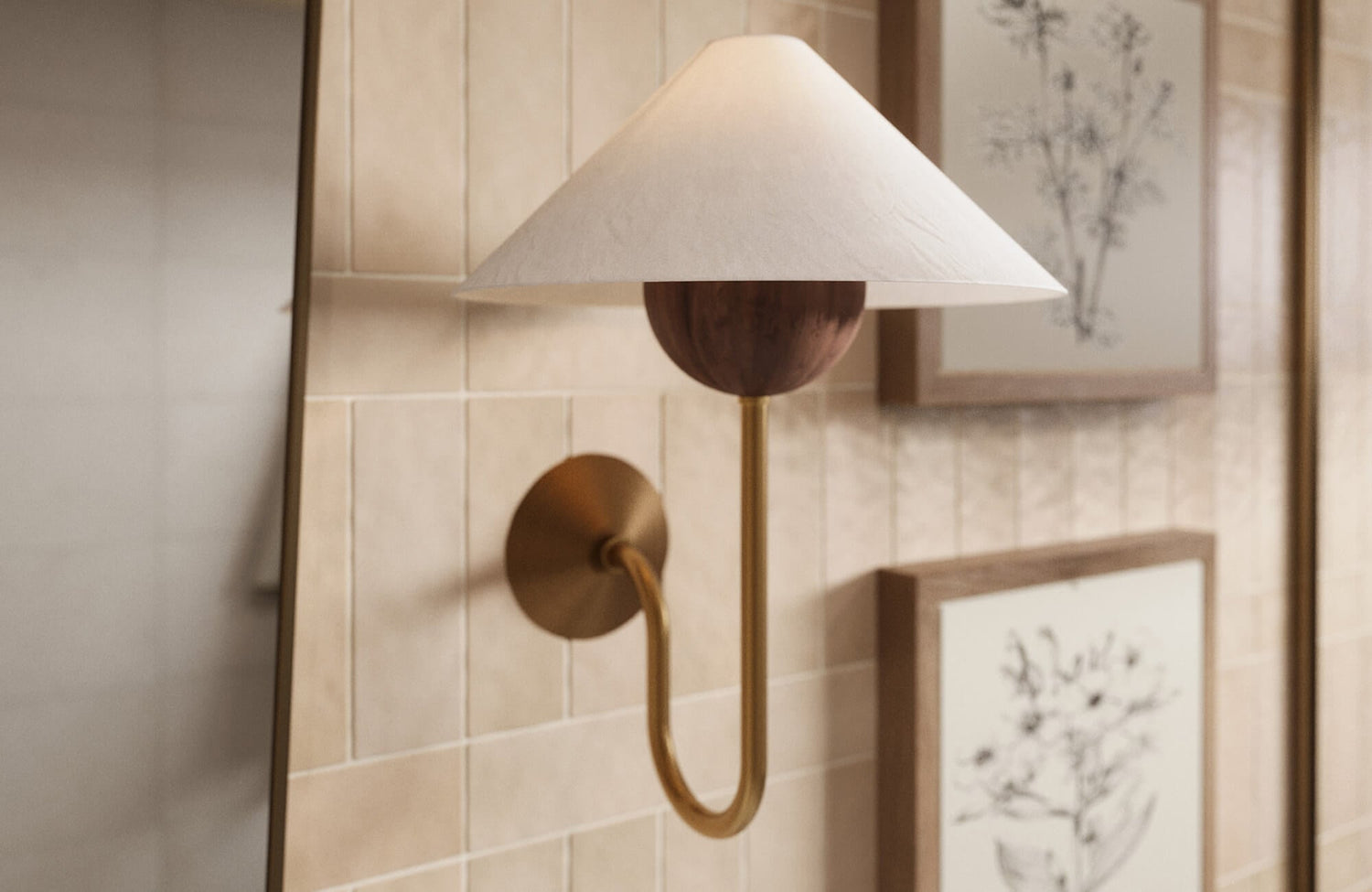
Wall sconces play a quieter role in farmhouse lighting. They are commonly used to support routine activities such as reading or grooming. Their placement often emphasizes symmetry and consistency, helping create the calm, steady rhythm typical of farmhouse interiors. Because they provide focused light without visual clutter, sconces help maintain balance along walls and transitional spaces.
Ceiling Mounted Fixtures
In spaces with limited ceiling height, farmhouse lighting often takes the form of flush or semi-flush designs. These fixtures maintain the same material honesty and simplicity while keeping the room feeling open. They are particularly well-suited for hallways, entryways, and smaller rooms. Their low-profile construction ensures adequate illumination without drawing attention away from architectural features. As a result, they provide functional light while preserving a sense of visual openness.

How Farmhouse Lighting Shapes Atmosphere
Lighting affects how a space feels long before you notice the fixtures themselves. Farmhouse lighting is particularly effective at shaping an environment that feels calm and welcoming.
Warm Light Temperatures
Warmer light tones are commonly used in farmhouse lighting because they soften surfaces and reduce visual strain. This choice helps rooms feel more comfortable, especially in the evening, when lighting has a stronger influence on the overall atmosphere. Warmer temperatures also bring out the texture and depth of natural materials. As a result, the room appears more relaxed and visually balanced without relying on strong contrasts.
Balanced Brightness
Rather than relying on one strong light source, farmhouse-style lighting works best when light is spread evenly. You will notice fewer harsh shadows and a smoother transition between bright and dim areas. This balance supports both activity and rest without drawing attention to the lighting itself. By distributing light thoughtfully, the space remains functional throughout the day while maintaining a visually calm atmosphere.
A well-executed example can be seen in the photo featured above, where Edward Martin’s Fenton Wall Sconce in Light Antique Brass is positioned on both sides of the mirrors, delivering consistent illumination that supports everyday tasks while maintaining visual balance and ease.
Visual Calm
Because farmhouse fixtures avoid excessive detail, they contribute to a sense of order. The room feels easier to read visually, which helps reduce distraction. This is one reason farmhouse-style lighting is often associated with relaxed, lived-in spaces. The restrained design allows other elements in the room to stand out without competing for attention.

Using Farmhouse Lighting Room by Room
Understanding where farmhouse lighting works best helps you make more confident choices throughout the home. Each room has different functional and atmospheric needs, and farmhouse lighting adapts by balancing practical illumination with a consistent sense of warmth and simplicity.
Kitchens
In the kitchen, farmhouse lighting focuses on clarity and efficiency. Fixtures are often placed directly over preparation areas to support daily tasks. Their straightforward design helps keep the space feeling organized, even during busy moments. At the same time, these lighting choices contribute to a welcoming atmosphere that encourages gathering and shared use. A great example is shown in the photo displayed above, where Edward Martin’s Carly 22" Pendant in Vintage Brass offers focused illumination over the island while its simple profile and warm finish support both function and approachability.
Dining Areas
Dining spaces benefit from a single, well-scaled fixture that brings people together. Farmhouse-style lighting supports this by offering steady illumination that feels inviting without being theatrical. The result is a space that encourages conversation and comfort. The restrained design keeps attention on the table and the shared experience rather than on the fixture itself.
Living Spaces
In living rooms, farmhouse lighting plays a supporting role. Ambient sources help soften the room while allowing furniture and textures to stand out. This approach keeps the space adaptable for different activities. By avoiding overly focused lighting, the room remains comfortable for both quiet moments and social use.
Bedrooms and Bathrooms
Bedrooms and bathrooms require lighting that feels gentle and dependable. Farmhouse fixtures often provide this through diffused light and simple placement. This consistency helps reinforce a sense of routine and ease. The result is lighting that supports daily habits without feeling intrusive or overly bright.

Mixing Farmhouse Lighting With Other Styles
Farmhouse lighting is rarely used on its own. It often works well with other design styles, helping create a balanced look that feels cohesive rather than overly themed.
Farmhouse and Modern
When paired with modern interiors, farmhouse lighting introduces warmth and visual softness. Clean-lined fixtures help bridge the gap between minimalism and comfort, preventing the space from feeling overly stark. This combination allows modern rooms to retain their simplicity while gaining a more relaxed, lived-in quality. It also helps balance crisp surfaces with subtle texture and depth. A clear example is illustrated in the photo shown above, where Edward Martin’s Alma Pendant in Ecru Marble Solid pairs a simple silhouette with natural material, softening the modern cabinetry and clean lines while maintaining a sense of restraint and clarity.
Farmhouse and Industrial
These styles share an appreciation for exposed materials. The key difference lies in tone. Farmhouse lighting tempers industrial elements by prioritizing comfort over edge, creating a more welcoming result. This approach softens the overall look while preserving the strength and functionality common to both styles.
Farmhouse and Traditional
In traditional spaces, farmhouse lighting adds a sense of restraint. It simplifies the visual field while maintaining structure, which helps prevent the room from feeling overly formal. By reducing excessive ornamentation, the lighting allows architectural details and furnishings to remain the focus. This balance creates a space that feels refined yet approachable.
Defining Farmhouse Style Lighting
Farmhouse style lighting is a design approach centered on function, honest materials, and a calm, welcoming atmosphere. Rooted in practical origins, it emphasizes clear illumination, straightforward forms, and finishes that feel natural rather than decorative. When you understand these characteristics, farmhouse lighting becomes easier to identify as lighting that supports daily life while creating spaces that feel steady, comfortable, and intentionally designed. If you would like guidance in selecting fixtures or planning lighting layouts, you can contact us to explore our design services and receive support tailored to your space and needs.