
)
)
)
)
)
)
)
)
What Is A Mosaic Tile And Why Is It So Popular?
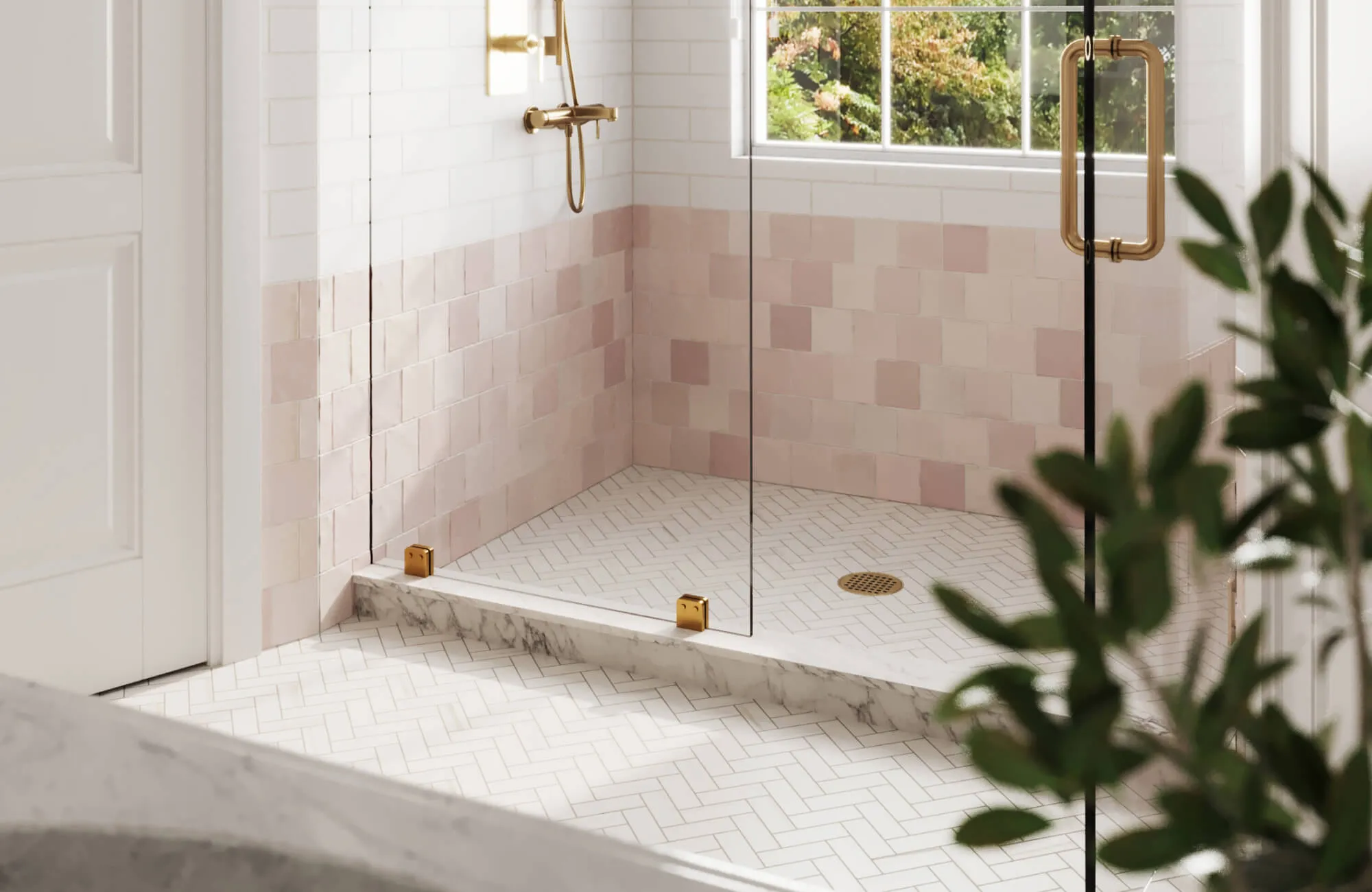
Mosaic tile has long been admired for its ability to blend art, function, and enduring beauty. From the grand floors of Roman villas to the shimmering walls of Byzantine cathedrals, mosaics have always been a way to tell stories, showcase craftsmanship, and elevate spaces. Today, that legacy continues as mosaic tiles bring texture, color, and personality into modern and commercial spaces alike.
What makes them truly remarkable is their versatility. They can adapt to nearly any design style, from rustic and organic to sleek and contemporary, while also delivering practical benefits such as durability, moisture resistance, and safety. By exploring their origins, craftsmanship, functionality, and design appeal, you will discover why mosaic tile remains one of the most popular choices in both traditional and modern design.
The Origins And Evolution Of Mosaic Tile
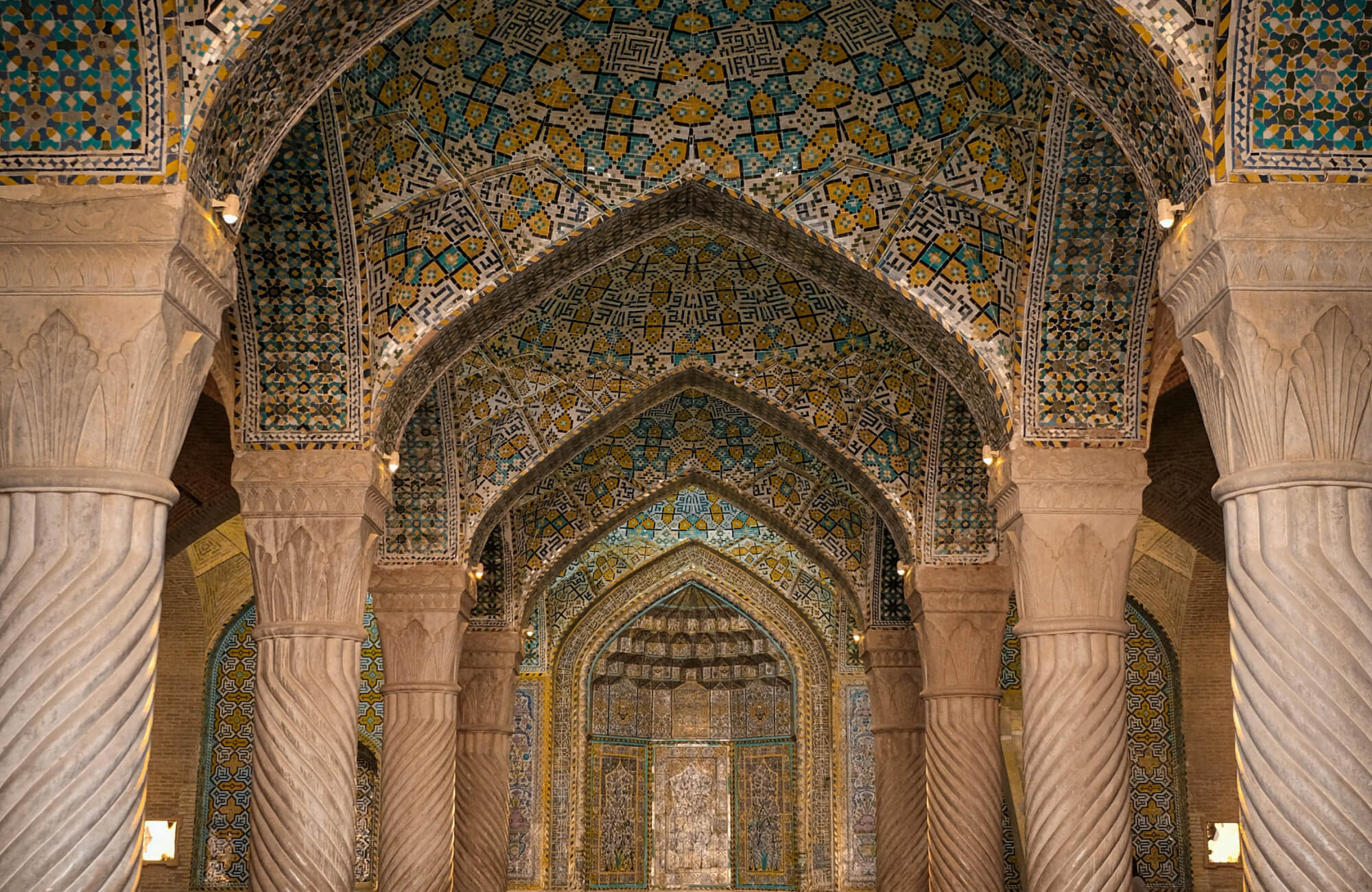
The history of mosaic tile stretches back to ancient civilizations, where it began as both a practical and symbolic form of decoration. In Mesopotamia, clay cone patterns were pressed into temple floors, while the Greeks refined the craft with pebble mosaics that depicted mythological scenes and geometric motifs. The Romans also took mosaics to new heights with opus tessellatum, cutting stone into uniform tesserae to create intricate designs for villas, baths, and sacred spaces. For them, mosaics were more than ornamental; they became a medium for storytelling, cultural identity, and expressions of luxury.
Over time, mosaics continued to adapt to different artistic and spiritual traditions. Byzantine artisans transformed walls and domes with shimmering gold and silver tesserae, while Islamic craftsmen emphasized complex geometric patterns that blended spirituality with precision. Even as frescoes gained prominence in the Renaissance, mosaics remained central to grand works like St. Mark’s Basilica. Later, the Arts and Crafts movement of the 19th century reignited interest in handmade mosaics, while the 20th century embraced bold new interpretations through Art Nouveau, Art Deco, and the playful innovations of Antoni Gaudí. These transitions reveal the resilience and versatility of mosaics, proving their ability to evolve with time while retaining their role as a lasting art form.
The Unique Craftsmanship Behind Mosaic Tile
From ancient tools to advanced mounting systems, the creation of mosaic tiles reveals a fascinating balance of tradition and innovation. Every step, from material choice to layout design, reflects a dedication to both artistry and function, showing you how craftsmanship shapes the character of each mosaic.
Materials That Define Quality
The foundation of any mosaic lies in the material you choose, as it determines not only the look but also the long-term performance of the surface.
Glass
Glass mosaics are celebrated for their brilliant light reflection and the vibrant shades made possible in smalti form. These richly colored pieces have long been admired for their ability to catch light in ways that make a surface shimmer with depth.
Porcelain
Porcelain mosaics take a different approach, offering exceptional durability and resistance to water. Fired at extremely high temperatures, porcelain is especially suited for showers, pools, and other moisture-prone spaces where resilience matters.
Ceramic
Ceramic, though non-porous too, is valued for its wide range of decorative glazes and accessible cost, giving you flexibility without sacrificing charm.
Natural Stones
Natural stones like marble and travertine introduce organic veining and timeless sophistication, though they require sealing to protect against staining.
Techniques Of Cutting And Mounting
The artistry of mosaics is defined by how each piece is shaped and placed. Traditionally, artisans used a martellina and a hardie, which are specialized hammer and chisel tools, to cut tesserae into uniform or freeform shapes. This painstaking process introduced subtle irregularities that gave hand-cut mosaics their fluid and organic character, a quality you can still appreciate in historic works today.
Modern techniques, however, have expanded what’s possible. Mesh-mounted sheets allow you to install pre-arranged mosaics quickly, ensuring consistent spacing while saving time and effort. For more intricate layouts, wet saws and advanced tile cutters provide precision, allowing mosaics to adapt to complex designs with clean edges. These innovations make it easier for you to enjoy the beauty of mosaics in both traditional artistry and contemporary applications, bridging the gap between heritage craftsmanship and practical installation.
Artistic Layouts And Patterns
Beyond the materials and cutting techniques, the magic of mosaics truly unfolds in the way tesserae are arranged. Each pattern creates a distinct mood, guiding the eye and shaping how a space feels. Herringbone, for instance, with its angled repetition, adds a sense of movement and elongation, while basketweave interlocks pieces in a way that mimics woven textures, offering warmth and rhythm to classic interiors.
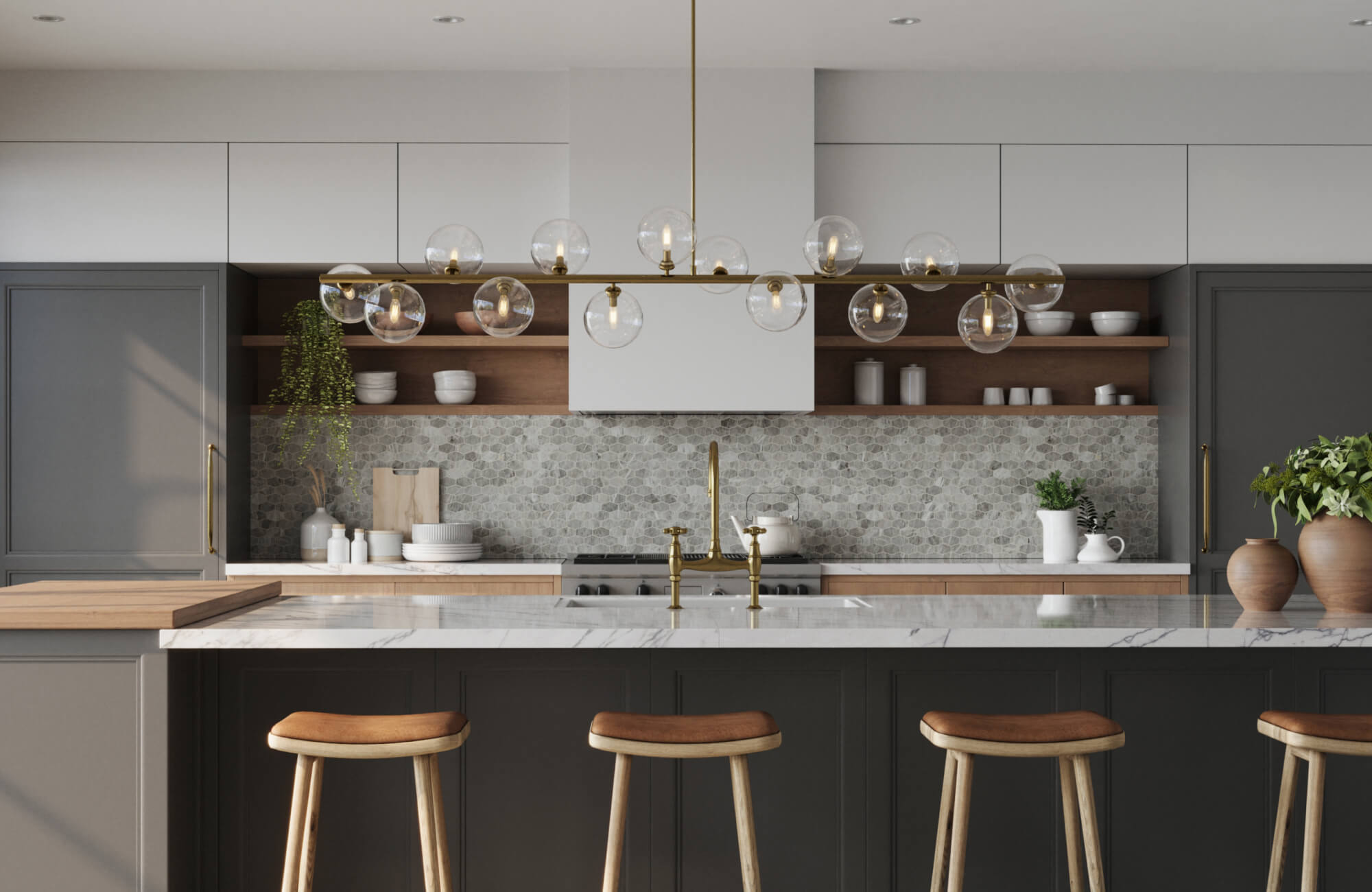
Hexagon mosaics have also become a modern favorite for their geometric precision and timeless appeal. Their honeycomb effect introduces both order and visual interest, making them equally suited for backsplashes, feature walls, or flooring. A perfect example is our Chantel 12x11 Polished Porcelain Hexagon Mosaic Tile in Imperial, seen in the image above, which blends durability with the soft smoke-gray shade. This hexagon design not only complements contemporary kitchens but also demonstrates how a simple shape can transform a surface into a striking design statement.
The Functional Benefits Of Mosaic Tile In Everyday Spaces
Although the visual impact of mosaic tile is undeniable, its value extends far beyond appearance. These small but powerful tiles excel in durability, adaptability, and safety, making them a smart choice for the most demanding areas of your home or commercial space.
Durability And Resistance To Moisture
One of the most important qualities of mosaic tile is its ability to withstand constant exposure to water and wear. Materials such as porcelain naturally repel moisture, resisting stains and mildew that can otherwise compromise a surface. This makes mosaics particularly reliable in bathrooms, kitchens, and pools, where water is part of daily use. A standout example is our Tatum 1x3 Matte Porcelain Mosaic Tile in Vein-Cut Straw, which combines porcelain’s durability with a soft, light beige finish that mimics natural stone while ensuring resilience in wet environments.
When installed with polymer-enhanced grout, mosaics become even more resilient. The grout fills the narrow spaces between tiles, creating a sealed barrier that protects both the tile and the underlying structure. Over time, this careful installation promotes hygiene by minimizing mold growth and extending the life of your surfaces. The abundance of grout lines also aids drainage, allowing water to move away efficiently rather than pooling, which further enhances long-term performance.
Versatility In Size And Coverage
The small scale of mosaic tiles gives them a flexibility that larger tiles cannot match. Their compact size makes it possible to wrap them around curves, columns, and irregular architectural features with ease. This adaptability allows you to achieve seamless coverage in areas where straight-edged tiles would leave gaps or awkward cuts.
Consider a curved bench in a steam room or a rounded kitchen niche—places that demand precision and fluidity. Mesh-mounted mosaics simplify this process by pre-arranging tiles on a flexible sheet, ensuring consistent spacing while bending naturally to the shape of the surface. This same versatility also works for large-scale applications, whether you want a striking focal point or a continuous covering that ties the whole space together.
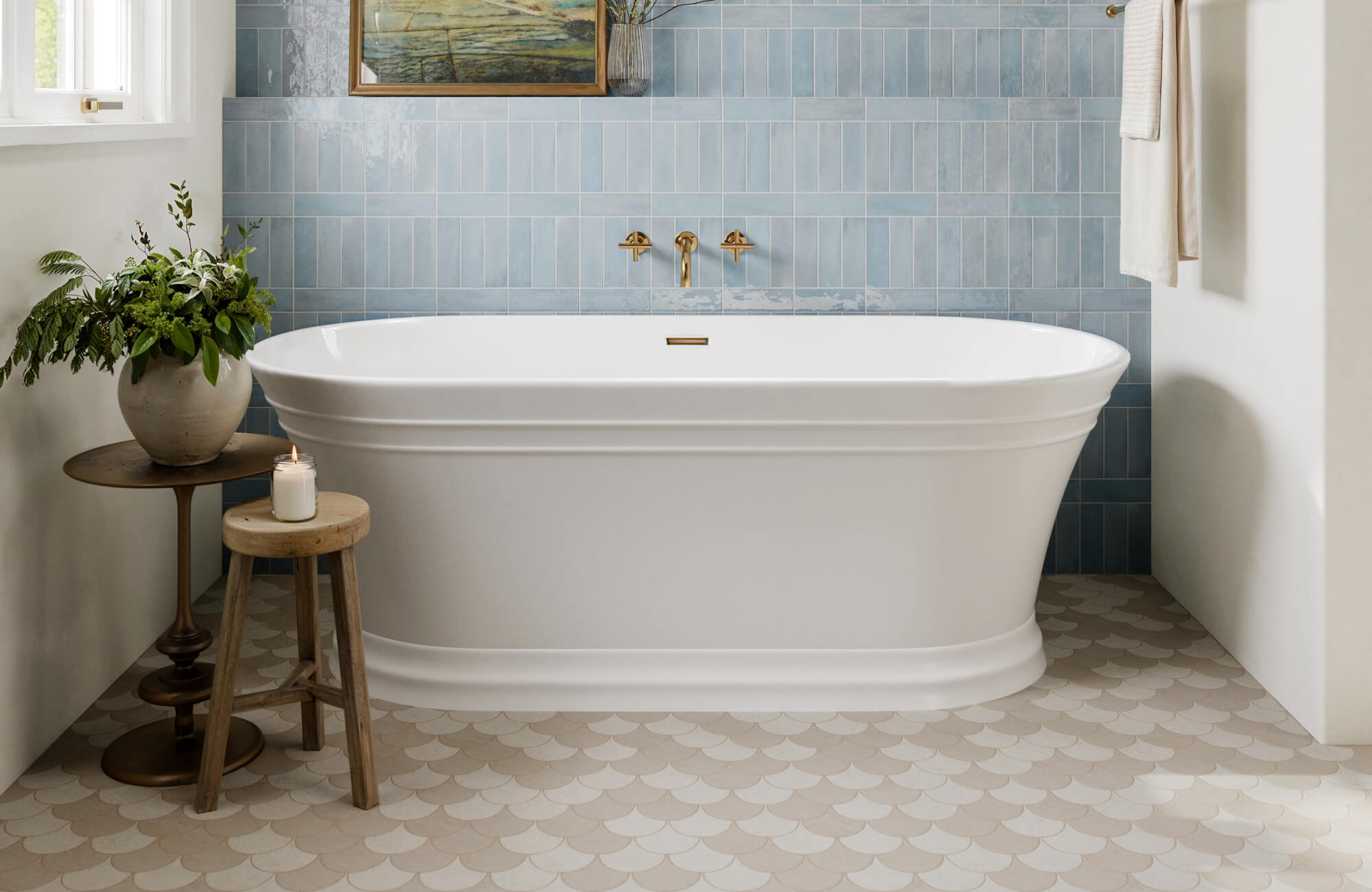
A beautiful example of this versatility can be seen in the bathroom floor photo above, where wave mosaics add movement and character while still offering durability. Our Shea 13.7x14.5 Matte Porcelain Wave Mosaic Tile in Warm Blend, a soft neutral mix of light grey and brown, creates a flowing pattern that complements the vertical blue wall tile while grounding the space with warmth and subtle texture. Mesh-mounted for easy installation, this wave mosaic demonstrates how unique patterns can elevate functionality into artistry.
The Design Appeal That Keeps Mosaic Tile Relevant
Mosaic tile continues to thrive in modern interiors, not only for its history but for its enduring ability to reimagine space. Through texture, color, and creative focal points, mosaics remain a design tool that gives you endless freedom to express style and atmosphere.
Texture And Dimension In Contemporary Spaces
What sets mosaics apart from larger tiles is the way they interact with light and surface. Each small tessera creates variation, producing shadows and highlights that give depth and movement to walls and floors. This effect is especially powerful in spaces where texture transforms an otherwise flat surface into something visually engaging.
For instance, tumbled stone mosaics bring softness and an organic quality, creating a tactile connection that feels grounded and natural. Polished glass mosaics, on the other hand, reflect and refract light, delivering a luxurious brilliance that shifts as you move through the room. In minimalist spaces, a single textured mosaic surface can anchor the entire design, proving that dimension alone can carry both warmth and sophistication.
Color Palettes That Transform Interiors
The sheer range of colors available in mosaics gives you remarkable control over the mood of a space. Earth-toned natural stones, for example, create a grounded, serene atmosphere, making them ideal for spa-like bathrooms or rustic kitchens where calmness is key. If you want energy and vibrancy, glass mosaics in bold hues can bring life to backsplashes, accent walls, or other high-visibility areas. A refined option that balances neutrality with elegance is our Aniston 2x2 Matte Porcelain Hexagon Mosaic Tile in Calacatta Antico, featuring a soft white base with subtle gray veining that echoes the look of natural marble while maintaining the durability of porcelain.
Advancements in production techniques also make it possible to blend colors seamlessly. Ombré mosaics, with their gradual tonal shifts, create painterly transitions that feel almost like works of art. By layering or blending shades, you can craft nuanced palettes that enrich your interiors and make each surface feel intentional and expressive.
Statement Walls And Focal Points
Few design choices capture attention as effectively as a mosaic used as a focal point. A fireplace clad in shimmering glass tesserae, for instance, instantly becomes the centerpiece of a living space, while a bathroom wall accented with ceramic mosaics or handcrafted look zellige tiles introduces drama and sophistication.
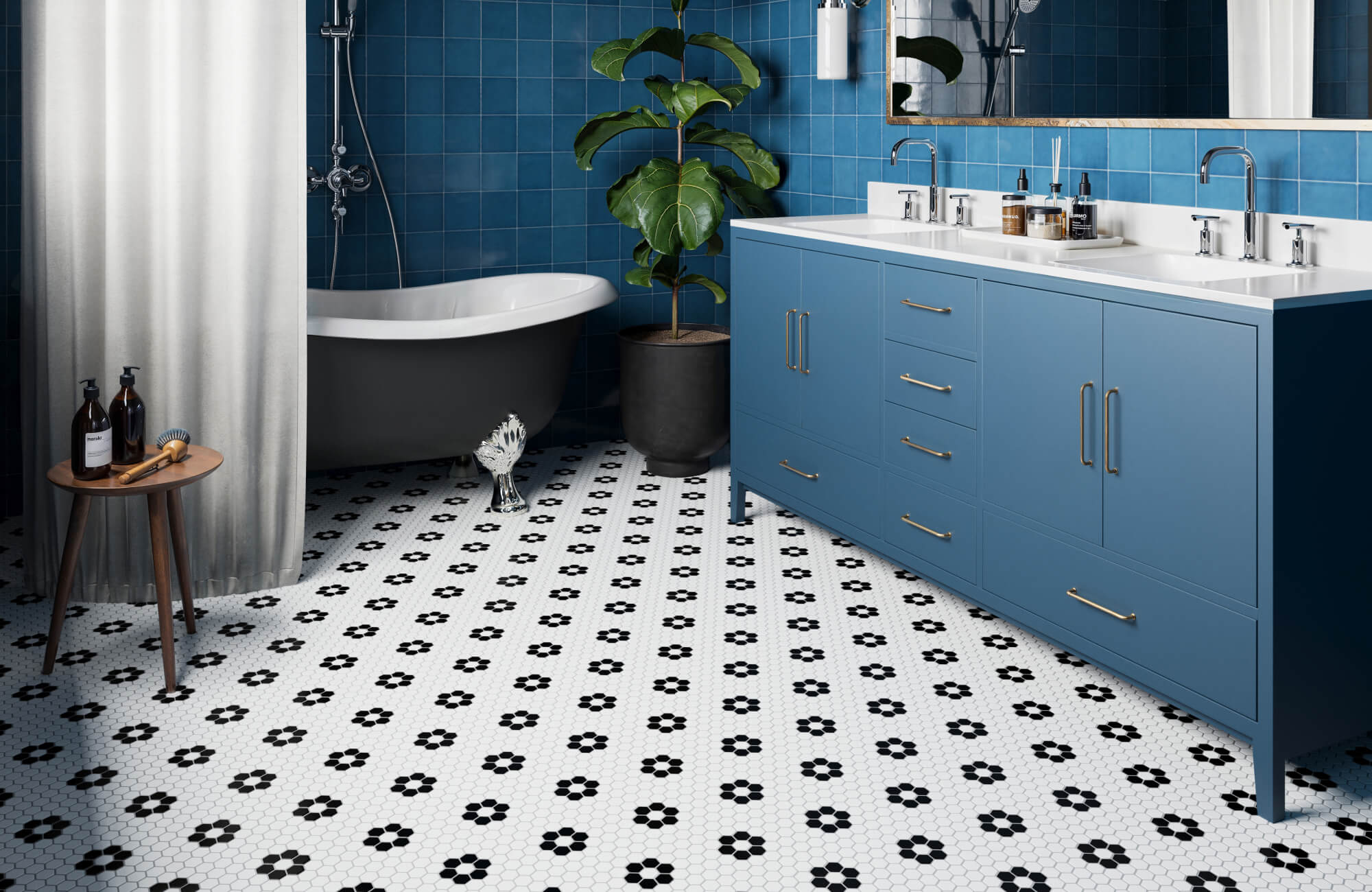
On the floor, patterns can be just as impactful as our Quinn 12x12 Matte Porcelain Hexagon Flower Mosaic Tile in Black & White Mix, displayed in the picture above, which uses a timeless black and white flower motif to bring both charm and contrast to the space. Its classic palette also pairs seamlessly with bold wall colors, creating a balanced design that feels both fresh and enduring. These intentional design moments allow you to elevate a room with just one well-placed surface.
In commercial spaces, mosaics often extend beyond decoration to serve as branding or wayfinding elements. A striking mosaic mural in a lobby, for example, can set the tone for an entire business environment, making a lasting impression on visitors. Because mosaics can cover expansive surfaces or highlight intricate details, they remain a versatile medium for creating bold statements that balance artistry with function.
How To Choose The Right Mosaic Tile For Your Project
Selecting the right mosaic tile is a process that goes beyond appearance. Although style and color are important, the best choice also considers functionality, location, and long-term goals. By thinking about how each space will be used, you can ensure your selection not only looks beautiful but also performs effectively over time.
Matching Tile To Function And Location
Choosing the right mosaic tile depends on where it will be used and how it needs to perform. Porcelain stands out in wet areas and on floors because of its density, water resistance, and strength, making it reliable for showers, spas, and busy zones. Ceramic mosaics, by contrast, are lighter and more versatile for walls, offering decorative glazes that work beautifully on backsplashes, bathroom accents, or feature walls without adding unnecessary weight.
Beyond these options, natural stone mosaics introduce organic veining and timeless sophistication, yet they demand more upkeep, often requiring sealing to guard against stains and moisture. In addition, glass mosaics bring unmatched vibrancy and light reflection, though their glossy surfaces can show smudges or scratches in busy spaces. By weighing these qualities, you can match each material to the function of your space, ensuring mosaics deliver both practical performance and artistic impact.
Considering Scale And Layout
The size and arrangement of mosaics influence how a space feels. In smaller rooms, finely scaled mosaics provide texture and detail without overwhelming the eye, creating a sense of intimacy and refinement. In larger spaces, expansive patterns create balance, drawing attention while still harmonizing with the room’s proportions.
Layout decisions further shape the experience of a space. A herringbone or chevron arrangement introduces movement, while a classic grid keeps the look clean and structured. Even grout color plays a role in the final outcome. Using a similar shade also creates a seamless effect, while contrasting grout highlights each individual tile for added definition. These choices allow you to guide how the eye travels and how the space is perceived.
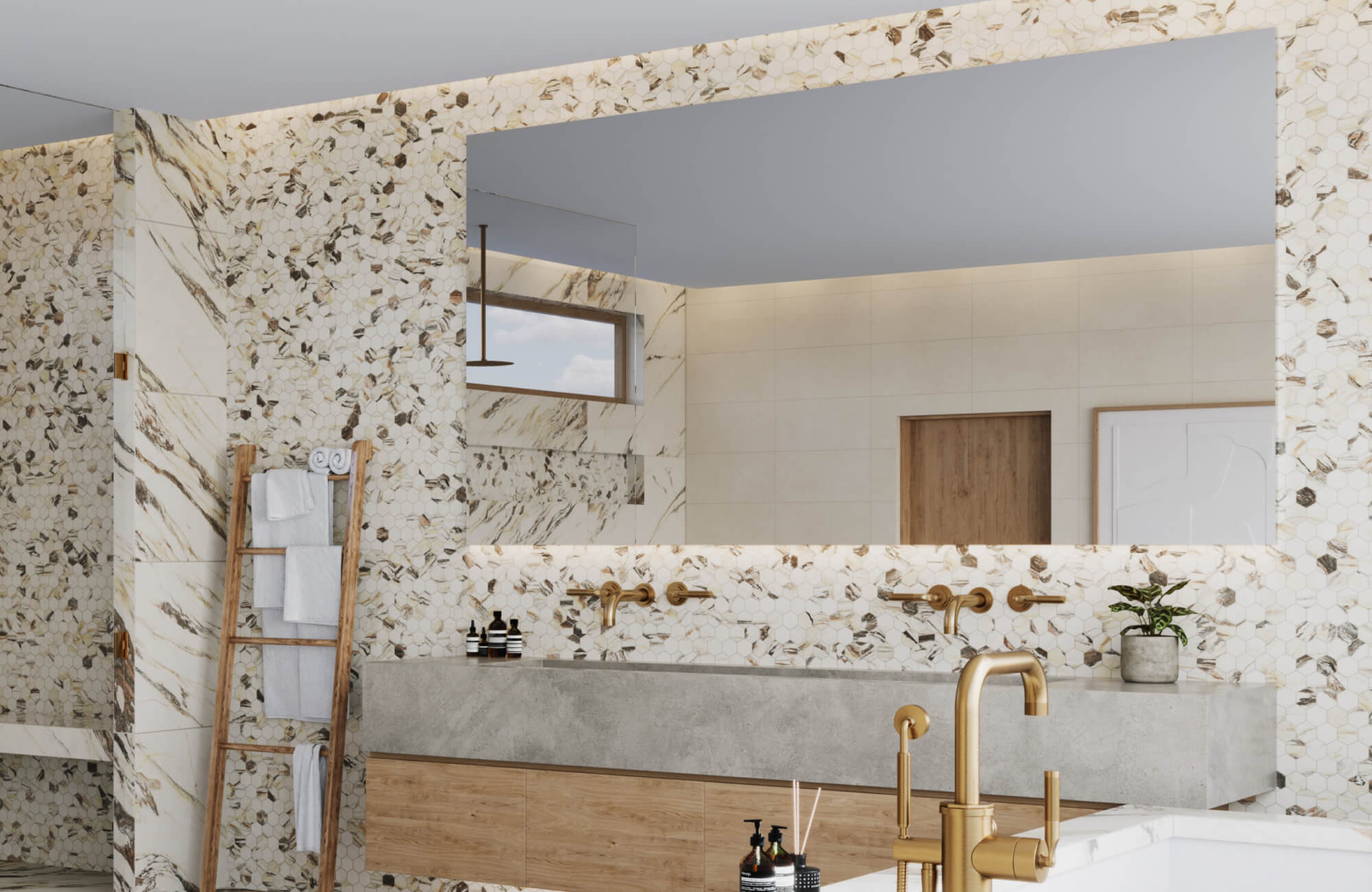
A striking example is displayed in the photo above, featuring our Aniston 2x2 Matte Porcelain Hexagon Mosaic Tile in Calacatta Viola, which combines the dramatic veining of Calacatta marble with the practicality of porcelain. Its compact hexagon shape works beautifully alongside large format slabs, softening the scale while introducing visual rhythm. This thoughtful balance between size and layout ensures that mosaics enhance rather than overwhelm, creating harmony within bold, luxurious interiors.
Aesthetic Value and Timeless Appeal
Mosaic tiles endure in popularity because they embody both artistry and practicality, offering a rare combination of beauty, function, and adaptability. They carry with them the weight of history yet remain flexible enough to meet the needs of contemporary design, whether through bold statements, subtle accents, or sustainable choices. By uniting craftsmanship with creativity, mosaic tiles continue to prove why they are not just a trend but a timeless element of design that enriches spaces and inspires expression across generations.
To help bring that timeless appeal into your own project, you can take advantage of our design services, where expert guidance ensures your tile selections align with your vision and practical needs. You can also experience how mosaics will look in real spaces with our augmented reality (AR) tool, which allows you to preview designs virtually before making a decision. These resources make it easier to translate the enduring artistry of mosaic tile into interiors that feel both personal and enduring.
Follow us on Instagram
@EDWARD.MARTIN
)
)
)
)
)
)
)
)
)
)
)
)
)
)
)
)