

)
)
)
)
)
)
)
)
What Height Should A Wall Sconce Be Mounted At?
Wall sconces bring both function and personality to a room. Whether you're using them to illuminate a hallway, frame a mirror, or provide focused light near a bed, getting the height right makes all the difference. When mounted too high or too low, they can disrupt the balance of a space or fail to serve their intended purpose. This article guides you through the essential factors, ranging from design and comfort to layout and safety, to help you confidently choose the ideal height for your wall sconces.
Defining the Purpose of the Sconce
Before measuring wall space or exploring fixture styles, it’s worth taking a moment to consider the role your sconce will play. Whether it's functional, decorative, or ambient, its purpose will largely determine the right placement.
Task vs. Ambient Illumination
When a sconce is used for a specific function, such as reading in bed or grooming at a mirror, its placement should prioritize usability. In these cases, mounting the fixture lower on the wall ensures the light reaches where it's needed without casting unhelpful shadows. Aligning the bulb with your seated eye level, typically between 55 and 65 inches from the floor, can provide more effective, comfortable illumination for tasks.
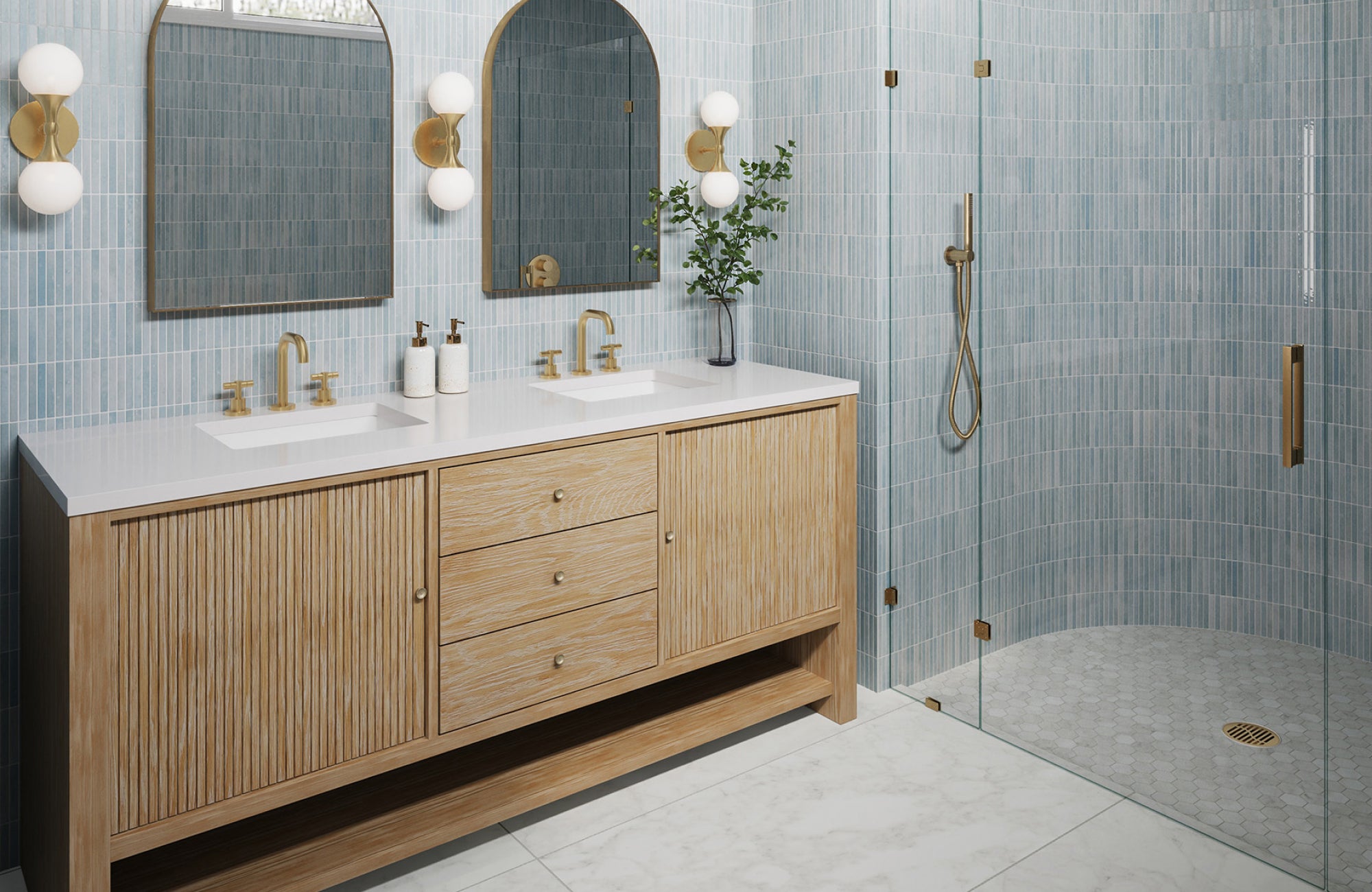
This principle is well illustrated in the photo above, where Edward Martin’s Nicholson Wall Sconce in Aged Brass is positioned at face level alongside each mirror. The dual-globe design not only adds a sculptural element to the space but also delivers balanced, shadow-free lighting that supports detailed tasks such as grooming or makeup application. By combining function with style, this sconce shows how thoughtful placement enhances both practicality and design.
On the other hand, when the goal is to create a mood or fill a room with soft light, sconces are best placed higher on the wall. This allows them to diffuse light upward or outward, contributing to a cozy atmosphere without focusing on a particular area.
Highlighting Features or Decor
Not all lighting is about visibility; some of it’s about emphasis. If you're using sconces to draw attention to artwork, architectural details, or even textured walls, their height should complement whatever they're highlighting. For example, placing a fixture just above or to the side of a painting can direct light across the surface, adding depth and visual interest.
In these situations, it's more important to consider where the light falls than to focus strictly on the height. The goal is to enhance, not overwhelm, the object or feature you're showcasing.
Adjusting Placement for Each Room
Once the fixture's purpose is clear, the type of room it's going into becomes the next guiding factor. Each space in your home calls for different lighting needs and usage patterns, which directly affect how high sconces should be mounted.
Bedrooms and Personal Spaces
In bedrooms, sconces often replace table lamps for reading or nighttime use. Here, the ideal mounting height depends on the height of your mattress and headboard. Generally, sconces work best when installed 55 to 65 inches from the floor, or about shoulder level when seated upright in bed.
Adjustable-arm sconces are also useful in this setting, giving you the flexibility to direct light precisely without disturbing someone else in the room. The placement should allow for easy reach and use without creating glare or shadows.
Bathrooms and Vanity Lighting
Proper lighting in bathrooms, particularly around mirrors, is essential. Sconces placed on either side of a vanity mirror should be mounted at approximately eye level, which typically means between 60 and 66 inches from the floor. This setup distributes light evenly across your face and helps reduce unflattering shadows during grooming.
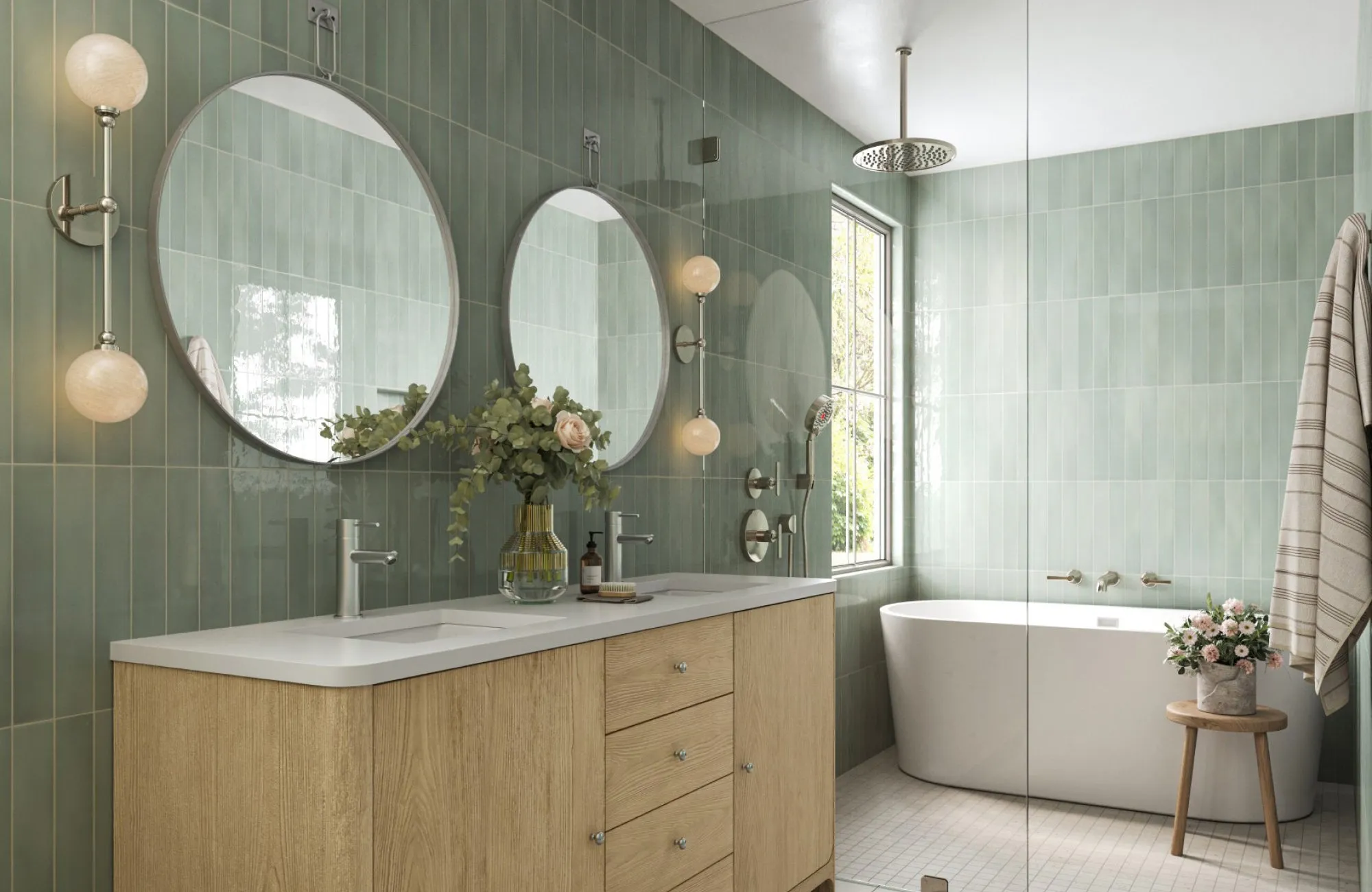
To see this in action, take a look at the photo above featuring Edward Martin’s Fenton Wall Sconce in Iridescent Acid Wash. With its distinctive sculptural form and focused downlight, the fixture is thoughtfully placed on each side of the mirror, offering both visual interest and functional clarity. The design allows light to hit the face from both directions, reducing contrast and improving visibility for detailed tasks.
Avoid mounting lights only above the mirror unless necessary, as this can create downward shadows that obscure detail. When done right, side-mounted sconces like these make tasks such as grooming or applying makeup far more accurate and comfortable, all while contributing to a more balanced and inviting space.
Hallways and Shared Living Areas
In common areas such as hallways, living rooms, or entryways, sconces are often used for general lighting and visual interest. These fixtures should be mounted slightly higher, typically between 66 and 72 inches from the floor, to prevent them from obstructing movement or appearing too low within the wall's vertical space.
It's equally important to consider head clearance and line of sight, especially in narrow walkways. Well-placed sconces in these spaces provide subtle lighting and enhance the room’s overall rhythm without becoming a distraction.
Proportions Relative to Room and Fixture Size
After determining the room and intended use, the next step is to consider how your sconce relates to the size of the wall and the height of the ceiling. The placement should feel balanced, not just technically correct, but visually appropriate as well.
Ceiling Height Considerations
Ceiling height also plays a significant role in determining how high a sconce should be mounted. In rooms with standard 8-foot ceilings, positioning the fixture around 66 inches from the floor generally creates a well-balanced look. This placement sits about two-thirds up the wall, a proportion that tends to feel visually comfortable.
For spaces with higher ceilings, it’s often best to raise the sconce slightly to maintain that same sense of balance. The goal is to keep the fixture aligned with the room’s vertical scale so it feels integrated rather than visually disconnected.
Wall Space and Fixture Size
The scale of the sconce also plays a significant role. A larger fixture with a tall backplate or extended arm can dominate a wall if placed too high, especially in smaller rooms. On the other hand, a small or minimalist sconce may go unnoticed if it's mounted far above eye level.
To maintain visual balance, it's equally important to consider how much wall space the sconce is meant to fill. The goal is to center it within the vertical area it influences, whether it's framing a mirror, anchoring a hallway, or standing alone on an open wall.
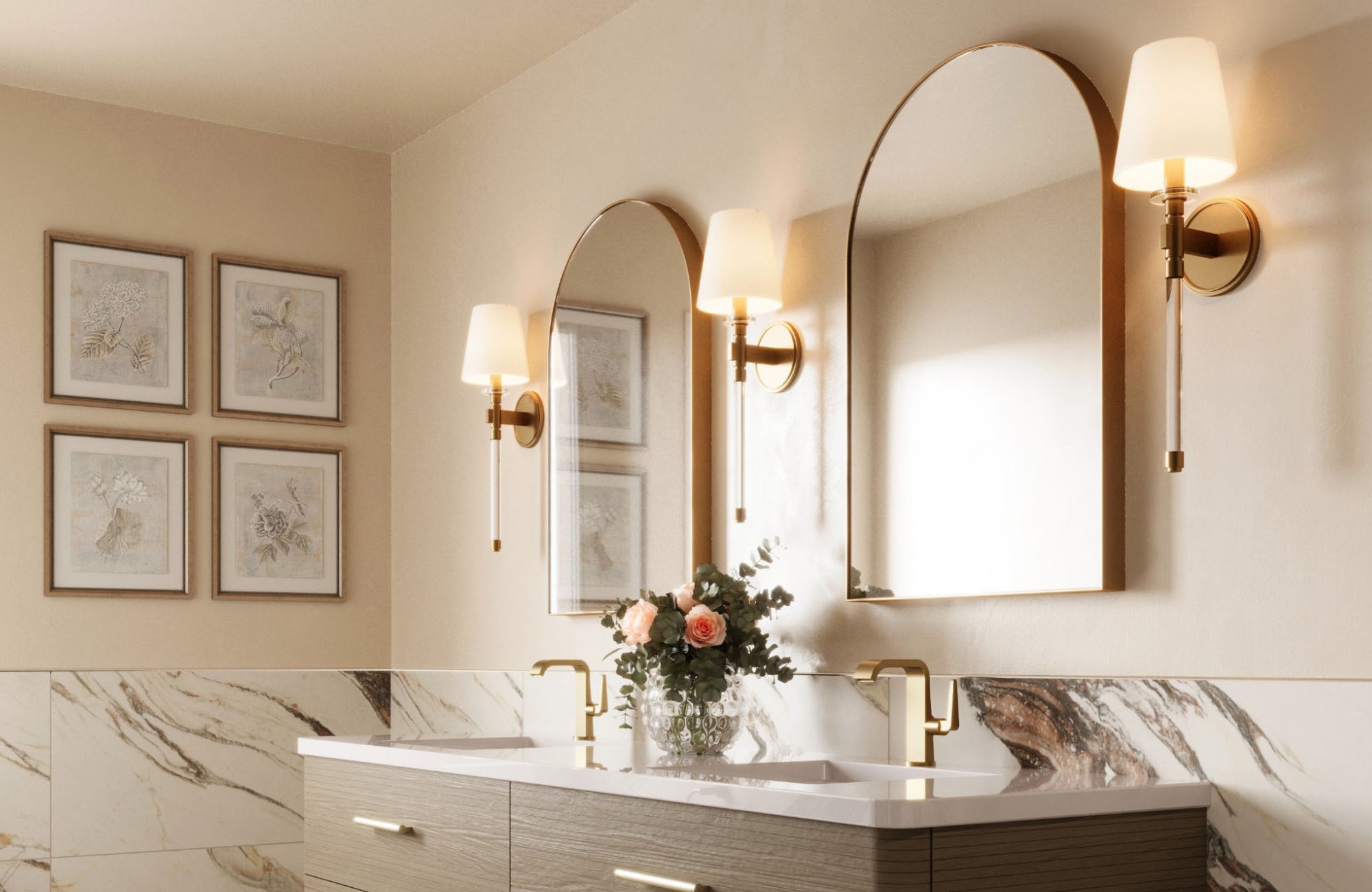
This balance is demonstrated in the photo above, featuring Edward Martin’s Colette Wall Sconce in Aged Brass, measuring 21 inches high and 6 inches wide. Despite its elongated form, the sconce feels well-proportioned because it’s centered alongside the mirrors and placed at a height that allows the fixture to complement, rather than overpower, the surrounding elements. Its vertical presence draws the eye without overwhelming the wall, showing how thoughtful scale and placement work together to enhance the space.
Aligning with Style and Visual Balance
Lighting isn’t just functional; it also speaks to the overall design of your space. The style of a sconce, along with how it’s positioned, plays a key role in creating visual harmony. Style and symmetry can both guide your placement choices, helping the fixture feel intentional and well-integrated.
Modern vs. Classic Styling
The design of a sconce often hints at how it should be installed. Traditional fixtures with intricate shapes and ornamentation tend to look best at slightly lower heights, where their details can be appreciated up close. Mounting them too high can diminish their character or make them seem disconnected from the room.
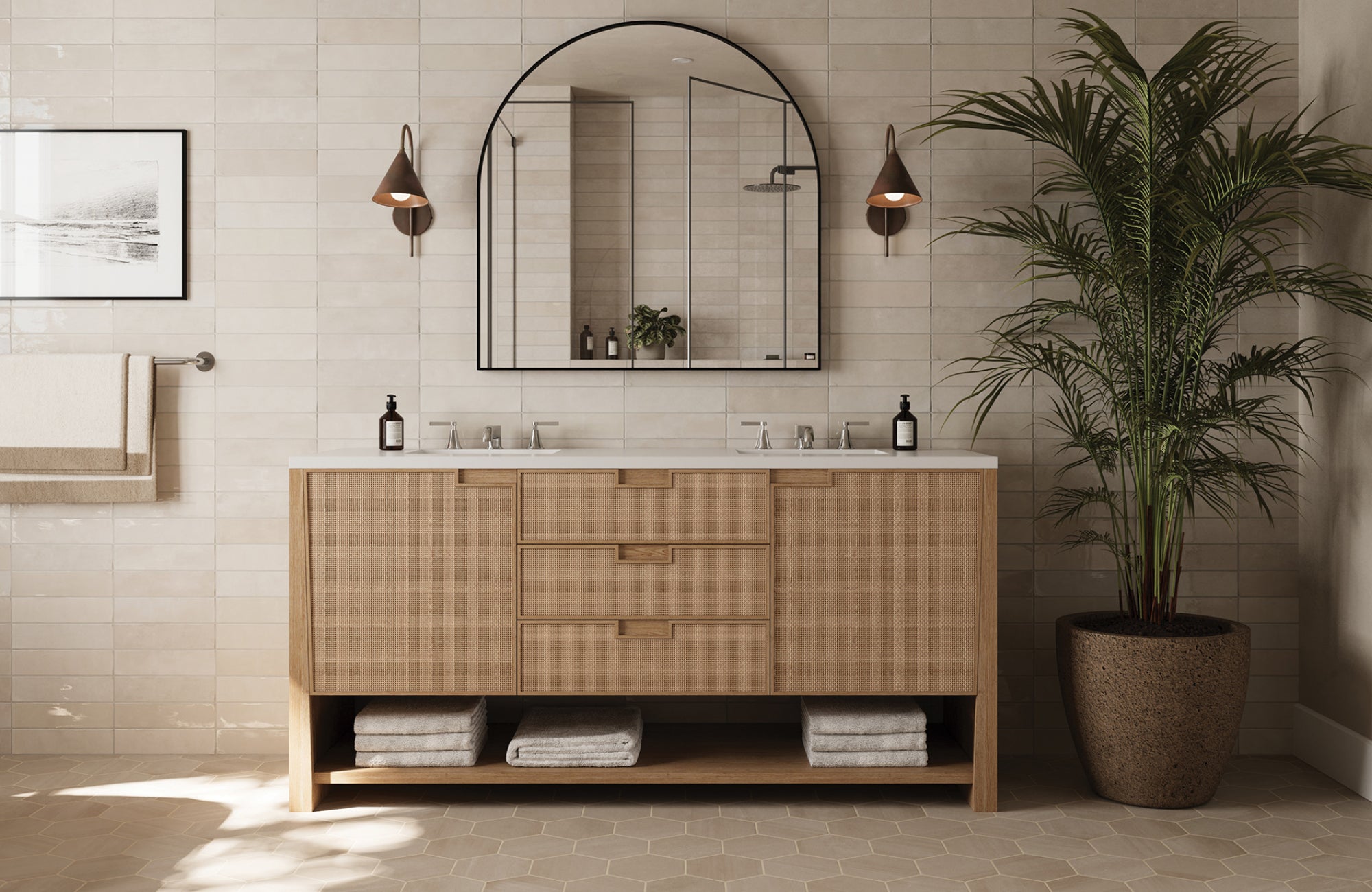
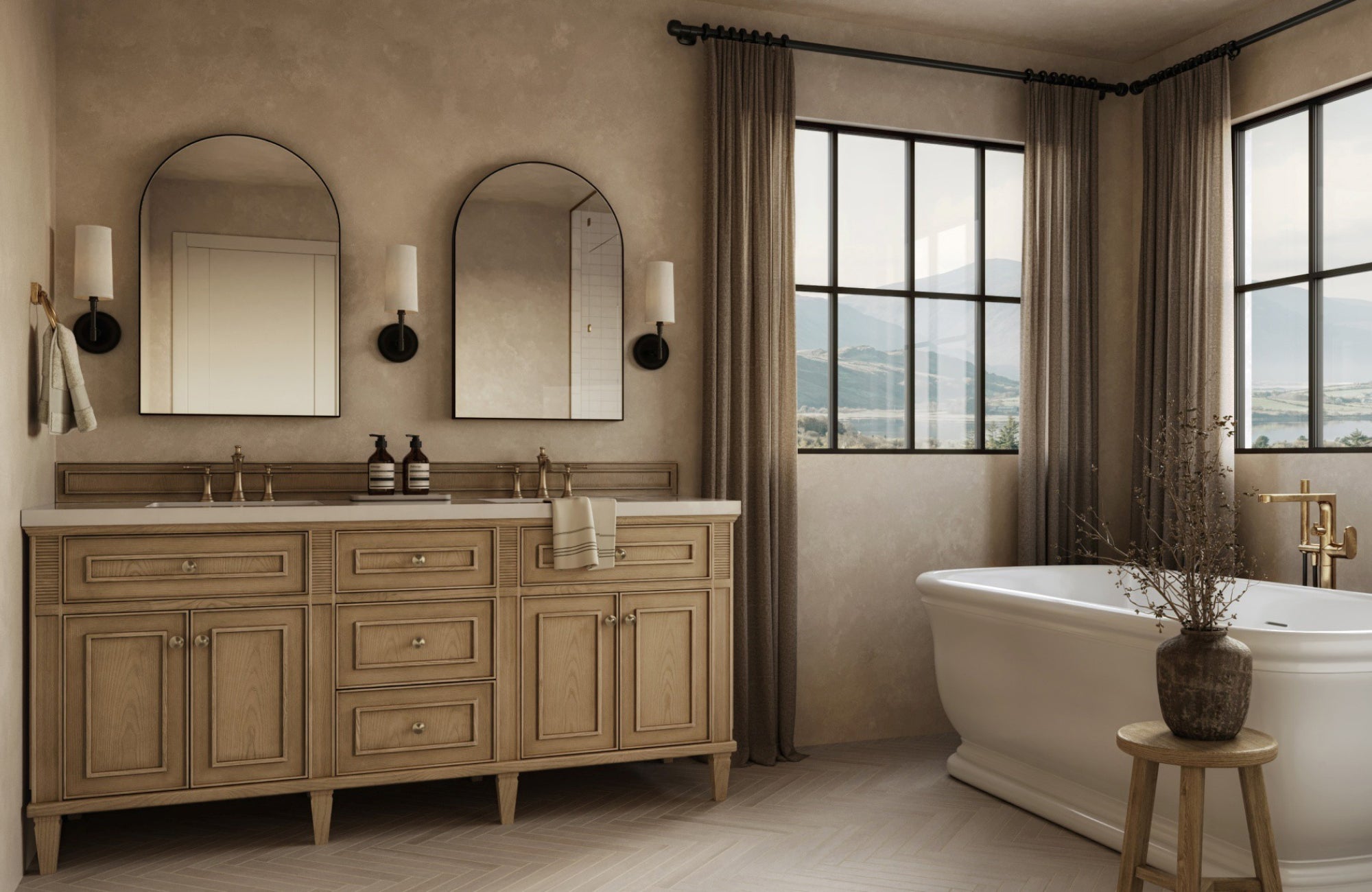
A good example is Edward Martin’s Perkins Wall Sconce in Old Bronze, as featured in the photo above. Its elongated cylindrical shade and dark bronze finish create a timeless look that pairs beautifully with classic interiors. Positioned at an accessible height, it enhances the vanity area without competing for attention, proof that scale and style go hand in hand.
Conversely, sleek, modern sconces with clean lines and subtle finishes often work well higher on the wall. Their simplicity allows them to blend seamlessly into the surrounding architecture, making them ideal for minimalist or contemporary interiors.
Creating Visual Consistency
When using multiple sconces in the same space, consistency is key. Uneven heights can make a room feel off-balance, especially when fixtures are part of a symmetrical arrangement, like on either side of a mirror or bed. To maintain visual alignment, use nearby architectural elements as reference points, such as door frames, window sills, or wainscoting. This approach further helps ensure that your sconces contribute to the overall rhythm of the room, creating a unified and intentional look.
Prioritizing Comfort and Eye-Level Placement
Beyond visual impact and structural logic, sconces need to feel natural to use. This means placing them in a way that works with how people move through and interact with the room. Comfort, visibility, and glare control all factor into this decision.
Seated and Standing Areas
Consider how people will be positioned in the space. In rooms where seating is the norm, such as dining areas, reading nooks, or home offices, mounting sconces at about 60 inches from the floor tends to work best. This places the light at seated eye level, making it functional without being overpowering.
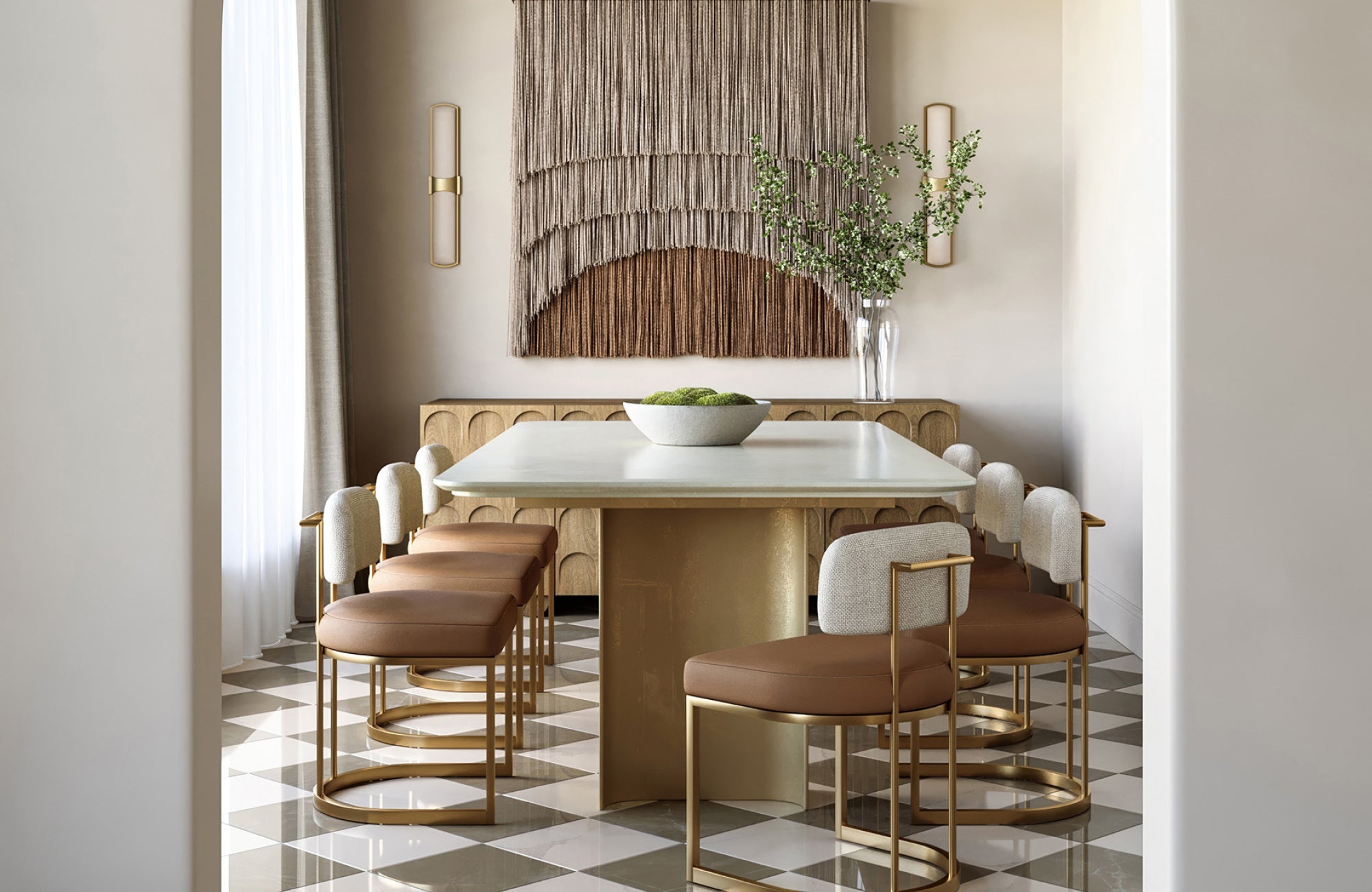
A great example of this can be seen in the photo above, where Edward Martin’s Esme 26" Wall Sconce in Aged Brass is placed thoughtfully on either side of the focal wall in a dining room. Its elongated, vertical design complements the symmetry of the space while remaining visually aligned with guests seated at the table. This placement enhances ambient lighting while minimizing glare, showing how thoughtful height adjustment brings form, function, and comfort into harmony with the way the room is used.
In spaces where people are mostly standing or walking through, a slightly higher position between 66 and 72 inches is more appropriate. This helps keep light out of the direct line of sight and ensures the fixture feels integrated with the room’s overall height.
Managing Brightness and Visibility
The type of light a sconce emits and whether the bulb is visible affect how comfortable it is to live with. Fixtures with exposed bulbs should be placed just above eye level to reduce glare, while shaded or diffused sconces offer more flexibility in placement.
Pay attention to the beam angle and intensity as well. A sconce that throws a wide, soft glow will be more forgiving than one with a focused beam or directional spotlight. Understanding these differences can help you place your fixture at a height that’s both effective and comfortable.
Working Within Electrical and Building Limitations
As much as we might like to place lighting exactly where we envision it, practical realities often come into play. Wiring limitations, fixed junction boxes, and local building codes can influence what’s possible and what’s not.
Fixed Wiring Locations
If you're working with an existing wall and aren't planning on new electrical work, your options may be limited by the location of the junction box. In that case, choosing a fixture that suits the existing height is a practical solution. Some sconces feature elongated backplates or adjustable components that make it easier to fine-tune the visual placement without relocating existing electrical wiring.
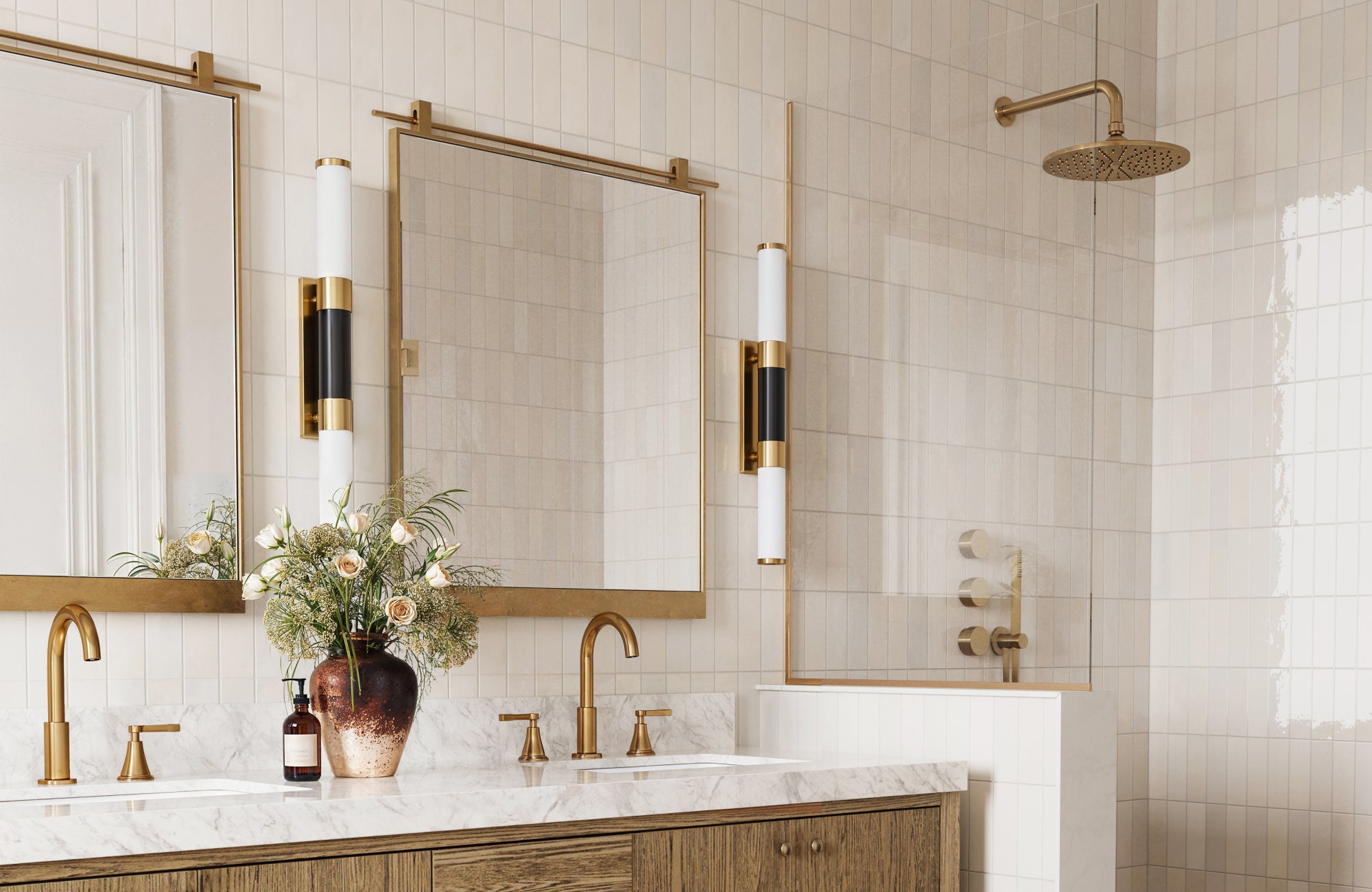
A great example is Edward Martin’s Tomlinson 2-Light Wall Sconce in Aged Old Bronze, as displayed in the photo above. Its tall, vertical form, paired with a clean rectangular backplate, helps visually anchor the fixture alongside the mirror, even when the electrical placement can't be changed. The backplate adds structure while subtly extending the fixture’s visual footprint, creating a seamless connection between the mirror and the surrounding wall. This design offers both height coverage and balanced illumination.
Alternatively, incorporating architectural details like trim or paneling can also help shift the visual focus and elevate the look without modifying the wiring.
Safety Standards and Code Compliance
In specific areas such as stairwells or commercial settings, local building codes may require minimum clearances and set limits on fixture height. These rules are designed to ensure safety, especially in areas where fixtures might interfere with walkways or emergency access.
Before installing a sconce in such spaces, it’s wise to check local requirements or consult a licensed electrician. Ensuring compliance from the beginning helps avoid costly changes down the road and supports a safer living environment.
Finding the Right Height with Confidence
Finding the right height for your wall sconces takes more than a quick measurement. It requires a clear understanding of how the light will function, how people will interact with the space, and how the fixture fits into the room’s overall design. Factors like purpose, room type, scale, style, user comfort, and any installation limitations all play a role in getting it right. To help confirm your choice, try mocking up the placement with painter’s tape or a temporary template; just a small adjustment in height can noticeably change the way the room feels.
If you're still unsure or want a second opinion, we’re here to help. Contact us for expert guidance or to book a personalized design consultation. Whether you’re updating a single fixture or designing an entire space, we’ll work with you to ensure every detail supports both style and function.
Follow us on Instagram
@EDWARD.MARTIN
)
)
)
)
)
)
)
)
)
)
)
)
)
)
)
)