Decorative throw pillows offer a refined opportunity to introduce color, texture, and depth into an interior, shaping both its visual identity and emotional tone. When thoughtfully curated, their hues transform a seating arrangement into a cohesive focal point where balance and contrast exist in quiet harmony. From nuanced neutral palettes to expressive accent combinations, the interplay of color reveals a layered and intentional approach to styling. Subtle shifts in undertones, material finishes, and color temperature further enrich the composition, allowing each element to contribute with clarity and purpose. Through a considered exploration of decorative throw pillow color combinations for modern interiors, the result is a setting that feels both elevated and enduring.

Color Theory Foundations for Decorative Throw Pillows
Color relationships form the underlying framework of any well-composed pillow arrangement, guiding how hues interact within a space. When applied with precision, these principles ensure that decorative throw pillows contribute to a balanced palette that feels both cohesive and visually engaging.
Complementary and Split-Complementary Pairings
Complementary color schemes, such as blue paired with orange or green with red, introduce a deliberate contrast that naturally draws the eye toward seating areas. This approach is especially effective in decorative throw pillow color combinations for neutral sofas with bold accents, where a measured sense of vibrancy is desired. At the same time, full complementary contrast can feel visually assertive, which is why split-complementary palettes offer a more nuanced alternative. By pairing a dominant hue with two adjacent opposing tones, the composition retains its dynamism while softening intensity. This balance also allows color to energize the space without overwhelming it. In turn, the arrangement feels structured yet expressive, supporting a more refined visual rhythm.
Analogous Color Harmony for Layered Styling
Analogous color schemes rely on hues that sit adjacent to one another on the color wheel, such as blue, teal, and green, creating a seamless visual progression. This method lends itself particularly well to layered decorative throw pillow styling for cohesive living room design, where subtle transitions enhance continuity. Rather than creating contrast, the gradual shift between tones establishes a sense of calm and visual cohesion. As these hues are combined with varied textures, the palette gains dimension without disrupting its harmony. This interplay also allows the arrangement to feel both soft and visually complete. Consequently, analogous palettes are especially suited to interiors that prioritize fluidity and understated elegance.
Warm vs. Cool Color Temperature Balance
Color temperature plays a defining role in shaping the atmosphere of a room, influencing whether it feels inviting or serene. Warm tones such as terracotta, rust, and mustard tend to advance visually, making them ideal for throw pillow color ideas that introduce warmth into minimalist interiors. In contrast, cooler tones like navy, sage, and slate recede, lending a sense of openness and tranquility. When these temperatures are balanced thoughtfully, the space avoids feeling overly dense or stark. Designers also often integrate both to create a subtle equilibrium that supports multiple functions within a room. As a result, the overall composition achieves a refined balance between comfort and clarity.

Neutral Color Palettes for Timeless Versatility
Neutral tones provide a versatile foundation that adapts seamlessly across evolving interior styles while maintaining a sense of continuity. Their effectiveness lies not in bold contrast but in the careful calibration of undertones, tonal variation, and material depth, allowing the composition to unfold with quiet sophistication.
Undertones and Color Matching Precision
Undertones determine whether a neutral appears warm, cool, or balanced, making them essential in achieving visual harmony. For instance, pairing a yellow-based beige with a cooler gray upholstery can introduce subtle discord that disrupts the overall palette. This consideration becomes particularly important when determining how to match neutral throw pillow colors with gray or beige couches in a cohesive manner. By carefully assessing undertones under both natural and artificial lighting, designers ensure a more accurate alignment across all elements. This process also allows each component to integrate seamlessly within the broader composition rather than appearing visually detached. Ultimately, such precision reinforces cohesion and prevents unintended tension within the space, resulting in a more refined and polished arrangement.
Tonal Layering with Texture Variation
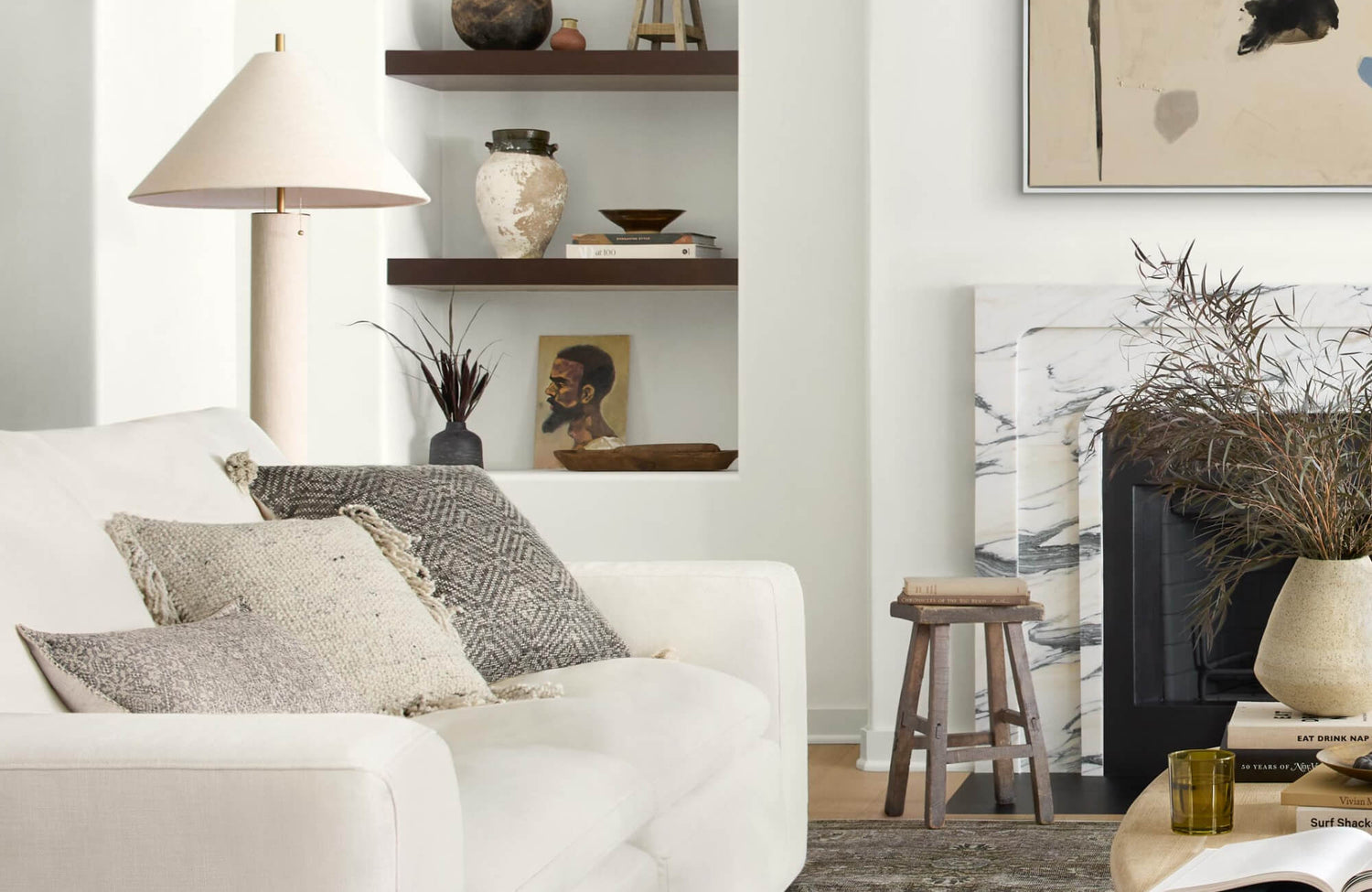
Layering within a neutral palette depends on variation in tone and texture rather than distinct color shifts, allowing depth to emerge subtly. Materials such as linen, velvet, and boucle introduce tactile contrast, enriching the overall composition without disrupting its calm foundation. This approach is especially relevant in tone-on-tone decorative throw pillow styling for modern organic interiors, where restraint is paired with dimensionality. Subtle transitions between ivory, taupe, and greige also create a refined gradient that feels intentional rather than incidental. As textures interact with light differently, they add further complexity while maintaining visual softness. The result is an arrangement that feels cohesive, elevated, and quietly dynamic, enhancing the overall interior without relying on bold contrast.
Soft Contrast Using Light and Dark Neutrals
Incorporating a spectrum of values, from soft cream to deep charcoal, prevents a neutral scheme from appearing flat or one-dimensional. This method is particularly effective in neutral throw pillow arrangements with contrast for minimalist living rooms, where subtle differentiation defines the aesthetic. Darker tones also provide visual grounding, anchoring the arrangement, while lighter hues introduce balance and luminosity. In addition, the interplay between these values enhances depth and spatial perception, allowing the composition to feel more layered. At the same time, this contrast creates flexibility when integrating additional décor elements, ensuring continuity throughout the space. As a result, the arrangement achieves a refined equilibrium that feels both structured and visually engaging.

Strategic Use of Bold and Accent Colors
Accent colors introduce energy and character, elevating understated interiors with carefully placed moments of contrast. When applied with intention, these hues enhance rather than disrupt the overall composition, allowing the space to feel both expressive and cohesive.
Applying the 60-30-10 Color Distribution Rule
A structured approach to color distribution ensures that bold tones remain balanced within the space. The 60-30-10 principle provides a framework in which accent pillows occupy a smaller proportion, supporting how to use bold throw pillow colors in a neutral living room design effectively. This measured placement also allows vibrant hues to stand out without overwhelming the arrangement or competing with dominant elements. As each color is assigned a clear role, the overall palette feels deliberate and visually coherent. Designers often rely on this ratio to guide hierarchy across furnishings and accessories, reinforcing balance. In doing so, the composition achieves both clarity and visual interest, resulting in a more harmonious interior.
Color Echoing for Cohesive Design Integration
Repeating accent colors found in rugs, artwork, or decorative accessories creates a sense of continuity throughout the space. This technique is central to coordinating throw pillow colors with existing home decor elements, ensuring that each component feels intentionally connected. By echoing these hues, pillows also become part of a broader visual narrative rather than isolated accents. In more refined settings, pieces like Edward Martin’s Marisette 12" x 27" Pillow Cover in Black introduce a grounding contrast that can subtly mirror darker architectural details, such as window frames or furniture accents. Complementing this, the Merelle 13" x 21" Down Pillow in Ivory softens the composition, reflecting lighter tones found in upholstery or surrounding finishes. As these tones repeat and interact, they establish a natural rhythm that allows the entire arrangement to feel cohesive, balanced, and thoughtfully curated.
Saturation and Depth in Jewel and Earth Tones
Highly saturated hues such as emerald, sapphire, and burnt sienna introduce richness and depth, particularly when layered against neutral backdrops. These tones are often featured in bold decorative throw pillow color ideas for contemporary interiors, where contrast is used with intention. When paired with textured fabrics, their visual intensity is further amplified, creating a more tactile and immersive effect. Earth tones, by comparison, offer warmth while maintaining a grounded quality that blends seamlessly with organic materials. This balance between vibrancy and subtlety also allows for a wide range of styling possibilities across different interiors. Ultimately, these colors enrich the palette while preserving harmony and visual continuity.

Aligning Throw Pillow Colors with Interior Styles and Materials
Color selection becomes more intentional when aligned with the defining characteristics of an interior style. At the same time, material finishes influence how these colors are perceived, shaping their depth, softness, or intensity within the overall composition.
Modern Organic and Scandinavian Color Approaches
Modern organic interiors draw from nature, favoring tones such as sand, olive, clay, and muted ochre to create a grounded and inviting atmosphere. In contrast, Scandinavian design leans toward lighter hues like soft gray and off-white, emphasizing clarity and simplicity while maintaining warmth. These palettes inform the best throw pillow colors for modern organic and Scandinavian interiors, where restraint and comfort are carefully balanced.
In spaces like a sunlit window seat, the layering of warm neutrals with soft mustard and terracotta accents introduces depth without disrupting the calm aesthetic. Pieces such as the Brielle 18'' x 18'' Down Pillow in Natural / Mustard and our Merelle 22" x 22" Down Pillow in Terracotta, as featured in the photo above, reflect this balance beautifully, blending earthy warmth with subtle accent tones that complement surrounding materials. As these hues interact with natural light and woven textures, the overall composition feels cohesive, serene, and effortlessly refined.
Industrial and Contemporary Material Pairings
Industrial interiors rely on deeper, more grounded hues that complement raw materials such as metal, concrete, and aged wood. Colors like charcoal, rust, and deep brown are commonly used in throw pillow color combinations for industrial style living rooms, reinforcing the structural character of the space. These tones also introduce warmth while maintaining the rugged aesthetic that defines the style. In contemporary settings, similar hues may be juxtaposed with polished finishes to create a striking contrast. This interplay between rugged and refined elements enhances visual complexity and depth. The overall composition feels cohesive while maintaining a distinct and intentional character.
Fabric Influence on Color Perception
Material selection plays a crucial role in how color is ultimately perceived within a space, influencing both depth and tonal clarity. Velvet, with its dense pile, intensifies saturation and lends a more luxurious dimension to hues. Linen, by contrast, diffuses light and softens the appearance of color, resulting in a more relaxed and understated effect. This distinction is essential in understanding how fabric texture affects decorative throw pillow color appearance in different lighting conditions. Designers also often select materials based on how they interact with surrounding finishes and ambient light. Through this approach, the intended color effect is preserved, ensuring consistency and visual harmony across the space.

Layering Techniques for Depth, Dimension, and Visual Balance
Layering techniques bring structure and dimension to decorative throw pillow arrangements, transforming them into cohesive visual compositions. By combining color, scale, and pattern with intention, the arrangement achieves a balance that feels both dynamic and refined.
Mixing Solid Colors with Patterned Elements
The combination of solid pillows with patterned designs introduces visual interest while maintaining cohesion throughout the arrangement. Patterns such as geometrics, florals, or subtle stripes add movement without overwhelming the composition. This approach is widely used in how to mix patterned and solid throw pillows for cohesive styling across different interior settings. By maintaining a consistent color palette, each element connects seamlessly with the others. This also prevents the arrangement from appearing fragmented or visually chaotic. Instead, the result is a balanced composition that feels layered, engaging, and thoughtfully curated.
Scale Variation and Proportional Balance
Varying the size and shape of pillows establishes a clear visual hierarchy within the arrangement, guiding how the eye moves across the composition. For instance, larger pillows act as foundational anchors, while smaller ones introduce detail and refinement. This principle is fundamental in decorative throw pillow layering techniques for sectional sofas, where proportion must be carefully managed. By distributing scale thoughtfully, the arrangement avoids appearing either crowded or sparse. The composition also gains structure while maintaining a sense of ease and comfort. As a result, the overall styling feels balanced, intentional, and visually cohesive.
Repetition and Rhythm in Color Placement
Repeating key hues across multiple pillows establishes rhythm and reinforces the overall color scheme in a subtle yet effective way. This method is particularly useful in balanced throw pillow color placement for visual continuity in interiors that require cohesion. Strategic repetition also allows colors to reappear naturally, creating a visual thread that ties the arrangement together. As these tones echo throughout the composition, they establish a sense of order and flow. This continuity enhances the perception of intentional styling rather than randomness. Ultimately, the arrangement feels harmonious, refined, and complete.
A Cohesive Expression Through Color and Composition
Decorative throw pillows, when thoughtfully composed, bring a sense of unity and refinement to an interior through the careful balance of color and texture. By integrating foundational color relationships with nuanced layering techniques, each element contributes to a composition that feels both deliberate and fluid. Neutral palettes establish continuity, while accent hues introduce moments of contrast that enliven the space without overwhelming it. Material selection further refines how these colors are experienced, adding depth and subtle variation across surfaces. In mastering decorative throw pillow color combinations for modern interiors, the result is a space that reflects both sophistication and enduring visual harmony.
For a more tailored approach, Edward Martin’s design services offer expert guidance in creating cohesive interiors with carefully curated details. Contact us to bring a well-balanced and refined vision to life!