



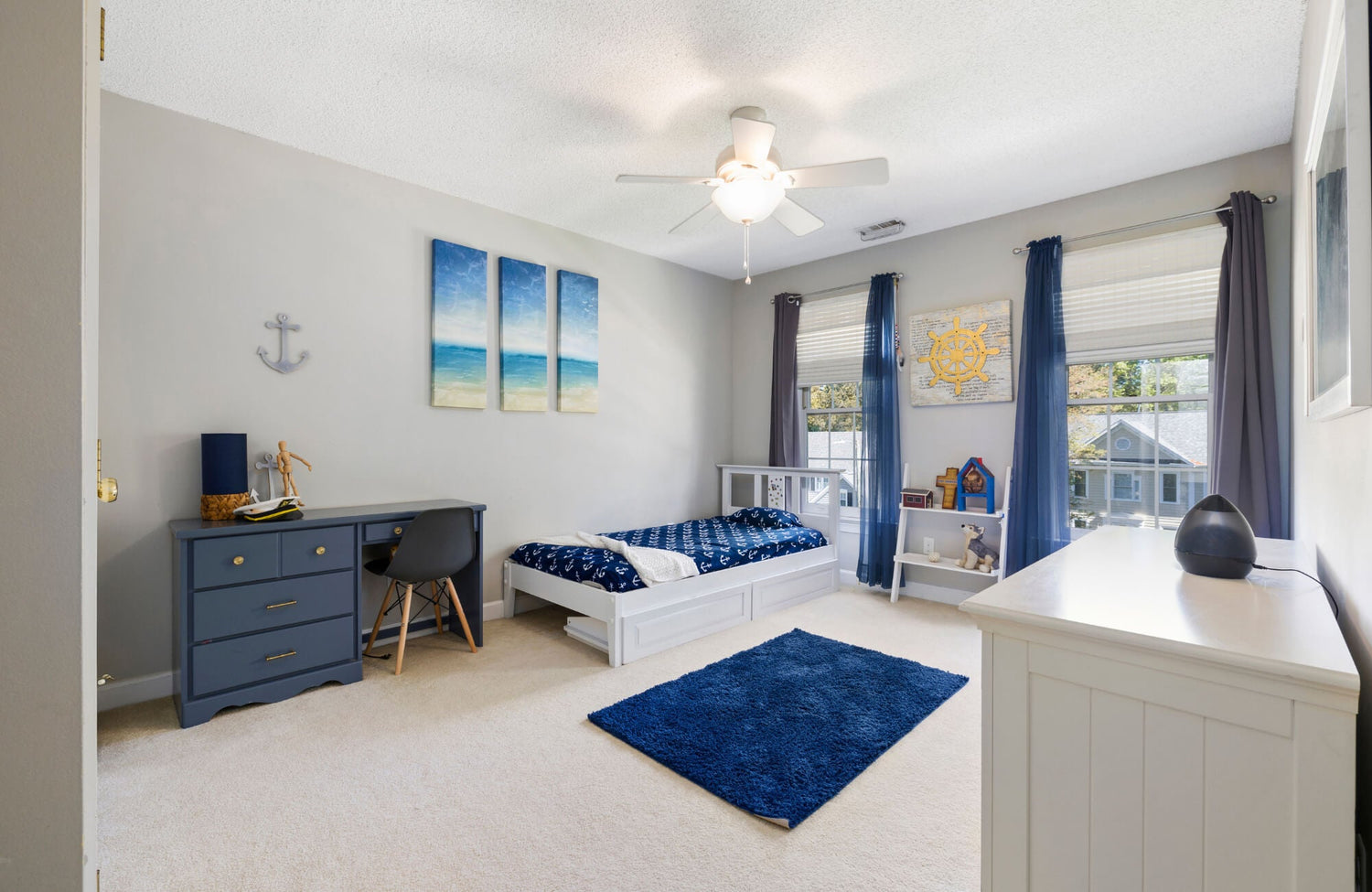
A blue rug can be the perfect anchor for any room, offering a sense of calm, stability, and timeless elegance. Yet its versatility can also make styling decisions feel a bit challenging. Should you pair it with warm or cool neutrals, or bring in bolder accents for contrast? How do you select furniture and finishes that enhance rather than compete with it? This guide will outline the essential design principles for decorating with a blue rug, helping you create a space that feels cohesive, curated, and effortlessly inviting.

Creating a Serene and Sophisticated Palette
The foundation of any well-designed space starts with color. A blue rug naturally sets a calming tone, and pairing it with the right neutrals and accents helps establish a palette that feels balanced, refined, and inviting.
Pairing with Warm Neutrals
Warm neutrals, such as beige, taupe, or ivory, counterbalance the cool undertones of blue, creating a sense of visual equilibrium. These hues add depth by softening the contrast and bringing in a layer of warmth that makes the space feel more welcoming. Shown above, Edward Martin’s Pascal Polyester Face Rug in Lake demonstrates how a soft blue foundation pairs elegantly with cream or sand-toned upholstery. Textiles like linen or wool in these shades further enhance tactile comfort, allowing the rug to stand out as a statement piece without overwhelming the room.
Pairing with Cool Neutrals
Cool neutrals, including shades of gray, charcoal, and crisp white, reinforce the calming qualities of blue. This pairing works especially well in modern or minimalist interiors where clean lines and chromatic consistency are prioritized. Using matte paint finishes or polished concrete flooring in these tones can establish a cohesive backdrop, allowing the blue rug to serve as a subtle focal point that anchors the design.
Choosing Your Metal Accents
Metallic finishes introduce a sophisticated layer of detail that can shift the overall mood of the palette. Brass and gold accents lend warmth and a sense of luxury, while brushed nickel or chrome provide a sleek, contemporary edge. Careful placement of these finishes, such as in lighting fixtures, furniture legs, or decorative hardware, creates visual rhythm, tying the color scheme together and elevating the space from casual to curated.

Incorporating Contrasting and Complementary Colors
Once you’ve explored serene pairings, the next step is adding energy and personality. Introducing contrasting or complementary hues alongside your blue rug creates visual interest and can transform the mood of the entire room.
The Bold Contrast of Orange and Yellow
On the color wheel, orange and yellow sit opposite blue, making them classic complementary choices. These high-contrast pairings energize a space, ideal for eclectic or contemporary interiors seeking vibrancy. Featured in the design above, Edward Martin’s Lafferty Wool Blend Rug in Ocean establishes a versatile blue base that complements mustard upholstery or burnt-orange accent chairs. To keep the palette balanced, introduce these tones selectively through textiles, wall art, or accessories, ensuring the rug remains a grounding element rather than competing with brighter accents.
The Natural Harmony of Green
Green shares blue’s cool undertones, forming an analogous color scheme that evokes balance and serenity. Soft sage or muted olive tones blend seamlessly, enhancing the rug’s calming influence. Incorporating greenery, whether through indoor plants, botanical prints, or moss-toned fabrics, reinforces biophilic design principles, promoting well-being while strengthening the natural connection between hues. This approach works particularly well in transitional and organic modern spaces.
The Playful Punch of Pink and Coral
Pink and coral offer a lively yet sophisticated counterpoint to blue, introducing warmth without the stark intensity of orange. These shades work beautifully in textiles such as throw pillows, velvet ottomans, or patterned drapery, adding a playful yet curated touch. Coral, with its hint of orange undertones, bridges warmth and energy, while blush pink softens the palette for a more romantic atmosphere. Together, they create layered contrast that feels fresh and dynamic in both traditional and contemporary contexts.

Selecting Furniture for Different Blue Tones
Color isn’t the only factor that shapes your design, furniture holds equal importance. By aligning your furniture choices with the specific shade or pattern of your blue rug, you can highlight its character while ensuring the room feels cohesive.
Furniture for Dark Blue Rugs
Dark blue rugs, such as navy or indigo, establish a strong foundation that pairs best with furniture in lighter or medium tones to avoid a heavy atmosphere. Cream or soft gray upholstery prevents the space from feeling closed-in, while wood finishes like oak or ash add warmth and contrast. For formal spaces, dark-stained furniture with brass or gold accents creates a luxe, tailored aesthetic that enhances the rug’s depth without overwhelming the palette.
Furniture for Light Blue Rugs
Light blue rugs project an airy, expansive feel that benefits from grounding elements in furniture selection. Mid-tone woods such as walnut or teak provide balance, while white or beige upholstery maintains the open, breezy quality. As illustrated above, Edward Martin’s Liddy Polyester Pile Rug in Ocean / Platinum creates a soft blue patterned foundation that works beautifully in coastal or Scandinavian-inspired interiors. Incorporating textural fabrics like boucle, linen, or woven cotton adds tactile interest, ensuring the space feels layered and calming rather than sparse.
Furniture for Patterned Blue Rugs
Patterned blue rugs require a more restrained approach, as the visual complexity of the rug already commands attention. Solid-colored furniture in neutral or muted tones, such as charcoal, cream, or soft taupe, allows the rug’s design to remain the focal point. Sleek silhouettes and simple upholstery prevent visual clutter, while incorporating subtle accent colors drawn from the rug pattern ensures cohesion. Strategic layering of textures, like leather chairs or metal-framed tables, adds dimension without competing with the rug’s intricate details.

Textures and Materials That Enhance a Blue Rug
After color and furniture selections are in place, texture brings the design to life. Incorporating materials like wood, textiles, glass, or metal alongside a blue rug adds depth and dimension, giving the space a polished, layered finish.
The Warmth of Natural Materials
Natural elements such as wood, rattan, and stone create an inviting counterpoint to the cool tones of blue. Light oak or walnut furniture introduces warmth while adding grain patterns that bring tactile richness. Rattan and wicker accents enhance a coastal or bohemian aesthetic, whereas stone tabletops or travertine surfaces provide durability and grounding mass. These materials connect the interior to nature, reinforcing the calming associations of the blue rug while preventing the space from feeling overly cold.
The Softness of Textiles
Layering textiles enhances both comfort and visual depth, especially when juxtaposed with a rug’s woven surface. Upholstery in fabrics such as velvet, chenille, or wool adds plush softness that balances the rug’s structure. Sheer drapery or linen curtains can echo lighter shades of blue, amplifying airiness, while throw pillows in tactile weaves or tufted finishes introduce dimension. By mixing textures, smooth cotton with nubby boucle or dense velvet, the room achieves harmony without monotony, ensuring the rug feels integrated rather than isolated.
The Smoothness of Glass and Metal
Glass and metal surfaces provide a polished contrast that complements the richness of a blue rug. Glass tabletops or shelving units maintain an open, uncluttered feel, allowing the rug to remain visually dominant. Metals such as brass, chrome, and matte black offer stylistic flexibility: brass introduces warmth and luxury, chrome reinforces a contemporary edge, and black metal adds modern sophistication. Used in furniture legs, lighting fixtures, or decorative accents, these smooth finishes create crisp visual punctuation that highlights the rug’s color depth while elevating the overall design.

Styling Your Blue Rug by Room
Finally, it’s time to put everything together in context. Whether in the living room, bedroom, or dining room, how you style a blue rug depends on each room’s function, atmosphere, and design priorities.
The Living Room
In a living room, a blue rug often serves as the central grounding element around which the seating arrangement is built. Above, Edward Martin’s Hutchinson Polyester Face Rug in Marine / Peach shows how a patterned design can anchor sofas and accent chairs while defining zones in open-concept layouts. Pairing it with neutral upholstery and layered accent colors, such as ochre throw pillows or brass lighting, creates balance without overwhelming the space. For added texture, a mix of wood coffee tables and metal-framed side tables enhances visual depth while allowing the rug’s tone to remain dominant.
The Bedroom
Blue rugs in bedrooms contribute to a restful, calming environment, particularly when layered beneath the bed to define the focal point. A soft powder-blue rug paired with light wood or upholstered headboards reinforces tranquility, while deeper shades like indigo or midnight blue create a more dramatic, cocoon-like effect. Positioning the rug to extend beyond the bed frame ensures proportional balance and a sense of luxury underfoot. Complementary bedding in crisp white, soft gray, or blush introduces harmony, while accent materials such as velvet throws or linen curtains add softness.
The Dining Room
In dining spaces, a blue rug offers both aesthetic appeal and functional definition, especially under a dining table. Darker tones, such as navy or cobalt, are particularly effective at concealing wear and stains, making them practical choices for busy areas. Pairing the rug with a wooden dining table, whether rustic oak or sleek walnut, creates warmth and contrast, while upholstered dining chairs in muted neutrals or complementary tones maintain cohesion. Choosing a low-pile or flatweave construction ensures durability and ease of cleaning without sacrificing style, allowing the rug to withstand frequent use while elevating the dining experience.
What To Do Next
In the end, a blue rug is a powerful design element that can transform any room in your home. Thoughtfully balancing color, furniture, and texture creates a cohesive and timeless space. If you’re unsure how to bring these elements together, Edward Martin’s design consultation offers expert guidance tailored to your project, helping you make confident style decisions. For personalized recommendations, product questions, or assistance with selecting the right tile, rug, or furniture, simply contact Edward Martin. With expert support, every choice can feel intentional, ensuring your home reflects both beauty and function!


