
)
)
)
)
)
)
)
)
What Type Of Rug Is Best For A Living Room?
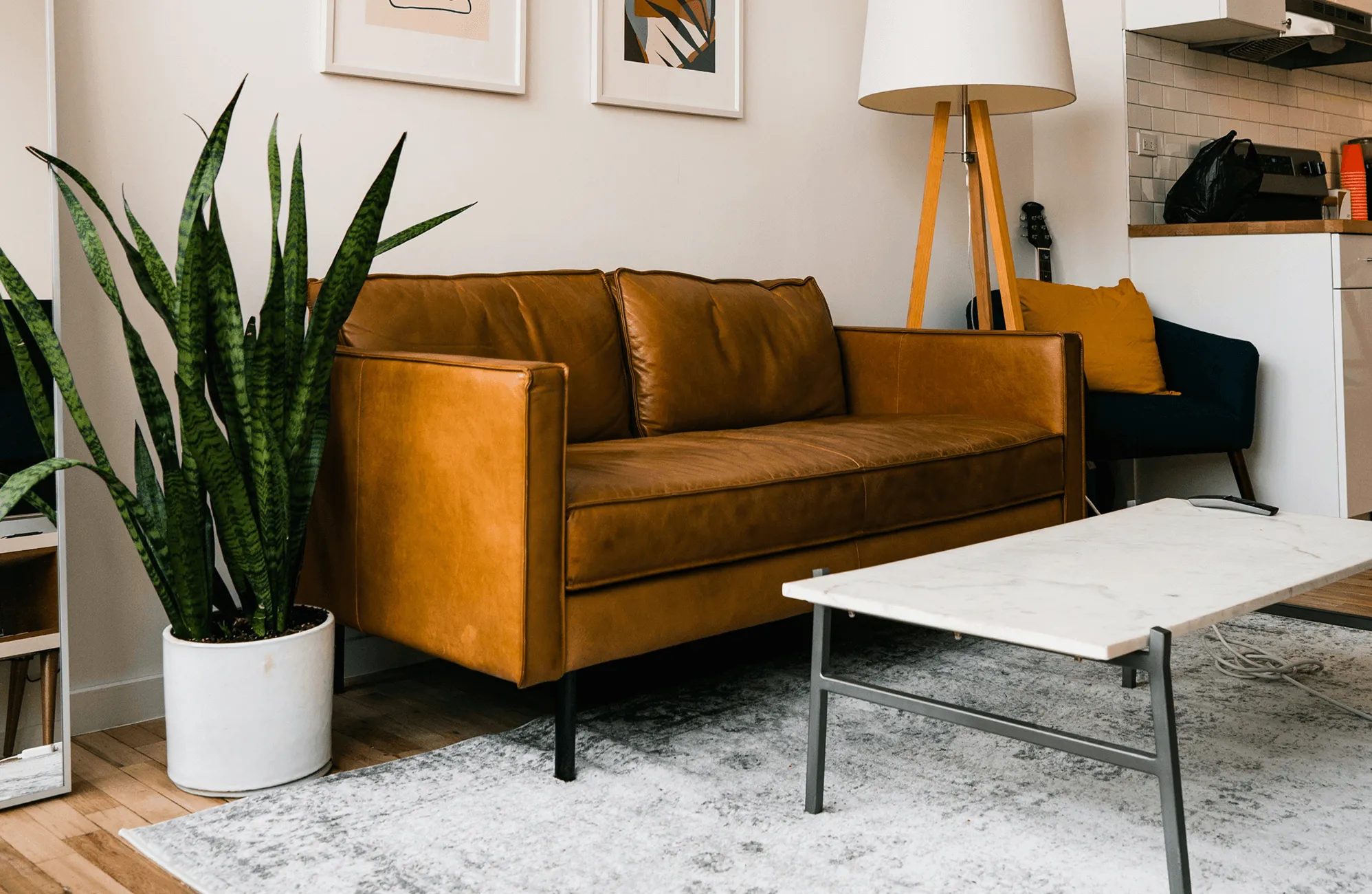
Choosing the right rug for your living room is more than a finishing touch, it’s what quietly defines the entire space. It can ground your furniture, soften the atmosphere, and introduce texture in ways that instantly make a room feel complete. Yet with so many materials, sizes, and styles available, finding the one that truly fits can feel less like decorating and more like guesswork.
The key is knowing what actually matters beyond appearance. From the durability of different fibers to the impact of scale, color, and texture, each decision shapes how your living room looks and functions every day. With a thoughtful approach, the right rug doesn’t just complement your space, it transforms it into something more cohesive, comfortable, and intentional.
Fabric Material
The material of a rug significantly influences its durability, texture, maintenance, and overall aesthetic. This section highlights the unique characteristics of natural fibers, synthetic options, and blends to help you choose the best fabric for your needs.
Natural Fibers for Eco-Friendly and Breathable Spaces
Natural fiber rugs like wool, jute, and sisal are sustainable, durable, and timeless, making them ideal for eco-conscious homeowners.
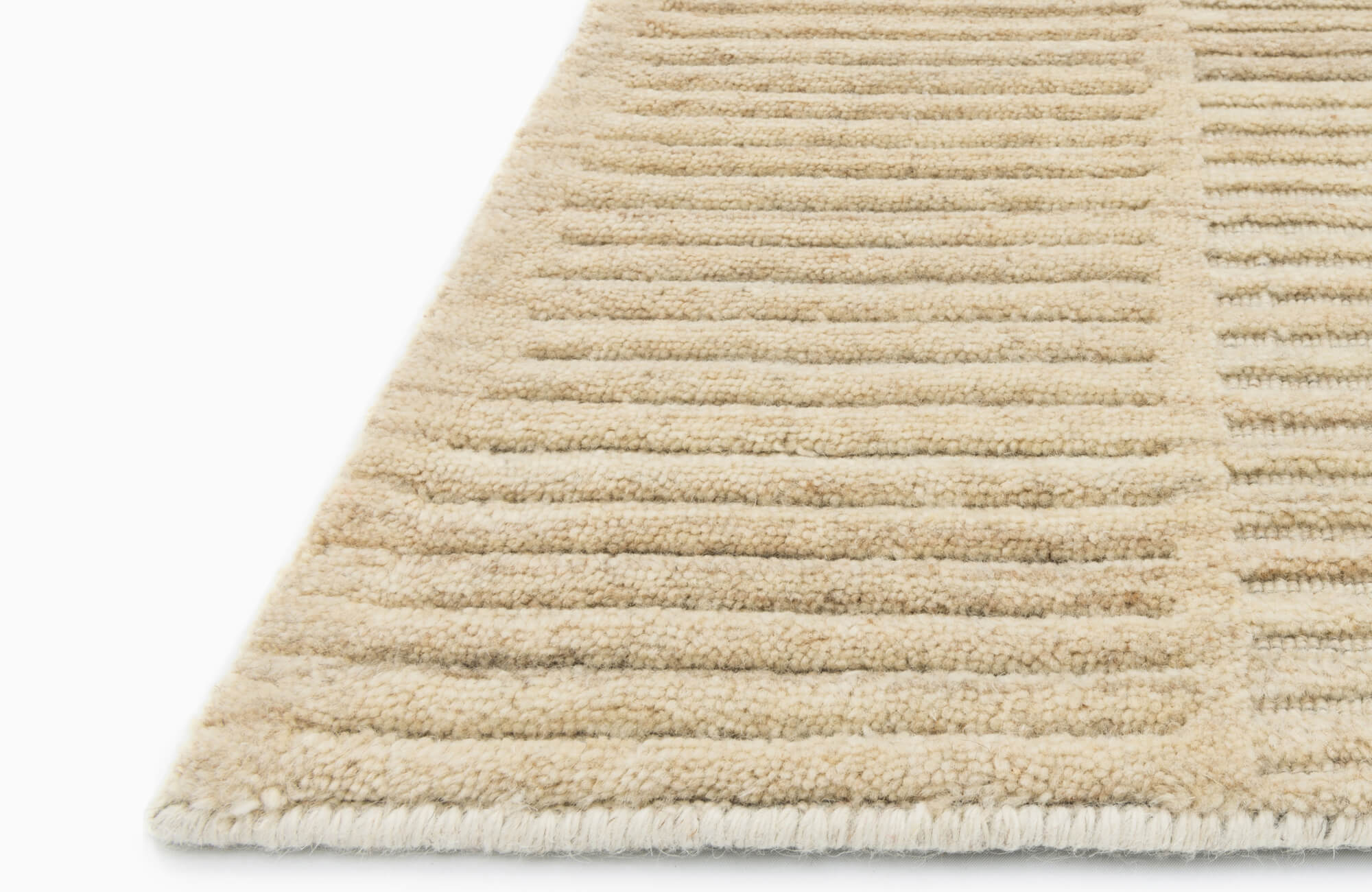
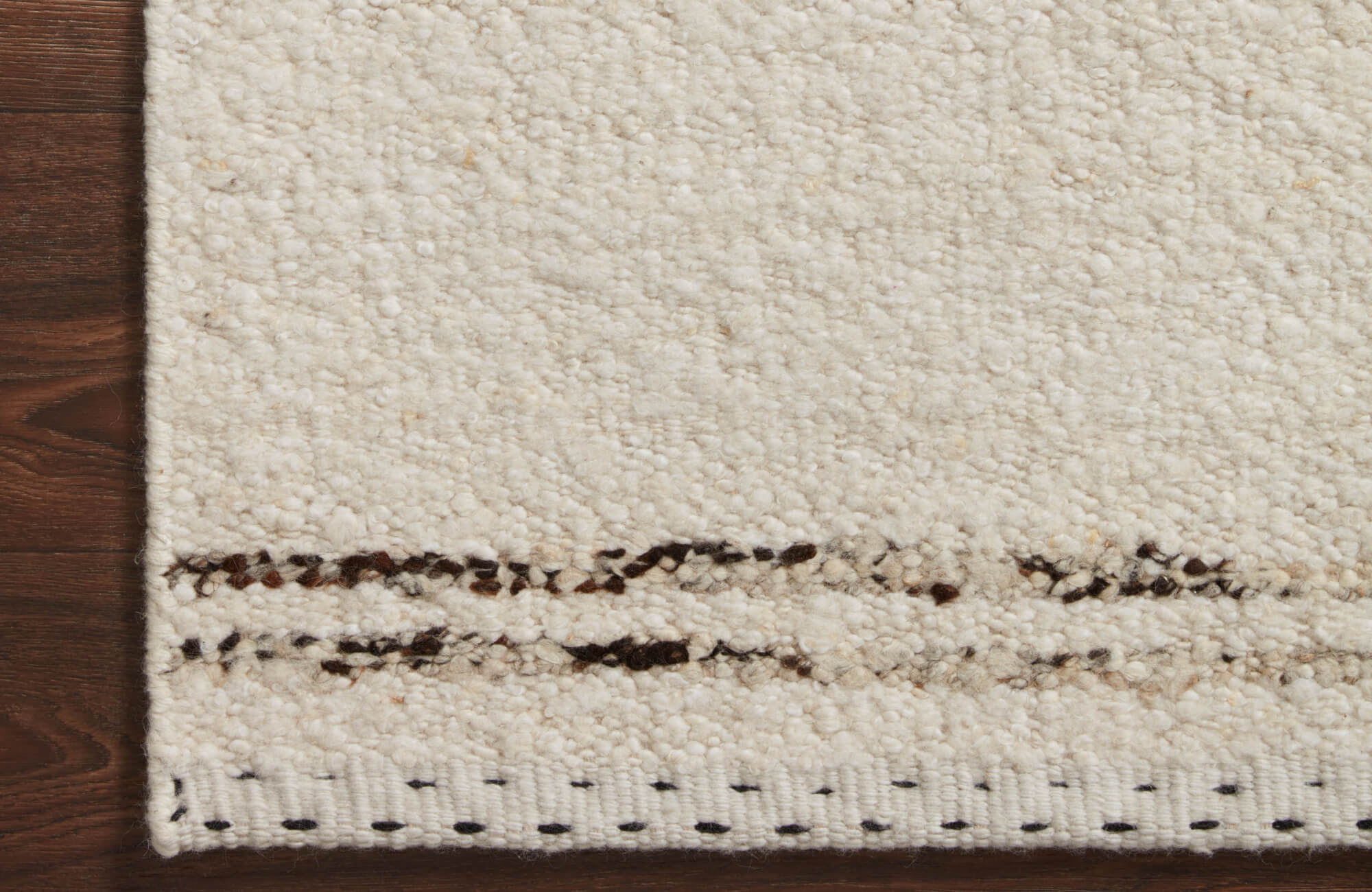
Wool rugs, often regarded as the gold standard, offer a perfect blend of durability and luxury. Their natural elasticity helps maintain shape over time, while flame-resistant and hypoallergenic properties enhance their practicality. Wool also holds vibrant colors that resist fading, ensuring long-lasting beauty. A great example is the Quinton Rug in Sand, as displayed in the picture above. It combines wool’s natural softness with added durability, offering an elegant, eco-friendly option that stands up to everyday use while maintaining a luxurious feel.
Jute and sisal rugs, on the other hand, bring earthy textures and casual elegance to a room. Jute’s softer feel makes it ideal for relaxed, cozy spaces, while sisal’s sturdy construction is well-suited for areas with frequent use. Both materials are biodegradable and promote breathability, though they are sensitive to moisture and perform best in dry environments or with protective underlays.
Beyond their visual appeal, natural fiber rugs contribute to healthier indoor air quality by reducing synthetic chemicals Their versatile textures effortlessly complement a range of styles, from rustic charm to contemporary minimalism, seamlessly blending function with style.
Synthetic Fibers for Budget-Friendly and Stain-Resistant Options
Synthetic fibers like polypropylene and nylon are affordable, durable, and stain-resistant, making them ideal for busy households with pets, children, or frequent gatherings. Polypropylene resists stains, fading, and moisture, making it perfect for spill-prone living rooms. It’s lightweight, easy to clean, and available in diverse designs, though it lacks the plush feel of natural fibers.
Nylon, on the other hand, strikes a balance between durability and softness. It also withstands heavy use, retains its shape, and features vibrant, long-lasting colors, adding comfort and style.
Both materials offer easy maintenance and longevity without sacrificing aesthetics. Additionally, synthetic rugs are often more colorfast than their natural counterparts, ensuring they retain their appearance even under direct sunlight. Their versatility in patterns and textures makes them a practical yet stylish option for modern living rooms.
Blended Materials for the Best of Both Worlds
Blended rugs offer the perfect balance of natural softness and synthetic durability, combining eco-friendly materials with practical performance. Wool-blend rugs, for example, incorporate synthetics like nylon to boost resilience and reduce costs, all while maintaining the luxurious softness of wool. This makes them an ideal choice for living rooms that experience moderate to heavy use.
Similarly, jute-polypropylene blends fuse jute’s organic, earthy charm with polypropylene’s strength and easy upkeep, providing a natural look without compromising on durability. Sisal-nylon blends follow the same principle, pairing sisal’s rich texture with nylon’s softness and stain resistance for a rug that’s both visually appealing and long-lasting.
These versatile materials not only extend the life of your rug but also offer flexible design options, making them a smart choice for households looking for sustainable, low-maintenance solutions.
Size and Shape
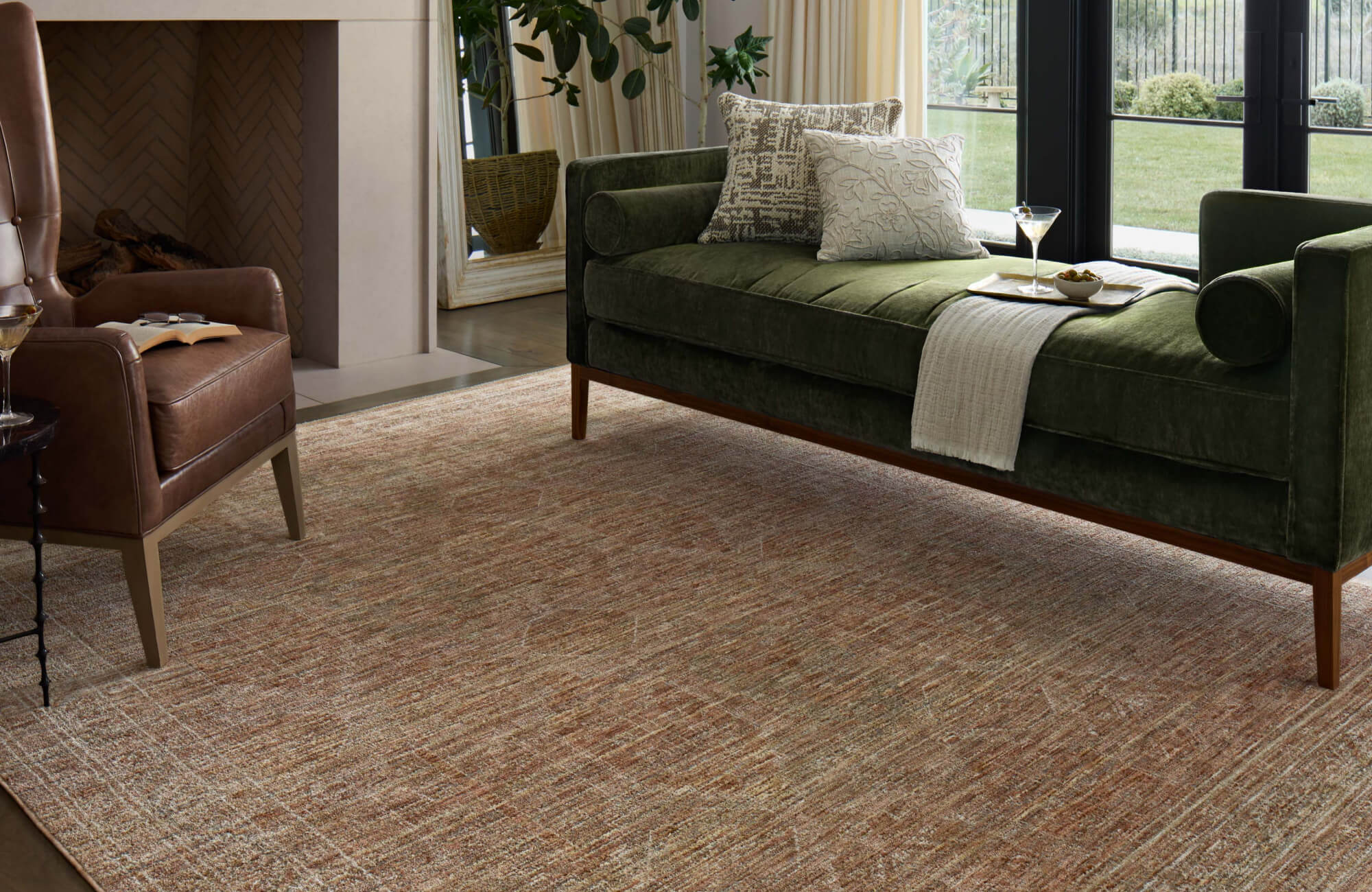
The size and shape of a rug anchor the room, define seating areas and tie design elements together. They also influence its functionality, guiding movement and defining distinct living areas within an open floor plan.
Standard Sizes and How to Measure Your Space
Choosing the right rug size brings harmony and balance to your living room. Begin by measuring your space, taking into account architectural details like fireplaces or bay windows. To create a well-framed look, leave 18-24 inches of bare floor around the rug’s edges. In smaller rooms, a 5x8-foot rug can define a cozy seating area, while larger spaces benefit from 8x10 or 9x12-foot rugs that anchor the entire room.
To achieve a cohesive design, ensure the rug extends under the front legs of sofas and chairs. For sectional sofas, choose a larger rug that fits the entire piece, avoiding a disproportionate appearance. The right rug size not only enhances visual appeal but also improves functionality, making your living room feel more spacious and inviting.
Custom Shapes for Unique Layouts
Non-rectangular rugs, such as round, oval, or irregular shapes, bring visual interest and address layout challenges, offering a versatile solution for distinctive living spaces. Round rugs, in particular, soften the sharp angles of square or rectangular rooms and pair beautifully with circular furniture, like round coffee tables or curved sofas, creating a cohesive, inviting look.
Similarly, oval rugs help elongate narrow rooms, visually widening the space while complementing arched doorways or other curved architectural details. For a more artistic touch, irregularly shaped rugs, like animal hides or abstract designs, add character and serve as eye-catching focal points in eclectic or modern interiors.
Beyond aesthetics, custom-shaped rugs are perfect for defining specific areas in open-concept spaces, seamlessly blending style with functionality. Their adaptability also makes them a smart choice for homeowners looking to elevate their interior design with unique, personalized touches.
Furniture Placement and Rug Proportions
How you position furniture relative to your rug plays a crucial role in maintaining balance and enhancing functionality. For a cohesive look, place all furniture on a large rug (9x12 feet or larger), especially in open-concept spaces where the rug anchors the living area. In medium-sized rooms, placing only the front legs of sofas and chairs on the rug defines the seating area without needing an oversized rug.
In smaller or minimalist spaces, floating the rug within the furniture arrangement, without any furniture legs resting on it, creates a clean, modern aesthetic while highlighting the rug as a distinct design element. These thoughtful placements enhance visual harmony and influence how people navigate the room, and the right proportions can make a room feel more open or intimate, depending on your design goals.
If you're unsure about selecting the right rug size or shape for your living room, Edward Martin’s design services are here to help. Our team can provide personalized guidance on measuring your space, choosing the perfect dimensions, and finding unique shapes that complement your layout. With expert advice tailored to your home’s specific needs, we’ll ensure your rug enhances both the functionality and style of your living room.
Colors and Patterns
Color and pattern transform your living room’s ambiance and unify its decor. Choosing the right combination of colors and patterns enhances the visual appeal and defines the space's mood, whether you’re aiming for a calm, neutral backdrop or a bold, statement-making focal point.
Neutral Tones for Versatility and Timelessness
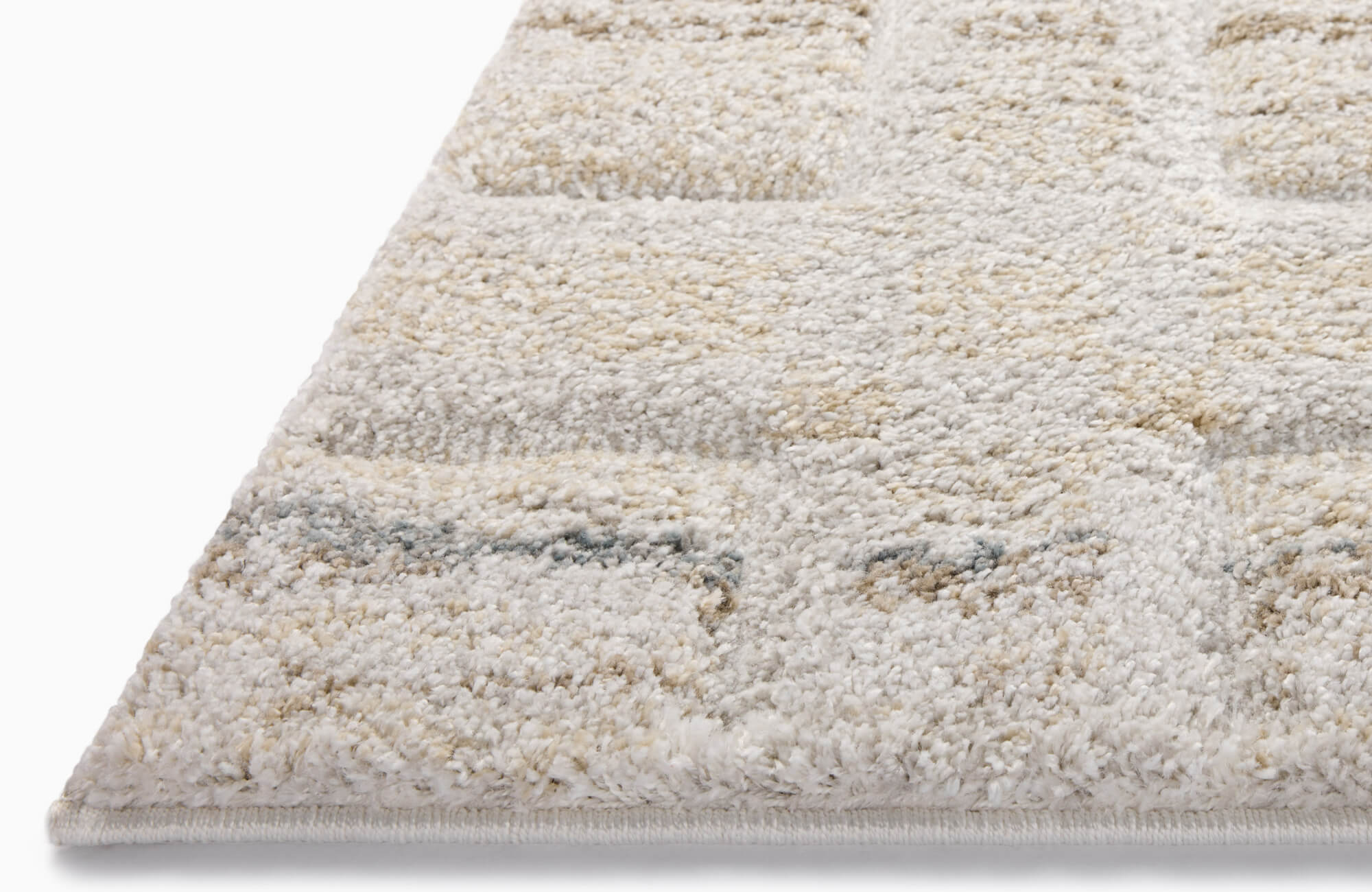
Neutral rugs offer timeless versatility, complementing a wide range of decor styles from traditional to contemporary. Shades like beige, gray, and ivory bring unique qualities, beige adds warmth, gray offers a modern edge, and ivory introduces lightness, making smaller rooms feel more open. Edward Martin’s Bowie Rug in Pearl / Coffee, as shown in the photo above, is a perfect example of a rug that embodies versatility and timelessness. Its neutral tones seamlessly adapt to various interior styles, ensuring it remains a classic element in your home decor for years to come.
Beyond their color versatility, neutral rugs gain added dimension through texture. Incorporating different weaves and finishes enhances depth and tactile interest, preventing simple designs from feeling flat or uninspired. Layering rugs in varying neutral tones and textures also creates a cohesive, monochromatic look that exudes subtle sophistication. This approach works particularly well in minimalist or Scandinavian-inspired interiors, where clean lines and understated elegance take center stage. Additionally, neutral rugs serve as grounding elements, allowing bold furniture or artwork to stand out while maintaining visual harmony. Their classic appeal ensures they remain stylish as trends evolve, offering both beauty and longevity in your decor.
Bold Patterns for Statement-Making Focal Points3
Bold-patterned rugs infuse personality into a living room, transforming the floor into a striking focal point that draws the eye and anchors the space. Geometric patterns, for example, introduce energy and movement, making them ideal for modern or eclectic interiors where clean lines and dynamic shapes add a contemporary edge.
For a softer touch, floral rugs bring elegance and warmth, complementing traditional or transitional decor with their intricate designs or oversized blooms. These patterns add a sense of charm and refinement, making the space feel inviting and thoughtfully curated.
If you’re looking for something more unconventional, abstract patterns offer an artistic flair with freeform shapes and bold color combinations, standing out beautifully in modern or bohemian spaces. Beyond aesthetics, bold patterns also serve a practical purpose; they can help delineate areas in open-concept layouts or add depth to neutral rooms, ensuring a balanced, cohesive, and visually engaging environment.
Coordinating Colors with Existing Decor
Choosing a rug that complements your existing decor is key to creating a cohesive, polished living room. By matching the rug with dominant room colors, such as walls, furniture, or curtain hues, you can foster a harmonious appearance that ties all elements together seamlessly.
On the other hand, incorporating contrasting colors introduces a bold visual impact, transforming the rug into a dynamic focal point that adds both energy and depth to the space. For a more balanced approach, consider selecting rugs that feature accent colors found in your decor, like those in throw pillows, artwork, or decorative accessories, which helps unify various design elements for a thoughtfully curated look.
Ultimately, coordinated color schemes not only enhance the room's aesthetic appeal but also create a natural flow and sense of balance throughout the space, making your living room feel both stylish and inviting.
Texture and Pile
The texture and pile of a rug influence both comfort underfoot and visual depth, shaping the room's overall feel. They play a key role in defining the overall style, from sleek, modern spaces to cozy, inviting environments.
Low-Pile Rugs for Easy Maintenance and Modern Looks
Low-pile rugs are sleek, easy to maintain, and perfectly suited for contemporary living spaces. Flatweave rugs, in particular, are lightweight and versatile, ideal for minimalist or eclectic interiors. Their thin profile allows for easy cleaning and layering, while simple patterns add subtle character without overwhelming the space.
Machine-made low-pile rugs, on one hand, offer durability and straightforward maintenance, catering to modern aesthetics. As shown in the image above, the Broderick Rug in Oat / Iron exemplifies low-pile construction, offering excellent resistance to wear and easy maintenance, perfect for high-use areas like living rooms. Crafted in Egypt, this rug blends durable materials with a refined design, offering both practicality and style. Its low pile traps less dust and allergens, contributing to a healthier indoor environment, while its modern color palette complements a wide range of decor styles.
High-Pile Rugs for Luxurious Comfort and Coziness
High-pile rugs, such as shag and plush styles, instantly elevate a living room with luxurious texture and warmth. Shag rugs bring retro or bohemian charm with long, fluffy fibers, adding a playful vibe to any space. While they require more maintenance, their texture makes them a standout feature in casual interiors.
Plush rugs offer a denser, softer feel, exuding elegance and sophistication, perfect for creating cozy spaces like reading nooks or intimate seating areas. Both shag and plush rugs enhance comfort while adding depth and dimension, making them ideal for spaces where tactile appeal is essential.
Layering Textures for a Dynamic Look
Layering rugs with different textures adds depth, dimension, and visual interest, transforming your living room into a dynamic and inviting space. A well-balanced mix of textures creates contrast, making the overall design feel more intentional and engaging. Pairing flatweave rugs with shag styles, for example, strikes the perfect balance, flatweaves provide a sleek, structured foundation, while shag rugs introduce softness and warmth for a cozy, inviting feel.
Blending natural fiber rugs like jute or sisal with plush synthetics further enhances this effect, combining durability with comfort to achieve a harmonious look. Adding small, textured accent rugs can also infuse personality without overwhelming the decor. Beyond aesthetics, layering rugs enhances the tactile experience and provides extra cushioning, making your space not only visually captivating but also more comfortable and functional.
Durability and Maintenance
Choosing durable materials and proper care methods ensures your rug remains beautiful and functional over time. These factors not only affect a rug’s longevity but also help maintain its style and practicality with minimal upkeep.
High-Use Areas and Rug Durability
Living rooms are busy areas, making durability a key factor when choosing a rug. Wool rugs are naturally resilient, with elasticity that prevents furniture indentations and lanolin that offers stain resistance, keeping them fresh and vibrant for years. Synthetic fibers like nylon and polypropylene are also designed to withstand heavy use, resisting moisture, stains, and fading, ideal for active households with children or pets. Additionally, tightly woven, low-pile rugs are particularly effective in high-use spaces, as their dense construction resists wear and traps less dirt, making maintenance easier and more manageable.
Cleaning Tips for Different Rug Types
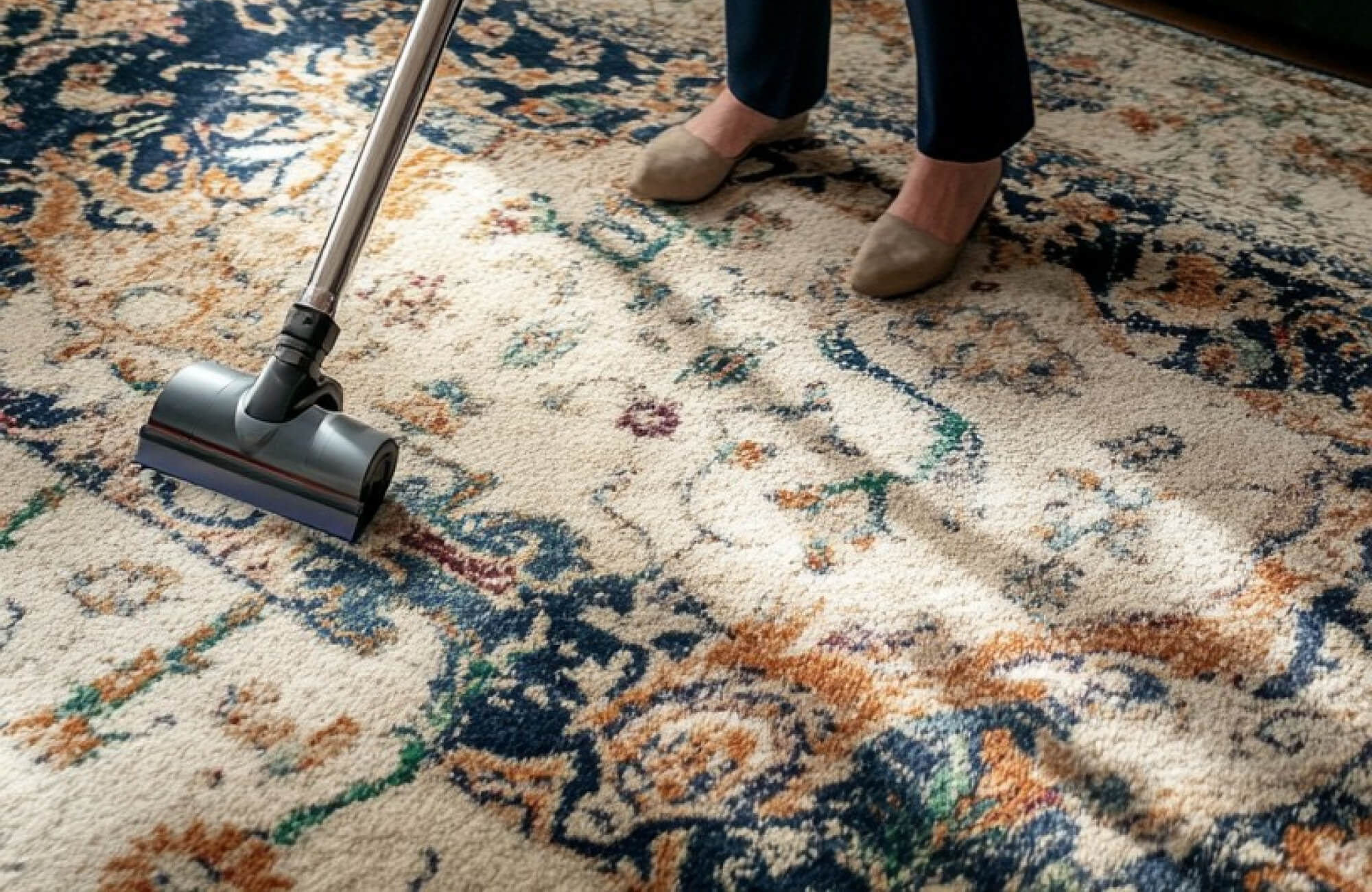
Proper cleaning is key to preserving your rug’s appearance and extending its lifespan. Natural fiber rugs, such as wool, jute, and sisal, require gentle care, vacuum wool without a beater bar to protect its fibers and keep jute and sisal dry to prevent moisture damage.
Synthetic rugs, on the other hand, are designed for easy maintenance. They can be vacuumed regularly, spot-cleaned with mild detergents, and even machine-washed in some cases, making them ideal for busy households. High-pile rugs, including shag and plush styles, demand extra attention, use adjustable vacuums to prevent fiber damage and avoid excessive moisture to maintain their softness and structure.
For the best results, always follow the manufacturer’s care instructions, as specific materials and constructions may require unique cleaning methods. Tailoring your cleaning routine to your rug’s material ensures it remains in top condition, enhancing both its aesthetic appeal and longevity.
Protective Measures to Extend Rug Life
Beyond regular cleaning, simple protective measures can significantly extend your rug’s lifespan. Using a quality rug pad prevents slipping, reduces wear from friction, and adds cushioning for increased comfort. Also, rotating your rug every six months helps distribute wear evenly, especially in high-use areas or spaces exposed to direct sunlight. To prevent fading, minimize sun exposure by positioning your rug away from windows or using UV-blocking treatments. These proactive steps will help maintain your rug’s color, structure, and overall appearance, ensuring it remains a lasting feature in your living room.
Budget and Value
Finding the right rug means balancing style, durability, and cost to make a smart, long-lasting investment. Factoring in both the initial price and long-term maintenance ensures your rug offers lasting value while complementing your lifestyle needs.
Affordable Options That Don’t Sacrifice Style
Budget-friendly rugs can still deliver on style, durability, and functionality. Synthetic options like polypropylene and polyester are not only affordable but also stain-resistant and easy to clean, making them perfect for homes with kids or pets. Available in a wide range of modern designs and vibrant colors, they seamlessly blend practicality with aesthetic appeal.
Flatweave rugs, such as kilims and dhurries, offer another cost-effective solution. Lightweight and easy to maintain, they feature timeless patterns and textures that complement various interior styles. Machine-made rugs also provide consistent quality and intricate patterns at a lower cost, with dense weaves and durable fibers built to withstand daily use. These affordable choices make it easy to refresh your living space without compromising on quality or style.
Mid-Range Rugs for Quality and Design Balance
Mid-range rugs strike the perfect balance between quality, design, and affordability. Wool-blend rugs combine the softness and warmth of wool with the durability of synthetic fibers, offering a plush feel that’s resilient enough for everyday use. Hand-tufted rugs also fall within this range, featuring intricate patterns and textures with a luxurious touch at a more accessible price than hand-knotted options.
For those seeking eco-friendly elegance, natural fiber rugs made from jute, sisal, or seagrass provide organic textures and durability, bringing a touch of nature indoors. While they may lack the plushness of synthetic or wool rugs, their unique aesthetics and sustainability make them a stylish, mid-range investment.
Luxury Rugs as Long-Term Investments
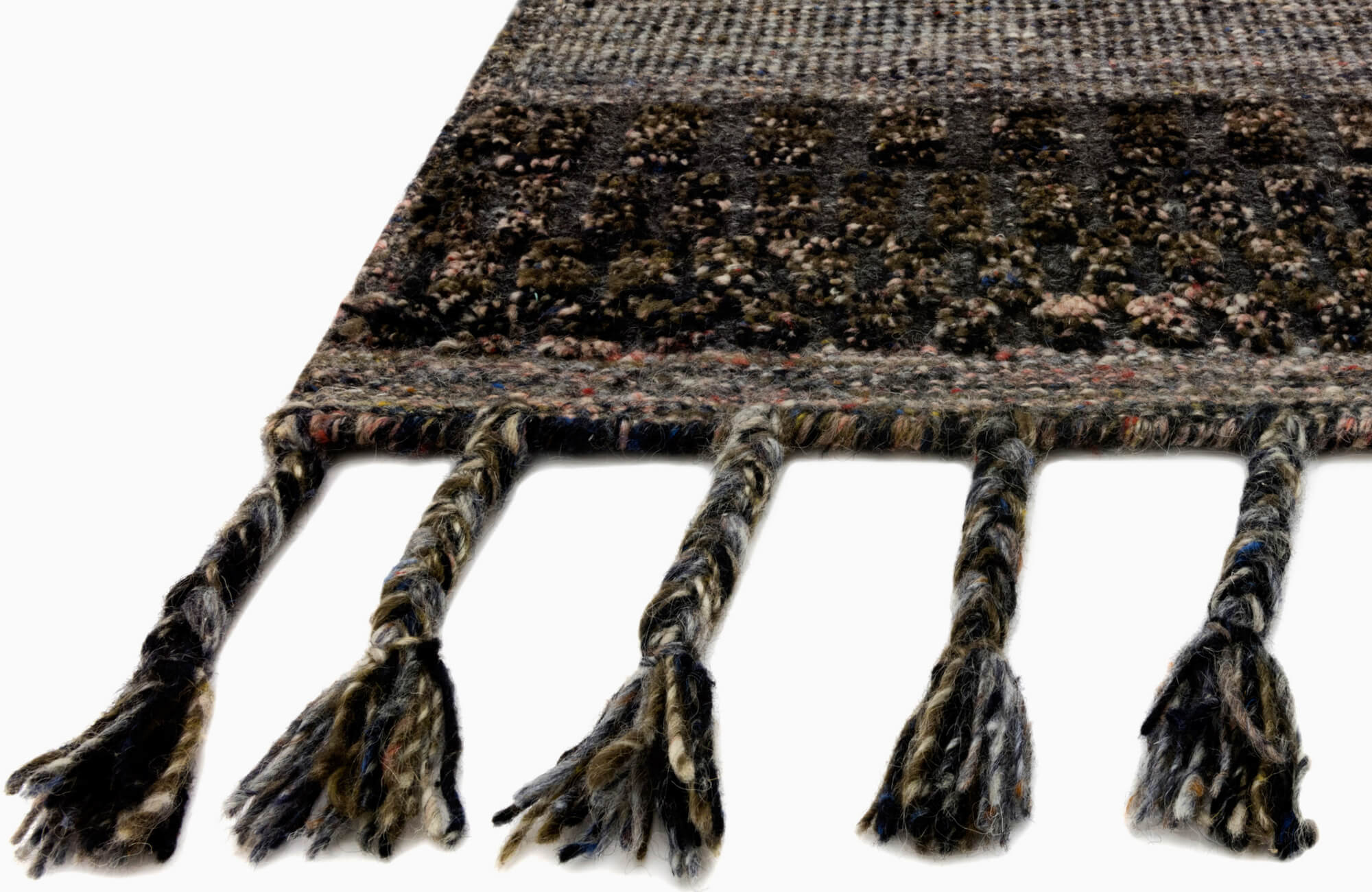
Luxury rugs represent the pinnacle of craftsmanship and design, often becoming cherished heirloom pieces. Hand knotted rugs are renowned for their meticulous attention to detail and exceptional durability, featuring dense, intricate patterns that stand the test of time. Each knot is tied by hand, creating a unique, artisanal product that adds depth and sophistication to any living space.
Silk rugs, known for their softness, sheen, and delicate patterns, bring unmatched elegance, though they are best suited for low-use areas due to their delicate nature. Antique and vintage rugs, on the other hand, offer timeless appeal, with unique patterns and rich histories that add character and depth to a room. While luxury rugs come with a higher price tag, their beauty, craftsmanship, and longevity make them a worthwhile investment for those looking to elevate their living spaces with pieces that transcend trends.
Making the Right Rug Choice for Your Living Room
Selecting the perfect rug is about balancing aesthetics, functionality, and budget. By considering materials, size, color, texture, durability, and overall value, you can choose a rug that enhances your living room’s comfort and style while aligning with your lifestyle. Whether you opt for a bold, statement-making piece or a timeless neutral, the right rug can transform your space into a cohesive, inviting haven.
If you’re feeling overwhelmed by the variety of options or need help narrowing down your choices, reach out to Edward Martin for expert guidance. With personalized recommendations and a deep understanding of design principles, Edward Martin can help you find a rug that perfectly complements your space. Contact us today to explore your options and make your living room truly shine!
Follow us on Instagram
@EDWARD.MARTIN
)
)
)
)
)
)
)
)
)
)
)
)
)
)
)
)