
)
)
)
)
)
)
)
)
Are Checkered Tiles More Expensive?
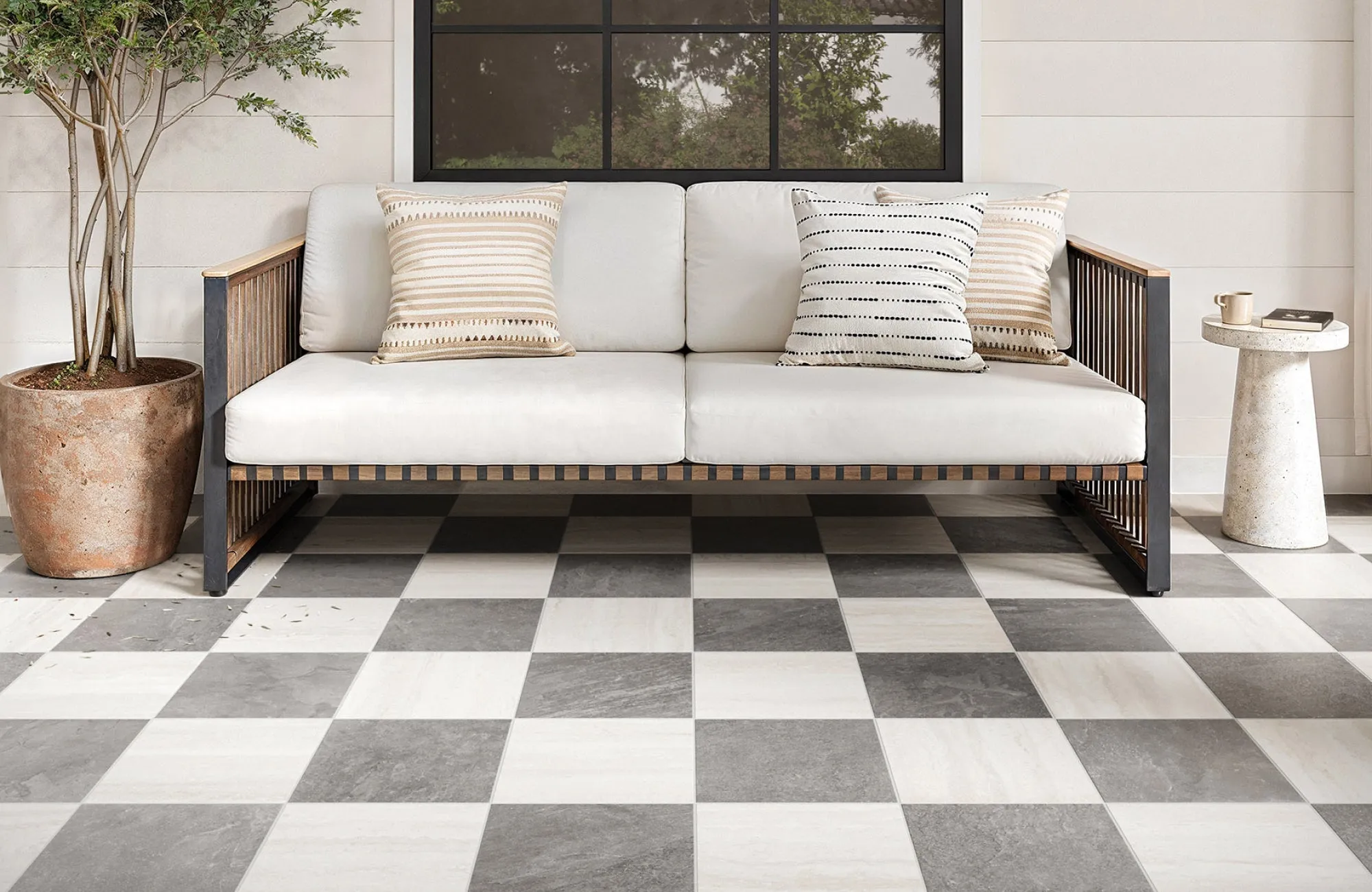
Checkered tiles bring a bold, vintage charm to any space, instantly creating a sense of style and movement underfoot. When planning a renovation or starting from scratch, cost naturally becomes an important part of the process. In this article, we’ll walk you through whether these classic checkered tiles carry a higher price tag, what influences the cost, and how you can choose options that match both your taste and your budget.
What Affects Checkerboard Tile Pricing
Before we can fairly compare checkered tiles to other options, it's essential to understand what influences tile prices. If you're new to tile buying, getting familiar with these key factors will help you make confident, well-informed choices from the start.
Material Matters
The cost of checkered tiles varies widely depending on the material, and each type brings its distinct benefits. For example, porcelain is made from refined clay and fired at high temperatures, resulting in a dense, non-porous surface that’s highly durable and ideal for moisture-prone or frequently used areas. By comparison, vinyl tiles are composed of synthetic materials and often feature a peel-and-stick backing. They’re lightweight, easy to install, and budget-friendly, though they don’t offer the same durability or texture as more traditional options.
When it comes to more natural finishes, stone and cement tiles bring a completely different kind of appeal. Natural stone, such as marble or travertine, is quarried and cut, resulting in tiles with naturally unique tones and veining. These tiles are visually rich but more porous, so they require sealing and ongoing maintenance to stay protected. Cement tiles, on the other hand, are handcrafted from a blend of cement, sand, and mineral pigments, resulting in a matte, earthy finish with rich, saturated color. They’re heavier and a bit more involved to install, but they can bring a sense of depth and character that stands out.
In the end, choosing the right tile material is about more than looks; it’s also about finding the right match for how you use the space and how much upkeep you’re willing to manage over time.
Production Complexity
Achieving a checkered look isn’t always as straightforward as placing black and white tiles side by side. In many cases, the pattern is pre-printed or embedded during the manufacturing process, which may involve advanced methods such as screen printing, digital glazing, or even intricate hand-finishing. As a result, these additional steps often lead to higher production costs that are reflected in the final price. So when you choose a checkered tile, you're not just selecting a design; you’re also investing in the craftsmanship and technology behind it.
Sourcing and Supply Chain
Where your tiles are sourced can have a noticeable impact on the overall cost. Imported options, particularly those crafted from specialty materials or featuring rare finishes, often include additional expenses such as shipping fees, import duties, and supply chain markups. For example, if you’re drawn to a unique color combination that’s only available through a European supplier, you’ll likely see a higher price tag. Furthermore, tiles produced in limited quantities tend to cost more simply because of their scarcity and reduced availability.
How Checkered Tiles Compare to Solid Designs
Now that we’ve covered the key factors that influence tile pricing, let’s shift the focus to how checkered tiles hold up next to solid-colored designs. While both styles can be budget-friendly or high-end depending on the material, checkered tiles offer a level of visual structure and detail that also brings value and design versatility, not just additional cost.
Design and Pattern Premiums
Solid-colored tiles are often manufactured in bulk for broad, general-purpose use. In contrast, checkered tiles, whether achieved through alternating placement or pre-patterned production, require a bit more finesse. This design complexity also typically calls for tighter quality control and greater precision, especially when tiles need to align perfectly for a symmetrical finish. What you’re paying for here isn’t just tile; it’s the design integrity and consistency that elevates the final look.
Installation Strategy
When planning a checkered tile layout, the design strategy plays a key role in shaping both the final look and the practical steps needed to achieve it. Solid-colored tiles offer flexibility with placement, but checkered patterns need deliberate alignment and a clear layout from the start. You’ll also need to decide on the direction of the pattern, how it flows across connected spaces, and whether to go with a classic grid or a diagonal layout. These early design choices impact your tile quantity, cut requirements, and overall project timeline. While it doesn’t directly increase tile cost, it does shape how the entire installation unfolds.
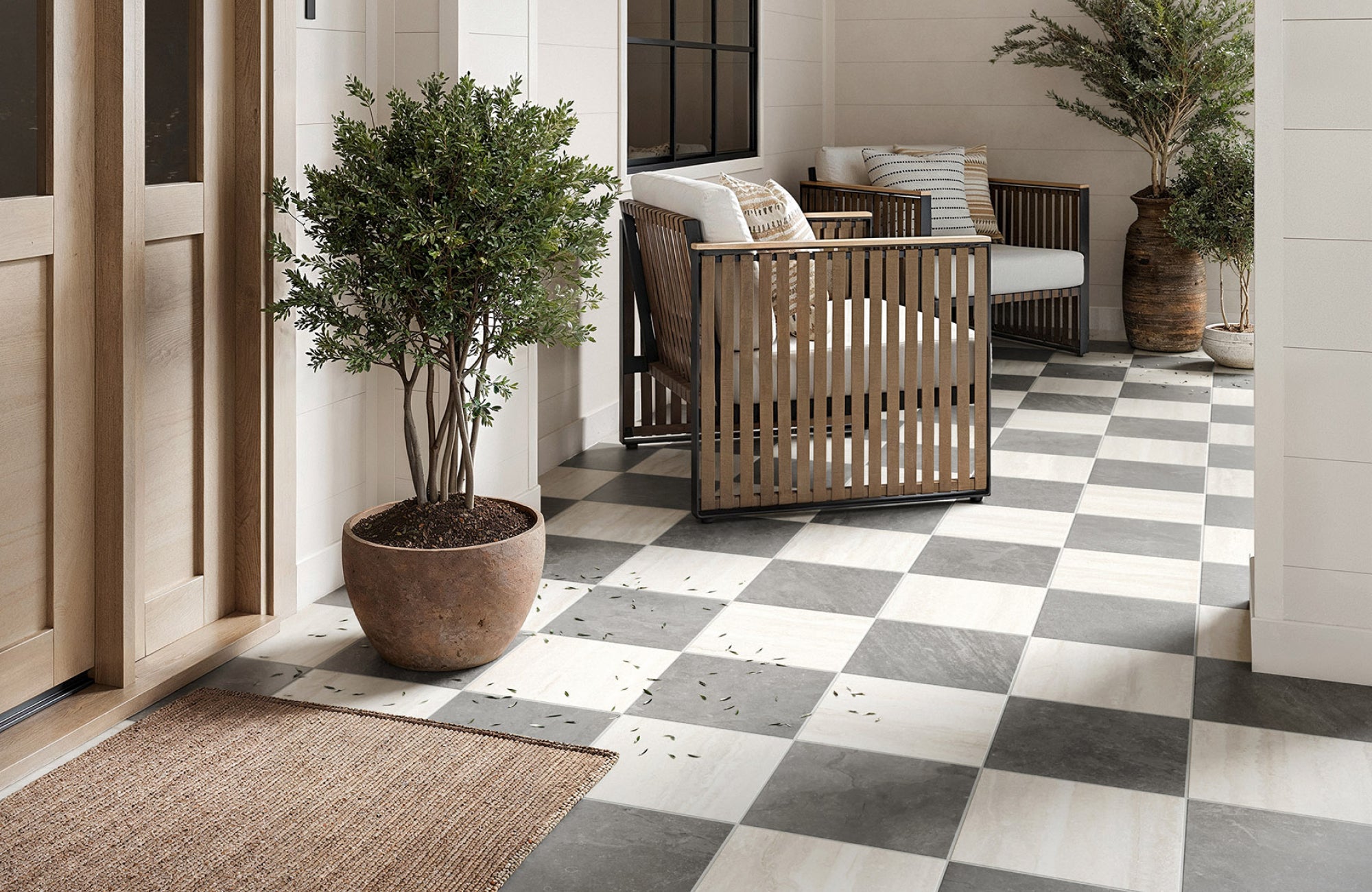
A great example of thoughtful layout planning can be seen with Edward Martin’s Palmer 12x12 Checkerboard Raw Porcelain Tile in White and Grey, as shown in the photo above. Its clean lines and raw finish give the outdoor space a relaxed yet structured feel, highlighting how important pattern flow and tile orientation can be in an open setting. In cases like this, even the direction sunlight hits the floor can influence how the pattern reads in the space, making upfront planning all the more worthwhile.
Packaging and Wastage
When planning for checkered designs, it’s wise to factor in how the pattern affects the quantity. Unlike solid layouts, which are more forgiving with placement and cutting, checkered tiles often involve a bit more trimming at the edges to preserve the visual flow. This may also lead to slightly higher material estimates, not due to wastefulness, but to make sure you don’t fall short mid-project. A little extra planning here ensures a smooth installation from start to finish.
How Installation Methods Influence Cost
Now that we’ve talked about materials and design, let’s shift to what happens once the tiles are in your hands. The way checkered tiles are installed plays a big role in your final cost, and understanding the process can help you plan more accurately.
Labor Intensity
From the installer’s side, checkered tiles demand precision at every step. Alternating colors means each tile must be placed in the correct sequence with consistent spacing throughout the room. If your design features angles, borders, or custom cuts, installers will also need to spend extra time measuring, cutting, and fine-tuning each piece to ensure a flawless result. This level of precision demands both skill and attention, which often translates to higher labor costs compared to more straightforward, single-color installations.
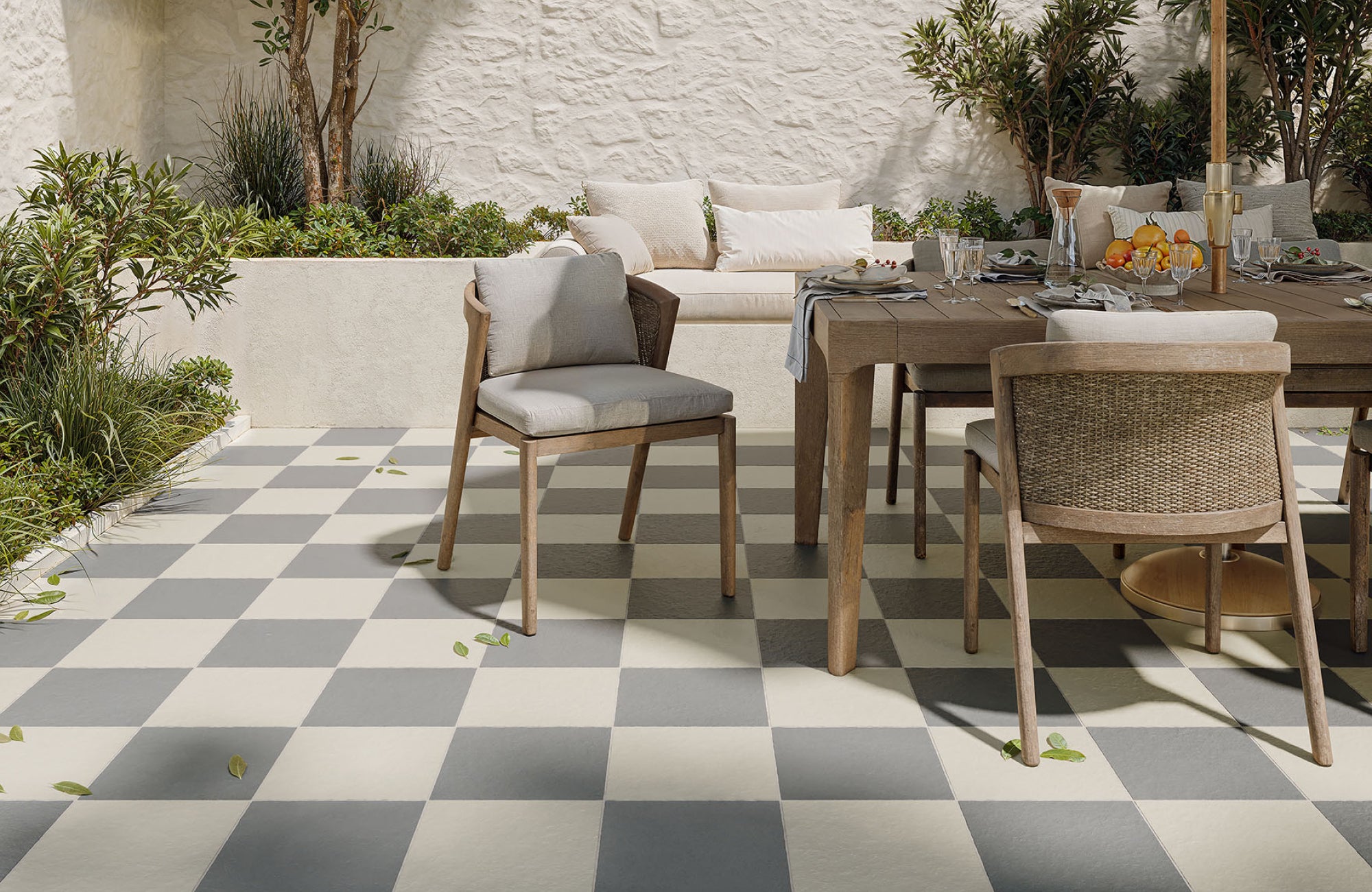
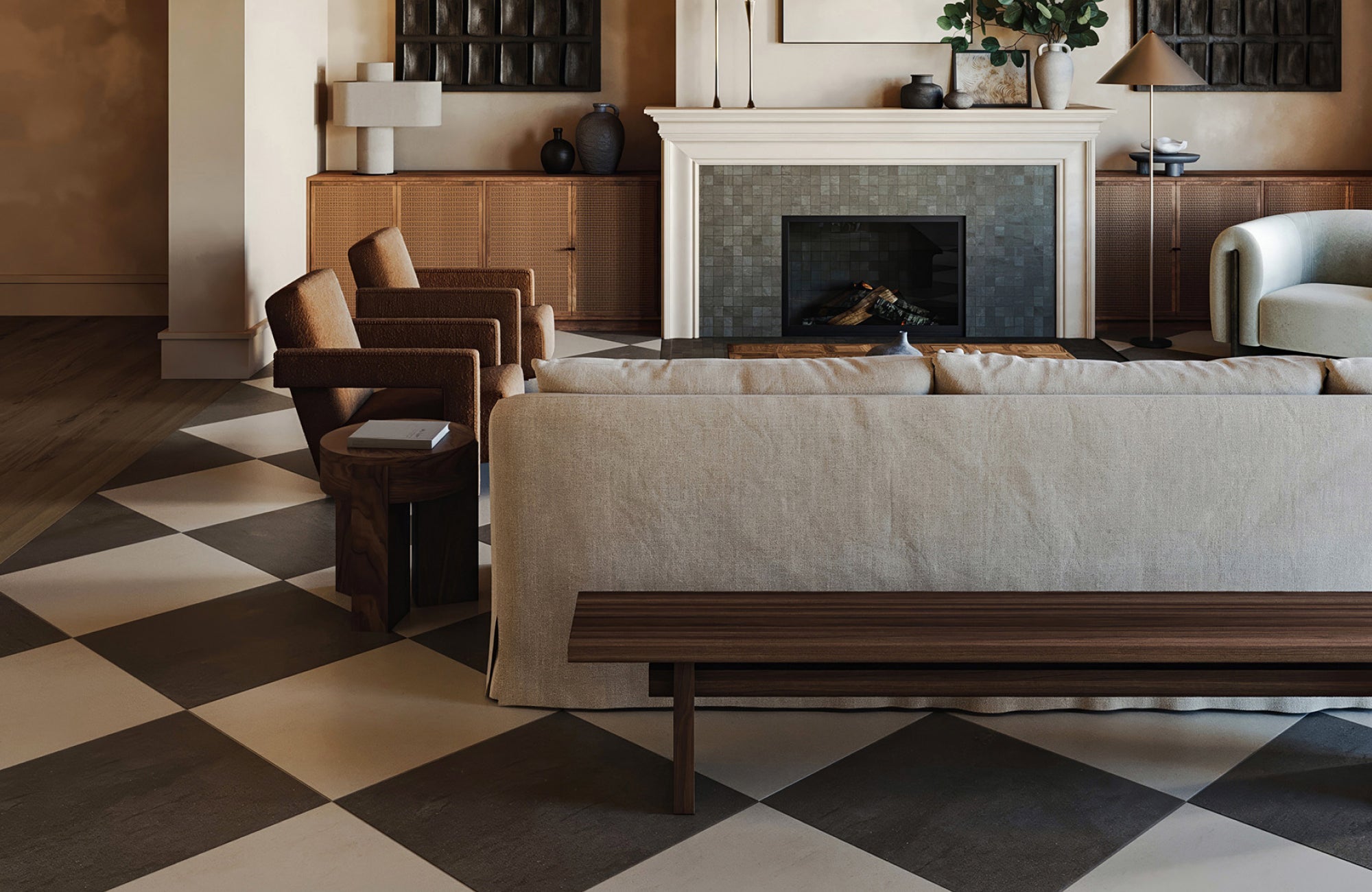
A great example of this attention to detail can be seen in the use of Edward Martin’s Wren 12x12 Checkerboard Grip 2cm Porcelain Paver Tile in Charcoal & Oat, as featured in the photo above. Its clean grid pattern and balanced color contrast highlight just how important accuracy is to achieve that polished, high-end finish. Each tile must align perfectly to maintain the design flow, particularly in open areas where even slight misalignment becomes instantly noticeable.
Subfloor Preparation
To achieve the full visual impact of checkered tiles, the subfloor has to be perfectly flat and level. Even minor bumps or dips can disrupt the alignment, which stands out even more in bold, high-contrast patterns. Depending on the condition of your space, you may also need additional preparation, such as underlayment or concrete leveling, to ensure a smooth, even foundation. These extra steps often come with added costs that aren’t always obvious upfront, but they’re essential for a clean, professional-looking result.
Layout Complexity
The complexity of your layout can also affect the overall cost. A straightforward grid is relatively quick to install; however, if you're aiming for a rotated diamond pattern or weaving the checkerboard into a larger decorative design, the process becomes more involved. More intricate layouts mean additional planning, more precise cuts, and ultimately, higher labor costs. If you’re going for a bold, standout look, it’s worth being prepared for the extra time and attention it will take to bring that vision to life.
Checkered Tile Options for Every Budget
How much you spend depends on the type of tile you choose. Here’s how checkered tiles can fit a variety of budgets, while still delivering the style and visual impact you’re looking for.
Entry-Level Options
If you're trying to keep costs to a minimum, peel-and-stick vinyl tiles offer a wallet-friendly way to achieve the classic checkered look. Priced around $1 to $2 per square foot, they’re a smart pick for quick makeovers in laundry rooms, rental spaces, or mudrooms. Installation is simple, DIY-friendly, and doesn’t require grout or professional tools, which can help keep your upfront investment low.
However, that low upfront cost does come with a few trade-offs. Vinyl just doesn’t hold up the same way ceramic or porcelain does, especially in areas that see moisture or frequent use. Over time, the adhesive can also wear down, causing tiles to peel, lift, or shift out of place. So while you might save at the start, you could end up spending more later on repairs or a full replacement. That’s why these tiles are best suited for light-use areas or short-term projects where long-term durability isn’t the top priority.
Mid-Range Options
For many, mid-range tiles strike the right balance between cost and performance. Porcelain and ceramic checkered tiles in this category typically range from $5 to $12 per square foot, offering both durability and aesthetic flexibility. Porcelain is especially ideal for busy spaces like kitchens and bathrooms due to its density, non-porous surface, and resistance to stains and moisture. Ceramic, while more budget-friendly, is best reserved for walls or light-use areas, as it can chip more easily when used on floors.
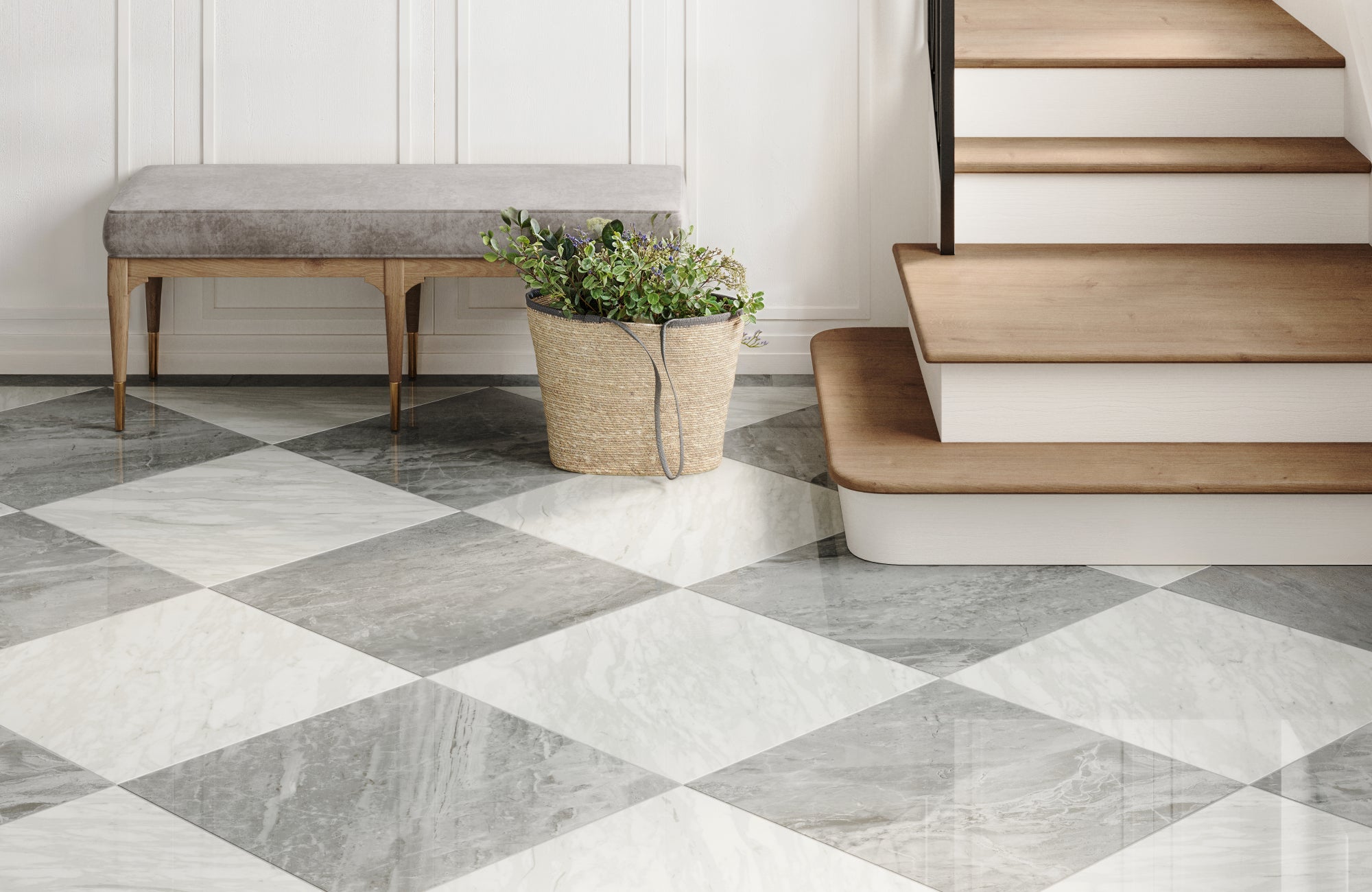
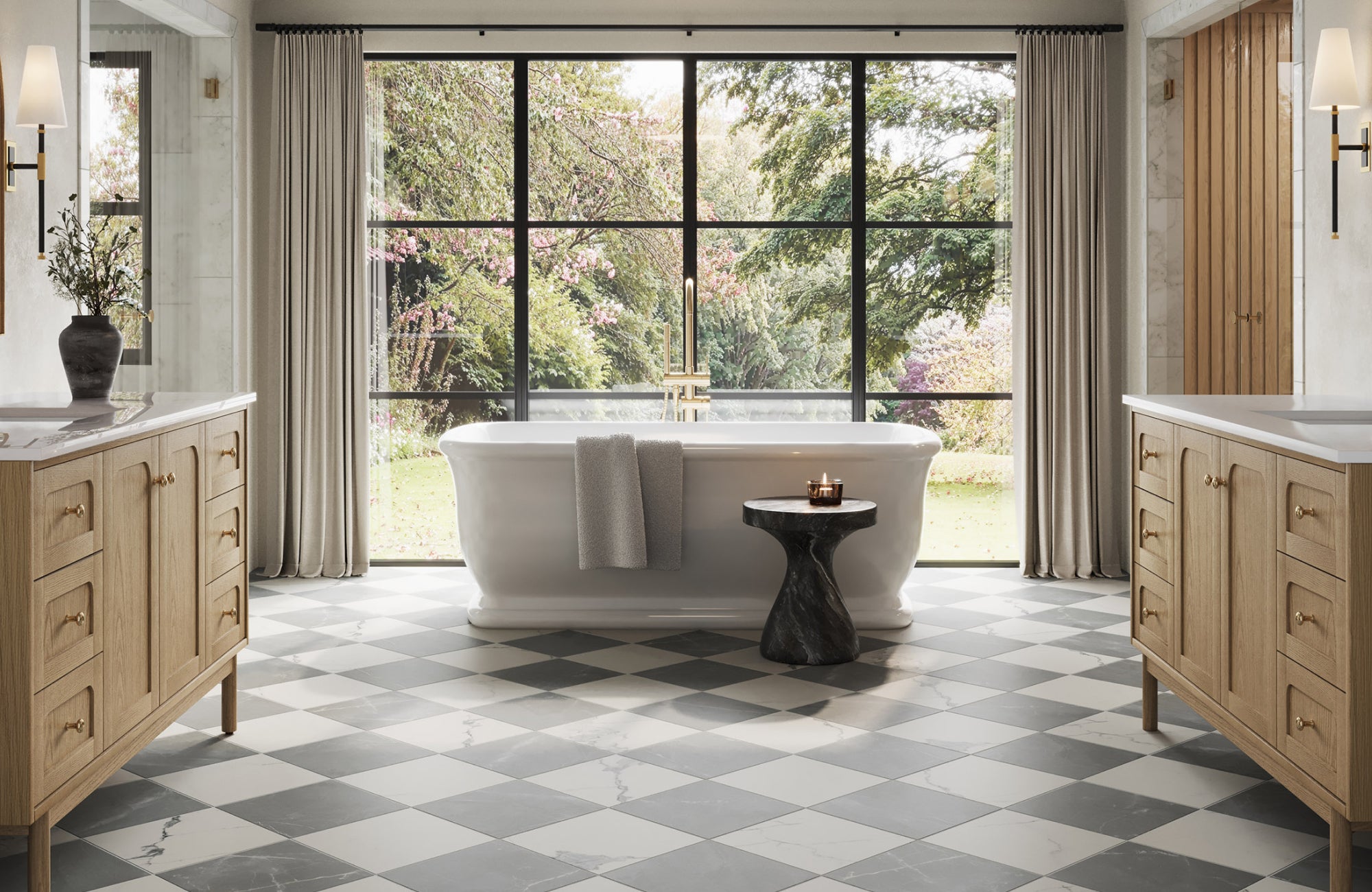
One standout example is Edward Martin’s Leona 12x12 Checkerboard Matte Porcelain Tile in Calacatta and Amani Grey, as shown in the photo above. With a refined marble-like finish and balanced tones, it adds elegance without overwhelming a space, priced at $9.49 per square foot. If you're looking for something more economical, other mid-range options start around $5.63, $7.92, or $11.49 per square foot, offering a range of price points that still deliver on style.
This price tier also offers a variety of finishes and colors, from matte and polished to bold tones and soft neutrals. Whether your style leans modern, traditional, or somewhere in between, there’s likely a checkered tile in this range that suits both your space and your budget.
Premium Options
If you're designing a space where the floor is meant to stand out, premium checkered tiles offer a level of character and craftsmanship that’s hard to match. Materials like encaustic cement, natural stone, such as marble, onyx, limestone, and travertine, and handmade ceramic tiles bring rich color variation, artisan textures, and finishes that feel truly one of a kind. These options are also ideal for statement areas such as entryways, powder rooms, or custom-designed spaces where the flooring plays a central design role.
This kind of quality comes at a higher price. Most premium tiles range from $12 to $25 per square foot, and installation tends to be more complex, often requiring skilled professionals, specialized tools, and extra prep time. As mentioned, natural stone needs proper sealing and ongoing maintenance to protect it from moisture and stains, especially in bathrooms and kitchens. Without that care, the surface can wear unevenly over time.
That said, many find the investment well worth it. Materials like marble and cement tend to age gracefully, developing a natural patina that adds depth and character. If you’re after a look that’s both distinctive and built to last, premium checkered tiles bring lasting value along with standout style.
Maintenance and Long-Term Value
The upfront cost is just one piece of the puzzle. Over time, your tiles should be able to handle daily wear and still maintain the fresh, polished look they had on day one. Let’s take a look at what it means to live with checkered tiles over time, depending on the type you choose.
Wear and Tear
Checkered tiles handle wear differently depending on the material. Vinyl peel-and-stick options are budget-friendly but more prone to damage, corners can lift, and surface scuffs show easily with daily use. They’re best suited for light-use areas where durability isn’t a top concern.
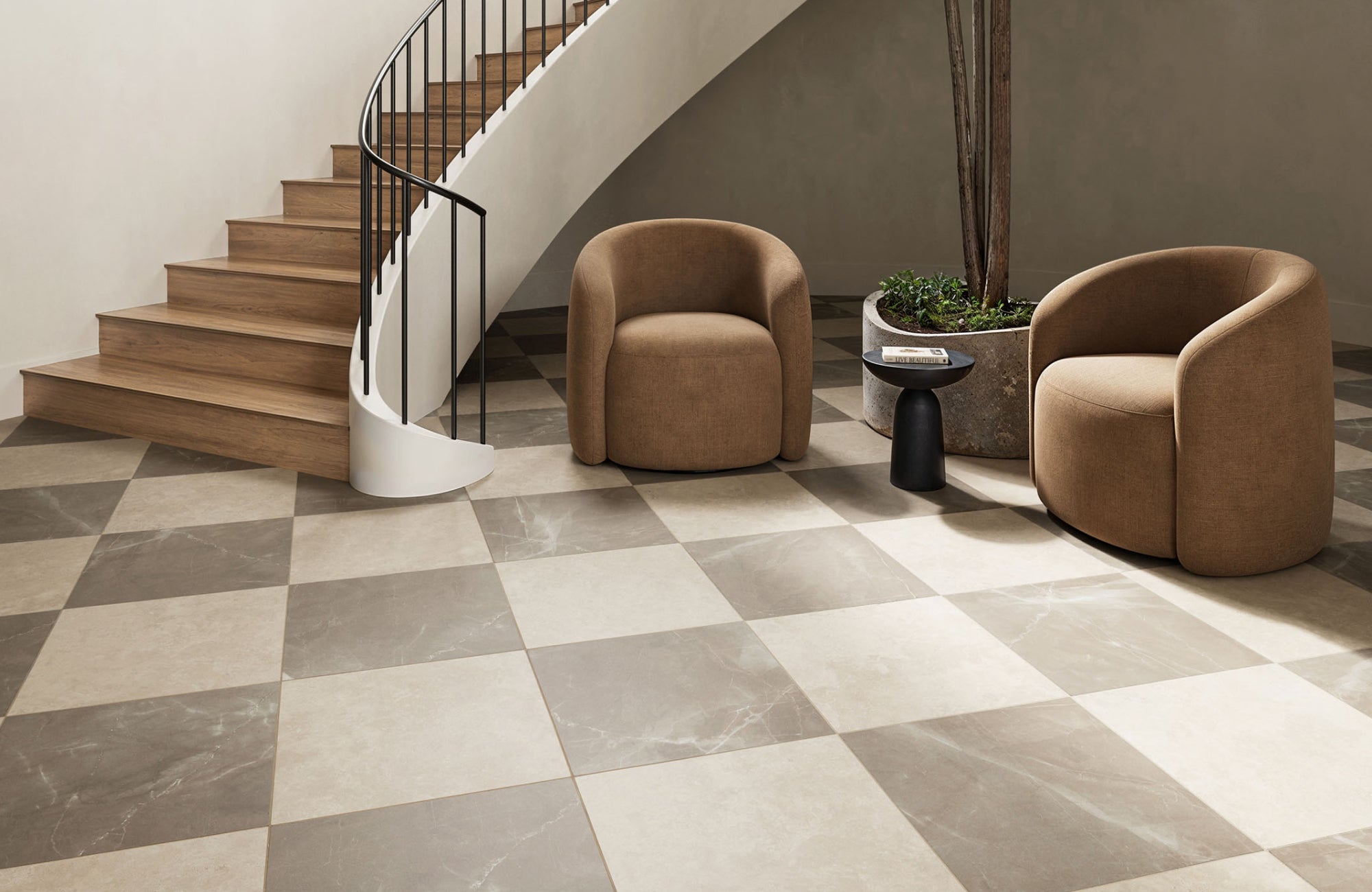
Mid-range porcelain tiles, such as our Brody 24x24 Checkerboard Matte Porcelain Tile in Sand and Smoke, as displayed in the picture above, offer better resistance to everyday wear. Their matte finish helps hide scuffs, and the denser surface holds up well in busy areas like kitchens and living rooms. The soft, neutral tones also help minimize the appearance of dirt between cleanings.
At the premium level, natural stone tiles like marble and travertine bring a timeless, elegant look but are more sensitive to surface wear. Over time, they may develop a patina that adds charm, though they’re more prone to scratching and require sealing to stay protected. Choosing the right material for your space ensures your checkered floor not only looks beautiful but also holds up to the way you live.
Cleaning Requirements
With checkered tiles, the contrast between light and dark tones tends to highlight dirt, dust, and spills more quickly than solid-colored floors. As a result, you might need to clean a little more frequently to maintain that crisp, clean appearance. Vinyl tiles are quick to wipe down, but too much moisture can weaken their adhesive over time. Porcelain and ceramic options are easier to maintain and hold up well with regular cleaning, especially if you choose a matte or satin finish that hides smudges and streaks. Natural stone, on the other hand, requires more care. It’s also important to use the right cleaners that won’t break down the surface or affect the sealer.
To protect your floor and keep it looking its best, always follow the manufacturer’s care recommendations, not just for the tile, but for the grout. Using the right cleaning products and techniques will help maintain both the appearance and performance of your checkered floor over time.
Replacement Costs
When it comes to repairs, checkered tiles can be more challenging to replace than solid-colored ones. If a tile cracks or chips, you can’t simply swap it out with any replacement; it needs to match the pattern, color, and size perfectly to maintain the design flow. This is particularly true for natural stone or handcrafted ceramic tiles, where each piece may have slight variations in tone and texture. Even with porcelain or vinyl tiles, matching the existing layout is also important to avoid throwing off the rhythm of the checkerboard pattern.
Replacement costs can vary depending on the material. Vinyl tiles may cost as little as $1 to $2 per square foot, while porcelain replacements often range from $5 to $12 per square foot. For natural stone or artisan tiles, replacement pieces can cost $15 to $25 per square foot, especially if the style is discontinued or custom-made.
That’s why it’s always a smart move to order extra tiles during your initial purchase, no matter the type. Keeping a few spares on hand also ensures you're ready for quick fixes down the line, without the stress of searching for a perfect match later.
Regional Pricing and Design Trends
Both your location and current design trends can influence how much you’ll spend on checkered tiles. These factors may not be immediately apparent, but they can have a real impact when you're budgeting for your tile project.
Geographic Influence
Tile prices can shift significantly depending on your location. In design-focused cities or regions with high construction activity, checkered tiles may be priced higher due to stronger demand and a more limited local supply. In contrast, smaller towns or areas less driven by trends often offer more affordable options, particularly if local suppliers have stock on hand that doesn’t require long-distance shipping. Getting a feel for your local market can also help you decide whether it’s better to shop nearby, look online, or visit a specialty retailer for the best value.
Popularity and Trends
The popularity of checkered tiles often evolves, influenced by what’s trending in magazines, blogs, and on social media. When the style is in high demand, prices can temporarily rise as suppliers respond to increased interest. If you’re trying to keep costs down, it’s also worth considering a purchase when the trend cools off. Retailers often discount older stock as styles shift, giving you the great opportunity to get a timeless design at a better price.
Local Installer Experience
Installation costs can depend on how familiar local professionals are with patterned tile layouts. In areas where checkered designs are more common, installers typically have the experience and tools to handle the job efficiently, which can help keep labor costs in check. In areas where checkered layouts are less common, you may end up paying more due to the extra time, planning, and precision they require. Having a conversation with your installer about their experience with this type of pattern can also give you peace of mind and help you plan your budget more accurately.
Balancing Style and Budget with Checkered Tiles
Checkered tiles may carry a slightly higher upfront cost depending on the design and material, but when it comes to long-term value, porcelain stands out as a smart and stylish investment. Its durability, low maintenance, and versatility make it a practical choice for both everyday spaces and elevated design moments. With the right planning and a solid understanding of the pricing, such as material selection, installation complexity, and long-term care, you can confidently create a look that balances both style and budget.
If you’d like to see how your favorite pattern looks in your home before you commit, try our Augmented Reality tile visualizer tool; a quick and easy way to bring your ideas to life. And if you need help finding the right tile, contact us today for expert advice on materials, costs, and design options!
Follow us on Instagram
@EDWARD.MARTIN
)
)
)
)
)
)
)
)
)
)
)
)
)
)
)
)