A shower upgrade can completely change how a bathroom feels, but the tile you choose often sets the tone for everything that follows. From layout and scale to finish and texture, shower tile decisions influence how open, calm, or bold the space ultimately becomes. In this blog, we’ll walk through shower tile design ideas that feel fresh, along with smart ways to support them using vanities, mirrors, lighting, rugs, and storage.

Start With Shower Tile Designs That Set the Direction
Shower tile choices often guide the entire direction of a bathroom upgrade, whether you realize it at the start or not. Decisions around layout, scale, color, and finish tend to influence how the space feels long before anything else is added. Below, we’ll talk through how those tile decisions shape the overall tone of a refreshed bathroom.
Choosing a Tile Layout That Feels Fresh, Not Trendy
Tile layout plays a major role in whether a shower feels timeless or tied to a specific moment. Simple layouts, such as vertical stacks or elongated horizontal runs, tend to age better because they rely on proportion rather than novelty. They also allow the material itself to do the visual work, especially when the tile has natural variation or subtle texture. More complex layouts can still feel fresh, but only when they’re grounded in balance and restraint. For instance, shifting a classic pattern slightly can feel intentional without becoming loud. A layout that feels calm today is more likely to feel right years from now.
Large-Format vs Patterned Tile and What Each Does to a Space
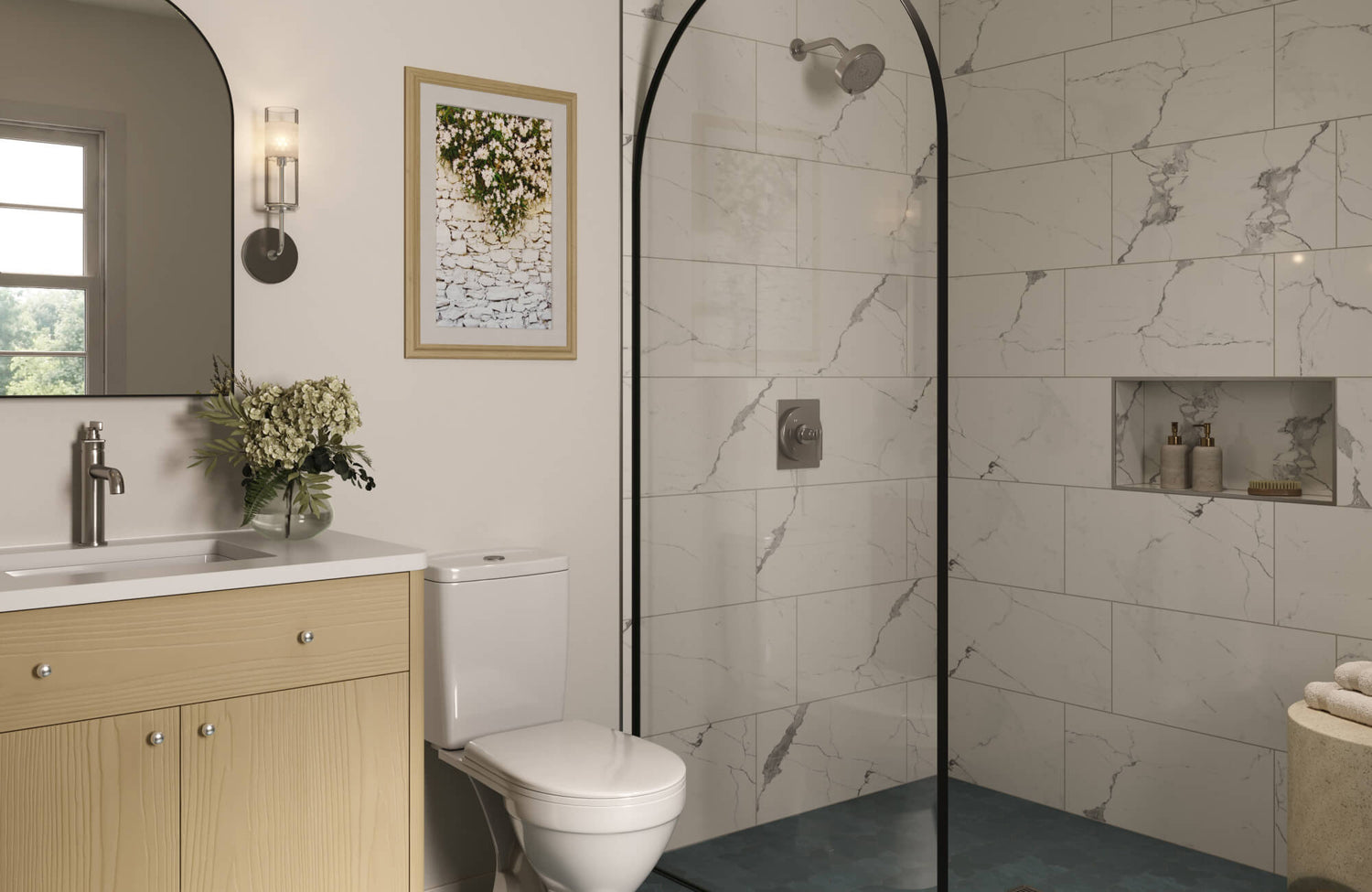
Large-format tiles, such as our Aniston 24x48 Matte Porcelain Tile in Calacatta Viola above, often make a shower feel more open because fewer grout lines create a cleaner visual flow. This can be especially noticeable in smaller bathrooms, where visual breaks tend to shrink the space. Patterned tiles, on the other hand, add movement and character, which can energize an otherwise simple layout. The key is understanding what the room needs most, whether that’s openness or visual interest. Too many patterns can overwhelm a compact shower, while oversized tiles can feel flat if the rest of the space lacks depth. Choosing between the two is less about trend and more about how you want the room to feel daily.
When a Statement Shower Wall Makes Sense
A statement shower wall can anchor the entire bathroom when it’s used with purpose. This approach works best when the rest of the shower remains visually quiet, allowing one surface to carry the design weight. Bold veining, dramatic color shifts, or directional layouts can all create that focal point. However, the statement should feel intentional rather than decorative for its own sake. If every surface demands attention, the effect quickly becomes overwhelming. A single, well-chosen feature wall often has more impact than layering multiple strong elements together.
Grout Color as a Quiet Design Lever
Grout color subtly shapes how tile patterns are perceived once the shower is in daily use. Matching grout tones tends to soften the overall look, allowing the tile surface to read as more continuous. Contrasting grout, by comparison, emphasizes shape and layout, which can make patterns feel more graphic. Neither approach is inherently better, but each creates a different visual rhythm. Over time, these differences become more noticeable than expected. Grout may feel like a small decision, yet it quietly influences how busy or calm the shower feels every day.
Texture and Finish Changes You’ll Notice Every Day
Texture and finish affect how a shower looks and feels long after installation is complete. Matte and lightly textured finishes tend to feel softer underfoot and reduce glare, which can make the space feel calmer. Glossier finishes reflect more light, creating brightness but also highlighting water marks and surface changes. These differences become especially noticeable with daily use, not just at first glance. Choosing a finish that aligns with how the shower is used helps avoid frustration later. Over time, texture becomes as much about comfort as it is about appearance.

Classic Shower Tile Designs That Always Look Updated
Some shower tile designs continue to feel fresh even as trends shift, which makes them especially reliable for bathroom renovations. These looks work because they rely on proportion, balance, and material character rather than bold styling moves.
Clean Subway Tile Layouts That Don’t Feel Basic
Subway tile remains popular because it’s incredibly adaptable when handled with intention. The key is focusing on layout choices that feel deliberate rather than default, such as vertical stacking or extended horizontal runs. These small shifts instantly modernize a familiar shape without making it feel trendy. Tile size also plays a role, as slightly elongated subway tiles tend to feel more current while still staying classic. When paired with thoughtful spacing and clean lines, subway tile reads polished instead of predictable. Over time, this simplicity helps the shower feel calm and well resolved.
A great example of this approach is our Cleo 2x6 Glossy Ceramic Tile in Bone above, which shows how a classic subway format can feel fresh through finish and tone alone. Its softly reflective glaze and shifting grayish-beige surface add quiet movement, so even a simple layout feels layered and intentional. Used in a restrained pattern, it brings an artisan quality that elevates the shower without relying on bold pattern or contrast.
Marble-Look Tile for a High-End Refresh Without the Fuss
Marble-look tile offers the visual richness people love without relying on overly ornate detailing. Soft veining and restrained contrast create a sense of depth that feels refined rather than flashy. This approach works especially well in showers because it elevates the space without demanding attention from every surface. The look pairs easily with a wide range of vanities, mirrors, and fixtures, which makes renovation planning simpler. Because the patterning feels organic, it adapts well to both modern and classic bathrooms. The result is a shower that feels elevated without feeling precious.
Soft Neutral Tile Palettes That Make Bathrooms Feel Bigger
Soft neutral tiles continue to work because they naturally reflect light and reduce visual clutter. Shades like warm white, pale gray, and light beige help a shower feel more open, especially in smaller bathrooms. These tones also create a flexible backdrop that allows other elements to change over time without clashing. Subtle variation within the tile keeps the space from feeling flat or sterile. When neutrals are layered thoughtfully, the bathroom feels balanced rather than bland. This understated approach tends to age gracefully through multiple design updates.

Modern Shower Tile Designs That Feel Sleek and Intentional
Modern shower tile designs tend to focus on clarity and restraint, but they work best when they still feel welcoming and livable. The goal is not to strip the space of personality, but to let clean lines and thoughtful choices do the heavy lifting. Below, we’ll look at modern tile approaches that feel intentional without tipping into cold or overly minimal territory.
Vertical Stacks, Clean Lines, and Why They Work in Showers
Vertical tile layouts have become a hallmark of modern bathroom design because they naturally draw the eye upward. This can make showers feel taller and more open, which is especially helpful in standard-height spaces. The clean alignment also creates a sense of order that feels calming rather than rigid. When grout lines are kept subtle, the surface reads as smooth and continuous. This approach works well because it simplifies the visual field without flattening the room. Over time, the structure holds up better than trend-driven patterns.
A strong example of this effect is our Jaden 2.5x16 Glossy Ceramic Tile in Hunter seen above, where the elongated format naturally reinforces the vertical stack layout. Its deep green surface shifts subtly in the light, while the slightly uneven edges add texture that keeps the look from feeling flat or overly precise. When used vertically, it amplifies height and depth, making the shower feel more open and visually grounded at the same time.
Minimal Mosaics Used in Small, Smart Ways
Mosaics still have a place in modern showers when they are used with restraint. Instead of covering entire walls, they work best as accents on shower floors, niches, or narrow feature bands. This keeps the texture where it adds function or visual interest without overwhelming the space. Smaller-scale tile also introduces grip underfoot, which is practical without being obvious. When mosaics are limited to specific zones, they can feel purposeful rather than decorative. That balance is what helps the shower remain clean-lined and cohesive.
Monochrome Tile Looks That Still Have Depth
Monochrome shower designs lean on variation in tone, surface texture, and light rather than using multiple colors to create interest. Keeping the palette tight helps the space feel modern and calm, but depth comes from the details within the tile itself. Subtle veining, gentle tonal movement, or slight surface variation keep the design from feeling flat. Even a single color can feel layered when it reacts differently to natural and artificial light throughout the day. Because of this, monochrome showers tend to feel intentional instead of plain.
Mixing Matte and Gloss for Subtle Contrast
Blending matte and glossy finishes is an easy way to add depth while still keeping a modern look intact. Glossy tiles naturally catch and reflect light, which helps emphasize clean lines and crisp edges, while matte finishes soften the space and make it feel more relaxed. When these two finishes are used together, the contrast feels intentional rather than decorative. This approach works especially well when both finishes share the same color or overall tile look. Instead of jumping out immediately, the difference becomes noticeable as you move through the shower. That gradual shift adds visual interest without creating distraction or clutter.

Pairing Shower Tile With the Right Vanity Style
Once your shower tile is in place, the vanity is usually the next thing your eye lands on, which is why the two need to work together. A vanity can either quietly support the tile design or accidentally pull attention away from it.
Floating Vanities That Keep Tile-Forward Bathrooms Feeling Open
Floating vanities are a smart choice when your shower tile is meant to be the star of the room. Because they don’t touch the floor, more of the tile stays visible, which instantly makes the bathroom feel lighter and less crowded. This is especially helpful in smaller spaces where every visual break matters. Floating designs also keep sightlines clean, so tile layouts, grout lines, and textures read more clearly. When the vanity itself stays simple, it lets the tile do the talking. The space ends up feeling modern, open, and easier to move through.
Wood Tones That Warm Up Cool Tile Choices
Many popular shower tiles lean cool, think stone looks, soft grays, or crisp whites. Bringing in wood through the vanity helps balance that coolness and makes the room feel more welcoming. Lighter woods keep things fresh and airy, while medium tones add warmth without weighing the space down. The goal isn’t to match the tile, but to soften it. When the wood tone feels natural and understated, it adds comfort without stealing attention. That contrast often makes both the tile and the vanity feel more intentional.
A vanity like our Delilah 72" Double Vanity in Seaside Oak above, shows how wood can quietly reshape the mood of a tile-forward bathroom. The warm oak finish and woven cane details introduce texture and softness, which takes the edge off cooler tile surfaces without shifting the focus away from them. Instead of competing with the shower tile, the vanity adds a relaxed, lived-in layer that makes the whole space feel more balanced and naturally inviting.
When a Simple Vanity Helps a Bold Shower Tile Shine
When your shower tile features strong patterning, bold veining, or high contrast, a more understated vanity often makes the space feel balanced. Clean lines and minimal detailing give the tile room to stand out without the bathroom feeling visually crowded. This becomes especially helpful during a renovation, when several elements are changing at the same time. A simple vanity grounds the room and provides structure without pulling attention away from the shower. Over time, this restraint tends to age well and feel less trend-driven. The tile becomes the focal point by design, not because everything else is competing for attention.
Hardware Finishes That Should Relate Back to the Tile
Vanity hardware may seem like a small finishing touch, but it often has a bigger impact on how pulled together the bathroom feels. Finishes such as brushed brass, matte black, or polished chrome tend to work best when they quietly echo tones already found in the shower tile. That connection doesn’t need to be obvious or perfectly matched—it just needs to feel considered. For example, warmer tile palettes usually pair more naturally with warmer metal finishes. When hardware feels completely disconnected, the space can start to look assembled rather than designed. Choosing finishes with the tile in mind helps the entire room feel cohesive without looking overly styled.

Mirrors That Balance the Shower Tile and Open Up the Room
Once your shower tile is set, mirrors play a surprisingly big role in how that tile is experienced throughout the room. The right mirror can calm visual noise, soften hard lines, or even make bold tile choices feel more refined. In here, we’ll look at how mirror shape, scale, and finish help support your tile design rather than compete with it.
Arched vs Rectangular Mirrors and What They Do Visually
Mirror shape plays a quiet but meaningful role in how structured or relaxed a bathroom feels. Rectangular mirrors naturally echo the straight lines found in tile layouts, which works especially well in modern spaces where order and symmetry are part of the design. Arched mirrors, on the other hand, help soften the room by breaking up the hard edges created by tile grids and grout lines. This can be especially effective when the shower tile features strong geometry or high contrast. The gentle curve adds a sense of movement and visual ease, keeping the space from feeling overly rigid. Choosing between the two often comes down to whether your tile design needs more structure or a bit of relief.
Framed vs Frameless Mirrors With Patterned or Textured Tile
When the shower tile has a noticeable pattern, texture, or movement, the mirror frame starts to play a bigger role than it might seem at first. Frameless mirrors tend to keep the focus on the tile by visually stepping back, which helps busy surfaces feel intentional rather than overwhelming. Framed mirrors can still work well, but they usually feel best when the frame is slim and understated. Heavier frames paired with detailed tile can quickly make the wall feel crowded or visually noisy. The key is balance, not giving equal emphasis to both elements at once. When the mirror quietly supports the tile instead of competing with it, the space feels more thoughtful and pulled together.
Choosing Mirror Finishes That Play Nice With Tile Undertones
Mirror finishes tend to work best when they quietly echo the undertones already present in your shower tile. Warmer tile palettes often feel more cohesive with brass or soft gold finishes, while cooler tiles usually pair more naturally with black, chrome, or brushed nickel. That said, this isn’t about perfect matching, but rather about keeping the undertones aligned. When finishes feel disconnected, the eye can start to bounce around the room instead of settling in one place. A thoughtfully chosen mirror finish helps the tile read cleaner and more intentional. Over time, that subtle alignment makes the entire bathroom feel more comfortable and put together.
When Oversized Mirrors Make Tile Look More Expensive
Oversized mirrors can quietly elevate shower tile by reflecting more light and visually extending the room. When the tile work is well executed, a larger mirror allows those details to carry across the space instead of stopping abruptly at the shower wall. This is especially helpful in bathrooms with limited natural light, where reflection adds brightness without introducing new finishes. A larger mirror also minimizes visual breaks, which helps the room feel more seamless and intentional. Because the eye reads the space as more continuous, the tile naturally feels more considered. When used thoughtfully, the result often feels higher-end without adding extra materials or complexity.

Lighting That Makes Shower Tile Look Better in Real Life
Shower tile rarely looks the same throughout the day, and lighting is usually the reason why. The temperature, placement, and layering of light all affect how tile color, texture, and grout lines actually show up once the bathroom is in use.
Warm vs Cool Lighting and How It Changes Tile Color
Light temperature has a direct impact on how the shower tile reads once it’s installed. Warm lighting tends to soften tile, pulling out beige, cream, and warmer undertones while reducing harsh contrast. Cool lighting, on the other hand, can sharpen grout lines and emphasize gray or blue tones, which works well in more modern bathrooms but can feel stark if overdone. The key is understanding what undertones your tile has before locking in bulbs. A tile that looks perfect under showroom lighting can feel completely different at home. Choosing the right temperature helps the tile look consistent and intentional from morning to night.
Where Sconces Help Most in Tile-Heavy Bathrooms
Wall sconces do more than simply add light—they help shape how tile reads at eye level. When placed near mirrors or vanities, they soften shadows that can otherwise make textured or patterned tile feel uneven. This becomes especially useful in bathrooms where shower tile extends beyond the wet zone and acts as a visual feature. Sconces also introduce a more directional, flattering light that works alongside overhead fixtures rather than competing with them. Because the light comes from the sides, tile surfaces pick up more depth and variation. As a result, the space feels thoughtfully lit instead of relying on a single, flat light source.
Ceiling Fixtures That Support Tile Without Stealing Focus
General ceiling lighting still matters, even in tile-forward bathrooms. Flush mounts or low-profile fixtures provide even ambient light that keeps the room functional without drawing attention away from the tile work. When these fixtures are too decorative or too bright, they can compete with the shower design. A simpler ceiling light allows the tile to remain the visual anchor. It also helps blend light sources together so the room doesn’t feel choppy. Think of ceiling lighting as the quiet background layer that lets everything else shine.
Recessed Shower Lighting That Highlights Texture
Recessed lighting inside the shower benefits from a more considered approach. When it’s positioned thoughtfully, it can bring out natural texture, subtle tile variation, and surface depth without causing harsh glare. Problems usually arise when lights are placed too directly overhead, which can flatten the tile or draw too much attention to grout lines. Offsetting recessed lights slightly often produces a softer, more flattering effect. This allows the light to skim across the surface rather than hitting it straight on. As a result, the tile reads as layered and intentional instead of overly exposed.
Avoiding Flat Lighting That Makes Tile Look Dull
Flat lighting usually shows up when a bathroom depends on just one main light source. Without variation, tile can lose its depth and start to feel lifeless, especially in showers with subtle color shifts or surface texture. Bringing in light from different heights helps the tile respond more naturally as you move through the space. It also allows the room to feel balanced at different times of day, not just when everything is fully lit. A thoughtful mix of ambient, task, and accent lighting prevents that washed-out effect. When lighting is layered well, the tile feels dynamic and intentional rather than static.

Rugs and Bathroom Textiles That Soften a Tile-Heavy Upgrade
When shower tile takes the lead in a bathroom upgrade, rugs and textiles help bring the space back to a more comfortable, lived-in place. Tile sets the visual direction, but softer layers are what make the room feel welcoming once the renovation dust settles.
Using Texture to Complement Tile Instead of Competing With It
Because tile already brings texture through grout lines, surface variation, and finish, textiles tend to work best when they introduce contrast rather than more visual activity. Softer rug textures, for instance, balance out smooth stone or porcelain and make the space feel better underfoot. At the same time, they help break up hard surfaces without adding unnecessary patterns. Heavily textured or overly detailed textiles, on the other hand, can compete with tile that already has movement. Keeping rug textures simple allows the shower tile to remain the focal point. When chosen thoughtfully, texture adds warmth while still feeling visually calm.
Color Choices That Feel Calm Next to Bold Tile
When shower tile carries strong color, veining, or contrast, textiles usually work best in a quieter supporting role. Softer neutrals help ground the space and give the eye a place to rest between harder finishes. Pulling a subtle tone from the tile itself often feels more cohesive than introducing an entirely new color. This approach keeps the bathroom from feeling overly styled or visually scattered. Higher-contrast colors can still work, but they’re best used sparingly so they don’t compete with the tile. In most cases, restrained color choices help the design feel balanced and intentional.
Rug Sizes and Placement That Support Bathroom Flow
Beyond color and texture, rug size and placement play a big role in how the bathroom functions day to day. Rugs that are too small can feel disconnected, while oversized options may interfere with doors or walking paths. Instead, placing rugs where you naturally pause, such as in front of the vanity or just outside the shower, tends to feel more intuitive. This adds comfort exactly where it’s needed without covering more tile than necessary. Leaving some floor exposed also helps the room feel more open. When placement is considered, rugs support movement rather than interrupt it.
Choosing Rug Materials That Handle Moisture Gracefully
In a tile-heavy bathroom, rug material matters just as much as color or size because moisture is part of daily life. Wool rugs, for instance, are naturally moisture-resistant and can regulate temperature, which helps them feel comfortable underfoot even in changing conditions. They also bounce back well from compression, making them a solid option for bathrooms that get steady use. Cotton rugs are another popular choice, especially for lighter-use spaces, since they’re breathable, soft, and easy to wash.
Synthetic options like polyester or polypropylene are often chosen for their practicality in wetter environments. These materials dry quickly, resist staining, and tend to hold their shape well over time. Low-pile constructions in these fibers work especially well near showers or vanities because they don’t trap water as easily. Wool blends can also be a smart middle ground, offering some of wool’s natural resilience with improved moisture tolerance. Choosing materials with bathroom conditions in mind helps the rug support the tile rather than becoming a maintenance issue.

Furniture and Storage That Completes the Makeover Without Clutter
Once the shower tile and core finishes are in place, furniture and storage should support the design rather than compete with it. These pieces help the bathroom function better day to day, but they also need to respect the visual weight of the tile.
Open Shelving That Doesn’t Visually Fight the Tile
Open shelving can work beautifully in a tile-forward bathroom, especially when it’s treated as a supporting element rather than a feature. Because shower tile already brings pattern and texture, shelves tend to look best when they stay simple in shape and finish. For instance, slim wood or metal shelves provide storage while letting the tile remain visually dominant. Overloading shelves with décor, however, can quickly pull attention away from the tile and make the space feel busy. Limiting shelf depth and spacing also helps maintain a lighter feel. When done right, open shelving adds function without disrupting the overall balance.
Benches and Stools That Add Function in a Light, Minimal Way
Small benches or stools are useful additions, especially in bathrooms where comfort and flexibility matter. They offer a spot to sit, set towels, or hold everyday items, but they should feel visually light to avoid crowding the room. Materials like wood, slim metal frames, or woven textures tend to work well because they soften the space without adding bulk. For example, a narrow stool near the shower can add function without blocking circulation. Choosing pieces with open bases or simple profiles helps keep sightlines clear. This way, the furniture supports daily use while letting the tile stay front and center.
Keeping Storage Finishes Consistent With the Bathroom’s Metals
Consistency in finishes plays a quiet but important role in making a bathroom feel cohesive. Storage pieces that echo the metals used elsewhere, such as mirror frames, lighting, or hardware, help everything feel connected. This doesn’t mean everything has to match exactly, but the finishes should at least feel related. For example, pairing black metal shelving with black fixtures tends to feel intentional rather than accidental. Mixing too many metal tones can distract from the tile and make the room feel scattered. Keeping finishes aligned helps the entire space read as one thoughtful design.
Creating a “Collected” Look Without Overfurnishing
A well-designed bathroom often feels collected rather than filled, and that balance comes from restraint. Adding a few purposeful pieces, rather than multiple small furnishings, keeps the space feeling open and calm. Because tile already carries a strong visual presence, less furniture usually goes further. It’s also helpful to consider how often each piece will actually be used. When every item has a clear role, the bathroom feels intentional instead of cluttered. The result is a space that looks finished, comfortable, and easy to live with over time.
Bringing a Shower Tile–Led Upgrade Together With Confidence
A fresh bathroom upgrade often starts with shower tile, but it truly comes together when every surrounding choice supports that foundation. Thoughtful tile layouts, finishes, and textures set the tone, while vanities, mirrors, lighting, rugs, and storage help the space feel balanced and livable. When each element is chosen in response to the tile rather than in isolation, the bathroom feels cohesive instead of pieced together. Over time, this approach not only looks better but also functions more comfortably day to day. The result is a space that feels intentional, calm, and well considered. That sense of clarity is what turns a renovation into a lasting upgrade.
If you’re unsure how to bring all of those decisions together, our design consultation can help simplify the process. We look at your shower tile first, then guide the surrounding choices so everything works as a complete bathroom, not just a collection of finishes. It’s a collaborative way to ensure your bathroom upgrade feels right now and still makes sense years down the line.