Floral wallpaper introduces a quiet sense of artistry into contemporary interiors, where organic forms soften architectural precision and establish a more balanced visual composition. Within modern settings, carefully selected flower wallpaper for walls transforms flat surfaces into layered backdrops that feel both expressive and intentional. From expansive botanical compositions to refined linear motifs, each variation contributes to a cohesive environment shaped by proportion, tone, and materiality. As color, scale, and surface interact, floral wallpaper for modern living spaces evolves beyond ornamentation into a defining design element. In this way, the right flower background for contemporary interiors brings depth, elegance, and a lasting sense of refinement.

Large-Scale Botanical Prints for Architectural Impact
Large-scale botanical designs introduce a strong visual presence that reshapes spatial hierarchy while maintaining a composed and modern aesthetic. Their effectiveness lies in the balance between expansive patterning, controlled detailing, and seamless integration within the overall interior composition.
Macro-Scale Pattern Composition and Repeat Systems
Large-scale floral wallpaper for walls is often developed using extended repeats or mural-style compositions, allowing patterns to unfold continuously across a surface with minimal interruption. Through high-resolution digital printing, intricate botanical details remain sharp and well-defined even at enlarged proportions. As the scale increases, individual elements such as petals and foliage begin to function as part of the room’s architectural language rather than isolated decorative features.
Careful alignment with wall dimensions also ensures that the composition remains cohesive, avoiding abrupt cropping or visual fragmentation. This continuity allows the design to read as a unified flower background, enhancing the perception of depth and movement. Such applications are especially effective in large-scale floral wallpaper for modern living room feature walls, where spatial boundaries appear more expansive. In turn, this approach reinforces the role of statement flower wallpaper for walls as a defining element in contemporary interior architecture.
Spatial Integration in Open-Plan Layouts
Within open-plan environments, large-scale flower wallpaper serves as a visual anchor that subtly defines functional zones without interrupting spatial flow. By emphasizing a single wall, it establishes a sense of structure that distinguishes living, dining, or lounge areas while preserving openness. The relationship between pattern scale and room dimensions also becomes essential, as proportion directly influences visual balance. When paired with streamlined furnishings, the wallpaper assumes a central role without overwhelming the composition.
This interplay allows the design to guide movement through the space naturally and unobtrusively. As a result, it is frequently specified in open-plan interiors using botanical mural wallpaper for zoning, where clarity and cohesion are equally important. This method ultimately highlights how thoughtfully placed floral wallpaper for modern living spaces can enhance both function and visual continuity.
Color Depth and Contrast Control
The visual impact of large-scale floral wallpaper depends significantly on precise color calibration and tonal balance. For instance, controlled saturation ensures that bold motifs remain refined, while subtle gradients introduce depth without heaviness. In designs such as sunflower wallpaper, where vibrant hues are prominent, careful integration of neutral undertones also helps maintain harmony within the overall palette. Gradual transitions between light and shadow further enhance dimensionality, allowing the pattern to respond to changing light conditions.
This nuanced approach prevents the wallpaper from dominating the space while still preserving its visual strength. Consequently, such designs are well-suited for high-contrast floral wallpaper for contemporary interior design schemes, where clarity and sophistication must coexist. This level of refinement ensures that even vibrant flower wallpaper for walls remains cohesive within modern palettes.

Minimalist Floral Line Art for Refined Simplicity
Minimalist floral designs reinterpret botanical forms through restrained linework and controlled negative space, offering a subtle yet sophisticated layer within modern interiors. Their quiet presence supports visual clarity while introducing gentle movement and texture.
Precision Printing and Line Definition
The refinement of minimalist floral wallpaper for walls depends on highly precise printing methods such as gravure or rotary screen techniques, which ensure consistent and sharply defined linework. These processes allow even the most delicate botanical outlines to remain crisp across the entire surface. Because the design relies on simplicity, any irregularity would disrupt the overall effect, making technical accuracy essential. The clarity achieved through these methods also reinforces a sense of order and intentionality within the space.
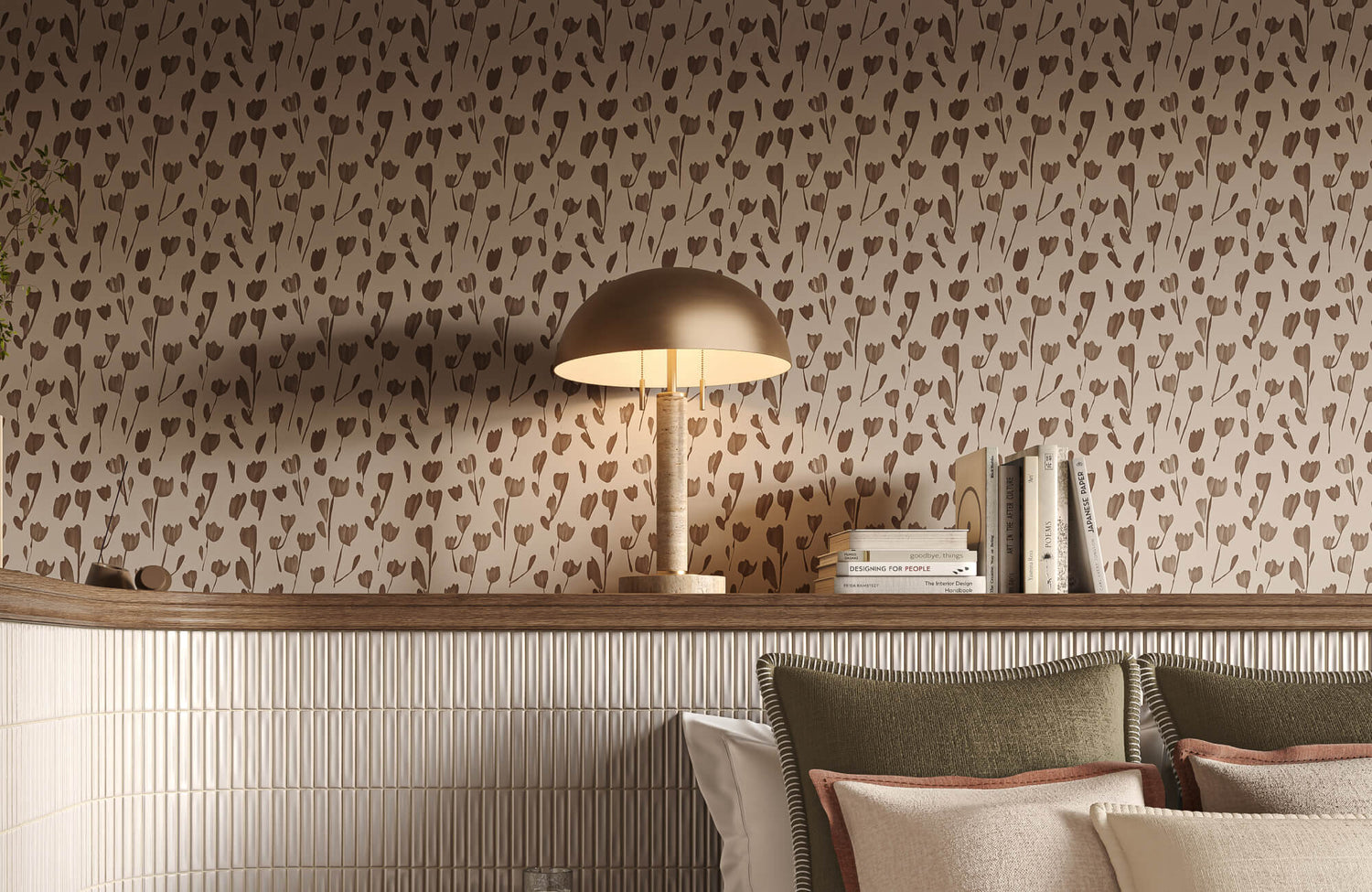
This level of precision is evident in designs like Edward Martin’s Brocade Wallpaper in Grey II, 52" x 132", as displayed in the photo above, where a light gray floral motif is carefully layered over a matte off-white ground, enhanced by softly distressed detailing that adds depth without compromising clarity. Digitally printed on a lightly textured DreamScape Terralon substrate, the surface maintains sharp definition while introducing subtle tactile richness. Its extra-wide, full-height format also minimizes seams, ensuring a continuous, uninterrupted pattern that preserves the integrity of the design.
As a result, the wallpaper complements high-end interiors where detail is subtle yet exacting. This approach is commonly seen in minimalist floral wallpaper for modern neutral interiors, where restraint defines elegance. Such precision also enhances the appeal of flower wallpaper for walls in spaces that prioritize clean, architectural detailing.
Integration with Neutral Design Schemes
With its subdued palette, minimalist flower wallpaper integrates seamlessly into interiors defined by neutral tones and natural materials. Soft hues such as beige, taupe, and warm gray create a calm visual field that enhances rather than competes with surrounding elements. This harmony supports design approaches like Scandinavian and Japandi, where balance and simplicity are central.
The wallpaper also functions as a quiet flower background, adding depth without introducing unnecessary complexity. Its presence allows furnishings and architectural features to remain prominent while still enriching the overall composition. In this context, it is particularly effective for subtle floral wallpaper for minimalist bedroom walls, where serenity is a priority. This seamless integration reinforces the versatility of floral wallpaper for modern living spaces focused on understated elegance.
Visual Rhythm and Spatial Lightness
The linear quality of minimalist floral patterns introduces a gentle visual rhythm that guides the eye fluidly across the surface. This sense of movement is carefully moderated through the use of negative space, ensuring that the design remains light and unobtrusive. In smaller interiors, this balance becomes especially valuable, as it preserves openness while adding character.
The wallpaper also enhances spatial perception by avoiding visual density, allowing light to interact more freely with the surface. As a result, the room feels both expansive and composed. This makes it a preferred choice for lightweight floral wallpaper for small modern apartments, where elegance must coexist with practicality. Ultimately, this approach highlights how flower wallpaper for walls can elevate compact spaces without compromising clarity.

Abstract Floral Interpretations for Contemporary Expression
Abstract floral designs reinterpret botanical inspiration through fluid forms and unconventional compositions, introducing a more expressive dimension to modern interiors. Their dynamic qualities allow them to function as both artwork and surface treatment within a cohesive design language.
Digital Layering and Gradient Techniques
Advanced digital printing enables abstract floral wallpaper to incorporate layered pigments and nuanced gradients that replicate painterly effects with remarkable precision. These layered applications create depth, allowing colors to shift subtly as lighting conditions change throughout the day. The resulting surface feels fluid and multidimensional, transforming the wall into an evolving flower background.
Such complexity also enhances the sensory experience of the space while maintaining a controlled aesthetic. This technique is particularly suited to interiors that value artistic expression without sacrificing cohesion. It is frequently applied in abstract floral wallpaper for modern creative living spaces, where visual interest remains balanced and refined. In this way, expressive flower wallpaper for walls becomes an integral part of contemporary design storytelling.
Asymmetry and Organic Geometry
Abstract flower wallpaper often departs from traditional symmetry, instead embracing irregular forms and organic geometry that suggest movement and spontaneity. This compositional freedom allows the design to feel more like a curated artwork than a repeating pattern. At the same time, the connection to natural forms also ensures that the aesthetic remains grounded and relatable.
In addition, the interplay between structure and fluidity introduces a dynamic yet controlled visual rhythm. This balance aligns seamlessly with contemporary interiors that prioritize individuality. As a result, such designs are well-suited for asymmetrical floral wallpaper for modern artistic interiors, where uniqueness is essential. This creative flexibility further demonstrates how floral wallpaper for modern living spaces can adapt to expressive design narratives.
Application in Accent Zones
The expressive nature of abstract floral designs makes them particularly effective when applied selectively within defined areas. By concentrating the pattern on a single wall or compact space, the design achieves maximum impact without overwhelming the broader interior. This focused application also enhances the wallpaper’s role as a visual focal point. At the same time, it allows surrounding elements to maintain clarity and balance.
The contrast between patterned and unadorned surfaces further strengthens the overall composition. This strategy is commonly used in accent wall floral wallpaper for contemporary homes, where thoughtful placement defines the design narrative. As a result, strategically placed flower wallpaper for walls introduces depth and emphasis with refined precision.

Neutral and Monochromatic Floral Palettes for Cohesive Interiors
Neutral and monochromatic palettes allow floral designs to integrate seamlessly into modern interiors, supporting a cohesive and understated aesthetic. Through careful tonal variation, these wallpapers introduce depth while maintaining visual harmony.
Tonal Layering and Pigment Control
Neutral floral wallpaper for walls achieves its refinement through controlled pigment layering, where subtle tonal shifts create dimension within a limited color range. This technique ensures that the design remains visually engaging without introducing strong contrast. Even in deeper palettes, the interplay between warm undertones and shadowed motifs also allows the pattern to feel cohesive rather than overpowering.
This effect is beautifully demonstrated in the Brocade Wallpaper in Black/Tan II, 52" x 132", as shown in the picture above, where a richly layered floral motif is rendered in a balanced spectrum of warm tan and deep black. The design draws from traditional damask influences, yet its softly distressed detailing and nuanced tonal variation create depth without disrupting visual harmony. As light interacts with the surface, the pattern also reveals subtle gradations that enhance dimension while maintaining a unified palette.
The consistency of tone allows it to pair effortlessly with a wide range of materials and finishes. This adaptability makes it suitable for both residential and commercial applications. It is often specified in monochromatic floral wallpaper for modern minimalist interiors, where cohesion is essential. This careful tonal control further reinforces the timeless appeal of flower wallpaper for walls in contemporary settings.
Light Reflectance and Spatial Brightness
The use of lighter tones in flower wallpaper for walls contributes to improved light reflectance, which in turn enhances the overall brightness of a space. This quality is particularly beneficial in interiors with limited natural light, where reflective surfaces can create a more open atmosphere. As illumination interacts with the wallpaper, the room also gains a sense of depth and airiness. This effect aligns with modern design principles that emphasize clarity and openness.
Additionally, it reduces reliance on artificial lighting, supporting a more balanced environment. Such characteristics make it ideal for light-enhancing floral wallpaper for contemporary interiors, where brightness and comfort are equally valued. In this context, well-chosen floral wallpaper for modern living spaces subtly enhances both light and atmosphere.
Harmonization with Modern Furnishings
Neutral floral designs provide a versatile backdrop that complements a wide range of contemporary furnishings and materials. Whether paired with natural wood, polished metal, or soft upholstery, the wallpaper maintains visual continuity throughout the space. Its understated presence also allows other design elements to stand out without competition. This balance contributes to a cohesive interior composition that feels both curated and adaptable. Over time, the design remains relevant as styles evolve, ensuring long-term usability.
For this reason, it is frequently used in neutral floral wallpaper for modern living spaces, where timelessness is a key consideration. This adaptability highlights the enduring relevance of flower wallpaper for walls in refined interior schemes.

Textured and High-Performance Floral Wallpaper Materials
Material innovation has elevated floral wallpaper into a functional design solution that combines durability with tactile richness. The selection of substrate and finish plays a critical role in both performance and overall visual impact.
Advanced Substrates and Durability
Modern floral wallpaper for walls is commonly produced using non-woven or vinyl-coated substrates, both of which offer enhanced durability and dimensional stability. These materials resist moisture, tearing, and surface wear, making them suitable for a wide range of interior conditions. Their structural integrity also ensures that patterns remain aligned over time, preserving the intended design. This reliability is particularly important for intricate motifs that require precision. In addition, these substrates support easier installation and maintenance, making them a practical choice for both residential and commercial applications.
This level of performance is exemplified by our Botanique Wallpaper in Winter, 52" x 132", as featured in the photo above, where durability meets refined design. Featuring a traditional floral motif, the composition unfolds stylized blooms and branching forms in bluish gray, beige, and soft brown tones set against an off-white field, creating a cool, muted palette that remains visually consistent across large surfaces. Digitally printed on a lightly textured DreamScape Terralon substrate, it alsop offers both tactile depth and long-term resilience, while its extra-wide, full-height format reduces seams for a more seamless installation. Rated for commercial interiors and full bathrooms, it ensures that both aesthetic clarity and structural performance are maintained even in demanding environments.
As a result, these advanced materials are frequently chosen for durable floral wallpaper for busy interior spaces, where longevity is essential. This durability ensures that flower wallpaper for walls maintains both beauty and performance over time.
Surface Embellishment Techniques
Techniques such as embossing and flocking introduce a tactile dimension to flower wallpaper for walls, adding depth through raised or textured surfaces. As light interacts with these variations, subtle shadows enhance the visual complexity of the design. This interplay transforms the wallpaper into a multi-sensory element that engages both sight and touch. The added dimension also elevates the perceived quality of the material. Such finishes are particularly effective in areas where detail and craftsmanship are emphasized. They are widely used in textured floral wallpaper for modern luxury interiors, where sophistication is paramount. Through these enhancements, floral wallpaper for modern living spaces gains both visual richness and tactile appeal.
Functional and Sensory Benefits
Beyond visual appeal, textured floral wallpaper contributes to improved acoustic performance by softening sound within a space. This functional benefit enhances comfort, particularly in larger or more open interiors. The tactile quality of the surface also enriches the overall sensory experience, making the environment feel more layered and complete. Additionally, modern materials are designed for ease of maintenance, allowing the wallpaper to retain its appearance over time. This combination of practicality and refinement supports its use in both residential and commercial settings. Consequently, it is well-suited for high-performance floral wallpaper for modern functional interiors, where design and utility must align. In this way, flower wallpaper for walls delivers both aesthetic and functional value in contemporary design.
A Timeless Expression of Modern Botanical Design
The enduring appeal of floral wallpaper for walls lies in its ability to merge natural inspiration with contemporary precision, resulting in interiors that feel both grounded and refined. Through variations in scale, abstraction, and materiality, each design approach contributes to a layered and cohesive environment. Whether expressed through bold sunflower wallpaper or subtle tonal compositions, these surfaces adapt effortlessly to evolving interior styles. Careful consideration of proportion, color, and texture also ensures that the wallpaper enhances rather than competes with surrounding elements. In this way, flower wallpaper for modern interiors becomes a defining feature that elevates both atmosphere and architectural character with lasting elegance.
For a more tailored approach, Edward Martin’s design services offer expert guidance in selecting the ideal flower wallpaper for modern interiors. Contact us through their contact page to begin creating a space that reflects both elegance and intention!