A beautifully renovated kitchen or bathroom begins at the ground level, where the right flooring quietly shapes both atmosphere and functionality with lasting impact. As materials evolve and design expectations rise, homeowners increasingly seek surfaces that balance visual sophistication with measurable performance. With this, today’s advanced flooring solutions offer an extraordinary blend of waterproof resilience, tactile comfort, and aesthetic versatility, allowing each space to feel thoughtfully curated and technically robust. Whether the goal is spa-like serenity or chef-inspired efficiency, the most successful renovations integrate flooring that enhances both daily experience and long-term value. With this in mind, exploring the nuances of top-performing materials reveals how each option can elevate a home through intelligent design and engineered durability.

Porcelain Tile Flooring
Porcelain tile remains a premier choice for moisture-exposed kitchens and bathrooms due to its exceptional density, structural resilience, and refined surface technologies. Its durability seamlessly aligns with spaces that demand waterproof performance while still embracing elegant, high-end design. For optimal longevity and performance, professional installation is strongly recommended to ensure proper setting, alignment, and moisture protection.
Material Composition and Water Absorption
Porcelain tile is crafted from highly purified clay fired at extremely high temperatures, producing a vitrified body with outstanding structural strength. This intensive firing process results in a water absorption rate below 0.5%, giving the tile unmatched stability in wet, humid environments. Its low porosity also prevents moisture from compromising the subfloor, which is particularly valuable in kitchens with frequent spills or bathrooms with daily steam exposure. Because porcelain resists microbial growth, staining, and swelling, it maintains consistent performance throughout decades of use. In addition, its structural rigidity enables a cleaner, more precise installation layout that lends itself well to modern design. Altogether, these qualities make porcelain ideal for homeowners searching for high-performance waterproof porcelain tile for long-lasting kitchen and bathroom upgrades.
Slip Resistance and Surface Technologies
Porcelain often incorporates advanced surface treatments that enhance traction while preserving an elegant finish. For example, R-rated slip classifications help ensure product selection matches the moisture demands of heavily used bathrooms or busy culinary spaces. Matte textures, nano-glazes, and micro-etched surfaces, on the other hand, create a subtle grip that remains effective even when exposed to water. These technologies also support chemical resistance, ensuring the tile withstands cleaning agents without clouding or degradation. As natural light interacts with its textured surface, porcelain gains tonal depth and sophistication that feels visually grounded. These innovative characteristics position porcelain as a leading choice for slip-resistant modern porcelain tile in premium kitchen and bathroom remodels.
In design-forward bathrooms, patterned matte porcelain such as Edward Martin’s Isabel 11x11 Matte Porcelain Tile Star in Charcoal and Cross in Rosewood demonstrates how slip resistance can coexist with striking visual impact. As displayed in the picture above, its matte finish and grout-defined star-and-cross geometry enhance underfoot traction in wet zones, while the bold pattern anchors the space beneath a cohesive layering of finishes—complemented by the warm glow of the Cillian Pendant in Gold Leaf/White, the tailored presence of the Sasha 72" Double Vanity in Carbon Oak with a White Zeus Quartz top, and the balanced illumination of the Emmery 29" LED Vanity Light in Brushed Gold/Opal Glass. Together, these elements create a harmonious renovation where slip-resistant flooring supports not only safety but also the visual rhythm, material contrast, and refined functionality of a thoughtfully composed bathroom environment.
Installation Systems and Structural Stability
Because porcelain is extremely dense, installers rely on polymer-modified thin-set mortar to achieve strong and lasting adhesion. Uncoupling membranes are commonly paired with porcelain to prevent cracks by absorbing structural movement beneath the flooring. These membranes also regulate vapor pressure, supporting tile stability in environments with significant humidity fluctuations. Moreover, precision leveling is essential, as porcelain’s rigidity highlights even minor inconsistencies in the substrate. High-performance grout, such as epoxy options, further enhances stain resistance and waterproof protection. The combined system creates a reinforced assembly ideal for homeowners seeking structurally stable porcelain flooring solutions for busy kitchens and bathrooms.

Luxury Vinyl Plank (LVP) and Luxury Vinyl Tile (LVT)
Luxury vinyl offers a comfortable, waterproof, and visually realistic alternative to traditional materials, making it ideal for kitchens and bathrooms demanding both practicality and style. Its multi-layer engineering ensures long-term stability while supporting rich, authentic design aesthetics.
SPC vs. WPC Core Technologies
LVP and LVT use either SPC or WPC cores, each engineered for particular performance strengths. SPC cores provide exceptional rigidity and temperature stability, ideal for kitchens exposed to heat from appliances. WPC cores also introduce enhanced cushioning and acoustic softness, creating a more comfortable underfoot experience. Both resist dents, moisture, and warping, safeguarding long-term performance in humid bathrooms. Their fully waterproof construction prevents issues common to wood-based flooring. These qualities appeal to homeowners searching for rigid-core waterproof vinyl flooring for moisture-intensive kitchen and bathroom renovations.
Wear Layer Performance and Visual Realism
Luxury vinyl’s wear layer incorporates urethane or ceramic bead coatings that help resist scratches, stains, and UV fading. Beneath this protective surface, high-definition image films replicate wood or stone with exceptional clarity, delivering elevated realism without the vulnerabilities of natural materials. Embossed-in-register textures also deepen authenticity by aligning tactile contours with the visual grain patterns they mirror. These details allow luxury vinyl to integrate seamlessly into both contemporary and traditional design schemes. Even in busy kitchens, the surface maintains its sheen and structural integrity. This balance of beauty and durability appeals to those seeking high-realism luxury vinyl flooring for modern kitchen and bathroom upgrades.
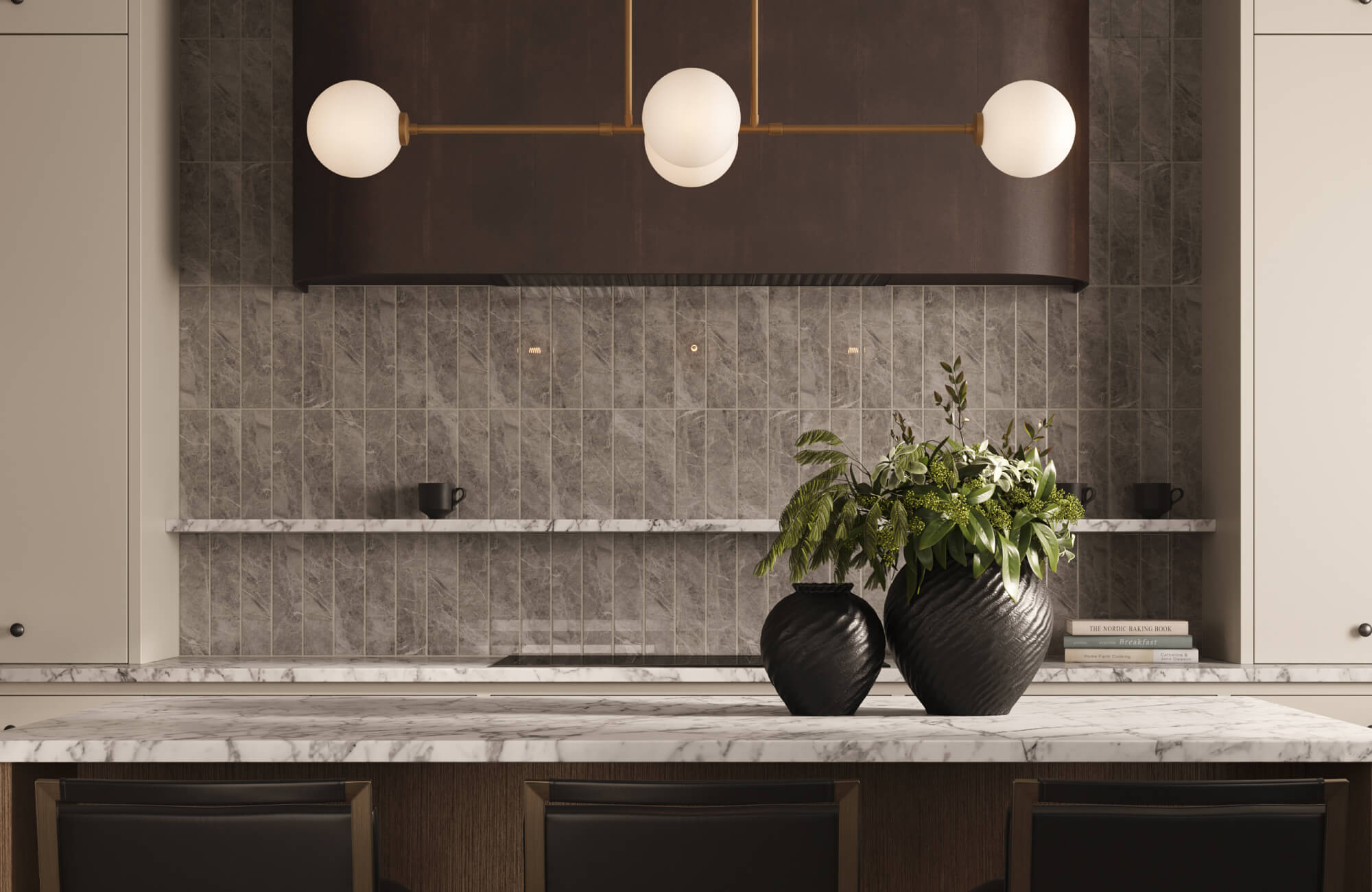
For homeowners drawn to the visual richness of natural materials, wood look porcelain options such as the Jameson 8x48 Matte Porcelain Tile in Umber demonstrate how realism and wear performance come together in thoughtfully planned renovations. Its elongated plank format and matte surface also capture the warmth of hardwood while delivering the durability required for active kitchen environments. As featured in the photo above, the Jameson’s grounded tone works in concert with vertical surface applications like Edward Martin’s Juliet 2.5x10 Matte Porcelain Tile in Denim, which adds depth and texture along the island face and shelving wall, while the Savannah Counter Stool in Cream introduces a lighter, tactile contrast that softens the composition without detracting from long-term functionality. Together, these elements illustrate how coordinated material selections enhance visual continuity while supporting the daily demands of a modern kitchen renovation.
Floating Installation and Subfloor Compatibility
Floating installation systems make luxury vinyl particularly renovation-friendly, enabling efficient upgrades without major demolition. Because the planks can bridge small subfloor irregularities, installations remain flexible and cost-effective. Integrated acoustic backings also soften footfall and reduce noise transfer in open-concept homes. Moreover, they enhance thermal comfort, making surfaces warmer during colder months. If damage occurs, individual planks can be replaced without affecting surrounding areas. These attributes suit homeowners researching fast-installation vinyl flooring for efficient kitchen and bathroom remodels.
To further support confident decision-making, Edward Martin’s augmented reality (AR) tool allows homeowners to visualize different tiles directly within their own kitchens and bathrooms before installation. This interactive experience helps ensure scale, color, and texture align seamlessly with surrounding finishes, reducing uncertainty while enhancing design clarity.

Natural Stone Flooring
Natural stone brings unrivaled character and architectural richness to kitchens and bathrooms, offering a depth of texture and coloration that feels inherently luxurious. Each stone type presents distinct structural strengths and organic beauty, making it an ideal choice for premium renovation projects.
Material Variations and Structural Properties
Marble, granite, slate, and travertine each display unique mineral compositions that influence texture, hardness, and overall aesthetic expression. For instance, granite’s density and scratch resistance make it well-suited for kitchens with heavy appliance use. On the other hand, marble’s veining and luminous depth create serene, spa-like bathrooms, while slate delivers textural richness and natural slip resistance, enhancing safety in wet areas. Meanwhile, travertine introduces warm, earthy tones that complement Mediterranean-inspired or organic interiors. Together, these qualities attract homeowners interested in luxury natural stone flooring for elegant kitchen and bathroom transformations.
Porcelain interpretations of marble aesthetics, such as the Leona 24x24 Checkerboard Matte Porcelain Tile in Calacatta and Nero Marquina, translate these material characteristics into a highly durable, low-maintenance format. As shown in the picture above, its large-format scale enhances structural continuity while the matte surface softens contrast, delivering the visual depth of marble with the strength, consistency, and moisture resistance required for high-performance bathroom environments.
Sealing Requirements and Moisture Protection
Natural stone must be sealed with penetrating sealers to protect against moisture, oils, and stains. Proper sealing helps maintain clarity and prevents etching from acidic substances common in kitchens and bathrooms. Regular re-sealing also ensures the material retains its visual integrity as it ages. Because stone interacts dynamically with environmental elements, consistent care promotes graceful aging rather than deterioration. Its natural variation continues to enhance the space over time rather than making it feel dated. These traits appeal to those seeking long-lasting, sealed natural stone flooring for high-moisture kitchen and bathroom environments.
Subfloor Reinforcement and Load Considerations
Due to its weight, natural stone requires a reinforced subfloor to ensure structural safety. Installers often use cement backer board or uncoupling membranes to prevent cracks and stabilize the tile assembly. Maintaining a perfectly level substrate helps avoid lippage and ensures seamless alignment. This preparation also allows the flooring to withstand heavy loads from appliances and cabinetry. In addition, a reinforced foundation preserves both the stone’s beauty and its longevity. These considerations support homeowners researching subfloor preparation for heavy natural stone flooring in luxury kitchens and bathrooms.

Engineered Wood Warmth and Style with Controlled Stability
Engineered wood offers the organic warmth and visual richness of hardwood while delivering greater stability in moisture-sensitive kitchen environments. Its multi-layer structure provides enhanced resistance to warping, making it a refined yet practical option for transitional spaces.
Dimensional Stability and Moisture Response
Engineered wood features cross-laminated layers that provide strong resistance to seasonal expansion and contraction. This stability allows it to perform reliably in kitchens where humidity and temperature fluctuate. Though not recommended for full wet-zone bathrooms, it excels in powder rooms or kitchens seeking continuity with adjacent hardwood areas. The wood veneer also maintains the authenticity of natural timber without the vulnerabilities of solid planks. Moreover, protective finishes help resist surface moisture, reducing everyday wear. These qualities appeal to homeowners seeking moisture-tolerant engineered wood flooring for warm and elegant kitchen renovations.
Aesthetic Versatility and Surface Treatments
Engineered wood comes in a wide range of species, stains, and surface textures, allowing it to adapt beautifully to traditional, rustic, or contemporary interiors. Finishes like wire-brushed or hand-scraped add tactile depth, enhancing the visual story of a kitchen, while matte polyurethane coatings reduce glare and help conceal minor scratches. Richer, deeper stains can also harmonize with cabinetry and stone countertops, tying the entire design palette together. In addition, the wood’s natural grain introduces warmth that softens modern architectural lines. These features attract homeowners searching for premium engineered wood flooring for cohesive whole-home design transitions.
Installation Flexibility and Underlayment Options
Engineered wood supports several installation methods, including floating, glue-down, and staple-down systems. This flexibility allows the flooring to adapt to varying subfloor conditions and renovation timelines. Acoustic underlayment can also reduce sound transmission, creating a quieter kitchen environment. Moisture barriers add supplementary protection to the assembly. When installed properly, engineered wood delivers both comfort and structural reliability. These advantages align with homeowners researching engineered wood installation options for stylish and stable kitchen flooring.

Waterproof Laminate and Hybrid Flooring
Waterproof laminate and hybrid flooring blend the warmth of wood aesthetics with the resilience of moisture-resistant core technology, making them suitable for unified flooring designs that extend into kitchens and bathrooms. Their structural engineering offers both practicality and visual authenticity.
Core Technology and Moisture Resistance
Waterproof laminate uses resin-enhanced HDF or thermoplastic composite cores to prevent swelling and maintain structural integrity. Hybrid flooring strengthens this performance with rigid cores that behave similarly to vinyl while preserving wood-like visuals. These cores also maintain dimensional stability under fluctuating humidity levels. Additionally, edge-sealing technology blocks moisture from penetrating plank joints. Over time, these protective characteristics support long-term durability in moisture-rich rooms. These traits appeal to homeowners searching for waterproof wood-look laminate and hybrid flooring for busy kitchen and bathroom environments.
High-Pressure Wear Surfaces and Texture Replication
Engineered wood offers a wide range of species, stains, and surface textures, making it adaptable to traditional, rustic, or contemporary interiors. To enhance its character, finishes like wire-brushed or hand-scraped add tactile depth that enriches the kitchen’s visual story, while matte polyurethane coatings reduce glare and help conceal minor scratches. Deeper stains can also harmonize with cabinetry and stone countertops, tying the entire design palette together. Similarly, hybrid and waterproof laminate floors combine practicality with style, featuring high-pressure wear layers that resist scratches and endure heavy daily use. Their deeply embossed textures replicate the dimensionality of natural wood with remarkable realism, further enhanced by high-resolution imaging that brings out rich visual detail. Finally, UV-resistant coatings preserve color vibrancy, even in sunlit kitchens, ensuring both durability and lasting beauty.
Acoustic Underlayment and Comfort Factors
Many hybrid floors include integrated acoustic underlayment that reduces sound transfer and enhances comfort underfoot. This underlayment improves thermal insulation, making the flooring more pleasant year-round. Because it is built in, installation becomes more streamlined and efficient. Lower material height simplifies transitions between rooms. The resulting comfort and quietness elevate the overall living experience. These qualities support homeowners searching for comfortable, waterproof flooring with integrated underlayment for modern kitchen and bathroom projects.
Enduring Flooring Choices that Transform Everyday Living
Thoughtfully selected flooring can elevate a kitchen or bathroom by enhancing comfort, functionality, and long-term value. Durable surfaces such as porcelain, luxury vinyl, engineered wood, and natural stone each bring unique strengths to support a home’s lifestyle needs. Beyond performance, flooring also harmonizes with cabinetry, countertops, lighting, and furniture to create a cohesive and balanced design. Coordinated materials help establish rhythm, texture, and visual continuity, making each space feel intentionally curated. By combining aesthetic refinement with engineered durability, flooring becomes an investment that enriches daily living while elevating every renovation outcome.
For homeowners seeking expert guidance, Edward Martin’s design services provide personalized support that aligns flooring selections with architectural style, functional needs, and long-term vision. By combining material expertise with thoughtful space planning, these services help translate inspiration into cohesive, enduring renovation outcomes!