Live edge dining tables have long captured attention for their raw, organic beauty. Although their irregular lines and unprocessed charm resonate with nature lovers, they may not suit every lifestyle or design preference. Whether it’s concerns about cost, practicality, or stylistic limitations, many are now looking toward refined alternatives that blend the essence of nature with modern design principles. This article explores elevated options that capture organic beauty through innovation, structure, and elegance.

Geometric Solid Wood
If you're drawn to the warmth and richness of wood but prefer a more tailored and timeless aesthetic, geometric solid wood tables offer a compelling alternative to live edge designs. These pieces balance natural material with intentional form, showcasing wood’s character through clean lines, precise craftsmanship, and architectural harmony.
Precision and Spatial Harmony
Choosing a geometric tabletop—whether rectangular, circular, or elliptical—gives you control over how the table interacts with the space around it. Unlike live edge slabs that often introduce asymmetry or awkward overhangs, these shapes create a sense of order and rhythm within your room. They also respect circulation paths, align with surrounding furniture, and help define the table’s relationship with lighting and flooring elements.
A soft oval, for example, encourages natural flow and intimacy, especially in dining spaces where conversation matters. Its curved edges remove harsh corners without sacrificing symmetry. In more structured environments, a rectangular form offers clarity and alignment, mirroring cabinetry, windows, or other architectural lines. When milled from kiln-dried lumber, these shapes emphasize grain direction and color variation with a crispness that highlights the natural beauty of the wood, without visual chaos.
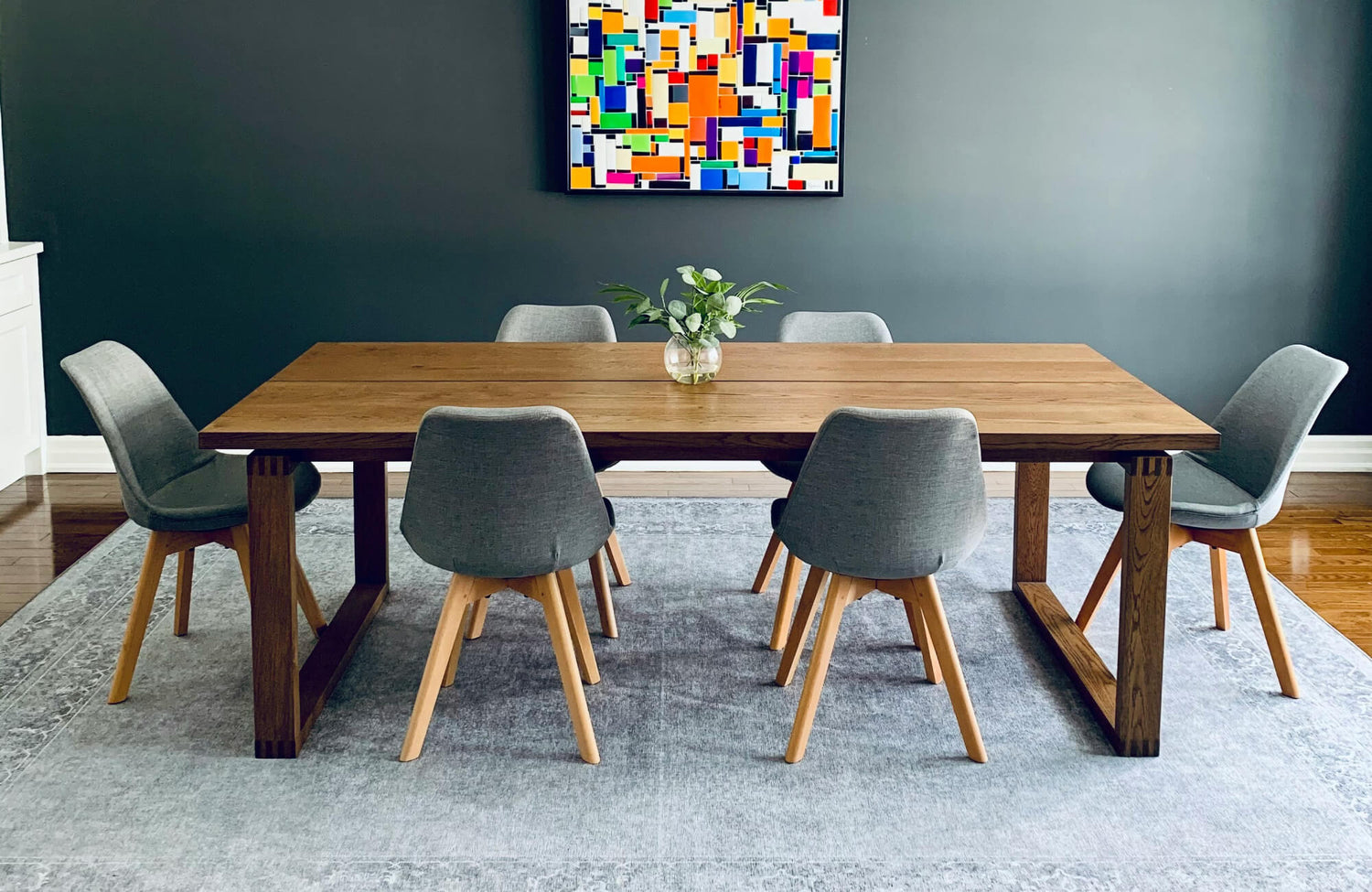
Our Fleurin Ash Oval Dining Table in Wenge, 96", shown in the image above, exemplifies this balance of form and function. Its elongated oval silhouette promotes easy circulation while maintaining a strong visual anchor in the room. Finished in a dark brown tone, the table brings warmth and richness without overpowering the space, making it especially well-suited for contemporary dining rooms that value both refinement and comfort. The controlled geometry also allows the natural ash grain to shine through with intention, offering a composed alternative to the unpredictability of live edge designs.
Edge Profiles as a Design Statement
Just as important as the table's top shape is the profile of its edge. This small detail has a significant impact on how the piece feels, both visually and physically. A chamfered edge, with its angled cut, can make even a thick slab feel light and refined. It also draws the eye downward with grace and can echo other angled details in your interior, like stair balusters or cabinet handles. If you prefer a softer, more approachable aesthetic, a bullnose edge rounds off the table’s form, making it ideal for busy spaces or family settings where comfort is key.
For a more graphic or modern statement, a sharp square edge asserts presence and weight. It brings out the end grain in bold clarity and complements linear interiors with a structured, confident finish. Unlike the unpredictable edges of a live edge table, which can be prone to splintering or snagging, these profiles are intentional and controlled. They allow you to define your dining table as a sculptural element within the room, not just a slice of nature but a carefully curated expression of material and design.

Natural Marble Tabletops
If you're seeking a dining table that balances natural beauty with refined sophistication, marble offers an unforgettable alternative to the live edge aesthetic. Its distinct veining, cool touch, and inherent permanence give it a sculptural quality that elevates any space, from minimalist modern to classic European-inspired interiors.
Natural Veining
Marble is not just a surface; it's a natural artwork formed over thousands of years. The veining you see on each slab is the result of compressed minerals, tectonic shifts, and ancient geological forces, making every piece entirely unique. Whether you prefer the soft, foggy movement of Carrara or the bold, high-contrast streaks of Calacatta Oro, marble provides the same sense of individuality that live edge wood celebrates, only with a greater sense of refinement.
Our Leonardo 59" Dining Table in Brown, seen in the photo above, captures this sense of refinement through a sculptural marble top paired with a warm, grounding base. Its round form allows the natural veining to take center stage, creating a balanced and intimate dining experience that feels curated rather than rustic. The contrast between smooth stone and rich wood tones also reinforces marble’s artistic quality while offering a composed alternative to the raw edges of live edge tables.
When crafted with techniques like bookmatching, where two slabs are mirrored to create a symmetrical Rorschach-like effect, the visual drama intensifies. This method transforms veining into a design centerpiece, often becoming a conversation starter that blurs the line between furniture and art. Although a live edge may highlight the irregular journey of a tree, marble offers an equally authentic narrative, one that speaks to history, transformation, and timeless elegance.
Thermal Mass and Material Weight
Beyond its appearance, marble’s physicality adds to its luxurious appeal. Its high thermal mass means the surface remains naturally cool to the touch, which not only feels refreshing but also signals a level of substance and permanence. This tactile experience contrasts sharply with the warmth of wood, offering a more grounded and architectural presence in your dining space.
Due to its density, marble requires proper structural support, often involving a reinforced base or metal subframe. But this investment pays off in both form and function. Unlike wood, marble doesn’t swell or contract with changes in humidity, which means your table maintains its shape and strength for decades. Its weight also anchors the room, giving it a presence that feels deliberate and enduring. For you, this means a dining table that won’t just complement your lifestyle, but outlast it, becoming a fixture as lasting as the stone itself.

Bookmatched Wood Veneer
If you’re drawn to the warmth of wood but want a more controlled, refined expression than a solid slab can offer, bookmatched veneer delivers a compelling balance of beauty and precision. This approach elevates natural grain into a deliberate design feature, giving you visual drama without the unpredictability or long-term movement of live edge construction.
Mirror Imaging for Visual Balance
Bookmatching involves pairing two consecutive veneer slices and opening them like the pages of a book, creating a perfectly mirrored grain pattern across the tabletop. This symmetry introduces a sense of order and intentionality that feels architectural rather than organic. Instead of random knots or uneven growth lines, the grain becomes a focal point, drawing the eye inward and anchoring the dining space with calm visual rhythm.
Because veneers are sliced thinly, this technique also opens the door to rare and highly figured species that would be impractical or unstable in solid form. You can enjoy dramatic burl patterns, cathedral grain, or high-contrast striping that feels bespoke and gallery-worthy. The result is a table that looks curated and elevated, offering the richness of natural wood in a form that feels composed rather than chaotic.
Dimensional Stability in Variable Climates
Beyond aesthetics, veneered tabletops excel in performance, particularly in environments where temperature and humidity fluctuate. Unlike solid wood slabs, which naturally expand and contract, veneered tables are built over engineered cores such as Baltic birch plywood or MDF. These substrates also counteract wood movement, helping the surface remain flat and stable over time.
Our Dominic 95” Dining Table in Dark Mango, displayed above, reflects this engineered approach through its use of wood veneer paired with a subtly contoured live-edge profile. Although the edge detail introduces a hint of organic character, the veneered construction provides greater structural consistency than a solid slab, offering the look of natural wood with improved dimensional control.
This structural advantage is especially valuable in modern homes with radiant heating, expansive glass walls, or seasonal humidity shifts. You get the look of real wood without the risk of warping, splitting, or ongoing maintenance concerns. In this way, bookmatched veneer represents a thoughtful fusion of nature and engineering, allowing you to enjoy organic beauty with confidence, consistency, and long-term reliability.

Troweled Concrete Surfaces
Concrete has moved far beyond its industrial roots to become a strikingly refined medium for interior design. As a dining surface, it offers a monolithic presence, tactile richness, and sculptural versatility, channeling the natural world through form and finish while embracing the boldness of architectural modernism.
Organic Contours without Structural Fragility
One of the greatest advantages of concrete is its ability to transcend the physical limitations of natural materials. Although wood is bound by the dimensions of a tree trunk, concrete can be cast into virtually any silhouette, from soft, rounded pebble shapes to long, fluid curves or angular geometric slabs. This freedom in form also allows you to introduce organic movement to a space without sacrificing structural performance.
Our Selena 55” Outdoor Dining Table in Black, seen above, exemplifies this sculptural flexibility through its smooth, monolithic profile and gently softened edges. Crafted from a concrete blend, the table achieves an organic presence that feels grounded and substantial, yet avoids the fragility or dimensional constraints associated with carved natural materials, making it especially well-suited for outdoor environments where durability and stability are essential.
Glass Fiber Reinforced Concrete (GFRC) enhances this flexibility by producing thinner, stronger slabs that are resistant to cracking, warping, or chipping. Unlike wood, which is prone to expansion and contraction, concrete remains dimensionally stable even with intricate or asymmetrical profiles. The addition of hand-troweled or chiseled textures can also replicate the visual irregularities found in nature, giving the table an earthy, tactile quality while maintaining the solidity of engineered material. It’s a way to honor organic inspiration without surrendering durability.
Integrated Tonal Customization and Aggregates
Beyond shape, concrete offers exceptional freedom in color and surface texture. Pigmented mixes can be fine-tuned to match your existing palette, ranging from warm taupes and soft greys to inky blacks or off-whites. This tonal versatility allows your table to act either as a grounding focal point or a seamless extension of the room’s architecture.
Aggregates further elevate the visual interest. Crushed glass, river stones, or recycled metal fragments can be embedded into the mix and then revealed through polishing, creating a mosaic of texture and light reflection. These inclusions echo the complexity of wood grain or marble veining but with a distinctly contemporary edge. The result is a table that feels elemental yet modern, rooted in the raw beauty of earth and transformed into a functional sculpture that brings material intelligence into everyday life.

Steel and Glass
If you’re drawn to sleek surfaces, minimalist form, and lasting durability, steel and glass dining tables offer a sophisticated departure from the rustic character of live edge wood. Together, these materials balance strength and lightness, combining structural precision with visual clarity. The result is a modern aesthetic that feels intentional, refined, and well-suited to contemporary interiors.
Non-Porous Surfaces for Modern Living
Steel and glass tables are especially appealing for spaces that blend cooking, entertaining, and everyday dining. Both materials offer non-porous finishes that are easy to maintain and resistant to staining. Spills from wine, citrus, or oils can be wiped away effortlessly, making these surfaces practical as well as polished.
In addition, the reflectivity of steel and glass enhances natural and artificial light, helping smaller or low-light rooms feel more open and expansive. Glass introduces transparency, while steel provides contrast and structure, creating a dynamic interplay that feels clean without being cold. This combination works particularly well in urban spaces and contemporary kitchens where efficiency and visual balance are priorities.
The Lightweight Expression of Precision Materials
Because of steel’s high tensile strength, tabletops and frames can remain slim and visually unobtrusive without compromising stability. When paired with glass, this effect is amplified, allowing the table to feel almost weightless within the space. Unlike solid wood, which often relies on mass, steel and glass emphasize restraint and proportion, supporting open sightlines and uncluttered layouts.
Laser-cut steel, refined welds, and crisp glass edges also contribute to an architectural finish defined by control and clarity. This approach favors clean geometry and deliberate detailing, making steel and glass tables ideal if you prefer a composed, future-forward alternative to the organic irregularity of live edge designs.
Choosing a Table That Reflects Your Modern Lifestyle
The best alternative to a live edge dining table ultimately lies in how well it supports your daily life and design vision. Whether you gravitate toward the structured warmth of geometric wood, the timeless presence of marble, the clarity of glass, or the sleek confidence of steel and concrete, each option answers the desire for organic beauty in a more intentional way. Rather than imitating nature outright, these tables refine it through craftsmanship, proportion, and performance. In doing so, they offer a dining centerpiece that feels just as meaningful, yet more aligned with the way modern spaces function and evolve.
If you’re ready to translate that vision into a piece that truly fits your space, working with a team that understands both design and material nuance makes all the difference. From selecting the right surface to refining proportions, finishes, and construction details, expert guidance helps ensure your dining table feels cohesive with your space and lifestyle. By starting a conversation with a dedicated team, you gain clarity, confidence, and a tailored approach that turns inspiration into a well-considered, lasting centerpiece.