



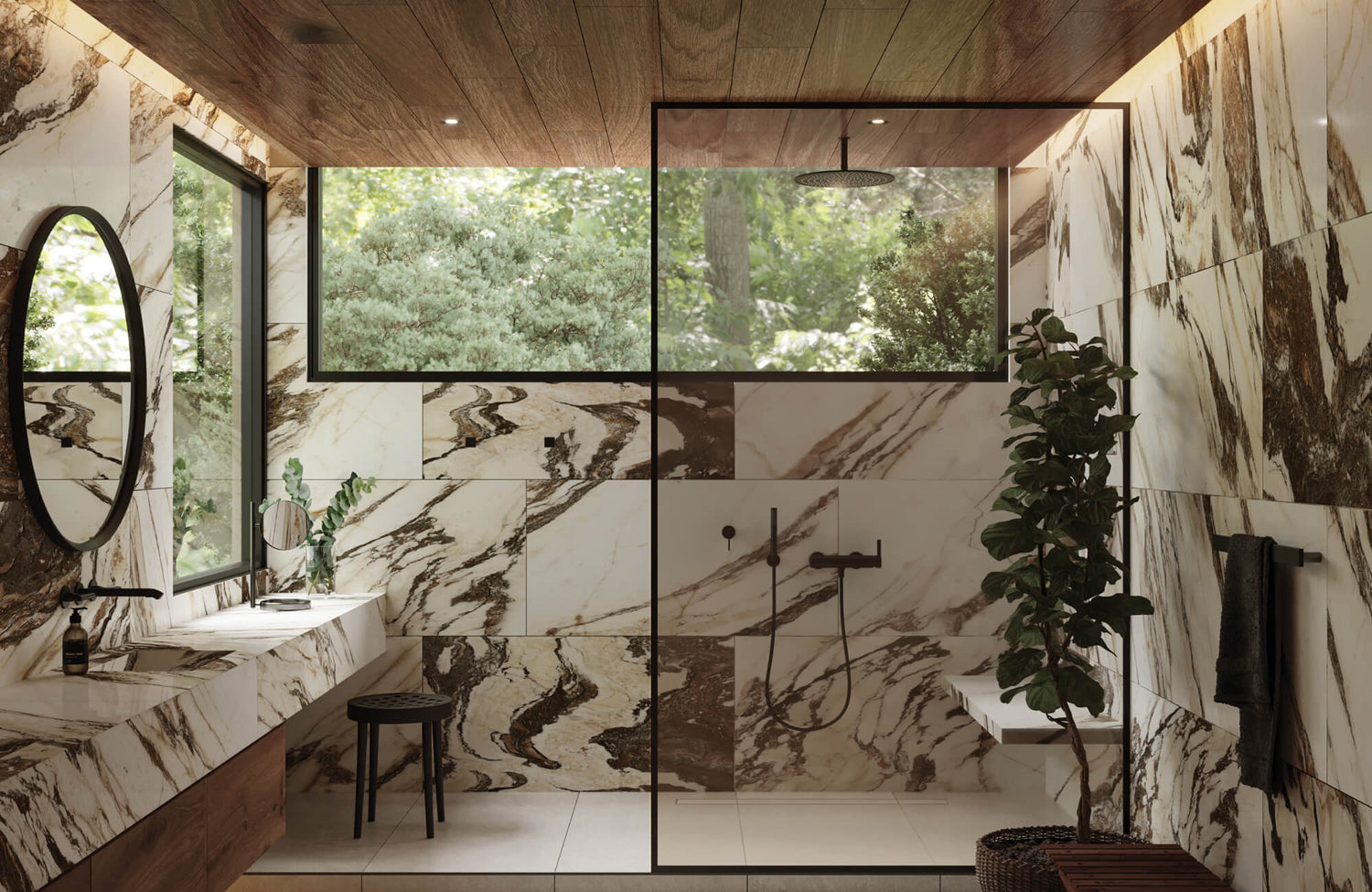
Brown tiles bring a grounded, enduring appeal to bathroom design, offering a balance of warmth, versatility, and practicality. Whether used across a brown tiled shower, installed as a dark brown tile bathroom floor, or featured along bathroom walls, they create a cohesive foundation that works across both modern and traditional spaces. Their natural tones help anchor the room visually, making everything from compact washrooms to expansive bathroom suites feel more intentional and inviting.
Beyond aesthetics, brown tiles also offer long-term value. With a wide range of shades, finishes, and formats available, they adapt easily to changing styles while maintaining a timeless presence. Paired with the right materials and fixtures, they can transform a bathroom into a refined, functional environment that feels both elevated and comfortable.

Design Ideas and Aesthetic Appeal of Brown Tiles
Brown tiles provide a versatile design base that can shape the overall mood of a bathroom. Whether applied to walls, floors, or a full brown bathroom suite, their tonal range allows for both subtle and statement-making interiors.
Exploring Color and Texture Pairings
Brown tiles are available in a spectrum of tones, each influencing how a space feels and functions. Lighter shades, such as soft beige or sand, work well across bathroom walls or within a brown shower enclosure, helping smaller washrooms feel more open and calming. These tones are especially effective when paired with natural light and minimalist fixtures.
Darker shades, including deep espresso or walnut, are often used for bathroom flooring or feature walls to create contrast and visual depth. A dark brown tile bathroom floor, for example, can ground the space beneath a floating vanity or freestanding tub, giving the room a more defined structure. Edward Martin’s Jameson 8x48 Matte Porcelain Tile in Umber, as seen in the image above, reflects this approach with its elongated wood-look format and rich tone that adds warmth while maintaining a clean, modern flow.
Texture contributes to how the design ultimately comes together. Matte finishes offer a softer, more understated surface ideal for walls or flooring, while glossy finishes reflect light and can enhance brightness in enclosed spaces like a brown tiled shower. Combining different finishes, such as matte floor tiles with glossy wall tiles, introduces subtle contrast while maintaining cohesion.

Pairing Brown Tiles with Other Colors and Materials
The versatility of brown tiles becomes even more apparent when paired with complementary colors and materials. These combinations can define the overall style of a bathroom while enhancing both contrast and harmony.
Brown and White
A brown floor paired with white bathroom walls is a timeless approach that keeps the space feeling bright while maintaining a grounded base. This combination works especially well in smaller bathrooms or powder rooms where balance is key. Subtle veining, like that found in Edward Martin’s Aniston 24x48 Matte Porcelain Tile in Calacatta Viola in the image above, introduces soft brown movement across a light surface, helping tie the palette together without overwhelming the space.
Brown with Bold Colors
In more contemporary settings, brown tiles can be paired with accents like blue or green through cabinetry, textiles, or wall paint. A brown tiled shower framed with colored walls or decorative elements introduces personality without overwhelming the design.
Natural Materials
Wood vanities, stone countertops, and marble accents complement brown tiles seamlessly. For example, a brown bathroom floor paired with a wood vanity and stone sink can create a cohesive, nature-inspired washroom that feels calm and organic.
Metal Accents
Fixtures in brushed brass, chrome, or matte black add refinement and contrast. A brown tiled shower with a frameless glass enclosure and matte black hardware creates a clean, modern look, while brass fixtures introduce warmth and a more classic feel.
To better visualize these combinations, Edward Martin’s Augmented Reality (AR) Visualization Tool allows you to preview how different brown tiles will appear within your own space. This makes it easier to experiment with layouts, finishes, and pairings before committing to a final design.

Choosing the Right Tile Styles for Brown Bathrooms
Selecting the right tile style helps define how brown tones are expressed throughout your bathroom. From wall applications to flooring patterns, each option offers both visual and functional advantages.
Subway Tiles
Brown subway tiles are a classic choice for bathroom walls and shower enclosures. Their clean lines work well in layouts like stacked or herringbone patterns, adding subtle visual movement without overwhelming the space. Used in a brown tiled shower or as a backsplash behind a vanity, they provide structure while maintaining a refined, timeless look.
Wood Look Tiles
Wood look tiles bring the appearance of natural wood into moisture-prone areas like bathrooms. Commonly used for brown bathroom floors, they add warmth underfoot while offering the durability and water resistance of porcelain or ceramic. These tiles are especially effective in rustic or spa-inspired washrooms, where texture and natural tones take center stage, as shown with Edward Martin’s Zayne 12x36 Matte Ceramic Tile in Slat in the image above, which introduces subtle linear texture for added depth.
Marble Look Tiles
For a more elevated aesthetic, marble look tiles with brown veining introduce depth and sophistication. These tiles work well as feature walls behind vanities or across shower walls, creating a focal point within the space while maintaining a cohesive palette.
Advanced manufacturing techniques, such as high-definition inkjet printing, allow porcelain and ceramic tiles to replicate the intricate veining and tonal variation of natural marble with impressive precision. This results in a surface that captures the visual complexity of stone while offering greater consistency and durability.
Their typically large-format sizing also minimizes grout lines, contributing to a cleaner, more seamless appearance. Fewer grout joints not only enhance the visual flow of the space but also make maintenance easier, particularly in wet areas like showers where buildup can occur over time.
Checkerboard Tiles
Checkerboard patterns using brown and white tiles offer a bold yet approachable flooring option. Often used as brown floor tiles in bathrooms, this pattern introduces visual rhythm while maintaining a classic appeal. Compared to black-and-white designs, brown tones create a softer contrast, making the space feel more welcoming while still visually engaging.

Practical Advantages of Brown Tiles
Beyond design flexibility, brown tiles are well-suited for the functional demands of a bathroom. Their durability and ease of maintenance make them a reliable choice for both residential and high-use spaces.
Durability and Easy Maintenance
Brown tiles, particularly those made from porcelain or ceramic, are highly resistant to moisture, temperature changes, and daily wear. This makes them ideal for areas like bathroom floors and brown tiled showers, where constant exposure to water is expected.
When properly installed and maintained, these materials perform exceptionally well in high-moisture environments, helping preserve both appearance and longevity over time.
Their surfaces are also easy to maintain. Routine cleaning with mild solutions keeps them looking consistent, while their natural color variation helps conceal water spots, dust, and minor imperfections. This is especially beneficial for brown floor tiles in bathrooms, where foot fall is highest, as seen with Edward Martin’s Leona 3x3 Matte Porcelain Hexagon Mosaic Tile in Marfil in the image above, which combines durability with a textured surface that subtly masks everyday wear.
Timelessness and Versatility
Brown tiles offer long-term design flexibility. Whether used in a full brown bathroom suite or as an accent within a mixed-material space, they adapt easily to evolving styles. Homeowners can update fixtures, wall colors, or décor without needing to replace the tiles themselves, making them a practical investment over time.

Eco-Friendly and Sustainable Choices
As sustainability becomes a growing priority in home design, many brown tiles now align with environmentally responsible practices without compromising style.
Recycled and Natural Materials
Some brown tiles are manufactured using recycled ceramic or other reclaimed materials, reducing the demand for new resources. Others are made from natural clay, offering both durability and a more organic, authentic appearance.
Low VOC and Non-Toxic Finishes
Tiles with low-VOC finishes contribute to better indoor air quality, which is especially important in enclosed, humid environments like bathrooms. Choosing non-toxic materials ensures a safer and more comfortable space over time.
Energy Efficiency and Longevity
Porcelain and ceramic tiles retain heat effectively, helping maintain a comfortable bathroom temperature. This is particularly noticeable when paired with radiant heating systems or in well-insulated spaces, allowing the surface to feel warmer underfoot.
Their long lifespan also reduces the need for frequent replacements, making them a sustainable option both environmentally and economically. Smaller format tiles, like Edward Martin’s Wyatt 2x2 Matte Porcelain Mosaic Tile in Espresso in the image above, are particularly well-suited for shower floors, offering both durability and enhanced grip while maintaining a cohesive brown-toned design.

Potential Drawbacks and Considerations
While brown tiles offer many benefits, thoughtful design decisions are essential to ensure a balanced and well-lit space.
Avoiding Monotony
Using brown tiles throughout an entire bathroom can sometimes feel visually heavy if not balanced properly. In a full brown bathroom suite, introducing contrast through white walls, lighter countertops, or mixed materials can prevent the space from feeling flat.
For instance, incorporating variation in finish and scale can make a noticeable difference. Edward Martin’s Graham 3x6 Glossy Ceramic Tile in Clay, as shown in the image above, adds a reflective surface that helps break up matte textures, bringing light and dimension into the space while maintaining a cohesive warm palette.
The Role of Lighting
Lighting significantly impacts how brown tiles appear. A dark brown tile bathroom floor or wall may feel too heavy in low-light conditions, while warm lighting can enhance its richness. Incorporating layered lighting, such as overhead fixtures, wall sconces, and natural light, ensures the space feels open and well-defined.
Cost Considerations
High-quality brown tiles, especially porcelain options, may require a higher initial investment. However, their durability and long-term performance often offset upfront costs. To manage expenses, consider simpler layouts or combining premium tiles with more budget-friendly options in less visible areas.
Bringing Warmth and Depth to Your Bathroom Design
Brown tiles offer a thoughtful balance of design flexibility and everyday practicality, making them a strong choice for a wide range of bathroom styles. Whether used for a brown tiled shower, a dark brown tile bathroom floor, or an entire bathroom suite, they provide a cohesive foundation that feels both refined and functional.
With the right combination of materials, fixtures, and layout, brown tiles can transform a bathroom into a space that feels grounded, comfortable, and visually complete. From subtle wall applications to statement flooring, their versatility allows for creative expression while maintaining long-term value. To help bring your vision into focus, exploring Edward Martin’s tile samples can offer a more tactile understanding of color, texture, and finish, making it easier to refine your selections with confidence.


