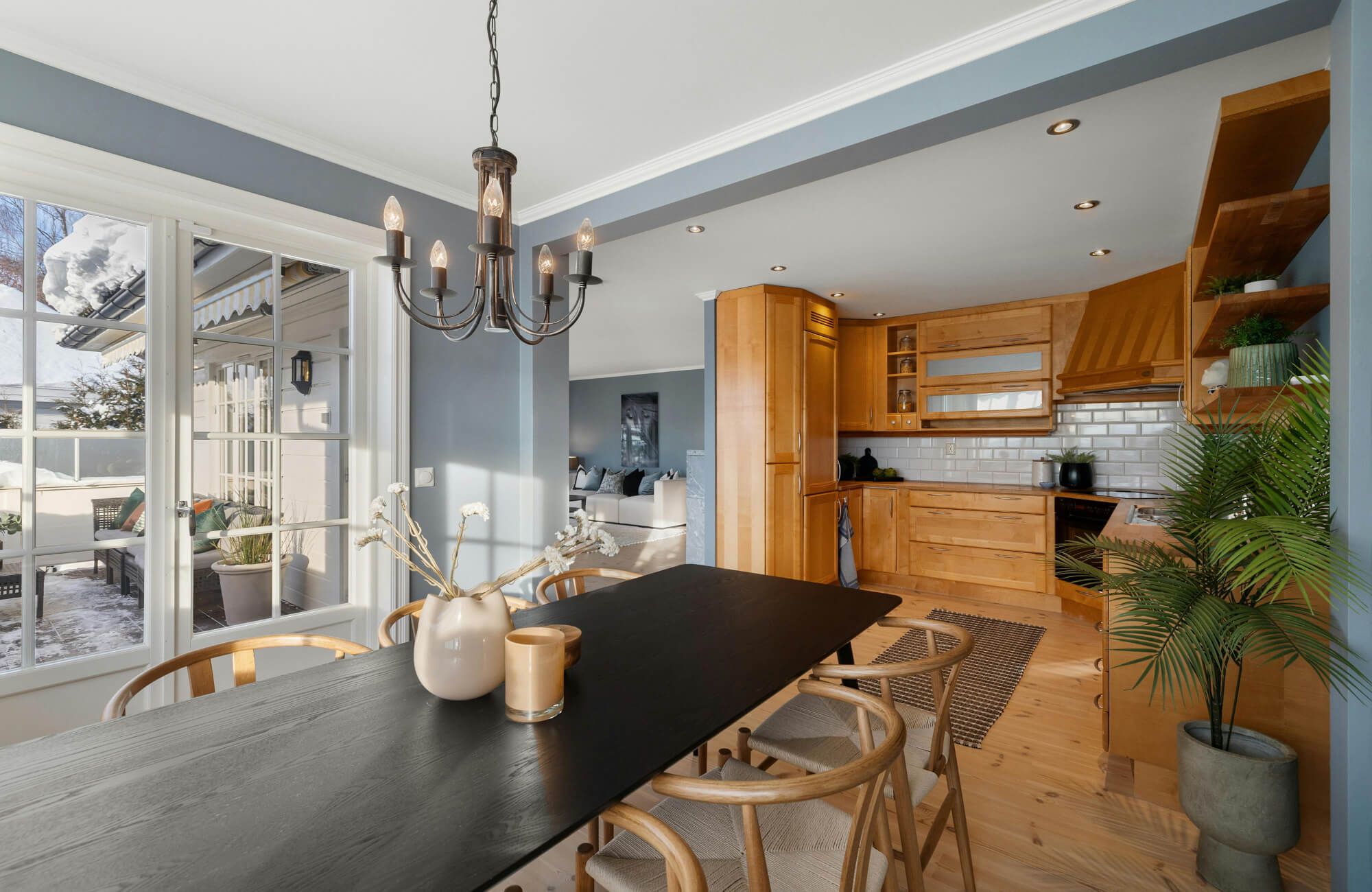
A dining table is one of the few pieces of furniture that’s always on display, whether it’s set for guests or used for everyday meals. While shape and size matter, the color of the table often has a bigger impact on how the room feels as a whole. In this blog, we’ll take a closer look at the benefits of choosing a black dining table and how color, materials, seating, and surrounding pieces work together to shape a dining area that feels balanced and easy to live with.

Why Color Choice Matters More Than Dining Table Style
When choosing a dining table, it’s easy to focus on leg shape or overall silhouette, but color often plays a bigger role in how the space actually feels. Below, we’ll look at why a black dining table can shape contrast, balance, and visual weight more effectively than style details alone, especially in rooms that connect to other living areas.
How Black Anchors A Dining Space Visually
A black dining table naturally grounds the dining area by giving the eye a clear point to settle on. Because darker tones carry more visual weight, black helps define where the dining space begins and ends, even in open layouts. This anchoring effect becomes especially helpful when the surrounding walls, floors, or décor lean lighter or softer in tone. Over time, that sense of structure keeps the room from feeling scattered or unfinished. As a result, the dining area feels intentional rather than simply placed within the space.
A strong example of this effect is our Selena 55” Outdoor Dining Table in Black, shown above. Its dark, earthy finish gives the dining area a clear visual center, helping the space feel anchored even when surrounded by lighter walls, floors, or seating. The sculptural concrete form adds weight without feeling bulky, which keeps the room composed rather than heavy. In open or connected layouts, that balance helps the dining zone feel intentional instead of floating within the space.
Why Neutral Dining Rooms Benefit From Darker Table Finishes
In neutral dining rooms, lighter finishes can sometimes fade into the background, making the space feel a bit too uniform. A black dining table introduces contrast that helps break up that softness without feeling abrupt or heavy. It adds depth to rooms filled with whites, beiges, or soft grays, allowing individual elements to stand out more clearly. At the same time, black still behaves like a neutral, so it doesn’t overpower the room or steal attention. Instead, it quietly anchors the dining area. The result is a space that feels layered and considered, even without relying on bold color accents elsewhere.
When Table Color Changes How Large Or Small A Room Feels
Table color has a way of shaping how a dining space feels, even if you don’t notice it right away. Lighter tables often blend in and make a room feel open, while a black dining table brings a sense of presence that can help larger spaces feel more settled and pulled together. In smaller dining areas, black works best when it’s balanced by lighter walls or floors, so the contrast feels intentional rather than heavy. When used this way, the table doesn’t make the room feel smaller. Instead, it gives the space a clear center. That definition often makes the room feel easier to live in and more comfortable over time.

How A Black Dining Table Creates Contrast Without Overwhelming The Room
A black dining table adds contrast in a way that feels deliberate rather than dominating. In this section, we’ll walk through how black can define the dining area, interact with lighter surfaces, and create separation within the room, all while keeping the overall space balanced and comfortable.
Pairing Black Dining Tables With Light Walls And Flooring
Black dining tables really shine when they’re set against light walls or flooring. The contrast helps each surface feel distinct, so the table stands out without dominating the room. Lighter finishes bounce natural and ambient light around, which keeps the black surface from feeling heavy or enclosed. This balance makes the dining area feel grounded yet welcoming at the same time. Over time, the contrast also makes the space easier to read visually. The table holds its place as a focal point, but it never overwhelms what’s around it.
Balancing Dark Tables With Natural Wood And Soft Textures
Natural wood and soft textures can completely change how a black dining table feels in a room. Wood tones add warmth that gently offsets the darker finish, while fabrics, upholstery, or woven elements soften the overall look. This combination keeps the space from feeling too sharp or overly structured. Instead, the dining area starts to feel relaxed and layered. The contrast becomes less about making a statement and more about creating balance. The result is a space that feels comfortable, lived-in, and easy to enjoy.
Using Black To Frame A Dining Area In Open Layouts
In open layouts, a black dining table can quietly do the job that walls or dividers usually handle. Its darker tone naturally draws the eye, which helps signal where the dining area begins, even when it flows directly into a kitchen or living space. That visual cue gives the room a sense of order without breaking up the openness everyone loves. Over time, this subtle framing makes the space feel easier to move through and easier to understand at a glance. The dining area feels intentional rather than simply placed in the middle of the room. You get definition without sacrificing openness, which is often the goal in shared spaces.
When Too Much Black Can Make A Room Feel Closed In
While black is flexible, it works best when it has room to breathe. If a black dining table is surrounded by dark walls, dark flooring, and equally dark furnishings, the space can start to feel heavier than expected. Instead of feeling grounded, the room may feel closed in or visually compressed. That’s where lighter finishes, reflective surfaces, or softer materials help restore balance. The goal isn’t to avoid black altogether, but to use it with intention. When balanced thoughtfully, black stays grounding and refined rather than overwhelming.

How Material Choice Shapes The Look And Longevity Of A Black Dining Table
While color sets the tone, the material of a black dining table determines how it feels, ages, and performs over time. Below, we’ll walk through the most common materials used for black dining tables and how each one supports different lifestyles, room layouts, and design goals.
Solid Wood (Painted or Stained Black)
Solid wood remains one of the most reliable options for a black dining table, especially for everyday use. When painted or stained black, the surface often allows subtle grain to show through, which adds depth and character rather than a flat finish. This natural variation helps the table feel warm and substantial, even in darker tones. Over time, solid wood tends to age gracefully, developing a look that feels lived in rather than worn out. It also offers flexibility across different interior styles, from traditional to modern. For many homes, this balance of durability and visual richness makes solid wood a long-term choice.
A great example of this material is our Laurent Ash Round Dining Table in Wenge, shown above. Crafted entirely from hardwood, its blackened finish allows the ash grain to remain visible, which adds depth instead of reading flat or overly polished. That subtle variation helps the table feel substantial and warm, even with its darker tone. Over time, the solid wood construction supports everyday use while continuing to feel intentional and well-balanced in both compact and open dining spaces.
Engineered Wood / MDF with Black Finish
Engineered wood or MDF tables with a black finish offer a cleaner, more uniform appearance. Because the surface is consistent, the black tone often looks sleek and modern, especially in minimalist or contemporary spaces. This material is generally more budget-friendly, which makes it accessible for a wide range of homes. However, it performs best in controlled indoor environments where moisture and temperature changes are limited. When used thoughtfully, it delivers a polished look without visual distraction. It’s a practical option for those prioritizing style consistency over natural variation.
Black-Stained Oak or Ash
Black-stained oak or ash strikes a balance between bold color and visible texture. Unlike fully painted finishes, staining allows the natural grain to remain visible, which adds warmth beneath the darker surface. This makes the table feel less severe and more layered, even when paired with modern furnishings. Oak and ash are also known for their strength, which supports long-term use. The result is a table that feels both refined and approachable. For many dining spaces, this option offers contrast without sacrificing character.
Metal Bases with Black Wood or Stone Tops
Dining tables with metal bases and black wood or stone tops introduce structure and visual strength. The metal base adds stability, which is especially helpful for larger tables or open dining layouts. This combination often leans modern or industrial, but it can adapt well when balanced with softer surrounding elements. The contrast between materials keeps the table from feeling too heavy in one direction. Over time, the sturdy base supports frequent use without compromising style. It’s a strong choice for spaces that benefit from both durability and definition.
Black Stone or Stone-Look Tops (Quartz, Sintered Stone)
Black stone or stone-look tops bring a sense of strength and permanence to a dining table that’s hard to overlook. Materials like quartz or sintered stone feel solid and substantial, which makes them a good fit for homes where the dining table sees regular use. At the same time, they still read as refined, so the table doesn’t feel overly heavy or industrial. Their weight and texture give the dining area a grounded, dependable feel that holds up over time. When paired with lighter chairs or flooring, the contrast keeps the space feeling balanced rather than dark. The table feels practical for everyday meals while still fitting naturally into a well-designed room.
Black Glass (Use Carefully)
Black glass dining tables create a lighter, more reflective presence despite their darker color. The glossy surface helps bounce light around the room, which can be helpful in smaller dining spaces or areas with limited natural light. However, that same reflectiveness makes fingerprints and marks easier to notice. Because of this, black glass tends to suit homes that value visual impact more than low upkeep. When softened with textured materials or warmer finishes nearby, it can feel sleek and modern instead of stark.

Choosing The Right Chairs For A Black Dining Table
The chairs you pair with a black dining table play a major role in how the space feels day to day. Here, we’ll look at how different chair profiles, from armless designs to armchairs, can shape openness, comfort, and the overall tone of the dining area without changing the table itself.
Why Armless Chairs Keep Black Dining Tables Feeling Lighter
Armless chairs tend to make a black dining table feel more open and less visually demanding. Because they take up less space both physically and visually, they allow the table to stand out without making the dining area feel crowded. This is especially helpful in smaller rooms or open layouts where keeping things fluid really matters. Armless designs also make it easier to move around the table, which subtly improves how the space functions day to day. Over time, this openness keeps the dining area feeling relaxed rather than tight. The setup feels practical while still being easy on the eyes.
When Armchairs Add Comfort And Visual Weight
Armchairs, such as our Gideon Dining Chair in Brown above, add a sense of comfort and structure that can make a black dining table feel more intentional. Their larger profile introduces visual weight, which works well in dining rooms that have enough space to support it. When placed at the ends of the table, armchairs naturally frame the setup and give it a more composed look. This added presence often makes gatherings feel more settled and inviting. Armchairs also signal a slightly more formal dining experience without feeling stiff. As long as the room isn’t too tight, they can become a natural focal point within the space.
Mixing Armless Chairs And Armchairs For Balance
Mixing armless chairs with armchairs is often the easiest way to get the best of both worlds. Armless chairs along the sides help keep the setup feeling open and approachable, while armchairs at the ends bring in structure and a sense of intention. This combination prevents a black dining table from feeling either too heavy or too informal. It also adds just enough variation to make the arrangement feel considered rather than repetitive. Over time, this mix proves practical for everyday meals while still feeling appropriate for gatherings. The table feels balanced, not overstyled.
How Chair Color And Material Affect A Black Table Setup
The color and material of dining chairs can quietly change how a black dining table reads in the room. Lighter chair finishes soften the contrast and help the space feel brighter and more relaxed. Darker tones, on the other hand, create a more cohesive and grounded look when paired with a black table. Materials like wood, upholstered seats, or woven textures add warmth and visual interest, keeping the setup from feeling too stark. These details influence whether the table stands out or blends in more seamlessly. When chosen with intention, the chairs support the table rather than compete with it.

How Black Dining Tables Pair With Sideboards And Dining Storage
A black dining table doesn’t exist in isolation, especially in dining rooms where storage plays a functional and visual role. In this section, we’ll explore how black tables interact with sideboards and dining storage, and how thoughtful pairing can create cohesion without making the room feel heavy or overly matched.
Coordinating A Black Dining Table With A Matching Sideboard
Pairing a black dining table with a matching sideboard creates a strong sense of continuity in the dining space. When both pieces share a similar finish, the room feels intentional and well-composed rather than visually fragmented. This pairing works particularly well in modern or contemporary interiors where clean lines and consistency matter. However, even within a matched look, subtle variations like different textures, finishes, or hardware help prevent the setup from feeling too uniform. Over time, this balance allows the dining area to feel polished without appearing overly styled.
Our Julian Sideboard in Black, shown above, offers a clear illustration of how this pairing works in practice. While its dark finish closely aligns with a black dining table, the mix of natural grain, woven texture, and warm brass details keeps the setup from feeling too uniform. Those subtle material shifts add depth, so the room feels layered rather than overly matched. It’s a strong example of how black-on-black can still feel balanced, intentional, and easy to live with over time.
Mixing Black Tables With Wood Or Neutral Storage
Mixing a black dining table with wood or neutral finish storage introduces warmth and visual relief into the room. Wood sideboards soften the darker table by adding natural texture, which helps the dining area feel more inviting and grounded. Neutral storage pieces, meanwhile, allow the black table to remain the focal point without competing for attention. This combination works especially well in spaces that already feature organic materials or lighter finishes elsewhere. Instead of feeling mismatched, the contrast creates a layered look that feels natural over time. The result is a dining area that looks collected rather than coordinated all at once.
Using Contrast To Prevent A Flat Or Heavy Look
When a black dining table sits near storage, contrast becomes what keeps the space from feeling visually dense. If multiple dark pieces are grouped too closely, the dining area can start to feel heavy instead of grounded. Introducing lighter finishes, natural textures, or even small shifts in tone helps break up that weight. This contrast gives each piece enough space to stand on its own while still feeling connected. Over time, the room feels more balanced and easier to live in. Instead of looking flat or overly uniform, the dining area gains depth and clarity.
When A Sideboard Should Be Lighter Than The Table
A lighter sideboard often works better when the dining table already carries strong visual weight. This is especially true in smaller dining rooms or spaces that don’t get much natural light. A lighter storage piece helps lift the room visually, keeping it from feeling closed in. It also allows the black dining table to stay grounded without dominating everything around it. When chosen with intention, the sideboard supports the table rather than competing for attention. The space feels calmer, more balanced, and easier to enjoy over time.

Practical Advantages Of Choosing A Black Dining Table
Beyond style, a dining table needs to work well for everyday life. Here, we’ll look at the practical reasons a black dining table continues to be a popular choice, especially in homes where the dining area sees regular use and frequent gatherings.
How Black Dining Tables Handle Everyday Use
Black dining tables tend to work well for daily life because their darker surface doesn’t call attention to every small change around it. Shifts in lighting, shadows from overhead fixtures, and the general movement that happens throughout the day tend to blend in rather than stand out. This makes the table feel more forgiving in real homes, not just styled spaces. Over time, that visual steadiness helps the dining area feel consistently pulled together. Even in rooms that serve multiple purposes, the table holds its place without looking unsettled. It feels dependable rather than precious.
Why Minor Marks Are Less Noticeable On Dark Finishes
One of the quiet advantages of black finishes is how they handle small, everyday imperfections. Minor marks and subtle surface changes tend to fade into the darker tone instead of immediately drawing the eye. While wear doesn’t disappear completely, it feels less disruptive to the overall look of the table. This helps the surface maintain a more consistent appearance as time goes on. For many households, that means less worry about keeping the table looking perfect. The finish feels reassuring rather than demanding.
When Black Makes Sense For Busy Dining Spaces
Black dining tables are often a smart choice in spaces that see regular use or connect to other parts of the home. Their strong visual presence helps anchor the dining area, even as people move through it throughout the day. This is especially helpful in open layouts where the table is always visible. Rather than feeling delicate, a black table feels stable and settled in its place. That sense of permanence supports both everyday meals and larger gatherings. The space feels ready to be used, not carefully preserved.
Is A Black Dining Table Right For Your Home?
A black dining table works best when it’s chosen with intention, not just for its look but for how it fits into daily life. As you’ve seen, color, material, seating, and nearby storage all play a role in whether the table feels grounded, balanced, or too heavy. When these elements work together, black becomes less of a bold statement and more of a steady foundation for the room. The dining space feels clear, composed, and comfortable to use over time.
If you’re unsure how a black dining table would work in your own layout, getting a second set of eyes can help. Our design consultation focuses on your space, how you use it, and what will actually feel right long term. From choosing the right table material to pairing chairs and storage, we help you make decisions that feel confident rather than rushed. Book a design consultation to get guidance tailored to your home, not just general advice.