A room with a centered seating layout doesn’t always feel quite right on a rectangular rug. In those cases, a square rug can subtly shift how furniture connects, how balanced the layout feels, and how the space functions day to day. In this blog, we’ll explore when a square rug makes sense, how a 10x10 performs across different room sizes, and what to consider before deciding if this shape is right for your space.

When a Square Rug Makes More Sense Than a Rectangular One
Square rugs work best when a room’s layout feels centered and evenly distributed rather than stretched in one direction. Instead of emphasizing length, they help visually anchor furniture in a way that feels calm, balanced, and intentional. In the right setup, a square rug can make a space feel more cohesive without pulling the eye too far in any single direction.
How Square Rugs Change the Visual Balance of a Room
Square rugs naturally pull attention toward the center of a space, which helps furniture groupings feel more grounded. Because all sides are equal, the rug doesn’t favor one direction over another, so the room feels more stable overall. This can be especially helpful in spaces that already have a symmetrical layout, where a rectangular rug might feel slightly off. A square rug also softens visual movement, making the room feel less busy. Instead of guiding the eye forward, it keeps the focus contained. That subtle shift often makes the space feel calmer and more intentional.
Spaces Where Symmetry Matters More Than Length
Rooms designed around symmetry tend to benefit the most from square rugs. Seating areas where furniture faces inward, for instance, feel more cohesive when the rug mirrors that balanced arrangement. Square rugs also work especially well when architectural elements like windows, fireplaces, or lighting are centered in the space. In these situations, a rectangular rug can unintentionally emphasize the length of the room that doesn’t actually need it. A square format, on the other hand, supports the room’s existing structure and keeps the layout visually even. Everything feels aligned and intentional, without pulling the eye in a single direction.
Common Layout Mistakes When Using Square Rugs
One common mistake is forcing a square rug into a space that’s clearly linear, where furniture runs along one long axis. In those situations, the rug can feel undersized or disconnected from the layout. Another issue happens when furniture only partially sits on the rug, breaking that centered effect that square rugs do best. It’s also easy to underestimate scale, since square rugs need enough presence to anchor all sides evenly. Without that balance, the rug can feel more like an accent than a foundation. Paying attention to symmetry and proportion makes all the difference.

What a 10x10 Square Rug Does Best
A 10x10 square rug sits in a really comfortable middle ground when you want a space to feel defined but not boxed in. It’s large enough to anchor furniture properly, yet still contained enough to keep the layout feeling intentional. Compared to smaller square rugs, it feels more substantial, and compared to oversized options, it keeps the room from feeling swallowed up.
Defining Seating Areas Without Stretching the Space
A 10x10 square rug does an excellent job of outlining a seating area without pulling the room in one direction. Instead of visually stretching the space lengthwise, it creates a centered footprint that feels even on all sides. This works especially well when sofas and chairs face each other rather than lining up in a straight row. The rug keeps every piece visually connected, while still allowing enough floor to show around the edges. That breathing room helps the seating area feel complete instead of crowded or compressed. As a result, the room often feels calmer and more comfortable to settle into.
Creating A Centered, Grounded Feel In Open Layouts
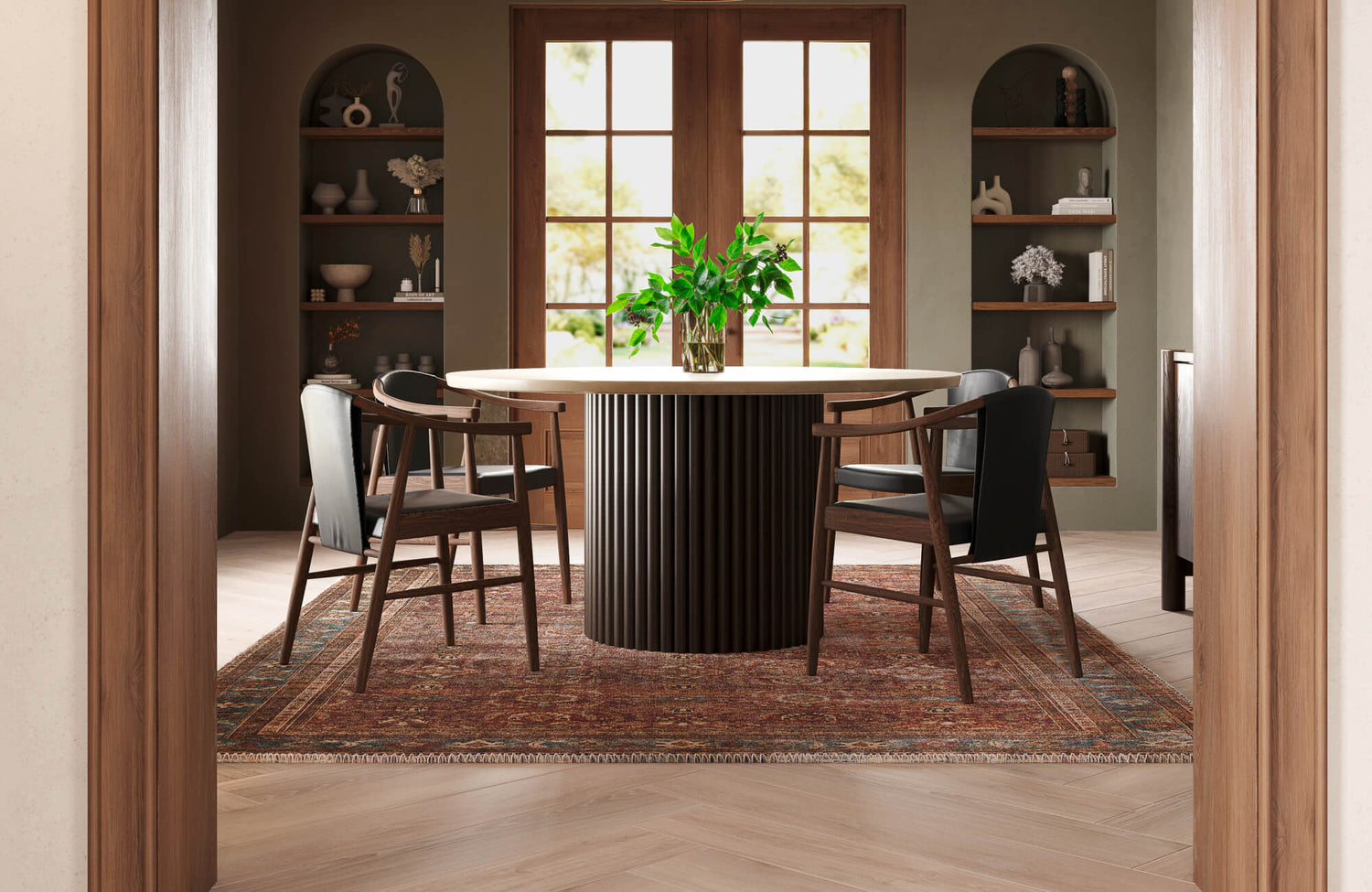
In open layouts, a 10x10 square rug can act as a visual anchor that gently organizes the space. Because the dimensions are equal on all sides, the rug naturally pulls furniture inward and keeps the layout from drifting or spreading too far apart. This is especially helpful in rooms without a clear architectural boundary defining the seating zone. The rug gives the eye a clear focal point, which helps the layout feel deliberate rather than accidental. It also prevents furniture from looking like it’s floating in the middle of the room. Over time, that sense of grounding makes open areas feel more cohesive and easier to live with.
One rug that works especially well for creating a centered, grounded feel is our Haverford Polyester Pile Rug in Platinum / Bronze above. Its square proportions help visually pull seating inward, while the defined vintage-style border clearly outlines the gathering area within an open layout. The layered mix of gray, beige, and warm brown tones adds depth without overpowering surrounding furniture or finishes. Together, the balanced scale and structured design help the space feel intentional and settled rather than loosely arranged.
When A 10x10 Feels Proportional Versus Oversized
A 10x10 square rug feels most proportional when furniture can sit comfortably on it without pressing too close to the room’s edges. In medium to moderately large spaces, it often lands in that sweet spot where everything feels balanced and visually settled. In smaller rooms, though, the same rug can start to feel heavy, taking up more space than the space can support. On the flip side, in very large rooms, it may feel a bit contained unless the furniture is grouped closely around it. Looking at how much floor remains visible around the rug is a simple way to gauge scale. When that balance feels right, the rug grounds the room rather than competing with it.

Square Rugs vs Rectangular Rugs in Common Room Layouts
The shape of a rug plays a bigger role in a room than people often realize. Square and rectangular rugs guide how furniture sits, how you move through the space, and how balanced the layout feels overall. Looking at shape first, rather than size alone, makes it easier to choose a rug that actually works with the room instead of fighting it.
Square Vs Rectangular Rugs In Living Rooms
In living rooms, square rugs tend to support centered, conversational layouts where furniture faces inward. They work well when sofas and chairs form a contained grouping rather than stretching across the room. Rectangular rugs, on the other hand, naturally encourage a linear layout, which can be helpful in longer or narrower living spaces. They guide the eye from one end of the room to the other and often work better when furniture is arranged along walls. A square rug keeps everything visually compact, while a rectangular rug helps elongate the space. Choosing between the two really comes down to whether the room feels more wide and open or long and directional.
How Rug Shape Affects Furniture Placement
Rug shape has a direct impact on how furniture settles into a room, as mentioned earlier. Square rugs naturally encourage symmetry, pulling seating inward and helping pieces feel evenly spaced on all sides. This tends to create furniture groupings that feel calm, balanced, and easy to read. Rectangular rugs, on the other hand, guide furniture into more linear arrangements, which can be helpful for defining pathways or emphasizing the length of a space. That approach often works well in busy rooms where movement needs to stay clear and intuitive. When the shape doesn’t match the layout, furniture can feel awkward or slightly disconnected, even if the rug size is technically correct. Choosing a shape that aligns with how the room is arranged makes the layout feel more settled and natural.
When Rectangular Sizes Like 8x10 Or 9x12 Work Better
Rectangular rugs like 8x10 or 9x12 often make more sense in rooms that are longer than they are wide. Their shape naturally supports the length of the space, helping it feel more open instead of visually broken up. They’re especially useful when furniture needs to line up along one clear direction, such as a sofa facing a media wall or a long coffee table arrangement. In open-plan layouts, rectangular rugs can also help guide movement from one area to another without disrupting the overall flow. Because many traditional rooms are already designed with a linear footprint, these sizes tend to feel familiar and easy to work with. In those settings, a square rug can sometimes feel a bit too contained for the way the room is meant to function.
A rug like our Hutchinson Polyester Face Rug in Sage / Graphite above, works especially well in 8x10 or 9x12 sizes because its rectangular shape naturally supports longer room proportions. The extended layout helps furniture line up comfortably along one direction, which is useful when a sofa, coffee table, and media wall are arranged in a straight visual path. Its layered border subtly frames the space without cutting it into sections, allowing movement to feel fluid across the room. In rooms designed with a linear footprint, this kind of scale helps the layout feel familiar, open, and easy to live with.
Choosing Shape Based On Room Proportions, Not Trends
It’s easy to get caught up in what rug shapes are popular, but proportions tend to matter far more than trends over time. For instance, a square rug in a long, narrow room can feel awkward, no matter how stylish it looks on its own. In the same way, a rectangular rug placed in a nearly square room can throw the layout slightly off balance. Paying closer attention to the room’s width, length, and furniture placement helps guide the decision more naturally. When the rug shape echoes the room’s proportions, the space feels more comfortable and cohesive overall. Trends may come and go, but a well-proportioned layout consistently holds up.

Materials That Work Best for 10x10 and Large Square Rugs
With larger square rugs, material choice matters just as much as size. Since a 10x10 rug covers more visual and physical ground, the fibers you choose influence how well it holds its shape, handles wear, and feels underfoot over time. Beyond durability, the right material also affects how grounded the rug feels within the room.
Wool Rugs For Structure, Durability, And Visual Weight
Wool is one of the most reliable materials for large square rugs, largely because it holds its structure naturally without feeling stiff. At a 10x10 scale, that built-in resilience helps the rug lie flat and keep its edges clean, even with heavier furniture placed on top. It also carries enough visual weight to anchor a space without appearing bulky or overpowering. On top of that, wool handles daily wear well, which makes it a practical option for living rooms or shared areas. Because the fibers bounce back over time, the rug tends to maintain its shape, striking a balance that’s especially effective in larger formats.
Natural Fibers And When They Make Sense For Square Formats
Natural fibers like jute, sisal, and seagrass can work well in square rugs when the goal is a lighter, more relaxed foundation. Rather than adding visual heaviness, these materials introduce texture in a way that keeps large rugs from feeling dominant in the room. In a 10x10 size, they tend to perform best in lower-impact areas where the rug isn’t expected to absorb constant movement. Their flatter weave helps the surface feel breathable instead of dense. That said, they don’t offer the same softness or recovery as wool, so choosing them often comes down to prioritizing a casual, laid-back look over plush comfort.
Polypropylene And Polyester For Easy Living
Polypropylene and polyester rugs are practical options when easy upkeep is a top priority. In larger square sizes, these materials tend to handle everyday messes well and are generally more resistant to staining and fading. They’re also lighter in weight, which makes them easier to shift or reposition if the layout evolves over time. In terms of feel, polyester usually offers a softer surface underfoot, while polypropylene leans more toward durability in busy spaces. That said, they don’t always have the same depth or structure as natural fibers. These materials make the most sense when flexibility and function matter more than developing long-term character.
One rug that shows how polypropylene and polyester work well in larger square formats is our Charlise Polypropylene & Polyester Pile Rug in Cream / Fog above. The blended fibers keep the rug lightweight and manageable at a larger scale, while still offering the durability needed for everyday living. Polypropylene helps resist moisture and fading, while polyester adds strength and a softer feel underfoot, making the surface comfortable without feeling fragile. Together, these materials support easy upkeep and consistent performance, which matters when a rug covers as much visual and functional space as a 10x10.
What To Avoid In Large Square Rugs
With large square rugs, certain material choices can become noticeable issues fairly quickly. Overly thin or flimsy constructions may ripple, curl at the edges, or shift under furniture, especially at a 10x10 scale. Very slick fibers can also make the rug feel unstable, particularly in open layouts where movement comes from multiple directions. It’s worth steering clear of materials that show wear unevenly, since larger rugs tend to highlight those changes more clearly. When a rug covers this much space, small performance flaws rarely stay hidden. Choosing materials with enough weight and resilience helps the rug support the room rather than compete with it.

Rug Construction and Pile Height for Large Square Sizes
Once you move into larger square rugs like 10x10, construction and pile height start to matter in very real, everyday ways. These details affect how stable furniture feels, how the rug wears over time, and how comfortable the space actually is to live in.
Handwoven vs Machine-Made Rugs At 10x10 Scale
At a 10x10 scale, the differences between handwoven and machine-made rugs tend to stand out more clearly. Handwoven rugs often feature subtle variation and a more organic feel, adding character without making the surface feel busy. They also tend to drape more naturally on the floor, which helps large square rugs feel grounded rather than rigid. Machine-made rugs, by contrast, usually offer greater uniformity and consistency, which certain layouts benefit from. They’re often easier to align cleanly under furniture, especially in more structured spaces. Ultimately, the choice comes down to whether you’re drawn to organic texture or prefer a cleaner, more predictable look in a larger format.
How Pile Height Affects Furniture Stability
Pile height plays an important role in how stable furniture feels on a large square rug. Thicker piles can feel plush underfoot, but they may allow chairs or tables to sink slightly, particularly when weight isn’t evenly distributed. Lower or medium piles, on the other hand, tend to provide firmer support, keeping furniture level and easier to reposition. This becomes especially noticeable in seating and dining areas, where frequent movement can quickly become frustrating. A well-balanced pile height offers comfort without sacrificing stability. In many cases, it’s the difference between a rug that simply feels cozy and one that works effortlessly in everyday use.
One rug that shows how pile height can support stability at a larger square scale is our Mallory Wool Pile Rug in Khaki, shown above. Its medium 0.5-inch pile offers a comfortable surface underfoot without allowing furniture to sink or feel uneven over time. The dense wool construction helps tables and seating sit more securely, which matters in rooms where pieces are moved or adjusted regularly. Together, the balanced pile height and resilient fibers make the rug feel supportive and settled, even in larger layouts that see everyday use.
Durability Considerations for Busy Rooms
Large square rugs in busy rooms need to handle consistent movement without showing wear too quickly. Construction techniques that secure fibers tightly help prevent flattening or matting over time. This becomes especially important in open layouts where movement crosses the rug from multiple directions throughout the day. A well-constructed rug distributes wear more evenly, rather than developing obvious paths or pressure points. That evenness helps the rug age more gracefully instead of looking worn in one specific area. In larger formats, durability is less about toughness and more about consistency.
Maintenance and Long-Term Performance
Long-term performance is closely tied to how easy a rug is to live with on a day-to-day basis. Denser constructions tend to keep debris closer to the surface, which makes routine cleaning more manageable. Pile height plays a role here as well, since taller piles tend to show compression sooner and require more frequent attention. Over time, rugs that balance density and pile height are better at holding their shape and texture. That reliability becomes increasingly important as rug size increases. When construction and pile are chosen thoughtfully, the rug supports the space quietly instead of turning into a maintenance concern.

How To Decide If a 10x10 Square Rug Is Right for Your Space
By this point, the question usually isn’t whether square rugs work, but whether a 10x10 square rug works for your room. This decision comes down to layout, scale, and how you actually use the space day to day. Looking at a few key factors together makes it easier to feel confident rather than second-guessing the choice.
Reading Your Room’s Layout Before Choosing a 10x10
Start by looking at how furniture naturally wants to sit in the room. If seating is arranged in a centered, conversational way, a 10x10 square rug often supports that layout beautifully. Rooms that don’t rely on long sightlines or directional flow tend to feel more balanced with a square format. Also, pay attention to architectural cues like fireplaces, windows, or lighting that sit near the center of the space. When these elements line up naturally, a square rug reinforces the room’s structure instead of fighting it. If the layout already feels settled, a 10x10 often feels like a natural extension rather than a bold change.
Checking Scale and Clearance Around the Rug
Scale matters just as much as layout when deciding on a 10x10 square rug. To keep the room from feeling crowded, it helps to leave enough floor visible around the rug rather than pushing it wall to wall. In many spaces, seeing about 12 to 24 inches of exposed flooring allows the rug to feel intentional instead of oversized. Furniture should sit comfortably on the rug without pressing right up against its edges, giving the layout some breathing room. If everything feels slightly tight, the rug may be overpowering the space. When the proportions are right, the rug supports the room quietly instead of demanding attention.
Considering How the Space Is Actually Used
Beyond scale, it’s worth thinking about how the room functions day to day, not just how it looks when styled. In spaces where people gather, shift furniture, or move through from multiple directions, a 10x10 square rug often feels stable and easy to live with. Its equal sides help spread wear more evenly over time, which supports long-term comfort. That said, if a room relies on clear pathways along one side, a rectangular rug may allow movement to feel more natural. The best choice tends to support real-life use rather than photo-ready layouts. When comfort and flow work together, the space feels right.
When Another Size or Shape Might Feel Better
A 10x10 square rug isn’t the right answer for every room, and that’s perfectly fine. In very large spaces, more coverage or a different shape may be needed to keep the layout from feeling visually contained. Smaller rooms, on the other hand, can start to feel overwhelmed when a rug takes up too much real estate. In situations like these, stepping down to a smaller square or shifting to a rectangular size often creates a better sense of balance. Rather than forcing a specific dimension, the goal is to choose a rug that allows the room to breathe. When the rug feels supportive instead of noticeable, you’ve found the right fit.
Deciding If a 10x10 Square Rug Fits Your Room’s Layout
Choosing whether to use a square rug like a 10x10 ultimately comes down to how your room is shaped, how furniture is arranged, and how the space is used every day. When the layout feels centered and balanced, a square rug can quietly bring everything together without pulling the eye in one direction. Size, material, and construction all play a role in how well the rug supports the room over time. Looking at these factors together helps you choose a rug that feels intentional rather than forced.
If you’re still unsure, that hesitation usually means the details matter, and that’s a good thing. Our design consultation can help you confirm whether a 10x10 square rug fits your layout or if another size or shape would feel more natural. Talking through room proportions, furniture placement, and lifestyle needs often brings clarity faster than guessing on your own. With the right guidance, the final choice feels less like a risk and more like a natural extension of the space you’re creating.