Subway tile may be one of the most familiar surfaces in residential design, but the choice between rectified and non-rectified formats can have a surprising impact on how an installation ultimately looks and feels. From grout visibility and edge definition to the overall character of a kitchen, bathroom, or feature wall, these subtle manufacturing differences often influence the finished result more than many homeowners expect. In this blog, we'll compare rectified and non-rectified subway tiles, explore where each option tends to perform best, and share practical considerations to help you determine which approach aligns most naturally with your space and design goals.

Rectified Subway Tiles
Rectified subway tiles are often chosen for their clean appearance and manufacturing precision. Their carefully finished edges allow for tighter grout joints and a more uniform installation, making them especially popular in contemporary interiors where crisp lines and visual continuity are priorities. Below, we'll look at what sets rectified subway tiles apart and where they tend to perform best.
How The Rectification Process Creates Precision
Rectified subway tiles undergo an additional manufacturing step after firing, where each tile is mechanically cut to achieve highly consistent dimensions and sharply defined edges. This process removes many of the minor size variations that naturally occur during production, resulting in tiles that are remarkably uniform from piece to piece. Because the edges are refined after firing, installers can work with tighter tolerances and achieve cleaner alignment across larger surfaces. The consistency also becomes more noticeable when multiple tiles are installed together, particularly in layouts that emphasize straight lines and repetition. For homeowners seeking a polished and orderly appearance, this level of precision is often one of the primary advantages of rectified subway tiles.
Why Rectified Tiles Create A More Seamless Look
One of the most recognizable characteristics of rectified subway tiles is their ability to create a more continuous surface. Because the tiles can be installed with narrower grout joints, the eye tends to focus more on the tile itself rather than the spacing between individual pieces. This can make walls and backsplashes feel less interrupted, especially when using larger subway tile formats or layouts that emphasize long visual lines. The effect is often associated with contemporary design because it creates a cleaner and more streamlined appearance throughout the space. While grout remains an important design element, rectified tiles generally allow it to play a quieter supporting role within the overall composition.
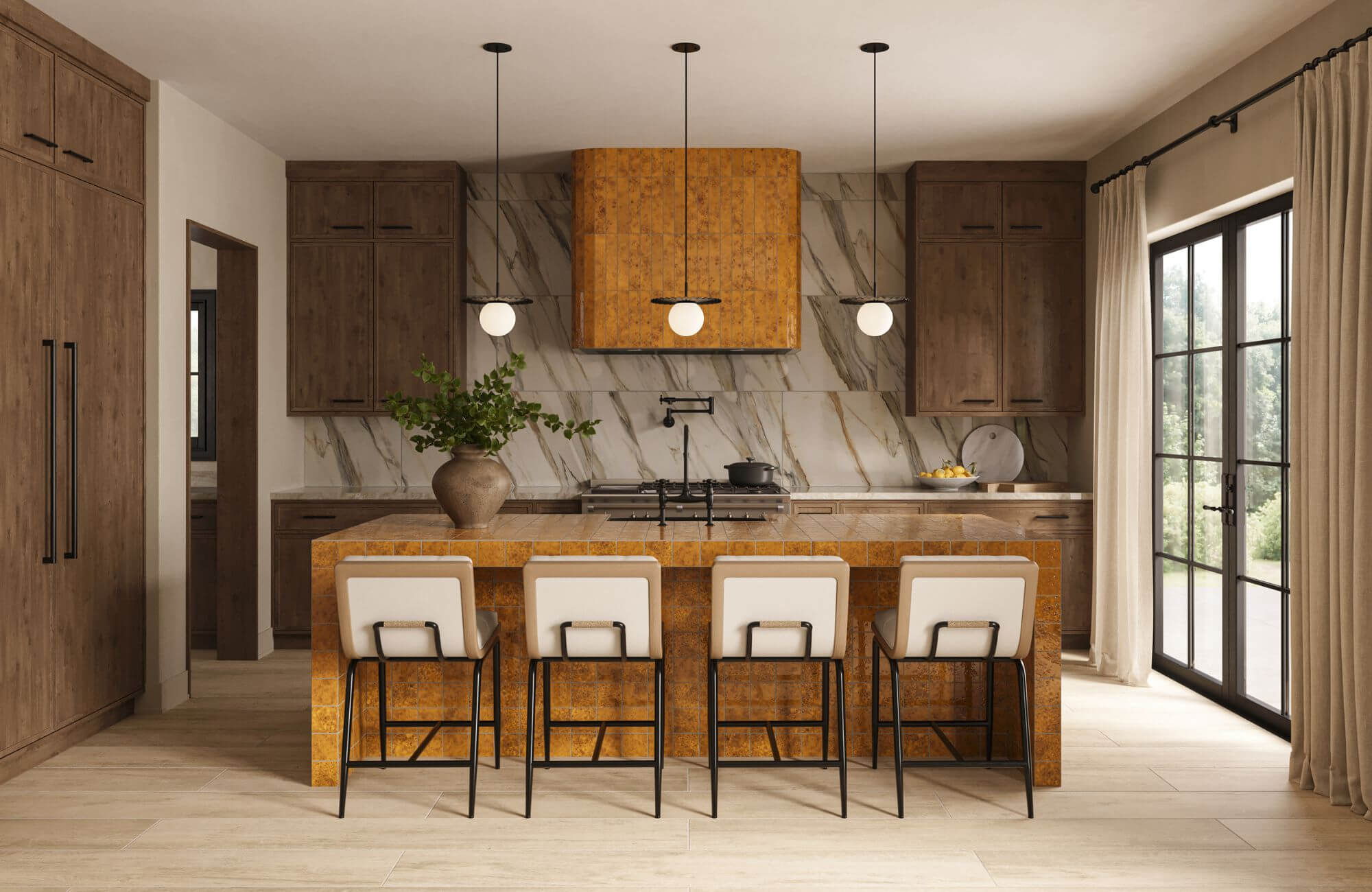
Seen in the kitchen above, our Chantel 3 x 12 Matte Porcelain Tile in Imperial highlights many of the qualities homeowners are often looking for in a rectified subway tile. Its elongated format, rich mid-gray tones, and striking marble-inspired veining flow across the backsplash with minimal visual interruption, allowing the surface to feel more expansive as a whole. The narrow grout joints keep attention on the movement of the veining rather than the spacing between individual tiles, helping the installation maintain a clean and cohesive appearance. This balance between natural variation and precise geometry is part of what makes rectified subway tiles particularly effective in contemporary kitchens, where both material character and visual continuity play an important role.
Where Rectified Subway Tiles Work Best
Rectified subway tiles are particularly effective in spaces where clean geometry and visual consistency are important parts of the design. Contemporary kitchens often benefit from their crisp lines, especially when paired with flat-panel cabinetry, minimalist hardware, and simple color palettes. Modern bathrooms can achieve a more refined look through tighter grout joints that help shower walls and backsplashes feel uninterrupted. They are also frequently used on full-height feature walls, where their uniform appearance helps maintain visual continuity across a larger surface. In luxury interiors, rectified subway tiles are often selected because their precision contributes to the tailored and carefully considered appearance that many homeowners are trying to achieve.
Installation Considerations For Rectified Tiles
The same precision that makes rectified subway tiles attractive can also make them less forgiving during installation. Small alignment issues that might go unnoticed with other tile types often become more visible when grout joints are narrow, and edges are highly uniform. Because of this, installers typically need to pay closer attention to layout planning, spacing, and surface preparation throughout the project. Flat and properly prepared substrates are especially important, since uneven surfaces can affect how consistently the tiles sit against one another. While rectified subway tiles can produce impressive results, achieving their intended appearance often depends on careful installation and attention to detail.

Non-Rectified Subway Tiles
While rectified subway tiles are valued for their precision, non-rectified subway tiles offer a different kind of appeal rooted in variation and character. Their softer edges and less uniform appearance can create a more relaxed look that feels comfortable in a wide range of interiors. Below, we'll explore how they're made, what contributes to their distinct appearance, and where they tend to work best.
How Traditional Manufacturing Shapes The Tile
Non-rectified subway tiles retain the edges formed during the manufacturing process rather than being trimmed after firing. Because ceramic and porcelain naturally experience slight movement as they are heated and cooled, minor variations in size and shape can occur from tile to tile. Instead of being viewed as imperfections, these differences often become part of the tile's visual appeal. The resulting edges tend to feel softer and less uniform than those of rectified tiles, contributing to a more natural appearance once installed. This traditional production method is one of the reasons non-rectified subway tiles continue to be popular in spaces that value warmth, texture, and individuality.
Why Non-Rectified Tiles Feel More Organic
The subtle variation found in non-rectified subway tiles often creates a look that feels less manufactured and more relaxed. Slight differences along the edges can soften transitions between tiles, reducing the highly precise appearance that rectified products typically create. This quality is often associated with handmade-inspired design, even when the tiles themselves are machine-produced. As grout joints become a more visible part of the installation, the overall surface tends to feel more textured and expressive. For homeowners who prefer spaces with a little more character and visual softness, non-rectified subway tiles can provide an appealing alternative to perfectly uniform installations.
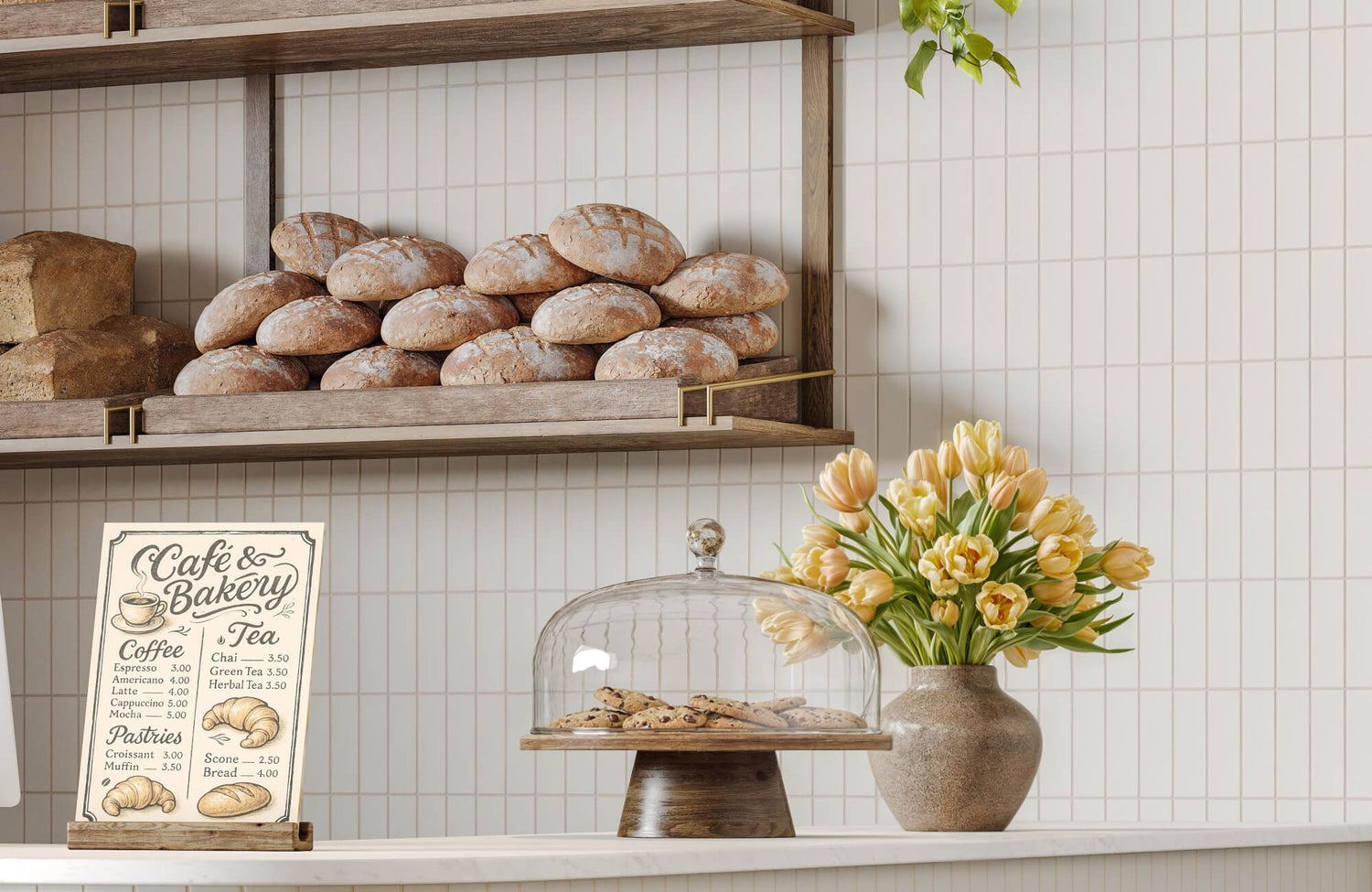
Featured in the laundry space above, our Maisie 2.5 x 16 Glossy Ceramic Tile in Canvas demonstrates why non-rectified subway tiles are often chosen for interiors that prioritize warmth and character over strict uniformity. Its subtle shade variation creates gentle shifts across the surface, while the elongated format introduces movement without feeling overly structured. Rather than presenting a perfectly consistent appearance from piece to piece, the tile embraces the kind of variation commonly associated with artisan-crafted materials. The result is a wall surface that feels softer and more organic, complementing the natural wood shelf, brass accents, and greenery throughout the space.
Where Non-Rectified Subway Tiles Work Best
Non-rectified subway tiles often feel most at home in interiors that embrace warmth, texture, and a sense of lived-in comfort. Farmhouse kitchens frequently use them to complement natural wood finishes, open shelving, and traditional detailing. Cottage-inspired spaces can benefit from their softer appearance because it helps reinforce the relaxed atmosphere these interiors are known for. They are also a popular choice for traditional kitchens and rustic bathrooms, where slight variation contributes to a more authentic and welcoming feel. In these settings, the goal is often less about achieving perfect precision and more about creating a space that feels inviting and full of character.
Installation And Grout Considerations
Because non-rectified subway tiles are not manufactured to the same level of dimensional consistency as rectified options, they are typically installed with slightly wider grout joints. These wider joints help accommodate minor variations while creating a balanced and visually cohesive installation. The added spacing can also make non-rectified tiles somewhat more forgiving during installation, particularly in layouts where perfect alignment is less critical. At the same time, grout becomes a more noticeable part of the finished design and may require additional attention when it comes to cleaning and maintenance. For many homeowners, however, the visual character created by these grout lines is part of what makes non-rectified subway tiles so appealing in the first place.

Key Design And Installation Differences To Consider
Choosing between rectified and non-rectified subway tiles often becomes easier once you start evaluating them within the context of your actual space. Factors such as room size, grout color, lighting, and surrounding finishes can all influence how the finished installation feels once everything comes together.
How Room Size Can Influence Your Choice
The size of the room often affects how noticeable the differences between rectified and non-rectified subway tiles become once the installation is complete. In a compact powder room or small kitchen backsplash, even subtle details such as grout spacing and edge definition can have a strong influence on the overall appearance because the surface is viewed at close range. A tighter installation may help the room feel cleaner and more visually continuous, especially when paired with a simple color palette. At the same time, a subway tile with slightly softer transitions can introduce texture and personality without overwhelming the space. Because smaller rooms offer fewer opportunities to layer materials and finishes, the tile itself often carries more visual responsibility within the design.
Larger spaces create a different experience altogether. A full-height shower wall, expansive backsplash, or long feature wall allows patterns, grout joints, and edge details to repeat across a much broader surface. What feels like a minor distinction on a sample can become far more apparent once dozens or even hundreds of tiles are installed together. This is one reason it helps to think about the scale of the installation rather than evaluating the tile in isolation. The way a tile occupies a five-foot backsplash can feel very different from the way it performs across an entire bathroom wall. Looking at the room through this lens often helps narrow down which option feels most appropriate for the space you're designing.
The Role Grout Color Plays In The Final Appearance
When comparing subway tile options, grout is often treated as a secondary decision that can be made later. In practice, grout color becomes one of the most influential design choices because it affects how the entire installation is perceived. A grout color that closely matches the tile can soften transitions between pieces and create a more unified surface. This approach often allows color, texture, and finish to take center stage rather than drawing attention to the pattern itself. For homeowners seeking a calmer or more understated look, the relationship between tile and grout can be just as important as the tile selection itself.
On the other hand, contrasting grout creates a very different visual experience. Instead of blending into the background, the grout becomes an active part of the design and helps define the shape of every individual tile. This can make layouts such as running bond, vertical stack, and herringbone feel more graphic and architectural. The effect is especially noticeable on larger walls where repeated grout lines become a defining characteristic of the installation. Before making a final decision, it is often worth viewing samples with multiple grout colors side by side. Many homeowners are surprised to discover that changing the grout has a greater impact than changing the tile itself.
Coordinating Subway Tiles With Other Finishes
Subway tile may cover a large portion of a wall, but it is rarely the only material shaping the room's appearance. Cabinetry, countertops, flooring, paint colors, hardware, and decorative accents all contribute to the broader visual story. A tile that looks appealing on its own can feel completely different once it sits beside warm oak cabinetry, dramatic stone veining, or dark metal fixtures. Because of this, successful tile selections often come from looking at the room as a collection of materials rather than a series of separate decisions. The strongest combinations usually feel connected, even when they introduce contrast.
It can be helpful to gather material samples and view them together before making a final choice. A countertop remnant, cabinet finish, paint swatch, and subway tile sample often reveal relationships that are difficult to imagine otherwise. This process can help identify whether the room needs additional contrast, more texture, or a quieter material that allows other elements to stand out. It also creates an opportunity to spot combinations that may feel disconnected once installed. Rather than asking whether a subway tile looks good on its own, it becomes easier to evaluate how it contributes to the atmosphere you're trying to create. That broader perspective often leads to decisions that feel more cohesive long after the project is finished.
Visualizing Different Subway Tile Styles Before Installation
Even after comparing samples, grout colors, lighting conditions, and surrounding finishes, it can still be difficult to imagine how a subway tile will look once installed across an entire wall or backsplash. Physical samples remain an important part of the decision-making process, but they only show a small portion of the finished surface. To help bridge that gap, our Augmented Reality (AR) Tool allows you to preview different subway tile options directly within your space. Seeing the tile at full scale often makes it easier to compare layouts, grout visibility, and overall visual impact before installation begins.

Questions To Ask Before Choosing Your Subway Tile
By the time you've compared rectified and non-rectified subway tiles, the decision often becomes less about technical differences and more about what feels right for your space. Asking a few practical questions can help clarify your priorities and prevent small details from overshadowing the bigger picture. These considerations are often what separate a tile that looks good on paper from one that feels right once it's installed.
What Will You Notice Most Every Day?
Many tile decisions begin with design rules, but the better starting point is often your own reaction to the material. Some homeowners are naturally drawn to crisp lines, clean repetition, and a highly organized appearance, while others prefer surfaces that feel softer and less predictable. Neither preference is more correct than the other, but understanding which qualities consistently appeal to you can make the decision much easier. After all, you'll experience the tile every day, not just during the planning phase. If one option repeatedly catches your attention or feels more comfortable within the space, that response is worth paying attention to. Personal preference often has more staying power than chasing a particular trend or design recommendation.
Are You Designing Around The Tile Or Around The Space?
It can be easy to become focused on the tile itself and lose sight of the room it is intended to support. In many projects, subway tile serves as one component within a much larger collection of materials, finishes, and furnishings that collectively shape the space. A tile that feels perfect on a sample board may not be the strongest choice if it pulls attention away from other design elements you want to emphasize. Looking at the broader environment often creates a more balanced perspective during the selection process. A rustic kitchen, for example, may prioritize warmth and texture differently than a sleek urban condo or a minimalist bathroom. Thinking about the room first and the tile second often leads to decisions that feel more natural once everything comes together.
Which Option Still Feels Right After Looking At Samples?
First impressions can be useful, but they rarely tell the entire story. Some subway tiles make an immediate impact because of a particular finish, color, or edge detail, while others reveal their strengths more gradually over time. This is one reason it helps to live with samples for several days rather than making a decision within a single afternoon. Revisiting them throughout the week often reveals which qualities continue to appeal to you and which ones begin to lose their novelty. The goal is not to find a tile that impresses you once, but one that continues to feel appropriate after repeated exposure. Taking a little extra time at this stage is often easier than second-guessing the decision after installation.
Choosing The Subway Tile That Fits Your Space
Choosing between rectified and non-rectified subway tiles is often less about determining which option is better and more about identifying which one feels most appropriate for the space you're creating. While edge precision, grout visibility, and overall character all play a role, the strongest choice is usually the one that aligns naturally with your design goals, surrounding materials, and personal preferences. Taking the time to compare samples, evaluate them within the room, and consider how the tile will be experienced every day can make the decision feel much clearer. In many cases, the right answer becomes obvious once you stop focusing on technical specifications and start focusing on how you want the finished space to feel.
If you're still weighing your options, our team can help you compare subway tile styles, layouts, colors, and finishes within the context of your project. Through our Personalized Design Consultation, we'll help you evaluate how different tile choices interact with your cabinetry, countertops, fixtures, and overall design direction, making it easier to move forward with confidence.