Choosing between glossy and matte backsplash tiles isn’t just about style; it also affects your kitchen’s functionality, upkeep, and day-to-day feel. Whether you’re planning a full renovation or making a few thoughtful updates, understanding how tile finish impacts both aesthetics and practicality can bring clarity to your decision-making. After all, while the backsplash may seem like a small detail, the right finish can elevate your entire kitchen, visually and functionally. In this article, we’ll guide you through the key considerations to help you make the most informed choice.

Matching the Tile Finish to Your Kitchen Style
The tile finish you choose should reflect the broader design personality of your kitchen. Whether you’re going for clean and modern or something warmer and more textured, understanding how finish impacts the overall aesthetic can help you create a kitchen that feels consistent and intentional.
Modern vs Traditional
In modern kitchen design, glossy finishes are often a natural fit. The reflective surface pairs effortlessly with sleek countertops, stainless steel appliances, and open layouts, enhancing clean lines and contributing to a polished, contemporary look that feels balanced rather than overpowering. Glossy tiles also amplify natural and artificial light, which adds to the bright, streamlined feel typical of modern interiors.
In contrast, traditional kitchens tend to favor matte tiles. Their understated finish brings a sense of warmth and softness that complements classic elements such as natural wood cabinetry, vintage fixtures, and decorative moldings. The muted texture of matte tiles adds depth and character, blending seamlessly with the layered details often found in more traditional designs.
In the photo above, the backsplash features Edward Martin’s Natasha 2x6 Matte Porcelain Tile in Bone, which perfectly illustrates how a matte finish supports a timeless, traditional aesthetic. Its soft bone tone offers a gentle contrast against the dark cabinetry and brass fixtures, while the tile's surface subtly diffuses light, reinforcing the cozy and grounded atmosphere of the room. Together, these elements show how a matte finish can subtly enhance traditional design while allowing other standout features to take the lead.
Industrial and Urban Looks
In kitchens with an industrial or urban edge, matte tiles tend to align more naturally with the overall aesthetic. Their subdued surface echoes the raw, tactile quality of materials like poured concrete, blackened steel, and reclaimed wood. This finish supports the grounded, utilitarian feel often seen in open-concept spaces such as lofts or warehouse conversions, where exposed structures and minimal ornamentation take center stage.
Even so, incorporating glossy tiles in small doses can create a purposeful contrast without disrupting the overall aesthetic. A slim band of gloss, for instance, can serve as a crisp visual break, adding a touch of refinement to a space defined by rugged, industrial elements. When applied thoughtfully, this contrast also brings depth and balance while preserving the raw character of the design.
Transitional and Eclectic Designs
In kitchens that blend styles, whether through a mix of old and new elements, varied materials, or contrasting tones, there’s room to combine glossy and matte finishes. Placing a glossy tile behind the stove can introduce a subtle focal point, while matte tiles around the perimeter bring a sense of balance and restraint. This type of contrast, when done with intention, adds depth without distracting from the overall design.
When finishes are combined thoughtfully, you can customize the space to reflect your style while maintaining a sense of visual harmony. Rather than adding contrast just for effect, it’s about layering texture and light in a way that feels intentional and balanced.

Lighting and Visual Impact in the Kitchen
Tile finishes respond to light in distinct ways, which can significantly influence the mood and feel of your kitchen. Whether your space is filled with natural daylight or depends on artificial lighting, knowing how your backsplash interacts with light can help you create the right atmosphere.
Enhancing Natural Light
In kitchens with limited daylight, glossy tiles can help make the most of the available light. Their reflective surface disperses light throughout the room, making the space appear brighter and more open, an advantage that’s especially noticeable in smaller kitchens where maximizing brightness is key.
Even in kitchens with abundant natural light, glossy finishes can also enhance the overall glow, contributing to a clean, vibrant look. However, in very sunny spaces, excessive reflection may feel overpowering if not balanced with more muted or textured surfaces nearby. Finding the right mix ensures the room feels well-lit without becoming visually harsh.
Managing Harsh Glares
Glossy finishes are excellent at reflecting light, but in settings with strong task lighting, such as under-cabinet LEDs, they can produce more noticeable reflections. In these situations, matte tiles offer a practical and visually calming alternative that helps balance the lighting effect across the space.
Because matte surfaces diffuse light instead of reflecting it directly, they create a softer and more consistent visual tone. This can be especially beneficial in open-concept kitchens where lighting overlaps with surrounding living areas. The result is a space that feels comfortably bright without becoming visually harsh or overstimulating.
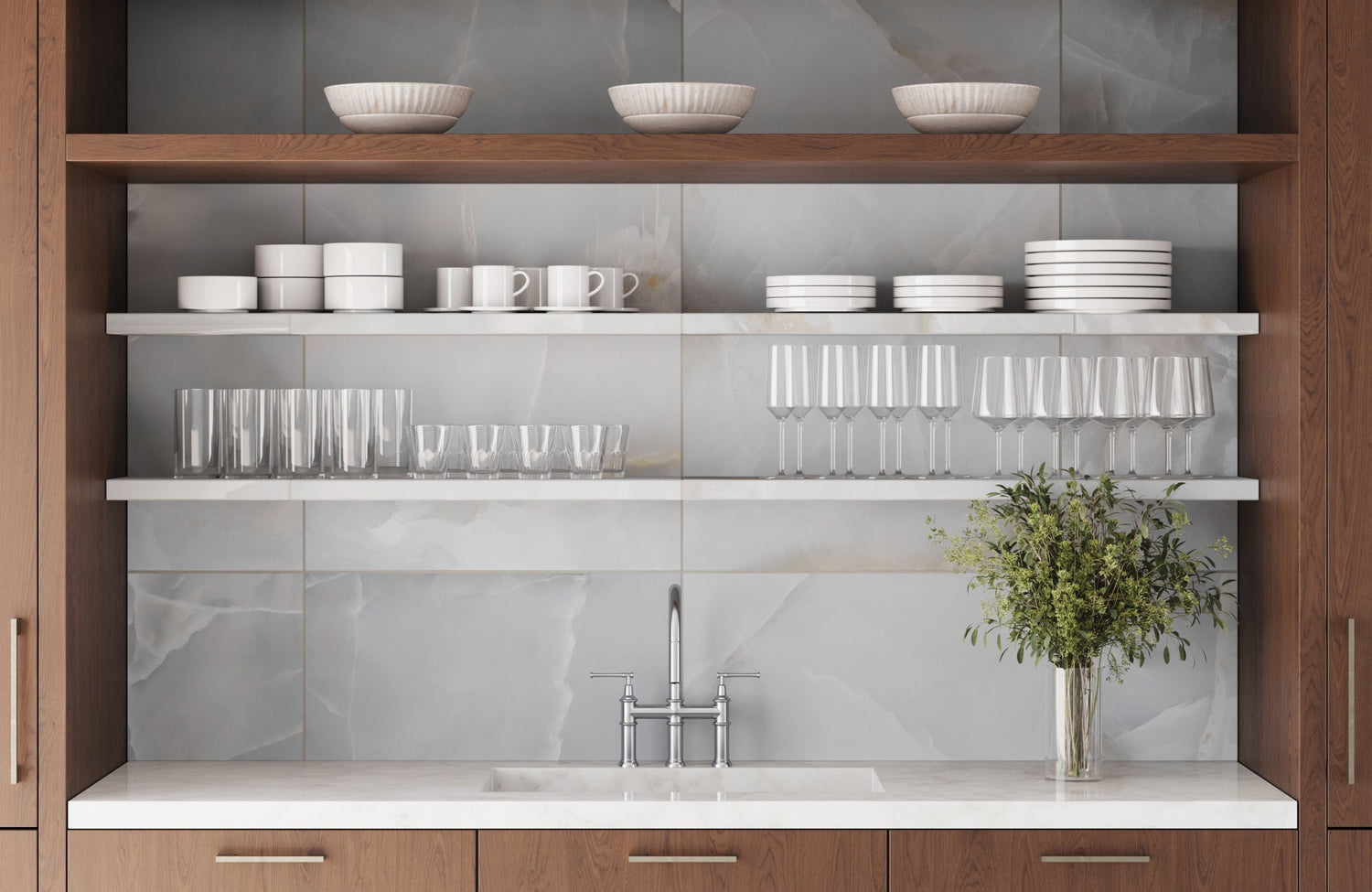
A great example is the kitchen above, featuring Edward Martin’s Aniston 12x24 Matte Porcelain Tile in Calacatta Viola. Its matte finish tones down the intensity of the under-shelf lighting, allowing the dramatic veining of the tile to stand out without overwhelming the room. This pairing of material and lighting showcases how matte surfaces can deliver sophistication while maintaining a relaxed, balanced ambiance.
Tile Finish and Ceiling Height
Ceiling height is often overlooked when choosing a tile finish, yet it can also have a noticeable impact on how the kitchen feels. In spaces with lower ceilings, glossy tiles can help reflect vertical light, making the walls appear taller and the room feel more open. This added brightness can visually expand the space, counteracting any sense of compression.
On the other hand, in kitchens with high or vaulted ceilings, matte tiles offer a sense of balance. Their soft, non-reflective surface helps ground the space, preventing it from feeling too open or sparse. By considering ceiling height when choosing between matte and glossy finishes, you can achieve a more proportionate, welcoming environment that feels tailored to the room’s dimensions.

Cleaning, Maintenance, and Everyday Practicality
A backsplash does more than elevate your kitchen’s design; it also needs to withstand the demands of daily use. From oil splashes to fingerprints, it’s a surface that works hard behind the scenes. Understanding how different tile finishes perform over time can help you choose one that stays looking clean with minimal effort. For the best long-term results, it's wise to follow the manufacturer's care and maintenance guidelines, as different finishes and materials may require specific cleaning methods or products.
Stain Resistance and Wipeability
Glossy tiles are a practical choice for heavily used kitchen zones because they’re easy to maintain. Their smooth, non-porous surface resists stains, allowing grease, splatters, and food residue to be wiped away quickly with a damp cloth. In kitchens where cooking is frequent, this low-maintenance quality can make everyday cleanup far more efficient.
A great example is Edward Martin’s Mikayla 5x5 Glossy Ceramic Tile in Espresso, which, as seen in the photo above, offers a sleek, glazed surface that naturally resists stains and splatter. Its glossy finish prevents grease and liquids from absorbing into the tile, making it easy to wipe clean with minimal effort, even in areas exposed to frequent cooking. This makes it especially well-suited for backsplashes near ranges or prep zones where quick, reliable cleanup is essential.
On the other hand, matte finishes, particularly those with subtle texture, can be more challenging to keep spotless. Tiny surface variations may hold onto residue, requiring a bit more effort to remove stubborn spots. If your kitchen sees a lot of stovetop action or frequent use of oil and sauces, it’s helpful to consider how much time and attention you’re willing to dedicate to cleaning.
Smudge and Fingerprint Visibility
Although glossy tiles are easy to clean, they’re also more likely to reveal smudges, streaks, and fingerprints, especially in areas that are touched often, such as around light switches or behind stovetops. This effect is even more noticeable with darker glossy tiles, where surface marks tend to be more visible under both natural and artificial light.
Matte finishes, by contrast, are generally more forgiving in this regard. Their non-glossy surface helps conceal everyday smears, water spots, and fingerprints, making them a practical option if you prefer a backsplash that maintains a tidy appearance with less frequent upkeep. For households with young children or a heavily used kitchen, matte tiles can also offer a subtle advantage in keeping surfaces looking consistently clean.
Maintenance Over Time
Over time, glossy and matte finishes tend to age in different ways. Glossy tiles, while easy to clean, can develop fine surface scratches from regular wiping or abrasion, and their reflective sheen may gradually lose some of its luster with prolonged use. This is worth considering if you’re aiming to preserve that high-shine look over the long haul.
Matte tiles, on the other hand, are less prone to visible surface wear but may show subtle discoloration in areas exposed to frequent cooking or grease buildup, particularly if not properly maintained. Consistent cleaning and care go a long way in preserving either finish. Although no tile is entirely maintenance-free, knowing how each type typically wears over time can further help you plan and set realistic expectations for daily upkeep.

Cost, Availability, and Installation Considerations
Glossy and matte surfaces can differ in price, material availability, and installation requirements, so it’s helpful to weigh these details alongside your design vision. Taking these factors into account ensures your final choice fits both your aesthetic and your overall project needs.
Material Costs and Trends
Glossy tiles are often mass-produced and readily available, which generally makes them more budget-friendly. They're offered in a wide range of materials, including ceramic and porcelain, giving you flexibility across various price points without limiting your design choices.
Matte finishes, particularly those with a handcrafted or artisanal look, may come at a slightly higher cost. While the price difference is usually modest, it’s worth keeping in mind, especially if you’re covering a large surface area or trying to stay within a set budget. Factoring in both finish and scale can further help you prioritize where to invest.
Installation Difficulty
Matte tiles generally offer better grip during installation, which can make handling and alignment more manageable. This added stability often leads to a smoother process, particularly for contractors working on tight layouts or detailed patterns.
Glossy tiles, on the other hand, can be more slippery and may shift more easily before the adhesive sets. They also tend to highlight minor imperfections in grout lines or spacing, so precise placement is essential. If you're planning a DIY installation, these subtle differences can influence both the ease and the quality of the final result. For best results, especially with large surfaces or intricate designs, it's always a good idea to consult with a professional installer who understands the specific demands of your chosen tile.
Finish Availability by Material
Certain materials tend to favor one finish over the other, which can influence your options from the outset. Glass tiles, for instance, are predominantly available in glossy finishes due to their inherently reflective nature. Porcelain offers more flexibility, commonly produced in both matte and glossy variations, while natural stone and cement-based tiles are typically found in matte finishes.
Being aware of these material-finish pairings can further help streamline your selection process. If you’re drawn to a particular material, its available finish may help shape your decision or lead you to explore similar options that achieve the look you want in the finish that best suits your needs.

Impact on Resale and Long-Term Appeal
The tile finish you choose affects more than just daily function; it also shapes how your kitchen is perceived over time. Whether you're planning for future resale or simply want a design that remains stylish for years to come, it's worth considering how different finishes hold their appeal in the long run.
Timelessness vs Trends
Matte tiles tend to blend more seamlessly with evolving design trends. Their soft, understated finish provides a neutral backdrop that remains relevant over time, making them a solid choice for homeowners looking to create a look that won’t quickly feel dated. Whether paired with natural textures or minimalist details, matte finishes, such as Edward Martin’s Catalina 2x16 Matte Porcelain Tile in Clay, as shown in the backsplash above, offer long-term versatility while adding warmth and texture without overwhelming the space.
In contrast, glossy tiles can introduce a sense of drama and shine. When used thoughtfully, they can bring elegance and visual impact, though their effect may feel more trend-driven depending on the color palette and surrounding materials. Their bold, reflective quality can make a kitchen feel sleek and luxurious, though it’s worth considering whether that high-impact look will still feel current years down the line.
Broad Buyer Appeal
When resale is part of your long-term plan, choosing finishes with broad appeal can work in your favor. Neutral matte tiles often resonate with more potential buyers, especially in open-concept homes where the kitchen flows into adjacent living spaces. Their soft, non-reflective finish creates a versatile backdrop that complements a wide range of furnishings and decor without competing for attention.
That said, a well-placed glossy backsplash can still attract the right buyer, particularly when it’s used intentionally to highlight a specific area or enhance a modern aesthetic. The key is thoughtful integration that aligns with the overall design rather than overpowering it.
Personalized Statement
Though resale value is important, not every design choice needs to be made with future buyers in mind. If you plan to stay in your home for the long term, selecting finishes that reflect your style can make the space feel more meaningful and enjoyable. Glossy tiles offer an opportunity to express that individuality, whether through vibrant colors, a reflective surface, or a striking pattern.
For many, the backsplash is an ideal spot to introduce a bold design element without overwhelming the room. A glossy finish can enhance that visual impact while still contributing to a cohesive overall look. The key is finding a balance between making a statement and maintaining harmony with the rest of your kitchen’s design.

Creative Uses of Finish to Add Depth and Interest
You don’t have to choose just one finish. Combining glossy and matte tiles opens up creative possibilities that can make your kitchen feel layered and sophisticated without becoming visually cluttered.
Layering Texture
Incorporating both matte and glossy finishes within a single pattern is a subtle yet effective way to introduce texture to your backsplash. For instance, combining the two in a herringbone or geometric layout can create visual depth and movement without overwhelming the design. Rather than adding contrast just for impact, this approach focuses on creating dimension and flow that enhance the overall character of the space.
Accent Strip or Inset Panels
Subtle design details often have the greatest impact, and accent strips or inset panels are a great way to add interest without disrupting the overall look. A slim glossy strip set within a matte field can draw attention to focal areas, such as behind the range or below open shelving. Conversely, incorporating a matte inset into a glossy surface adds understated texture while keeping the visual focus balanced.
These small additions introduce personality in a thoughtful, restrained way. They also offer a practical opportunity to experiment with a bolder finish without committing to it across the entire backsplash.
Playing with Color and Finish Together
Finish isn’t the only way to create contrast; color plays a key role, too. Pairing dark matte tiles with a few glossy accents can produce a rich, layered look, while using pale glossy tiles bordered by a soft matte edge introduces just enough variation to keep the design visually engaging without overwhelming it.
When combined intentionally, color and finish can work together to add nuance and sophistication to your space. In the kitchen above, Edward Martin’s Lilah 6x6 Glossy Ceramic Tile in Mist demonstrates this approach beautifully. Its glossy finish subtly reflects light, enhancing the soft neutral tones without dominating the room. This blend of sheen and restraint shows how even a light, monochromatic palette can feel dynamic when finish is used to add depth.
Choosing the Right Tile Finish
Selecting between glossy and matte tiles goes beyond aesthetics; it’s also a choice that influences how your kitchen looks, functions, and feels daily. By understanding the strengths of each finish and how they align with your space and routine, you can make a decision that supports both your lifestyle and design goals. Whether you’re drawn to the reflective quality of gloss or the understated texture of matte, the best finish is the one that brings your kitchen vision to life with balance and intention.
To help you visualize how each finish will look in your own space, try using our augmented reality (AR) tool for an interactive preview. And when you're ready to take the next step, order a tile sample so you can feel the texture and see the color in person before making your final decision.