Choosing between a single accent wall and a fully wallpapered room goes far beyond surface-level style. At first glance, it may seem like a simple design decision, yet it quietly influences how a space feels, functions, and evolves over time. From the way light moves across a room to how patterns shape perception, wallpaper has the power to either define a focal point or create a fully immersive environment. Because of this, the right choice is rarely about preference alone but rather how each element works together to support the space as a whole.

Enclosure and Spatial Perception
Wallpaper does more than enhance a room aesthetically. It fundamentally shapes how space is perceived and experienced. When applied continuously across all four walls, patterns create a sense of visual cohesion that softens boundaries and reduces the feeling of enclosure. Instead of registering each wall as a separate plane, the eye moves fluidly around the room, allowing the space to feel more expansive and immersive. This effect is especially pronounced with low-contrast or subtly layered designs, which minimize visual breaks and establish a calm, uninterrupted rhythm that encourages a more relaxed state of mind.
In contrast, limiting wallpaper to a single accent wall can unintentionally disrupt this balance. A bold, isolated pattern tends to draw the eye repeatedly in one direction, creating visual weight and a subtle sense of imbalance within the room. Over time, this can make the space feel less cohesive and more mentally stimulating than intended. By enveloping the room in a consistent design, the visual focus becomes evenly distributed, allowing the wallpaper to function as an atmospheric element rather than a focal point—resulting in a more harmonious, comfortable, and psychologically inviting environment.

Architectural Integrity and Structural Storytelling
A well-executed wallpaper plan works with the architecture rather than against it. When you align your choices with the room’s structure, the entire space feels more intentional and visually coherent.
Working with Asymmetry and Awkward Nooks
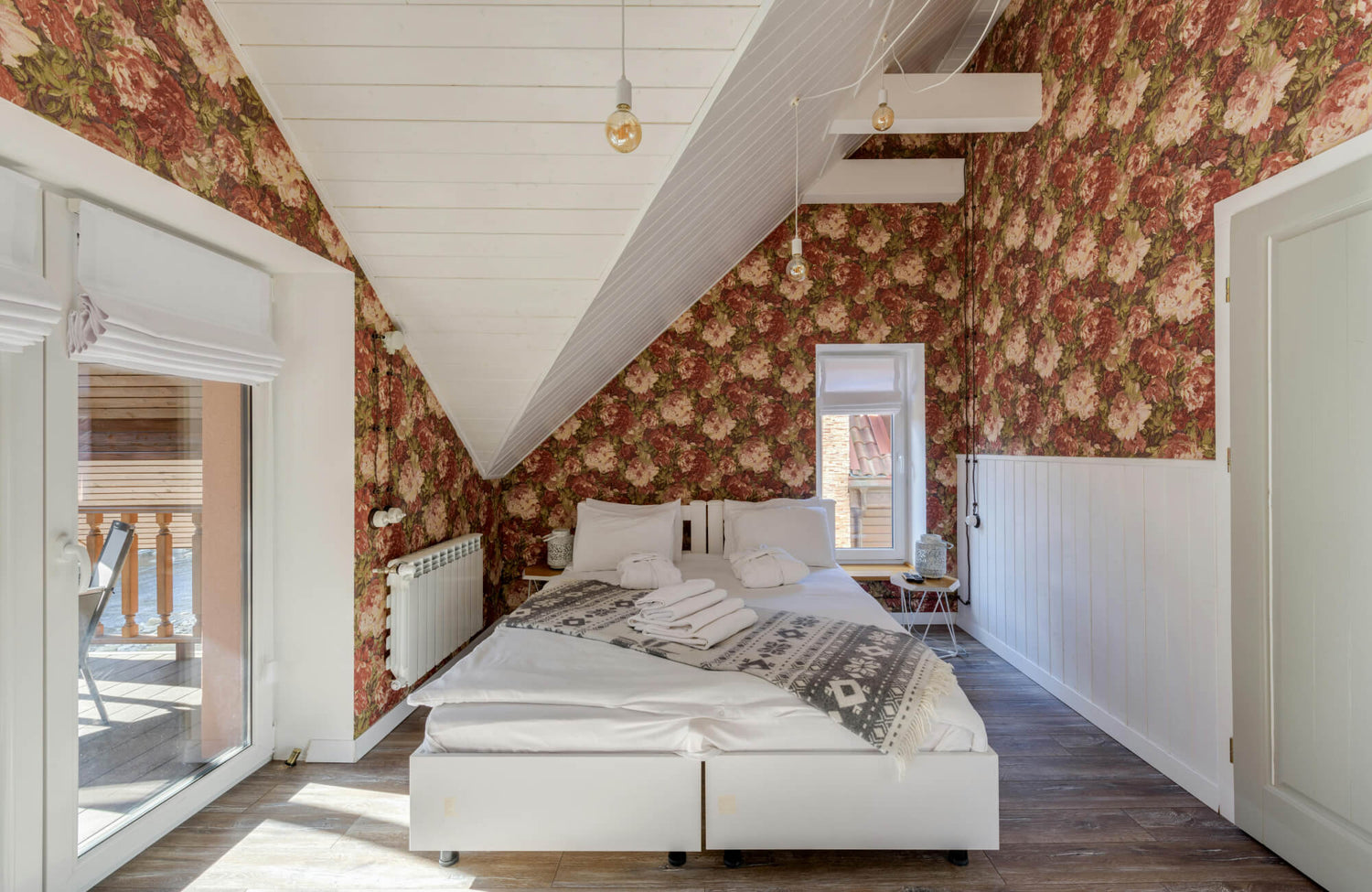
Rooms with unusual angles, sloped ceilings, or recessed alcoves can feel disjointed if each surface is treated differently. When you apply wallpaper to just one wall, those irregularities often become more pronounced, drawing attention to where the architecture shifts or feels incomplete. Instead of smoothing over these transitions, the contrast can unintentionally highlight them.
By extending wallpaper across multiple surfaces, or even introducing it onto the ceiling, you create a continuous visual layer that helps unify the room. In the image above, the Botanique Wallpaper in Fall, 52" x 132" is applied overhead, where its delicate, nature-inspired pattern softens the room’s geometry and subtly connects the surrounding elements. Even without full wall coverage, this ceiling application guides the eye more fluidly through the space, minimizing harsh transitions and transforming architectural quirks into a cohesive, thoughtfully layered design.
Defining Transitions in Open Concept Layouts
In open-concept spaces, where walls no longer clearly define function, wallpaper can help you establish subtle boundaries. A single accent wall can anchor a seating area or dining zone, giving it a sense of identity without the need for physical dividers. However, this only works when the placement feels intentional within the architecture.
To make the transition feel natural, you should align the edge of the wallpaper with existing structural cues, such as corners, beams, or changes in flooring. This creates a visual stopping point that feels clean and purposeful rather than abrupt. As a result, the space maintains its openness while still offering a sense of organization and flow.

Pattern Scale and the Art of Visual Weight
The scale of a pattern plays a critical role in how your space feels and functions. Choosing between a bold statement and a subtle backdrop often comes down to how visually “heavy” or expansive the design appears.
Large Scale Murals as Singular Statements
Large-scale murals and oversized prints naturally command attention, which is why they work best when given space to stand on their own. When you apply them to a single wall, they read as a curated focal point, almost like a piece of art anchoring the room without overwhelming it. This allows you to build the rest of the space around that visual centerpiece with intention and clarity.
However, when these expansive designs are repeated across multiple walls, their impact can quickly diminish. Corners interrupt the imagery, causing elements to feel cut off or misaligned, which disrupts the overall narrative of the pattern. By limiting their use to one surface, you preserve the integrity of the design and create a more polished, cohesive look.
Micro Prints and Ditsy Florals for Total Immersion
Smaller-scale patterns behave very differently once they’re applied. When used on just one wall, they can feel overly busy or even disconnected from the rest of the room, as your eye tries to make sense of the dense repetition in isolation. This often makes the wall stand out in a way that feels more distracting than intentional.
When you carry these micro prints across all walls, though, they begin to soften into the background. The repetition becomes rhythmic rather than overwhelming, and the pattern reads more like texture than decoration. As a result, you get a layered, immersive environment that feels rich and cohesive, while still allowing furniture and decor to take center stage.
Edward Martin’s Plateau Wallpaper in Taupe II, 52" x 132", displayed in the photo above, is a strong example of how a tightly repeated pattern can create atmosphere without overpowering a room. Its fine-lined, all-over motif carries enough movement to add depth and character, yet the restrained taupe palette keeps that visual activity feeling soft and grounded. When used throughout a space, this kind of small-scale design reads less like a single decorative feature and more like an enveloping texture, helping the walls recede while furniture, lighting, and natural materials remain the primary focal points.

Aesthetic Value and Timeless Appeal
Wallpaper should do more than follow trends; it should help shape a space that feels intentional and enduring. The choice between a single wall and full coverage ultimately influences whether your room feels temporary or thoughtfully complete.
The Flexibility of Accent Walls
An accent wall offers a quick way to introduce personality without fully committing to a long-term look. Because it isolates pattern to one surface, it allows you to experiment with bolder styles, colors, or trends that might feel overwhelming if applied throughout the entire room. This flexibility makes it easier for you to update the space over time as your preferences evolve.
However, this same adaptability can also make the design feel less grounded. Since only one wall carries the visual interest, the overall space may feel slightly disconnected, as if the wallpaper was added rather than fully integrated. Over time, this can give the room a more transitional or trend-driven appearance rather than a cohesive, lasting identity.
The Lasting Impact of Full Room Wallpaper
When you extend wallpaper across the entire room, the effect is immediately more immersive and refined. Instead of acting as a feature, the pattern becomes part of the room’s foundation, tying together furniture, textures, and architectural details. This creates a sense of completeness that often feels more elevated and intentional.
Additionally, when you choose classic patterns or subtle textures such as grasscloth, linen-inspired finishes, or heritage prints, the design tends to age gracefully. Rather than feeling tied to a specific moment in time, the room develops a timeless quality that remains relevant even as other elements change. As a result, you’re not just decorating, you’re building a space with lasting visual value.
For a more immersive, fully wrapped approach, designs like the Greensward Wallpaper in Black & Tan II, 52" x 132" show how a room can take on a richer, more cohesive identity. As seen in the image above, the layered botanical motif and balanced contrast create a sense of continuity from wall to wall, allowing the pattern to function as a unifying backdrop rather than a singular feature. This kind of all-over application helps the space feel thoughtfully composed, where every element from furniture to lighting connects seamlessly within the environment.

Light Interaction and Color Saturation
Lighting plays a defining role in how wallpaper is perceived, often changing its color, depth, and overall impact throughout the day. Because of this, your choice between a single wall or full coverage should always respond to how light moves through the space.
Managing North-Facing Shadows
In rooms with limited or cool-toned natural light, shadows tend to settle unevenly across different surfaces. If you only wallpaper one wall, the contrast between the patterned surface and the surrounding painted walls can become more pronounced, making the darker areas feel heavier and less inviting. This imbalance can unintentionally emphasize the lack of light rather than compensate for it.
By extending wallpaper across the entire room, you create a more consistent surface for light to interact with. Even subtle textures or softly reflective finishes can help distribute available light more evenly, reducing harsh shadow lines. As a result, the space feels warmer and more cohesive, even when natural light is minimal.
Glare on Accent Surfaces
Rooms filled with strong, direct sunlight present a different challenge. When wallpaper is placed on a wall directly opposite a window, especially if it has a sheen or metallic detail, it can reflect light too intensely. This glare not only obscures the pattern but can also make the space uncomfortable to look at during certain times of day.
To avoid this, placing an accent wall adjacent to the window allows light to move across the surface rather than bounce straight back. This softer interaction highlights the texture and detail of the wallpaper without overwhelming it. As the light shifts throughout the day, the pattern remains visible and balanced, helping the room feel bright without becoming visually harsh.

Functional Durability and Room Usage
How you use a room should ultimately guide how far you go with wallpaper. Beyond aesthetics, durability and maintenance play a key role in determining whether full or partial application makes the most sense, as each space presents its own level of exposure to wear, moisture, and daily activity.
Busy Areas
In constantly used spaces such as hallways, entryways, and family rooms, walls are frequently exposed to friction, impact, and everyday wear. Applying wallpaper such as the Petaline Wallpaper in Taupe II, 52" x 132" from floor to ceiling in these areas increases the likelihood of visible damage over time, particularly along lower sections. Additionally, a more practical approach is to pair wallpaper with protective elements like wainscoting or a chair rail, keeping the pattern above while shielding vulnerable zones. This allows you to maintain a polished look without sacrificing durability.
Bathrooms
Bathrooms introduce moisture and humidity into the equation, which can affect both adhesion and longevity. Although wallpaper can still be used successfully, it’s best to opt for moisture-resistant materials and consider partial applications in areas prone to splashes. Strategic placement, away from direct water exposure, also helps preserve the integrity of the design while still enhancing the space visually. Subtle, organic patterns like the Bower Wallpaper in Tan I, 52" x 132" are especially well-suited here, bringing warmth and texture to the space while maintaining a light, breathable feel that complements a bathroom’s functional needs.
Powder Rooms
Powder rooms offer the most freedom for full wallpaper application. With minimal moisture and lower use, these spaces are ideal for experimenting with bold patterns, darker tones, or intricate designs. Their smaller scale also makes full coverage feel intentional and immersive, creating a cohesive, high-impact environment without overwhelming the room. Nature-inspired patterns like the Botanique Wallpaper in Winter, 52" x 132" are especially effective in these settings, where their layered detailing and tonal depth can fully envelop the space, adding a sense of quiet drama and refined intimacy, as displayed above.
Kitchens
Kitchens require a more selective approach due to heat, grease, and frequent cleaning. Wallpaper works best in areas removed from direct cooking zones, such as breakfast nooks or upper wall sections. Choosing durable, wipeable materials like the Strafford Wallpaper in Tan II, 52" x 132" ensures the design remains intact while accommodating the functional demands of the space.
Bedrooms
Bedrooms are low-impact environments, making them well-suited for either full or partial wallpaper application. Full coverage can create a calming, enveloping atmosphere, while an accent wall behind the bed offers a softer, more flexible alternative. Since wear is minimal, the choice here is driven more by aesthetic preference than practicality. Soft, nature-inspired designs like the Strafford Wallpaper in Olive I, 52" x 132" work particularly well in this setting, where their gentle movement and muted tones enhance the room’s restful quality without overwhelming the space.
Living Rooms
Living rooms fall somewhere in between—used often but typically with less direct contact than transitional spaces. This allows for flexibility in design, whether through full-room application for a cohesive look or selective placement to highlight architectural features. Balancing durability with visual impact ensures the space remains both inviting and functional over time. Classic, decorative patterns like the Brocade Wallpaper in Taupe II, 52" x 132" offer a versatile option, adding a layer of elegance and visual richness that can either anchor the entire room or elevate a single focal wall with understated sophistication.
Choosing the Right Approach for Your Space
The decision ultimately comes down to how you want the room to function and feel on a daily basis. If flexibility, ease of updates, and a defined focal point are your priorities, an accent wall offers a practical and visually engaging solution. However, if your goal is to create a cohesive, immersive environment with a more refined and lasting presence, extending wallpaper across the entire room is the stronger choice. By aligning your approach with the room’s layout, lighting, and level of use, you can ensure that the final result not only looks considered but also enhances how the space is experienced over time.
If you’re still weighing your options or want guidance tailored to your specific space, reaching out to a professional can help bring clarity to your decision. At Edward Martin, our team can walk you through material choices, layout considerations, and design direction to ensure your wallpaper selection aligns seamlessly with your vision and lifestyle. Whether you’re refining a single feature wall or planning a fully immersive room, connecting with an expert allows you to move forward with confidence and create a space that feels both intentional and beautifully resolved.