When it comes to decorating your dining room or living area, few design choices have as much visual impact as what you place above your sideboard. The right wall feature can completely transform the mood and balance of the room, whether that’s a stunning mirror that adds airiness and light, or a captivating piece of art that infuses personality and depth.
But which is the better choice for your space: a mirror or a large piece of art?
Both can elevate a sideboard beautifully, but each brings its own advantages and design implications. In this guide, we’ll explore the aesthetic and functional benefits of each option, how to decide which is right for your room, and key styling principles to ensure your final composition looks perfectly curated.

The Case for a Mirror: Adding Light, Depth, and Function
If your goal is to make your room feel brighter, more open, and effortlessly elegant, a mirror might be your best design ally. Beyond their practical purpose, mirrors have the power to transform how a space feels, enhancing light, expanding visual depth, and adding just the right touch of polish.
A Tool for Expanding the Feel of Your Space
If your dining room or living area feels a bit enclosed, a mirror can be the ultimate space enhancer. By reflecting the room back to itself, mirrors create the illusion of greater depth, making even modest spaces feel open and inviting.
In narrow dining rooms or smaller apartments, this optical expansion can be especially valuable. A large, clean-lined mirror can elongate sightlines and visually “double” your square footage. For open-concept homes, a mirror helps define the dining zone while maintaining that cohesive, airy flow between rooms.
Framed or frameless, round or rectangular, the key is to choose a mirror that complements the scale of your sideboard and the architectural proportions of your wall. The effect is a room that feels expansive without requiring any renovation.
Maximizing and Amplifying Your Room's Light
One of the most powerful advantages of hanging a mirror is its ability to enhance natural light. When placed strategically, across from a window, near glass doors, or opposite a light fixture, a mirror bounces illumination around the room, softening shadows and brightening corners.
This not only makes the space feel more cheerful and dynamic but also contributes to an elevated evening ambiance. Candlelight, chandeliers, or sconces reflected in the mirror create an almost cinematic glow.
For darker rooms or spaces without ample sunlight, this can make a remarkable difference. Consider a beveled or antiqued mirror to diffuse light subtly for a romantic, layered effect.
Creating a Formal, Glamorous, or Serene Vibe
Beyond practicality, mirrors add an unmistakable sense of polish. In formal dining rooms, a large mirror framed in brass, black metal, or gilded wood creates a luxurious, symmetrical statement.
Prefer a more relaxed look? A round mirror with a rattan or oak frame lends natural warmth and a serene balance. For a touch of contemporary drama, a geometric or oversized asymmetrical mirror brings sculptural interest to minimalist spaces.
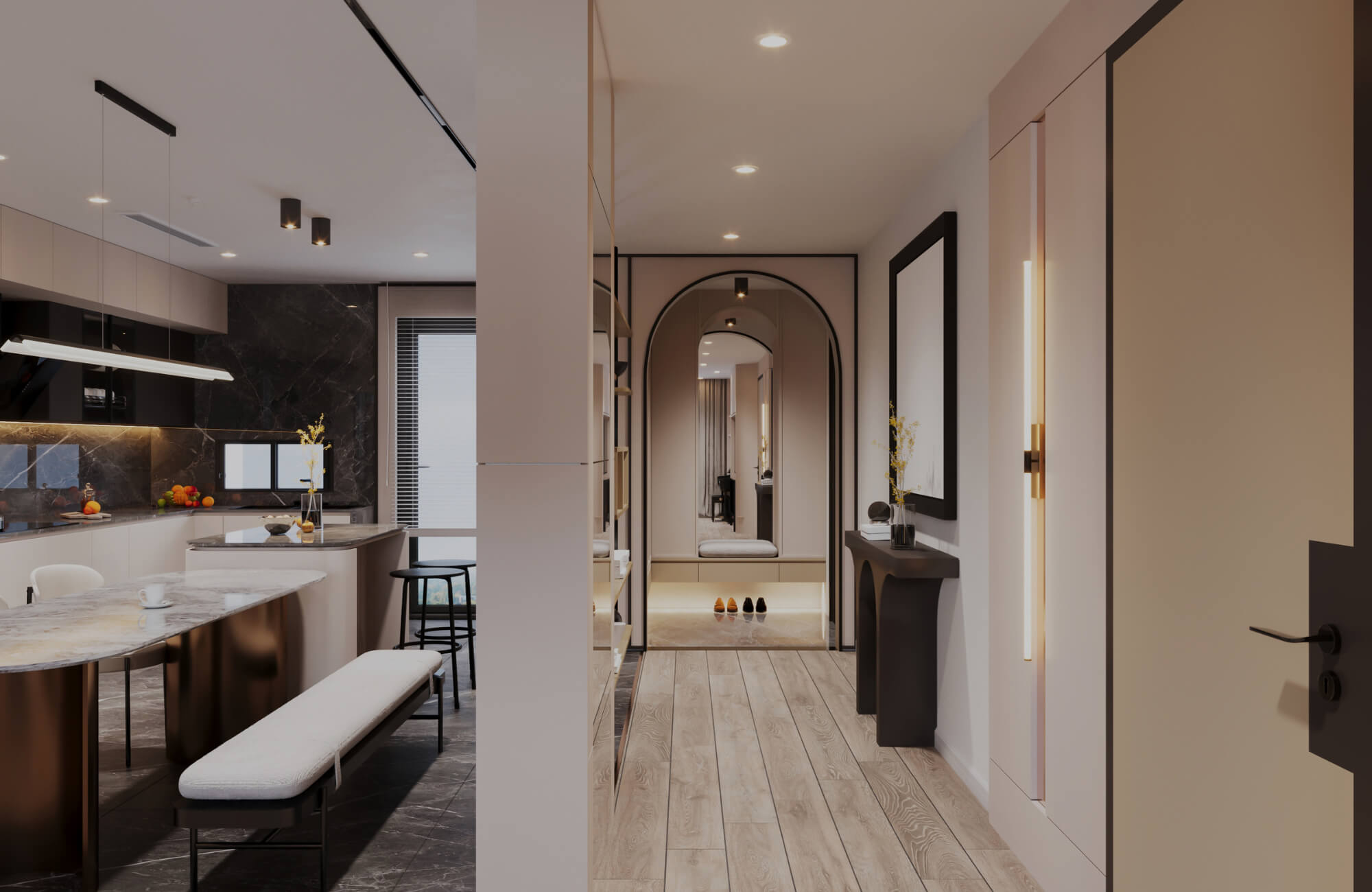
In the image above, Edward Martin’s Leonardo Sideboard in Brown beautifully complements the arched mirror and soft lighting, creating a refined yet tranquil atmosphere. In all cases, mirrors convey refinement and poise. They can anchor your sideboard décor while allowing surrounding textures, ceramics, glassware, or florals, to shine without visual clutter.
If your goal is to open up your space while maintaining a timeless aesthetic, a mirror may be the perfect choice.

The Case for Large Art: Infusing Color, Personality, and Focus
While mirrors reflect what’s already there, art introduces something entirely new, a sense of emotion, color, and story. After exploring the subtle sophistication of mirrors, it’s time to look at how a bold piece of artwork can define a room’s character and make your sideboard the star of the space.
Establishing a Powerful and Intentional Focal Point
Every beautifully styled room needs a visual anchor, a spot that naturally draws the eye. Hanging an art piece above your sideboard establishes that anchor instantly.
Whether it’s an abstract canvas, a landscape, or a bold contemporary print, large-scale art commands attention and defines the rhythm of your room. In open spaces, it can help delineate zones; in formal dining rooms, it adds gravity and sophistication.
A well-chosen artwork communicates taste and confidence. It’s your opportunity to express emotion, culture, and personal perspective through design.
If your space feels visually “flat” or undefined, art provides that necessary dose of presence.
Defining or Unifying Your Room's Color Palette
Artwork is one of the most effective tools for establishing or reinforcing your color story. The hues within a painting or print can echo accent tones found in your upholstery, area rug, or tableware, tying everything together in a cohesive, polished way.
Alternatively, if your space is neutral, a vibrant piece of art can act as a bold contrast, injecting personality without overwhelming the room. Think of it as your palette’s “hero” piece, the element that sets the tone for everything else.
For example, a soft coastal watercolor might harmonize beautifully with a dining room in whites and blues, while a moody abstract piece with hints of gold could elevate a modern interior with brass lighting and dark wood furniture.
Expressing Your Personal Style and Narrative
More than any other design element, art is personal. It reveals your taste, your travels, your mood, and your story. Whether you’re drawn to serene landscapes, modern abstracts, or vibrant portraits, your artwork communicates what you value aesthetically and emotionally.
Unlike a mirror, which serves primarily a spatial or lighting purpose, art creates connection and dialogue. Guests often notice and comment on it, making it a perfect conversation starter.
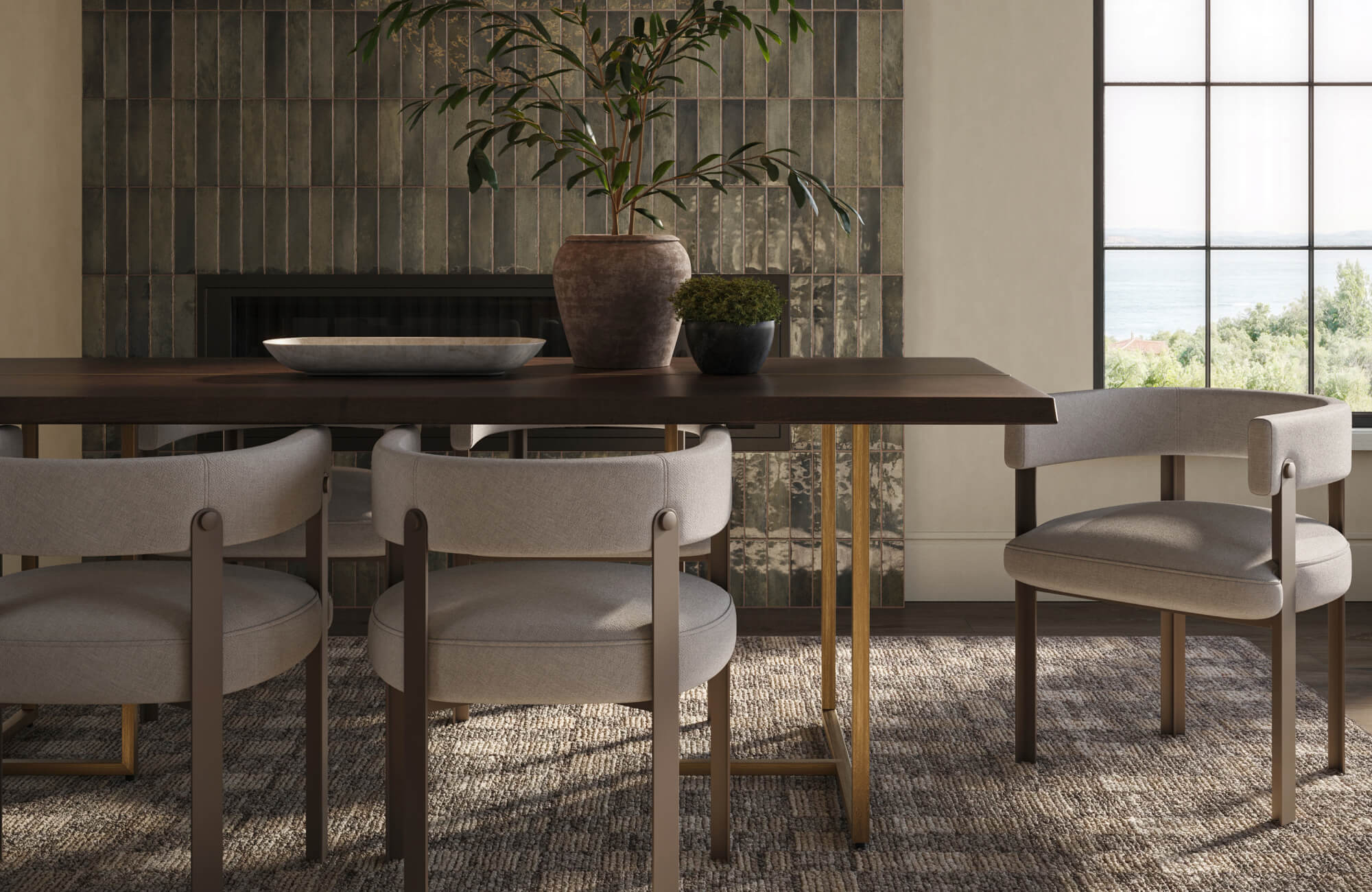
As shown in the image above, Edward Martin’s Charlie Sideboard in Taupe pairs elegantly with a soft floral artwork, creating a harmonious blend of texture and tone that feels deeply personal. Choosing art for your sideboard area allows you to transform a functional wall into a curated gallery moment, an intimate reflection of your home’s soul.

How to Make the Right Choice for Your Specific Room
Both mirrors and art offer beautiful benefits, but the right option depends on your room’s layout, lighting, and mood. Now that we’ve seen what each brings to the table, let’s narrow the focus and explore how to determine which one truly suits your home.
What Is the Primary Function of This Room?
If your sideboard sits in a dining room, think about the energy you want during gatherings. A mirror enhances light and formality, ideal for evening dinners and elegant entertaining. Art, on the other hand, creates intimacy and warmth, perfect for family meals and conversations.
In a living room, mirrors can make the space feel grand and cohesive, while art defines the tone of the entire décor scheme. For entryways, mirrors offer practicality (a last glance before heading out), while art delivers a strong first impression.
What Is Directly Opposite Your Sideboard?
This detail is often overlooked but crucial. If your mirror will reflect something beautiful, like a chandelier, a garden view, or architectural detailing, then a mirror becomes an obvious choice. However, if the reflection shows a blank wall, doorway, or cluttered area, opt for art instead.
The reflection should enhance the view, not duplicate or detract from it.
What Does Your Room Currently Need Most?
Assess your space objectively. Does it feel too dark, too crowded, or perhaps a bit bland? If your room lacks light or airiness, a mirror is often the perfect solution, instantly opening up the space and reflecting brightness throughout. When your space feels flat or needs more warmth, energy, or personality, art is the better choice, it brings color and emotion that make a room come alive.
In the image above, Edward Martin’s Julian Sideboard in Black demonstrates how thoughtful design choices can influence a room’s atmosphere. The deep finish grounds the space while complementing the artwork and lighting, achieving a balance of contrast and cohesion.
If the area already has plenty of visual interest but lacks unity, a carefully chosen artwork can tie the elements together harmoniously. Conversely, if the layout feels tight or closed in, a mirror helps restore balance and spaciousness. By evaluating your room’s needs, you can make a decision that’s both aesthetic and strategic.

Key Rules for Scale, Proportion, and Styling
Once you’ve decided between art and a mirror, the magic lies in the details, how you hang it, size it, and style around it. To ensure your display feels cohesive and elevated, let’s walk through a few essential design principles that make all the difference.
Getting the Proportions and Scale Just Right
Proportion is everything. A mirror or artwork that’s too small will look lost, while one that’s too large can overwhelm your furniture.
A good rule of thumb: your wall piece should be two-thirds to three-quarters the width of your sideboard. This creates balance and visual unity.
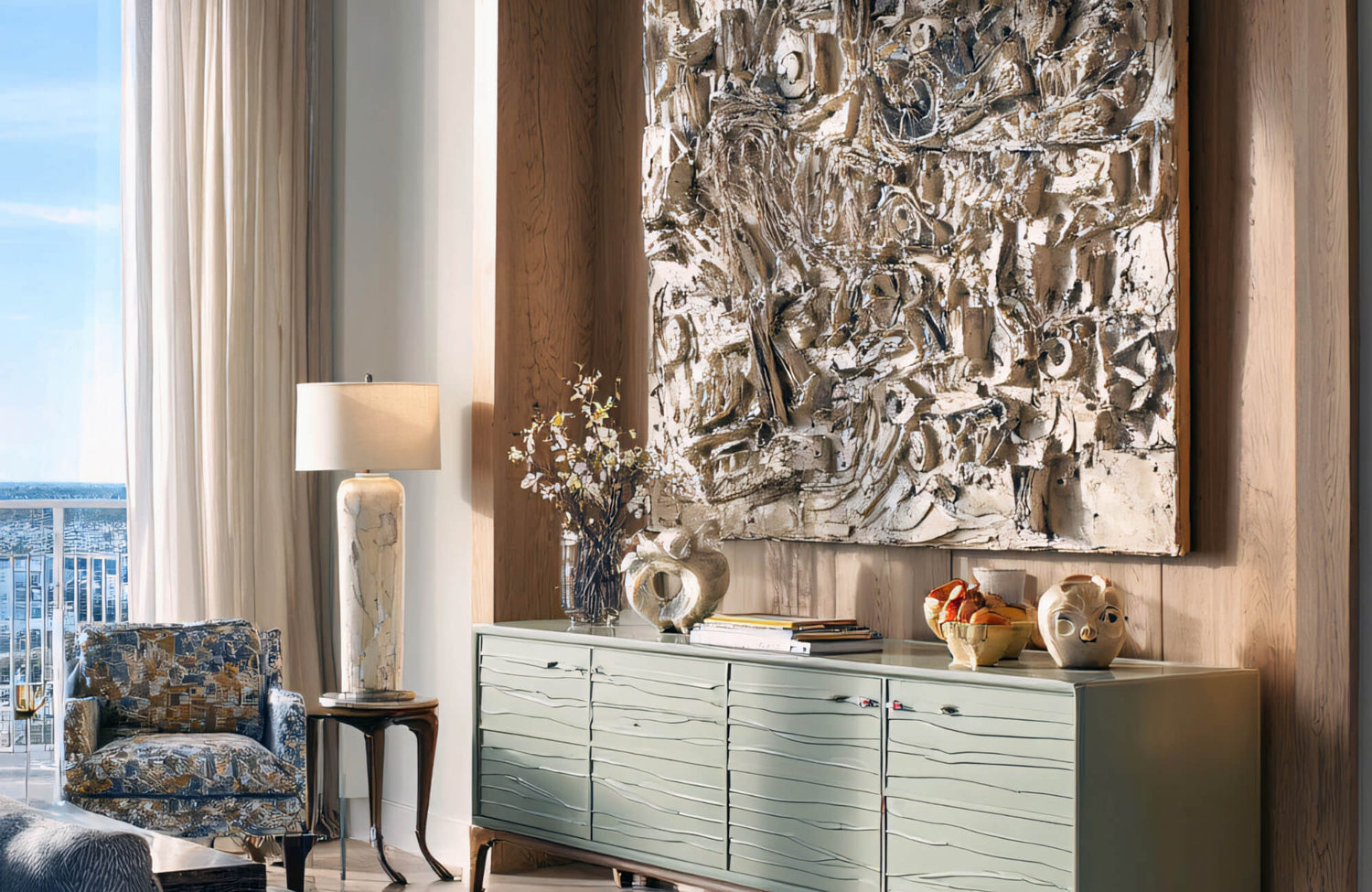
As seen in the image above, Edward Martin’s Brooke Sideboard in Rustic Oak achieves perfect harmony with the dimensional textile wall art above it, balancing natural texture and scale effortlessly. If you’re drawn to a smaller piece, consider flanking it with sconces or a pair of smaller frames to create a complete arrangement. If your ceiling is high, you can experiment with vertical compositions; for lower ceilings, choose wider, horizontal orientations to ground the space.
The Perfect Hanging Height Above the Sideboard
The sweet spot for hanging is typically 6 to 10 inches above the top of the sideboard. This keeps the artwork visually connected to the furniture rather than floating awkwardly in isolation.
If you’re displaying a large, dramatic piece, you can go slightly higher, but maintaining that close relationship between the top of the sideboard and the bottom of the frame keeps the composition cohesive.
When in doubt, err on the side of slightly lower, especially in rooms designed for seated gatherings, like dining areas.
How to Style the Surface Around Your Chosen Piece
What sits on top of your sideboard is just as important as what hangs above it. Together, they form a complete vignette.
For mirrors, add layered accessories that complement the reflection, think tall vases, candles, or sculptural objects. Avoid clutter; the reflection doubles everything visually.
For art, build a grounded base with varied heights: a lamp on one side, stacked books or a low floral arrangement on the other. This asymmetry enhances visual flow and keeps the art as the focal point.
Balance negative space with intentional grouping. Every element should feel purposeful and connected.
Art or Mirror: It’s a Choice You Can’t Get Wrong
At the end of the day, the question of whether to hang a mirror or a large piece of art above your sideboard isn’t about right or wrong, it’s about what your space needs and what resonates with you. Mirrors bring light, depth, and elegance; art brings soul, color, and individuality. Both can elevate your dining or living area when chosen thoughtfully and scaled properly.
If you’re unsure which direction to take, Edward Martin’s design consultation service can help you make confident style decisions tailored to your project. Our design experts offer personalized recommendations and guidance, whether you’re choosing between mirrors and art, selecting furniture, or coordinating rugs and tiles. For further support or specific product questions, you can always contact Edward Martin to receive expert advice and assistance that ensures your space feels cohesive, curated, and unmistakably yours.