
)
)
)
)
)
)
)
)
Should A Rug Go Under The Sofa?
The simple act of placing a rug can dramatically shape the experience of a room. It’s not just about softness underfoot or adding color to your floor. It’s also about defining space, guiding movement, and influencing how your furniture connects with the room. At the center of this design choice lies a surprisingly pivotal decision: should the rug go under the sofa or stop just short?
This question invites more than one right answer. It’s tied to the size of your space, your design preferences, your day-to-day routines, and even your long-term plans for the area. In this article, you'll explore not only the visual and functional impact of rug placement but also how to adapt this choice to your unique lifestyle and space needs. By the end, you'll have a clear, informed path to making your rug work beautifully under, in front of, or even partially beneath your sofa.
The Spatial Impact of Rug Placement
The position of a rug in relation to your sofa reshapes how a space feels, flows, and functions. By choosing the right placement, you can alter the visual proportions of a room, define areas, and create a more harmonious layout.
Expanding or Anchoring the Room Visually
When a rug is placed fully or partially beneath your sofa, it does more than provide softness underfoot; it visually anchors the seating arrangement. In a spacious room, placing the rug under all the main furniture pieces, including the sofa, coffee table, and chairs, prevents the layout from feeling fragmented or floating. It also pulls everything together into a unified area, creating a stronger sense of purpose and intentionality in the design.
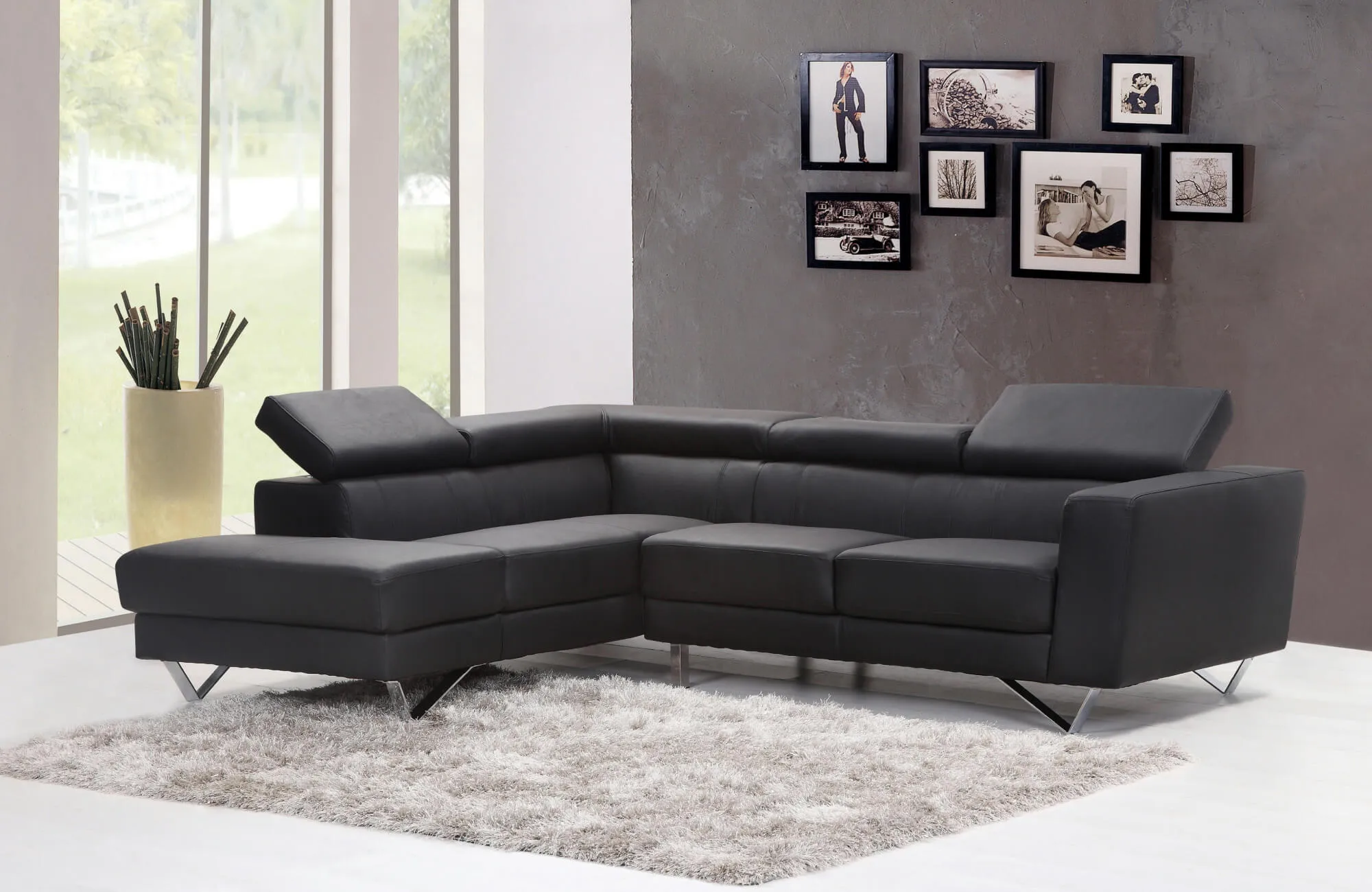
In contrast, if you're working with a smaller room, extending the rug just under the front legs of the sofa can give the illusion of more space. This technique draws the eye outward and tricks the brain into reading the floor area as larger than it is. A rug in a cool, neutral tone like our Liddy Polyester Pile Rug in Graphite / Platinum offers a smoky gray shade that effortlessly blends with most palettes while subtly extending the visual field. By shifting perceived boundaries, you also make the room feel more open without having to sacrifice comfort or visual weight. This kind of strategic placement is especially effective in apartments, small living rooms, or narrow spaces where every inch counts.
Balancing Proportions in Asymmetrical Rooms
Not every room offers clean lines and symmetrical walls. You might be dealing with an awkwardly shaped space—maybe the fireplace isn’t centered, or the windows and doorways fall on uneven sides. When the room itself lacks symmetry, rug placement becomes a corrective tool. Aligning the sofa so its front legs sit firmly on the rug helps stabilize the visual weight and gives your eyes a clear focal point.
Rather than emphasizing what’s off-kilter, this method also draws attention to the rug as a grounding surface, subtly pulling the eye toward the central seating arrangement. Even in rooms with odd angles or unconventional layouts, placing the rug partially beneath the sofa helps introduce order. Moreover, it shifts the focus from architectural flaws to a more cohesive furniture story, helping the space feel settled rather than disjointed.
Creating Flow Between Zones
In open-concept layouts, where living, dining, and even work areas blend into one, creating a sense of separation without physical dividers can be tricky. This is where the placement of a rug under your sofa becomes an effective design solution. By grounding the sofa and surrounding seating pieces on a shared rug, you carve out a distinct “living room” within the larger space.
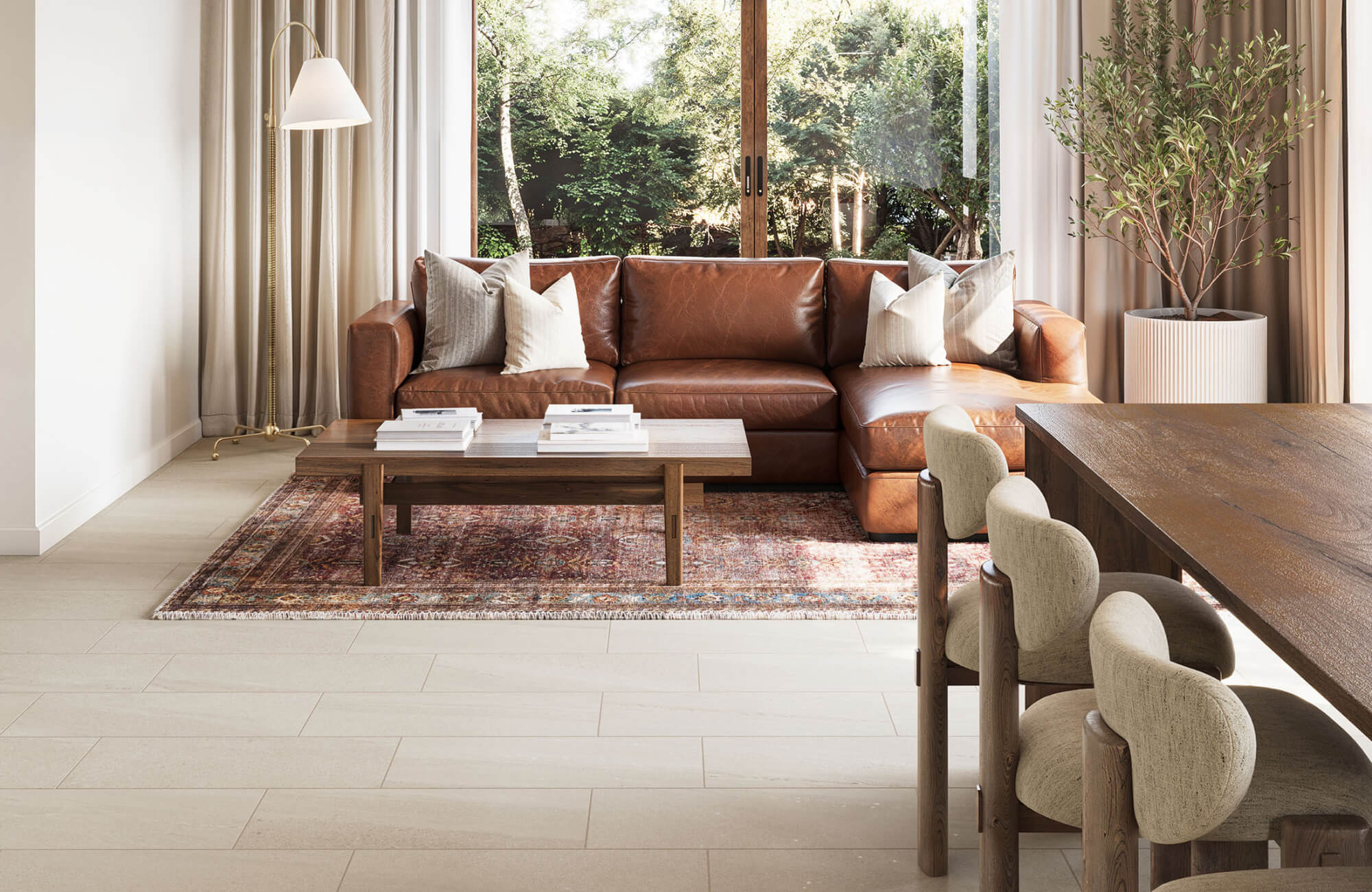
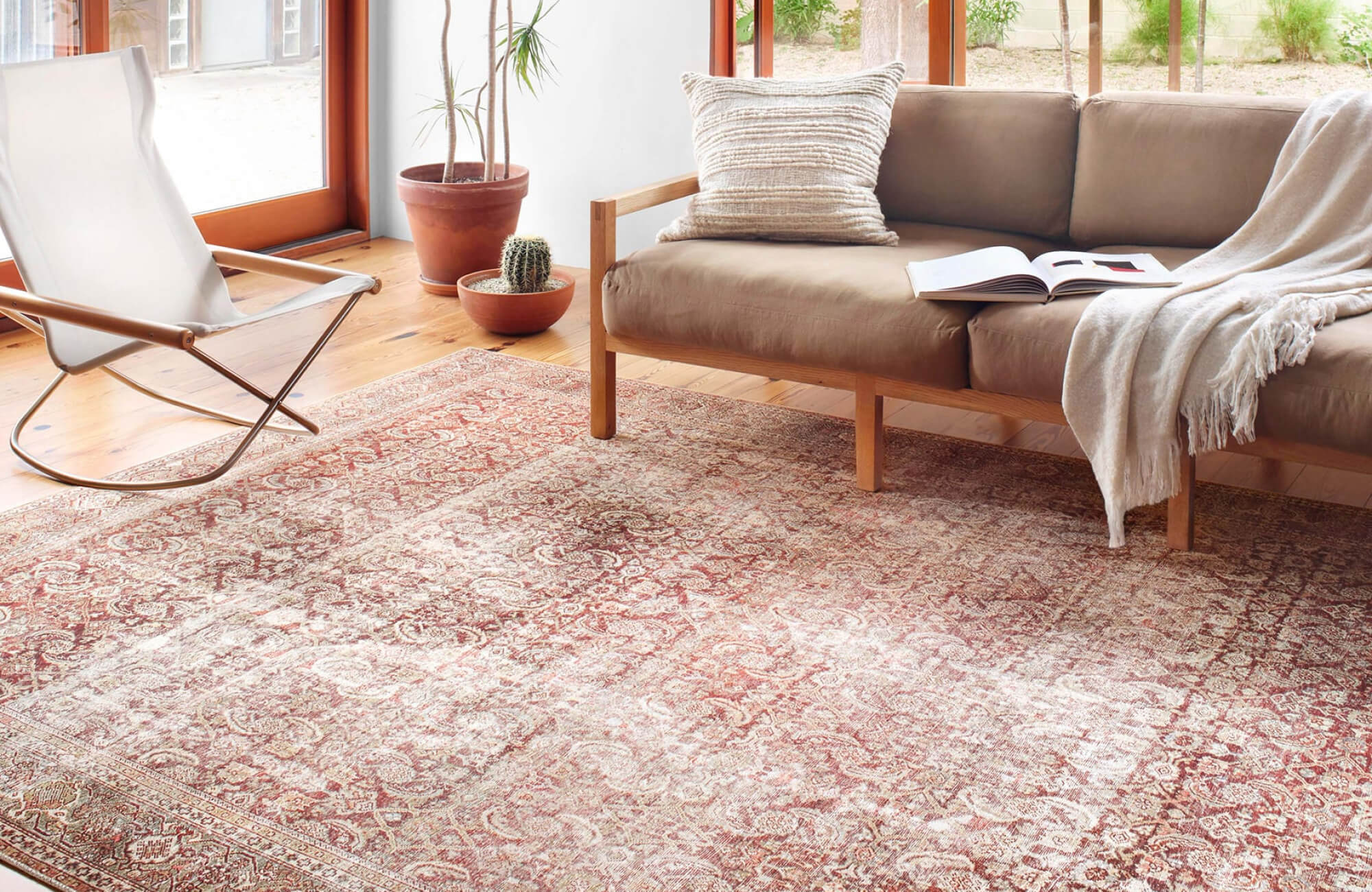
For example, a richly textured option like our Hutchinson Polyester Face Rug in Burgundy / Denim, shown in the image above, offers a deep red tone that visually anchors the seating area while adding warmth and definition. Its color and construction naturally create a boundary that separates the living zone without interrupting the openness of the floor plan.
This kind of visual zoning enhances not only the aesthetic but also the functional layout of your space. It reduces visual chaos and clarifies how each part of the room should be used. Instead of relying on walls to define spaces, you begin using design elements to establish zones that naturally guide movement and interaction. As a result, the living area feels more purposeful and seamlessly integrated into the rest of the space.
Functional Benefits and Drawbacks
Rug placement isn’t only about aesthetics. It also affects comfort, furniture protection, and long-term upkeep. How and where you place a rug in relation to your sofa can shape the practicality of your entire living space.
Preventing Slipping and Curling
A rug that sits beneath the weight of your sofa gains a natural advantage; it stays in place. This built-in anchoring helps keep the rug from sliding around or curling at the edges, which can often be a nuisance in busy areas. Without that extra stability, rugs are more prone to shifting, especially on hard flooring, leading to uneven surfaces or even tripping hazards.
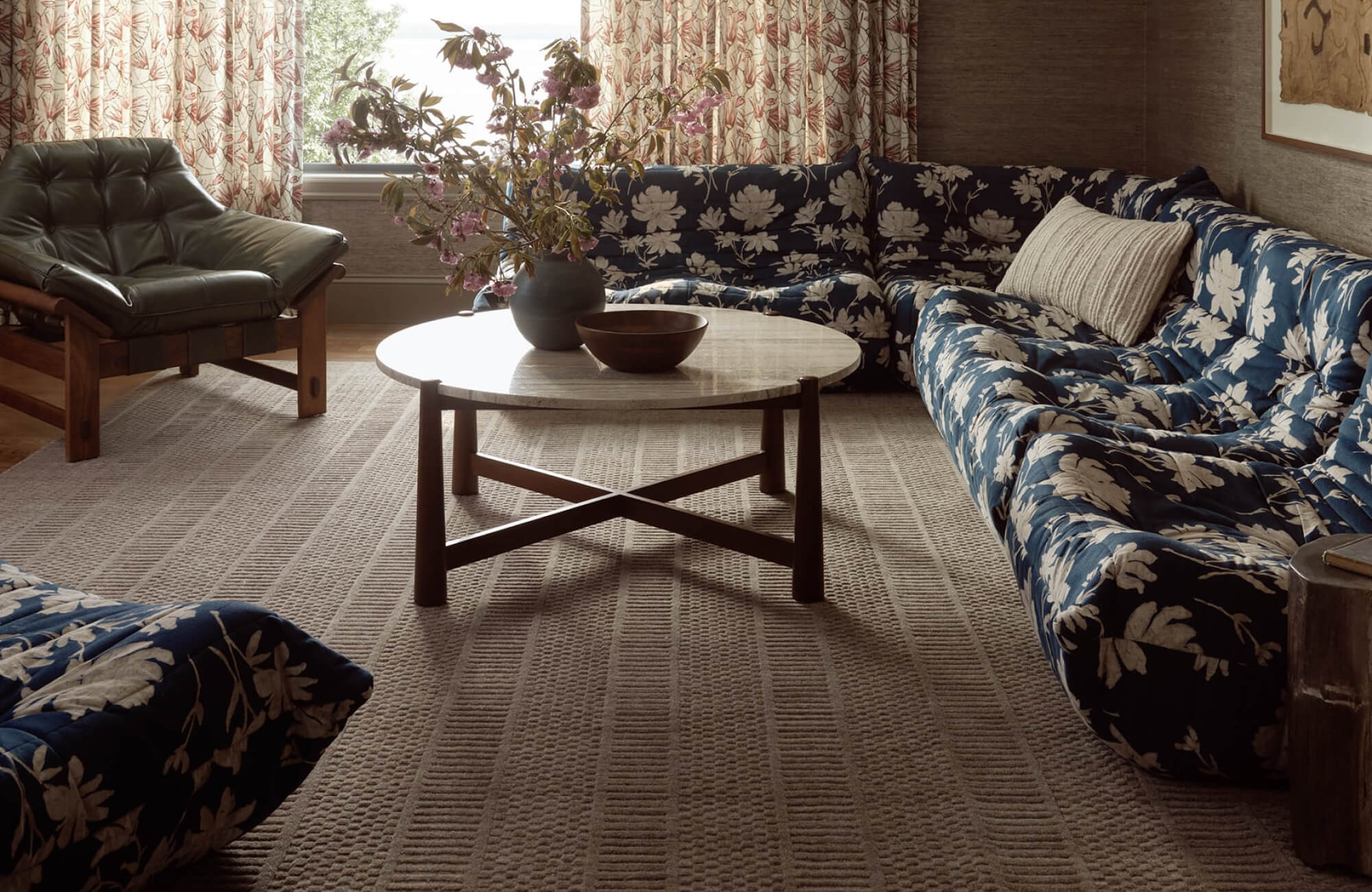
In the room picture above, our Quinton Wool Blend Rug in Ash exemplifies how a structured, textured surface can keep things grounded. Its soft gray tone blends effortlessly with bold, patterned upholstery while its wool-blend construction adds both traction and resilience beneath heavy furniture. This type of rug offers both grip and protection, ensuring your space remains stable, safe, and beautifully composed.
Additionally, to maintain a smooth, secure surface, it helps to pair your setup with furniture pads or a quality non-slip rug liner. These additions not only enhance grip but also provide a buffer between the rug and the floor, protecting the fibers from excessive wear caused by the sofa legs. Over time, this kind of reinforcement extends the life of the rug and keeps your living space safer and easier to maintain.
Protecting Floors from Sofa Damage
Sofa legs can leave a lasting mark on your flooring, especially if they sit in the same position for years. Hardwood, laminate, and vinyl are all susceptible to dents, scuffs, or discoloration from pressure and friction. Placing a rug under your sofa creates a cushioned layer that absorbs some of this stress and distributes the sofa’s weight more evenly across the floor.
This small addition can also prevent the kind of damage that’s often expensive or irreversible, particularly if you plan to rearrange furniture in the future. If you're renting, using a rug as a protective barrier under the sofa is a simple but effective way to maintain the flooring in good condition. It could make the difference between a smooth move-out and a costly repair charge.
Considering Vacuuming and Cleaning Logistics
Rugs that reach beneath your sofa often introduce one frustrating challenge: cleaning. Dust, crumbs, and debris can settle in the hard-to-reach areas under the furniture, which vacuums don’t always reach, and robotic cleaners tend to ignore. If left unchecked, this can impact both the cleanliness and air quality of your space.
Because of that, selecting the right rug type matters. Low-pile or flatweave options are far easier to keep clean in this kind of layout, as they don’t trap debris as deeply. Still, even with the right material, routine care is essential. Sliding the sofa forward now and then to vacuum thoroughly or scheduling an occasional professional deep clean can also keep your space feeling fresh and extend the life of the rug. Without this maintenance, even the most beautiful placement can lead to hidden buildup over time.
Aesthetic Alignment with Design Styles
How your rug interacts with your sofa should align with the overall visual language of your space. Each design style has its own approach to balance, texture, and proportion, which directly influences how and where the rug should be placed.
Emphasizing Symmetry in Traditional Decor
Traditional interiors favor order and balance, and your rug placement can play a major role in reinforcing that sense of symmetry. By positioning the rug fully under the sofa, along with other central pieces like the coffee table and armchairs, you help the room feel harmonized and grounded. This approach also draws attention to the centered layout, giving the space a timeless, polished appeal.
A beautifully understated option that complements this look is our Lafferty Wool Blend Rug in Dove. With its refined dove-gray hue and soft texture, it adds elegance and warmth without overwhelming the classic sensibility of the room. When used to anchor key furniture pieces and align with architectural features, it also reinforces the sense of proportion and structure that traditional design depends on, bringing the entire room into a visually soothing equilibrium.
Creating Contrast in Modern and Minimalist Rooms
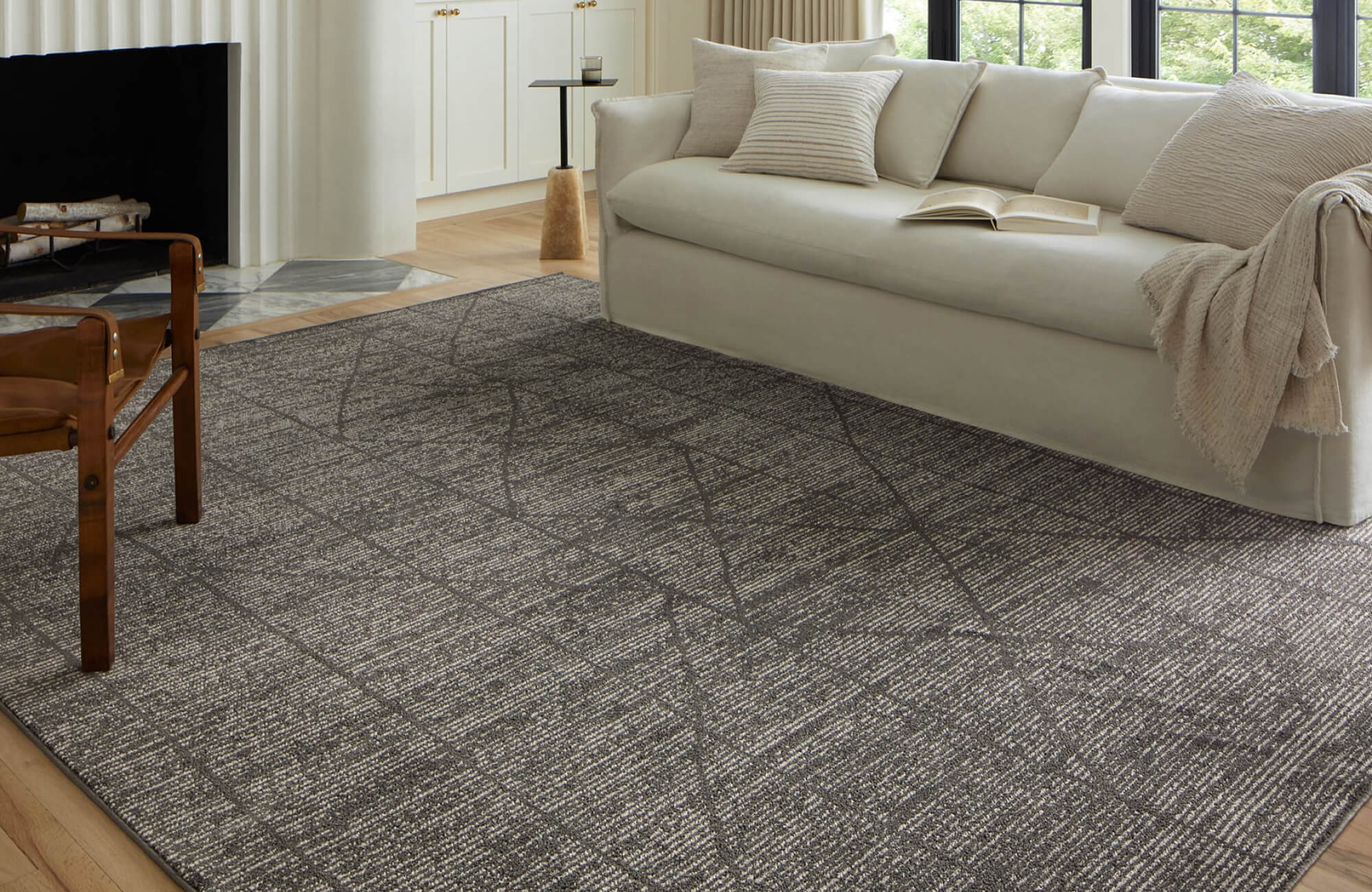
In modern and minimalist spaces, every detail matters, and that includes how your rug interacts with the sofa. A rug that sits beneath the entire sofa can become a strong visual anchor, especially if it features a bold texture, high-contrast color, or geometric pattern. Rather than disappearing into the background, the rug also becomes a statement piece that introduces warmth and interest into the otherwise pared-down setting.
As seen in the photo above, our Liddy Polyester Pile Rug in Graphite / Pearl effortlessly blends rich charcoal tones with light gray undertones, creating a subtle yet impactful backdrop. Its linear design adds modern movement without overpowering the minimalist décor, grounding the ivory-toned sofa while enhancing the room’s crisp, tailored look. The key here is intentionality—by selecting a rug that stands out while still fitting the space, you create a contrast that feels deliberate and elevated.
Layering and Offsetting in Boho or Eclectic Interiors
Boho and eclectic interiors invite creativity, and your rug placement should reflect that free-spirited energy. Instead of centering a rug perfectly beneath the sofa, you might choose to place it under just the front legs or even slightly to the side. This offset layout also feels less rigid and more lived-in, echoing the relaxed, unstructured nature of these styles.
Layering plays a key role as well. A smaller, colorful, or patterned rug layered over a neutral jute or sisal base adds texture and depth, telling a visual story of travel, craft, and personality. With this approach, your rug doesn't just support the sofa; it contributes to a broader, more expressive narrative that feels warm, collected, and undeniably yours.
Room Size and Rug Dimensions
Room scale and rug dimensions work hand in hand. Choosing the right size is essential for both aesthetic success and functional harmony, especially when considering how your rug interacts with the sofa.
Small Living Rooms
In a small living room, space is often at a premium, so every design decision must work double duty. Placing a rug so that it runs just beneath the front legs of the sofa offers a practical solution. This approach visually defines the seating area without covering too much floor, allowing the space to feel more open and breathable. You also create a frame for the furniture that feels intentional but not overpowering.
Extending the rug about six to twelve inches beyond the sofa’s width on either side further helps maintain a sense of balance, making the furniture appear thoughtfully placed rather than cramped. This setup also prevents the rug from feeling like a floating island. It connects the sofa to the floor and makes the room feel more expansive, especially when combined with lighter colors or low-profile rug designs.
Medium to Large Rooms
When dealing with a medium or large living room, using a generously sized rug becomes more of a necessity than a luxury. A rug that stretches fully beneath the sofa and often under accompanying pieces like accent chairs and the coffee table helps tie the entire layout together. This is particularly important in rooms where furniture might otherwise feel scattered or disconnected.
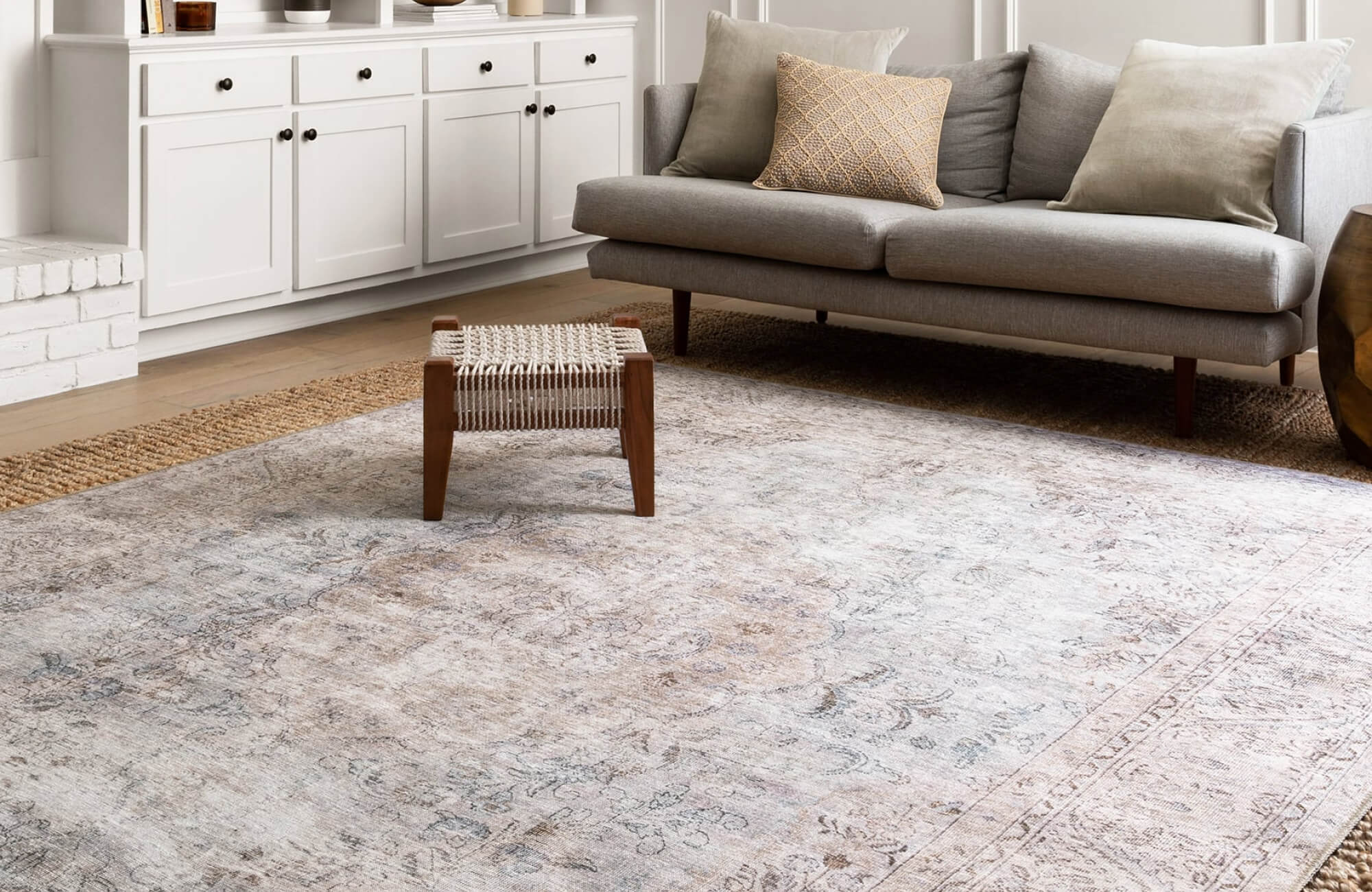
A great example is our Georgette Polyester Pile Rug in Desert Multi, seen in the image above. Its blend of earthy tones and soft patterning adds warmth and visual cohesion while filling out the space without overwhelming it. The subtle vintage-inspired design also complements neutral furnishings and classic architectural elements, helping to anchor the room with quiet elegance. With the rug extending under the main seating area, the space feels intentional and complete, offering both structure and softness that suits larger layouts beautifully.
Sectionals and Non-Standard Layouts
Sectionals can make rug placement more challenging, especially if the seating arrangement bends or extends into unusual corners. In these cases, you’ll want a rug large enough to sit beneath all the major contact points of the sectional to maintain a balanced appearance. Failing to anchor the full shape of the sectional can cause the room to feel uneven or awkwardly divided.
To avoid misjudging size, it also helps to mark out the rug’s dimensions on the floor using painter’s tape before committing to a purchase. This step allows you to see how the rug will interact with furniture legs, usage paths, and the overall layout. A well-fitted rug in these scenarios ensures both comfort and functionality, creating a seamless base that supports the sectional’s scale and the room’s flow.
Lifestyle Considerations and Household Needs
Daily routines, family size, and living arrangements should all inform your rug placement decision. The way you live and how your space needs to function can shift the ideal position of a rug under or around your sofa.
Busy Spaces with Kids or Pets
When your space is full of motion, whether from little feet, furry companions, or daily hustle, a rug under the sofa becomes more than a style choice. It adds essential stability to the space, keeping the rug from sliding as people or pets pass through. This is especially important in areas where play and activity are part of everyday life. By anchoring the rug beneath the sofa, you also reduce the chance of slipping corners, shifting edges, or disrupted layouts that can come from constant movement.
Equally important is choosing a rug that can withstand the wear and tear. Washable or high-performance rugs are excellent for these environments, offering resilience without sacrificing appearance. They also make it easier to stay on top of spills, muddy paws, and snack-time messes. A rug in this setup doesn’t just support the sofa; it supports the pace of your life.
Rental and Temporary Living Setups
If you're in a rental or know you’ll be moving soon, flexibility is key. A rug that doesn’t fully extend under the sofa makes it easier to rearrange or repurpose in a new space. You’re not locked into one configuration, which gives you the freedom to adapt without having to replace your rug with each transition. This kind of modular thinking is essential when you're working with spaces that aren’t permanent.
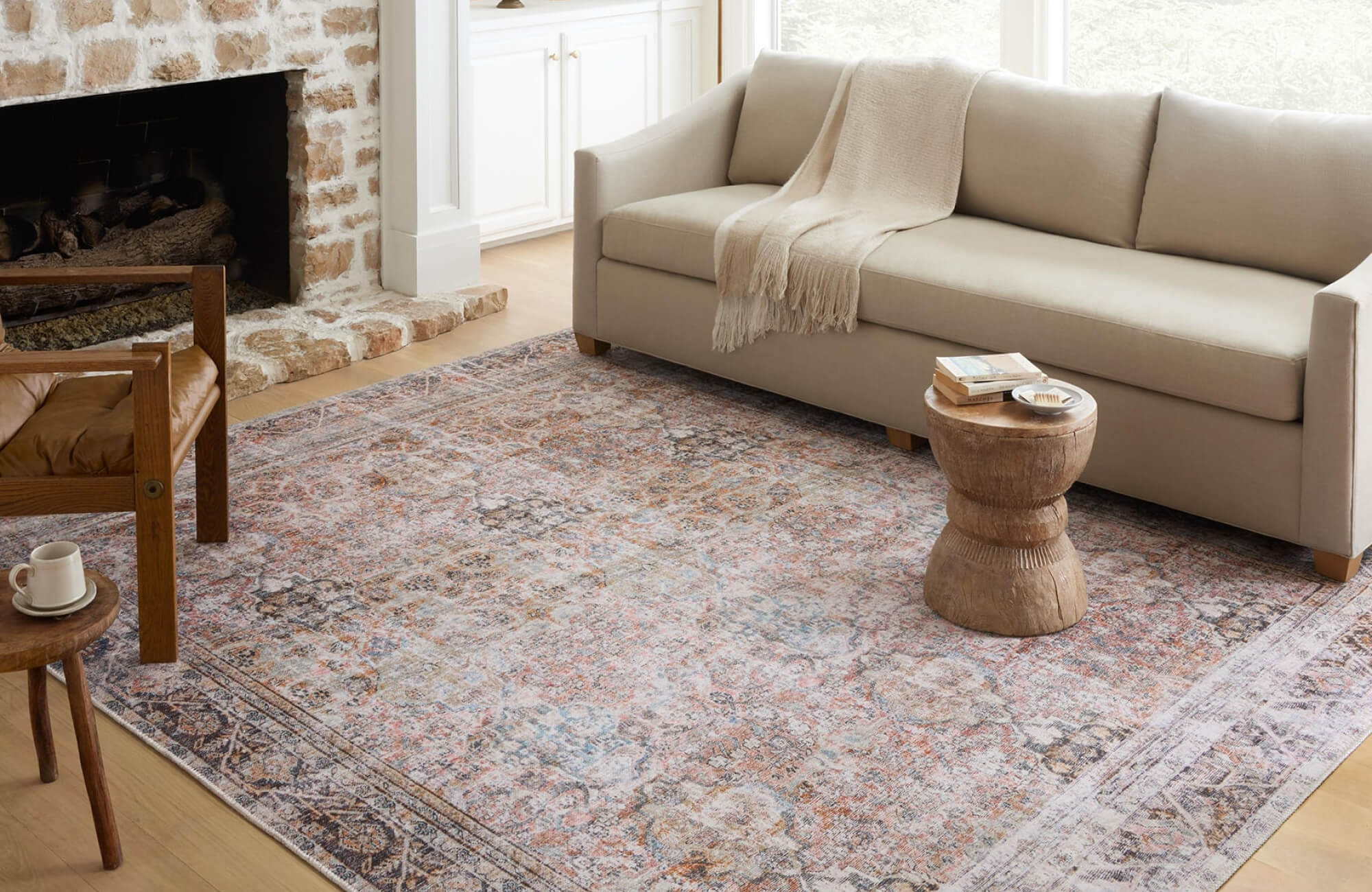
Our Hutchinson Polyester Face Rug in Burgundy / Khaki, displayed in the photo above, is a perfect example of this adaptable approach. With its inviting mix of brick red and taupe tones, it adds warmth and personality without overwhelming the space or demanding a fixed layout. Because it’s not fully anchored under the sofa, it offers both visual definition and the freedom to move or repurpose as your space evolves, perfect for renters or those who love to rearrange.
Multi-Purpose Rooms and Frequent Rearranging
In rooms that serve more than one function, such as a living area that doubles as a workspace or guest zone, flexibility matters more than a rigid layout. A rug placed in front of the sofa instead of under it allows you to move things around as needed without disrupting the whole setup. This floating configuration also defines the living zone while giving you the freedom to shift furniture to accommodate new activities or changing needs.
To keep the rug in place even without the sofa’s weight holding it down, rug grippers or low-tack adhesives offer a practical solution. These subtle tools help maintain the rug’s position while still allowing easy repositioning. Whether you’re rearranging weekly or just enjoy experimenting with layout, this approach keeps your space functional, adaptable, and grounded.
Budget and Investment Perspective
Rug placement is a financial decision. Your budget and long-term plans should guide how much to invest in size, quality, and layout, ensuring your design choices match both your vision and your wallet.
When to Invest in a Full-Coverage Rug
If your living room setup is firmly in place and you don’t anticipate any major layout changes, investing in a large, high-quality rug that extends under your sofa can be a smart, long-term move. A full-coverage rug not only elevates the overall look of the room, but also provides a luxurious foundation that improves acoustics, comfort, and cohesion. Additionally, it anchors the furniture with elegance and helps convey a sense of completeness and care throughout the space.
Beyond style and comfort, there’s practical value in this approach. A well-chosen rug can add perceived value to your space, particularly if you're thinking about resale in the future. A polished, unified space is far more attractive to buyers or guests than one that feels pieced together. Although the upfront cost may be higher, the return, whether through long-term use or visual impact, often justifies the investment.
Smart Options for Budget-Conscious Decorators
If you're working within a tighter budget, there are still creative ways to use rug placement to your advantage. Rather than stretching your resources on one oversized rug, placing a smaller, well-chosen rug in front of the sofa can still define the seating area effectively. This method allows you to add softness and structure without making a major financial commitment.
To enhance the look further without exceeding your budget, consider layering that smaller rug over a neutral, larger base, like a flatwoven jute or sisal. This combination gives the appearance of a more expansive and custom layout, adding texture and depth to the room while keeping costs manageable. With thoughtful layering and careful sizing, you can also achieve a designer-inspired look that suits both your lifestyle and your bottom line.
Elevating Space Through Thoughtful Rug Placement
The choice to place a rug under your sofa can transform your entire living space when approached with intention. It influences the flow of your room, the balance of your furniture, and the comfort of your daily routines. From design style and floor protection to budget considerations and flexibility, this decision touches every aspect of how you live in and experience your space. When aligned with your lifestyle, layout, and aesthetic, thoughtful rug placement also becomes the foundation for a space that feels both functional and beautifully finished.
If you’re seeking tailored advice or looking to explore rug options that fit your space perfectly, our team is here to help. Whether you're navigating layout challenges, sourcing custom sizing, or simply want expert insight on how to elevate your space with the right rug placement, you can connect directly with our knowledgeable staff through our Contact Us page. Our commitment to personalized service ensures that your choices not only look great but also work effortlessly within your lifestyle.
Follow us on Instagram
@EDWARD.MARTIN
)
)
)
)
)
)
)
)
)
)
)
)
)
)
)
)