
)
)
)
)
)
)
)
)
Should A Bathroom Mirror Be The Same Width As A Sink?
When designing or remodeling a bathroom, the little decisions often end up making the biggest difference. One question we usually hear is: Should the mirror be the same width as the sink? Though it may seem like a minor detail, this choice also plays a significant role in shaping the look, functionality, and overall comfort of your space. Whether you’re creating a brand-new bathroom or updating your current one, let’s explore what matters when it comes to mirror width and how to make the smartest, most stylish decision for your space.
Proportions That Influence Bathroom Design
Choosing a mirror size isn’t just about filling wall space; it’s also about making the room feel balanced, coordinated, and comfortable to use. Getting the proportions right helps everything feel intentional from the moment you walk in.
Understanding Visual Balance
We’ve all seen bathrooms where the mirror feels “off,” either too wide or too small for the sink beneath it. When the mirror lines up with the sink width, it naturally creates a centered focal point that feels pleasing to the eye. This alignment becomes especially important in compact or narrow bathrooms, where any visual imbalance is immediately noticeable. A mirror that stretches too far or doesn’t reach the edge of the vanity can disrupt the room’s flow. While subtle, the mirror also plays a surprisingly strong role in grounding the entire space.
When Slight Variations Work
In some layouts, a mirror that’s slightly narrower or wider than the sink can still feel balanced, especially when the surrounding elements are thoughtfully coordinated. For instance, a frameless mirror that’s just a couple of inches narrower than the vanity can still feel perfectly proportional when paired with vertical sconces, which help visually widen the space and draw attention outward. On the other hand, if you have extra wall space, a mirror that extends beyond the sink's width can add visual drama, provided it integrates well with the room’s other features.
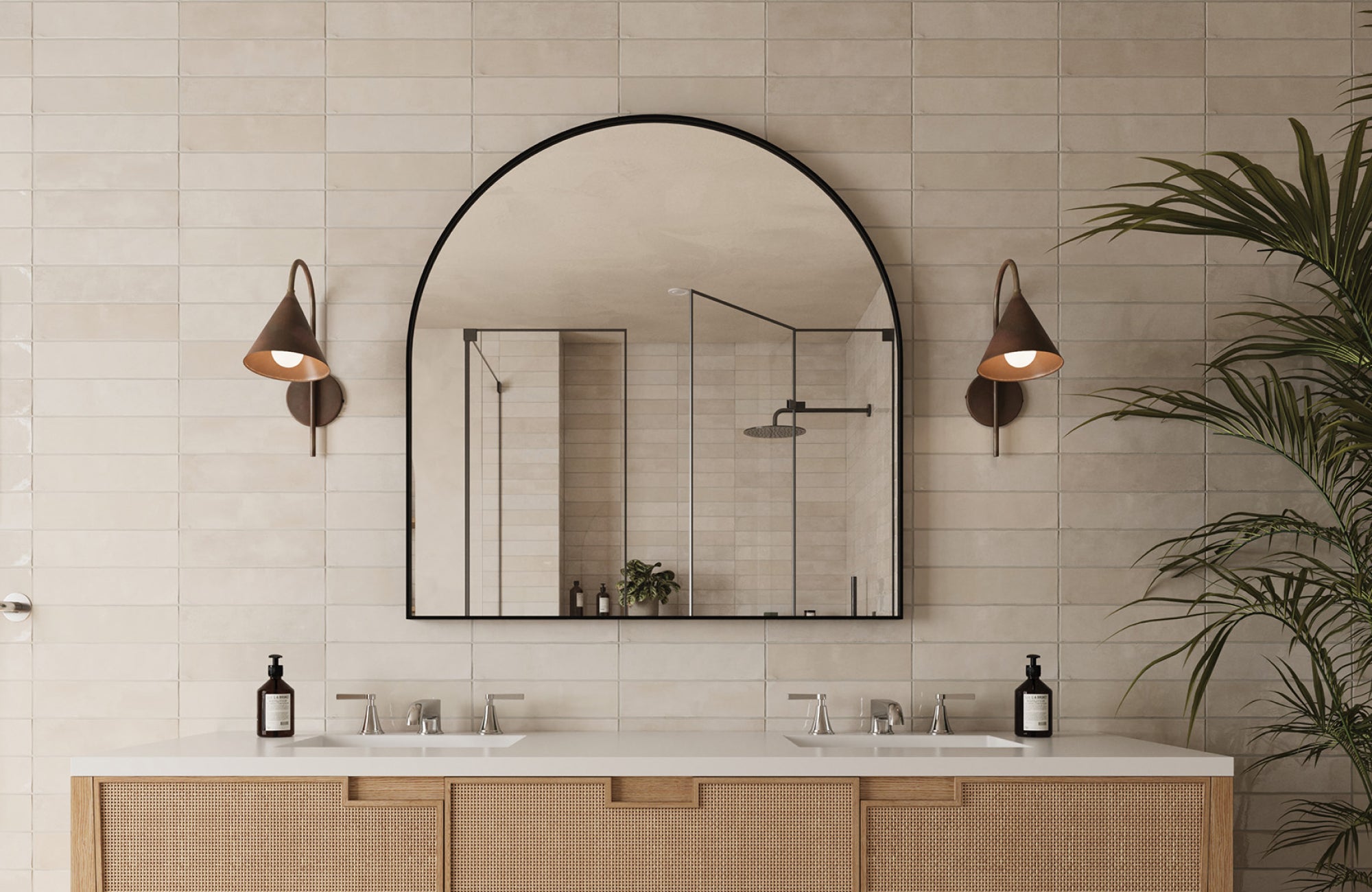
Take Edward Martin’s Esmeralda Wide Mirror in Iron Matte Black, for example. In the photo shown above, this slightly narrower arched mirror works beautifully with the double sink vanity due to the balanced placement of cone-shaped wall sconces on either side. Although the mirror doesn’t span the full width of the vanity, the visual weight is evenly distributed. The symmetry of the lighting, paired with the clean, modern lines of the mirror, also allows the entire composition to feel both intentional and elegant. This setup is a perfect reminder that proportions don’t always have to be exact; they just need to feel harmonious within the overall design.
Impact on Wall Space and Fixtures
One of the most important reasons to consider mirror width is how well it fits within the overall layout of your space. If you’re planning to install wall-mounted lights, add a towel ring, or include shelving nearby, the mirror’s size can either support or compete with those elements. A mirror that stretches too far may limit where fixtures can be placed, while one that’s too narrow might leave the wall feeling bare or underutilized. This is where thoughtful lighting choices, such as well-positioned sconces or mirrors with built-in lighting, can help create a more cohesive, functional setup without sacrificing style.
Sink and Vanity Styles That Shape the Decision
Vanity designs vary widely, and the style of sink you choose plays a key role in determining the ideal mirror width. Some configurations benefit from a perfectly aligned mirror, while others allow for more flexibility and creative interpretation.
Single vs Double Vanities
Let’s begin with a setup many of us are familiar with: the single vanity. Typically, a mirror that aligns closely with the sink width offers a clean, streamlined look. It complements the faucet placement, reflects light evenly, and helps avoid any empty or awkward wall space. When it comes to double vanities, you have more room to tailor the design. You might choose one large mirror that spans the full width for a seamless feel, or opt for two separate mirrors, each centered over its basin. If you prefer the latter, just be sure to space them thoughtfully and account for lighting so both sides feel equally well-lit and balanced.
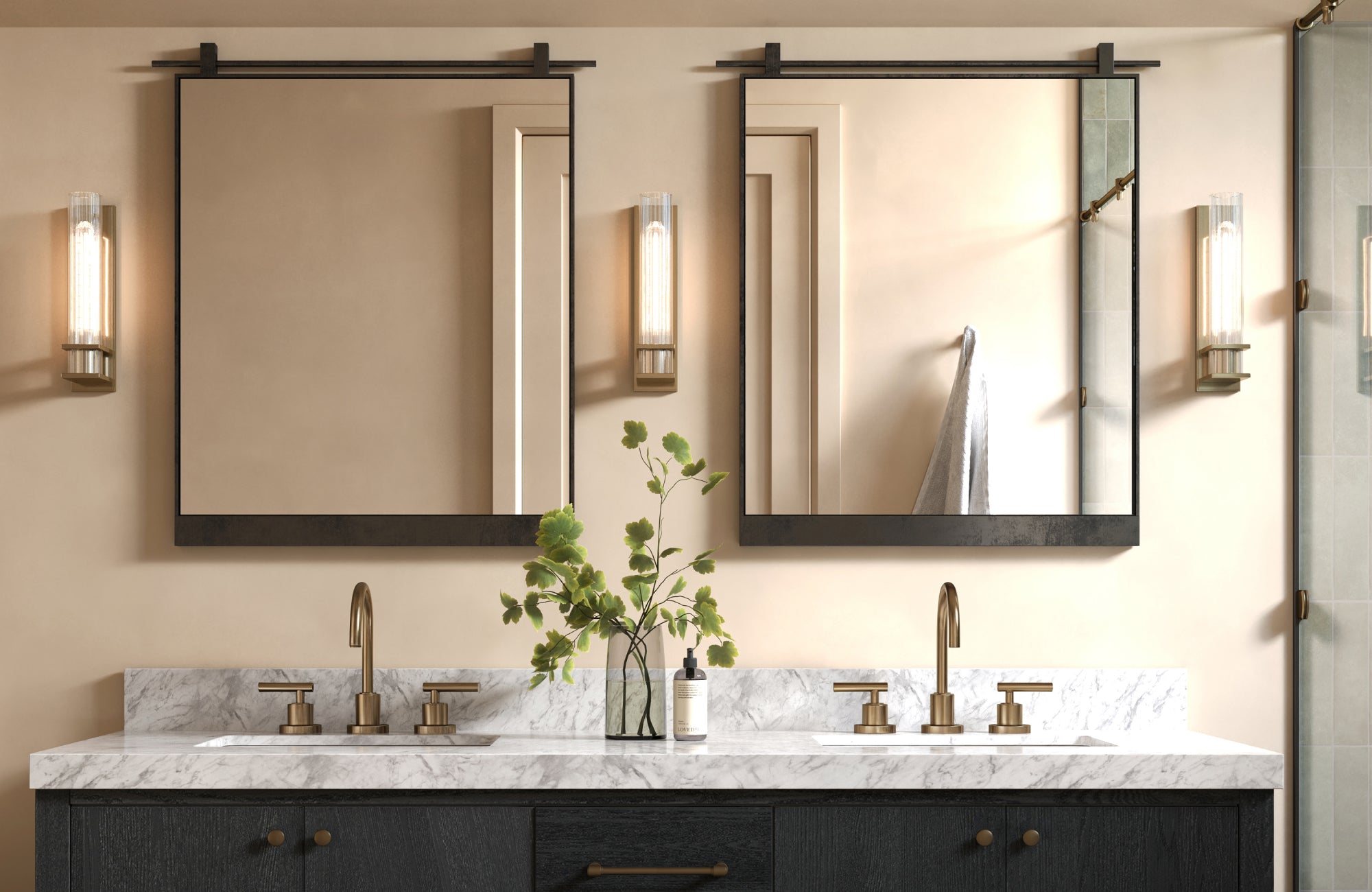
A great example of this approach is the use of Edward Martin’s Clancy Small Mirror in Antiqued Iron. In the photo displayed above, these mirrors are mounted individually above each sink, creating symmetry without overwhelming the space. The slim frame and subtle antiqued finish also add a tailored, elegant edge while allowing the eye to focus on the full design. Combined with vertical sconces placed between and beside each mirror, the overall composition feels intentional and refined—proof that pairing two smaller mirrors can be just as striking as one large one when designed with care.
Vessel Sinks and Floating Vanities
Vessel sinks and floating vanities tend to create more vertical emphasis, drawing your eye upward. These designs often pair well with tall, narrow mirrors that highlight the height and elegance of the sink. In this case, matching the sink’s width isn't as important as aligning it with the sink’s center. The mirror becomes more of a vertical feature than a horizontal one, and it can still look balanced even if it’s slightly narrower.
Integrated Countertop Designs
If your sink is part of an integrated countertop, especially in modern or minimal designs, then it makes sense to have the mirror extend across the full width of the unit. This creates a sleek, seamless line that’s visually cohesive. Everything flows together: sink, counter, and mirror, all in alignment. It’s an ideal match for contemporary aesthetics, where clean lines and proportional harmony take center stage.
Framing and Mirror Style Considerations
Mirror framing can completely change how the size appears and how it interacts with the rest of your vanity. The style and structure of the mirror should complement your bathroom design, not just in shape, but in visual weight.
Framed vs Frameless Mirrors
Choosing between a framed and frameless mirror goes beyond just style; it also affects how the mirror is perceived in the space. A bold frame adds visual weight, which can make a smaller mirror feel more prominent and grounded. This is especially useful if the mirror is slightly narrower than the sink and needs a bit more presence to feel balanced. On the other hand, frameless mirrors offer a cleaner, more streamlined look that tends to blend effortlessly into the wall. These work particularly well when aligned closely with the sink, especially in bathrooms with a minimalist or contemporary aesthetic.
Statement and Decorative Mirrors
If you’re leaning toward a more expressive style, statement mirrors give you the freedom to break a few traditional rules. Arched, oval, or uniquely shaped mirrors don’t need to match the sink width to feel “right.” Instead, their shape or finish can become the visual centerpiece. Just remember, these choices should still support practical use. Lighting must also be considered carefully, both in placement and temperature, to make sure form doesn’t outpace function.
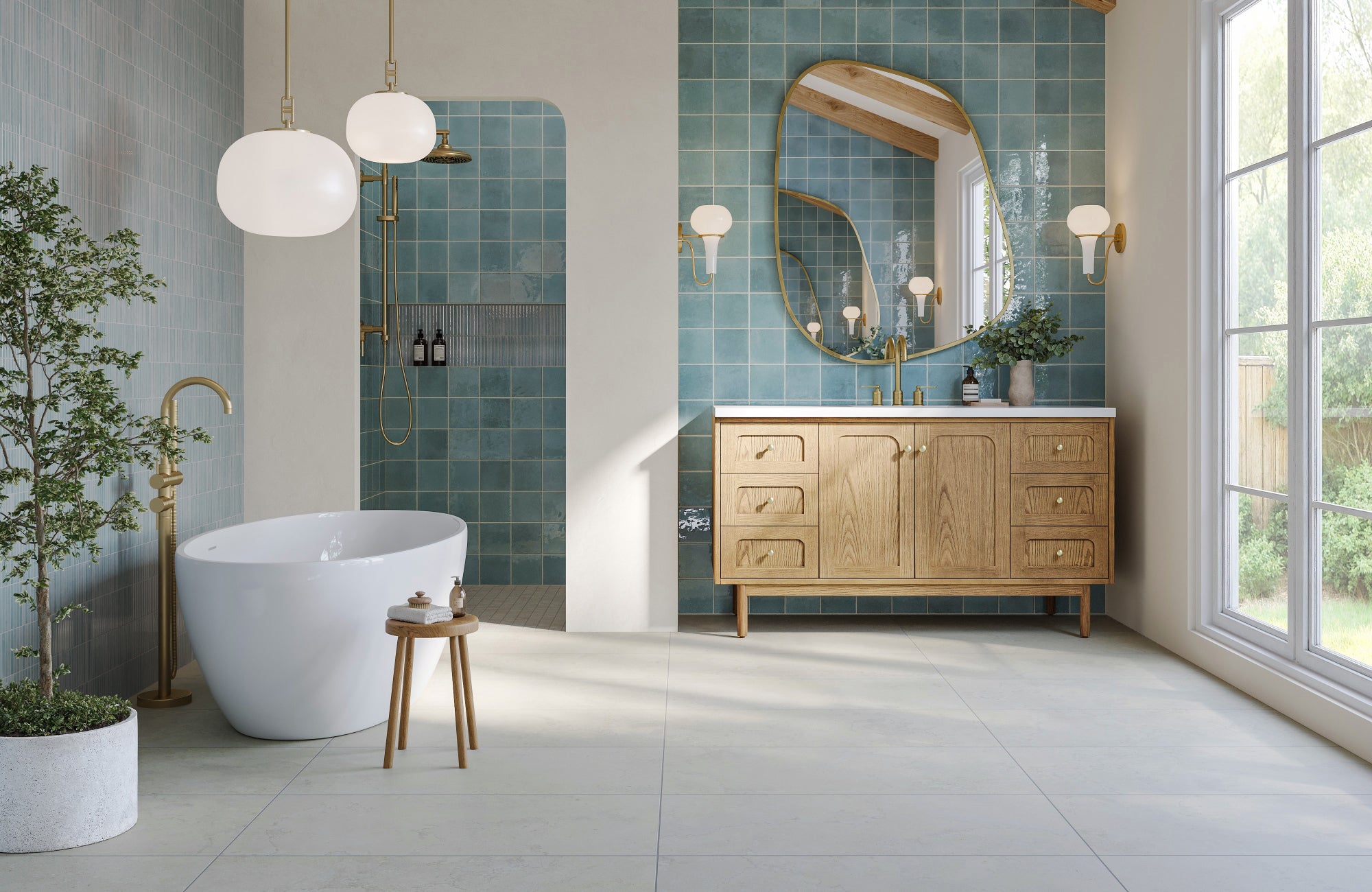
Take Edward Martin’s Shirley Large Mirror in Antique Brass Iron, for example, as displayed in the photo above. Its soft, asymmetrical shape paired with a warm brass frame creates an inviting, sculptural presence that anchors the vanity wall. Even though the mirror doesn’t match the vanity’s width precisely, it brings character and dimension to the space, drawing the eye upward while complementing the curves of the rounded sconces. This design also shows how a statement mirror can strike the perfect balance between bold style and everyday functionality when paired with thoughtful lighting and complementary materials.
Backlit or Floating Mirrors
Backlit and float-mounted mirrors bring a distinct presence to the room, often appearing larger than their actual size due to the glow they cast around them. That soft halo of light acts almost like a frame, extending the mirror’s visual reach and adding a sense of depth. With designs like these, precise alignment with the sink isn’t always necessary. Instead, the integrated lighting becomes part of the overall composition, tying the space together in a way that feels both visually striking and thoughtfully functional.
Functionality and Everyday Use
Mirror size isn’t just about how the bathroom looks; it also affects how it feels and functions every single day. The right combination of mirror and lighting can turn a routine space into one that feels intuitive and effortless, while the wrong setup can quickly become a daily frustration.
Coverage for Daily Tasks
You want your mirror to serve you well, especially during your morning and evening routines. A mirror that matches or slightly exceeds the width of your sink gives you the coverage you need for tasks like grooming, brushing your teeth, or applying skincare. When the reflection is limited to just a narrow area, you may find yourself leaning or shifting position just to use it comfortably. Matching the mirror with the sink also ensures that your reflection is centered and accessible.
Lighting Distribution
Lighting plays a key role in how effectively your mirror functions. If your mirror is narrower than the sink, your face might not be fully lit, especially if the lighting is above the mirror or only on one side. Uneven lighting leads to shadows and glare, making it harder to see clearly. On the other hand, wider mirrors allow for better distribution, particularly when paired with wall sconces or integrated lights that extend illumination across your entire face.
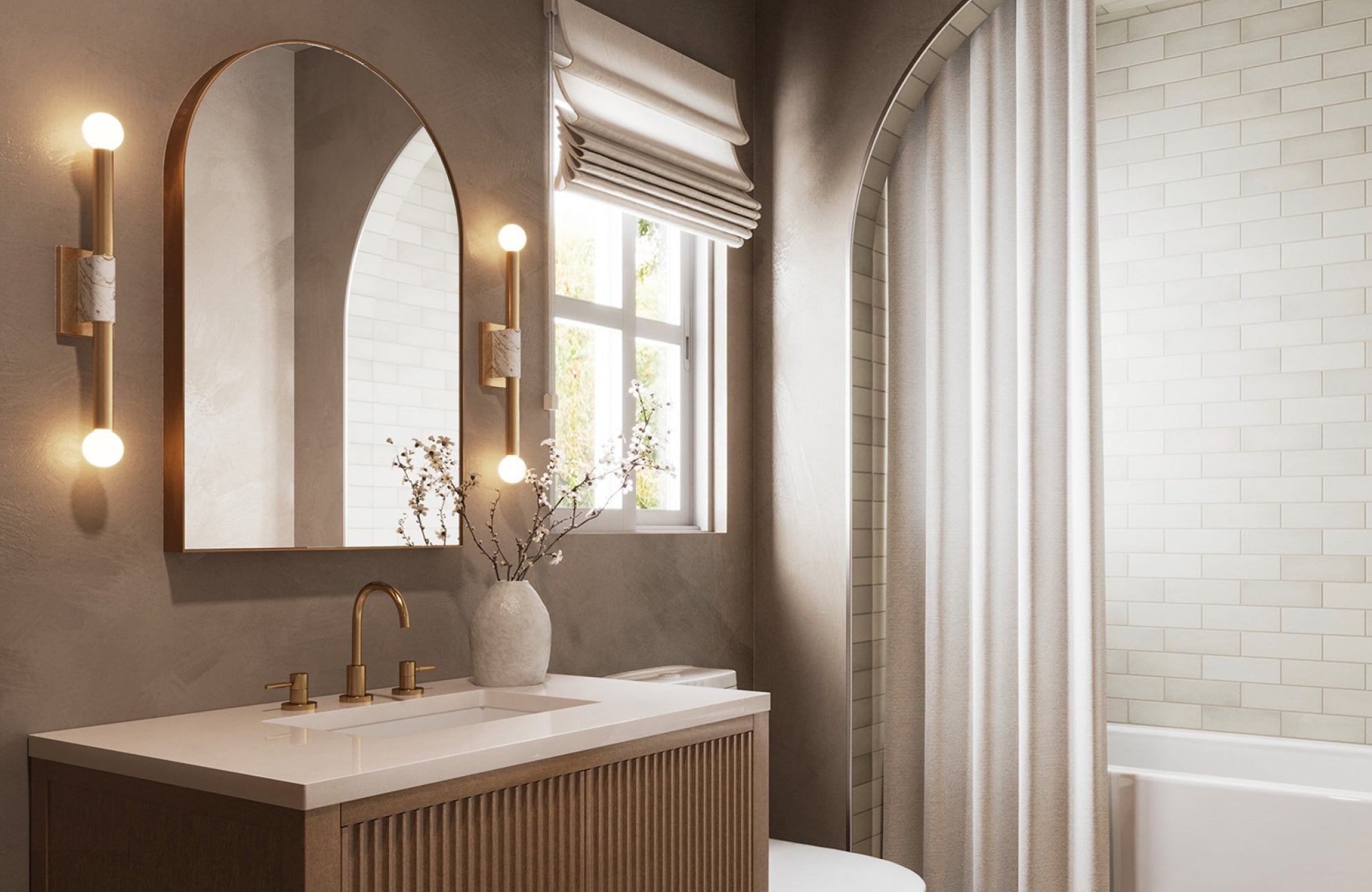
A great example of effective lighting placement is the use of Edward Martin’s Larson Wall Sconce in Aged Brass, as shown in the photo above. Positioned vertically on either side of the mirror, these sconces cast an even glow across the face, eliminating harsh shadows and creating a more flattering, practical setup. Their soft, warm light also complements the aged brass frame, tying the space together visually while improving daily usability. It’s a smart solution that proves even a slightly narrower mirror can still shine, literally and functionally, with the right lighting in place.
Cleaning and Maintenance
Larger mirrors may need a bit more upkeep, but with the right setup, maintenance stays simple. One thing worth considering is how the mirror handles splash zone coverage. When a mirror extends well beyond the sink, it’s more likely to collect water spots and fingerprints, particularly in family bathrooms where little hands tend to reach high. Choosing a mirror that aligns with or slightly exceeds the sink’s width also helps keep most splashes contained within the main viewing area. Aside from that, this makes it easier to clean consistently and reduces the chances of visible streaks collecting around the outer edges.
Architectural Constraints and Wall Space
Although design preferences matter, sometimes the room itself sets the boundaries. It’s also important to work with the existing architecture of your bathroom so that the mirror fits in naturally, rather than fighting the space around it.
Window and Fixture Placement
If there’s a window, light switch, or cabinet near the sink, your mirror width might be limited. You may need to opt for a narrower mirror to avoid overlapping these features. This doesn’t mean your design will feel off; it just needs to be balanced differently. For example, if the mirror ends before the edge of the sink, consider adding a vertical sconce or narrow shelf to fill the space and maintain visual flow.
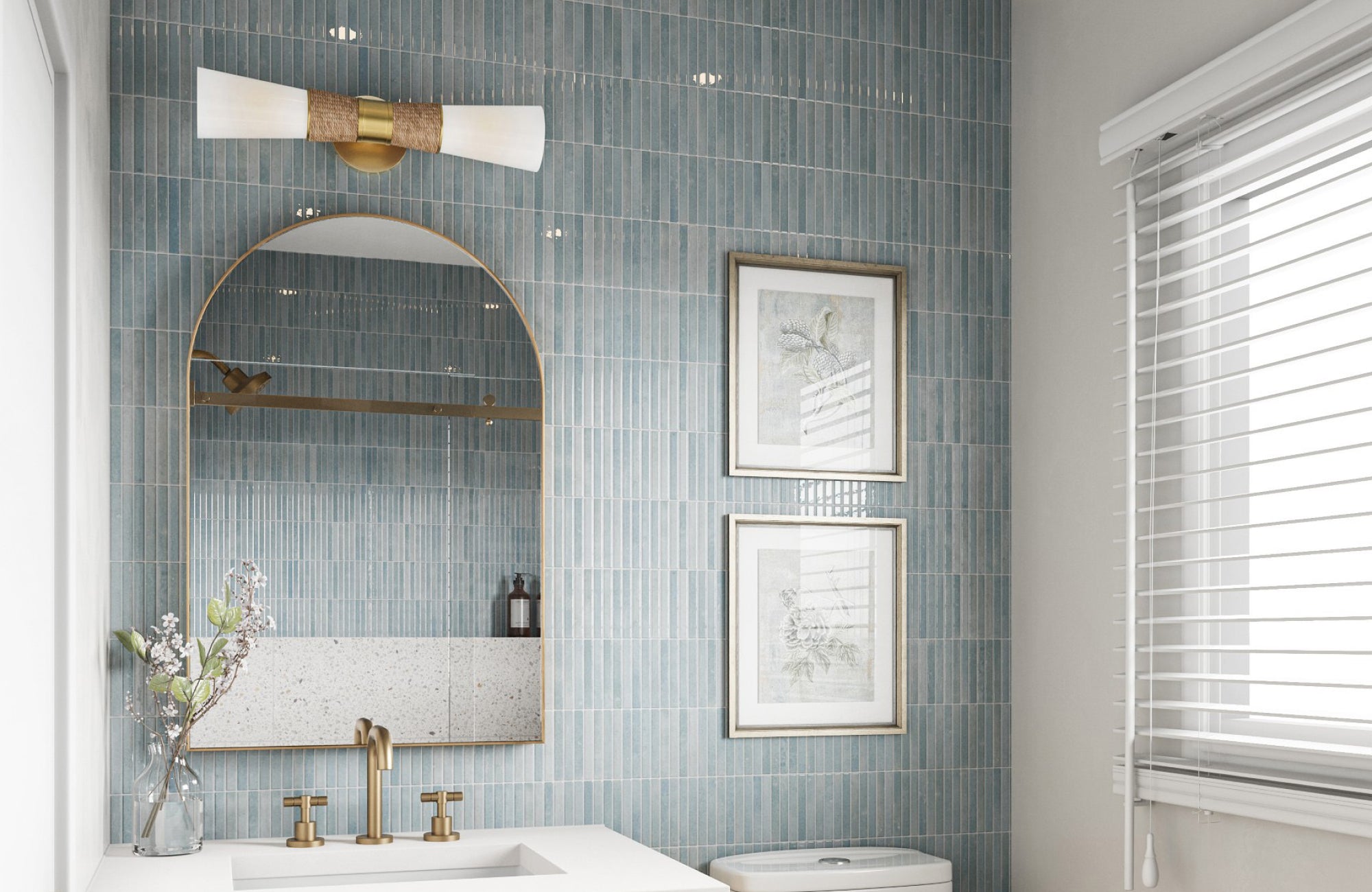
A great example of working within these limitations is the use of Edward Martin’s Esmeralda Small Mirror in Polished Brass, as featured in the photo above. It fits neatly between the vanity and the nearby window without crowding the layout. Its soft, arched shape and warm brass frame also lend elegance, while the compact size keeps the area feeling open. Paired with a horizontally mounted sconce, the mirror remains functional and stylish, proving that limited wall space doesn't have to compromise your design’s balance or charm.
Small Bathrooms or Tight Corners
In compact bathrooms, mirrors serve a dual purpose by enhancing both function and the perception of space. A mirror that extends just beyond the sink can make the room feel wider and more open, but it’s also important not to let it dominate the space. In powder rooms or guest baths, it’s often recommended to use edge-to-edge mirrors, as they reflect more light, visually expand the room, and maintain a clean, uncluttered look.
Tile Lines and Wall Finishes
Tile lines and wall finishes play an important role in guiding mirror placement. When your wall includes decorative tile, wainscoting, or a painted border, it’s best to align the mirror thoughtfully with those features to maintain a cohesive look. A mirror that stops neatly at the edge of a tile or trim line feels purposeful, while one that interrupts these features can look out of place. Matching the mirror to the closest finish boundary, even if it means going slightly wider or narrower than the sink, also helps create a design that feels cohesive and intentional throughout the space.
Trends and Personal Aesthetic Preferences
While guidelines can help shape your choices, personal style often plays the biggest role. More than ever, mirrors are being used as expressive design elements, bringing character and personality to the space beyond their practical use.
Following or Breaking Design Trends
Full-width mirrors that span the entire vanity wall have become a popular trend, offering a bold, upscale look that reflects light beautifully and creates a sense of luxury. At the same time, there’s growing interest in more curated designs featuring smaller, often arched or circular mirrors that appear to float above the sink. These choices can also bring a boutique, personalized feel, especially when paired with distinctive sconces or rich, textured finishes.
Blending Modern and Traditional Styles
When mixing modern and traditional design elements, the mirror becomes a great opportunity to introduce contrast thoughtfully. Placing a sleek, oversized mirror above a classic pedestal sink can create a bold, eye-catching focal point. Conversely, pairing a vintage-style framed mirror with a clean, modern floating vanity adds a layer of warmth and character. The key is to blend styles with intention, so the combination feels curated rather than conflicting.
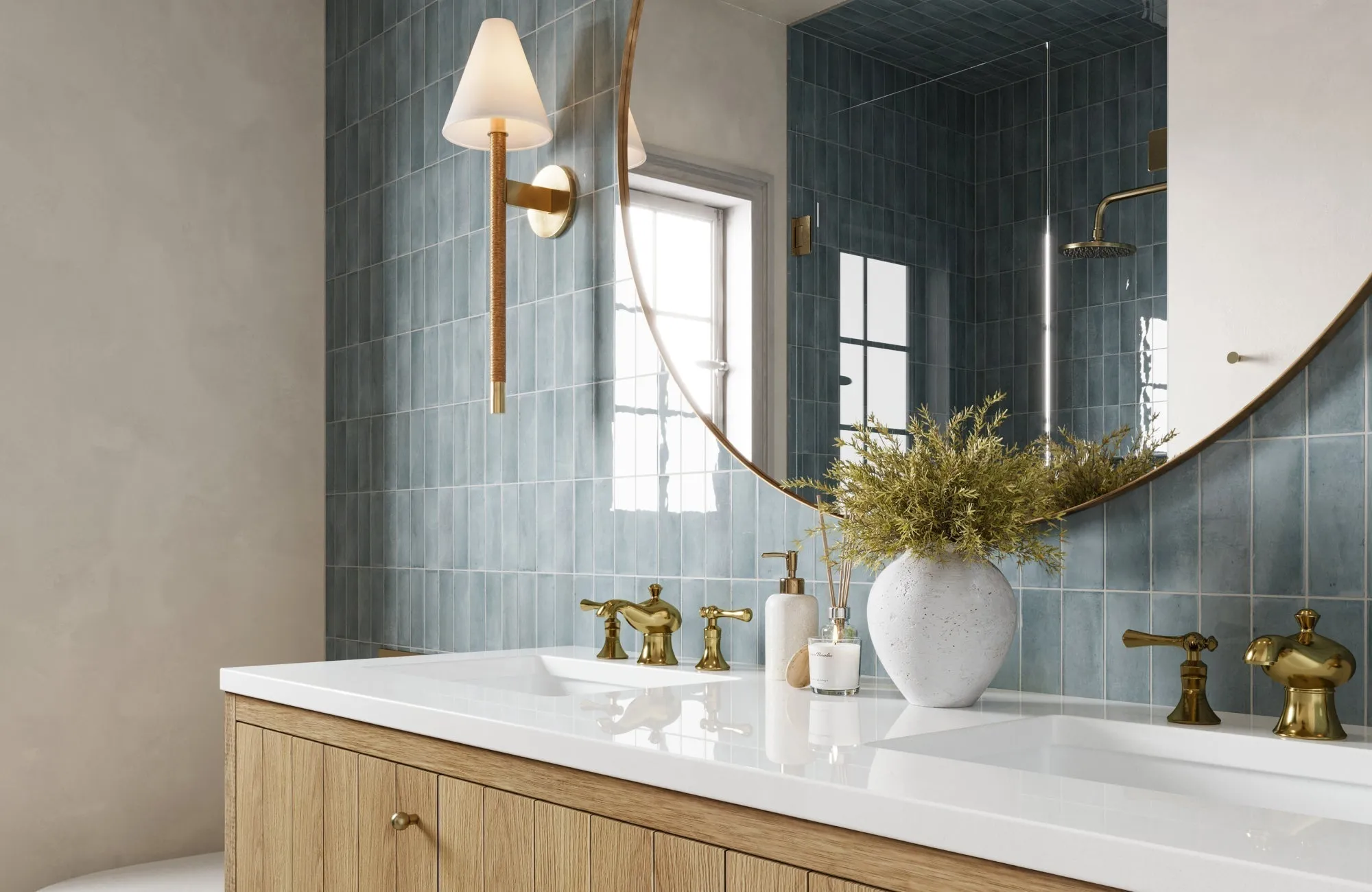
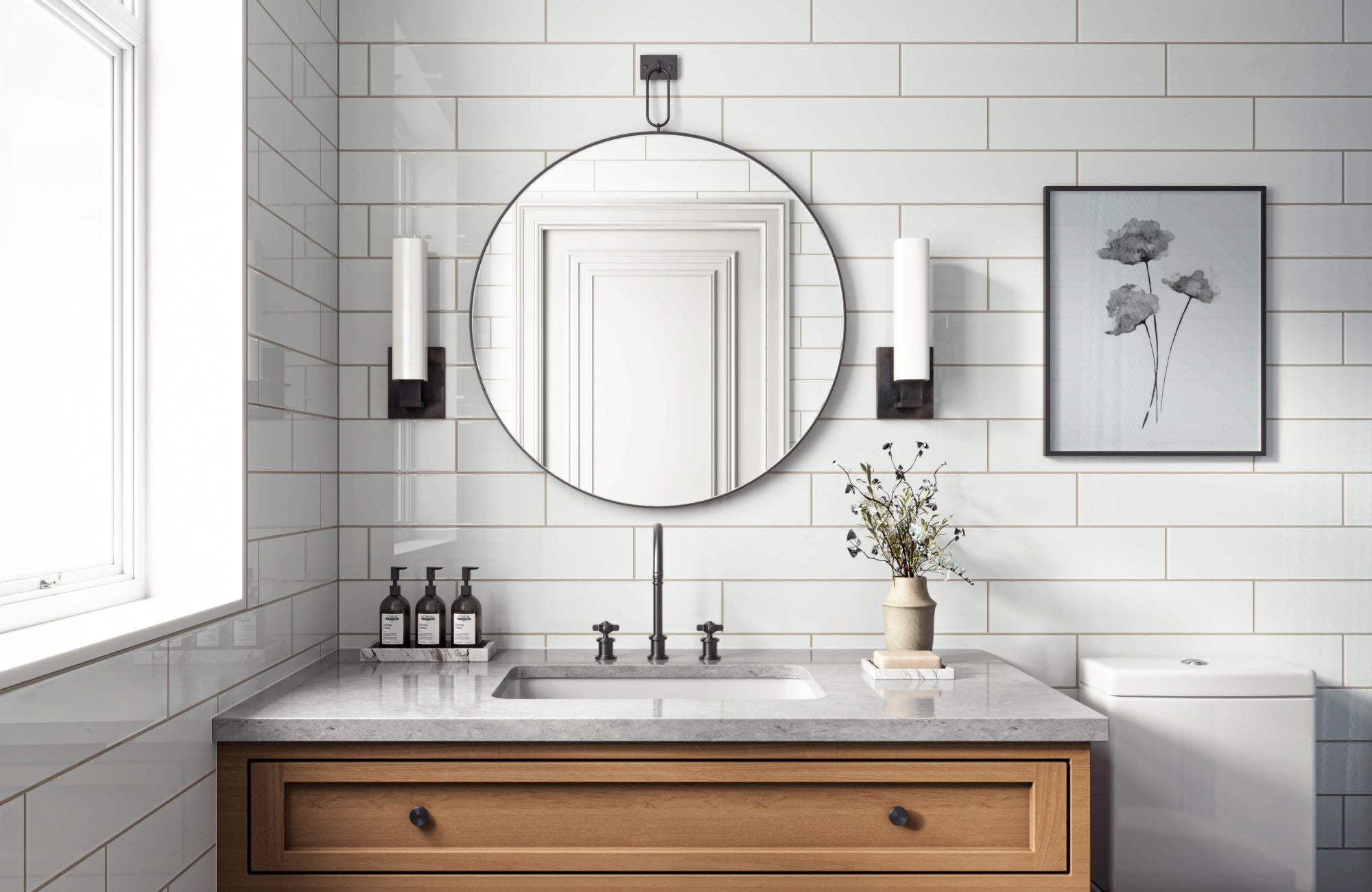
A perfect example of this balance is the use of Edward Martin’s Fitz Mirror in Antiqued Iron, as featured in the photo above. Its classic round silhouette and subtly aged finish add a touch of vintage charm, while the minimalist black sconces and linear tile pattern keep the overall look clean and modern. Set against a warm wood vanity with traditional paneling, the mirror also acts as a visual bridge between old and new. This thoughtful combination proves that blending styles doesn’t mean compromising; it means elevating each element to work beautifully together.
Personal Use and Lifestyle
Consider how you use your mirror daily. If the space is shared, a wider mirror can make everyday routines smoother and more comfortable for everyone. In a guest bathroom, where functionality is less of a priority, a smaller, more decorative mirror might be the better fit. Your lifestyle should shape your choice just as much as your design preferences. Ultimately, the best mirror is the one that not only looks right in the space but also supports the way you use it.
Finding the Right Mirror Width for Your Sink
Ultimately, deciding whether your bathroom mirror should match the width of your sink depends on how you want the space to work and feel. Although a perfectly aligned mirror often creates a clean, balanced look, modern design encourages a more tailored approach, one influenced by your style, lighting setup, and room layout. It's also important to think beyond just the measurements. Consider how the mirror complements your daily habits, enhances illumination, and fits seamlessly into the overall design. When each of these factors is thoughtfully considered, your mirror becomes more than a decorative element; it becomes a functional, integrated part of your bathroom experience.
If you’re unsure where to begin or want help refining your vision, our team is here to assist. Contact us for expert advice, or explore our complimentary design service to create a bathroom layout that looks beautiful and works perfectly for your lifestyle!
Follow us on Instagram
@EDWARD.MARTIN
)
)
)
)
)
)
)
)
)
)
)
)
)
)
)
)