A bathroom vanity is more than a storage unit; it also sets the tone for how the space looks and how comfortably it functions. For many, a second sink feels like an easy way to add convenience, especially on busy mornings when two people are getting ready at once. Still, what feels like a luxury in some homes may turn into an unnecessary expense or a space constraint in others. By weighing factors such as space, daily function, style, cost, installation, and household needs, you can decide if a double sink vanity is the right fit. In this article, we'll explore the pros and cons across each of these areas to help you make a clear and confident choice.

Space and Layout Requirements
A double vanity can reshape the footprint of a bathroom more than most other upgrades. To know if it will work in your space, it’s important to consider the overall dimensions, how doors open, and the natural flow from the entrance to the shower and toilet.
Pros of Space and Layout
If the bathroom has enough width, a longer cabinet can be a practical choice because it keeps most activity along one wall and leaves the center open for easy movement. The extended counter gives more space for essentials, and sinks set far enough apart allow both users to get ready without bumping elbows. Additionally, this setup simplifies mirror and lighting placement, allowing you to use either two separate mirrors or one large mirror for balanced illumination. With careful measuring, you can also maintain comfortable clearances, prevent drawers from hitting nearby fixtures, and keep the overall flow of the room smooth and functional.
In the photo shown above, Edward Martin’s Bridgette 60" Double Vanity in Light Natural Oak with a 3 cm White Zeus Quartz Top illustrates how a wider cabinet can maximize one wall, provide generous counter space, and maintain comfortable clearances, all while keeping the layout open and easy to navigate.
Cons of Space and Layout
A second basin makes the vanity wider, which can block a door or leave less room around the toilet. In a narrow bathroom, drawers and cabinet doors may also clash with a shower enclosure, while a deeper countertop can make tight passages feel cramped. Once a wide unit is installed, the layout becomes fixed, leaving little flexibility for future changes or the addition of storage features such as a tall linen cabinet. For compact bathrooms, it may be more practical to choose a shallower cabinet, a floating vanity, or even a single offset sink to maintain comfortable movement and flow.

Everyday Use and Convenience
Once you know a double vanity will fit the space, the next step is thinking about how it works in day-to-day life. From sharing the sink during busy mornings to keeping personal items organized and staying on top of the extra cleaning, everyday routines often show whether a double vanity feels like a smart upgrade or more of a hassle.
Pros of Everyday Use
With two basins, you and another person can get ready together, making busy mornings quicker and less stressful. Each side can be dedicated to a different user, with separate drawers and organizers that keep toiletries from mixing and the countertop neat. Aside from the basics, small upgrades such as divided drawers for hair tools, outlet strips tucked inside the cabinet, or tilt-out trays for everyday items can also make the setup even more practical. As a result, your essentials stay within easy reach, and you spend less time moving things around and more time moving smoothly through your routine.
Cons of Everyday Use
However, the added convenience also brings added responsibility. Two sinks mean more faucet aerators to clean, more drains to maintain, and a larger counter that requires regular wiping. Differences in habits can become more noticeable, with one side staying neat while the other collects clutter that spreads across the counter. Additionally, plumbing can add to the challenge because two traps and longer runs may slow drainage if not vented correctly, and standing water often leaves mineral spots that require extra cleaning.
And if your schedules rarely overlap, the second basin may sit unused, leaving you with twice the upkeep for little return. In situations like these, a single larger sink with generous counter space, like Edward Martin’s Gemma 55" Single Vanity in Satin Black Veneer with a Carrara Marble Top, as displayed in the photo above, can also offer a simpler yet equally functional alternative.

Style and Design Impact
Because the vanity often serves as the centerpiece of a bathroom, its design plays a major role in shaping the space. Choosing a double configuration can elevate the room with symmetry and balance, but it can also present challenges in scale, proportion, and lighting. Understanding both sides helps ensure the vanity enhances the style of the room rather than overwhelming it.
Pros of Style and Design
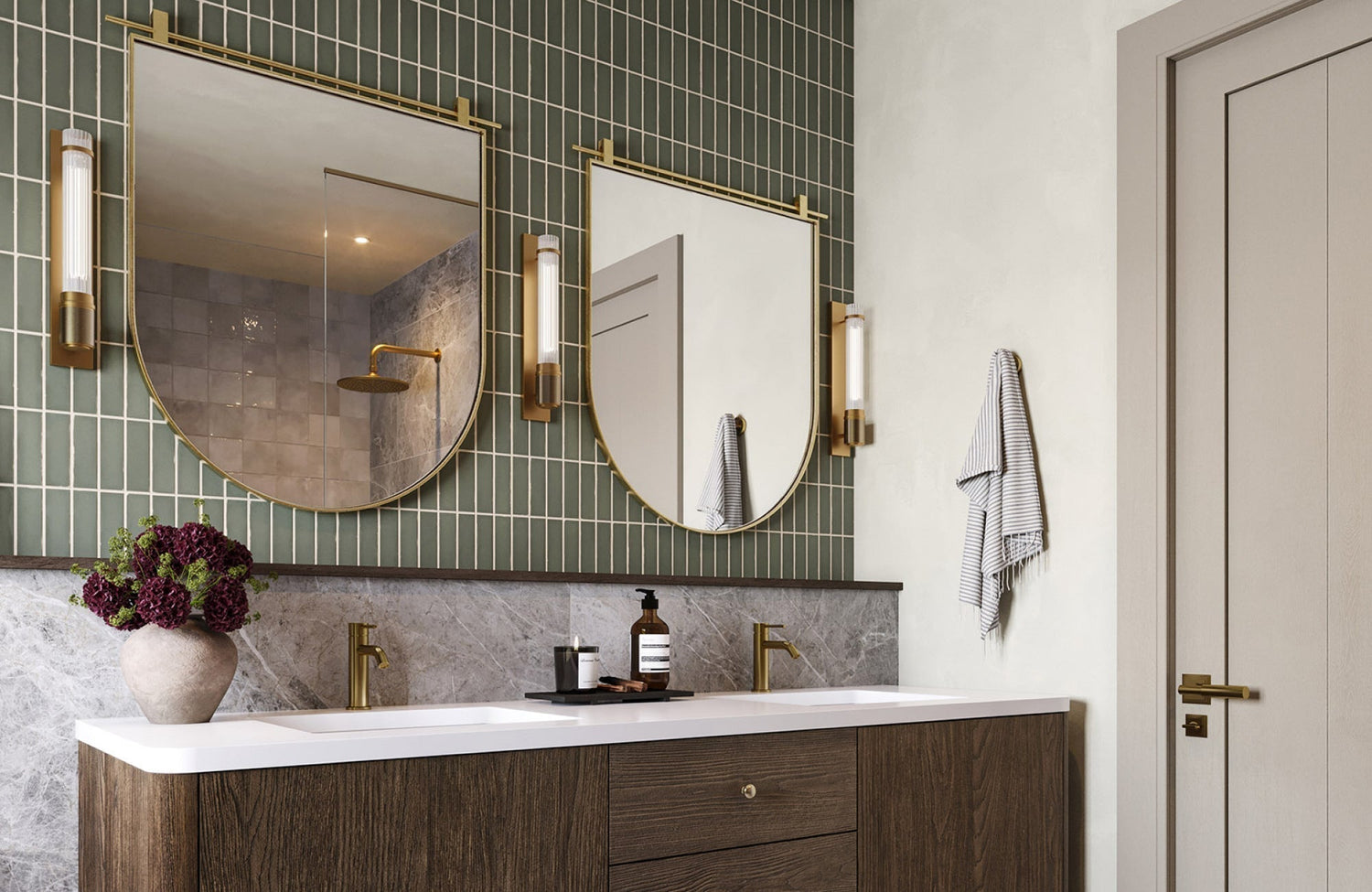
A wider cabinet naturally draws the eye and can become a strong focal point that unifies mirrors, sconces, and hardware into a cohesive line. The added surface area gives you the freedom to experiment with finishes, for example, pairing a stone top with simple cabinetry and textured hardware without creating visual clutter. Since the countertop extends across a wider width, you can choose between two separate mirrors or a single expansive mirror, both of which provide even lighting.
With thoughtful material and color selections, a double vanity can also set a consistent design theme that complements surrounding tile, fixtures, and glass. This effect is well demonstrated by Edward Martin’s Maxine 72" Double Vanity in Black Wash Oak Veneer with a Carrara Marble Top, as shown in the photo above, where the design ties together mirrors, sconces, and finishes into a polished, cohesive look.
Cons of Style and Design
Although a double vanity can enhance both function and style, it may present a few design challenges. In smaller bathrooms, a wide cabinet or darker finishes can make the space feel heavier than intended. Narrow layouts may also make it harder to place sconces evenly or fit two mirrors without the proportions feeling tight. Additionally, if the walls or floors are slightly uneven, a longer countertop can highlight those imperfections and sometimes require custom adjustments. These factors don’t outweigh the benefits but are worth keeping in mind to ensure the vanity complements the space rather than overwhelms it.

Financial Investment and Value
Budget plays a major role in deciding whether a double vanity is the right choice. Adding a second basin affects not only the upfront costs of cabinetry, countertops, plumbing, and installation but also the long-term expenses of care and maintenance. Looking at both sides further helps you understand where the money goes and what kind of value you can expect in return.
Pros of Costs and Value
A well-planned double vanity can make a primary suite more appealing to buyers because it reflects how many households actually use the space. At the same time, you don’t need to overspend to see that benefit. By combining a standard-size cabinet with a durable mid-range countertop and dependable faucets, you can keep costs reasonable while still adding value. Over the years, the convenience of two sinks often offsets the initial expense by saving time and keeping the storage more organized.
And if you decide to update the bathroom later, choosing a classic cabinet style and a neutral top further helps preserve resale value by appealing to a wider range of tastes. This balance between practicality and timeless design is reflected in our Sasha 72" Double Vanity in Mid Century Walnut with a 3 cm White Zeus Quartz Top, as shown in the photo above, which demonstrates how a double vanity can be both functional and value-conscious.
Cons of Costs and Value
While a double vanity can add convenience and appeal, it does come with higher upfront costs than a single basin. Additional materials, fixtures, and labor, such as extra supply lines, a second drain, and countertop fabrication, can increase the overall price. Over time, there may also be modest maintenance expenses, since two faucets and drains mean more parts that eventually need attention. In spaces that aren’t used every day, such as guest baths, the return on investment may be less noticeable, making a single, well-designed vanity a more practical choice in those cases.

Installation and Technical Factors
The benefits of a double vanity go beyond design; it also comes down to how well it’s installed. Because two sinks require more plumbing and a longer countertop, careful planning during installation is equally important to ensure everything fits seamlessly, functions properly, and withstands daily use.
Pros of Installation
With proper planning, installing a double vanity can be a straightforward process. During new builds or full remodels, there’s an opportunity to position each sink on a stud bay, run supply and drain lines cleanly, and align lighting with mirrors for even illumination. A well-planned setup further includes details such as accessible shutoff valves, a level base for accurate seams, and secure backing to support heavier countertops and mirrors. These steps can also make the vanity easier to maintain, ensure drawers and doors open smoothly, and create a polished, reliable finish.
Cons of Installation
In existing bathrooms, installing a double vanity often requires more planning than a single unit. Retrofitting may require adjusting plumbing for two sinks, along with some extra framing or finishing work. Similarly, in older homes, venting systems might require minor updates to support two traps. Longer countertops require precise templating, and if the walls or floors aren’t perfectly even, custom adjustments may be essential to achieve a proper fit. In some cases, adding support for heavier stone tops or large mirrors can also be worthwhile, to keep the installation stable and long-lasting.

Matching the Vanity to Household Needs
Beyond size and budget, the right vanity choice often comes down to lifestyle. It’s equally important to consider your daily routines, the number of people who will be using the space, and how frequently the bathroom is in use during busy times of the day.
Pros of Household Fit
Couples who get ready at the same time can benefit from having separate basins, drawers, and counter zones, which helps reduce friction and keeps both on schedule. For families, assigning a side to older kids or teens can encourage better organization and prevent products from spreading across the entire vanity. In a primary suite, two sinks also match the way the space is used every day and often pair nicely with features like a dedicated makeup area or a tall linen tower for added storage. This balance of practicality and style is illustrated by Edward Martin’s Holly 72" Double Vanity in Sunwashed Oak with a 3 cm White Zeus Quartz Top, as shown in the photo above, which offers ample space for multiple users while maintaining a cohesive look.
Cons of Household Fit
In many guest bathrooms, two basins are rarely necessary because visitors use the space only occasionally; a single larger sink with generous counter space can feel more open and easier to maintain. For someone living alone, an additional basin may only mean more upkeep without offering much added benefit. In compact condos or narrow townhome bathrooms, the space needed for two sinks can also limit room for other useful features, such as a larger shower, a towel warmer, or a hamper; elements that may enhance comfort and practicality more than a second faucet.
Making the Choice That Fits Your Home
A double sink vanity has both pros and cons, and the right choice depends on your needs. On the positive side, it offers more convenience, personal space, and design impact, making it especially useful in larger bathrooms or shared spaces. At the same time, it can require more room, add to installation and maintenance costs, and may be unnecessary in smaller or less frequently used bathrooms. By weighing these advantages and drawbacks against your space, routines, and budget, you can decide whether a double vanity will truly enhance your home or if a single sink with smart storage is the better fit.
If you’re still unsure which option is right for you, contact us to explore our design services. We’ll help you create a bathroom that feels functional, balanced, and tailored to your lifestyle.