Designing an outdoor space takes intention and strategy if you want it to feel both inviting and functional. Whether you are working with a compact patio, an expansive backyard, or a modern rooftop terrace, every layout presents unique opportunities and challenges. By approaching the process with clarity and purpose, you can transform any exterior area into a well-balanced extension of your space.
In this article, we will break down the core principles of outdoor space design and guide you through actionable steps to elevate your setup. From layout planning to furniture selection and material choices, we will explore practical insights that help you create an outdoor environment that is not only visually impressive but also built for everyday enjoyment.

1. Clarify Your Outdoor Living Goals
Before you jump into layouts, materials, and décor, you need to get clear on why you’re designing the outdoor space in the first place. Are you creating a peaceful retreat to unwind after long days? A lively entertainment zone for hosting friends and family? A functional outdoor dining area? A garden escape or a seamless blend of all these elements?
When you clearly define how you plan to use the space, you set the foundation for every design decision that follows. From furniture selection and lighting placement to landscaping and usage flow, your purpose shapes it all. By identifying your priorities early, you ensure the final result is not only visually appealing but also highly functional and tailored to your lifestyle.

2. Plan a Functional and Flowing Layout
Once you’ve defined your goals, it’s time to evaluate the available space and map out a layout that truly supports your needs. You need to pay close attention to the orientation of the garden and track how sunlight moves throughout the day. Do you want a bright corner for morning coffee? Or a shaded terrace where you can unwind in the evening? Understanding sun patterns also helps you position each feature with intention.
Next, you should organize the space into clearly defined zones based on function. You can create dedicated seating areas for conversation, dining spaces for gatherings, and planting areas that bring life and texture to the design. As you divide the space, it’s also essential to maintain a natural, logical flow between each zone, such as consistent tile layouts. To make confident surface selections, you can use our augmented reality (AR) tool to preview different tile styles, patterns, and finishes directly within your outdoor space before making a final decision. When movement feels seamless and purposeful, the entire outdoor area becomes more cohesive, comfortable, and enjoyable to use.
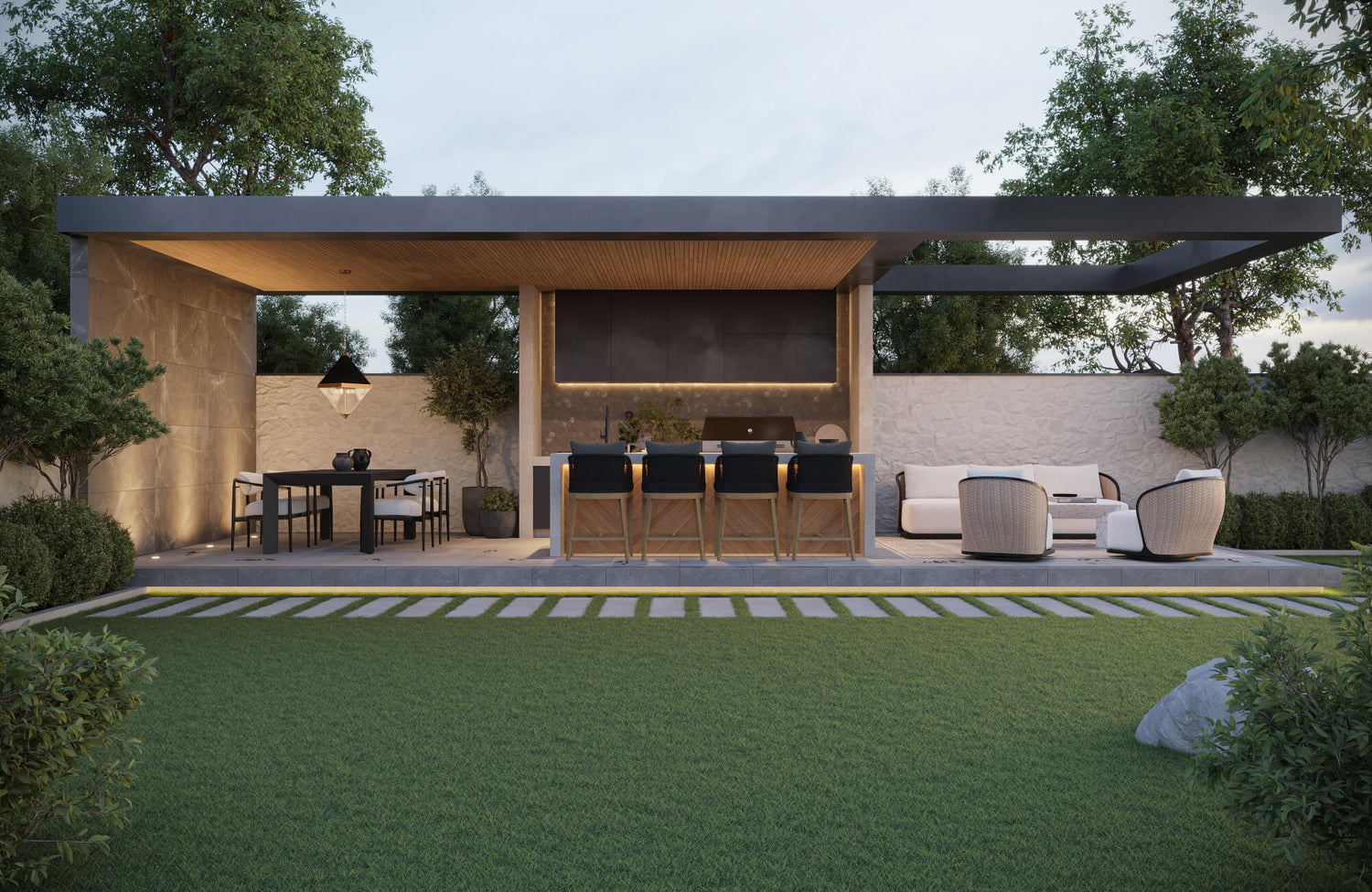
In the featured outdoor setting above, the flowing layout is elevated through carefully selected surfaces and lighting. Our Ramsey 12x48 Grip Porcelain 2cm Paver Tile in Chalk creates a clean, linear pathway effect with its gray shade and beige undertones that visually guide movement from the lawn to the seating area, reinforcing a sense of direction and structure. For the main patio, options like our Sloane 24x24 Matte Porcelain Tile in Pebble and Ramsey 24x24 Matte Porcelain Tile in Chalk offer a soft, contemporary foundation that complements the neutral seating and architectural lines. On vertical surfaces or feature walls, our Leona 24x48 Polished Porcelain Tile in Amani Bronze, with its brown base, introduces warmth and subtle earthy white veining, adding depth and a refined contrast to the minimalist design. Completing the look, our Bernard 15” Lantern in Aged Brass enhances the ambiance with a warm, sculptural glow, making the entire outdoor kitchen and lounge area feel more inviting and beautifully illuminated after sunset.

3. Incorporate and Highlight Natural Elements
To create an outdoor space that feels balanced and inviting, you should work with the natural features already present rather than against them. By embracing existing greenery, mature trees, and the natural contours of the land, you can design a setting that feels authentic and seamlessly connected to its surroundings.
You can enhance this harmony by layering in plants, shrubs, and flowers that add texture, color, and seasonal interest. Thoughtful landscaping not only elevates visual appeal but also creates a calming, restorative atmosphere. At the same time, you should evaluate key views and sightlines from multiple angles, whether from inside the space or different areas of the yard. By maximizing these perspectives, you ensure your outdoor design fully celebrates and showcases the beauty of the surrounding landscape.

4. Choose Durable and Stylish Outdoor Furniture
To create an outdoor space that is both functional and inviting, you must carefully select furniture that balances durability with design appeal. Since these pieces will face sun, rain, and changing temperatures, you should prioritize weather-resistant materials that maintain their strength and appearance over time, just like our Kendra Outdoor Dining Chairs in Natural, Set of 2. Comfort should also remain at the forefront of your decisions. By incorporating lounge chairs, outdoor sofas, and well-sized dining sets, you encourage relaxation and effortless social gatherings. The right seating transforms a patio or garden into a true extension of your space.
Additionally, you should be strategic about materials. Options like teak, powder-coated aluminum, and weatherproof wicker offer long-lasting performance while complementing a range of design styles. When you combine resilience with comfort and cohesive aesthetics, you create an outdoor environment that’s built to entertain, unwind, and thrive season after season.

5. Design for Shade and Privacy
To make your outdoor space comfortable throughout the day, you need to intentionally incorporate shade solutions that protect you from direct sunlight. Features like pergolas, cantilever umbrellas, and retractable awnings not only provide practical sun coverage but also add architectural interest to the overall design. By positioning them strategically, you can create cooler, more usable areas even during peak afternoon heat.
Privacy is equally important in crafting a relaxing outdoor retreat. You can use trellises, layered hedges, privacy screens, or tall plantings to define boundaries and block unwanted views. These elements allow you to create secluded zones without making the space feel closed off. When you thoughtfully combine shade and privacy, you transform your outdoor area into a comfortable, intimate setting that feels both protected and open.

6. Elevate the Space with Strategic Outdoor Lighting
To fully maximize your outdoor space, you must treat lighting as both a functional necessity and a powerful design feature. The right lighting plan allows you to extend the usability of your space well into the evening while creating a warm, inviting atmosphere. By layering multiple types of lighting, you achieve the perfect balance between practicality and visual impact. You should integrate task lighting such as wall sconces, overhead fixtures, or mounted lights to properly illuminate dining and seating areas, while accent lighting like string lights, lanterns, or subtle uplighting adds depth, softness, and character.
At the same time, prioritizing safety is essential, so you need to ensure that walkways, steps, and transitions between zones are clearly lit for secure movement after dark. Highlighting focal points such as sculptures, water features, or statement plantings can further enhance dimension and drama throughout the landscape.
In the elegant covered patio setting above, layered lighting plays a defining role in enhancing both structure and ambiance. Our Wilder Exterior Wall Sconce in Textured Black provides crisp, architectural framing along the stucco walls, complementing the dark window shutters while delivering focused illumination for entry points and seating areas. Suspended overhead, our Ameena Lantern in Textured Black introduces a sculptural focal point beneath the arched ceiling, casting a warm, inviting glow that softens the space and highlights the surrounding greenery. Together, these fixtures create depth and contrast against the neutral palette, elevating the patio from a simple outdoor nook into a refined, beautifully illuminated retreat that feels intimate and welcoming after sunset.

7. Enhance the Atmosphere with Water Features
To bring movement, sound, and serenity into your outdoor space, you should consider integrating a water feature. Elements like fountains, ponds, or even a compact waterfall can instantly elevate the ambiance while adding a refined visual focal point. The gentle sound of flowing water helps you create a calming environment, making the space feel more private and restorative. It can also effectively soften or mask background noise from nearby streets or neighbors, enhancing your overall outdoor experience.
When selecting a water feature, you need to ensure it aligns with the scale of your space and complements the overall design aesthetic. A well-proportioned feature blends seamlessly into the landscape rather than overpowering it. By choosing thoughtfully, you add both tranquility and sophistication to your outdoor living area.

8. Build a Functional Outdoor Cooking and Dining Area
If you love cooking and entertaining outdoors, it’s essential to design a dedicated space that makes the experience seamless and enjoyable. By incorporating an outdoor kitchen or grill station into your layout, you transform your backyard into a true extension of your indoor living space. You can also elevate functionality by installing a built-in grill, durable countertops, and practical storage cabinets. These elements allow you to prep, cook, and serve efficiently without constantly moving back and forth inside. Thoughtful planning ensures everything you need is within reach.
To complete the setup, you should position a dining area nearby with a well-sized table and comfortable seating. Keeping cooking and dining zones connected improves flow and convenience while encouraging conversation and connection. When you design with both function and comfort in mind, you create an outdoor environment that’s perfect for gatherings, family meals, and memorable entertaining experiences.

9. Infuse the Space with Personal Style
To truly make your outdoor space feel like home, you need to layer in details that reflect your personality and design preferences. Personal touches are what transform a well-planned layout into a space that feels warm, inviting, and uniquely yours. You can also introduce decorative elements such as outdoor cushions, throw pillows, weather-resistant rugs, and statement artwork to add color, pattern, and texture. These accents soften the space and create a cohesive, styled look that ties everything together.
Incorporating your favorite plants, flowers, or even a small herb garden adds another meaningful layer. Not only do these choices enhance visual appeal, but they also connect the design to what you genuinely enjoy. When you thoughtfully integrate personal elements, you create an outdoor environment that feels curated, comfortable, and authentically reflective of your lifestyle.

10. Maintain and Update Regularly
Lastly, maintain your outdoor space regularly to ensure it remains in good condition. Trim plants, clean furniture, and address any repairs or weather damage promptly. Additionally, update your outdoor space periodically by refreshing the décor, adding new plants, or incorporating trending design elements to keep it visually appealing.
Remember, exceptional outdoor design balances aesthetics with functionality. By carefully considering your needs, incorporating natural elements, and paying attention to detail, you can create an outdoor space that becomes a true extension of your area and a place where you can relax, entertain, and enjoy nature.
Bringing Your Outdoor Vision to Life
Creating an exceptional outdoor space is not about following trends. It’s about making intentional decisions that align with your lifestyle, environment, and long-term goals. When you take the time to plan strategically, balance beauty with function, and invest in quality materials, your outdoor area becomes more than just an exterior space. It becomes a seamless extension of your living environment, one that supports relaxation, connection, entertainment, and everyday enjoyment. With thoughtful design, consistent maintenance, and a clear vision, you can transform any outdoor setting into a refined, purposeful retreat that adds lasting value and comfort.
If you’re ready to take the next step, professional guidance can make all the difference. Our design experts can help you refine your layout, select the right materials, and bring clarity to every detail of your project. Through our comprehensive design services, you gain personalized support tailored to your space, style, and goals, ensuring your outdoor renovation is cohesive, functional, and beautifully executed from concept to completion.

Frequently Asked Questions
Before starting your outdoor renovation, it’s natural to have questions about budgeting, timelines, materials, and logistics. Below, we’ve answered some of the most common questions to help you plan with confidence and clarity.
1. What is the average budget range for an outdoor renovation?
Outdoor renovation costs vary widely depending on size, materials, and features. A simple patio refresh may cost a few thousand dollars, while a full outdoor kitchen, lighting system, landscaping, and structural additions can range from $15,000 to $50,000 or more. Establishing a clear budget early allows you to prioritize essential upgrades and avoid unexpected expenses.
2. How long does a typical outdoor renovation project take?
Project timelines depend on the scope of work and weather conditions. Smaller upgrades can take a few days to a couple of weeks, while larger renovations involving construction, plumbing, or electrical installations may require several weeks to a few months for completion.
3. Do I need permits for outdoor renovations?
In many cases, permits are required—especially for structural additions, deck builds, pergolas, outdoor kitchens with gas lines, or electrical installations. Always consult your local building authority to ensure compliance with regulations before starting your project.
4. What are the best low-maintenance materials for outdoor spaces?
Low-maintenance options include composite decking, porcelain pavers, powder-coated aluminum furniture, and synthetic turf. These materials are designed to resist moisture, fading, and wear, reducing long-term upkeep while maintaining their appearance.
5. How can I make a small outdoor space feel larger?
To visually expand a compact outdoor area, incorporate multi-functional furniture, vertical landscaping, mirrors, and layered lighting. Maintaining a cohesive color palette and minimizing clutter also helps create a more open and spacious feel.