
)
)
)
)
)
)
)
)
Most Popular Kitchen Design Styles: Your Guide To The Top 3
The most popular kitchen design styles—traditional, contemporary, and transitional—continue to lead today’s kitchen design landscape. These three styles consistently top preferences, and resources for designing each one remain in high demand. To help you move from inspiration to renovation, we’re sharing everything you need to know about the top three kitchen design styles and how to bring them to life in your own home.
Finding Your Kitchen Design Style
As you begin planning a kitchen remodel, a general sense of what you want often starts to form early on. Before diving into layouts, materials, or timelines, take the time to define your preferred design style, as this provides clarity and direction—whether you’re managing the project yourself or collaborating with a professional.
By understanding which style aligns best with your preferences, you can make more focused decisions around cabinetry, finishes, lighting, and overall flow. The sections that follow break down today’s most popular kitchen design styles, offering practical guidance and inspiration to help you create a kitchen that feels cohesive, functional, and distinctly your own.
What Are the Most Popular Kitchen Design Styles?
Traditional kitchens remain the most popular choice among homeowners. According to a Home Stratosphere survey of more than one million households, 32% feature traditional kitchen design. Contemporary kitchens follow closely at over 25%, while transitional kitchens rank third, representing just over 15% of the kitchens surveyed.
What’s Involved in Creating Each Kitchen Design Style?
While transitional kitchens, which blend classic and modern elements, continue to gain popularity, traditional and contemporary styles remain the frontrunners. No matter which direction you choose, creating a successful kitchen design starts with understanding a few essential components that bring the space together.
To simplify the process, we break each kitchen design style into four key design elements:
Cabinets & Hardware
Countertop Material
Light Fixtures
Color Palette
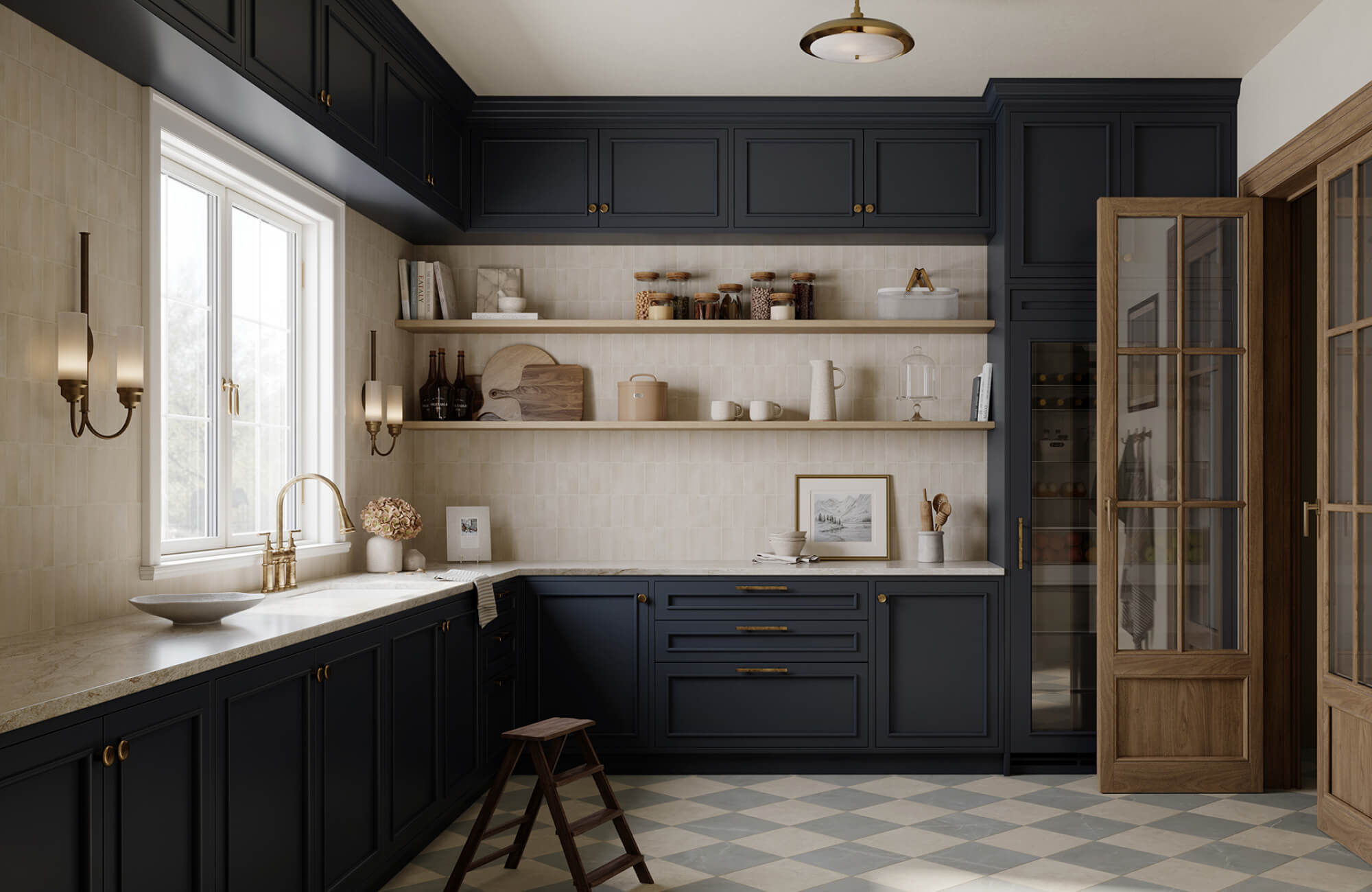
Traditional Kitchen Design
Traditional kitchen designs emphasize warmth, timeless appeal, and classic craftsmanship. Wood elements, detailed cabinetry, and richer color palettes define this style, creating a welcoming and comfortable atmosphere. While rooted in tradition, these kitchens can still incorporate subtle updates for a refreshed, modern feel. Whether you lean fully classic or blend in contemporary touches, traditional kitchens offer versatility and enduring charm.
Traditional Style Cabinets & Hardware
Traditional kitchens can range from ornate and elegant to simple and refined, offering flexibility while maintaining a classic foundation.
Cabinets:
Wood or wood veneer materials
Raised-panel cabinet doors
Embellished detailing and crown molding
Traditional finishes or antique glazes
Natural wood, cream, or white tones
Optional glass-panel doors for added elegance
Hardware:
Decorative, statement-driven designs
Finishes such as gold, bronze, oil-rubbed bronze, or brushed nickel
Knobs, cup pulls, ring pulls, and vertical bar pulls
Traditional Style Countertops
Traditional kitchens typically feature neutral, timeless countertop materials:
Granite with unique natural patterning
Laminate or solid surface alternatives for budget-friendly options
When selecting countertops, the goal is a timeless appeal. Neutral patterns with depth and warmth complement traditional cabinetry and finishes beautifully.
Traditional Style Light Fixtures
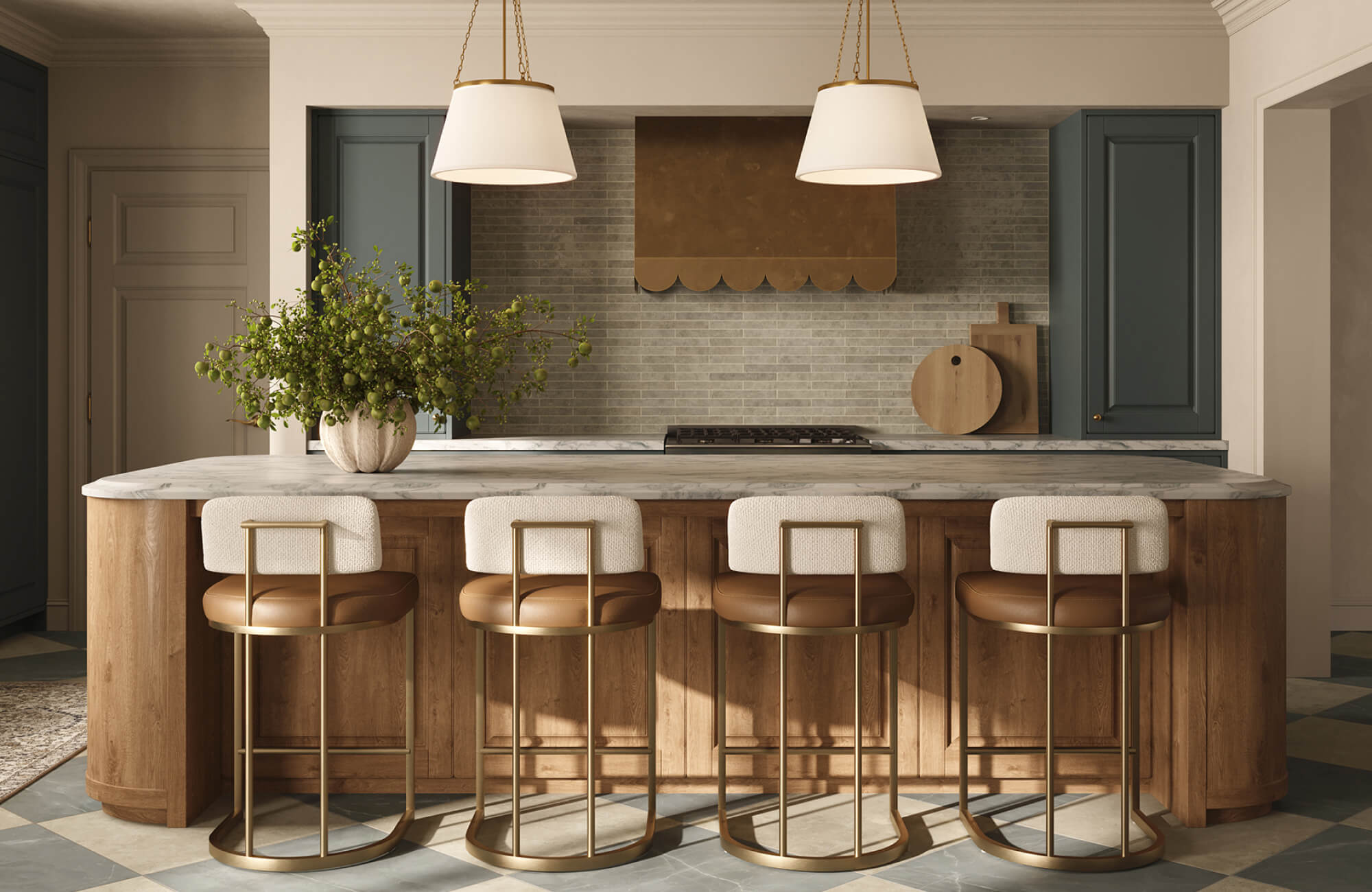
Lighting choices in traditional kitchens often lean toward classic silhouettes and warm metallic finishes that enhance the space’s timeless character. Common options include antique-style fixtures, chandeliers, linear pendants, and designs finished in bronze or gold tones.
To illustrate how these elements come together, the photo featured above highlights Edward Martin’s Jodie Wall Sconce in Antique Brass Iron paired with the Sebastian Pendant in Aged Brass Iron. Together, these fixtures reinforce the traditional aesthetic through their refined detailing and warm finishes, while providing layered lighting that feels both elegant and functional within a classic kitchen setting.
Traditional Style Color Palette
Traditional color palettes lean warm and neutral, featuring soft creams and tans, rich browns and blacks, and earthy tones accented by the occasional deep green. These hues work together to create a kitchen that feels cozy, inviting, and timeless.
As seen in the photo featured above, Edward Martin’s Natasha 2x6 Matte Porcelain Tile in Canvas complements this classic palette beautifully. Its soft, neutral tone adds subtle texture and warmth, reinforcing the refined, understated elegance that defines traditional kitchen design while allowing surrounding finishes to stand out naturally.
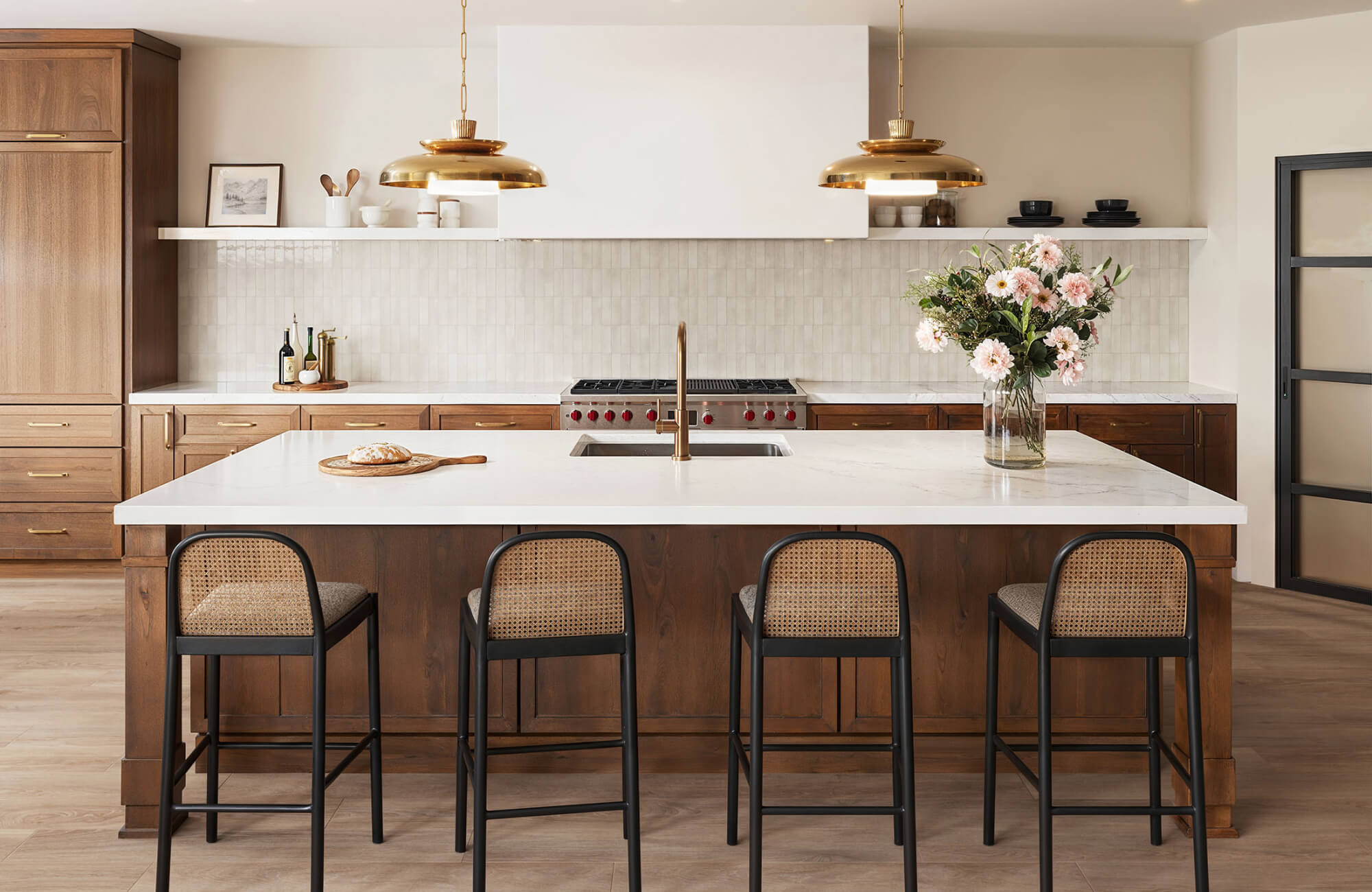
Contemporary Kitchen Design
Contemporary kitchens are sleek, stylish, and rooted in modern design trends. Cool color palettes, clean lines, and minimal detailing define this look. Often described as chic and elegant, contemporary kitchens balance everyday functionality with a clean, streamlined look, showcasing materials such as quartz countertops and stainless steel appliances.
Contemporary Style Cabinets & Hardware
Cabinetry and hardware play a major role in defining a contemporary kitchen’s clean, streamlined aesthetic. These elements focus on simplicity, subtle detailing, and finishes that enhance the kitchen’s modern, polished look without overwhelming the space.
Cabinets:
Flat-panel or slab doors
Materials such as metal, glass, laminate, or wood veneer
Smooth surfaces with minimal ornamentation
White, gray, or bold modern hues
Hardware:
Simple, sleek designs
Matte black, brushed nickel, gold, or silver finishes
Hardware coordinated with faucets and fixtures
Horizontal or vertical pulls, or discreet knobs
Contemporary Style Countertops
Popular choices include:
Quartz and marble
Materials that mimic marble or quartz patterns
Subtle veining in white, gray, silver, or gold tones
Laminate and solid surface countertops also provide contemporary-friendly options, offering clean aesthetics that complement modern kitchen designs.
Contemporary Style Light Fixtures
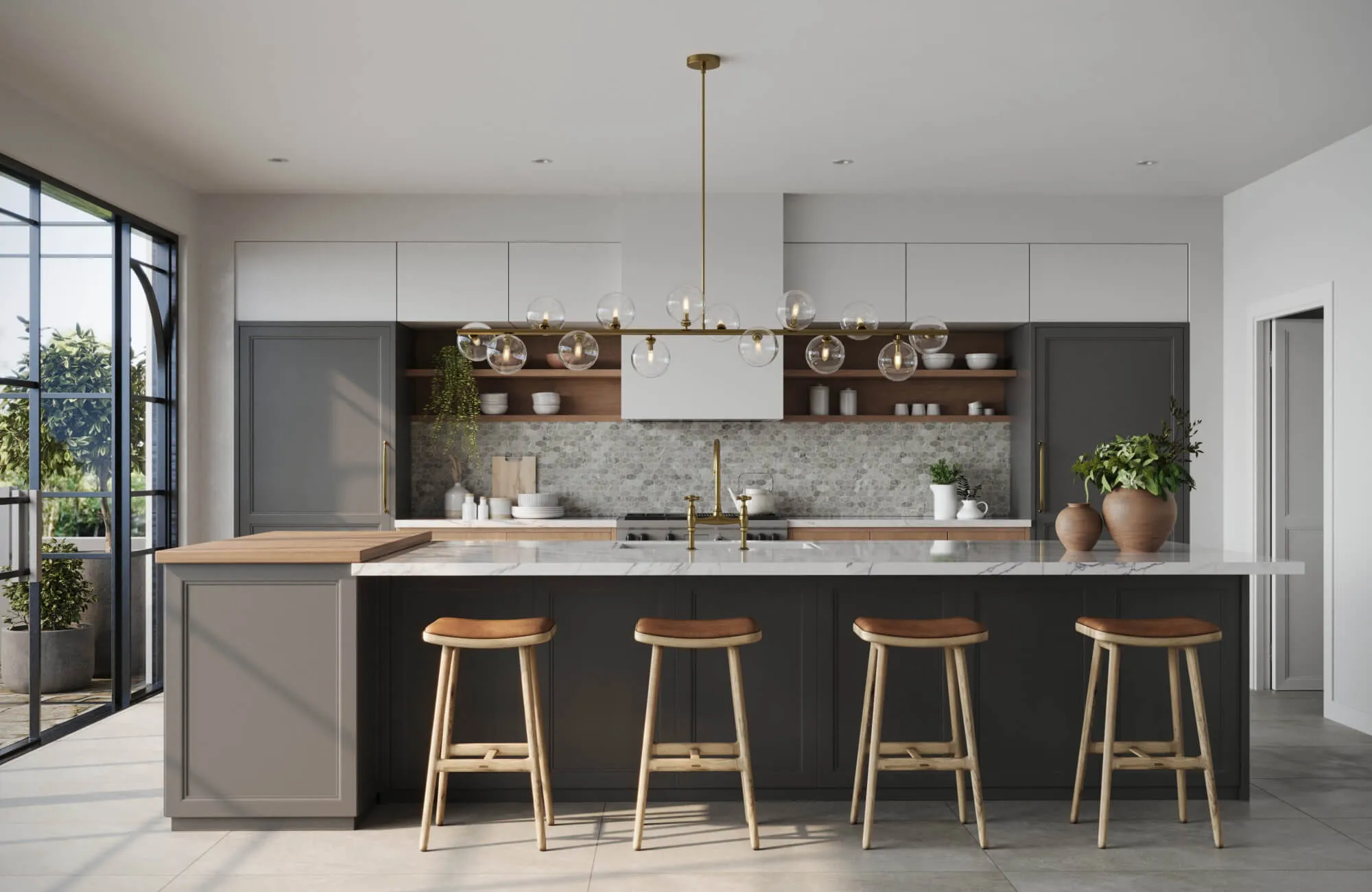
Contemporary kitchen lighting emphasizes clean lines, simplicity, and refined finishes that enhance the space without overwhelming it. Common features include pendant lighting, recessed or integrated fixtures, exposed bulbs or wire details, and glass coverings paired with metallic accents.
This approach is illustrated in the photo featured above, where Edward Martin’s Carly 22" Pendant in Vintage Brass adds a warm, modern touch. Its streamlined silhouette and soft metallic finish align seamlessly with contemporary design principles while providing both visual interest and functional illumination over the kitchen island.
Contemporary Style Color Palette
Contrast plays a defining role in contemporary kitchens, with cool tones setting the foundation. Crisp whites, layered grays and charcoals, black accents, and the occasional muted neutral or blue create a palette that feels clean, balanced, and modern. The result is a kitchen that looks bold without feeling overwhelming.
This refined approach is evident in the photo featured above, where Edward Martin’s Natasha 2x6 Glossy Porcelain Tile in Oat adds subtle warmth and dimension. Its soft, glossy finish complements the cooler tones of the space, enhancing the overall contemporary aesthetic while maintaining a polished, sophisticated look.
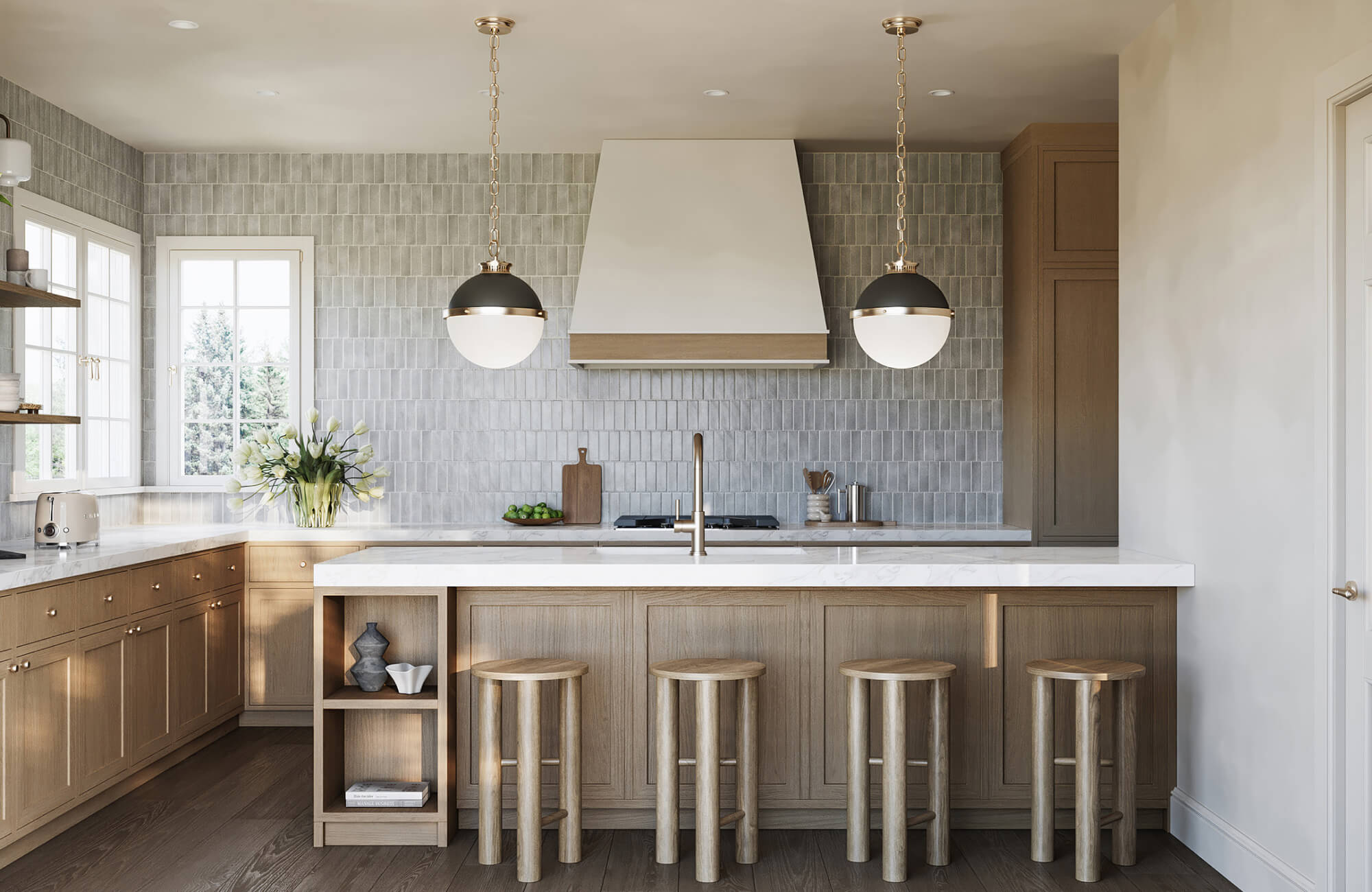
Transitional Kitchen Design
Transitional kitchens bridge the gap between traditional warmth and contemporary simplicity. This style blends textures, tones, and design elements to create a balanced, versatile space. By combining classic features, such as crown molding or subway tile, with clean lines and modern finishes, transitional kitchens can feel both timeless and fresh.
Transitional Style Cabinets & Hardware
Cabinets and hardware in a transitional kitchen strike a balance between classic detail and modern simplicity. These elements combine clean lines with subtle texture, giving the space a look that feels both timeless and current.
Cabinets:
Wood, laminate, or wood veneer
Recessed, inset, or glass-front doors
White, cream, gray, or light natural wood tones
Hardware:
Flexible combinations of knobs, pulls, and handles
Finishes ranging from matte black to gold or silver
Transitional Style Countertops
Nearly any countertop material works well, including:
Quartz, granite, laminate, and solid surface
White, cream, gray, or soft neutral tones
Natural-looking materials are especially popular, reinforcing the balanced aesthetic of transitional kitchens.
Transitional Style Light Fixtures
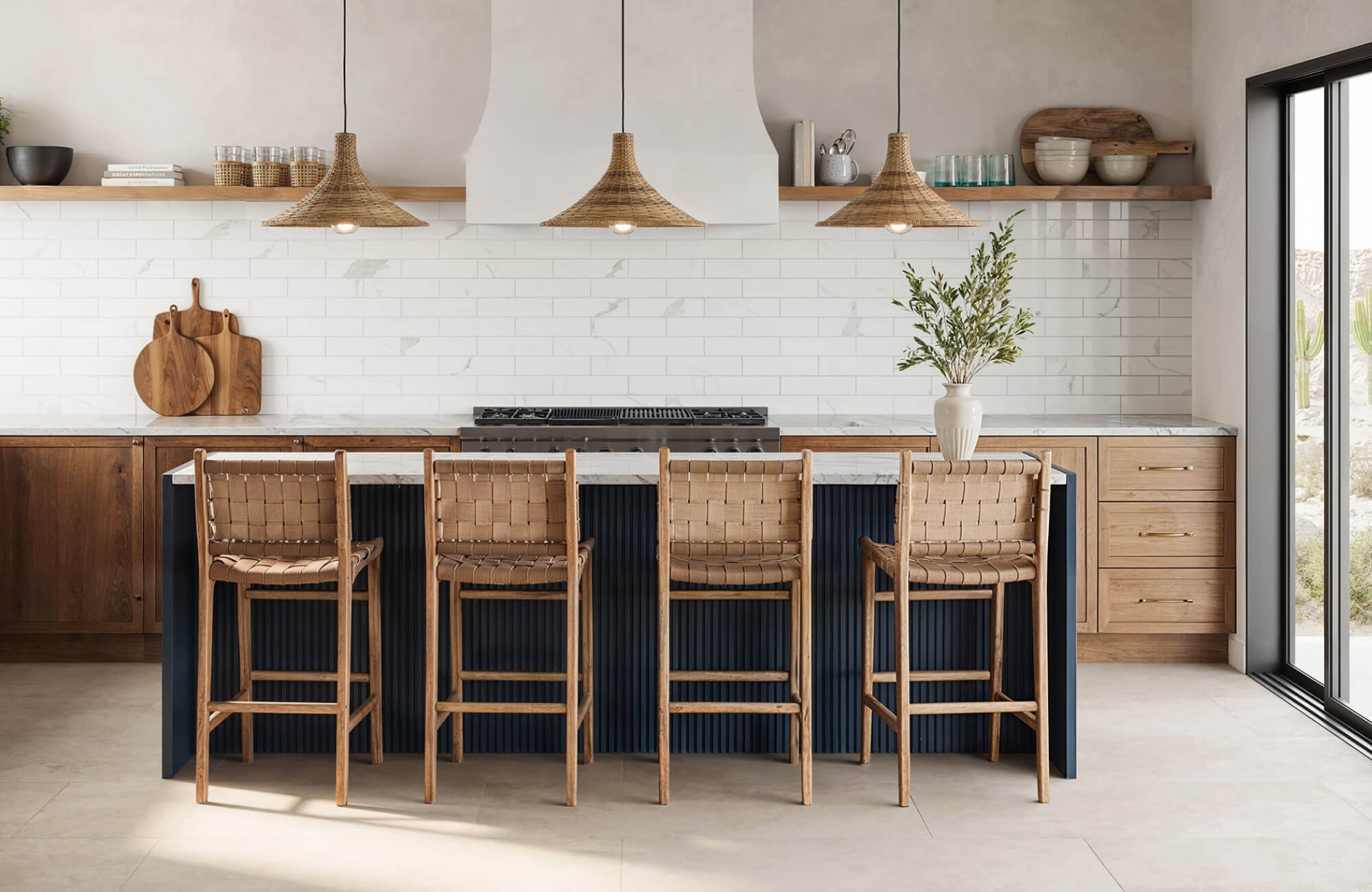
Lighting in a transitional kitchen blends classic and modern influences to create a balanced, cohesive look. Common options include a mix of traditional and contemporary fixtures, lantern-style pendants, linear chandeliers, and designs that incorporate caged or exposed bulb details.
This balanced approach is reflected in the photo featured above, where Edward Martin’s Barnes 14" Pendant in Aged Antique Distressed Bronze adds depth and character to the space. Its warm finish and classic-inspired form pair seamlessly with the clean lines of the kitchen, reinforcing the transitional aesthetic while providing functional, well-placed illumination.
Transitional Style Color Palette
Transitional color palettes strike a thoughtful balance between warm and cool tones, often featuring soft grays and beiges, charcoal accents, and subtle blues or muted warm hues. This layered approach creates visual interest while maintaining a calm, cohesive feel.
That balance is clearly reflected in the photo featured above, where Edward Martin’s Jameson 8x48 Matte Porcelain Tile in Umber grounds the space with natural warmth. Its wood-inspired tone adds depth and contrast without overpowering the lighter finishes, reinforcing the transitional aesthetic through a refined mix of light and dark elements.
Bringing Your Kitchen Design Vision Together
Now that you’ve explored the most popular kitchen design styles, it’s time to turn inspiration into renovation. A successful remodel begins with thoughtful planning, clear goals, and the right guidance to keep the process moving smoothly.
When you’re ready to take the next step, our professional kitchen design services can make all the difference. From cabinetry and countertops to appliances and fixtures, we create cohesive, thoughtfully planned spaces where every detail works together. Contact us today to schedule a consultation and start bringing your kitchen vision to life with expert design support from start to finish.
Frequently Asked Questions
Before we conclude, we’ve compiled answers to a few common questions homeowners often have when planning a kitchen remodel. While these topics aren’t covered above, they can play an important role in creating a smooth, well-planned, and stress-free renovation experience.
1. How do we choose the right kitchen layout for our space?
The best layout depends on how we use our kitchen daily, the room size, and existing structural constraints. Evaluating traffic flow, storage needs, and appliance placement helps us determine whether layouts like L-shaped, U-shaped, or galley kitchens will work best.
2. How long does a typical kitchen remodel take?
A full kitchen remodel usually takes several weeks to a few months, depending on the scope of work, material availability, and whether structural changes are involved. Planning and finalizing selections early helps keep the timeline on track.
3. Should we remodel our kitchen before selling our home?
In many cases, yes. An updated kitchen can greatly enhance a home’s value and overall appeal to buyers. Even modest updates—such as new countertops, refreshed cabinetry, or modern lighting—can make a strong impression without requiring a full renovation.
4. How do we balance functionality with aesthetics?
We start by prioritizing how the kitchen will function daily, then layer in design elements that support that use. Smart storage solutions, durable materials, and proper lighting help ensure the kitchen looks beautiful while functioning efficiently.
5. What mistakes should we avoid during a kitchen remodel?
Common pitfalls include underestimating the budget, overlooking lighting needs, and selecting finishes without considering long-term durability. Careful planning, realistic expectations, and professional guidance help us avoid costly revisions later on.
Follow us on Instagram
@EDWARD.MARTIN
)
)
)
)
)
)
)
)
)
)
)
)
)
)
)
)