White oak has become a familiar sight in bathroom design, showing up in vanities across a wide range of homes and styles. Its steady presence raises an important question: is white oak still leading by choice, or simply by habit? As bathroom layouts evolve and preferences shift toward both comfort and longevity, material selection plays a larger role than ever. In this blog, we’ll look at why white oak rose to prominence, how it performs across vanity types and sizes, and whether it continues to make sense in today’s bathrooms.

Why White Oak Became the Go-To Wood for Bathroom Vanities
White oak did not become a default choice overnight, but through steady use and growing confidence from designers and homeowners alike. Its rise is tied to how easily it adapts to different bathroom styles while maintaining a calm, grounded presence. Rather than feeling trend-driven, white oak offered something that felt reliable, flexible, and visually balanced.
The Appeal of White Oak’s Natural Grain and Tone
White oak’s grain strikes a balance between visual interest and restraint, which makes it especially appealing in bathrooms where surfaces are often limited. The grain pattern is present without being busy, offering movement that feels subtle rather than decorative. This allows the wood to add depth without competing with stone, tile, or hardware finishes. Its natural tone sits comfortably in a neutral range, avoiding the extremes of overly warm or overly cool wood shades. That neutrality gives designers room to layer other materials without forcing contrast. In smaller bathrooms, this softness helps the space feel composed rather than visually crowded.
Beyond appearance, the consistency of white oak’s tone from piece to piece contributes to its popularity. Even when natural variation is present, it tends to read as intentional rather than irregular. This makes it easier to specify across multiple vanities or within larger projects without worrying about mismatched results. The grain remains expressive enough to feel organic, yet controlled enough to support clean lines. That balance is one of the reasons white oak became so widely accepted. It feels natural without feeling unpredictable.
How White Oak Balanced Warmth and Modern Design
Modern bathroom design often leans toward clean lines, restrained palettes, and minimal ornamentation, which can sometimes leave a space feeling cool or distant. White oak introduced warmth without interrupting that clarity. Its natural tone softens the room while still working comfortably alongside modern forms and streamlined silhouettes. Rather than drawing attention to itself, the wood supports the overall composition in a way that feels measured and intentional. This makes it easier to create bathrooms that feel contemporary without losing a sense of comfort.
White oak’s adaptability across finishes further strengthened that balance. Matte, wire-brushed, lightly stained, or sealed treatments allow the same material to shift subtly depending on the design direction. In more minimal spaces, it reads clean and understated, while in warmer settings, it brings in a familiar, grounded quality. This flexibility helped white oak move easily between design approaches that might otherwise feel at odds. It offered warmth without visual heaviness, making it a natural fit as modern bathroom aesthetics continued to evolve.
Why Designers Trusted White Oak Across Different Styles
Designers gravitated toward white oak because it moved easily across styles rather than tying a space to a single aesthetic. It felt just as natural in transitional bathrooms as it did in modern, Scandinavian, or softly traditional settings. This range made it easier to design spaces that could evolve without feeling locked into a specific moment. For clients whose tastes might shift over time, white oak offered flexibility without visual compromise. It allowed designers to meet current preferences while leaving room for change.
That trust deepened through repeated use. As white oak appeared in more finished projects, it became a reliable choice rather than a stylistic risk. Designers observed how it aged visually and how it continued to feel appropriate as surrounding elements changed. Fixtures could be updated, tiles replaced, and lighting adjusted, yet the vanity still held its place. Over time, this consistency built confidence. White oak became less of a focal statement and more of a steady foundation, which is often exactly what a vanity is meant to be.

Has White Oak Reached Peak Popularity or Is It Still Leading?
White oak has been a steady presence in bathroom design for several years, which naturally raises the question of whether it is leveling off or continuing to lead. As design preferences shift, materials that last tend to adapt rather than disappear. Looking at current trends helps clarify whether white oak is simply familiar or still genuinely relevant.
Current Bathroom Design Trends Influencing Vanity Finishes
Bathroom design has been moving toward softer contrasts, layered neutrals, and materials that feel calm rather than attention-seeking. This has shifted focus away from high-gloss finishes and stark color blocks toward surfaces with depth and subtle texture. Vanity finishes are increasingly expected to feel integrated rather than decorative. Natural-looking materials, especially those with visible grain or tonal variation, fit easily into this direction.
At the same time, there is a growing preference for bathrooms that feel connected to the rest of the home. Vanities are no longer treated as standalone fixtures but as part of a broader design language. White oak aligns well with this approach because it transitions smoothly between spaces. It does not demand a specific style commitment, which allows it to remain relevant as trends soften rather than swing dramatically.
How White Oak Compares to Walnut, Maple, and Painted Vanities
When compared to darker woods like walnut, white oak tends to feel lighter and more flexible, especially in smaller bathrooms or spaces with limited natural light. Walnut offers depth and richness, though it can introduce visual weight if the room is not carefully balanced. Maple sits at the opposite end of the spectrum, with a cleaner and more uniform appearance that works well in simple layouts but can feel restrained in more layered designs. Painted vanities provide color versatility, yet they often follow clearer trend cycles that can date more quickly.
White oak settles between these options in a way that feels composed rather than reactive. It brings warmth without leaning towards dark and texture without strong contrast. This balance allows it to adapt to a wide range of design goals without demanding attention. Instead of competing with tile, hardware, or lighting, it tends to support those elements quietly. That ability to hold space without dominating it helps explain why white oak continues to feel relevant across different styles and settings.
Where White Oak Still Feels Timeless Versus Trend-Driven
White oak tends to feel most timeless when it is used as a quiet foundation rather than a focal point. Simple profiles and restrained finishes allow the material to read as deliberate and enduring. In these settings, the vanity stays relevant even as hardware, lighting, or wall finishes change over time. When paired with familiar materials like stone, ceramic tile, or neutral-toned metals, white oak maintains its presence without calling attention to itself.
It begins to feel more trend-driven when the styling becomes overly specific. Heavy stains, exaggerated textures, or highly decorative forms can anchor the wood to a particular design moment. Even then, the material itself remains versatile when handled with moderation. White oak’s strength shows in how comfortably it settles into a space, offering consistency without needing to lead the design conversation.
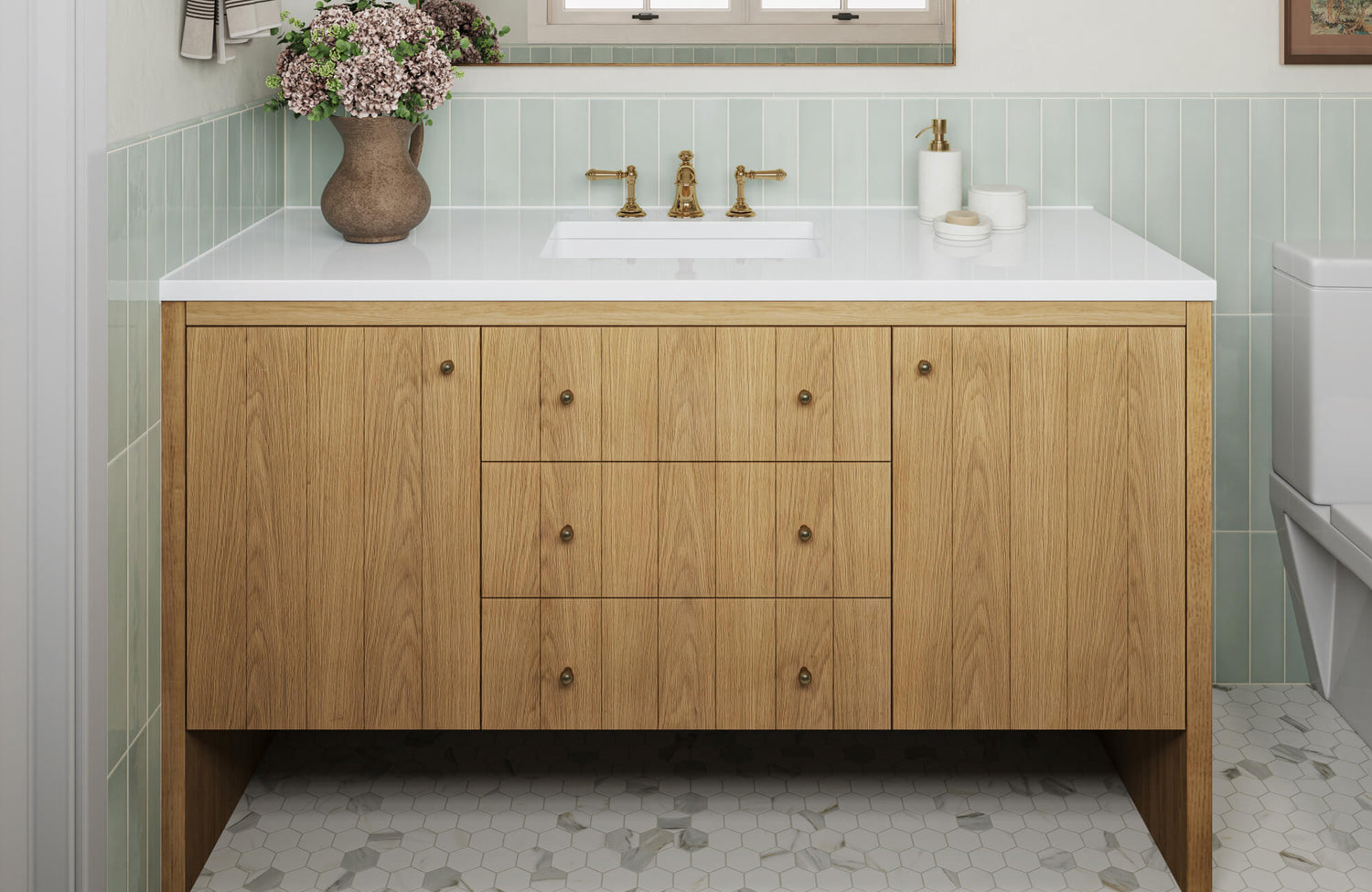
A good example of why white oak continues to feel relevant is our Abigail 48" Single Vanity in Light Natural Oak with 3 cm White Zeus Quartz Top, shown above. Its light, natural finish highlights subtle grain and soft tonal variation, which aligns well with today’s preference for calm, layered bathroom spaces. Rather than acting as a statement piece, the vanity settles into the room and lets the surrounding tile, hardware, and lighting do their work. This kind of quiet adaptability is what keeps white oak from feeling dated, even as trends continue to soften.

Popular Bathroom Vanity Types Where White Oak Is Most Used
White oak appears across a wide range of bathroom vanity types because it adapts well to both form and function. Its natural tone and grain allow it to feel intentional in different layouts without overpowering the space. Below, we’ll look at how white oak shows up across common vanity styles and why it works so consistently from a visual and practical standpoint.
Single Vanities and Why White Oak Feels Approachable
Single vanities often serve as the main focal point in smaller or secondary bathrooms, which makes material choice especially noticeable. White oak helps these spaces feel warm and inviting without adding visual weight. Its subtle grain provides texture without overwhelming the room or competing with wall finishes and fixtures. Because the color sits comfortably between light and mid-tone, it keeps the vanity from feeling stark or heavy. This balance makes single vanities easier to style over time as accessories or hardware change. The wood supports the space quietly, allowing the room to feel cohesive rather than overly designed.
Double Vanities and the Role of White Oak in Shared Spaces
Double vanities introduce repetition and width, which can quickly dominate a bathroom if the finish is too dark or bold. White oak softens that effect by distributing warmth evenly across a larger surface. Its natural variation helps long runs of cabinetry feel layered rather than flat. This is especially helpful in shared spaces, where visual balance matters more than statement-making finishes. The wood allows the vanity to feel substantial without becoming visually heavy. As a result, the bathroom remains calm and functional even with two sinks in use.
Floating Vanities and White Oak’s Visual Lightness
Floating vanities depend on a sense of visual lightness to keep bathrooms feeling open and uncluttered. White oak supports this effect by adding warmth without visually weighing the piece down. When the vanity is lifted off the floor, the wood reads as purposeful rather than heavy or dense. Its grain brings in subtle movement, which helps minimal forms feel more natural and less severe. This balance keeps floating vanities from feeling overly architectural. Instead, the material allows the design to feel composed, warm, and comfortably integrated into the room.
Furniture-Style and Freestanding Vanities Using White Oak
Furniture-style and freestanding vanities place greater emphasis on material presence, since their forms are more exposed within the space. White oak suits these designs by highlighting craftsmanship without drifting into ornamentation. Its grain and tone give the vanity the presence of a true furniture piece rather than built-in cabinetry. At the same time, the wood’s restrained warmth prevents these silhouettes from feeling overly traditional. This flexibility allows freestanding vanities to sit naturally in both classic and contemporary bathrooms. White oak bridges those styles quietly, letting proportion and form do most of the visual work.

Most Common Bathroom Vanity Sizes and How White Oak Fits Each
Vanity size plays a quiet but important role in how a wood finish is perceived. White oak adapts well across different scales, though its visual impact shifts depending on how much surface area is involved. In here, we’ll look at how white oak behaves at common vanity sizes and why certain proportions tend to highlight its strengths more naturally.
Small Vanity Sizes (24”–30”) and White Oak’s Visual Impact
Smaller vanities draw more attention to material choice because there is less surface area to absorb visual weight. In this range, white oak adds warmth without overwhelming the space or feeling out of scale. Its fine, linear grain keeps the vanity calm and readable at close range, which matters in compact bathrooms and powder rooms. The wood introduces subtle depth without adding visual clutter. This helps smaller vanities feel intentional rather than purely functional. White oak brings presence while still allowing the room to feel open and composed.
Mid-Size Vanities (36”–48”) Where White Oak Is Most Popular
Mid-size vanities provide enough surface area for white oak’s grain to express itself without becoming repetitive. At this scale, the material feels balanced and confident, which helps explain its popularity in primary bathrooms. The grain adds interest while still giving space for hardware, countertops, and fixtures to take the lead visually. White oak also transitions easily between modern and more traditional design directions at this size. The finish feels substantial without becoming visually heavy. This balance makes mid-size vanities one of the most natural places for white oak to shine.
Large and Double Vanities (60”–72”) and Grain Scale Considerations
Large and double vanities introduce extended horizontal surfaces, where grain scale becomes more noticeable. White oak handles this scale well because its natural variation helps break up long runs without feeling busy. The surface reads as layered rather than monolithic, which keeps the vanity from feeling overly heavy. This allows larger pieces to feel grounded while still fitting comfortably within the room. Designers often turn to white oak at this size to preserve warmth without overwhelming the space. The material supports the vanity’s presence without relying on added visual complexity.

Why White Oak Works So Well in Both Small and Large Bathrooms
White oak’s versatility becomes most apparent when it is used across bathrooms of very different sizes. The wood responds thoughtfully to light, surrounding materials, and spatial proportion, which allows it to adapt without feeling out of place.
How White Oak Helps Small Bathrooms Feel More Open
In smaller bathrooms, a sense of openness often depends on how materials respond to light. White oak introduces warmth without adding heavy contrast or visual density. Its lighter tones allow cabinetry to feel grounded in the space while still keeping the room open and breathable. The grain adds quiet surface interest without interrupting sightlines, helping walls and floors read more clearly. This restraint keeps the room from feeling crowded, even when storage needs are higher. White oak defines the vanity area while allowing the space to remain calm and easy to move through.
Using White Oak to Ground Larger Bathroom Layouts
Larger bathrooms benefit from materials that bring cohesion to more expansive layouts. White oak offers that grounding effect by visually connecting different zones without creating hard breaks. Its natural grain variation adds subtle movement, which keeps wide surfaces from feeling flat or overly uniform. At the same time, the wood’s neutral tone helps prevent the space from becoming visually busy as it scales up. This balance supports layering with stone, tile, and architectural details without overwhelming the room. White oak helps larger bathrooms feel composed, warm, and well-proportioned.
Lighting and How It Affects the Look of White Oak
Lighting has a noticeable influence on how white oak appears within a bathroom. Natural light tends to highlight its softer undertones, allowing the grain to read evenly throughout the day. Warmer artificial lighting brings out depth and texture, while cooler light can emphasize subtle contrast within the wood. Because white oak responds smoothly to these shifts, it maintains visual consistency rather than feeling reactive. This adaptability helps the vanity remain grounded as lighting changes from morning to evening. Over time, the material continues to feel composed and well integrated into the space.
If you want a great alternative that works just as well in both small and large bathrooms, our Elodie 72" Double Vanity in Light Natural Oak with 3 cm White Zeus Quartz Top above, offers the same sense of warmth and visual balance people often look for in white oak. Its lighter tone keeps smaller bathrooms from feeling boxed in, while the visible grain and generous scale help larger layouts feel grounded and intentional. Because the finish responds well to both natural and artificial light, it stays calm and consistent throughout the day. This makes it an easy choice when you want flexibility without committing to a single design direction.
Making White Oak Work for Your Bathroom, Long Term
White oak continues to hold its place in bathroom design because it adapts rather than competes. Across vanity types, sizes, and layouts, it offers warmth without excess and structure without rigidity. Its ability to respond to light, materials, and proportion allows it to feel settled in both small and expansive spaces. That balance is what keeps it relevant, even as design preferences continue to shift.
If you’re deciding whether white oak is right for your bathroom, context matters just as much as the material itself. Vanity scale, surrounding finishes, lighting, and daily use all shape how the wood will ultimately read in your space. Our design consultation helps bring those factors together, offering guidance tailored to your layout and design goals. With the right planning, white oak becomes less of a trend choice and more of a long-term foundation that feels considered from day one.