Wallpaper is no longer just a nostalgic reference to past interiors. Instead, it has re-emerged as a refined and highly adaptable design solution that reflects how modern spaces are styled and experienced today. As homeowners and designers seek more personalized and visually engaging environments, wallpaper offers a unique ability to introduce depth, texture, and narrative in ways that go beyond traditional wall finishes.
Advancements in materials and installation have also addressed many of the concerns that once limited its appeal. As a result, wallpaper is being reconsidered not as a permanent or outdated choice, but as a flexible design tool that can evolve with changing tastes and functional needs. By examining its transformation, applications, and practical benefits, it becomes clear why wallpaper is once again playing a significant role in contemporary interior design.

The Evolution of Wallpaper in Modern Design
Wallpaper has transformed significantly in both style and perception over time, evolving from a traditional decorative element into a versatile design tool. This progression reflects broader shifts in interior design priorities, where customization, material performance, and spatial storytelling now take precedence. By examining how wallpaper has adapted to contemporary expectations, it becomes clear why it is once again gaining relevance in modern interiors.
From Traditional Patterns to Contemporary Expressions
Historically, wallpaper was characterized by intricate florals, damasks, and repetitive motifs that often covered entire rooms in a uniform manner. These designs were rooted in classical European aesthetics, where wallpaper served as a symbol of refinement and ornamentation. However, such applications could sometimes feel visually dense, particularly in smaller or more functionally driven spaces, leading to a gradual decline in popularity as minimalist design trends emerged.
In contrast, contemporary wallpaper has embraced a broader and more experimental visual language. Advances in digital printing technology now allow for high-resolution imagery, custom-scale graphics, and complex color layering that were previously unattainable. As a result, wallpaper has shifted from a purely decorative background to a focal design element capable of anchoring an entire room. Designs such as the Franklin Wallpaper in Olive, 52" x 132", shown in the image above, introduce a refined balance of pattern and texture, where subtle vertical detailing adds depth without overwhelming the space. Large-scale murals can also introduce depth and perspective, effectively altering spatial perception, while subtle textured finishes can mimic materials such as linen, plaster, or even concrete. This expanded range enables you to tailor wallpaper selections to specific architectural contexts, ensuring that each application feels intentional rather than ornamental.
Changing Perceptions and Design Preferences
The decline of wallpaper in past decades was largely influenced by practical concerns, particularly the difficulty of installation and removal. Traditional pasted wallpapers often required extensive surface preparation and could cause damage when stripped, making them less appealing for those seeking flexibility. Additionally, outdated associations with heavily patterned interiors contributed to a perception that wallpaper lacked modern relevance.
Today, these perceptions have shifted due to significant improvements in both material composition and application methods. Non-woven substrates, for instance, offer enhanced dimensional stability and breathability, reducing the risk of warping or peeling over time. Meanwhile, peel-and-stick technologies have introduced a removable option that appeals to renters and design-conscious individuals who prefer the ability to update spaces without long-term commitment.
Equally important is the change in how wallpaper is used within a design scheme. Rather than covering every wall, it is now often applied selectively to emphasize architectural features, define zones, or create visual contrast within a room. This strategic approach aligns with contemporary design principles that prioritize balance, restraint, and intentionality. As a result, wallpaper is no longer viewed as a permanent or overwhelming choice, but as a flexible and sophisticated medium that can adapt to evolving design needs.

Innovations in Materials and Technology
Advancements in wallpaper production have significantly improved both its performance and practicality, transforming it into a highly adaptable surface solution. These innovations extend beyond aesthetics, addressing long-standing concerns related to durability, maintenance, and installation. As a result, wallpaper is now a viable option for a broader range of environments, from residential interiors to commercial settings where performance requirements are more demanding.
Performance Driven Materials for Modern Living
Contemporary wallpaper is engineered with specialized substrates and protective coatings that enhance its resilience in everyday conditions. Vinyl-coated wallpapers, for example, incorporate a protective layer that resists moisture, staining, and abrasion, making them particularly suitable for kitchens, bathrooms, and entryways where exposure to humidity and frequent cleaning is expected. Similarly, non-woven wallpapers, composed of a blend of natural and synthetic fibers, offer dimensional stability and breathability, reducing the likelihood of expansion, contraction, or mold development in fluctuating climates.
These materials also support improved maintenance protocols. Washable and scrubbable classifications allow surfaces to be cleaned without compromising the integrity of the print or finish, which is especially important in busy or commercial environments. In addition, advancements in ink technology, including UV-cured and water-based inks, ensure colorfastness and resistance to fading over time, even in areas exposed to natural light. This combination of durability and visual consistency allows wallpaper to maintain its appearance while meeting the functional demands of modern living.
Ease of Installation and Removal
Equally transformative are the innovations in installation systems, which have simplified what was once a labor-intensive process. Traditional wallpaper required adhesive application directly to the paper, often resulting in stretching, misalignment, or difficult removal. In contrast, paste-the-wall systems allow adhesive to be applied directly to the wall surface, enabling easier positioning and adjustment of the wallpaper during installation. This method not only improves accuracy but also reduces installation time and material waste.
Peel-and-stick wallpaper represents another significant advancement, offering a pressure-sensitive adhesive backing that eliminates the need for paste altogether. This option is particularly appealing for renters or those seeking temporary design solutions, as it can be removed with minimal surface damage when applied to properly prepared walls. Furthermore, modern wallpapers are designed to strip away in larger sections, rather than in small fragments, which significantly streamlines the removal process.

Wallpaper as a Tool for Personal Expression
Wallpaper has emerged as a highly expressive design element, allowing you to move beyond standardized finishes and create spaces that feel distinctly personal. Unlike paint or other wall treatments, wallpaper offers a broader visual vocabulary, combining color, pattern, scale, and texture in a single application. This versatility makes it an effective medium for shaping the emotional tone of a space while reinforcing a cohesive design narrative.
Custom Designs and Statement Murals
One of the most impactful ways wallpaper is used today is through custom designs and large-scale murals. These applications transform walls into immersive visual experiences, often acting as the defining feature of a room. Advances in digital printing have made it possible to produce high-resolution imagery tailored to specific dimensions, ensuring that the design aligns precisely with the architectural context.
Statement murals can also introduce perspective, depth, and movement, particularly in spaces that benefit from a strong focal point, such as living rooms, bedrooms, or entryways. Edward Martin’s Vista Mural, 312" x 132", exemplifies this approach, using layered, landscape-inspired imagery to create a sense of atmosphere and visual continuity across the wall, as seen above. Such compositions can visually expand a room by suggesting distance, while abstract interpretations can add energy and dynamism. The ability to control scale and color allows these designs to be calibrated to the desired mood, whether calming, dramatic, or visually engaging. As a result, wallpaper becomes not just a decorative layer but a narrative device that reflects personal taste and spatial intention.
Layering Patterns and Textures
Beyond large-scale statements, wallpaper also plays a critical role in layering patterns and textures within an interior. This approach contributes to a more nuanced and sophisticated design, where multiple materials interact to create depth and visual richness. Wallpaper can introduce tactile qualities that complement other finishes, such as the softness of textiles, the warmth of wood, or the solidity of stone.
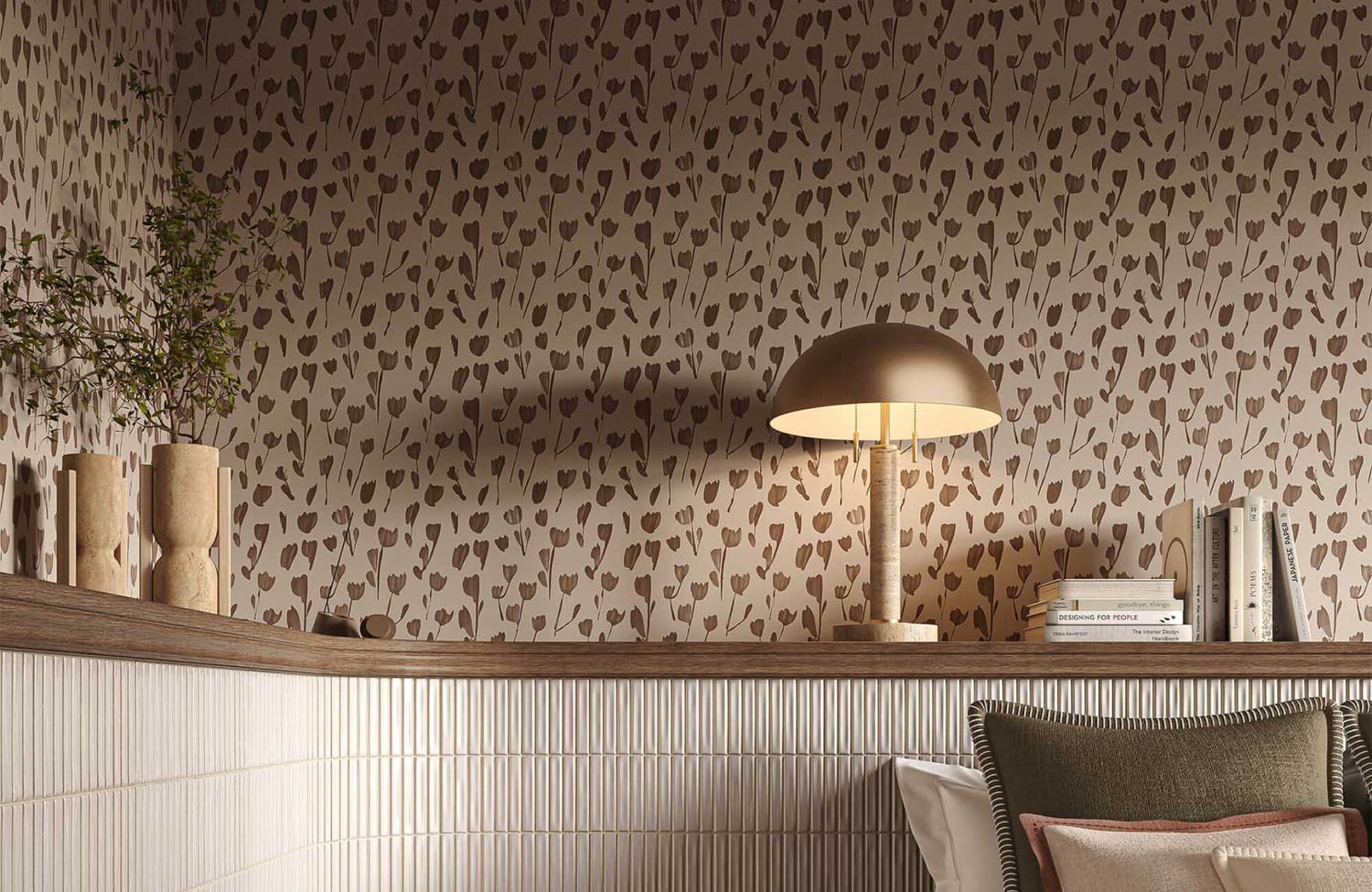
Subtle textured wallpapers, such as those that mimic linen, grasscloth, or plaster, provide a refined backdrop that enhances material variation without overwhelming the space. These options are particularly effective in rooms where a quiet, cohesive atmosphere is desired. Conversely, bold patterns and graphic prints can be used to energize a space, especially when balanced with more restrained furnishings and finishes. Pieces like the Plateau Wallpaper in Black/Tan I, 52" x 132" demonstrate how pattern can be layered with intention, introducing graphic structure and contrast while still maintaining balance within the overall composition.
The key to successful layering lies in maintaining a sense of proportion and cohesion. Patterns should relate to the scale of the room and the surrounding elements, while textures should complement rather than compete. By thoughtfully integrating wallpaper into a layered material palette, designers can create interiors that feel both visually engaging and harmoniously composed.

Strategic Applications in Different Spaces
Wallpaper is now used with greater precision and intention, moving beyond traditional full-room coverage to more targeted applications. This strategic approach allows you to highlight architectural features, define functional zones, and introduce visual interest without overwhelming the space. By tailoring placement to the specific needs of each room, wallpaper becomes a versatile tool that enhances both aesthetics and spatial organization.
Accent Walls and Feature Zones
One of the most effective uses of wallpaper is in the creation of accent walls and defined feature zones. Rather than applying it uniformly, select a single wall to serve as a focal point, allowing the pattern or texture to stand out while the surrounding surfaces remain more subdued. With its layered botanical pattern and muted olive tones, the Newport Wallpaper in Olive II, 52" x 132" brings a sense of depth and quiet movement that can ground a space without overpowering it. This technique enhances contrast while helping define key areas such as the wall behind a bed, a sofa, or a dining table.
In addition to visual emphasis, accent walls can help delineate functional areas within open-plan layouts. For instance, wallpaper can be used to subtly separate a dining zone from a living area without the need for physical partitions. The scale and intensity of the pattern should also be carefully considered in relation to the room size and lighting conditions, ensuring that the feature enhances rather than dominates the space. When executed thoughtfully, accent walls create a balanced composition that feels both dynamic and cohesive.
Unexpected Applications Beyond Walls
Beyond vertical surfaces, wallpaper is increasingly being applied in unconventional locations to create distinctive design moments. Ceilings, often referred to as the “fifth wall,” present an opportunity to introduce pattern and color in a way that draws the eye upward and adds dimension to the room. A design like the Botanique Wallpaper in Fall, 52" x 132", displayed above, brings a soft, organic rhythm overhead, using botanical detailing to subtly animate the ceiling without overwhelming the space. This approach can be particularly effective in smaller spaces, where it creates a sense of enclosure and visual interest without occupying valuable wall space.
Other applications include lining the backs of shelving units, cabinetry interiors, or recessed niches. These placements allow for subtle yet impactful design details that enhance the overall composition without overwhelming it. In kitchens or home offices, for example, wallpaper within open shelving can provide contrast against stored objects, elevating otherwise functional elements.

Comparing Wallpaper With Other Wall Finishes
Evaluating wallpaper alongside other wall treatments provides a clearer understanding of its strengths and limitations within modern interiors. Although each option offers unique benefits, the choice ultimately depends on the desired balance between aesthetics, performance, and long-term maintenance. By comparing these finishes, you can make more informed decisions that align with both functional needs and design intent.
Wallpaper Versus Paint and Panels
Wallpaper offers a level of visual richness that is difficult to replicate with paint alone. Even though paint provides a clean and versatile base, it is typically limited to solid colors or simple decorative techniques, such as color blocking or faux finishes. In contrast, wallpaper can incorporate intricate patterns, layered textures, and high-resolution imagery, allowing for more dynamic and expressive design solutions. This makes it particularly effective when a space requires a strong focal point or a sense of visual depth.
Wall panels, on the other hand, introduce a different type of dimension through physical structure. Materials such as wood, MDF, or upholstered panels create depth through relief and shadow, contributing to a more tactile architectural effect. However, panels often involve higher installation costs and may require more permanent modifications. Wallpaper can achieve a similar sense of interest through pattern and texture, but with greater flexibility and typically lower installation complexity. As a result, it often serves as a middle ground between the simplicity of paint and the structural impact of paneling.
Durability and Maintenance Considerations
Modern wallpaper has significantly improved in terms of durability, making it suitable for a wider range of applications than in the past. High-quality options, particularly those with vinyl coatings or non-woven backings, are designed to resist wear, moisture, and staining. This allows them to perform well in busy areas or spaces that require regular cleaning, such as hallways, kitchens, and even certain bathroom settings.
Maintenance requirements also vary depending on the material and finish. Washable and scrubbable wallpapers can be cleaned with manufacturer-approved mild solutions, helping to preserve their appearance over time. In comparison, painted surfaces may require frequent touch-ups to address scuffs or fading, especially in areas of heavy use. Panels, while durable, can be more difficult to repair if damaged, often requiring replacement of entire sections.

Cost Sustainability and Long Term Value
Practical considerations such as cost and environmental impact play a critical role in determining whether wallpaper is a suitable choice for a given space. Beyond initial aesthetics, evaluating long-term performance, maintenance cycles, and sustainability ensures that the investment remains both functional and responsible over time. A well-informed approach allows you to balance upfront expenses with enduring value.
Budget Planning and Value Assessment
Wallpaper pricing can vary widely depending on factors such as material composition, manufacturing technique, and design complexity. High-end options, including custom prints or specialty finishes, typically require a larger initial investment but can significantly elevate the overall design by acting as a focal point. Conversely, more understated patterns or standard collections offer flexibility and can be integrated across multiple spaces without exceeding budget constraints.
When assessing value, it is important to consider lifecycle costs rather than focusing solely on upfront pricing. Unlike paint, which may require periodic repainting due to wear, fading, or changing design preferences, high-quality wallpaper can maintain its appearance for many years with minimal intervention. This longevity can offset the initial cost, particularly in spaces where durability and visual consistency are priorities. Additionally, selective application, such as using wallpaper in feature areas rather than entire rooms, allows for strategic budgeting while still achieving a high-impact result.
Sustainability has become an increasingly important consideration in interior material selection, and wallpaper manufacturing has evolved to address these concerns. Many modern wallpapers are produced using responsibly sourced raw materials, such as natural fibers or recycled content, reducing their environmental footprint. In addition, advancements in printing technology have led to the use of water-based or low-VOC inks, which minimize the release of harmful emissions and contribute to improved indoor air quality. Certifications and transparency in manufacturing processes are also key indicators of environmentally responsible products. Selecting wallpapers that meet recognized environmental standards helps ensure that materials are produced with reduced energy consumption and minimal chemical impact. Furthermore, durability plays a role in sustainability; longer-lasting products reduce the need for frequent replacement, thereby conserving resources over time. Wallpaper is indeed having a comeback, but its return is defined by innovation and intentional use rather than repetition of past trends. As materials have become more durable and installation methods more accessible, wallpaper now offers a balance of practicality and design flexibility that aligns with modern living. At the same time, its expanded range of patterns, textures, and applications allows it to serve as both a subtle backdrop and a defining feature within a space. For those looking to incorporate wallpaper in a way that feels both cohesive and intentional, expert guidance can make a meaningful difference. Edward Martin’s team can help refine your selection by considering scale, material, and placement to ensure the design complements your space. Contact us to gain tailored recommendations that bring clarity and confidence to your project while achieving a polished, well-executed result!Eco-Friendly Options and Responsible Design
Wallpaper Has Reclaimed Its Place in Modern Interiors