
)
)
)
)
)
)
)
)
Is Terrazzo Flooring Back In Style For Modern Homes?
Terrazzo flooring is no longer a relic of mid-century schools and municipal buildings. Once associated with institutional hallways and commercial lobbies, terrazzo has reemerged as a refined, design-forward surface embraced by architects, interior designers, and style-conscious homeowners. Its return is not accidental. It reflects a broader movement toward materials that balance durability, artistry, and individuality while aligning with modern living.
Today’s terrazzo looks and performs very differently from its predecessors. Advances in manufacturing, especially in porcelain tile, have made terrazzo more accessible, versatile, and suitable for residential interiors. At the same time, contemporary design preferences have softened its appearance, expanded its color range, and repositioned it as a statement material rather than a purely utilitarian one. Terrazzo is not just back in style. It has been thoughtfully reimagined for modern homes that value both aesthetics and performance.
The Renaissance of Terrazzo in Contemporary Design
With terrazzo’s renewed presence in modern homes, it’s worth understanding why this once-overlooked material is resonating again. Its comeback is rooted in how contemporary design has reshaped terrazzo’s look, scale, and color to better suit today’s interiors.
Nostalgia Meets Modern Minimalism
One of terrazzo’s strongest appeals lies in its nostalgic roots. Historically, terrazzo was prized for its longevity and handmade quality, often composed of marble chips set in cement or resin. That heritage still resonates, particularly among homeowners who appreciate materials with history and substance. At the same time, modern design has stripped away excess ornamentation, allowing terrazzo to exist within cleaner, more minimalist spaces.
In contemporary homes, terrazzo often appears alongside streamlined cabinetry, flat-panel millwork, and uncluttered layouts. The floor becomes a subtle source of visual interest rather than the focal point competing for attention. This balance allows terrazzo to feel timeless rather than trendy, grounding modern interiors with a sense of continuity and craftsmanship.
The Shift to Large Scale Aggregates
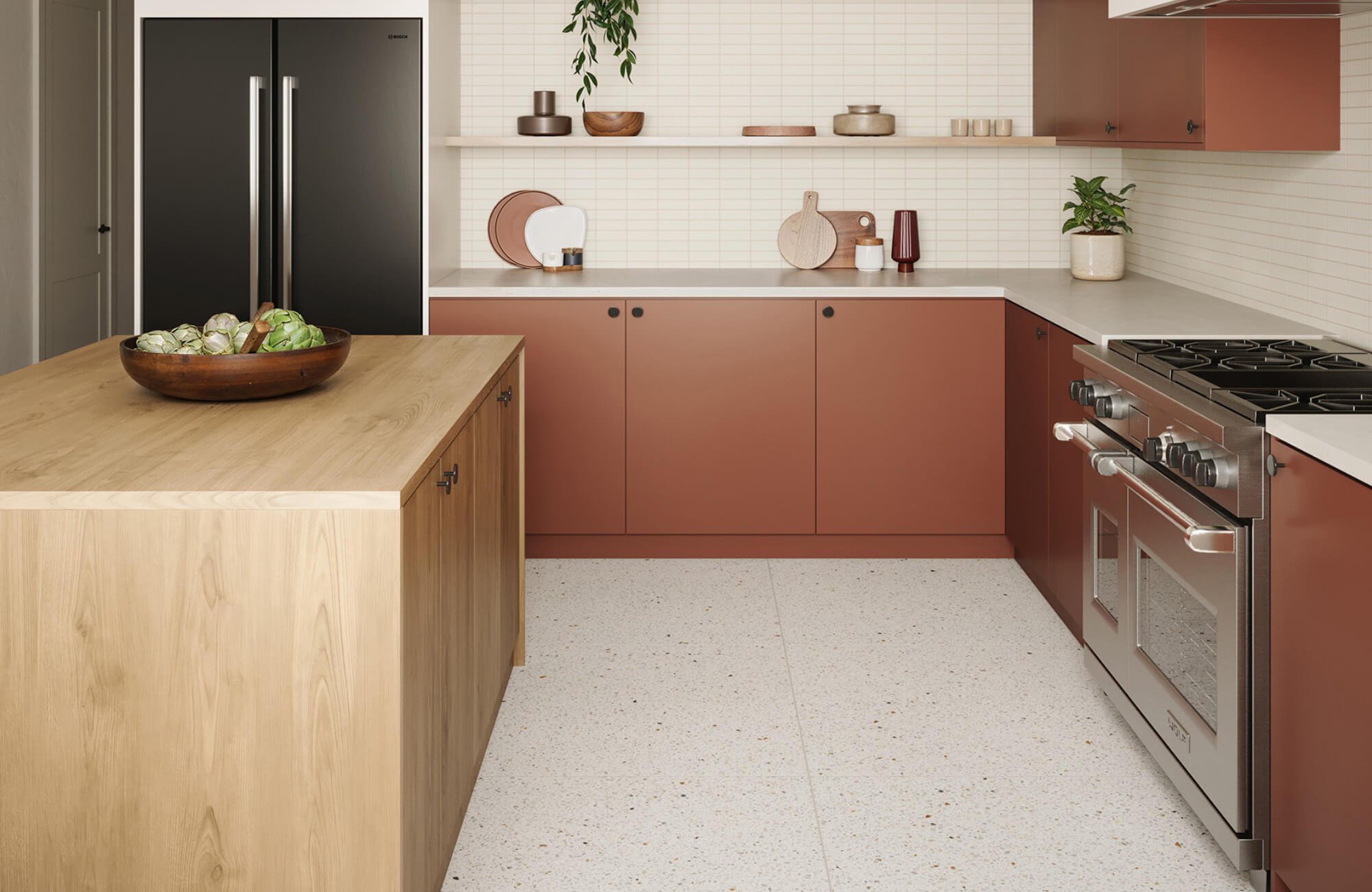
Another defining change in modern terrazzo design is the move toward larger aggregate pieces. Traditional terrazzo typically featured small, evenly distributed chips that created a dense, speckled effect, but today’s designs often favor oversized fragments that feel more graphic and intentional. This approach is well illustrated by Edward Martin’s Leighton 35x35 Matte Porcelain Tile in Multicolor, shown in the image above, where the broader aggregate pattern feels curated rather than busy.
Larger aggregates introduce a sense of rhythm and scale that works particularly well in open-concept homes. They allow the floor to read clearly from a distance, complementing expansive layouts and high ceilings. This evolution has helped reposition terrazzo as a bold yet controlled design element, one that can anchor a room without overwhelming the space.
Evolution of the Color Palette
Color has also been central to terrazzo’s resurgence. Early terrazzo installations were often limited to neutral or earth-toned bases, driven largely by the natural stone materials available at the time. Modern terrazzo embraces a much broader spectrum, ranging from soft, warm neutrals to muted pastels and dramatic, high-contrast combinations.
Porcelain terrazzo tiles, in particular, have expanded what is possible in terms of color consistency and customization. Designers can now specify subtle tonal variations that align with contemporary palettes, including warm grays, creamy off-whites, and sophisticated charcoal bases accented with carefully curated aggregate hues. This refined approach allows terrazzo to integrate seamlessly into modern homes without overpowering other design elements.
Porcelain Versus Poured: The Modern Application
As terrazzo reclaims its place in residential design, the way it’s used has evolved just as much as its appearance. Comparing traditional poured terrazzo with modern porcelain options reveals why today’s homeowners are gravitating toward one over the other.
The High Cost and Labor of Tradition
Poured terrazzo is a labor-intensive process that requires specialized installation, extended curing times, and a significant financial investment. It is typically poured on-site, ground, polished, and sealed, making it more suitable for large commercial spaces or high-end custom homes with flexible timelines and budgets.
For many homeowners, these requirements can be prohibitive. The installation process often involves structural considerations, especially in remodels, and repairs can be complex if damage occurs. While traditional terrazzo remains a beautiful option, its practical limitations have encouraged many to explore more accessible alternatives.
The Durability and Ease of Porcelain Tile
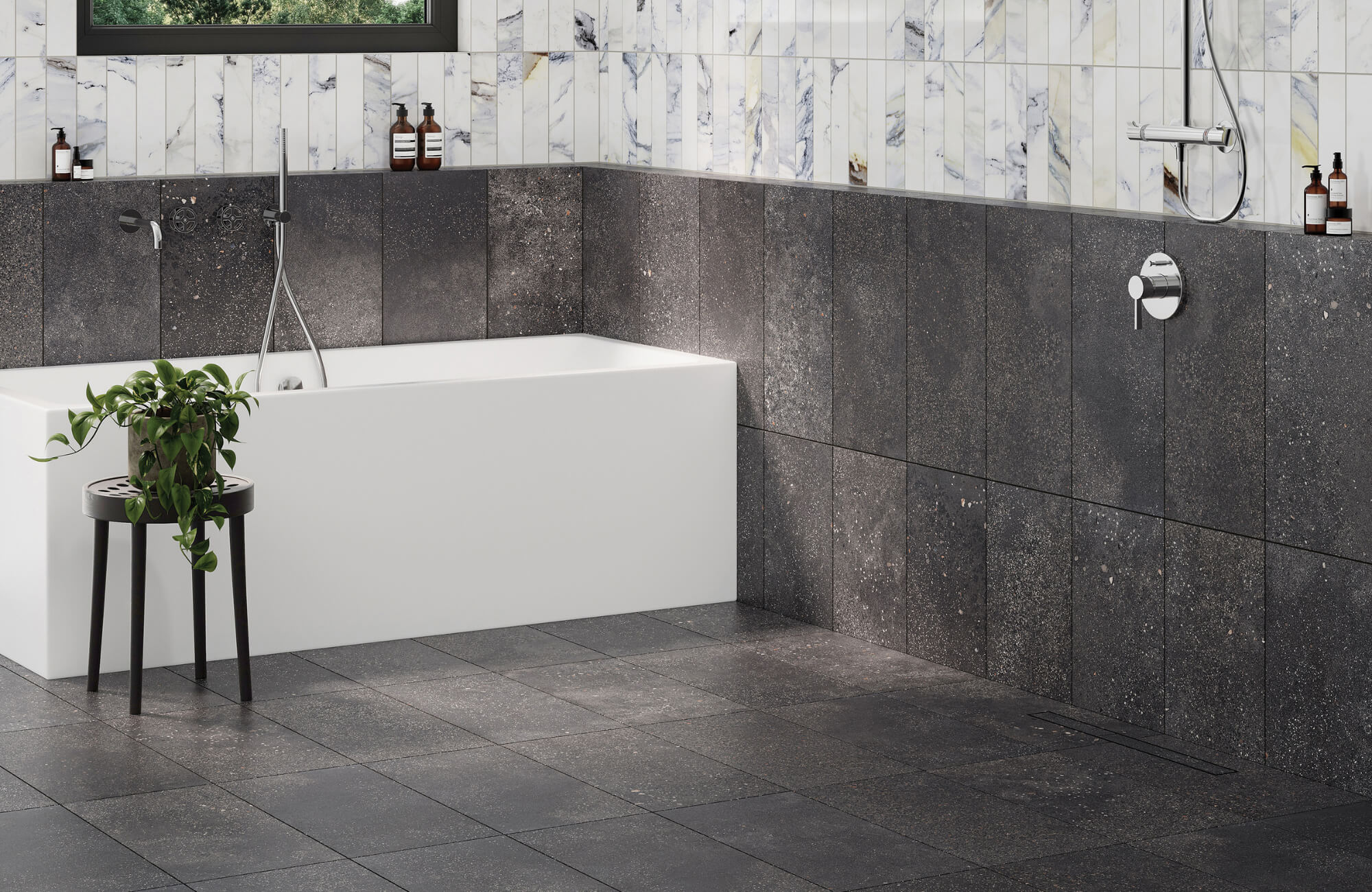
Porcelain terrazzo tile has emerged as the preferred solution for modern residential interiors, offering the character of traditional terrazzo with far fewer practical limitations. It replicates the look of poured terrazzo with remarkable accuracy while delivering the performance benefits of porcelain, including moisture resistance and long-term durability. In the image above, Edward Martin’s Sloane 12x24 Matte Porcelain Tile in Charcoal demonstrates how this balance works beautifully in a bathroom setting without sacrificing visual depth.
From an installation standpoint, porcelain tile is far more straightforward than poured terrazzo. It can be installed over standard substrates, pairs well with radiant heating systems, and allows for easier replacement if a tile becomes damaged. This practicality has been a major driver of terrazzo’s resurgence, making the look achievable for a wider range of homeowners.
Consistency and Control in Design
Another advantage of porcelain terrazzo tile is the level of control it offers in design execution. Unlike poured terrazzo, which can vary slightly depending on installation conditions, porcelain tiles provide consistent patterning and color across the entire surface. This predictability is especially valuable in residential spaces where cohesion and precision are priorities.
Large-format porcelain tiles also minimize grout lines, creating a more seamless appearance that echoes the monolithic feel of traditional terrazzo. The result is a surface that feels polished and intentional, aligning with the expectations of modern homeowners who value both beauty and reliability.
Where to Use Terrazzo for Maximum Impact
Once the material itself is chosen, the next question becomes placement. Building on terrazzo’s modern versatility, certain areas of the home allow its durability and visual character to shine the most.
The Spa Bathroom Statement
Bathrooms are one of the most compelling places to use terrazzo flooring. Its natural resistance to moisture and its ability to handle frequent cleaning make it a practical choice, while its visual texture adds depth to what might otherwise be a minimal space. In spa-inspired bathrooms, terrazzo pairs beautifully with floating vanities, soft lighting, and neutral wall finishes.
When extended from the floor to the shower walls or vanity backsplash, terrazzo creates a cohesive, immersive environment. The result feels luxurious without being ostentatious, striking a balance that resonates with homeowners seeking calm, retreat-like spaces.
Kitchen Floors That Hide Everything
In kitchens, terrazzo excels at disguising everyday messes thanks to the natural variation in its pattern. Crumbs, spills, and minor scuffs tend to blend in rather than stand out, which is especially valuable in busy cooking spaces. That benefit is clearly evident with Edward Martin’s Sloane 24x24 Matte Porcelain Tile in Charcoal, seen in the image above, where the tonal movement adds interest while remaining forgiving under daily use.
Terrazzo floors also work particularly well in open kitchens that flow into dining or living areas. Their subtle visual texture helps maintain continuity across connected spaces without competing with cabinetry or furniture. For homeowners who want a kitchen floor that performs as hard as it works, terrazzo remains a smart and stylish choice.
Seamless Indoor Outdoor Transitions
Modern homes increasingly emphasize the connection between indoor and outdoor living, and terrazzo supports this trend beautifully. Porcelain terrazzo tiles rated for exterior use can extend from interior floors to patios or covered outdoor areas, creating a seamless transition that enhances the sense of openness.
This continuity is especially effective in warm climates or homes with large sliding doors and expansive outdoor entertaining spaces. The terrazzo pattern ties the environments together while maintaining the durability needed to withstand temperature changes and exposure to the elements.
Styling Terrazzo to Avoid the Institutional Look
Even when terrazzo is used in the right spaces, styling makes all the difference. Tying together material choices and finishes helps ensure terrazzo feels warm, residential, and intentionally designed rather than commercial or cold.
Warming It Up with Wood Tones
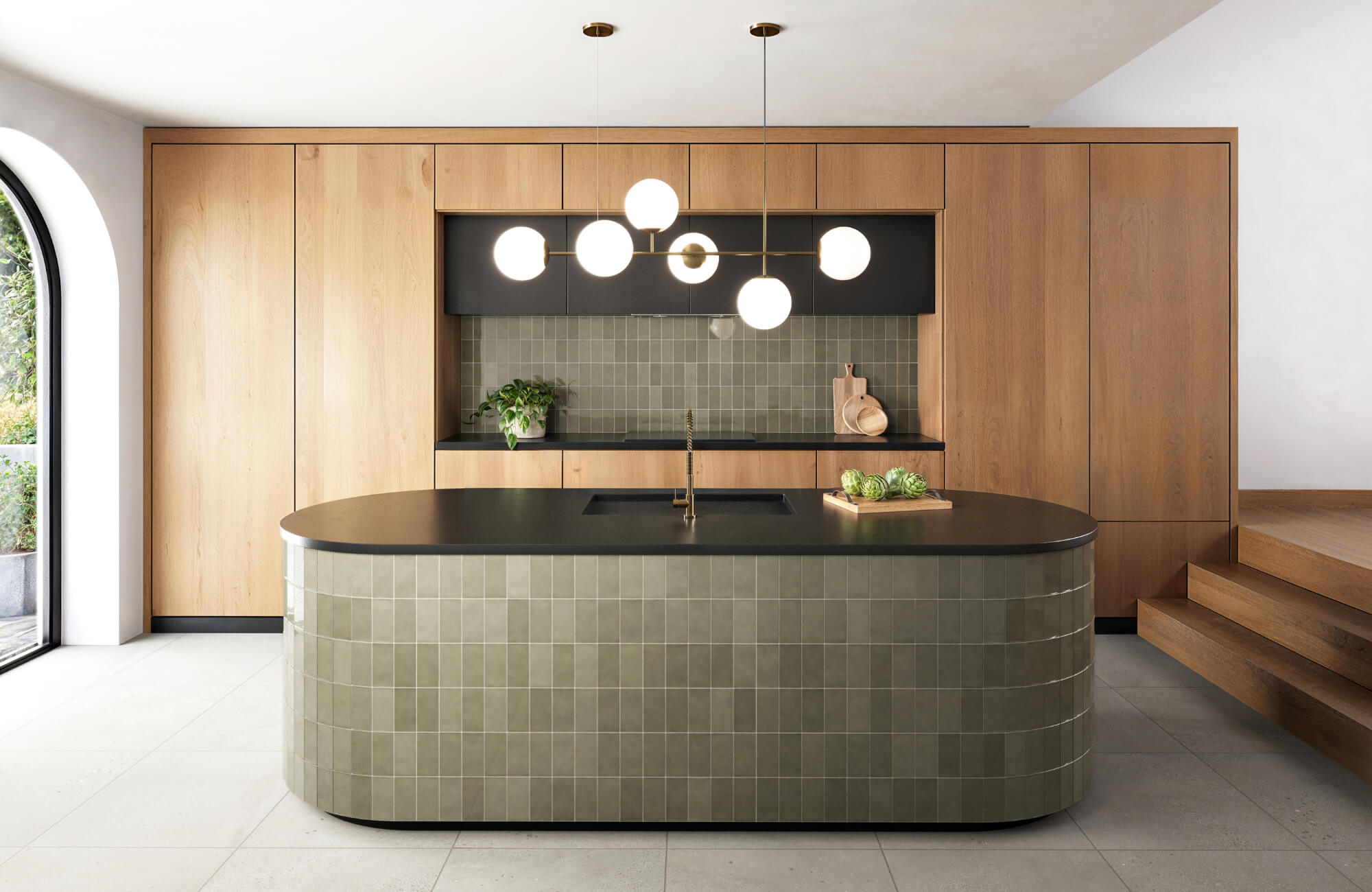
Wood is one of the most effective materials for balancing terrazzo’s cool, hard surface. Natural wood tones introduce warmth and texture, preventing a space from feeling overly stark or sterile. This pairing feels especially inviting in kitchens and living areas, as shown in the image above with Edward Martin’s Sloane 24x24 Matte Porcelain Tile in Sandstone set against warm wood cabinetry and finishes.
Lighter woods lend an airy, Scandinavian-inspired feel, while richer tones add depth and a sense of sophistication. In both cases, the contrast between terrazzo and wood enhances visual interest and reinforces an intentional, residential aesthetic that feels both modern and livable.
Pairing with Minimalist Metals
Metals act as complementary elements in modern terrazzo interiors. Brushed brass, matte black, and soft stainless steel finishes complement terrazzo without overpowering it, echoing the subtle sheen of the aggregate pieces while maintaining a clean, contemporary feel. Tools like Edward Martin’s Augmented Reality (AR) Visualization Tool make it easier to see how these finishes interact with terrazzo in your own space before committing.
Using metals sparingly in fixtures, lighting, or hardware helps define the space and adds refinement, and once a combination feels right on screen, ordering tile samples from Edward Martin allows you to confirm the look in natural light and alongside existing materials. The key is restraint, letting terrazzo remain a textured backdrop rather than competing with overly ornate details.
Using Rugs to Soften the Hardscape
In living areas and bedrooms, area rugs provide an effective way to soften terrazzo floors and add comfort underfoot. Rugs introduce color, pattern, and warmth, breaking up large expanses of hard surface while preserving terrazzo’s visual appeal.
Layering rugs over terrazzo also reinforces the residential character of the space. It signals comfort and livability, countering any lingering perceptions of terrazzo as purely functional. The combination allows homeowners to enjoy the durability of terrazzo while tailoring the atmosphere to their personal style.
Terrazzo Is the Art of the Floor
Terrazzo’s return to modern homes is not a fleeting trend but a reflection of evolving design values. Homeowners today seek materials that are expressive yet practical, durable yet visually engaging. Terrazzo meets these demands by offering a surface that functions as both foundation and artwork.
Through advances in porcelain tile, terrazzo has shed many of its limitations while retaining its distinctive character. Its adaptability across rooms, its compatibility with contemporary materials, and its ability to age gracefully make it a compelling choice for modern living. When used thoughtfully, terrazzo elevates interiors, transforming the floor from a background element into a defining feature of the home.
In this sense, terrazzo is not simply back in style. It has been redefined as an enduring design language, one that celebrates craftsmanship, embraces modern innovation, and proves that the most impactful design statements often begin from the ground up.
Follow us on Instagram
@EDWARD.MARTIN
)
)
)
)
)
)
)
)
)
)
)
)
)
)
)
)