Marble has long been celebrated for its refined beauty and enduring sophistication, making it a favored material for floors, walls, and countertops alike. Despite its prestigious reputation, it is often labeled as overly delicate or demanding to maintain. While marble does require a thoughtful approach to care, it is far from impractical. With proper maintenance and a clear understanding of its natural characteristics, marble can retain its elegance for decades. For those who admire the look of marble but prefer a surface with fewer upkeep considerations, marble look tile offers a practical alternative that captures the same visual appeal with enhanced durability. In this article, we’ll take a closer look at what caring for marble truly involves and share practical guidance to help you preserve its timeless appeal with confidence.

Understanding Marble Care and Maintenance
While marble is often perceived as a high-maintenance material, with proper care, it can be a durable and beautiful addition to your home. By understanding its unique properties and following a few simple maintenance tips, you can keep your marble tiles looking their best for years to come.
The Natural Properties of Marble
Marble is a metamorphic stone formed when limestone is subjected to intense heat and pressure deep within the earth, a process that gives it both structural density and remarkable visual depth. Its crystalline composition creates the smooth surface and distinctive veining patterns that have made it synonymous with elegance for centuries. These flowing veins, shaped by mineral impurities during formation, also ensure that no two slabs are ever exactly alike, reinforcing marble’s appeal as a one-of-a-kind natural material.
At the same time, marble’s beauty is closely tied to its composition. Because it is primarily made of calcium carbonate, it is naturally porous and chemically reactive. This porosity allows liquids such as water, wine, coffee, or acidic substances like citrus juice to penetrate the surface if left unattended. When acids interact with the stone, they can cause etching, which appears as dull spots or subtle surface marks rather than traditional stains. In addition, while marble is durable, its polished finish can be scratched by abrasive particles like sand or grit, making routine dust removal an important part of its care. Understanding these inherent characteristics helps explain why marble benefits from thoughtful maintenance rather than intensive upkeep.
Types of Marble and Their Maintenance Needs
Different types of marble vary in their porosity, color, and veining patterns. Understanding these variations can help you choose the right marble for your specific needs and tailor your maintenance routine accordingly.
Carrara Marble
Known for its soft white background and delicate gray veining, Carrara marble is one of the most widely used varieties in both traditional and contemporary interiors. Its understated elegance makes it especially popular for bathroom vanities, backsplashes, and flooring where a light, airy aesthetic is desired. However, Carrara tends to be more porous than some other marble types, which means it can also absorb liquids more readily if left unsealed. Because of this, consistent sealing and prompt attention to spills are essential to preserving its clean, refined appearance. With proper care, Carrara develops a gentle patina over time that many homeowners find adds to its character rather than detracts from it.
Calacatta Marble
Calacatta marble is distinguished by its bold, dramatic veining set against a creamy white backdrop, creating a striking visual statement wherever it is installed. Often considered more luxurious and rarer than Carrara, it is frequently used as a focal point in kitchens, feature walls, or statement islands. Although it is generally less porous than Carrara, it is still composed primarily of calcium carbonate and therefore remains vulnerable to etching and staining if exposed to acidic substances. Regular cleaning with pH-neutral products and periodic sealing can help maintain its luminous surface and prevent dulling over time. When properly maintained, Calacatta retains its high-contrast beauty and continues to elevate the overall design of a space.
Statuary Marble
Statuary marble is highly prized for its bright white field and fine, refined veining, qualities that have made it a historic favorite for sculptures and architectural detailing. Its smooth texture and uniform appearance lend a sophisticated, gallery-like feel to interiors. Because of its relatively delicate structure and premium status, statuary marble benefits from particularly attentive care. Gentle cleaning methods, protective sealing, and avoiding abrasive contact are especially important to preserve its pristine finish. When treated with care, statuary marble maintains its crisp elegance and timeless appeal, making it a true investment material in both decorative and functional applications.
Common Misconceptions About Marble Maintenance
Marble is often described as fragile or overly demanding, yet much of this reputation stems from misunderstanding rather than reality. One common belief is that marble surfaces require constant polishing to maintain their shine. In truth, marble does not need daily buffing to remain attractive; its luster is preserved primarily through consistent but simple care and the use of appropriate cleaning products. Over-polishing can even accelerate surface wear, making moderation more effective than excessive treatment.
Another misconception is that any contact with water will immediately damage marble. While prolonged moisture exposure can lead to issues if the stone is unsealed, routine contact, such as in bathrooms or kitchens, is generally manageable when surfaces are properly protected and dried after use. Marble is designed by nature to withstand environmental elements; it simply benefits from preventative measures that reduce long-term absorption.
There is also a tendency to assume that every mark on marble is permanent. In many cases, minor etching or surface dullness can be professionally restored without replacing the material entirely. Understanding these distinctions helps reframe marble not as a high-risk surface, but as a natural material that responds well to informed and balanced care.

Practical Tips for Marble Tile Care
Marble tiles add timeless elegance to any bathroom, but proper care is essential to maintain their luster and longevity. Below are simple yet effective tips to keep them looking pristine. Remember that these are general guidelines, and it’s always best to consult the manufacturer or a professional for specific care instructions tailored to your marble tiles.
Daily Care Routine
Consistent daily care is crucial for maintaining the beauty of marble tiles. Dust the surface with a soft, lint-free cloth or microfiber mop to prevent scratches from dust and debris. For deeper cleaning, use a pH-neutral cleaner mixed with warm water, applied gently with a soft cloth or sponge. Avoid harsh chemicals, abrasive cleaners, or acidic substances like vinegar, which can harm the marble's finish. Additionally, excessive moisture should be avoided as water can seep into the pores and cause staining or etching. Always dry the surface thoroughly after cleaning to preserve its polished appearance.
Weekly Maintenance
Weekly maintenance ensures marble tiles remain in top condition. Use a pH-neutral cleaner and a soft-bristled brush to clean grout lines and remove accumulated grime. For stubborn stains like wine or oil, test a stronger cleaner on a discreet area before applying it to the stain. Hard water spots, on the other hand, can be treated with a mixture of warm water and isopropyl alcohol. Apply the solution to the affected area, allow it to sit briefly, and wipe it clean to restore the marble's smooth, polished look.
Annual Maintenance
Annual maintenance is key to sustaining the elegance of marble tiles. Professional polishing every one to two years helps eliminate scratches, etching, and dullness, restoring the marble's natural shine. Additionally, resealing the tiles protects them from stains and water damage. A professionally applied high-quality sealant forms a protective barrier, ensuring the marble remains durable and visually appealing over time.

The Real Costs of Marble Maintenance
Maintaining marble involves both predictable routine expenses and occasional restorative services, and understanding these costs upfront allows homeowners to plan realistically. While marble itself is often a premium material, its ongoing care is typically moderate rather than excessive when approached proactively. Most of the expense lies not in daily cleaning, but in periodic protection and professional upkeep that preserves the stone’s integrity over time.
Routine cleaning supplies, such as pH-neutral stone cleaners and microfiber mops, generally cost between $15 to $40 per product, depending on brand and size, and can last several months with regular use. Sealants designed specifically for natural stone typically range from $30 to $80 per bottle, with one bottle often covering several hundred square feet. For those who choose professional sealing services, costs commonly fall between $1 to $3 per square foot, depending on the condition of the surface and regional labor rates.
Over time, marble may also require professional polishing to address light scratches, etching, or surface dullness. Light restoration services generally range from $3 to $7 per square foot, while more intensive refinishing can cost between $5 to $12 per square foot if grinding or honing is necessary. Although these services are not required annually in most residential settings, budgeting for them every few years helps maintain marble’s original sheen.
Compared to materials that may need full replacement after a decade or two, marble’s longevity can offset its maintenance costs. When properly sealed and cared for, marble surfaces can last for generations, making the long-term investment more about preservation than repair. By viewing maintenance as preventative rather than reactive, homeowners often find the overall costs manageable in relation to marble’s enduring aesthetic and structural value.

Exploring Alternatives to Marble
While marble is undoubtedly a luxurious and beautiful material, it may not be the best choice for every homeowner. Its high cost, susceptibility to damage, and maintenance requirements can be deterrents. Fortunately, several excellent alternatives offer similar aesthetic appeal and superior performance.
Porcelain Tiles
Porcelain tile has become one of the most reliable alternatives for homeowners who appreciate the refined look of marble but prefer a surface engineered for resilience. Manufactured under high heat and pressure, porcelain is dense, less porous than natural stone, and highly resistant to moisture, staining, and wear. This makes it particularly well-suited for busy floors, bathrooms, kitchens, and even commercial settings where durability is essential.
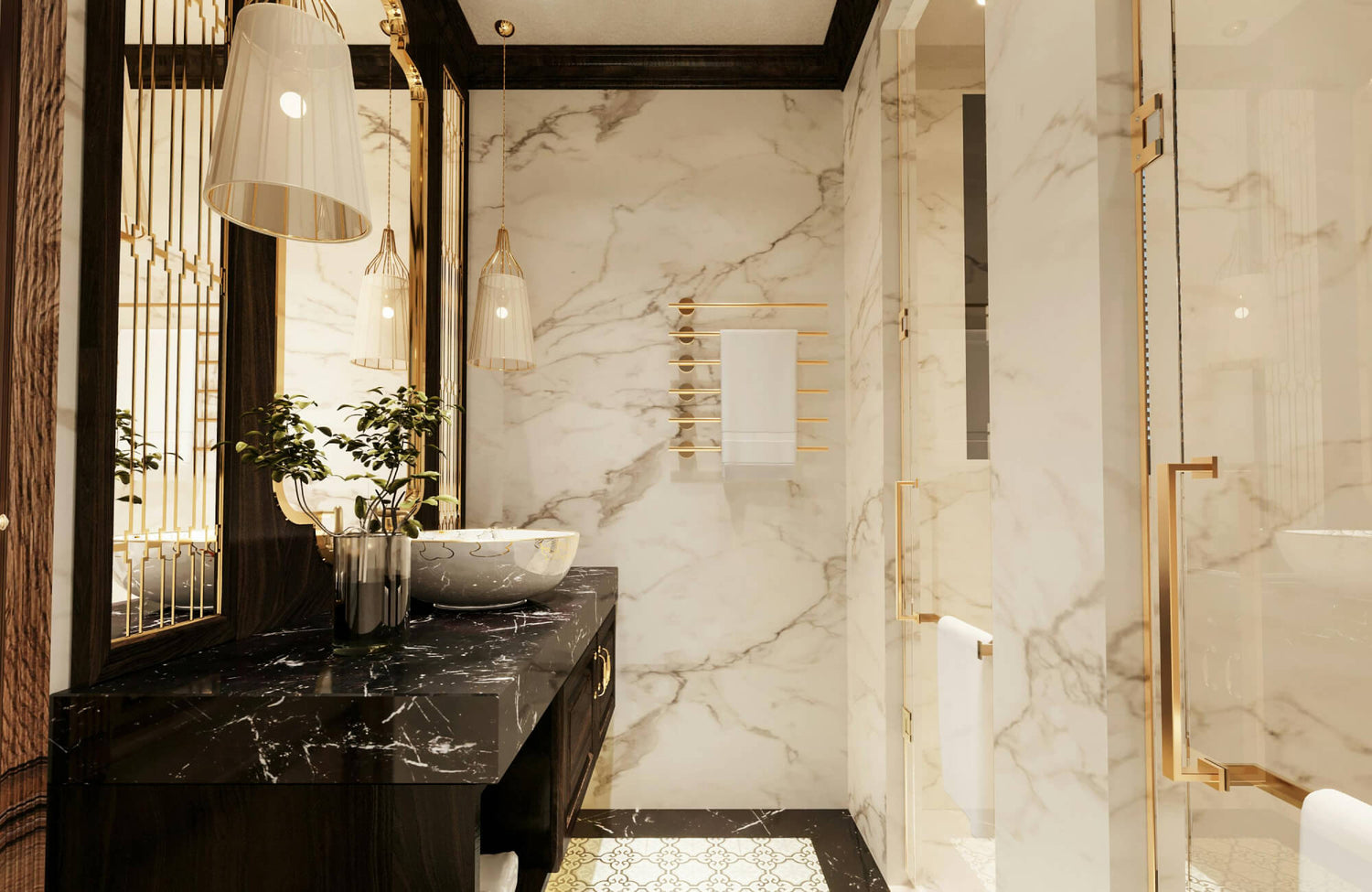
Advancements in printing technology now allow porcelain to replicate marble’s veining and tonal variation with impressive realism. For example, Edward Martin’s Aniston 24x48 Matte Porcelain Tile in Calacatta Quarzite, as displayed in the photo above, captures the dramatic movement and luminous quality of natural marble while offering the structural strength porcelain is known for. Its large-format design minimizes grout lines, creating a seamless and expansive visual effect reminiscent of a continuous marble slab. Unlike natural marble, porcelain does not require sealing and can be easily maintained with routine sweeping and occasional cleaning using warm water and a mild detergent, making it a practical solution for those seeking long-term performance with minimal upkeep.
Ceramic Tiles
Ceramic tile offers another accessible way to achieve a marble-inspired aesthetic, particularly in vertical applications. While ceramic is slightly less dense than porcelain and not typically recommended for heavy-use flooring, it performs exceptionally well on walls, shower surrounds, and kitchen backsplashes where exposure to wear is more limited. Its lighter weight also makes installation easier in decorative settings.
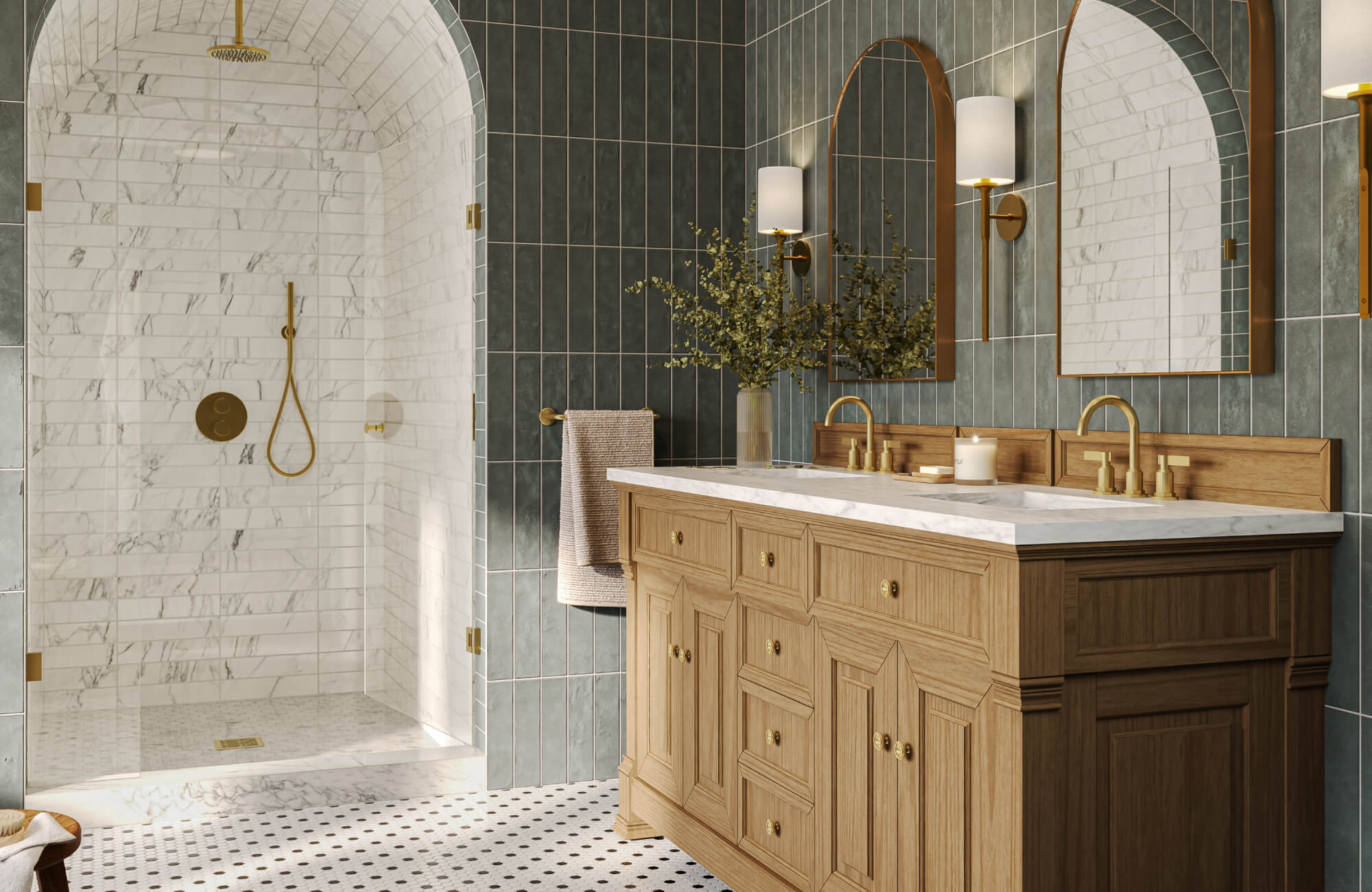
Modern ceramic tiles are designed to reflect the soft veining and polished elegance associated with classic marble. Our Julianna 4x12 Polished Ceramic Tile in Carrara, for instance, recreates the timeless beauty of Carrara marble in a glossy finish that enhances light reflection, making it especially effective for brightening backsplashes and bathroom walls. Because ceramic is best suited for vertical surfaces rather than floors, it provides a stylish yet practical option for homeowners who want marble’s visual charm without committing to the structural demands of natural stone. With straightforward cleaning and no need for sealing, ceramic tile remains a low-maintenance choice for decorative wall applications.
Engineered Stone
Engineered stone offers a compelling alternative to marble, combining crushed stone or quartz with resin to create a highly durable and versatile product. This man-made material is known for its resistance to stains, scratches, and heat, making it an excellent choice for areas prone to heavy use. It also provides a uniform appearance that can be manufactured in a range of colors and patterns to mimic natural stone, including marble. However, despite its durability, engineered stone is not completely immune to damage; it can sometimes be sensitive to UV light and extreme heat, which can cause discoloration or cracking over time.
Other Natural Stone Materials
As alternatives to marble, several natural stones offer their unique advantages and considerations:
Granite
Granite is renowned for its hardness and durability, making it ideal for high-use areas such as kitchens and bathrooms. While generally more expensive than marble, granite requires less maintenance due to its resistance to scratching and staining. However, like all natural stones, it does require periodic sealing to maintain its appearance and functionality.
Quartzite
Quartzite is a metamorphic rock that closely resembles marble but offers superior durability and stain resistance, making it suitable for both interior and exterior applications. It tends to be more expensive than marble but is a worthwhile investment for those seeking a marble-like appearance with enhanced performance characteristics.
Travertine
Travertine offers a warmer, more relaxed interpretation of natural stone, distinguished by its soft earth tones and subtly textured surface. Formed from mineral deposits in natural springs, it features small pores and organic movement that give it a rustic yet refined character. While it shares some porosity with marble and therefore benefits from regular sealing, its typically honed or matte finish makes minor etching and wear less noticeable. Travertine also works especially well in Mediterranean, traditional, or spa-inspired interiors where a gently aged aesthetic is desired.
Limestone
Limestone presents a quieter, more understated alternative to marble, often characterized by consistent coloring and a soft, velvety surface. Its muted palette of creams, beiges, and light grays lends itself to serene, cohesive spaces. Like marble, limestone is porous and requires sealing to guard against moisture and staining, yet its subtle patterning allows it to age gracefully over time. It is particularly well-suited for low-use areas or interiors that emphasize natural texture over dramatic veining.
Soapstone
Soapstone differs more noticeably from marble in both appearance and performance, offering a dense, smooth surface typically found in deep charcoal or green-gray tones. Unlike marble, soapstone is non-porous and does not require sealing, making it naturally resistant to staining and bacterial growth. Although softer than granite, it is less reactive to acids, reducing concerns about etching. Over time, soapstone develops a rich patina that enhances its depth of color, appealing to homeowners who appreciate a surface that evolves with use.
For those still deciding between marble and its alternatives, visualizing the material within your own space can make the selection process far more intuitive. Edward Martin’s augmented reality (AR) tool allows you to preview different tile options in real time, helping you choose with greater clarity and confidence.
Weighing the Beauty and Demands of Marble Tile
Marble tile, with its luxurious and timeless elegance, is a classic choice for those seeking to elevate their home's decor. While often perceived as high-maintenance, marble can indeed be a manageable and enduring option when cared for properly. Regular cleaning, along with periodic treatments such as sealing and professional polishing, ensures that it retains its beauty and remains a stunning feature in any home for generations.
However, for those deterred by the maintenance or cost, alternatives such as ceramic and porcelain tiles designed to mimic marble offer similar aesthetic appeal with greater durability and less upkeep. These materials provide a practical solution for busy households, resisting stains and scratches and requiring minimal maintenance. Just remember that when deciding whether marble or its alternatives are right for your home, consider factors like budget, intended use, and desired aesthetic. Each option offers unique benefits and challenges, so weighing these against your personal preferences and practical needs can help you make a well-informed decision that satisfies both your style and daily life requirements. Consulting with a design professional can also aid in navigating these choices to ensure a tailored and beneficial outcome.