Marble walls don’t just decorate a space; they become the focal point the moment you walk in. The veining, the way light hits the surface, and even the scale of the slabs all shape whether a room feels calm and understated or bold and high-contrast. But once you start thinking about real use, questions come up quickly: will it hold up in a bathroom, how much maintenance does it actually need, and is the installation worth it long term? These are the details that matter just as much as the look itself. In this blog, we’ll break it all down and show you when marble makes sense, and when marble look tiles might be the smarter choice for your space.

Aesthetics and Practicality in Busy Zones
Marble has a way of instantly elevating a space, not just visually, but in how it feels when you walk into it. The veining, depth, and natural variation bring a level of detail that’s hard to replicate with other materials. But once you start thinking about placing it in areas that are used every day, it’s no longer just about appearance.
Visual Impact and Design Integration
The type of marble you choose does more than define the wall; it sets the tone for the entire room. Carrara marble, with its softer grey veining, tends to create a more relaxed and understated look that blends naturally with neutral palettes, light woods, and softer finishes. It works well in spaces where you want something refined but not overpowering, especially in areas meant to feel calm and lived-in. Calacatta marble, on the other hand, brings a much stronger presence, with bold veining and higher contrast that immediately draws attention. It pairs well with darker finishes and richer materials, where the contrast helps create a more layered and intentional design. Choosing between them really comes down to how much you want the wall to stand out versus blend in.
How marble is applied matters just as much as the type itself. A full-height marble wall can feel dramatic and polished, especially when lighting is used to highlight the veining and natural movement in the stone. Patterned layouts like herringbone or chevron introduce a different kind of energy, adding movement and breaking up larger surfaces so they don’t feel too static. Book-matched slabs create a mirrored effect that feels more architectural, often making spaces like bathrooms or hallways feel more expansive. These decisions shape how the marble interacts with the space, not just how it looks on its own. When everything is considered together, the result feels more intentional and less like a surface treatment.
Wear and Tear Considerations
As polished and durable as marble appears, it reacts more to everyday conditions than most people expect. In spaces with regular movement, small particles like dust or grit can gradually wear down the surface, creating fine marks that affect how light reflects off it. This is especially noticeable on smoother finishes, where even subtle changes can alter the overall look. Edges and corners are also more exposed, which makes them more prone to chipping from everyday contact or accidental impact. These aren’t always immediate issues, but they tend to show up over time with consistent use.
Marble also responds to common household substances in ways that aren’t always obvious at first. Spills from coffee, wine, or citrus don’t just sit on the surface; they can interact with the stone and leave behind dull spots if not addressed quickly. This doesn’t mean marble can’t be used in active areas, but it does mean you need to be a bit more aware of how it behaves. In lower-contact spaces, these effects are less noticeable, but in more active zones, they can influence how the surface ages. Knowing this upfront helps set expectations and makes it easier to decide where marble will work best. It’s less about avoiding use and more about understanding how it responds to it.
Customization and Finishing Options
Marble’s finish plays a major role in both its appearance and how it performs over time. The right finish can either highlight its natural veining or soften its overall look, depending on how you want the space to feel. It also affects how much wear shows on the surface, which becomes more important in areas that see regular use. Because of this, choosing a finish isn’t just a design decision; it’s also a practical one. The goal is to find something that looks right while still fitting how the space is actually used.
Polished Finish
A polished finish brings out the full depth and contrast of marble, creating a reflective surface that helps brighten the room and highlight the natural veining. It’s often used when the goal is to make the marble stand out as a focal point, especially in feature walls or more formal areas. The shine adds a sense of refinement, but it also makes the surface more sensitive to everyday marks like fingerprints or light scratches. Because it reflects light so clearly, even small imperfections can become more noticeable over time. This is why polished finishes tend to work better in areas that don’t see constant contact. When placed correctly, though, they create a strong visual impact that feels clean and elevated.
Honed Finish
A honed finish offers a softer, matte look that feels more relaxed and easier to live with. Instead of reflecting light, it diffuses it, which helps reduce glare and makes the surface feel less formal overall. This also means minor scratches or wear tend to blend in rather than stand out, which is helpful in spaces that are used more frequently. It’s a good option when you want marble to feel present but not overpowering. The finish works well across different styles, from modern to more traditional interiors, without drawing too much attention to itself. Over time, it tends to age more evenly, which makes it a practical choice for everyday spaces.
Leathered Finish
A leathered finish introduces a subtle texture that adds depth without taking away from the natural look of the stone. It creates a more tactile surface, which can make the marble feel less formal and more grounded in the space. This texture also helps disguise things like water spots or fingerprints, which makes it easier to maintain visually. It works particularly well in areas where you want a bit more character without relying on high contrast or shine. The finish adds variation to how light hits the surface, giving it a slightly more dynamic look. In the right setting, it balances aesthetics and practicality in a way that feels natural rather than forced.

Moisture Resistance and Bathroom Applications
Marble can look incredible in bathrooms, especially when used across larger wall areas or as a feature surface. It naturally brings in that clean, spa-like feel that a lot of homeowners are after. But once you place it in a space where moisture is constant, the way it behaves becomes just as important as how it looks. Humidity, water exposure, and daily use all start to affect the surface over time.
Porosity and Water Absorption
One of the biggest things to understand about marble in bathrooms is how it handles moisture on a daily basis. It doesn’t just deal with direct water contact; it also reacts to humidity in the air, which is always present in enclosed spaces like showers. Some marbles, especially lighter ones like Carrara, tend to absorb moisture more easily, which can slowly change how the surface looks over time. You might start to notice subtle darkening, dull patches, or uneven areas where water exposure happens more often. This doesn’t always happen right away, but it builds gradually with repeated use. That’s why marble in bathrooms tends to age based on how the space is used, not just how it was installed.
Hard water adds another layer to this, especially in areas where water dries on the surface regularly. As moisture evaporates, it leaves behind mineral deposits that can create visible streaks or a slightly chalky film, particularly on smoother finishes. Over time, this buildup can make the surface look less refined if it’s not cleaned consistently. In areas like showers, where water exposure is constant, moisture can also settle into the stone if it’s not properly managed. This can lead to deeper changes in the material, from minor surface wear to more noticeable structural effects if left unchecked. It’s not about avoiding marble in these areas, but about understanding how it reacts in that environment.
Managing moisture becomes less about one solution and more about a combination of small, consistent habits. Good ventilation plays a big role, since reducing humidity helps limit how much moisture lingers on the surface. Exhaust fans, open airflow, or even simple practices like leaving the door open after use can make a difference over time. Wiping down wet areas, especially in showers, helps prevent water from sitting too long and soaking in. These steps don’t take much effort, but they go a long way in keeping the surface looking even. When these habits are in place, marble becomes much easier to maintain in moisture-heavy spaces.
Installation Techniques for Wet Environments
How marble is installed in a bathroom matters just as much as the material itself. Because it’s naturally porous, the layers behind the tile need to be set up properly to keep moisture from moving beyond the surface. Using a moisture-resistant backer board instead of standard drywall creates a much more stable base, especially in areas like showers where water exposure is constant. Without that support, even well-installed marble can start to show issues over time. This is one of those steps that doesn’t get seen, but it directly affects how long the installation holds up. Getting the foundation right makes everything else easier to maintain.
Adding a waterproof membrane behind the installation creates another layer of protection that helps control how moisture moves through the space. This becomes especially important in enclosed areas like shower walls, where water is hitting the surface regularly. It helps prevent moisture from reaching the structure behind the tile, which reduces the risk of long-term damage. Grout also plays a bigger role than most people expect, since traditional options can absorb moisture if left unsealed. Choosing a more water-resistant grout helps keep the surface more consistent and easier to clean over time. When all of these elements work together, the installation feels more secure and less reactive to daily use.
Small structural details also make a difference once the space starts being used regularly. Expansion joints, for example, allow the material to adjust slightly with changes in temperature and humidity, which helps prevent stress from building up in certain areas. Without that flexibility, small shifts can eventually lead to cracks or separation over time. These details aren’t always noticeable right away, but they help maintain the overall integrity of the installation. In moisture-prone spaces, it’s these behind-the-scenes decisions that determine how well the marble performs. When everything is done properly from the start, the surface holds its look much more consistently.

Structural Integrity and Wall Load Capacity
Marble’s substantial weight requires careful planning to ensure walls can support its load without compromising stability. Unlike lightweight wall finishes, marble demands reinforced support to prevent long-term structural issues.
Weight Distribution and Support Systems
Marble’s density makes it considerably heavier than standard wall finishes, with slabs often exceeding 160 pounds per cubic foot. This immense weight creates continuous downward pressure on the underlying structure, making proper weight distribution essential to prevent long-term stress-related damage. If the load is not evenly spread, certain areas may bear excessive strain, leading to potential structural issues such as bowing, warping, or even detachment over time. To minimize these risks, each section of the marble installation must be securely anchored, ensuring that no single point carries more weight than it can support.
Unlike lightweight materials that can be installed directly onto drywall, marble also requires a reinforced substrate capable of handling its considerable mass. Standard drywall lacks the necessary strength to support such weight, increasing the likelihood of cracks or outright failure if proper reinforcements are not in place. Depending on the slab’s thickness and the scale of the installation, additional structural modifications may be necessary. Reinforcements such as plywood backing, metal brackets, or mechanical anchors also help transfer the load effectively to the underlying framework, ensuring long-term stability. Without these essential support systems, the weight of the marble could compromise the integrity of the wall, leading to costly repairs and potential safety hazards.
Wall Preparation and Reinforcement
Before installing marble, properly assessing and preparing the wall is essential to ensure a secure and long-lasting application. As a naturally heavy material, marble requires a stable and supportive surface to prevent structural issues over time. A thorough inspection also helps identify any structural weaknesses, uneven surfaces, or existing damage that could compromise the installation. Even minor imperfections can lead to stress fractures, particularly if the wall is unable to evenly distribute the load. Addressing these issues early on helps prevent costly repairs and ensures that the marble remains firmly in place without shifting or cracking.
To create a stable foundation, reinforcement methods such as plywood backing or metal framing may be necessary, especially for larger installations or when working with particularly heavy slabs. These reinforcements help distribute weight more evenly, reducing stress on the wall structure and improving long-term stability. In areas prone to humidity, choosing moisture-resistant materials is equally important to protect against potential deterioration. Consulting a structural engineer can also provide valuable guidance on whether additional support is required, ensuring that the wall can safely bear the weight of the marble for years to come.
Thermal Conductivity and Climate Considerations
Marble’s natural thermal conductivity makes it a unique material that responds quickly to temperature changes. In warm climates, this characteristic provides a cooling effect, making marble walls a comfortable choice for areas with high temperatures. The stone also remains pleasantly cool to the touch, helping to regulate indoor temperatures naturally. This is particularly beneficial in sunlit rooms or outdoor applications where heat absorption can be a concern. However, in colder climates, marble’s ability to retain cold can make spaces feel less inviting.
If marble is used extensively on walls in cooler regions, underfloor heating or radiant wall heating can help balance its temperature, preventing an uncomfortably cold surface. In bathrooms, pairing marble with heated towel racks or ambient heating systems enhances comfort without compromising the stone’s beauty. Additionally, choosing the right finish can also impact thermal perception—honed or textured finishes tend to feel slightly warmer than high-gloss polished surfaces, which reflect more light and temperature fluctuations.

Maintenance and Longevity
Although marble offers timeless beauty, maintaining its elegance requires consistent care. Its porous nature makes it vulnerable to staining, scratches, and dullness if not properly protected. Regular cleaning, sealing, and mindful upkeep help preserve its finish, ensuring long-term durability and a pristine appearance.
Cleaning and Stain Prevention
Keeping marble surfaces clean is essential for preserving their smooth texture and refined finish. Over time, dust, dirt, and small debris can act as abrasives, gradually wearing down the surface and making it more susceptible to scratches and dullness. To minimize this risk, regular cleaning is key. A soft microfiber cloth works well for wiping down countertops, effectively removing dust and particles before they settle into the stone. For flooring, a damp mop with warm water helps lift dirt without causing unnecessary wear.
In addition to regular cleaning, choosing the right cleaning products is just as important. Acidic and abrasive cleaners, including vinegar, lemon juice, and bleach-based solutions, can strip away the stone’s protective layer, leading to etching and permanent dull spots. To prevent this, a pH-neutral stone cleaner is the safest choice, effectively removing dirt and grime, and preserving the marble’s natural luster. Furthermore, spills should be wiped up immediately to prevent staining. Liquids can seep into the porous surface if left unattended, causing discoloration that is difficult to reverse.
Since different types of marble may have unique maintenance requirements, always follow the manufacturer’s care recommendations to ensure proper upkeep. When using a new cleaning product, test it on a small, inconspicuous area first to check for compatibility with the stone. If unsure about the best care practices, consulting a professional can also help prevent accidental damage and keep marble surfaces looking pristine for years to come.
Sealing and Surface Protection
One of the most important steps in preserving the beauty and integrity of marble is proper sealing. Because marble is naturally porous, it can absorb liquids that lead to staining, etching, or long-term damage. If left unprotected, common household substances like coffee, wine, and even water can seep into the stone, resulting in unsightly discoloration. To avoid these issues, a high-quality penetrating sealant helps mitigate the risks by forming an invisible shield that repels moisture without restricting the stone's ability to breathe. As a result, this not only safeguards the surface but also simplifies cleaning and maintenance, ensuring that spills can be wiped away before they cause lasting damage.
How often marble needs to be resealed depends on several factors, including usage, exposure to moisture, and the specific type of marble. For example, in areas with high humidity, such as bathrooms and kitchens, sealing may need to be refreshed annually to maintain its protective qualities. Conversely, in drier spaces with minimal exposure to water, a properly applied sealant can last up to three years before reapplication is necessary. To check if resealing is needed, a simple water droplet test can be performed. If a drop of water is absorbed rather than beading on the surface, it’s time to apply a fresh coat of sealant. By staying proactive with sealing and surface care, you can preserve the elegance of marble, protecting it from everyday wear and tear.

Marble Look Tiles as a Versatile and Practical Alternative
Marble look tiles capture the beauty of natural stone, providing enhanced durability and ease of maintenance. Thanks to technological advancements, these tiles mimic the veining and texture of real marble with remarkable accuracy. Their resistance to stains, scratches, and moisture also makes them a practical choice for achieving a luxurious aesthetic without the upkeep of genuine marble.
Sustainability and Environmental Impact
Marble look tiles offer a more efficient way to achieve the look of natural stone without relying on large-scale quarrying. Instead of extracting full slabs from the earth, these tiles are manufactured using controlled processes that require fewer raw resources and create less disruption to natural landscapes. This reduces the need for intensive excavation, which is one of the biggest environmental concerns tied to natural marble. It also allows for more consistent production, where materials are used more efficiently with less waste. Over time, this approach supports a more balanced way of bringing stone-inspired design into a space. For homeowners who value both aesthetics and responsibility, this becomes a practical advantage.
Another benefit comes from how marble look tiles are produced and used over time. Many porcelain and ceramic tiles incorporate recycled materials during manufacturing, which helps reduce overall waste while extending the lifecycle of raw inputs. Because these tiles are durable and resistant to wear, they also don’t need to be replaced as often, which lowers long-term material consumption. Their non-porous surface eliminates the need for sealants or chemical treatments, further reducing maintenance-related environmental impact. Combined with easier transportation due to their lighter and more uniform format, they create a more streamlined process from production to installation. When all of these factors come together, marble look tiles offer a more sustainable way to achieve a similar visual result without the added environmental cost.
Material Variations and Aesthetic Fidelity
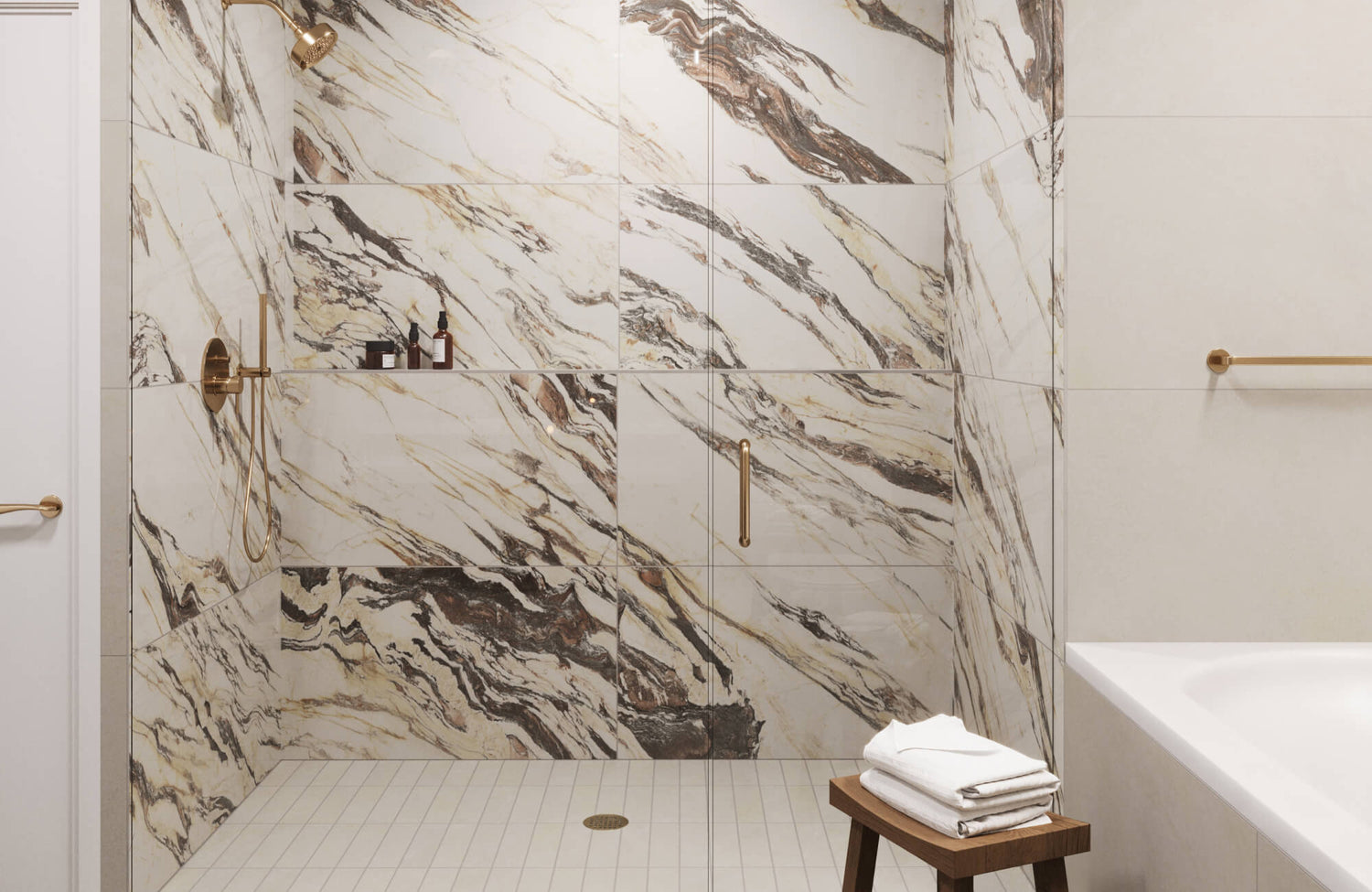
With the rise of advanced digital printing techniques, marble look tiles have undergone significant advancements, replicating the intricate veining, color depth, and texture of authentic marble with remarkable precision. Unlike earlier versions, which often lacked subtle details, modern porcelain and ceramic options closely mimic natural variations, ensuring a highly realistic appearance. A perfect example is the Aniston 24x48 Matte Porcelain Tile in Calacatta Quartzite, displayed in the photo above, which beautifully captures the elegant white background and striking gray veining of classic Calacatta marble. Offering the luxurious appeal of natural stone with the durability and low maintenance of porcelain, this tile is an ideal choice for walls, floors, and statement features.
Beyond their visual appeal, the diverse material compositions of marble look tiles contribute to their practicality. Porcelain versions, known for their density and low porosity, are particularly well-suited for wall applications in moisture-prone areas such as bathrooms and kitchens. Their water resistance helps prevent damage from humidity and splashes, making them a durable choice for shower surrounds, backsplashes, and feature walls. Additionally, their strength and stain resistance allows them to maintain their appearance over time with minimal maintenance.
While porcelain is a great choice for walls, it is the best option for floors as well, offering exceptional durability and resistance to heavy use. Meanwhile, ceramic marble look tiles are commonly used on walls, offering a lightweight yet stylish option that enhances vertical surfaces without the added weight of porcelain. Although ceramic is slightly more porous, it remains a reliable choice for accent walls and areas with minimal exposure to moisture, providing both aesthetic appeal and functionality.
To further enhance their versatility, these tiles are available in a range of finishes that cater to different design preferences. A polished finish like our Blair 3x3 Polished Porcelain Hexagon Mosaic Tile in White Carrara, for example, offers a reflective, glossy surface that mimics the opulence of real marble, creating a bright and elegant ambiance. In contrast, matte finishes provide a softer, more understated appeal, offering better traction underfoot. For those who prefer added texture, textured options introduce depth and dimension, making them ideal for a more natural, tactile effect.
Selecting the right marble look tile is not just about style but also how it fits within your space. To help with this, our augmented reality (AR) technology allows you to visualize different tile options in real time. By seeing how various colors, finishes, and patterns interact with your lighting and décor, you can confidently select the perfect style before making a final decision.
Performance and Maintenance Advantages
Although natural marble is undeniably luxurious, it comes with a level of fragility that requires constant attention. Its porous nature makes it highly susceptible to stains, and even a small spill can lead to lasting discoloration if not cleaned immediately. Additionally, everyday activities can leave visible scratches, especially in areas with frequent movement. Marble look tiles eliminate these concerns by offering a surface that is highly resistant to scratches, stains, and etching. Whether placed in a bustling kitchen or a well-used bathroom, these tiles maintain their pristine appearance without the need for delicate handling. Unlike natural stone, which can develop imperfections from contact with acidic substances like lemon juice or vinegar, marble look tiles remain unaffected, making them a practical solution for spaces that demand durability without sacrificing elegance.
Beyond their resilience, marble look tiles stand out for their effortless maintenance. Unlike real marble, which requires regular sealing to prevent moisture absorption and staining, these tiles need nothing more than routine cleaning with mild detergent and water, as recommended by the manufacturer. Their non-porous surface also prevents dirt and grime from seeping in, ensuring a hygienic and easy-to-maintain option for both residential and commercial spaces.
Installation Flexibility and Cost-Effectiveness
One of the most compelling advantages of marble look tiles is their affordability compared to real marble. Natural stone not only comes with a high material cost but also requires professional installation due to its weight and delicate nature. Depending on the type and rarity, marble can range from $40 to over $100 per square foot, with installation costs adding significantly to the overall expense. On top of that, real marble often necessitates reinforced subflooring, increasing both labor and material costs.
In contrast, ceramic marble look tiles typically range from $2 to $10 per square foot, while porcelain options, known for their enhanced durability, range from $3 to $15 per square foot. These cost-effective alternatives allow you to achieve the refined elegance of marble without exceeding your budget, making high-end design more accessible without sacrificing quality.
Beyond cost savings, marble look tiles provide remarkable flexibility during installation. Unlike heavy natural stone, these tiles are easier to transport, cut, and lay, reducing both labor time and complexity. Their lighter weight also eliminates the need for structural reinforcements, making them suitable for a variety of applications, including walls, floors, kitchen backsplashes, and even outdoor settings.
Making Informed Choices for Your Walls
Marble can bring a level of depth and character to walls that few materials can match, but how well it works really depends on how the space is used day to day. In quieter areas, it can hold its polished look with minimal interruption, while in more active zones, it requires a bit more awareness and upkeep to maintain that same finish. Understanding how it reacts to moisture, movement, and everyday contact helps you place it more intentionally instead of treating every wall the same. When those decisions are made early, the result feels more balanced and easier to live with over time.
If you’re drawn to the look of marble but want something that fits more seamlessly into your routine, marble look tiles offer a more practical way to achieve that same visual impact. They bring in the veining, depth, and overall elegance without the need for sealing or careful maintenance, which makes them easier to use across different areas of the home. Our Personalized Design Consultation is here to help you sort through those options, from choosing the right style to making sure it works with your layout, lighting, and overall design direction.