Herringbone tile has been used for centuries, admired for its distinctive zigzag pattern and timeless appeal. Yet as design styles evolve, many people wonder whether this classic layout still feels fresh or if it belongs in the past. The answer is not as simple as yes or no, because the way you use herringbone, through color, scale, and placement, shapes how current or traditional it feels. By exploring its history and understanding how designers adapt it today, we can determine whether this pattern remains a smart choice for modern homes.

The Origins and Enduring Legacy of Herringbone
Before deciding if herringbone tile is outdated, it also helps to know its origins and why it has lasted so long. Tracing its path from ancient roads to refined European interiors provides context for how it might enhance the spaces you design today.
Ancient Beginnings
Herringbone first emerged in Roman brickwork and woven textiles, where its interlocking geometry provided strength and stability. Over time, this functional solution for distributing weight and reducing wear evolved into a recognizable design element in architecture. Because it was rooted in practicality, the pattern earned lasting credibility, valued as much for its durability as for its visual appeal.
European Influence
Centuries later, herringbone found new expression in Renaissance wood flooring, where it became a hallmark of refinement and craftsmanship. The repeating pattern added a sense of movement to expansive halls and grand residences, gradually establishing itself as a symbol of elegance in European interiors. In modern design, tile extends that same visual rhythm, capturing the character of parquet while delivering the durability and moisture resistance needed for everyday living.
A Symbol of Longevity
Herringbone’s enduring appeal lies in its ability to adapt across different cultures and periods. Depending on the scale, angle, and finish, it can read as either classic or contemporary, making it remarkably versatile. A narrow tile in a compact room keeps the pattern subtle and controlled, while longer planks in a hallway highlight movement and direction. This adaptability is the reason why herringbone has never gone out of style and still feels at home in interiors centuries after it first appeared.

The Modern Appeal of Herringbone Tile
Though herringbone has deep historical roots, it still blends seamlessly into contemporary spaces. Its modern appeal comes from the way designers adapt color, scale, and finish to keep the pattern feeling fresh and relevant in today’s homes.
Clean and Minimalist Adaptations
For a kitchen or bath that calls for a crisp backdrop, herringbone works best when paired with tight grout joints and a shade that closely matches the tile. This approach creates a sense of movement without sharp contrast, allowing the pattern to complement the space rather than dominate it. For instance, a matte white 2-by-10 tile set at 90 degrees to the counter edge brings gentle rhythm behind open shelving, while a 45-degree layout can guide the eye upward and make a low ceiling feel taller. To maintain this streamlined look, ask your installer to finish outside corners with miters or use trim pieces in the same tone so transitions remain clean. Keeping accessories simple ensures the geometry itself adds quiet elegance without unnecessary clutter.
In the bathroom shown above, the same principle is achieved with Edward Martin’s Harley 3x12 Polished Porcelain Tile in Greige. Its soft, neutral tone paired with the polished finish allows the herringbone layout to feel refined and modern, offering a calm backdrop that supports the room’s natural light and minimalist design. This balance between subtle texture and simplicity illustrates how herringbone can remain fresh when used thoughtfully.
Playful Variations
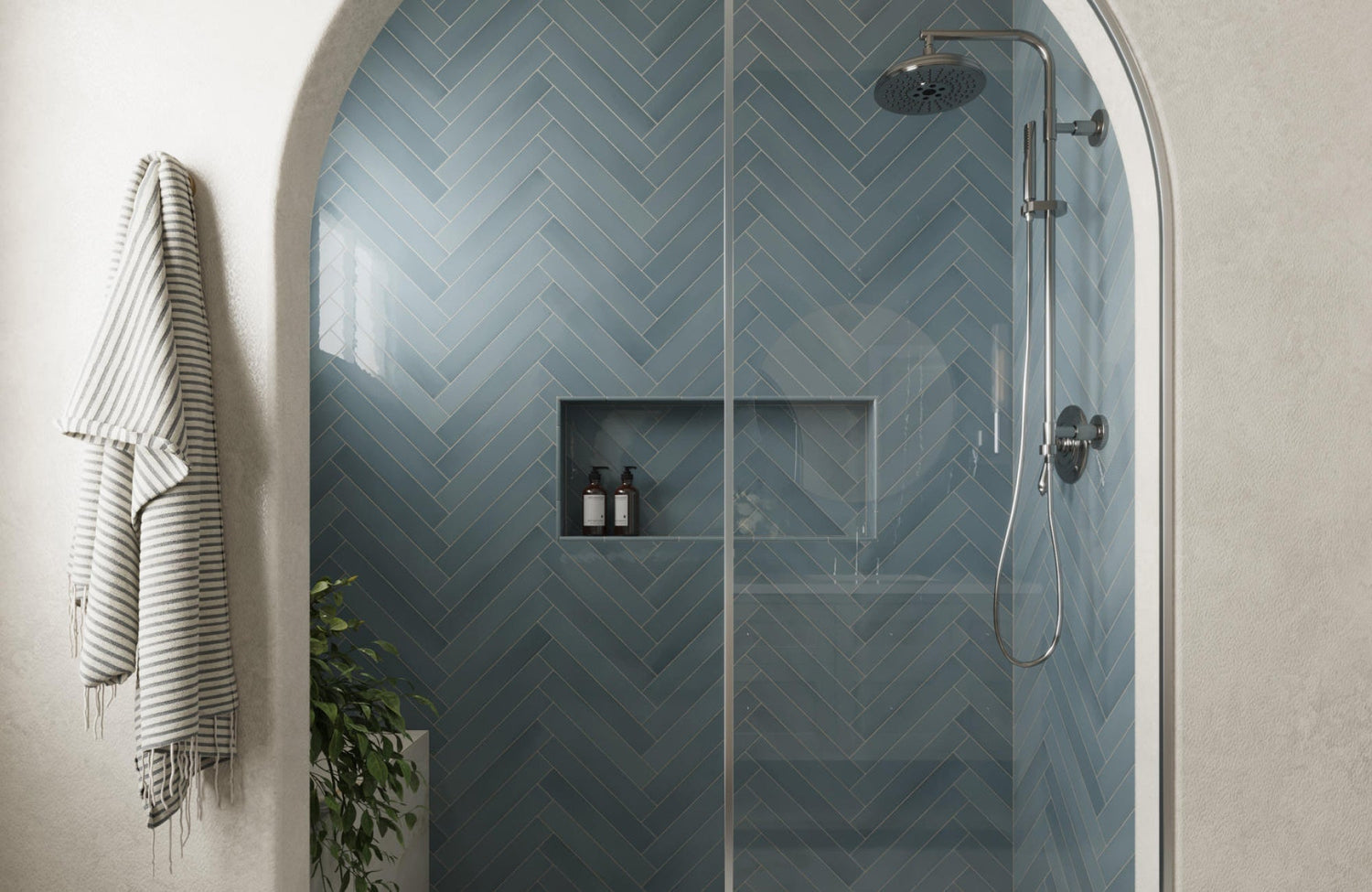
You might be drawn to bolder expression. In that case, pair a saturated field tile with a deliberate grout contrast to outline each chevron-shaped turn created by the pattern’s broken zig. A teal or rust glaze looks vibrant on a small splash zone, while a two-tone layout alternates color rows for a tailored stripe effect. If you want an artistic accent without overpowering the room, confine the herringbone to a framed niche, a stove inset, or a half-wall. That focused placement lets you enjoy color and pattern while keeping the rest of the room calm.
Mixing Traditional and Modern Elements
Herringbone often acts as a bridge between traditional and modern design when finishes are chosen with care. A limestone-look porcelain arranged in a herringbone, for instance, can sit comfortably alongside flat-panel cabinetry and streamlined hardware, creating a space that feels balanced rather than divided. To make the mix feel deliberate, it helps to repeat one material or finish in a few different places. A brushed nickel tone, for example, might appear in the faucet, the switch plates, and a slim metal trim around the tile field. By carrying a single detail across multiple features, the room reads as intentional rather than nostalgic. This thoughtful repetition allows herringbone to highlight heritage while still supporting a contemporary look, giving you a space that feels cohesive and current.

How Designers Use Herringbone in Different Spaces
Now it’s time to shift from style to placement. The same pattern can create very different effects in kitchens, bathrooms, and living areas, and understanding these variations helps you choose a layout that fits the function of each room rather than relying on a single approach for every space.
Kitchen Surfaces
Backsplashes often benefit from a 90-degree herringbone layout, as the vertical strokes balance the strong horizontal lines of counters and shelving. In more compact kitchens, using narrower tiles keeps the pattern refined, adding texture and interest without overwhelming the workspace. This approach lets the backsplash stand out while still blending seamlessly with the overall design.
Flooring applications, on the other hand, invite a different strategy. Rotating the herringbone so the “arrows” guide toward the main entry creates a natural sense of direction from the doorway into the prep area. Large-format porcelain with a light surface texture further improves slip resistance and withstands the daily wear of chairs and constant movement through the room. For durability, it is best to include movement joints at doorways and transitions, and to seal grout with a food-safe product that makes cleaning easier over time.
In the photo shown above, Edward Martin’s Jameson 8x48 Matte Porcelain Tile in Camel demonstrates how a warm, wood-look herringbone floor can anchor a kitchen with both comfort and resilience, providing a surface that feels inviting while standing up to everyday use.
Bathrooms with Character
Bathrooms benefit from patterns that bring visual interest without creating clutter. On the walls, a herringbone layout in soft stone-look porcelain adds subtle dimension while keeping the design calm and refined. In a tall, narrow shower, setting the angle so the pattern rises with the height introduces a gentle sense of elongation, making the space feel more open. Keeping shelves and niches aligned with full tile dimensions also helps the layout remain clean and uninterrupted.
For the floor, a small-format herringbone mosaic offers both style and function. Its tighter joints improve traction, while the orientation of the pattern allows water to drain smoothly along the slope. Around freestanding tubs or other wet areas, choosing a slip-rated finish enhances safety while maintaining the cohesive look of the overall design. With thoughtful placement, herringbone can bring character to bathrooms in a way that feels both elegant and practical.
Living Areas and Entryways
In an entryway, wide herringbone planks establish a sense of order as soon as you walk in. If the hallway shifts or bends, centering the pattern at the first sight line and carrying it forward helps the space feel intentional rather than disjointed. In larger living areas, a border course around the herringbone field creates a clear frame that neatly defines the placement of rugs and furniture. Matching stair noses and transitions to the same finish maintains continuity, allowing the pattern to flow naturally from one space to another. Together, these details can also create an interiors that feel composed, balanced, and easy to furnish.

Comparing Herringbone to Other Tile Patterns
To see whether herringbone is still relevant, it’s useful to compare it with other common tile layouts. By considering differences in style, function, and installation, you can better understand where herringbone excels and where a simpler pattern might serve the space more effectively.
Subway Tile Layouts
A running bond or stacked subway layout creates a calm, orderly grid that requires fewer cuts and is quicker to install. In the photo featured above, Edward Martin’s Jaden 2.5x16 Glossy Ceramic Tile in Dove illustrates this well, with its elongated size and soft gray tone adding subtle variation while the glossy finish reflects light and brightens the space.
In contrast, herringbone brings more visual movement but usually demands additional labor and precision. In kitchens that already feature strong vertical and horizontal lines, a stacked bond helps maintain balance and simplicity. When a space feels flat and needs rhythm, however, herringbone introduces energy without overwhelming the design. These differences also affect the cost, making it equally important to plan for extra time, thorough dry-fitting, and precise cuts around outlets and corners when choosing herringbone.
Chevron Patterns
Chevron and herringbone often get confused. Chevron uses tiles cut at angles so the ends meet in perfect points, forming a continuous V. Herringbone uses rectangular pieces that overlap at right angles, creating a broken zig with tiny steps. The choice affects how your eye reads the surface. If you prefer a sleek, tailored stripe, chevron delivers. If you want a textured, classic movement that tolerates slight dimension variations in handmade tile, herringbone is more forgiving. Because the chevron requires angled cuts, it often produces more waste, an important factor to consider when planning materials for larger rooms.
Grid and Modular Patterns
A true grid presents a stable, modern field that recedes behind furnishings. Modular patterns mix sizes to create a measured rhythm. Both can look current and efficient, yet neither brings the same directional flow as herringbone. If you want the floor to guide you through an elongated space, herringbone has an advantage. If you want a quiet backdrop for art, a square grid in a soft finish may be better. Just make sure to consider ceiling height, window placement, and furniture density before choosing, since these patterns interact differently with light and scale.

Practical Considerations for Choosing Herringbone Tile
Choosing herringbone tile isn’t just about appearance. Installation, upkeep, and cost all play a role in how the pattern performs over time, making it important to consider these practical factors before moving forward.
Installation Complexity
Herringbone demands precision from the very start, with an accurate layout, consistent angles, and careful alignment along the edges. Because of its small, staggered steps, any unevenness in the substrate becomes noticeable right away. To avoid these issues, it helps to apply a self-leveling compound where needed, plan the layout so it resolves neatly at visible edges, and dry-lay a few rows to map out cuts before applying thinset. It’s also wise to order extra material since angled cuts create more waste than standard layouts. For the best results, rely on a skilled installer who can achieve clean miters at corners, maintain even grout joints, and finish the field with full or near-full tiles for a balanced appearance.
Durability and Maintenance
The long-term performance of herringbone depends largely on tile composition and finish. Porcelain is a strong choice for kitchens and baths because it is dense, durable, and highly resistant to stains. Natural stone, in contrast, offers warmth and character but requires more care, including scheduled sealing and pH-neutral cleaning products to protect its surface.
A good example is Edward Martin’s Natasha 2x6 Matte Porcelain Tile in Fog, as featured in the photo above. Its porcelain body offers reliable strength for wet areas, while the matte finish helps reduce visible water spots and everyday wear. Because porcelain tile requires no sealing, upkeep is straightforward, making it especially practical for frequently used bathrooms and kitchens.
Grout selection also plays a key role. Epoxy grout resists stains and minimizes upkeep, while cementitious grout provides a classic appearance that allows for easier spot repairs. To ensure lasting performance, it’s best to follow the manufacturer’s recommendations for both tile and grout, since maintenance requirements can vary by product.
Budget and Value Impact
Herringbone generally costs more to install because the layout requires extra time and additional cuts. One way to manage expenses without losing the effect is to place the pattern where it has the most visual impact, such as behind a range, in a foyer, or around a fireplace surround. Pairing it with a simpler field tile in less prominent areas keeps the overall budget balanced. When executed thoughtfully with restrained colors and quality materials, herringbone can also support resale value, since it conveys a sense of intention rather than a passing trend. To avoid costly delays, plan for a realistic waste factor and order enough material from the same batch to ensure consistency across the installation.

Is Herringbone Right for You Today
By now, you’ve seen how herringbone has evolved through history, how it adapts to different styles and spaces, and what practical factors affect its use. The final step is to consider how this pattern aligns with your vision so you can decide whether herringbone is the right fit for your home.
Aligning with Personal Style
Consider the atmosphere you want to create when you step into the room. If you appreciate gentle movement that catches the eye without dominating the space, herringbone can provide that balance. If, instead, you lean toward surfaces that stay quietly in the background, a simpler layout may be a better match.
To clarify your preferences, gather a few inspiration images and look for recurring tones, finishes, or patterns. You can also take advantage of our AR tool to preview herringbone in your own space, allowing you to see how the pattern interacts with light, furnishings, and color before making a decision. If the design continues to appeal to you both in inspiration photos and digital previews, it’s a strong sign that herringbone fits your style.
Considering Timelessness vs Trend
Herringbone holds its timeless reputation when paired with restrained colors, natural tones, and finishes that age gracefully. It begins to feel more trend-driven when sharp contrasts or oversized formats push the design toward novelty. For a stable, enduring look, neutral porcelain or stone with grout in a similar shade is a reliable choice.
An excellent example is Edward Martin’s Catalina 2x16 Matte Porcelain Tile in Clay, as featured in the photo above. Its warm, earthy tone and soft matte finish show how herringbone can achieve a sense of permanence while still adding subtle movement to the space. If you prefer a touch of boldness, however, consider reserving stronger colors or more dramatic contrasts for smaller feature areas, where they can be updated more easily as styles evolve. This approach allows you to balance long-term appeal with the flexibility of personal expression.
Herringbone Tile’s Lasting Appeal
Herringbone tile remains a timeless choice, not a dated one. Its relevance comes from how thoughtfully it is applied, when scale, angle, color, and placement are aligned with the room’s proportions and your design goals, the pattern feels both current and enduring. For those who appreciate subtle movement rooted in history, herringbone adds character to kitchens, baths, and living areas without overwhelming the space. If, on the other hand, you prefer calm, understated surfaces, simpler layouts may better suit your vision.
If you’re considering herringbone for your next project and want guidance on styles, finishes, or installation details, contact us to explore options tailored to your space!