When you begin choosing a dining table, the shape often raises more questions than the material or finish. An oval dining table sits between round and rectangular options, and understanding how it functions in real homes helps you decide whether it truly supports how you move, dine, and gather. In this article, we’ll walk through how an oval table affects space, seating, comfort, and everyday use so you know exactly what to expect before making a decision.

How Oval Tables Influence Dining Room Flow and Space
When you place a dining table in a room, its shape plays a key role in how easily you move around it and how open the space feels each day. With an oval dining table, circulation often feels more natural, particularly in rooms with narrow walkways or furniture placement that is constrained. The absence of corners allows the table to interact more gently with surrounding walls and pathways, creating a layout that feels less rigid and more accommodating.
Improving Walkways
As you move around an oval dining table, the absence of sharp corners reduces the chance of accidental bumps, quietly improving comfort and safety. This becomes especially noticeable in homes where the dining area doubles as a main passageway, such as open kitchens or shared living spaces. Even when dining chairs are pulled out, the room feels easier to navigate and less restrictive.
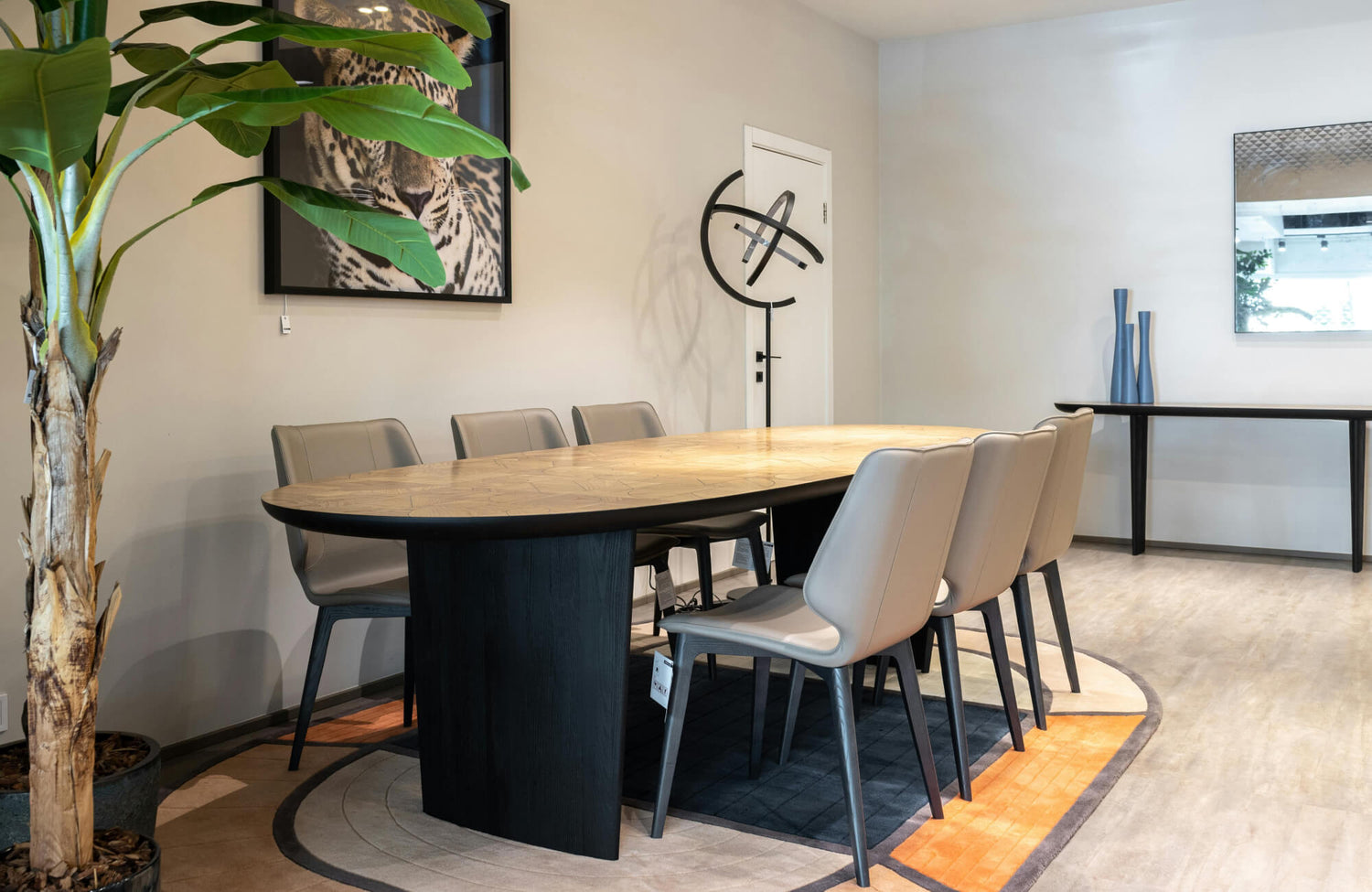
This effect is clearly illustrated with Edward Martin’s Fleurin Ash Oval Dining Table in Wenge, 96", where the elongated oval shape allows for smooth circulation around the table without interrupting the natural flow of the space. Over time, this kind of layout can help the dining area feel more integrated with the rest of the home, rather than like an obstacle to move around.
Working With Room Proportions
In rooms that feel long or slightly narrow, an oval dining table can help soften the overall layout. Rather than emphasizing straight lines, its curved edges interrupt the room’s length and create a more balanced visual rhythm. This approach tends to work well in dining areas that are not perfectly square but still need a table that feels appropriately scaled to the space. It also helps prevent the room from feeling visually divided, allowing the dining area to blend more naturally with surrounding spaces.
Placement Flexibility
Oval dining tables offer greater flexibility when perfect centering is not possible. If lighting fixtures or architectural features sit slightly off alignment, the table can still feel deliberate rather than misplaced. This adaptability makes it easier to accommodate doors, windows, or built-in elements that influence layout decisions. As a result, you can work comfortably with real-world rooms rather than relying on idealized floor plans.

Seating Comfort and Social Interaction Around Oval Tables
Once everyone is seated, the table’s shape subtly shapes how comfortable the setting feels and how easily conversations flow. Oval dining tables support a more inclusive dining experience by allowing people to engage naturally, without locking anyone into rigid or awkward positions.
Encouraging Conversation
Because there are no sharp corners, eye contact tends to flow more naturally across the table. This often leads to more balanced interaction, with fewer side conversations and a greater sense of shared discussion. As a result, the table supports a setting where everyone feels more included during meals.
Flexible Seating Options
Oval tables adapt easily when an extra chair is needed. Without rigid corners, seating can shift slightly to accommodate another guest without making anyone feel cramped. This flexibility becomes especially useful during holidays or informal gatherings when seating needs to change. That adaptability is easy to visualize with Edward Martin’s Alice 84" Oval Dining Table in Light Oak paired with Rita Dining Chairs in Taupe, Set of 2, where the evenly spaced seating allows for subtle adjustments without disrupting comfort or balance. As the table fills, chairs can be repositioned naturally, helping everyone remain comfortable throughout the meal.
Comfortable Edge Design
Sitting at an oval table often feels less restrictive, making it easier to shift, turn, or adjust the position once seated. Knees typically have more clearance, and elbows rest comfortably without pressing into sharp corners. For families with children, this can reduce accidental bumps during everyday use. Over time, these small comfort improvements contribute to a dining experience that feels easier and more relaxed.

Oval Dining Tables in Different Interior Design Styles
Aside from function, it is also worth considering how an oval table influences the overall look of a dining space. Depending on materials, proportions, and surrounding décor, its shape can either blend seamlessly into the room or stand out as a defining element.
Modern and Minimal Interiors
In clean-lined spaces, an oval table introduces softness without disrupting simplicity. When paired with understated materials, it adds visual interest while maintaining a calm, organized feel. This balance helps modern rooms feel welcoming rather than stark. The curved form also provides contrast to straight architectural lines, preventing the space from feeling overly rigid.
Transitional and Classic Homes
Oval tables often feel at home in interiors that blend traditional and contemporary elements. Their shape reflects familiar furniture forms while still accommodating updated finishes and proportions, which makes them a dependable choice when styles overlap. This balance is well illustrated in the setting shown, where Edward Martin’s Fleurin Ash Oval Dining Table in Wenge, 96" pairs naturally with the Jenkins 35" LED Linear Pendant in Vintage Brass, Universal Voltage, bridging classic architectural details with more modern design cues. Together, these elements help soften the transition between decorative molding and cleaner cabinetry, allowing the space to feel cohesive rather than divided.
Making a Visual Statement
An oval dining table can serve as a focal point when combined with a sculptural base or a distinctive surface. In these situations, the shape adds presence without overwhelming the room. This approach is often well-suited to dining areas designed for gathering and hosting. Thoughtful lighting and the arrangement of nearby furniture can naturally draw focus to the table while keeping the space balanced.

Practical Considerations Before Choosing an Oval Table
Even when a table looks right, its success is defined by how it performs in everyday use. Before choosing an oval shape, it helps to consider how it will function over time and adapt to daily routines.
Table Size and Capacity
Oval tables vary widely in length, and choosing the right size helps prevent crowding. A longer table can increase seating without adding visual heaviness, but only when the room allows enough clearance for movement and chairs. Taking accurate measurements of the space, including walkways, helps avoid discomfort later. It also helps ensure the table works well for both everyday meals and occasional gatherings.
Base Types and Leg Placement
The base design plays an important role in how chairs fit beneath the table. Pedestal bases typically offer more legroom, while traditional legs can restrict seating at certain points. Understanding this difference helps you choose a configuration that supports your needs. It also influences how easily chairs can be repositioned as seating arrangements change.
Maintenance and Durability
The curved edges of an oval dining table may experience wear differently from straight edges. Materials such as wood, stone, or porcelain wear differently, so choosing a surface that fits your lifestyle can reduce long-term upkeep. Regular care and simple cleaning habits also help maintain the table’s appearance over time.

Comparing Oval Tables to Other Dining Table Shapes
To determine whether an oval table is a good fit, it helps to compare it with other common table shapes. Each shape serves a different purpose, and understanding these differences can make the decision clearer.
Oval vs. Rectangular
Rectangular dining tables emphasize structure and formality, while oval tables tend to feel more fluid in a space. In contrast, the straight edges and defined corners of a rectangular table reinforce strong architectural lines, as shown in the photo featured above with Edward Martin’s Bastien Walnut Dining Table, 120" x 42". This type of silhouette works especially well in rooms where symmetry and linear details already play a prominent role. Ultimately, choosing between the two shapes comes down to whether you prefer a more structured atmosphere or a softer, more relaxed feel at the table.
Oval vs. Round
Round dining tables work well in compact spaces, but as they increase in size, seating can become more limited. In comparison, oval dining tables extend seating capacity while still maintaining a sense of connection among diners. This balance makes them a practical middle ground between intimacy and flexibility. Additionally, they tend to fit more naturally into longer rooms where a round table might otherwise feel undersized or awkwardly placed.
When Oval Is the Best Choice
Oval tables tend to work best when you want flexibility while still keeping the space feeling refined. They suit spaces that accommodate both daily meals and occasional gatherings, offering adaptability without visual heaviness. This makes them especially useful in homes where the dining area serves multiple purposes. They also work well when you want a table that feels welcoming without appearing overly formal.
Choosing an Oval Dining Table With Confidence
An oval can be a very good shape for a dining table when comfort, movement, and flexibility matter in your space. It offers a balance between the openness of a round table and the seating capacity of a rectangular one, while supporting easier circulation and more natural interaction. By looking at how it fits your room layout, daily routines, and style preferences, you can decide with confidence whether an oval dining table suits the way you dine and gather.
If you would like guidance tailored to your space, reaching out for design support can help clarify sizing, placement, and layout choices, and a design service can offer practical recommendations based on how you use your dining area every day.