For many homeowners and design enthusiasts, the word “neutral” still instinctively brings to mind shades of white, beige, gray, and taupe. These hues have long been treated as the safe foundation of modern interiors, especially in minimalist or contemporary spaces. Yet as design tastes evolve, so does the definition of what neutrality can look like. Increasingly, designers are challenging the idea that neutrals must be colorless, turning instead to richly layered elements that behave like neutrals even if they are visually bold. One of the most compelling examples of this shift is the red Persian rug.
At first glance, a red Persian rug seems like the opposite of neutral. It is saturated, patterned, and steeped in history. But when viewed through the lens of modern design principles, it often functions exactly like a neutral anchor. It grounds furniture, stabilizes color palettes, hides wear, and adds warmth without overpowering a space. Understanding why this works requires moving beyond surface-level color theory and into how humans perceive pattern, contrast, and material over time.

Redefining Neutral Beyond the Beige Spectrum
Modern design is increasingly less about strict rules and more about visual balance and livability. Neutrality today is defined less by the absence of color and more by a material or element’s ability to coexist harmoniously with many styles, finishes, and palettes. A neutral is something you do not have to constantly think about once it is in place. It supports the room rather than demanding continual attention.
The Blue Jeans Theory of Interior Design
A useful way to understand the neutrality of a red Persian rug is through what many designers refer to as the “blue jeans theory.” Blue jeans are not neutral in a literal sense, yet they pair effortlessly with almost anything. They work with crisp white shirts, black leather jackets, soft knits, and tailored blazers. Their neutrality comes from familiarity, depth, and versatility rather than lack of color.
Red Persian rugs operate in much the same way. They are visually complex enough that the eye does not lock onto a single color note. Instead, the rug reads as a field of warmth and texture. Like blue jeans, it feels lived-in, reliable, and adaptable. In a modern living room with clean-lined furniture, the rug acts as a visual constant, allowing other elements to change over time without clashing.
The Complexity of Madder Root Red
One reason red Persian rugs behave differently than a flat red surface lies in the dye itself. Traditional Persian rugs were often dyed using madder root, a natural dye that produces a wide range of reds, from deep oxblood to softened brick tones. These reds are never uniform. They contain undertones of brown, rust, wine, and even subtle hints of blue or violet.
This chromatic complexity is critical in modern design. Flat, synthetic reds tend to feel loud and one-dimensional, which makes them difficult to integrate. Madder-based reds, by contrast, shift with the light and surrounding colors. In the morning, they may appear warmer and earthier; in the evening, deeper and more subdued. This variability allows the rug to harmonize with both cool and warm palettes, making it far more flexible than its reputation suggests.
How Pattern Density Creates a Blur Effect
Another factor that contributes to the neutral quality of a red Persian rug is pattern density. Unlike large-scale, high-contrast prints, Persian rugs are composed of intricate motifs repeated across the entire surface. When viewed as a whole, these patterns visually blur, especially from a standing height or across a room, as seen with Edward Martin’s Hutchinson Rug in Blush / Multi in the image above.
This blur effect softens the color impact. Instead of reading as “red,” the rug reads as “rich” or “warm.” The eye perceives texture and depth before color dominance. In minimalist spaces, where walls and furniture often have little visual noise, this kind of patterned surface provides interest without chaos. It fills the visual field in a calming way, much like natural materials such as wood grain or stone veining.

Anchoring Modern and Minimalist Furniture
One of the greatest challenges in modern interiors is preventing them from feeling cold or impersonal. Clean lines, sparse furnishings, and neutral walls can easily tip into sterility if not carefully balanced. This is where a red Persian rug excels. It introduces warmth and visual gravity that anchors modern furniture without compromising the overall aesthetic.
Warming Up the All White Room
All-white interiors remain popular for their brightness and sense of openness, but they often struggle with depth. A red Persian rug instantly solves this problem. Against white walls and light flooring, the rug becomes a grounding plane that prevents the room from feeling unfinished or echoey, much like Edward Martin’s Hutchinson Rug in Fog / Crimson shown in the image above.
Rather than overwhelming the space, the rug introduces a controlled warmth that balances the coolness of white. The intricate patterns keep the eye engaged, while the red base adds emotional comfort. In modern homes where white serves as a backdrop, the rug functions as a visual hearth, subtly defining the living area without the need for additional color saturation elsewhere.
The Perfect Partner for Leather and Wood
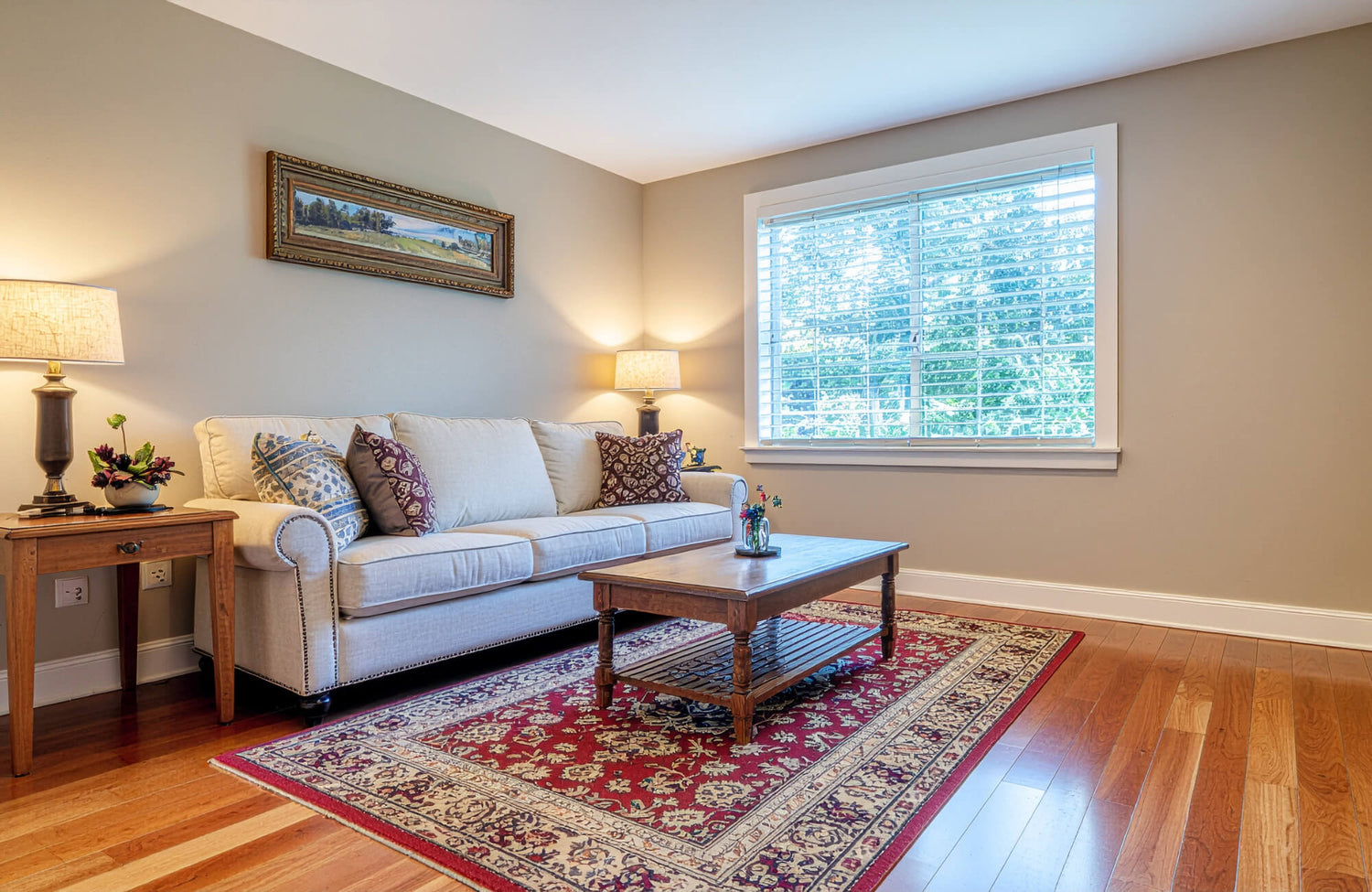
Red Persian rugs have a natural affinity for leather and wood, two materials frequently used in modern and mid-century-inspired interiors. Brown leather sofas, whether caramel, cognac, or espresso, pick up the warmer undertones in the rug, creating a cohesive and grounded look. The rug enhances the richness of the leather rather than competing with it.
Similarly, wood furniture benefits from the contrast. Light woods such as oak or maple gain warmth and depth when placed over a red Persian rug, while darker woods like walnut or mahogany feel more layered and intentional. This synergy makes the rug an ideal foundation for spaces that prioritize natural materials and timeless finishes.
Creating the Collected vs Decorated Look
Modern homeowners increasingly value spaces that feel collected over time rather than decorated all at once. A red Persian rug inherently communicates longevity and story. Even when newly purchased, it carries a visual language associated with heritage and craftsmanship.
In a modern context, this helps a room feel less like a showroom and more like a home. The rug suggests that the space has evolved, that pieces have been chosen thoughtfully rather than matched. This quality is particularly important in minimalist interiors, where every element carries more visual weight. The rug provides complexity so the room does not rely on excessive accessories to feel complete.

Coordinating Color Palettes Successfully
One of the most common hesitations homeowners have about red Persian rugs is how to coordinate other colors around them. The assumption is that red will limit options or force a traditional palette. In reality, the opposite is true. Because of their layered tones and patterns, these rugs are remarkably accommodating.
The Classic Navy and Charcoal Contrast
Navy and charcoal are among the most reliable partners for a red Persian rug in modern interiors. These deep, cool neutrals create a striking yet sophisticated contrast that feels intentional rather than dramatic. A navy sofa or charcoal accent wall allows the red to stand out without becoming overpowering, a balance clearly illustrated by Edward Martin’s Hutchinson Rug in Marine / Crimson in the image above.
This combination works especially well in spaces that aim for a moody, tailored aesthetic. The cool tones temper the warmth of the rug, while the rug prevents the darker colors from feeling heavy or oppressive. Together, they create a palette that feels both grounded and refined.
Mixing with Greens Without Looking Festive
Green is another color that pairs beautifully with red Persian rugs, despite common fears of creating a holiday-like effect. The key is choosing the right greens. Muted, earthy greens such as olive, moss, or sage harmonize with the natural undertones of madder red. These shades echo the organic origins of traditional dyes and patterns.
When used thoughtfully, green elements such as plants, upholstery, or painted cabinetry create a layered, nature-inspired palette. The result feels sophisticated and calming rather than seasonal. This pairing is particularly effective in homes that emphasize biophilic design or a connection to natural materials.
Keeping the Rest of the Room Quiet
Perhaps the most important principle when designing around a red Persian rug is knowing when to stop. The rug already provides complexity, color variation, and pattern. Walls, large furniture pieces, and window treatments benefit from staying relatively subdued.
Soft whites, warm grays, gentle taupes, and natural textures allow the rug to breathe. This does not mean the room must be boring. Subtle variations in texture, such as linen, plaster, or unfinished wood, add interest without competing. The rug becomes the emotional center of the space, supported rather than challenged by its surroundings.

Strategic Placement for Maximum Impact
Where a red Persian rug is placed can significantly influence how it is perceived. Strategic placement allows the rug to function as a practical neutral while enhancing the usability of the space. In modern homes, where open plans and multifunctional rooms are common, this becomes especially important.
Hiding Dirt in Busy Entryways
Entryways and hallways are among the most demanding areas of a home, yet they are often overlooked when it comes to thoughtful design. A red Persian rug excels in these spaces because its dense pattern naturally conceals dirt, dust, and wear, as demonstrated by Edward Martin’s Hutchinson Rug in Burgundy / Denim in the image above.
In a modern home with clean lines and minimal storage, this practical advantage cannot be overstated. The rug maintains its appearance far longer than a solid or lightly patterned option. At the same time, it creates a welcoming first impression, setting a warm and confident tone as soon as someone enters the home.
Anchoring a Dining Room Table
Dining rooms benefit greatly from the grounding presence of a red Persian rug. Under a modern dining table, the rug provides visual weight that balances the often slim profiles of contemporary furniture. It also helps define the dining area in open-plan layouts, creating a sense of intimacy without walls.
The rug’s pattern disguises crumbs and minor spills, making it a practical choice for everyday use. Its warmth softens the acoustics of the room and encourages lingering, aligning beautifully with the social purpose of a dining space. Even with minimalist chairs and a simple table, the rug ensures the room feels complete.
The Bedroom Bohemian Vibe
In bedrooms, a red Persian rug introduces comfort and personality without disrupting restfulness. Placed under the bed or partially extending beyond it, the rug adds warmth underfoot and visual richness that contrasts with crisp bedding and simple furniture.
This placement is especially effective in modern bedrooms that lean toward a restrained palette. The rug brings in color and pattern without requiring bold artwork or layered textiles. The result is a subtle bohemian influence that feels curated rather than eclectic, supporting relaxation while still expressing individuality.
The Power of the Power Neutral
The idea that a red Persian rug can function as a neutral challenges outdated assumptions about color in modern design. Neutrality is no longer about playing it safe; it is about choosing elements that endure, adapt, and support a wide range of styles and uses. Red Persian rugs do exactly that, especially when selected with thoughtful guidance tailored to the needs of a specific space.
In modern design, the most powerful neutrals are not the quietest ones. They are the ones that hold a space together, age gracefully, and make everything around them feel more intentional. For those seeking confidence in these decisions, Edward Martin’s design consultation service offers personalized recommendations and expert insight, whether refining a rug choice or coordinating tile and furniture selections. And for product-specific questions or project support, you can always contact Edward Martin to ensure every detail aligns seamlessly.