The vanity often serves as the centerpiece of a bathroom, striking a balance between function and style. Its color plays a big role in setting the room’s mood, and black has become an increasingly popular choice. A black vanity introduces depth and sophistication, creating a bold contrast that lighter finishes may not provide.
At the same time, choosing black is about more than appearance. It can further influence how spacious the bathroom feels and the level of upkeep required. In this article, we’ll explore its impact on style, lighting, materials, and maintenance, so you can decide if a black vanity is the right fit for your space.

The Style Impact of a Black Vanity
When considering a black vanity, style is often the first aspect that stands out. The color transforms a bathroom’s character almost immediately, drawing attention and making the vanity feel like a design feature rather than a simple storage space. Depending on how it’s used, black can create a sleek modern look, a dramatic focal point, or a timeless sense of elegance.
Modern and Minimalist Appeal
If you’re drawn to clean lines and simplicity, a black vanity can be an ideal choice for modern and minimalist bathrooms. A flat-front cabinet in matte black pairs seamlessly with sleek countertops and frameless mirrors, creating a bathroom that feels streamlined and uncluttered. Black also has a way of emphasizing geometry, so if your bathroom features sharp angles or contemporary details, this color helps those elements stand out with clarity. When paired with subtle lighting or understated hardware, a black vanity further reinforces the calm, ordered atmosphere that minimalism is known for.
Classic and Traditional Influence
In traditional or vintage-inspired bathrooms, a black vanity can introduce elegance and refinement. A vanity with carved legs, paneled doors, and brushed brass hardware in a deep black finish conveys a sense of permanence and history, giving the room a more established feel. Black also works well as a counterbalance to decorative elements such as patterned wallpaper, rich textiles, or ornate mirrors, grounding the design so it feels composed rather than overly busy. In this way, it supports classic design traditions while still offering a bold and distinguished presence.
Statement Piece Potential
A black vanity is often most effective when it serves as the standout feature of the room. In bathrooms with lighter palettes, such as crisp whites, soft neutrals, or muted grays, the contrast creates an immediate focal point that adds depth and definition. The vanity further becomes the anchor that prevents the design from feeling flat or overly simple. Even in calm, spa-like settings, a black vanity can also act as a striking centerpiece, especially when paired with distinctive sinks, bold hardware, or unique countertop materials.
In the photo displayed above, Edward Martin’s Gemma 55" Single Vanity in Satin Black Veneer with a Carrara Marble Top illustrates this effect beautifully, standing out against the light walls and tub while still harmonizing with the natural textures and warm accents in the room. By taking on this role, it does more than support the design; it also establishes the character of the entire space.

Light, Space, and Perception
Aside from style, black also shapes the way a bathroom feels in terms of space and atmosphere. Since it absorbs rather than reflects light, it can change the sense of openness and brightness in a room depending on the conditions. Understanding this effect makes it easier to decide whether a black vanity will enhance your bathroom or make it feel more confined.
Small Bathroom Considerations
In a small bathroom, a black vanity may initially feel overwhelming. Because dark colors absorb light, they can give the impression of a smaller space. The effect, however, can be softened with thoughtful choices. A vanity with raised legs creates a sense of openness, while pairing it with a lighter countertop keeps the design balanced. Bright walls and flooring also help offset the darker cabinet, ensuring the room feels cohesive rather than cramped.
Natural and Artificial Lighting
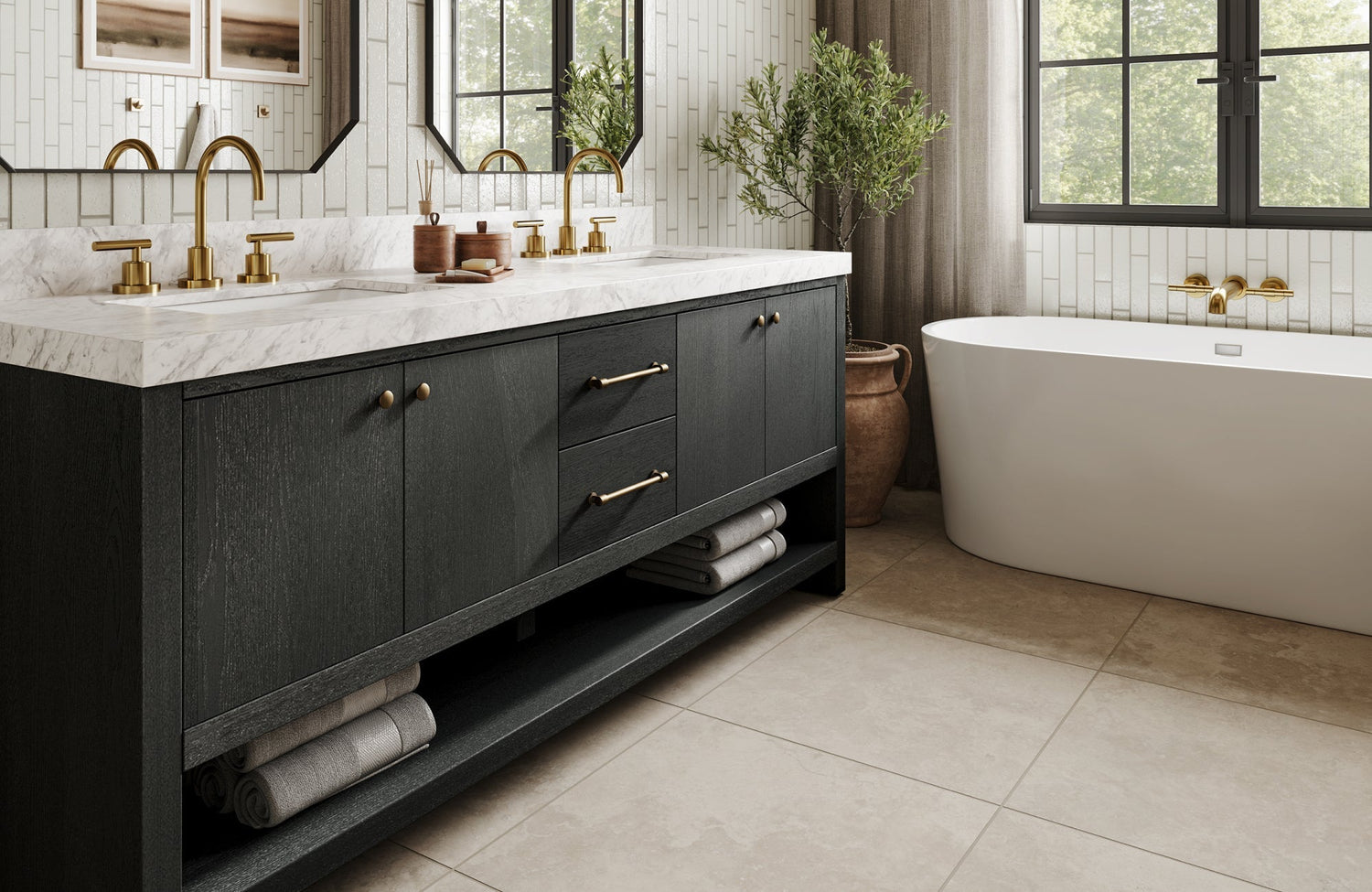
Lighting plays a crucial role when introducing a black vanity, as it determines how the piece is perceived within the room. For instance, natural light from windows softens the depth of the color and reveals its texture, allowing the vanity to feel more dynamic. A good example is Edward Martin’s Maxine 72" Double Vanity in Black Wash Oak Veneer with a Carrara Marble Top, as shown in the photo above, where the daylight streaming through the window highlights the richness of the finish without making the space feel heavy.
However, when windows are not available, lighting fixtures become essential. In these cases, warm-toned fixtures above the vanity or recessed ceiling lights can help prevent the surface from appearing flat. Without adequate illumination, the finer details may fade, and as a result, the entire room can take on a dimmer, less welcoming atmosphere.
Pairing with Mirrors and Reflective Surfaces
Reflective elements are a practical way to balance the visual weight of black. A large mirror above the vanity not only bounces light around the room but also echoes surrounding colors, helping the vanity feel seamlessly integrated. Features like glass shower doors, glossy tiles, or metallic faucet finishes can further enhance brightness and prevent the space from feeling heavy. Together, these surfaces can create a counterpoint to the depth of black, keeping the room open and airy while allowing the vanity’s bold presence to remain the focal point.

Material and Finish Choices
Not all black vanities are the same. The material and finish you select play a major role in how the vanity looks, feels, and holds up over time. Understanding these differences will help you choose an option that not only suits your style but also meets the practical demands of everyday use.
Matte vs Gloss Finishes
Matte black finishes are often chosen for their subtle, understated appeal. They tend to resist fingerprints better than glossy surfaces, making them practical in busy households, though they can highlight dust more easily. Gloss finishes, on the other hand, reflect light and create a more polished, formal appearance, but they also reveal smudges and scratches more quickly. The decision often depends on whether you prefer the subtle sophistication of matte or the sleek, high-shine presence of gloss.
Wood, Stone, and Composite Options
The base material of a vanity plays a vital role in its durability and overall appearance. A wood vanity painted black adds warmth beneath the finish, while a stained black wash allows the natural grain to remain visible, creating subtle texture. In contrast, stone surfaces such as granite or quartz in darker tones offer a seamless, high-end look that pairs beautifully with black cabinetry.
Veneers are another option, providing the appearance of solid wood at a more accessible cost by applying thin layers of real wood over an engineered core. Edward Martin’s Josephine 48" Single Vanity in Satin Drifted Black Veneer with a Carrara Marble Top, as shown in the photo above, demonstrates how veneers can deliver a sophisticated, natural look that enhances the boldness of black while remaining versatile in a range of bathroom styles. Finally, composite materials like MDF or particleboard are often chosen for their affordability, as they hold black finishes well but may not age as gracefully as natural options.
Hardware and Accent Integration
Hardware plays an equally important role in shaping the overall impression of a black vanity. Finishes like brushed nickel, polished chrome, or brass each bring a distinct mood to the design. Because black naturally creates contrast, it helps to decide how much contrast you want. Black-on-black hardware delivers a seamless, streamlined look, while gold or brass introduces warmth and a touch of luxury. With thoughtful choices, these accents allow you to tailor the vanity’s character to fit your personal style.

Practicality and Maintenance
While a black vanity can be visually striking, it’s equally important to consider the day-to-day reality of keeping it clean and functional. Dark finishes respond differently from lighter ones, and understanding these differences helps you know what to expect and how to manage them effectively.
Water Spots and Dust Visibility
On black surfaces, water spots, dust, and soap residue tend to be more noticeable than on lighter finishes. However, this doesn’t mean a black vanity is difficult to maintain; it simply calls for more consistent care. For example, wiping down with a soft cloth and mild cleaner helps keep it looking fresh. In addition, pairing the vanity with a slightly lighter countertop can soften the contrast, making small marks less obvious and reducing how often they catch your eye. As with any finish, it’s always best to follow the manufacturer’s care recommendations to keep your vanity in its best condition.
Durability of Painted vs Stained Finishes
The way a vanity receives its black finish greatly influences how well it lasts over time. A painted surface offers a smooth, uniform color, but it may chip or scratch if the sealant isn’t strong. A stained black finish, on the other hand, allows the natural material to show through and can make signs of wear less noticeable over time. For long-term durability, it’s equally important to consider how each finish will withstand your daily use and cleaning habits.
Everyday Functionality
Functionality goes beyond ease of cleaning. Although a black vanity can be visually striking, it should also provide storage that suits your daily needs. Spacious drawers and shelves can keep toiletries organized, while the countertop should coordinate seamlessly with your sinks and fixtures. A good example is Edward Martin’s Sasha 48" Single Vanity in Carbon Oak with a 3 cm White Zeus Quartz Top, as displayed in the photo above, where multiple compartments and thoughtful design details make organization effortless. In many cases, combining black cabinetry with a white or natural stone countertop not only creates balance but also makes the surface more practical to maintain over time.

Color Pairing and Design Harmony
A black vanity rarely stands alone. It becomes part of a larger design scheme, and the surrounding colors play a key role in how well the overall look comes together. Choosing the right combinations can either highlight the black vanity as a focal point or help it blend seamlessly into the space.
Neutral Complements
Pairing a black vanity with neutrals like white, beige, or gray creates a look that feels both timeless and versatile. White countertops or subway tiles can highlight the contrast and draw the eye to the vanity, while soft grays provide a gentler transition for a more understated effect. Similarly, beige tones add warmth, softening the strength of black without diminishing its impact.
In the photo shown above, Edward Martin’s Gemma 55" Single Vanity in Satin Black Veneer with a Carrara Marble Top strikes a perfect balance with light walls and patterned flooring. Together, these elements also let the vanity stand out as a feature while keeping the overall design cohesive and welcoming.
Bold Color Accents
If you prefer a more expressive bathroom, a black vanity provides an ideal backdrop for stronger colors. Deep greens and blues can add richness and a touch of elegance, while lighter shades such as pale pink or soft yellow create a fresher, more uplifting feel. Since black acts as a grounding element, it allows brighter tones to stand out without overwhelming the room. This approach also works well if you like changing your décor with items such as artwork, towels, or accessories, as the vanity’s depth makes it easy to switch accent colors over time.
Natural Textures and Warmth
Sometimes the best way to complement black is not with another color but with texture. Wood tones introduce warmth and comfort, while stone surfaces add depth and a natural character to the design. Even a few touches of greenery can further soften the strong presence of a black vanity, making the space feel more relaxed and inviting. Together, these natural elements can balance the boldness of black and add a sense of harmony, helping the vanity feel like a cohesive part of the room rather than a stark contrast.
Choosing a Black Vanity
After considering style, lighting, materials, and upkeep, the question remains: Is a black vanity a good choice? The answer is yes, when chosen thoughtfully, it can be an excellent addition to your bathroom. A black vanity has the flexibility to serve as a bold focal point or a timeless complement, depending on how you style it. The key is creating balance with the right finishes, lighting, and room proportions. When these elements align, a black vanity adds depth, elegance, and sophistication that few other options can match, making it both a stylish and practical investment for your home.
If you’d like help deciding which vanity works best for your space, contact us today or explore our design services for expert, personalized guidance.