
)
)
)
)
)
)
)
)
Bathroom Vanity Size Guide: How To Choose The Right Fit For Your Space
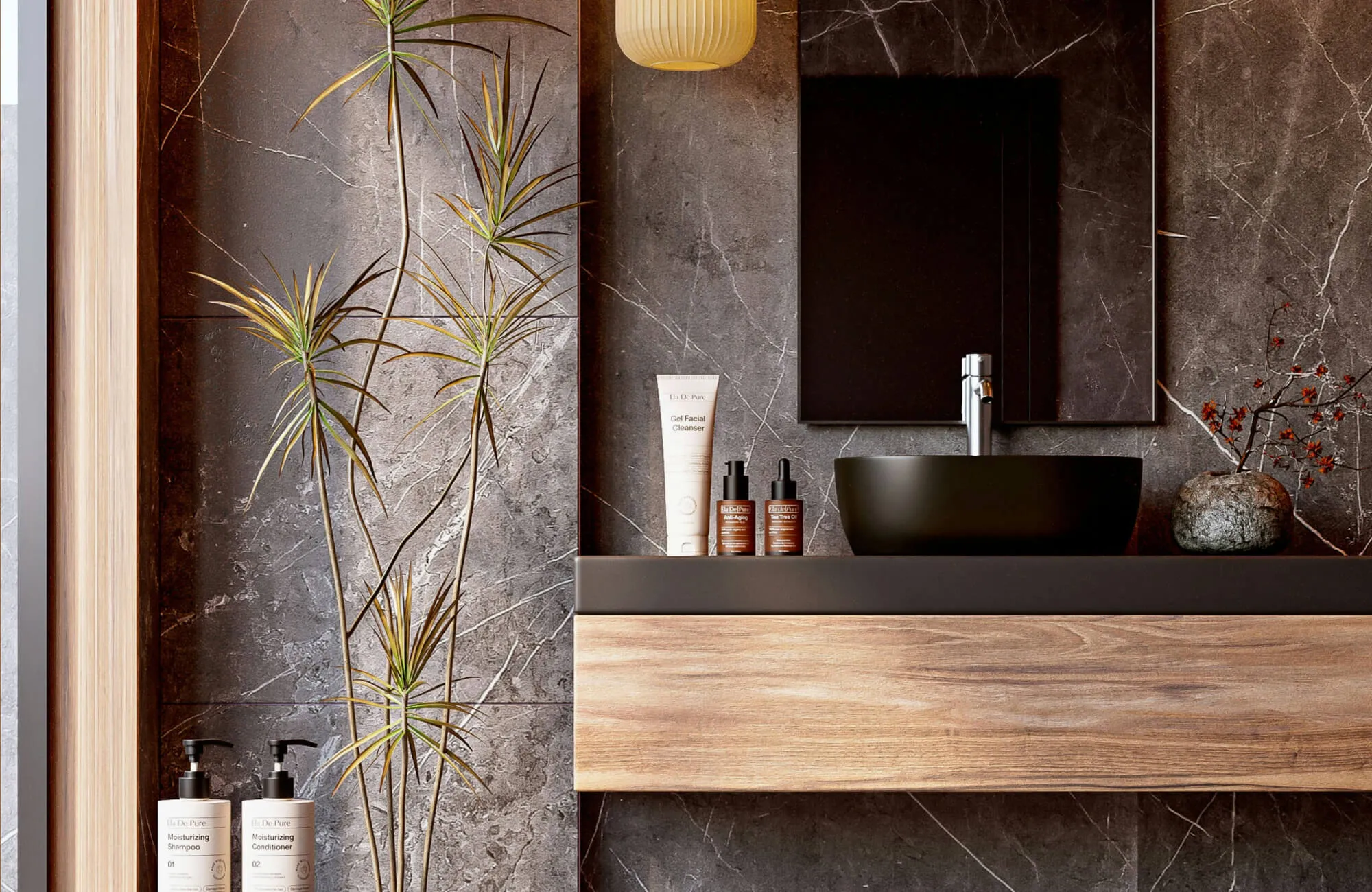
A bathroom vanity is more than a fixture; it is the foundation of a bathroom’s character, balancing form, function, and storage with refined elegance. Selecting the right size transforms the room into a cohesive space where beauty and practicality come together effortlessly. From compact powder rooms requiring space-conscious solutions to expansive master suites designed for dual convenience, every bathroom demands thoughtful consideration. Understanding dimensions, layout planning, storage options, materials, and design details ensures that the vanity enhances both usability and aesthetics. With the right approach, the bathroom vanity becomes a timeless centerpiece that elevates daily rituals and adds enduring value to the home.
Understanding Standard Vanity Sizes
Standardized vanity sizes create a framework that balances usability, plumbing compatibility, and ergonomic comfort. Knowing these ranges helps homeowners and designers make informed choices that complement both layout and lifestyle.
Width Ranges and Configurations
Vanities are produced in standard widths to suit bathrooms of varying sizes, allowing for seamless integration. In compact powder rooms, for instance, vanities as slim as 18 inches can provide necessary function without overcrowding the space. At the opposite end, master suites can comfortably accommodate widths of 72 inches or more, creating a strong visual anchor. Single-sink vanities generally fall between 24 and 48 inches, offering sufficient counter space without overwhelming smaller footprints. By contrast, double-sink models usually begin at 60 inches, designed to serve multiple users with ease. Ultimately, selecting the correct width requires balancing daily storage needs with circulation space. When proportioned thoughtfully, the vanity becomes a harmonious focal point that enhances the overall bathroom layout.
Depth Considerations
The depth of a vanity greatly influences both functionality and how it interacts with surrounding pathways. For example, standard depths of 20 to 21 inches provide a generous countertop surface while still leaving sufficient clearance for movement. In smaller bathrooms, however, shallower depths of 15 to 18 inches preserve essential function without sacrificing comfort. These slimmer vanities continue to deliver storage while keeping circulation open and unobstructed. On the other hand, depths greater than 22 inches can reduce ergonomic comfort and overwhelm compact spaces. Ultimately, selecting the right depth ensures the vanity enhances usability while maintaining spatial balance.
Height Evolution
The evolution of vanity height reflects a growing emphasis on ergonomics and convenience. Traditionally, older models stood at 30 to 32 inches, but modern “comfort height” designs now measure 34 to 36 inches to reduce strain during grooming. As a result, daily routines become more efficient, particularly for adults. In contrast, children’s bathrooms may still incorporate lower vanities or rely on step stools for accessibility. For multi-user households, custom heights offer additional benefits, allowing designers to accommodate everyone’s needs with precision. Finally, when coordinated with sink type, faucet reach, and mirror placement, vanity height becomes a key element in creating a bathroom that is both functional and visually cohesive.
Space Planning and Bathroom Layout Integration
A vanity must fit not only by measurement but also within the rhythm of the room’s design and circulation. Proper planning ensures the vanity enhances accessibility, complies with codes, and maintains harmony with surrounding fixtures.
Clearance and Circulation
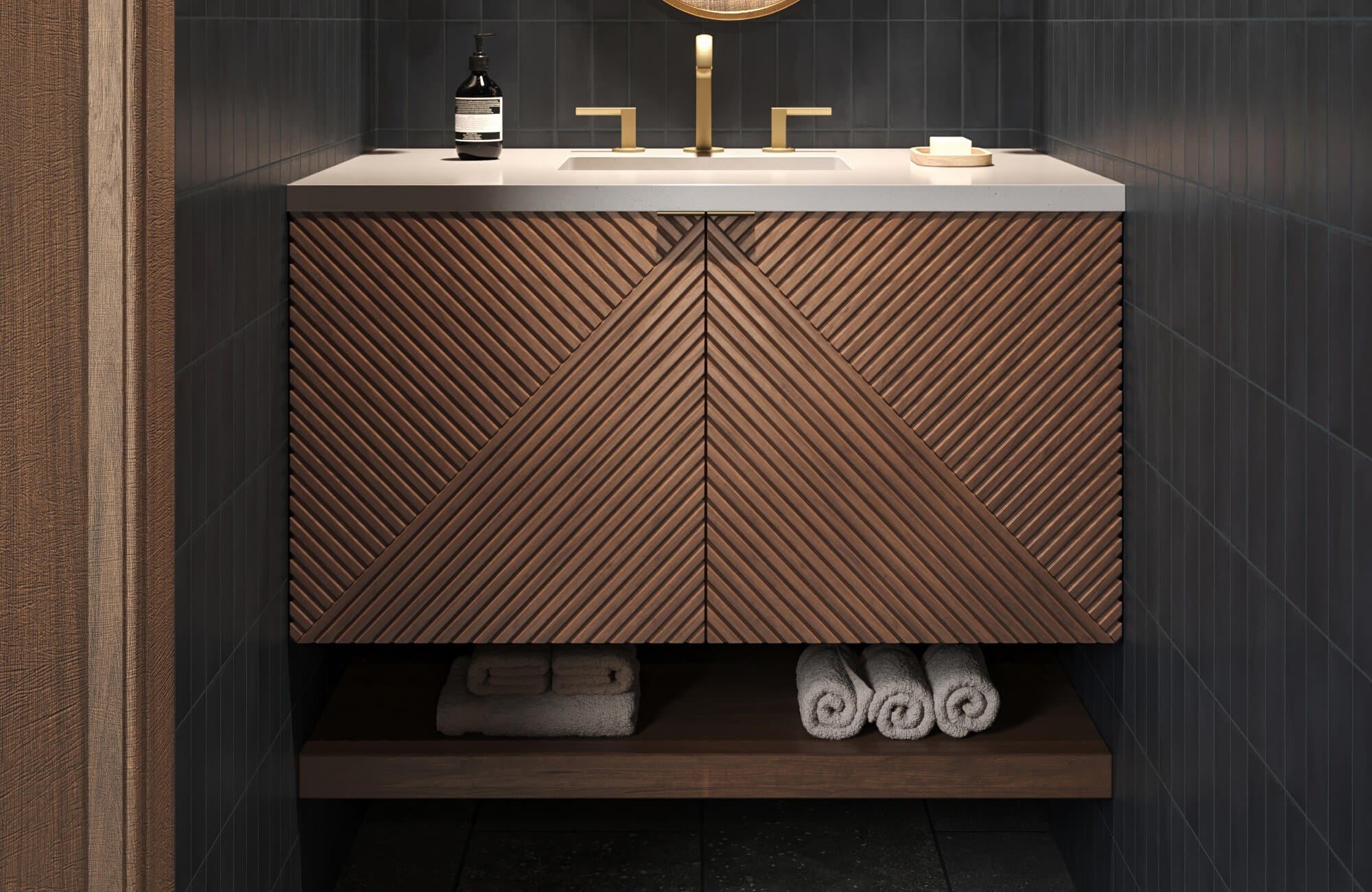
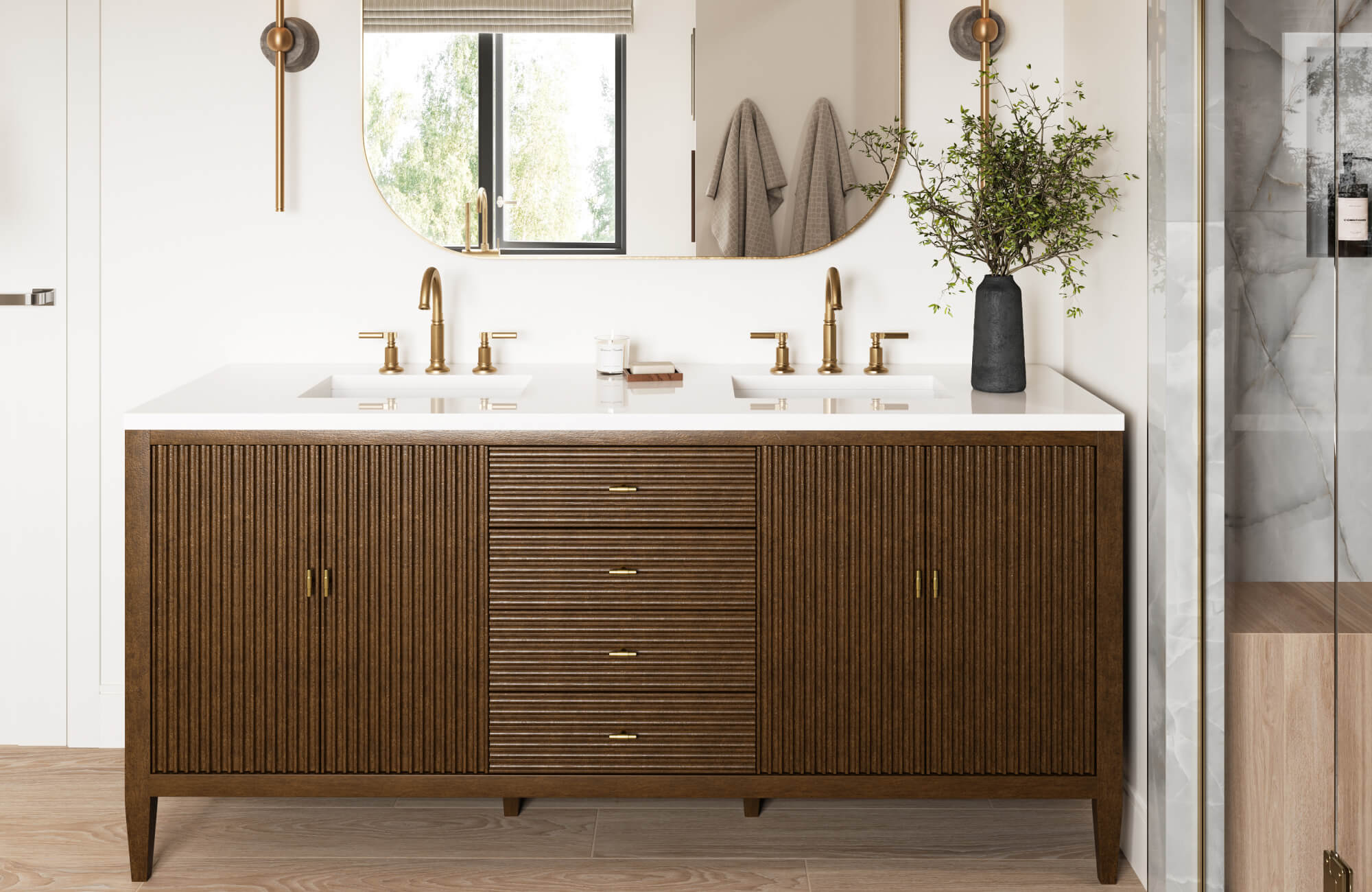
Clearance space around a vanity dictates how smoothly the bathroom functions. At least 30 inches of open floor area in front of the vanity allows drawers and cabinet doors to operate without obstruction. In compact layouts, floating vanities like Edward Martin’s Royce 36" Single Vanity in Chestnut with 3 cm White Zeus Quartz Top, as displayed in the photo above, create openness by exposing floor space, making the room feel larger. Sliding or pocket doors further improve circulation by minimizing conflicts with door swings. Designers frequently use circulation diagrams to anticipate how users will move between the toilet, shower, and vanity. When properly planned, clearance creates an environment that feels both spacious and highly functional.
Plumbing Fixture Spacing
Vanity placement must respect both building codes and spacing guidelines to ensure comfort and compliance. For instance, maintaining at least 15 inches from the toilet’s centerline to the vanity’s edge helps prevent congestion and preserve accessibility. This spacing becomes especially important in compact bathrooms where fixtures compete for limited space. In addition, proper separation minimizes the risk of water splashing between the toilet and vanity surface. To address these challenges in advance, designers often use CAD layouts to preview and resolve potential conflicts. Ultimately, correct fixture spacing delivers not only code compliance but also a bathroom that feels intentionally and thoughtfully designed.
ADA Accessibility Standards
Accessibility considerations bring inclusivity to bathroom design. To begin, ADA-compliant vanities should remain no higher than 34 inches to ensure usability for seated individuals. In the same way, floating vanities with at least 27 inches of knee clearance provide essential access for wheelchair users. Ease of use can also be improved through lever-handled or touchless faucets, which are especially helpful for individuals with reduced dexterity. At the same time, storage must be carefully positioned to avoid obstructing legroom or limiting mobility. By following ADA guidelines, designers can create bathrooms that serve all users while still maintaining a sophisticated sense of style.
Single, Double, and Custom Sink Options
The number and type of sinks within a vanity dramatically influence both size and functionality. Choosing the right configuration depends on household routines, bathroom size, and plumbing requirements.
Single-Sink Vanities
Single-sink vanities are an excellent choice for compact layouts or secondary bathrooms. Typically measuring between 24 and 48 inches wide, they provide generous countertop space while requiring only one plumbing connection. Beyond installation, their uninterrupted storage compartments make them practical and efficient for everyday use. This streamlined design also improves circulation in tighter spaces, helping to prevent a cramped feel. In addition, the reduced need for fixtures translates into cost savings, making them appealing for budget-conscious projects. Altogether, single-sink vanities offer a smart balance of style, function, and efficiency.
Double-Sink Vanities
Double-sink vanities are designed to meet the demands of shared master bathrooms. Beginning at 60 inches wide, they create dual grooming stations that allow multiple users to operate simultaneously. Each sink requires at least 36 inches of counter width with a 4-inch separation between basins to avoid crowding. While they require more plumbing and a larger footprint, they significantly improve convenience in busy households. These vanities also enhance resale value, appealing to buyers seeking both functionality and luxury. A refined example, as shown in the picture above, is the Sasha 72" Double Vanity in Mid Century Walnut with 3 cm White Zeus Quartz Top, which combines generous storage, timeless wood detailing, and durable quartz-based to elevate both style and everyday usability. When space permits, double-sink vanities add both comfort and sophistication to a bathroom design.
Custom Sink Configurations
Custom sink layouts provide flexibility beyond standard single or double designs. Trough sinks, for instance, accommodate two users without dividing the counter surface, offering a streamlined modern appeal. Similarly, offset sinks create expanded counter space on one side, making them ideal for shared storage needs. In more compact bathrooms, custom sizing can pair reduced widths with unconventional placements to maximize usability. Often, designers integrate these custom sinks into bespoke vanities for a seamless fit. Altogether, such personalized solutions ensure bathrooms reflect both lifestyle needs and aesthetic priorities.
Storage Design and Organizational Features
The internal structure of a vanity determines how practical it will be for daily routines. By combining thoughtful layouts with organizational details, storage becomes both efficient and elegant.
Drawer and Cabinet Configurations
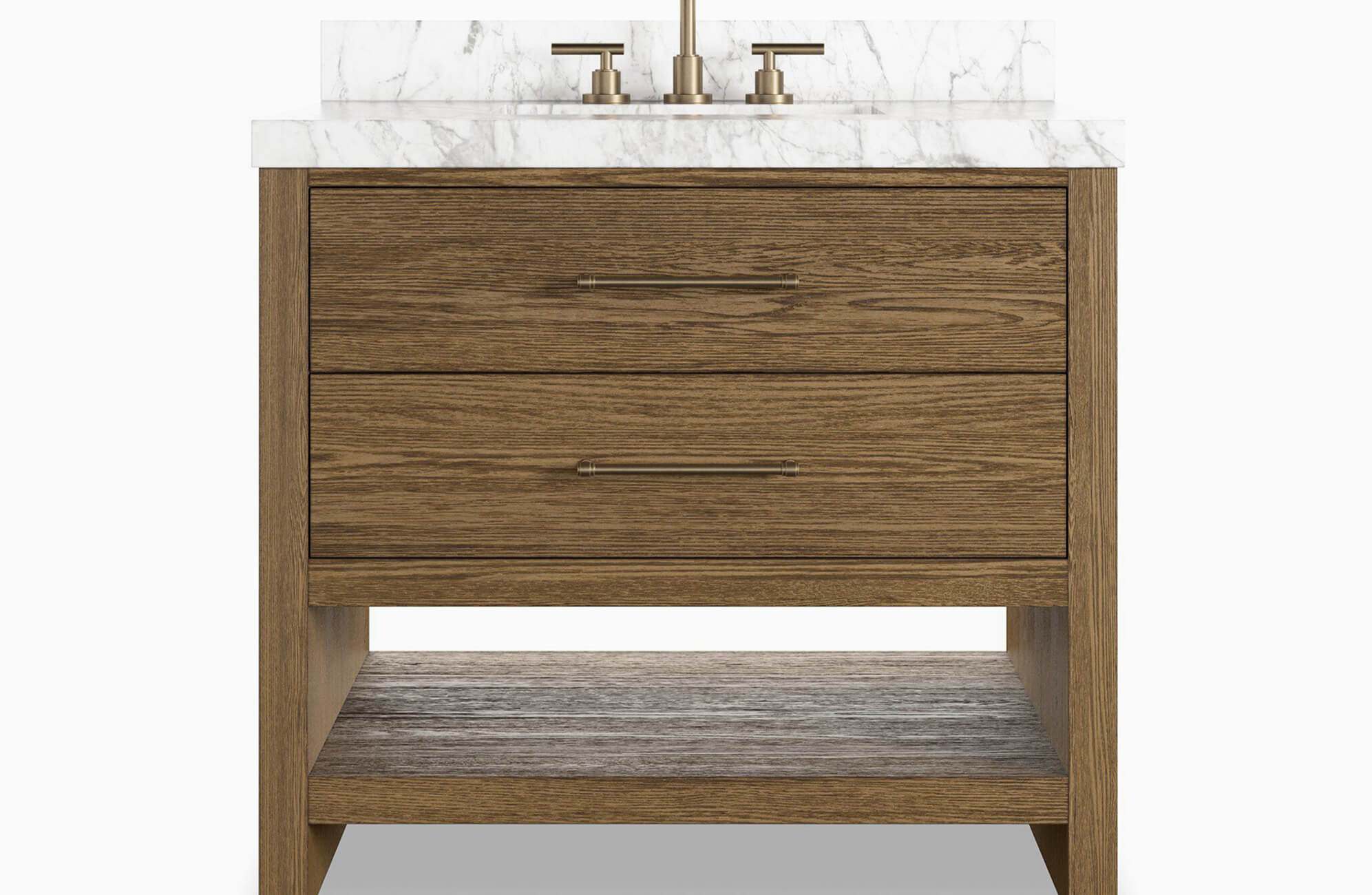
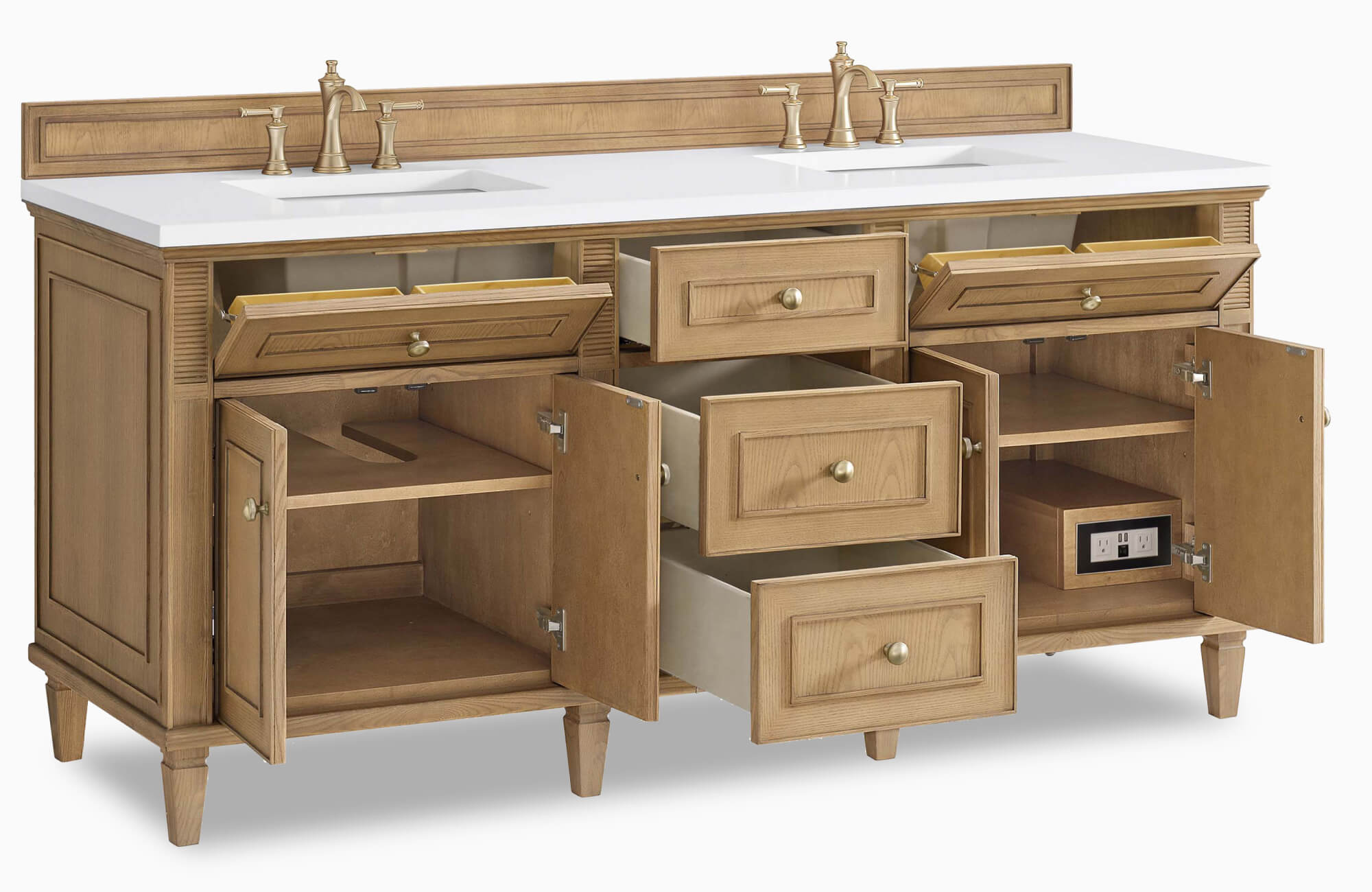
A balanced mix of drawers and cabinets ensures storage flexibility. For example, deep drawers with full-extension glides make bulky items accessible without strain. On the other hand, shallow drawers are ideal for smaller essentials like grooming tools or cosmetics. Adjustable shelves within cabinets also accommodate tall bottles and irregularly shaped products. In addition, soft-close hardware elevates both usability and durability by minimizing wear. A standout example is our Elodie 72" Double Vanity in Light Natural Oak with 3 cm White Zeus Quartz Top, as featured in the picture above, which showcases generous drawer space, concealed cabinetry, and built-in outlets for seamless functionality. Together, these configurations create an organized system that enhances efficiency.
Vertical Storage Enhancements
Vertical storage solutions maximize capacity without increasing the vanity’s footprint. For example, linen towers placed beside vanities provide generous space for towels and supplies. In the same way, wall-mounted cabinets or recessed niches take advantage of underused surfaces, helping to reduce clutter. Medicine cabinets with mirrored fronts add another layer of function by combining hidden storage with sleek design. At the same time, floating shelves introduce opportunities for decorative display while maintaining everyday convenience. When layered thoughtfully, these vertical solutions create storage systems that feel expansive yet uncluttered.
Built-In Organizers
Built-in organizers elevate functionality by reducing countertop clutter. Drawer dividers, for instance, create compartments for grooming accessories and cosmetics. In addition, pull-out trays and baskets make it easier to reach items stored at the back. To enhance convenience further, integrated outlets allow discreet charging and appliance use without exposed cords, while hidden hampers streamline laundry routines and preserve visual order. Taken together, these built-in features ensure storage feels intentional, polished, and highly usable.
Style Materials and Durability
A bathroom vanity must withstand daily use in a humid environment while also serving as a statement piece. The combination of style and material durability determines both longevity and visual appeal.
Material Selection
The choice of materials has a direct impact on vanity performance. Solid hardwoods and marine-grade plywood, for example, provide superior moisture resistance and strength. In the same way, engineered laminates and waterproof MDF deliver cost-effective durability while mimicking natural finishes. Countertops with a ½–1 inch overhang also protect cabinetry from water damage. Finishes such as veneer or painted lacquer can add aesthetic refinement. When paired with quality craftsmanship, these materials ensure resilience and beauty.
Countertop Durability
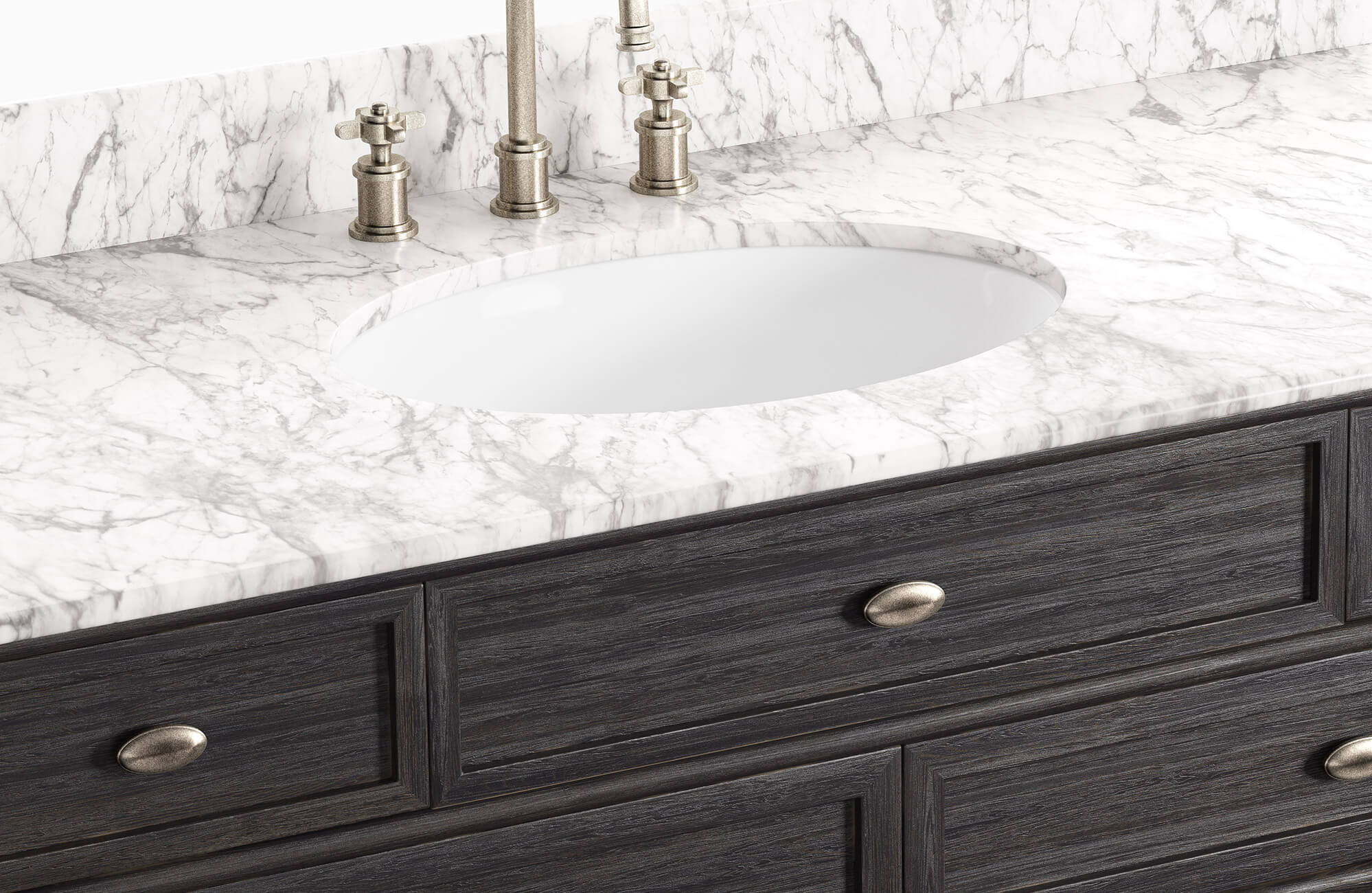
Countertops must balance visual elegance with resistance to wear. For instance, quartz and granite provide both durability and a wide range of colors. In contrast, marble delivers timeless beauty but requires sealing to resist staining. For those who prefer consistency, engineered stone delivers uniform patterns and improved scratch resistance. Finally, for budget-conscious projects, solid-surface materials provide a versatile option without compromising performance. Ultimately, selecting the right countertop ensures a vanity that is both stylish and built to last.
Finish and Hardware Longevity
The finish and hardware of a vanity play a crucial role in its overall lifespan. To start, moisture-resistant coatings help prevent swelling and deterioration over time. Beyond protection, functionality also matters—soft-close hinges and drawer glides extend usability while reducing impact damage. When it comes to hardware, options like stainless steel, brass, or matte black not only resist corrosion but complement a variety of design themes as well. For a cohesive look, coordinating finishes across faucets, handles, and lighting ties the space together. In the end, investing in high-quality finishes ensures the vanity remains both stylish and durable for years to come.
Lighting Mirrors and Complementary Fixtures
The vanity’s effectiveness depends not only on its size but also on the integration of mirrors, lighting, and nearby fixtures. These details shape both functionality and atmosphere, creating a space that feels complete.
Mirror Placement
The placement of mirrors strongly influences how a vanity interacts with the room. For wider vanities, a single expansive mirror creates a sense of continuity, while dual mirrors emphasize symmetry in double-sink layouts. In terms of style, frameless mirrors bring modern minimalism, whereas framed options introduce character and warmth. For added practicality, medicine cabinets with mirrored fronts provide hidden storage without disrupting the overall look. Finally, aligning placement with the user’s height ensures comfort and usability. When chosen thoughtfully, mirrors elevate both the design and
Task and Ambient Lighting
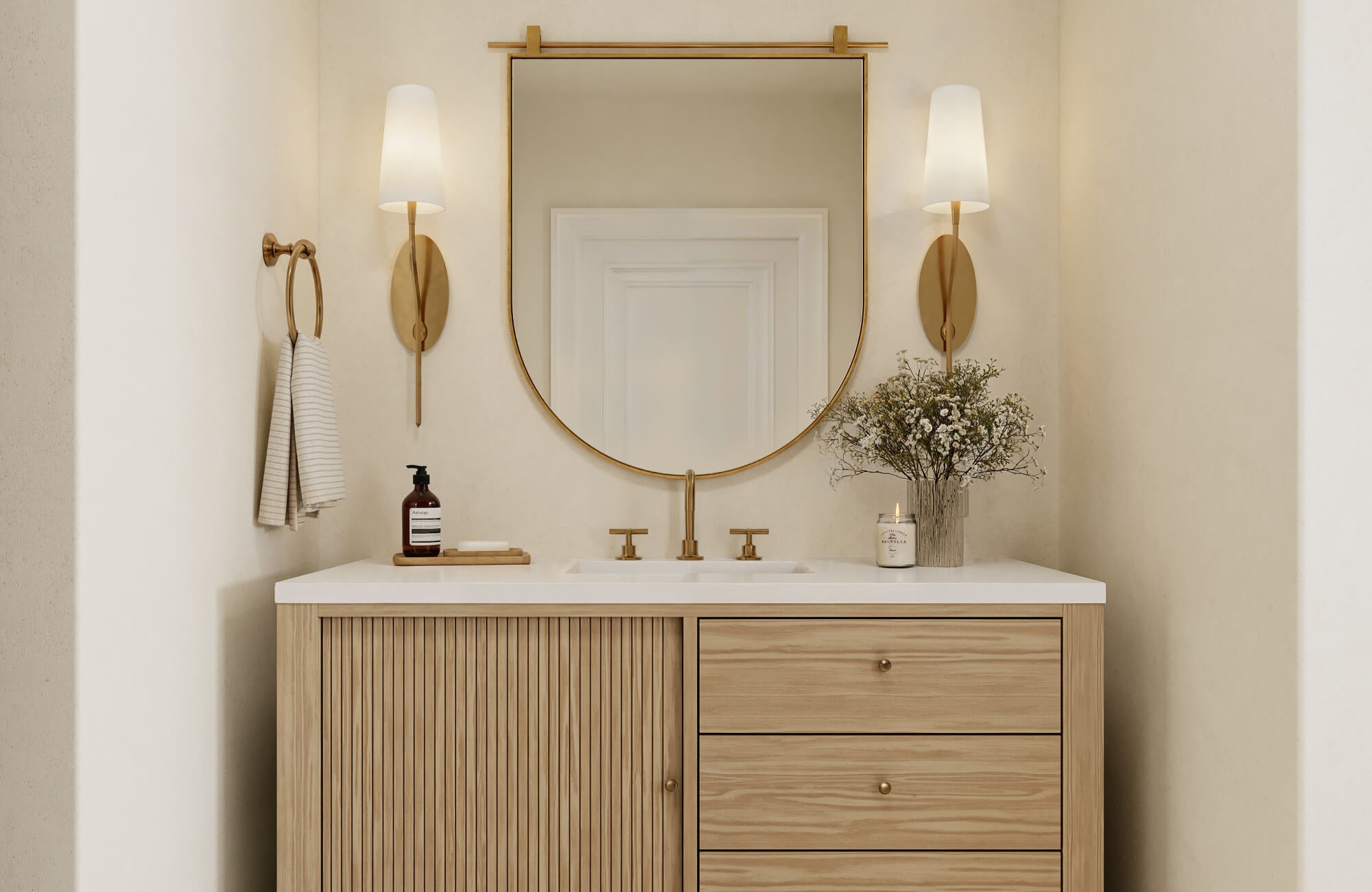
Lighting around the vanity must strike a balance between clarity and atmosphere. To begin, wall sconces positioned at eye level minimize shadows during grooming, ensuring accurate illumination. While overhead fixtures provide general brightness, they work best when layered with task lighting for more precise results. For a modern touch, LED strip lighting beneath floating vanities adds both a stylish accent and improved nighttime navigation. In addition, dimmable fixtures allow homeowners to adjust light levels to suit different moods. The pairing of Edward Martin’s Holly 48" Single Vanity in Sunwashed Oak with 3 cm White Zeus Quartz Top with the Goodwin Wall Sconce in Aged Brass, as displayed in the photo above, beautifully demonstrates how warm finishes and thoughtful illumination can elevate both function and ambiance. This layered approach ensures the vanity remains practical while contributing to the bathroom’s overall atmosphere.
Coordinating Fixtures
A vanity gains greater presence when it is harmonized with surrounding fixtures. To achieve this, faucets, towel bars, and shower hardware should share consistent finishes, creating a sense of continuity. Similarly, lighting elements can echo the style of cabinet pulls or even the edges of the countertop. For added impact, decorative tile backsplashes or wall treatments can frame the vanity and draw the eye toward it. Together, these coordinated details establish a cohesive visual story that feels both intentional and refined. With this level of attention, the vanity ties seamlessly into the overall bathroom design.
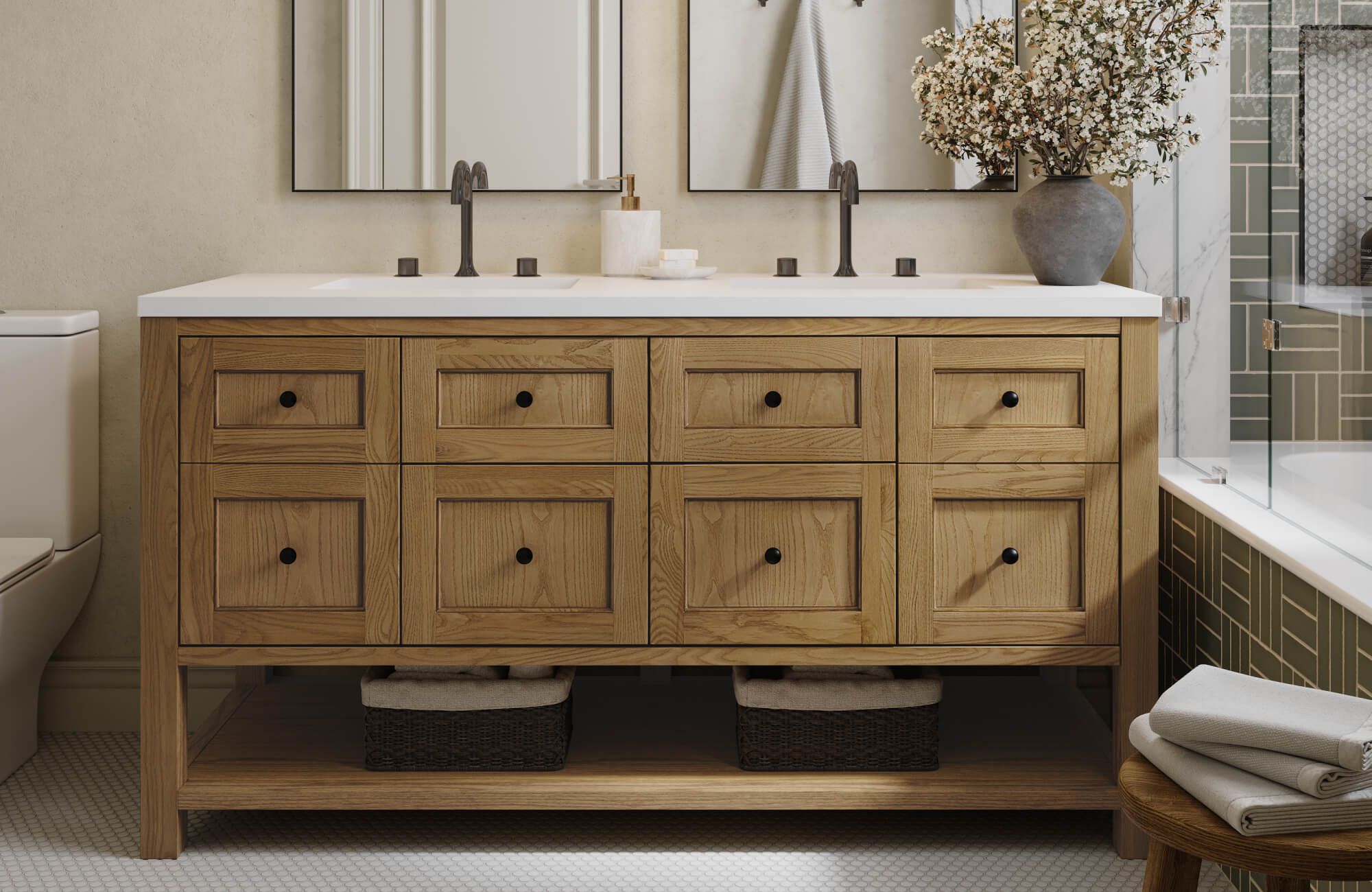
Customization and Long-Term Investment Value
Customization allows vanities to transcend standard sizing, offering tailored solutions that meet unique needs. When combined with durable materials, these upgrades become investments in both lifestyle and property value.
Custom Dimensions and Features
Custom sizing resolves challenges such as alcoves, corners, or irregular walls. With bespoke vanities, measurements can be millimeter-precise, ensuring that every inch of space is put to functional use. Beyond sizing, thoughtful integrations add even more convenience—outlets and hidden compartments keep appliances and accessories neatly stored out of sight. Likewise, pull-out hampers streamline laundry routines while maintaining visual order. To further reduce clutter, specialized dividers and trays keep daily essentials organized and accessible. Altogether, these custom details transform the vanity into a personalized centerpiece of the bathroom.
Value of Premium Materials
Premium materials elevate the vanity beyond pure function, turning it into a true luxury feature. For instance, solid woods, natural stone, and engineered quartz combine long-lasting durability with refined visual appeal. To protect cabinetry from daily humidity, moisture-resistant finishes add another layer of resilience. At the same time, coordinated countertops and hardware not only unify the look but also extend the lifespan of the vanity. Ultimately, high-quality craftsmanship ensures it withstands years of everyday use. By investing in premium materials, homeowners reinforce both style and durability in their bathroom design.
Long-Term Resale Benefits
A well-designed vanity adds measurable value to any home. Much like premium tile enhances both resilience and beauty in wet zones, a carefully selected vanity elevates functionality while boosting buyer appeal. Today’s homeowners increasingly look for ergonomic layouts, efficient storage, and durable finishes when evaluating properties. In this context, custom vanities signal thoughtful investment and higher quality, which in turn strengthen resale potential. In addition, maintenance-friendly finishes extend the lifespan of the product, offering reassurance to prospective buyers. Ultimately, the right vanity serves as both a personal luxury and a long-term financial asset.
Lasting Value of the Perfect Vanity
Choosing the right bathroom vanity size is an investment in both everyday comfort and long-term design harmony. When dimensions, storage solutions, and materials are selected with care, the vanity elevates the bathroom into a space that feels curated and timeless. From compact layouts to expansive master suites, the perfect vanity serves as both a practical workstation and a statement of style. In uniting functionality with beauty, it becomes a defining element that enhances the entire home.
For those seeking guidance tailored to their unique space, Edward Martin’s expert design services provide personalized solutions that blend elegance with practicality. To begin creating your ideal bathroom, explore the collection or contact us today to bring your vision to life!
Follow us on Instagram
@EDWARD.MARTIN
)
)
)
)
)
)
)
)
)
)
)
)
)
)
)
)