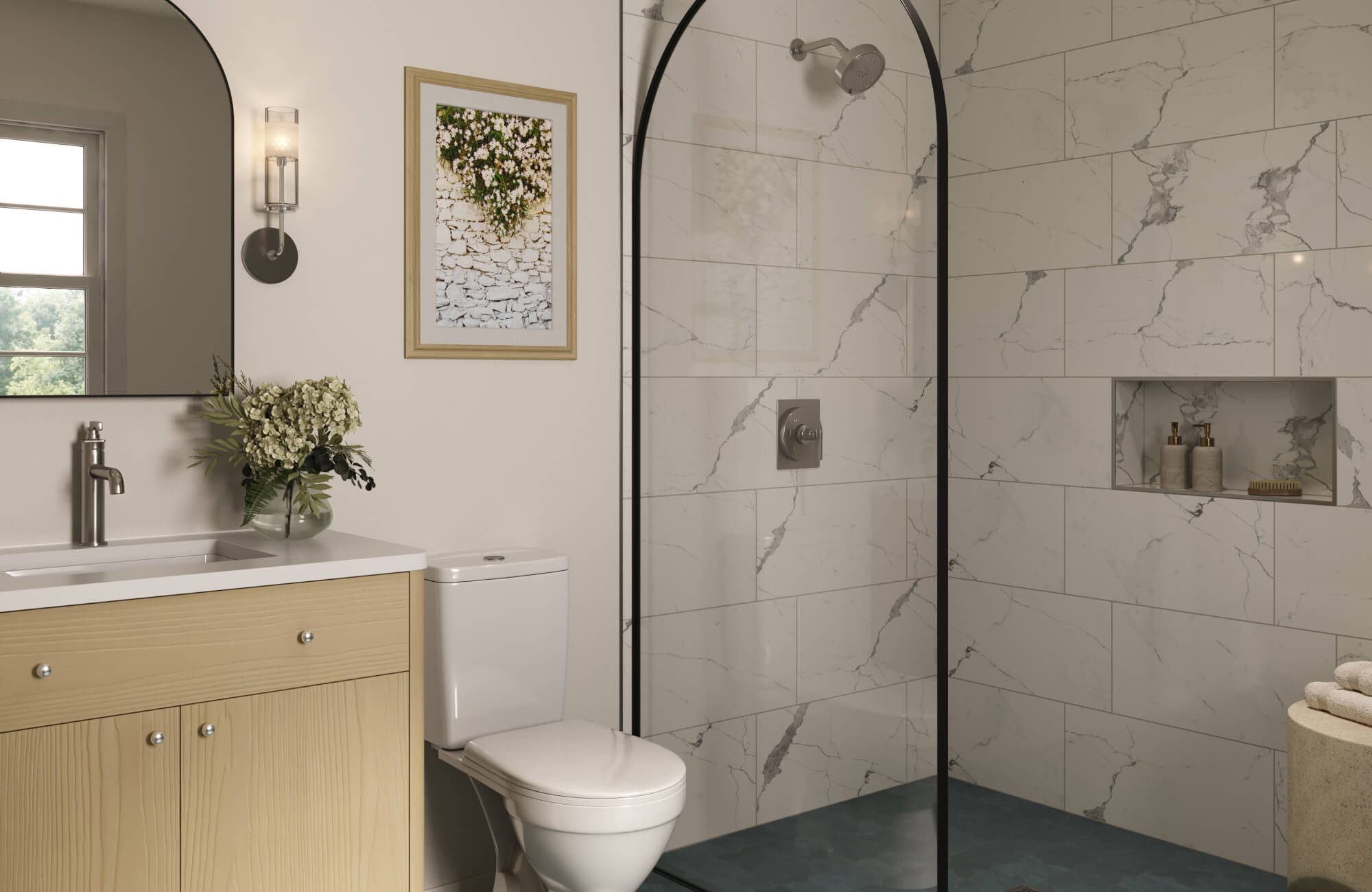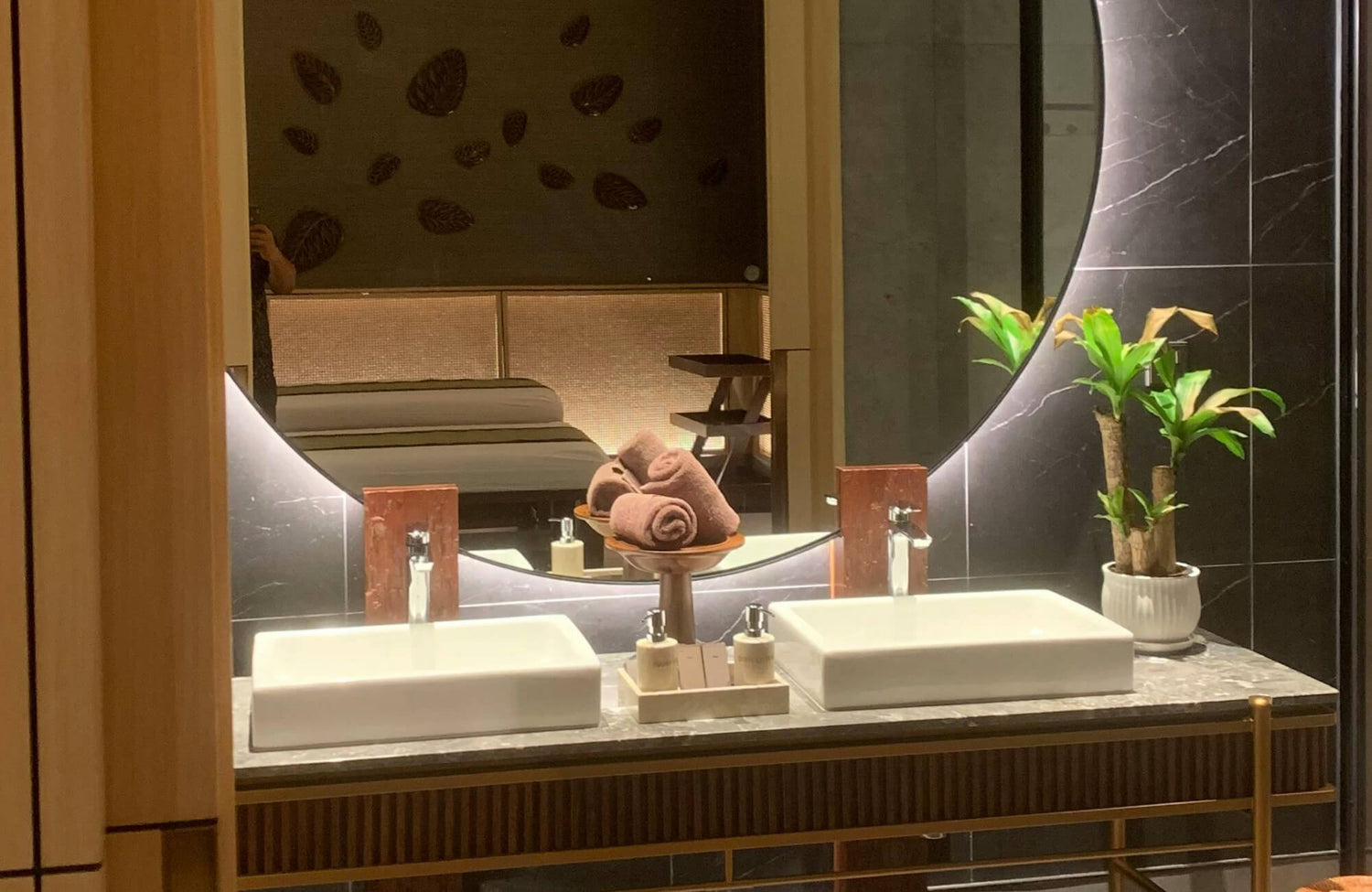
Bathrooms have become refined interior spaces where visual harmony, lighting performance, and material craftsmanship converge with intention. Vanities with a mirror and lights now anchor bathroom design, seamlessly blending illumination, reflection, and cabinetry into a single architectural statement. These integrated systems elevate both aesthetics and daily routines by delivering precise lighting, spatial clarity, and advanced functionality. As design priorities shift toward efficiency and experiential comfort, illuminated vanity mirrors also influence everything from layout planning to material selection. This evolution reflects a broader movement toward modern bathroom vanities with integrated LED mirror lighting that balance beauty with technical precision.

Lighting-Centered Vanity Design as the New Planning Standard
Vanities with integrated mirror lighting now serve as the primary source of illumination in bathroom design. This shift has restructured lighting hierarchies, prioritizing task accuracy and visual comfort in planning decisions.
Task-Optimized Facial Illumination
Task-focused facial illumination is achieved through strategically placed wall-mounted vanity lights positioned on either side of the mirror. This balanced lighting arrangement delivers even, forward-facing illumination that minimizes facial shadows and reduces contrast distortion during grooming, shaving, and makeup application. Globe-style or diffused fixtures also soften light output while maintaining sufficient brightness for task accuracy. High-quality bathroom vanity lighting typically targets 300–500 lux at face level to meet residential and hospitality standards. When paired with a wide, well-proportioned vanity such as Edward Martin’s Sasha 72" Double Vanity in Carbon Oak with a 3 cm White Zeus Quartz Top, the lighting layout supports shared use without visual imbalance. Side-mounted vanity lighting remains a foundational solution for precise, functional bathroom illumination in double-vanity configurations.
Consolidation of Bathroom Lighting Layers
By integrating task and ambient lighting into the vanity zone, designers reduce the need for redundant ceiling fixtures. This consolidation streamlines electrical layouts while maintaining balanced light distribution throughout the bathroom. Integrated mirror lighting also supports a more uniform luminance field, reducing harsh brightness transitions. This approach simplifies reflected ceiling plans, which is particularly valuable in minimalist and contemporary bathroom designs. In addition, fewer fixtures allow for cleaner architectural lines and reduced visual clutter. Consequently, modern bathroom vanity lighting design increasingly prioritizes integrated solutions over traditional multi-fixture layouts.
Color Temperature Control and Visual Adaptability
Advanced vanity mirrors often feature adjustable color temperature settings to accommodate different lighting preferences. Warm white tones around 2700K create a relaxed ambiance, while neutral to daylight settings up to 5000K enhance visual clarity. This adaptability supports circadian-aligned lighting strategies for morning and evening routines. Tunable lighting also improves functionality in shared or multi-use bathrooms. Many systems allow seamless transitions through touch sensors or smart controls.

Spatial Efficiency and Visual Expansion Through Illuminated Mirrors
Illuminated mirrors directly influence how bathroom spaces are perceived and experienced. Through controlled reflection and light diffusion, they enhance openness without increasing physical dimensions.
Perceived Depth Through Backlit Mirror Design
Backlit illuminated mirrors introduce a soft perimeter glow that visually separates the mirror from the wall surface, creating a sense of depth and architectural layering. This subtle light diffusion reduces harsh contrasts between vertical planes and enhances wall texture visibility. In compact bathrooms, the added dimensionality also prevents the space from feeling compressed or enclosed. The effect works especially well with neutral palettes, large-format tile, and stone surfaces. By amplifying depth without increasing physical square footage, backlit LED bathroom mirrors play a critical role in spatial optimization. This lighting strategy is now a hallmark of modern bathroom design focused on openness and visual comfort.
Floating Vanities and Visual Weight Reduction
Floating bathroom vanities like the Royce 48" Single Vanity in Chestnut with a 3 cm White Zeus Quartz Top significantly reduce visual weight by lifting cabinetry off the floor plane, creating a sense of openness and spatial clarity. This wall-mounted configuration exposes more flooring, visually expanding the room and improving circulation flow, particularly in compact or alcove-style bathrooms. By eliminating a traditional base, architectural details such as herringbone tile or continuous flooring patterns remain uninterrupted. The added openness also enhances how light from illuminated mirrors is distributed across the room, reinforcing brightness and spatial continuity. As a result, floating vanities pair seamlessly with bathroom vanities with light and mirror designs to achieve a lighter, more balanced visual composition.
Cleaner Sightlines and Reduced Fixture Interference
Traditional bathroom lighting fixtures, such as wall sconces or overhead lights, often interrupt mirror symmetry and wall alignment. Integrated LED mirror lighting eliminates these disruptions, preserving clean sightlines and balanced compositions. The absence of external fixtures also allows for greater flexibility in mirror sizing, placement, and proportional alignment with vanities. Continuous reflective surfaces improve light distribution and enhance overall brightness. This visual clarity supports minimalist, modern, and or transitional bathroom aesthetics. Integrated vanity mirror lighting enables architecturally refined layouts with reduced visual clutter.

Electrical Planning and Smart Coordination for Vanity Lighting
As lighting becomes embedded within vanity systems, electrical coordination plays a critical role in design execution. Thoughtful planning ensures performance reliability while enabling advanced technological features.
Dedicated Power Planning and Load Management
Vanities with integrated LED mirror lighting require precise electrical planning to ensure safe and reliable operation. Dedicated power feeds must be concealed within walls or cabinetry while remaining accessible for servicing. Designers also coordinate voltage requirements, driver placement, and transformer capacity early in the construction process. Most LED vanity mirrors now operate on low-voltage systems that demand accurate load calculations to prevent flicker, dimming inconsistencies, or premature component failure. Moreover, compliance with local bathroom electrical and safety codes is essential. Early electrical coordination further supports seamless installation and long-term performance of LED bathroom vanity mirrors.
Smart Controls and User-Centric Interfaces
Smart controls have become a defining feature of modern bathroom lighting and vanity systems, supporting both functional precision and everyday comfort. For instance, integrated touch sensors, dimming capabilities, and intuitive on-off interfaces allow users to adjust lighting levels effortlessly based on task, time of day, or personal preference. These systems are also designed to minimize visual clutter by consolidating controls directly into the mirror or vanity zone rather than relying on multiple wall switches. In advanced configurations, smart interfaces coordinate multiple functions, including lighting and environmental features, to operate seamlessly together. This level of integration enhances usability while preserving clean sightlines and minimalist design intent. User-centric control systems now play a central role in contemporary bathroom design, balancing technology with refined simplicity.
Integrated Anti-Fog and Environmental Control
Moisture management is a critical performance consideration in bathrooms, particularly in spaces that rely heavily on mirrors for daily grooming and personal care. Integrated anti-fog systems are engineered to maintain consistent mirror clarity by gently warming the glass surface, preventing condensation during and after hot showers. These low-wattage heating elements are permanently bonded to the mirror backing, ensuring even heat distribution without affecting the mirror’s appearance or energy efficiency.
When paired with smart lighting or control interfaces, anti-fog functionality can activate automatically or in tandem with lighting use, reducing unnecessary power consumption. This integration also eliminates the need for secondary accessories while ensuring reliable performance in humid environments. As a result, anti-fog mirror technology enhances both daily usability and the overall quality of high-performance bathroom design.

Advanced Materials and Moisture-Resistant Construction
The integration of lighting and electronics elevates material performance requirements for vanity mirrors. Durability, moisture resistance, and thermal stability are essential to long-term reliability.
Copper-Free Mirror Substrates and Longevity
High-quality illuminated vanity mirrors increasingly rely on copper-free, silver-backed glass to ensure durability in moisture-rich bathroom environments. This advanced mirror construction resists corrosion, edge deterioration, and black spotting caused by prolonged exposure to humidity and steam. Enhanced protective backing layers further reinforce structural integrity and improve adhesion between materials. These performance upgrades also preserve optical clarity, reflection accuracy, and visual consistency over time. As a result, copper-free LED bathroom vanity mirrors are now widely specified for luxury residential and hospitality bathroom design. Their longevity supports sustainable design practices while reducing long-term maintenance concerns.
Structural Frames and Housing Materials
The structural components surrounding illuminated mirrors play a critical role in maintaining performance and appearance. Aluminum and powder-coated steel frames, for example, provide excellent resistance to corrosion while remaining lightweight for precise wall mounting. Vanity cabinetry is also often constructed using marine-grade plywood, PVC composites, or sealed hardwoods to withstand proximity to plumbing and condensation. These moisture-resistant materials prevent warping, swelling, and surface degradation over time. When paired with integrated LED mirror systems, they ensure dimensional stability and seamless alignment. Moisture-resistant bathroom vanity construction is therefore essential to the reliability of integrated lighting solutions.
Thermal Management and Heat Dissipation
Effective thermal management plays a critical role in the performance and longevity of integrated LED vanity mirrors, as even high-efficiency LEDs generate heat that must be properly dissipated to maintain consistent brightness and accurate color temperature. To achieve this, manufacturers incorporate integrated aluminum heat sinks and concealed ventilation channels that draw heat away from light sources without compromising the mirror’s minimalist profile. When heat is properly regulated, the risk of premature LED degradation, flicker, or color shift is significantly reduced, supporting long-term energy efficiency and visual consistency. As a result, thermal management has become a defining technical standard in high-performance LED bathroom mirror design.

Aesthetic Refinement and Contemporary Bathroom Identity
Vanities with a mirror and lights have become defining visual elements in modern bathroom interiors. Their proportions, illumination, and detailing shape the overall architectural expression of the space.
Minimalist Profiles and Frameless Expressions
Frameless and ultra-slim illuminated vanity mirrors reflect the clean, restrained aesthetic of contemporary bathroom design. Their minimal profiles integrate seamlessly with large-format tile, stone slabs, and smooth architectural wall finishes. By eliminating decorative framing, the focus shifts to proportion, alignment, and light quality. Integrated LED lighting also replaces ornamentation with refined functionality. This approach enhances visual continuity across the vanity wall. Modern bathroom vanity mirrors with integrated LED lighting support timeless, minimalist interiors that prioritize clarity and balance.
Material Enhancement Through Light Interaction
Integrated LED mirror lighting plays a crucial role in highlighting the texture and depth of surrounding bathroom materials. Stone veining, porcelain surfaces, wood grain, and matte finishes become more pronounced under controlled, even illumination. This interaction enriches the visual character of the space without introducing additional decorative elements. Reflected light also enhances tonal variation and material authenticity. Designers leverage this effect to elevate neutral palettes and natural materials. LED vanity mirror lighting is therefore central to material-driven contemporary bathroom design.
Customization and Proportional Precision
Custom-sized illuminated mirrors allow designers to achieve precise proportional alignment with vanity widths, wall modules, and ceiling heights. This level of customization improves symmetry and reinforces architectural order within the bathroom. Bespoke fabrication also accommodates double vanities, expansive master baths, and hospitality environments with exacting standards, while integrated LED lighting ensures consistent illumination across custom dimensions. The result is a cohesive, high-end visual composition. Custom luxury bathroom vanities with LED mirrors remain essential to tailored and design-led interior solutions.
The Future of Bathroom Design Through Integrated Vanity Lighting
Vanities with a mirror and lights have transformed bathrooms into carefully curated environments where function and beauty coexist seamlessly. Integrated LED mirror lighting enhances daily rituals while supporting efficient layouts, smart technology, and material longevity. These systems redefine lighting hierarchy, spatial perception, and architectural clarity within modern interiors. As design trends continue to prioritize wellness and precision, illuminated vanity mirrors will remain essential to high-performance bathroom design. Modern bathroom vanities with integrated LED mirror lighting represent the intersection of innovation, craftsmanship, and enduring visual elegance.
For those ready to move from inspiration to execution, contact us to connect with Edward Martin’s design services and bring this vision to life!