Black wallpaper carries an unmistakable sense of drama, transforming interiors with a depth that feels both intimate and architecturally refined. When thoughtfully composed, a black background wallpaper shifts the narrative from darkness to contrast, allowing light, texture, and form to emerge with heightened clarity. Whether expressed through a tailored black and white wallpaper scheme or a softly layered plain black wallpaper, the effect can feel luminous rather than enclosed. This balance is achieved by offsetting low-reflectance surfaces with considered illumination, reflective materials, and spatial intention. Through this interplay of finishes, light, and composition, dark wallpaper evolves into a sophisticated design element that enhances both brightness and dimension.

Light Reflectance and Visual Depth
Black wallpaper absorbs a significant portion of visible light, yet when balanced with high-reflectance elements, it contributes to depth rather than visual heaviness. A measured approach to placement and surrounding finishes allows dark surfaces to recede gracefully, enhancing spatial perception while preserving brightness.
Low LRV and Interior Brightness Control
Black wallpaper typically carries a low Light Reflectance Value (LRV), meaning it absorbs most incident light instead of redistributing it across the space. This effect becomes more controlled when paired with high-LRV elements such as white ceilings, pale flooring, or light-toned millwork. For instance, integrating a dark wallpaper with crisp trim or a black and white wallpaper composition introduces contrast that enhances perceived brightness.
As reflective décor elements are layered in, light is redirected across surfaces, reducing the visual weight of darker tones. Even a plain black wallpaper begins to feel lighter when framed by luminous finishes and balanced tonal distribution. In this way, managing adjacent reflectance ensures that darkness remains intentional rather than overwhelming.
Spatial Perception and Depth Enhancement
Because darker tones visually recede, black wallpaper can be used to create an illusion of expanded depth within a room. When applied as a black background wallpaper on a far wall, it subtly elongates spatial perception, making the room feel more expansive. This approach proves especially effective in narrow layouts, where visual extension enhances overall proportion.
As lighter surfaces flank the darker wall, the resulting contrast also introduces a layered dimension rather than enclosure. Smooth tonal transitions further ensure that the eye moves fluidly through the space without interruption. Consequently, black wallpaper becomes a strategic device for shaping spatial experience.
Strategic Wall Placement Techniques
Thoughtful placement allows black wallpaper to enhance architectural features without overwhelming the room. When used on accent walls, recessed niches, or built-in elements, dark wallpaper establishes a focal point that anchors the overall composition. A black background behind shelving or a fireplace also introduces depth while maintaining openness across the remaining surfaces.
This selective application ensures that light continues to circulate freely, preventing visual compression. At the same time, aligning placement with natural light sources allows illumination to interact more effectively with the darker surface. Through this careful positioning, black wallpaper becomes a refined structural element within the design.

Reflective Finishes and Surface Texture
The finish of black wallpaper plays a defining role in how it interacts with light, shaping whether it appears dense or visually dynamic. By incorporating reflective qualities and tactile variation, dark surfaces gain dimension and maintain a sense of visual lightness.
Gloss and Metallic Surface Interaction
Glossy and metallic finishes enhance the reflective properties of black wallpaper, allowing it to interact more actively with ambient light. For example, a black background wallpaper with subtle metallic detailing introduces a soft luminosity that offsets its dark base. These finishes also create micro-reflections, which prevent the surface from appearing flat or visually heavy. As lighting conditions shift throughout the day, the wall responds with a gentle sense of movement and depth.
This evolving quality keeps the wallpaper visually engaging while maintaining balance. As a result, reflective finishes become essential in refining the presence of dark wallpaper within a space. Through this interplay of light and sheen, black wallpaper gains a refined brilliance that elevates its visual presence without increasing brightness artificially.
Textured Wallcoverings for Light Diffusion
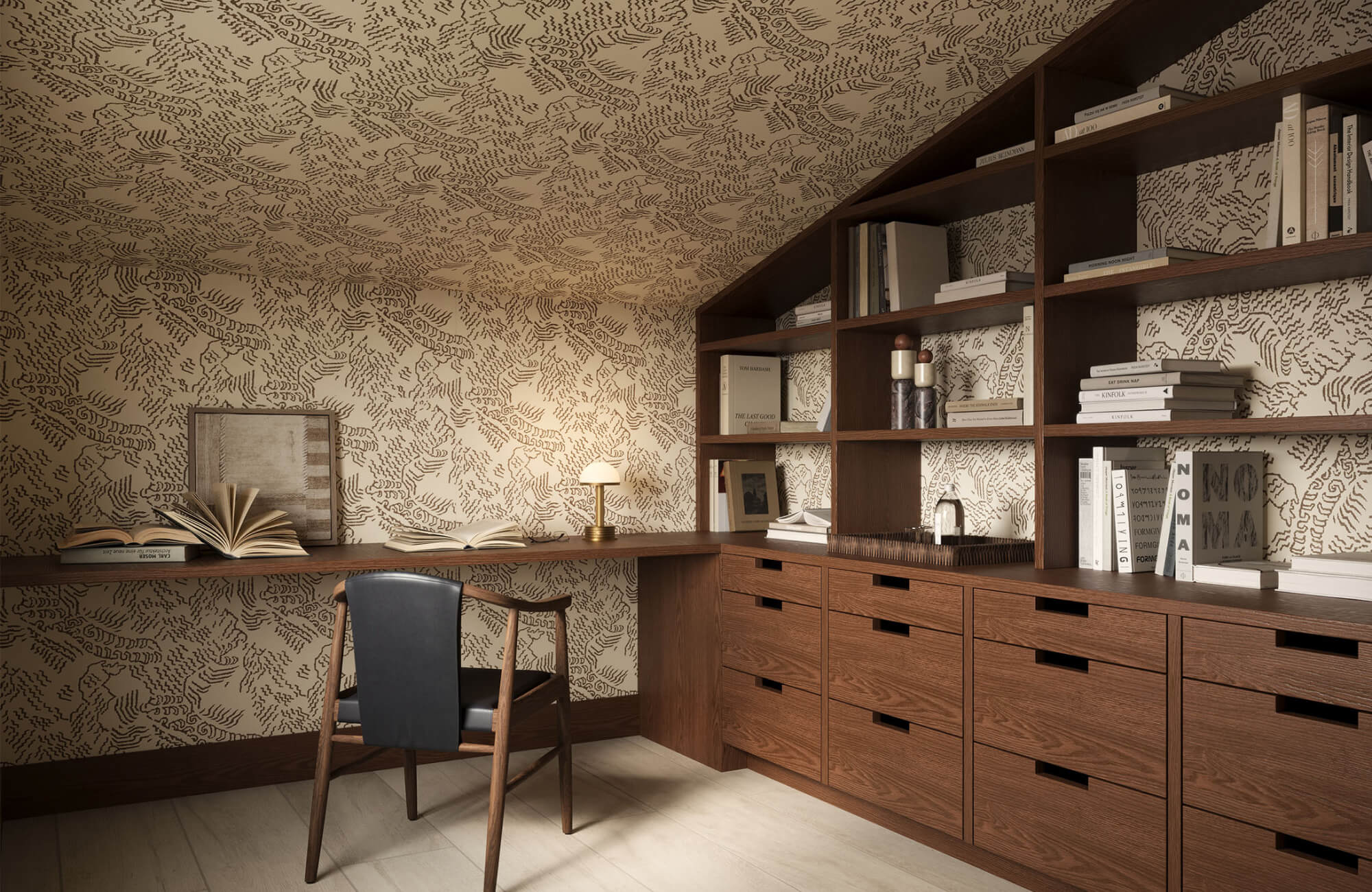
Textured wallcoverings like Edward Martin’s Essex Wallpaper in Black I, 52" x 132", as displayed in the photo above, introduce subtle irregularities that diffuse light across the surface, softening the intensity of dark tones. Materials such as grasscloth, linen, or embossed vinyl allow light to interact at varying angles, creating a layered visual effect. A textured plain black wallpaper, for instance, offers greater dimension than a smooth matte surface, enhancing both depth and tactile appeal.
As light disperses across these textures, the wall avoids appearing flat or monolithic. This interplay between light and surface variation contributes to a more balanced and inviting atmosphere. In turn, texture becomes a key element in moderating the visual weight of black wallpaper. By gently scattering light, textured finishes ensure that dark wallpaper feels nuanced and visually breathable rather than dense.
Matte Versus Sheen Balance
Matte finishes like the Brocade Wallpaper in Black I, 52" x 132" absorb light consistently, which can intensify the depth of dark wallpaper when used in isolation. Introducing a subtle sheen through adjacent materials creates a more balanced light interaction across the room. When matte black wallpaper is paired with semi-gloss trims or polished accents, the contrast introduces visual nuance without disrupting cohesion.
Within a black and white wallpaper palette, this variation in finish also adds depth while maintaining a restrained color scheme. The gentle interplay between matte and reflective surfaces ensures that the space feels layered rather than subdued. Ultimately, this balance enhances both clarity and sophistication. This calibrated contrast between matte and sheen allows dark wallpaper to read as intentional and refined, rather than visually heavy.

Layered Lighting Techniques for Dark Walls
Lighting design is essential in ensuring that black wallpaper enhances a room’s atmosphere rather than diminishing its brightness. A layered approach distributes illumination evenly while emphasizing texture and depth, allowing dark surfaces to integrate seamlessly.
Ambient Lighting for Even Illumination
Ambient lighting establishes the foundational brightness necessary for spaces featuring dark wallpaper. Ceiling-mounted fixtures or recessed lighting with appropriate lumen output ensure consistent illumination throughout the room. This even distribution also prevents shadow buildup, which can otherwise intensify the perception of darkness. When paired with reflective finishes, ambient lighting enhances the overall luminosity of the space.
The result is an environment where black wallpaper reads as intentional and refined rather than heavy. Maintaining this baseline illumination is key to achieving visual balance. A well-calibrated ambient layer ensures that dark surfaces remain visually grounded while the room retains a clear and open atmosphere.
Accent Lighting and Wall Grazing
Accent lighting introduces a focused layer of illumination that enhances the texture and pattern of black wallpaper. Wall grazing techniques, where light is cast at a shallow angle across the surface, emphasize subtle variations and dimensional details. This approach is particularly effective for textured or patterned black background wallpaper, as it highlights depth without overwhelming the space. As light moves across the surface, it also creates a dynamic interplay of highlights and shadows.
This adds visual interest while preserving overall brightness. In this way, accent lighting reinforces the design intent behind dark wallpaper applications. By sculpting light across the surface, accent lighting transforms dark wallpaper into a dimensional feature that enriches the entire spatial experience.
Color Temperature and Light Quality
The quality and temperature of light significantly influence how black wallpaper is perceived within a space. Warm white lighting introduces softness, tempering contrast, and creating a more inviting atmosphere. In contrast, neutral white lighting enhances clarity, particularly within black and white wallpaper compositions where definition is key. Selecting the appropriate temperature ensures harmony between wallcoverings and surrounding materials.
Consistency in light quality also prevents distortion and maintains the integrity of finishes. Through careful calibration, lighting enhances both comfort and visual cohesion. This precise control of light quality allows dark wallpaper to integrate seamlessly, supporting both aesthetic refinement and functional clarity.

Contrast Pairing and Material Balance
Balancing black wallpaper with lighter tones and reflective materials ensures that it enhances rather than dominates the overall composition. Through deliberate contrast, the space maintains brightness while achieving a cohesive and layered aesthetic.
Light-Toned Furnishings and Surfaces
Light-toned furnishings provide a visual counterpoint to the depth of dark wallpaper. Upholstery in shades such as ivory, beige, or soft gray reflects light into the space, softening the impact of darker surfaces. When positioned against a black background, these elements create a balanced interplay between light and shadow. This contrast also enhances depth while preserving a sense of openness and comfort. As light circulates more effectively, the room feels cohesive rather than enclosed. Thoughtful integration of lighter tones is therefore essential to maintaining equilibrium. This deliberate contrast allows dark wallpaper to feel elevated and breathable, rather than visually dominant.
Reflective Materials and Light Amplification
Reflective materials play a pivotal role in amplifying both natural and artificial light within a space. Mirrors, glass surfaces, and polished metals capture and redistribute illumination, enhancing overall brightness. When placed strategically near windows or light sources, these elements maximize their reflective potential. In combination with dark wallpaper, they also introduce subtle highlights that prevent visual heaviness. Even a plain black wallpaper feels more integrated when balanced with reflective accents. This interplay ensures that the space remains luminous and visually dynamic. By extending the reach of light, reflective elements transform dark surfaces into active contributors to brightness rather than absorbers of it.
Layering Natural and Engineered Materials
A combination of natural and engineered materials introduces variation in texture and reflectivity, enriching the overall design. Warm wood tones paired with black wallpaper create a contrast that feels grounded yet refined. Similarly, stone surfaces offer subtle reflectivity while maintaining a sense of solidity. This layering also prevents monotony and adds depth without overwhelming the space. As materials interact with both light and shadow, they contribute to a cohesive visual narrative. In this way, material diversity supports the elegance of dark wallpaper applications. Through this nuanced layering, black wallpaper is framed by materials that enhance its richness while maintaining visual balance and warmth.

Pattern Scale, Layout, and Spatial Composition
The scale and placement of black wallpaper patterns shape how light and proportion are perceived within a room. When selected thoughtfully, these elements introduce rhythm and clarity while maintaining a balanced visual composition.
Patterned Versus Plain Applications
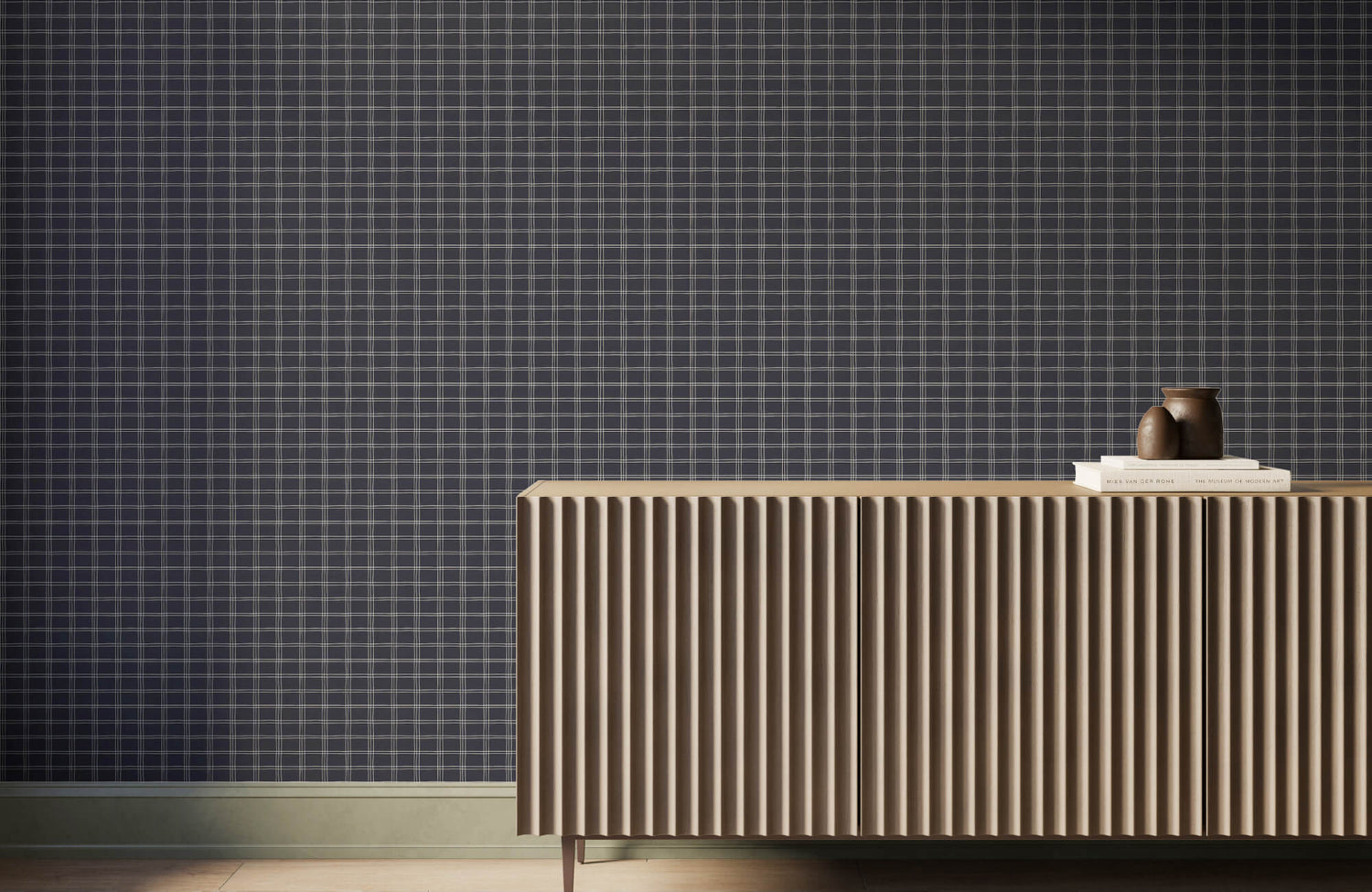
Patterned black wallpaper introduces variation that breaks up the density of dark surfaces. Designs such as black and white wallpaper with contrasting motifs create movement and visual rhythm across the wall. This prevents the surface from reading as a continuous, uninterrupted dark plane. A great example is our Downland Wallpaper in Black I, 52" x 132", as shown in the photo above. In contrast, plain black wallpaper offers a more restrained and minimal expression, requiring careful integration with surrounding elements. The choice between patterned and plain designs depends on the desired level of visual activity. Both approaches can achieve balance when applied with intention and precision. When thoughtfully selected, either style transforms a black background into a visually dynamic surface that enhances depth without compromising brightness.
Directional Patterns and Visual Flow
Directional patterns influence how the eye travels through a space, subtly shaping its perceived proportions. Vertical motifs, for instance, draw the gaze upward, enhancing the sense of height within a room. Conversely, horizontal patterns can visually widen a space, making it feel more expansive. When applied to black background wallpaper, these directional effects become more pronounced due to the strong contrast. This controlled visual movement also contributes to a more dynamic and open environment. As a result, pattern orientation becomes a powerful tool in spatial design. By guiding visual flow with precision, directional patterns ensure that dark wallpaper supports openness rather than visual confinement.
Zoning and Selective Application
Selective application allows black wallpaper to create impact without overwhelming the entire room. By defining zones such as accent walls, alcoves, or feature panels, dark wallpaper introduces depth while preserving overall brightness. A black background can also anchor specific elements, guiding attention without enclosing the space. This approach maintains visual balance and supports a clear design hierarchy. As light continues to interact with surrounding surfaces, the room retains a sense of openness. Through controlled zoning, black wallpaper becomes a refined and intentional feature within the composition. This deliberate placement reinforces contrast and clarity, allowing dark wallpaper to elevate the space with structure and sophistication.
Elevating Interiors Through Balanced Contrast
Black wallpaper, when approached with precision, becomes a medium through which contrast, depth, and light are thoughtfully composed. By pairing dark wallpaper with reflective finishes, layered illumination, and carefully selected materials, interiors retain both brightness and clarity. A well-executed black background wallpaper or black and white wallpaper composition allows light to interact dynamically, enhancing dimension rather than diminishing it. Even a plain black wallpaper can feel luminous when integrated with balanced reflectance and intentional spatial planning. Ultimately, dark wallpaper serves not as a limitation, but as a refined foundation for creating interiors that feel both dramatic and effortlessly sophisticated.
Edward Martin’s design services offer tailored guidance to help you achieve this balance with confidence and precision. For personalized recommendations, contact us to bring your vision into a cohesive and elevated space!