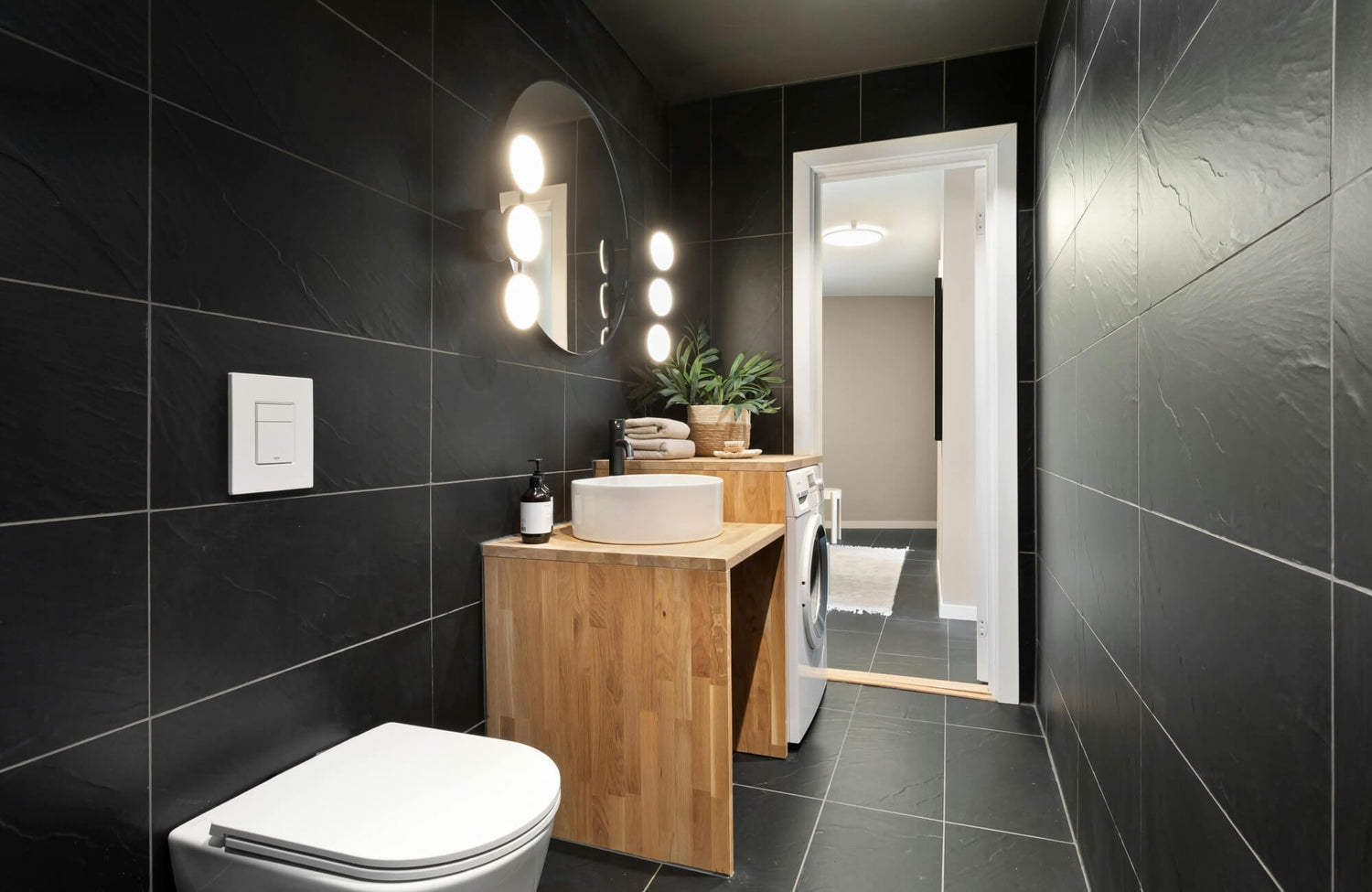
A bathroom designed with black tiles can feel bold, elegant, and timeless. With thoughtful planning, this striking choice transforms into a retreat that balances drama with comfort and everyday function. Black bathroom tiles also adapt easily, whether you prefer a sleek, modern aesthetic or a warmer, more textured look. With a thoughtful approach to design, you can create a bathroom that feels both personal and timeless.

Creating the Right Foundation with Black Tiles
The foundation is where you define how black tiles shape the overall mood of your bathroom. By selecting the right format, finish, and coverage, you can establish a space that feels thoughtfully designed and suited to your style, rather than simply dark or overwhelming.
Choosing Tile Size and Shape
To begin, match the tile scale to the size of your bathroom and the overall atmosphere you want to create. For example, large-format porcelain on walls or floors creates smooth, uninterrupted lines that make the space feel calm and expansive. At the same time, mosaics introduce fine detail that catches the eye and brings a sense of intimacy. In smaller bathrooms, placing larger rectangular tiles vertically on the walls can emphasize height, especially when combined with thin grout lines that create a smooth, continuous surface. On the other hand, in a more spacious setting, breaking up the expanse with a grid or basketweave pattern introduces structure and rhythm without making the design feel busy.
Matte vs Glossy Finishes
The finish plays a key role in how black tiles interact with light, so it’s equally important to choose based on your natural lighting and the mood you want to create. Matte black softens reflections and conceals minor water marks, making it especially practical around showers and vanity areas. In contrast, glossy black tiles reflect light and produce crisp highlights, giving the surface a polished, luxurious feel.
To achieve balance, it often works well to combine the two, using matte tiles on the floor for grip and easy upkeep, while reserving a glossy feature wall behind the vanity to introduce brightness and visual interest. For those seeking a spa-like atmosphere, a satin finish also offers a gentle sheen that adds warmth without the sharp glare of high gloss.
Placement and Coverage
Placement and coverage determine how intense black tiles will feel in your bathroom. When black tiles cover full-height walls and floors, the effect can feel immersive, so balancing the depth with a lighter ceiling and well-chosen grout tones helps keep the space comfortable. If you prefer a more measured approach, limiting black tiles to the shower enclosure or vanity wall allows them to serve as a feature, while surrounding surfaces in lighter tones prevent the room from feeling compressed.
In many designs, the most effective balance is achieved by combining black tile flooring with lighter wall surfaces. In the photo shown above, Edward Martin’s Chantel 12x24 Polished Porcelain Tile in Imperial is used on the walls, creating a refined gray marble effect, while the shower floor contrasts with the Levi 12x12 Matte Porcelain 1x1 Hexagon Mosaic Tile in Black. This combination also shows how black tile can ground the space without overpowering it, while the lighter polished walls maintain an open and bright atmosphere. Extending black tile across the floor into the shower maintains visual flow, and the smaller hexagon mosaic provides both texture and slip resistance for practical everyday use.

Balancing Light and Dark Elements
When styling a bathroom with black tiles, light becomes one of the most important design tools. By pairing lighting with thoughtful color choices, you can achieve a space that feels striking and comfortable.
Natural Light Considerations
Daylight plays a major role in how black tiles appear within a bathroom. When a window is present, slim frames combined with frosted glazing allow gentle light to filter in while still preserving privacy. In more compact rooms, using a pale ceiling and finishing the window reveals in a reflective tone helps bounce light back into the space, keeping the darker surfaces defined rather than overwhelming. In situations where no window is available, a high-reflectance ceiling color paired with lighter walls placed opposite the tiled areas also ensures illumination spreads more evenly, allowing the black tiles to stand out as a feature rather than disappearing into shadow.
In practice, pairing dark flooring with generous daylight can create a striking yet balanced result. In the photo shown above, Edward Martin’s Adeline 24x24 Matte Porcelain Tile in Midnight is used on the floor, and the ample natural light from large windows keeps the deep surface from feeling too heavy. This combination demonstrates how thoughtful use of daylight can highlight the richness of black tiles while maintaining a bright, welcoming atmosphere.
Layered Artificial Lighting
Artificial lighting is equally important when styling a bathroom with black tiles since it helps balance depth and prevents the space from feeling too heavy. For instance, ceiling-level ambient lighting sets the overall brightness, which makes the room feel more open. Complementing this with task lighting at the mirror provides the clarity needed for daily routines such as grooming or applying makeup. For added dimension, wall-mounted sconces or recessed linear fixtures can also be placed to graze the tile surface, emphasizing its texture and finish without introducing glare. Finally, incorporating a subtle night setting, such as an LED strip beneath the vanity, keeps the bathroom practical after dark while preserving a calm, inviting atmosphere.
Complementary Color Schemes
Color selection is essential for balancing the bold presence of black tiles. For example, pairing them with crisp white creates a striking contrast and a clean, gallery-like feel, while warm beige tones soften the overall look and lend a sense of calm. If you prefer something more modern, muted pastels can further introduce subtle interest without overwhelming the dark backdrop.
Metallic finishes also play a significant role in shaping the mood: brushed brass adds warmth and richness, whereas matte nickel provides a cooler, more understated edge.
To maintain cohesion, it helps to repeat the chosen finish across multiple features, such as faucets, handles, or mirror frames. Grout color, too, influences the final impression; deep black grout produces a seamless surface, while dark gray or light gray grout highlights the joints, giving the tiles a defined and architectural quality.

Styling with Fixtures and Fittings
When styling a bathroom with black tiles, fixtures not only serve a practical role but also frame the dark surfaces, bring balance through contrast, and influence the overall feel of the space. By choosing finishes and forms that complement the tiles, you can achieve a bathroom that feels intentional, refined, and cohesive.
Metallic Accents
Metal finishes play an equally important role in shaping how black tiles work in a bathroom. Matte black taps blend seamlessly with the surface to emphasize clean lines, while polished chrome reflects light and sharpens the overall look. Similarly, brushed brass introduces warmth that balances the coolness of black, whereas oil-rubbed bronze brings depth for a more traditional feel. To achieve a cohesive design, it’s best to repeat the chosen finish across taps, shower valves, and towel bars.
When paired thoughtfully, the effect can be striking. In the photo shown above, Edward Martin’s Leona 24x24 Matte Porcelain Tile in Nero Marquina creates a bold, dramatic backdrop, while brushed brass fixtures add warmth and contrast. Together, they demonstrate how metallic accents can enhance black tiles, adding both balance and sophistication to the space.
Statement Vanity and Sink
The vanity often serves as the busiest area of the bathroom, making it an ideal counterbalance to the boldness of black tiles. A floating vanity in oak or walnut introduces natural warmth while keeping the floor visible, which helps the room feel more open. For sinks, a vessel basin in honed stone adds sculptural character, while an integrated countertop sink maintains sleek lines and simplifies cleaning. Incorporating practical storage, such as drawer inserts for everyday essentials, keeps the surface clear and allows both the vanity and tiles to remain the focal points.
Shower and Bath Design
Shower and bath areas offer an excellent opportunity to showcase black tiles while maintaining a practical and functional layout. A clear glass partition allows the dark walls to remain a feature without making the room feel closed in, while a ceiling-mounted showerhead controls water flow and minimizes splashing. For a tub setup, placing a white freestanding bath against a black-tiled wall creates bold contrast, and a recessed niche lined with matching tile offers storage that blends seamlessly into the design. Even details like drainage matter; aligning linear drains with grout joints improves function while maintaining the clean, intentional look that black tiles bring to the bathroom.

Adding Texture and Layers
Texture adds depth to a dark palette by catching light and drawing the eye. By combining patterned surfaces, natural materials, and soft elements, the room feels inviting and balanced rather than stark.
Tile Patterns and Layout
Pattern is an effective way to introduce movement and depth without adding new colors. For example, a herringbone wall in slim ceramic planks can guide the eye with subtle direction, while a stacked layout delivers a clean, contemporary grid. On the floor, a checkerboard arrangement creates timeless contrast and rhythm, giving the space a bold yet classic character. In the photo shown above, Edward Martin’s Leona 24x24 Checkerboard Matte Porcelain Tile in Calacatta and Nero Marquina demonstrates this beautifully, as the alternating black and white squares bring visual energy while still maintaining balance. To keep the cohesion, it’s equally important to plan cuts and starting points carefully, aligning the pattern with focal elements like the vanity or shower to help the layout feel deliberate and refined.
Natural Materials
Incorporating natural materials is an effective way to soften the visual weight of black tiles while adding texture and warmth. Elements such as timber stools, stone trays, or a bamboo bath mat can introduce organic grain and fiber, creating an immediate sense of balance against the dark surfaces. When humidity is a concern, sealed hardwoods or moisture-tolerant species also work best, provided they are kept away from standing water. Similarly, a single piece of honed stone on the vanity or a small slate ledge can bring depth and character without distracting from the impact of the tiles.
Soft Furnishings and Accessories
Soft furnishings play an important role in making a black-tiled bathroom feel comfortable and inviting. Thick cotton towels in shades like cream, pebble, or pale sage can provide a gentle contrast to the dark surfaces while helping the space feel more welcoming. A low-profile rug with a secure backing introduces softness underfoot while improving safety, and a simple shower curtain in a durable fabric can also conceal everyday items while adding a subtle vertical accent of lightness. To maintain harmony, it works best to repeat one accent color across a few accessories so the overall composition feels connected rather than cluttered.

Enhancing with Décor and Styling Details
Decorative touches add character to a bathroom while preserving the calm presence of black tiles. By selecting a few well-chosen pieces and arranging them thoughtfully, the décor enhances the design yet keeps the tiles as the main focus.
Plants and Greenery
Adding greenery is an effective way to bring life and contrast to black tiles. In bathrooms with gentle natural light, plants like pothos or snake plants work well on a wall shelf or vanity corner, provided their leaves are kept away from direct water spray. In spaces with little or no light, preserved stems can also achieve a fresh look without the need for ongoing care. Choosing planters in stone or matte ceramic further helps echo the finish of the tiles, while a single trailing plant can soften sharp edges and add interest without overcrowding the space.
Mirrors and Reflections
Mirrors play an equally important role in shaping light and guiding sightlines while adding a refined design touch. A tall, frameless mirror above the vanity keeps the look clean and maximizes reflection, while a slim metal frame in the same finish as the taps adds a subtle detail that ties the space together. For added depth, a backlit mirror also directs light forward, softens facial shadows, and makes daily grooming easier and more comfortable. To maintain balance, mirrors are usually sized to align with the basin or extend slightly wider so the composition feels complete and harmonious.
Art and Personal Touches
Adding art to a bathroom can be highly effective, provided the materials are suited to humidity. Monochrome prints framed behind glass or ceramics on a shelf add character while maintaining a calm, uncluttered atmosphere. Instead of scattering several small items, a single larger piece often makes a stronger statement without overwhelming the space. Scent can also serve as a subtle decorative layer, and placing a closed candle jar or a small diffuser on a stone tray protects the surfaces, offering a refined finishing touch.
Designing with Black Tiles Made Simple
By combining the right tile format, thoughtful lighting, well-chosen fixtures, layered textures, and carefully curated décor, black tiles become the foundation of a bathroom that feels both elegant and livable. For those who love the depth of dark surfaces but want a space that remains bright and balanced, these strategies offer a clear framework.
To help you visualize your design, try our AR Tool, which lets you see how different tiles will look in your own space before making a decision. And if you’re ready to take the next step, contact us today. Our team will guide you in selecting the right finishes and creating a bathroom that feels timeless and tailored to you!