A bathroom vanity mirror is more than just a reflective surface—it’s a focal point that defines the elegance, balance, and functionality of your space. Whether adorning a minimalist powder room or elevating a spa-inspired master bath, the right mirror enhances light, creates visual harmony, and complements the surrounding materials. From sleek frameless styles with beveled edges to framed statement pieces in moisture-resistant finishes, each choice shapes the ambiance and character of your bathroom.
In this guide, you’ll learn how to choose a bathroom vanity mirror that seamlessly blends design, durability, and precision fit. We’ll cover essential factors like mirror dimensions, mounting options, frame styles, lighting integration, and moisture resistance—so you can select a mirror that’s not only beautiful but also perfectly suited to your space and daily routine.

Mirror Dimensions and Vanity Proportions
Getting the dimensions right ensures your bathroom vanity mirror feels integrated rather than forced, complementing the overall layout without overpowering or underwhelming it. Achieving a balanced proportion between the mirror and vanity enhances both aesthetic appeal and daily usability.
Vanity Width-to-Mirror Width Ratio
To maintain visual symmetry, a mirror should typically be 2 to 4 inches narrower than your bathroom vanity. This creates clean borders that frame the sink area without overwhelming the wall. For instance, a 36-inch vanity pairs well with a mirror measuring between 28 and 32 inches wide, achieving a balanced and visually cohesive look. If a mirror is too wide, it may interfere with nearby lighting or architectural elements; if too narrow, it can appear disconnected or undersized.
By carefully measuring the vanity and wall space beforehand, you ensure proper scale and visual flow. This also simplifies coordination with wall-mounted fixtures such as sconces or shelving. Whether the space is a compact powder room or a full master bath, proportionate mirror sizing is essential to creating an elegant and functional environment.
Vertical Clearance and Placement
Correct vertical placement of a vanity mirror above the sink is crucial for both user comfort and design consistency, allowing users of different heights to comfortably see their reflection. Though ceiling height and wall constraints should be factored in, most mirrors fall within a height range of 30 to 40 inches.
When determining placement, it’s also important to consider the spacing above and below the mirror. The mirror’s bottom edge should sit roughly 5 to 10 inches above the faucet or backsplash, providing enough space to reduce splash exposure while remaining comfortably within view. To maintain visual breathing room, allow 3 to 6 inches of space between the mirror and any ceiling trim or overhead lighting fixture. This spacing ensures the mirror doesn’t appear crowded while allowing light to disperse evenly. The result is a mirror that not only performs well but also enhances the visual structure of the vanity area.
Considerations for Double Vanities
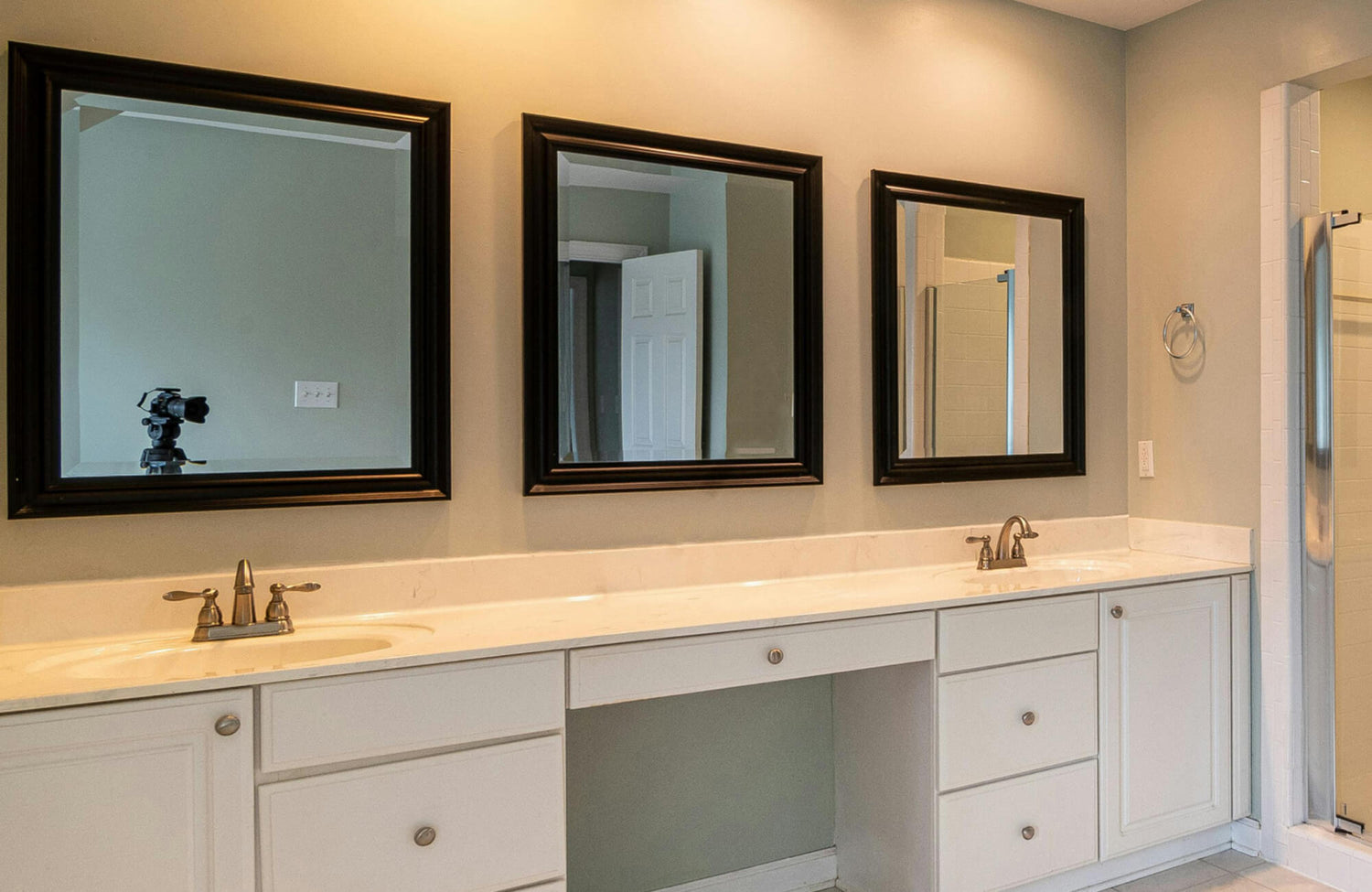
When working with double sink bathroom vanities, mirror choices can significantly influence the symmetry and perceived space of the room. You can opt for either two individual mirrors, one above each sink, or a single large mirror that spans the entire vanity width. Twin mirrors offer a clean, symmetrical look and pair beautifully with dual sconces or pendant lights. A wide, continuous mirror, on the other hand, reflects more light and can help open up a smaller room.
Edward Martin’s Esmeralda Small Mirror in Polished Brass exemplifies how individual mirrors can elevate a double vanity with both elegance and visual clarity. In the picture displayed above, the mirrors, with their softly arched tops, slender brass frames, and clean lines, perfectly align with each basin and sconce, enhancing balance, highlighting vertical proportions, and contributing a refined warmth that complements the neutral tile and natural wood vanity below.

Mounting Options and Installation Methods
The way a bathroom vanity mirror is mounted can greatly influence its functionality and structural performance over time. Selecting the right installation method ensures the mirror remains secure, moisture-resistant, and visually integrated with surrounding design elements.
Wall-Mounted Mirrors
Wall-mounted vanity mirrors are a go-to option for most bathroom layouts due to their ease of installation and flexible styling. These mirrors are typically secured using French cleats, L-brackets, or keyhole slots, each of which accommodates various wall types and mirror weights. For drywall surfaces, it’s important to use anchors rated for high-humidity environments or fasten directly into wall studs to ensure long-term stability. Precision in mounting, especially in terms of centering and level alignment, enhances the mirror’s aesthetic while preventing strain on mounting hardware.
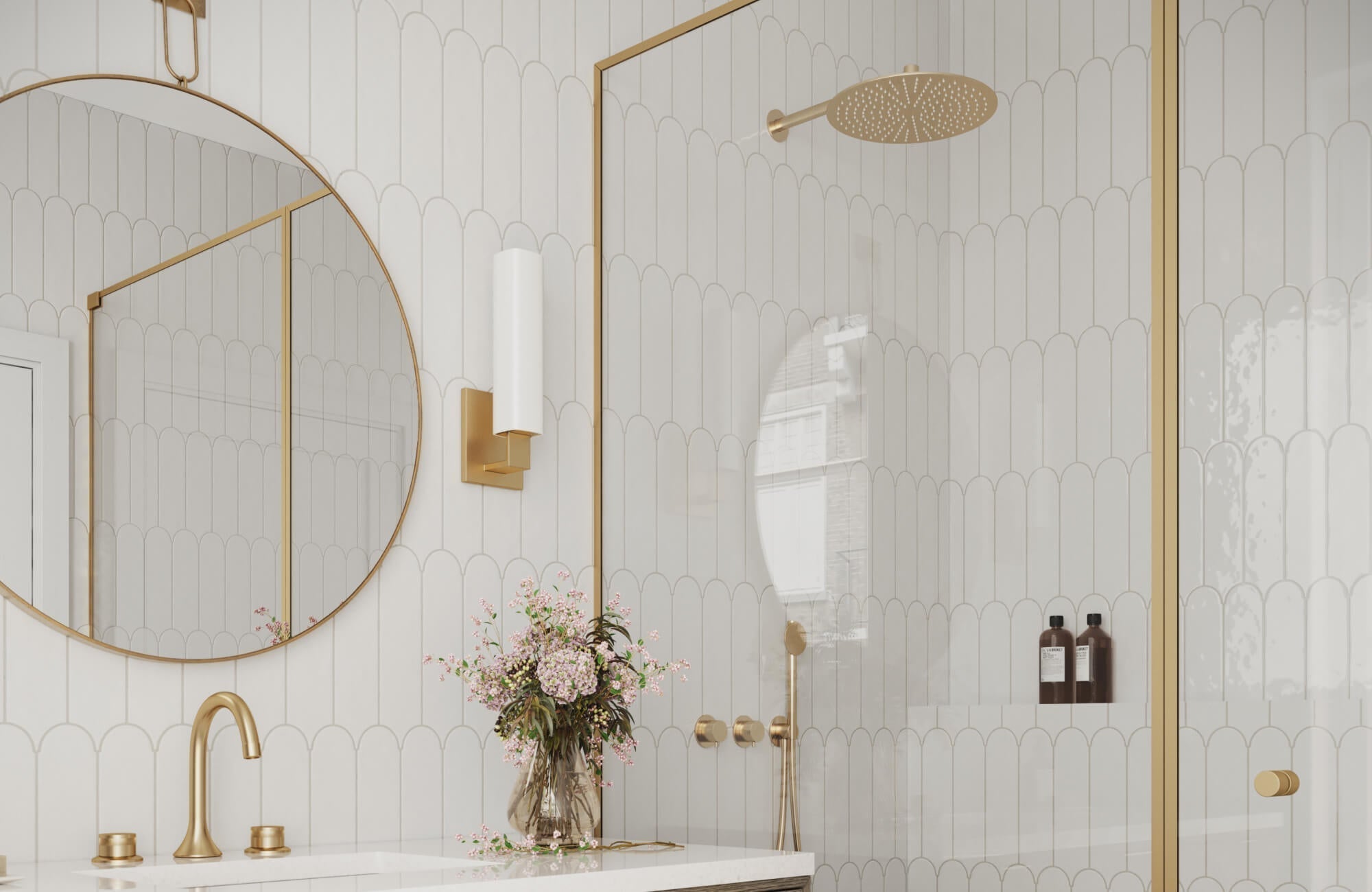
One particularly elegant example is the Rory Mirror in Antique Brass Iron, which demonstrates how wall-mounted mirrors can serve as sculptural focal points as well as functional pieces. As shown in the photo above, the Rory Mirror’s fluid, asymmetrical arch and slim antique brass frame bring a sense of curated luxury to dark-tiled spaces, beautifully framed by vertical sconces that echo its shape and metallic warmth, showcasing how wall-mounted mirrors can transform even compact powder rooms into refined, design-forward retreats.
Pivot-Mounted Mirrors
Pivot bathroom vanity mirrors introduce adjustable functionality, offering vertical tilting that makes grooming tasks more convenient for users of different heights. This style is particularly beneficial in shared or family bathrooms, where fixed mirrors might not accommodate everyone equally well.
Side-mounted brackets, often constructed from corrosion-resistant materials such as brushed nickel or stainless steel, provide both durability and smooth pivot action. When installed correctly, anchored into studs or reinforced backers, these mirrors offer secure, long-lasting performance even in steamy bathroom conditions. Their adjustable design adds a subtle layer of luxury and functionality, without requiring much extra space. Pivot-mounted mirrors also blend seamlessly into classic, transitional, and even vintage-style interiors.
Recessed and Built-In Mirrors
Recessed mirrors with built-in storage, such as mirrored medicine cabinets, provide a streamlined solution that maximizes space while maintaining a clean aesthetic. These mirrors sit flush against the wall surface, hiding internal shelving that’s perfect for storing toiletries and grooming tools. Installing one typically involves cutting into the drywall and ensuring a framed cavity is present to support the unit, usually with a depth of 3 to 5 inches.
For damp locations, choose models with rust-proof hinges and water-resistant internal linings to ensure longevity. This mounting style is ideal for minimalistic and modern bathrooms, where space and surface continuity are at a premium. A well-installed recessed mirror also adds functionality without adding bulk.

Framing Materials and Mirror Styles
The frame, or lack thereof, serves both aesthetic and practical functions, helping define the bathroom’s design tone while protecting the mirror from moisture and wear. Choosing the right framing material and mirror style can elevate both form and function within your vanity area.
Framed Bathroom Vanity Mirrors
Framed mirrors for bathroom vanities deliver structure and design character, anchoring the mirror visually while complementing your chosen decor style. Available materials include sealed hardwoods, powder-coated metals, resin composites, and engineered wood, each offering different resistance levels to humidity. In high-moisture environments, sealed or synthetic materials are preferable, as untreated wood is prone to warping or mold.
Framed mirrors also provide a natural boundary between the mirror and surrounding elements like tile or wallpaper, offering a finished look. To maintain design cohesion, select frame finishes that align with bathroom hardware such as faucets, handles, and light fixtures. This approach creates a unified visual theme that ties the entire vanity area together.
Frameless Mirrors with Beveled Edges
Frameless vanity mirrors are ideal for achieving a sleek, modern aesthetic, helping create the illusion of more space while maintaining simplicity. Often featuring beveled edges, these mirrors add a subtle decorative touch, without the visual weight of a frame. Their minimalist design makes them well-suited to contemporary or spa-inspired bathrooms, where clean lines are a priority.
Usually installed using specialized clips or mirror adhesive, frameless mirrors should be placed on smooth, sealed surfaces to prevent water damage. Because they lack a frame, they are easier to clean and less susceptible to collecting dust or mildew. For added elegance, pair them with underlit vanities or LED sconces for a clean and modern presentation.
Specialty Finishes and Smart Mirrors
High-tech and visually distinctive, smart bathroom mirrors with LED lighting and specialty finishes bring modern luxury to everyday routines. These mirrors often feature touch-activated lighting, built-in Bluetooth speakers, anti-fog heating pads, and dimmable brightness settings.
Specialty finishes, like antique, smoked, or bronze-tinted glass, offer dramatic visual appeal and help soften direct light reflections. Integration with lighting and HVAC systems further enhances user comfort and convenience. Many smart mirrors are surface-mounted and require hardwired electrical connections, so planning for power access is key. With the right finish and features, a specialty mirror can transform your vanity into a functional and visually striking centerpiece.

Mirror Lighting Integration and Visual Clarity
Proper lighting integration around or within your mirror enhances visual accuracy, supports grooming tasks, and contributes to a balanced, well-lit bathroom environment. Choosing the right light source and placement ensures your mirror performs optimally and complements the surrounding design.
Backlit and Edge-Lit LED Mirrors
Backlit bathroom vanity mirrors offer soft, even illumination that minimizes shadows and glare, ideal for precision grooming tasks such as shaving or makeup application. These mirrors typically feature built-in LED panels around the perimeter or behind the mirror, creating a halo-like glow that adds ambient warmth to the room. Look for mirrors with a Color Rendering Index (CRI) of 90 or above, which ensures accurate reflection of skin tones and fine detail.
Choose lighting in the 3000K–4000K range, which mimics natural white light without being too harsh or yellow. Many models now feature dimming controls, motion sensors, and anti-fog elements for added functionality. This all-in-one approach creates a sophisticated and highly practical lighting solution for any bathroom vanity.
External Lighting Coordination
When using bathroom vanity mirror lighting with sconces or overhead fixtures, careful spacing and placement make a significant difference in clarity and comfort. Wall sconces should be mounted at eye level, generally 60 to 66 inches from the floor, and placed approximately 24 to 36 inches apart for balanced side lighting. With this, overhead fixtures should sit about 3 to 6 inches above the mirror's top edge to avoid casting harsh shadows onto the face.
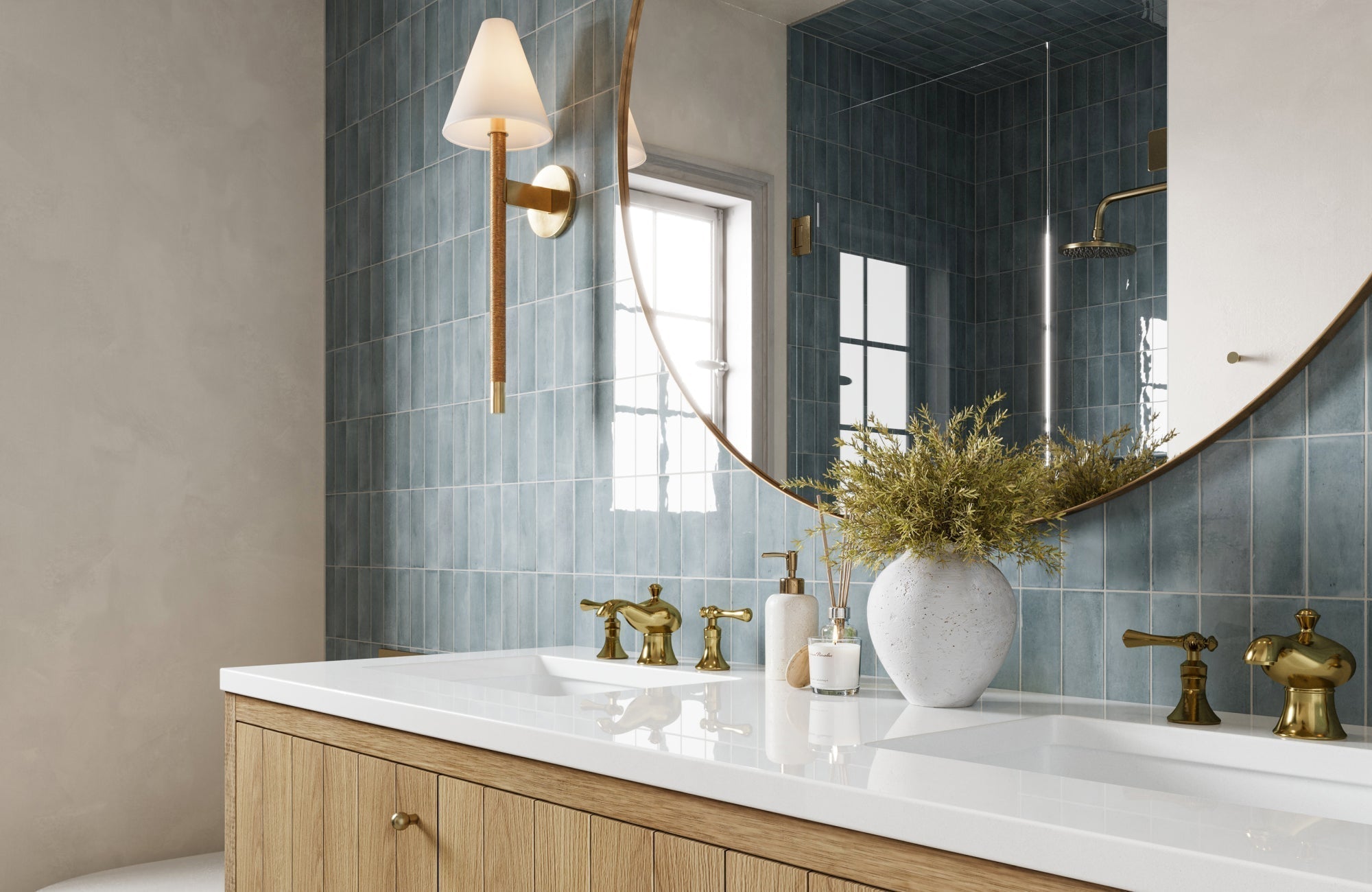
Select light bulbs with a color temperature around 3500K to 4000K to produce flattering, natural-looking illumination. Dimmable light sources add versatility for different times of day or tasks. When mirror and lighting are thoughtfully paired, the result can be both functional and visually striking. A perfect example of this is our Tristan Round Mirror in Polished Brass, as featured in the picture above. Its generous scale and warm metallic trim echo the glow of the vertical sconces, while its round form softens the geometry of the vertical blue tiles, demonstrating how mirror shape and lighting can work in harmony to elevate both visibility and style.
Wiring and Electrical Safety
For hardwired mirrors and smart features, following bathroom electrical code compliance is non-negotiable for safety and longevity. All electrically powered mirrors should connect to GFCI (Ground Fault Circuit Interrupter) protected circuits, safeguarding against potential water-related electrical issues. Wires should be housed in moisture-rated conduits, with junction boxes and connectors also rated for damp environments. It’s best to also have a licensed electrician install any hardwired or integrated lighting to ensure alignment with NEC (National Electrical Code) standards. Additionally, check for IP44 or higher ingress protection ratings when choosing illuminated mirrors for wet zones. Safe wiring enhances reliability and peace of mind, especially in frequently used bathrooms.

Moisture Resistance and Material Durability
Because bathroom environments are prone to high humidity and temperature fluctuations, your mirror must be constructed from materials designed to endure these conditions. Prioritizing moisture-resistant construction and edge protection ensures long-term performance and visual clarity.
Moisture-Proof Construction Materials
Moisture-resistant vanity mirrors rely on sealed backings and materials such as PVC-laminated MDF, marine-grade plywood, or galvanized steel to prevent warping and mold growth. These substrates are engineered to hold up in high-moisture environments without absorbing water or degrading over time. Avoid backing materials like untreated particleboard or cardboard, which can fail quickly under consistent humidity. In addition, pair these mirrors with moisture-sealed mounting adhesives and corrosion-resistant fasteners for added protection. Opting for mirrors labeled specifically for bathroom use also helps ensure they meet durability and safety standards. Long-lasting performance starts with choosing materials designed for damp locations.
Edge Sealing and Anti-Corrosion Treatments
One of the most common issues with bathroom mirrors is black edge corrosion, which occurs when moisture seeps into the unprotected edges of the glass. To prevent this, look for mirrors that feature edge-sealed silicone, epoxy coatings, or other waterproof barriers. These protective treatments shield the reflective silvering layer from oxidation and breakdown. Check for ASTM C1503 compliance, which verifies the mirror has undergone moisture durability testing. Frameless designs particularly benefit from sealed edges, as they lack protective frames. Edge sealing not only preserves aesthetics but also extends the lifespan of the mirror in humid conditions.
Anti-Fog Technology and Ventilation
For a consistently clear reflection, consider anti-fog bathroom mirrors that use integrated heating pads to prevent condensation buildup. These pads warm the mirror surface slightly above room temperature, deterring fog without compromising energy efficiency. They can also be controlled via dedicated switches, motion sensors, or even built into the mirror’s smart interface. To complement this technology, ensure your bathroom has adequate ventilation, typically an exhaust fan rated at 1 CFM per square foot of floor space. Proper ventilation and anti-fog features work together to maintain visibility and mirror clarity even after hot showers. This combination adds comfort and convenience, especially in shared or busy bathrooms.
Finding the Perfect Mirror for Your Bathroom Vanity
A well-chosen bathroom vanity mirror transforms everyday routines into moments of style and clarity, seamlessly merging beauty with utility. When dimensions, mounting style, framing, lighting, and moisture resistance align with your space, the result is a mirror that feels tailored and timeless. Each detail, from edge treatments to lighting integration, contributes to a more refined and functional environment. Investing in a high-quality vanity mirror also means choosing lasting materials and thoughtful design that complement both modern and traditional bathroom aesthetics.
For those seeking a bespoke design experience, Edward Martin’s design services offer expert guidance in selecting mirrors and curating bathroom interiors with elegance and precision. To begin your transformation, contact us and let us help you create a bathroom that reflects your personal style with enduring sophistication!