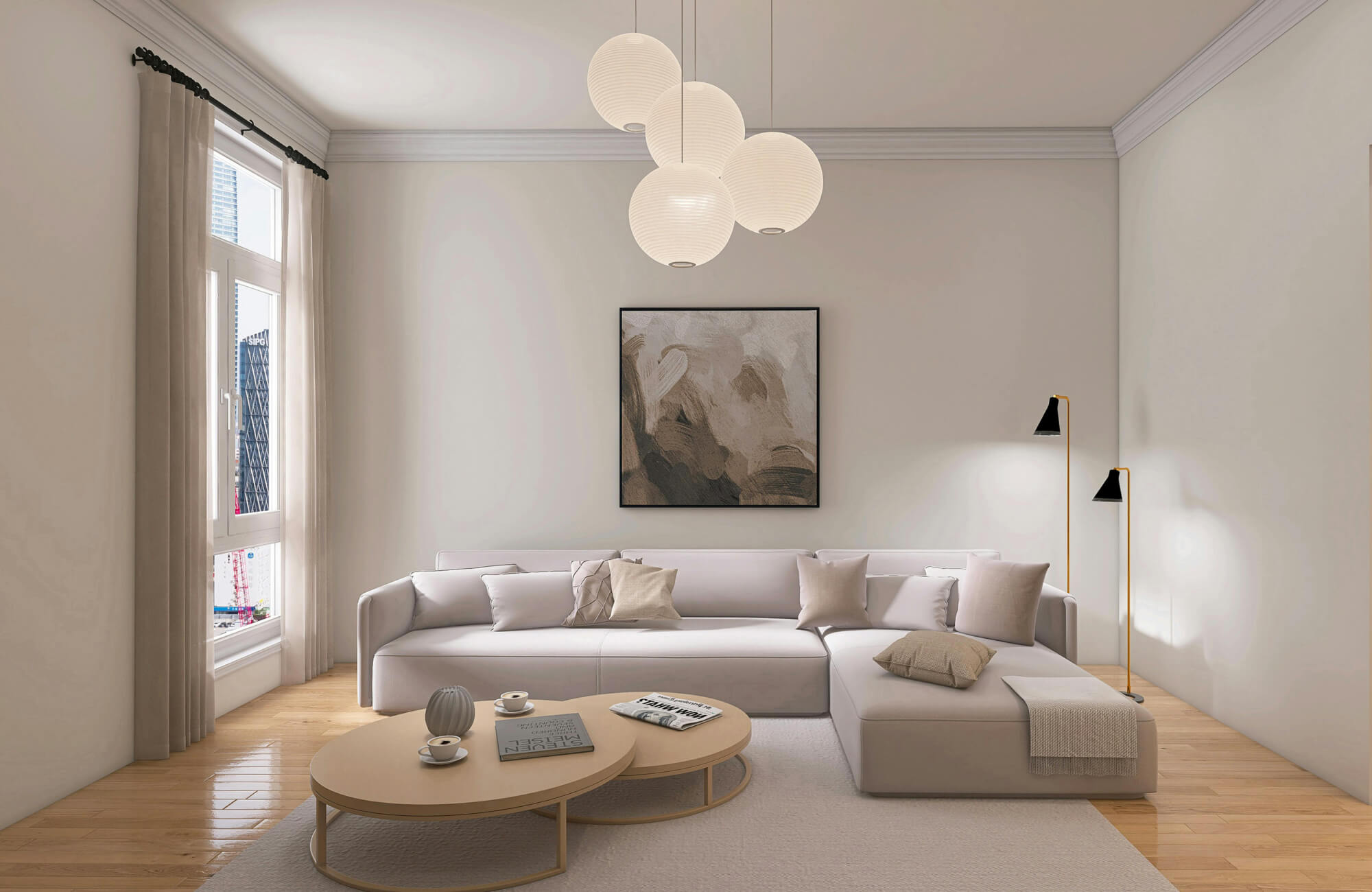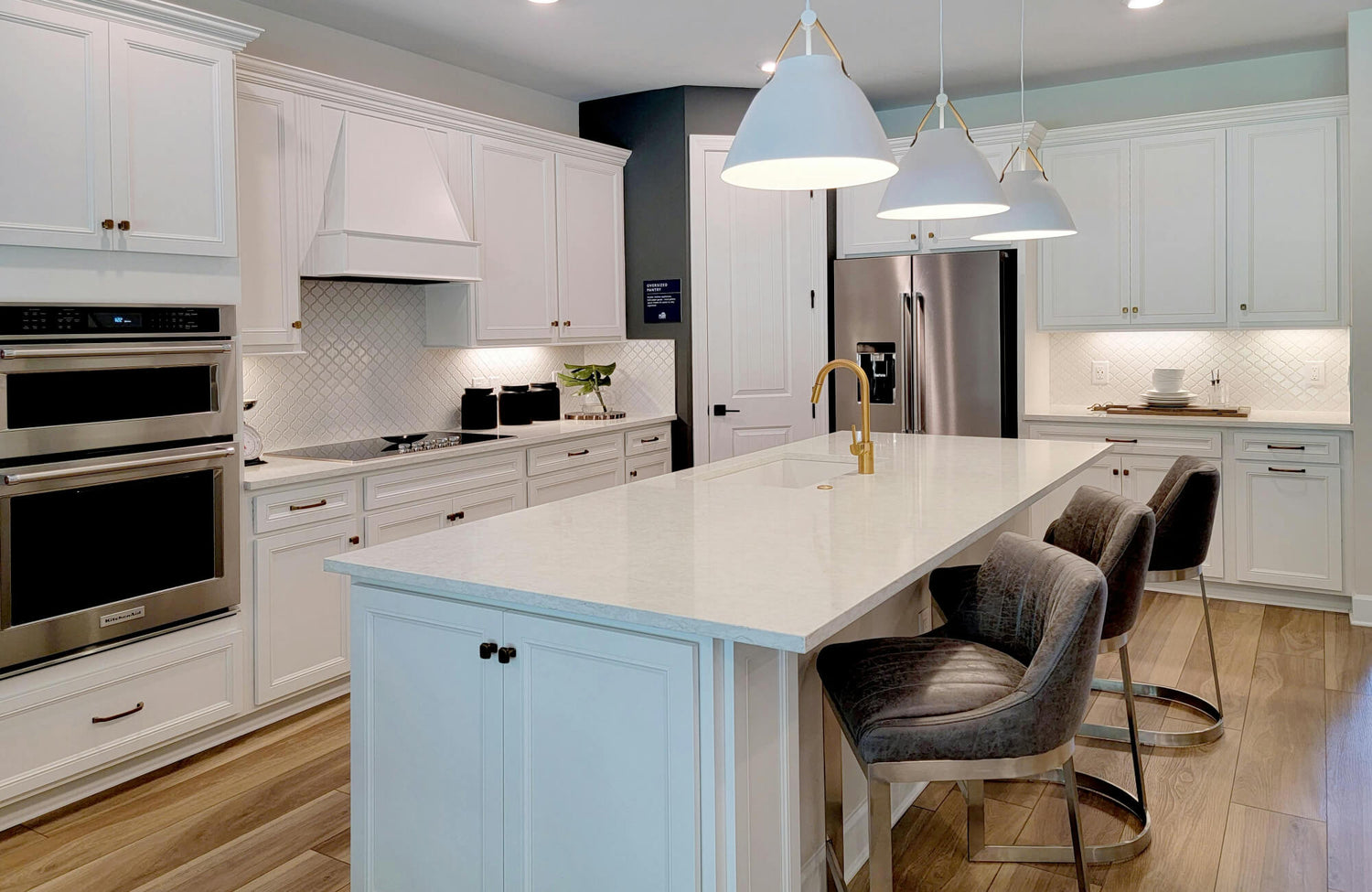
Pendant lights have a way of setting the tone in a kitchen, especially over islands and dining areas where they naturally draw attention. Mixing and matching them can add personality and depth, but it takes a bit of intention to keep the look cohesive. Instead of aiming for perfect symmetry or identical finishes, it helps to think about how shapes, colors, and spacing work together as a whole. In this blog, we’ll walk through how to combine pendant styles thoughtfully so your kitchen feels layered, balanced, and effortlessly pulled together.

Mixing Pendant Shapes Without Creating Visual Clutter
Mixing pendant shapes can add personality to a kitchen, but it only works when proportion and rhythm are handled with care. The goal isn’t to create contrast for the sake of it, but to introduce variation that still feels intentional and composed. In this section below, we’ll look at how to combine silhouettes in a way that feels balanced rather than visually overwhelming.
Combining Curved and Linear Forms Thoughtfully
Curved and linear pendants can absolutely coexist, especially when there’s a clear relationship between them. For instance, a softly rounded globe paired with a more streamlined cylindrical pendant can create contrast without tension if their proportions feel aligned. The key is making sure the difference in shape feels purposeful rather than random. When curves soften strong architectural lines, and linear forms echo cabinetry or island edges, the pairing begins to feel connected. Instead of competing, each silhouette brings something different to the overall composition. When handled thoughtfully, that contrast adds depth without disrupting visual harmony.
Keeping Scale Consistent Across Different Shapes
Even when shapes differ, scale should feel consistent from one pendant to the next. If one fixture feels dramatically larger or heavier, it can quickly throw off the visual balance of the kitchen. Similar heights, widths, or visual weight help different silhouettes feel like they belong in the same conversation. For example, a wide dome and a tall, narrow pendant can still work together if their overall presence feels proportionate. Paying attention to how much space each fixture occupies keeps the arrangement feeling cohesive. When scale is aligned, variety feels curated rather than chaotic.
When Repetition Still Matters in Mixed Designs
Mixing shapes doesn’t mean abandoning repetition altogether. In fact, repeating at least one element, whether it’s a similar outline, proportion, or structural detail, helps anchor the design. That repetition gives the eye something familiar to return to, which makes variation easier to absorb. For instance, alternating two different shapes across an island can feel organized when the pattern follows a clear rhythm. Without some repetition, the arrangement can start to feel scattered. A thoughtful balance between consistency and contrast is what keeps the look refined.
Avoiding Overly Decorative Combinations
When mixing pendant shapes, it helps to resist the temptation to combine several highly detailed or ornate designs at once. Too many expressive silhouettes can compete for attention and make the kitchen feel busy. Instead, allowing one shape to carry more character while the others remain simpler often creates better balance. For example, pairing a sculptural pendant with cleaner, more restrained forms keeps the focus intentional. This approach ensures the lighting adds personality without overwhelming the space. Subtle restraint usually makes mixed designs feel more cohesive and easier to live with over time.
A strong example of a sculptural pendant that carries presence without overwhelming the space is our Oswald Pendant in Dusty Iron, shown above. Its tiered, cascading conical shades echo vintage Danish and Art Deco influences, yet the silhouette remains clean enough to pair with simpler forms nearby. The dark finish with warm undertones adds depth without feeling overly ornate, which makes it easier to mix thoughtfully. When one fixture like Oswald introduces character, surrounding pendants can stay more restrained, allowing the overall composition to feel balanced rather than visually crowded.

Blending Finishes and Colors for a Balanced Look
Mixing finishes can elevate a kitchen instantly, but it works best when there’s a sense of balance behind the choices. Instead of trying to match every metal exactly, it helps to think about how warm and cool tones interact across the space. Below, we’ll look at how brass, black, chrome, bronze, and other finishes can work together in a way that feels layered and intentional rather than mismatched.
Mixing Warm and Cool Metal Finishes
Warm metals like brass and bronze naturally bring in softness, while cooler finishes such as chrome or polished nickel feel crisp and clean. When combined thoughtfully, they can create depth without feeling disconnected. The key is making sure the tones relate in some way, whether through subtle repetition or a shared design element elsewhere in the kitchen. For instance, a warm pendant can feel grounded if cooler finishes appear in smaller accents rather than dominating the room. It’s less about strict rules and more about visual conversation between surfaces. When warm and cool metals are balanced, the space feels curated rather than chaotic.
Matte vs Polished Surfaces in the Same Space
Surface sheen plays just as important a role as color when you’re blending finishes. Matte metals often feel softer and more understated, while polished surfaces catch the light and naturally draw the eye. Mixing the two can feel intentional and layered, especially when one finish stays in the background, and the other provides a subtle highlight. For instance, matte black pendants alongside polished hardware can introduce contrast without overwhelming the kitchen. The key is keeping the overall tone aligned, even if the sheen shifts. When matte and polished elements are balanced across the space, the look feels dimensional yet still cohesive.
Using Cabinet Hardware as a Reference Point
Cabinet hardware often serves as a steady reference point when mixing pendant finishes. Because it repeats across the kitchen, its tone naturally influences how other metals are perceived. If your hardware leans warm, introducing a pendant in a complementary warm finish can help the space feel connected. On the other hand, choosing a contrasting metal for pendants can work as long as it feels intentional and appears elsewhere in small details. Thinking of hardware as an anchor makes it easier to experiment without losing balance. When finishes relate back to something already established, the mix feels deliberate.
When One Finish Should Lead the Composition
Even in a mixed-metal kitchen, it helps to let one finish take the lead. A dominant tone anchors the space and keeps the overall look from feeling scattered or undecided. From there, secondary finishes can step in as accents, adding dimension without pulling focus. For example, if black hardware sets the foundation, touches of brass in the pendants can read as intentional highlights rather than competing elements. This subtle hierarchy gives the eye something steady to return to. When one finish quietly guides the composition, the entire mix feels more confident and cohesive.
A strong example of letting one finish take the lead can be seen in our Matthew 18" 1 Light Pendant in Aged Gold/White Linen, seen above. Its deep golden frame establishes a warm foundation, while the gently flared white linen shade softens the look and diffuses light in an inviting way. Because the aged gold carries enough presence on its own, it can anchor the kitchen’s metal story while allowing secondary finishes to act as subtle accents. It’s a reminder that when one tone guides the composition, layered metals feel intentional rather than mixed at random.

Playing With Height, Spacing, and Arrangement
How pendants are positioned can influence the kitchen just as much as their shape or finish. Height, spacing, and overall arrangement all contribute to how the eye moves through the space. In here, we’ll focus on creating visual flow across islands and dining zones so the layout feels intentional rather than accidental.
Symmetrical vs Asymmetrical Arrangements
Symmetry often feels calm and predictable, which is why evenly spaced pendants are such a popular choice over kitchen islands. When fixtures line up cleanly, the space reads organized and balanced from the start. Asymmetrical arrangements, on the other hand, can feel more relaxed and design-forward when handled thoughtfully. The key is making sure the imbalance feels purposeful rather than random. For example, grouping pendants slightly off-center can work if something else in the room visually counterweights that shift. When either approach is executed with intention, the kitchen feels cohesive instead of unsettled.
How Height Differences Add Subtle Interest
Varying pendant heights can introduce a quiet dimension without overwhelming the room. When you slightly stagger fixtures, the eye naturally moves upward, which adds gentle motion, especially in open-concept kitchens. At the same time, the variation should feel intentional and restrained so the pendants still read as a cohesive group. If the height differences become too dramatic, the arrangement can start to feel disconnected unless the broader design clearly supports that choice. Often, just a few inches is enough to create layered interest without drawing too much attention. When handled thoughtfully, subtle height shifts bring personality while keeping the overall composition balanced and refined.
Creating Rhythm Across Long Kitchen Islands
Long kitchen islands naturally draw attention, so pendant placement needs a clear sense of rhythm to feel composed. When spacing is even and intentional, the eye can move smoothly from one end of the island to the other without interruption. The distance between fixtures should feel balanced, not too tight and not too far apart, so the arrangement reads as steady rather than scattered. Repetition becomes especially helpful when you’re already mixing shapes or finishes elsewhere, because it anchors the overall look. A consistent pattern creates structure without making the design feel rigid. When spacing is planned with care, the island feels connected to the rest of the kitchen instead of visually breaking it up.
Avoiding Visual Imbalance
Imbalance often happens when pendants feel too concentrated on one side of the room. If fixtures cluster too closely together or sit too far apart, the space can start to feel visually tilted. Paying attention to surrounding elements, such as cabinetry, range hoods, or windows, helps maintain equilibrium. For instance, aligning pendants with architectural lines can subtly reinforce structure. It’s less about strict measurements and more about how the arrangement feels at a glance. When placement supports the room’s proportions, the lighting looks naturally integrated rather than forced.

Coordinating Pendant Lights With Other Fixtures
Pendant lights rarely stand alone, especially in kitchens that open into dining or living areas. They interact with wall sconces, chandeliers, recessed lighting, and even mirrors, all of which influence how the space feels once everything is turned on. Rather than trying to match every fixture perfectly, the goal is to create cohesion through layering and thoughtful repetition.
Matching Pendants With Wall Sconces and Chandeliers
Pendants, wall sconces, and chandeliers don’t need to be identical to feel connected. What matters more is that they share a visual thread, whether that’s a similar silhouette, finish tone, or level of detail. For example, if pendants feature soft curves, a chandelier with a similar rounded profile can quietly echo that shape without copying it exactly. The same goes for finish families, where warm metals or matte textures can relate without being a perfect match. When fixtures acknowledge each other subtly, the space feels layered and cohesive. It’s about conversation between pieces, not uniformity.
Using Mirrors to Reflect and Amplify Light
Mirrors do more than show a reflection; they quietly amplify whatever light sits nearby. When positioned thoughtfully, a mirror can catch the glow from pendants and carry it farther across the room, softening shadows along the way. In kitchens that open into dining spaces, this reflected light helps the transition feel smoother and more connected. The mirror’s shape and frame also add to the story, since they introduce another layer of material and form. For example, a warm metal frame can subtly echo brass pendants without looking repetitive. When mirrors are treated as part of the lighting plan, the entire space feels brighter and more cohesive.
Layering Ambient, Task, and Accent Lighting
While pendants often steal the spotlight, a well-balanced kitchen depends on layered lighting. Ambient fixtures, such as recessed lights, create the overall glow that fills the room, while task lighting focuses on work zones like prep counters and sinks. Accent lighting then adds dimension by highlighting textures, shelving, or architectural details. When each layer supports the others, pendants feel integrated rather than isolated. It’s less about adding more fixtures and more about giving each type a clear purpose. With thoughtful layering, the kitchen stays comfortable and visually balanced from morning routines to evening gatherings.
When Simpler Fixtures Support Bolder Pendants
If pendants make a strong visual statement, the surrounding fixtures often benefit from a quieter presence. Simple sconces or understated recessed lights can act as a backdrop, allowing the pendants to shine without competition. This doesn’t mean everything else must fade away, but restraint helps maintain balance. For example, a sculptural pendant feels more intentional when nearby fixtures keep clean lines and subtle finishes. Letting one element lead, as mentioned before, while others support, creates clarity in the overall design. That balance is what keeps a mixed lighting plan feeling polished rather than overwhelming.

Knowing When to Pull Back for a More Cohesive Finish
After mixing shapes, finishes, and arrangements, it helps to pause and look at the kitchen as a whole. Sometimes the most important design move isn’t adding another element, but stepping back and refining what’s already there. A cohesive finish often comes from restraint, where each piece has room to breathe. In this final stage, the goal is to evaluate, edit, and make sure the lighting feels intentional rather than overworked.
Recognizing When the Mix Feels Too Busy
It’s easy to get carried away when combining different pendants, especially if each one feels beautiful on its own. However, when too many strong elements compete for attention, the space can start to feel unsettled. If your eye doesn’t know where to land, that’s usually a sign that something needs simplifying. Pay attention to whether shapes, finishes, or arrangements are repeating with purpose or just adding noise. Sometimes, removing one competing detail can immediately calm the entire composition. A refined look often comes from subtracting rather than layering more.
Balancing Personality With Practical Function
Statement lighting absolutely brings personality into a kitchen, yet it still has to function comfortably day to day. If pendants feel oversized, block sightlines, or pull focus away from prep areas, the balance may need adjusting. A kitchen should first feel easy to move through, with character layered in naturally. It helps to ask whether the lighting supports how you cook, gather, and live in the space, not just how it looks in photos. When personality and practicality work together, the design feels intentional rather than forced. That harmony is what keeps bold lighting choices feeling confident instead of overwhelming.
Editing Down to the Strongest Elements
Not every design idea needs to make it into the final version of your kitchen. Once pendants are installed or visualized together, take a moment to identify which elements truly elevate the space. It may be a particular finish, a unique silhouette, or the way the fixtures align across the island. Strengthening those key features while letting secondary details fade often creates a cleaner result. Editing isn’t about losing personality—it’s about sharpening it. When only the strongest elements remain, the lighting feels more confident and refined.
Trusting a Cohesive Lighting Plan
At some point, the most important step is trusting the overall direction you’ve created. If the pendants relate thoughtfully to surrounding fixtures and the arrangement feels balanced, resist the urge to keep adjusting. Constant tweaks can sometimes disrupt an already cohesive plan. Stand back, view the kitchen from different angles, and notice how the lighting interacts with the room as a whole. When everything feels connected without trying too hard, you’ve likely found the right balance. Confidence in the plan is often what makes the final result feel complete.
Finding the Right Balance Between Personality and Cohesion
Mixing different pendant lights isn’t about following rigid rules. It’s really about creating a visual conversation that feels natural and intentional. When shape, finish, spacing, and surrounding fixtures are considered as part of one connected plan, the kitchen starts to feel layered instead of busy. The most cohesive spaces aren’t perfectly matched, but they are thoughtfully edited, with each piece playing a clear role. When balance guides the decisions, mixing and matching becomes a way to add depth and personality without losing harmony.
If you’re unsure how to combine shapes, metals, or layouts in your own space, our personalized design consultation can help you sort through the options with clarity. We’ll look at your kitchen’s proportions, finishes, and lighting needs to create a plan that feels cohesive from every angle. Instead of guessing, you can move forward with a lighting mix that supports both your routine and your design goals. A well-considered approach makes the final result feel effortless and confidently put together.