When a rug looks too small or doesn’t quite fit your space, layering offers a flexible, stylish fix. Instead of replacing a favorite piece or settling for a size that feels off, you can build visual balance by stacking rugs with intention. In this article, we’ll break down how layering solves layout challenges, whether you’re working around floating furniture, defining zones in open plans, or stretching the footprint of an heirloom rug. From pairing materials to positioning for impact, we’ll walk through practical ways to layer rugs that look cohesive, feel grounded, and bring warmth to any room.

Why Rug Layering Is a Smart Fix
Layering isn’t just a design trend; it’s a clever solution when your main rug falls short. Whether you’re working with an undersized heirloom, filling an awkward layout, or just want more warmth underfoot, layering can help you solve practical layout problems without starting from scratch.
Making a Small Rug Work in a Large Room
A common challenge in living rooms is owning a rug that’s too small to properly ground your furniture. Instead of discarding it, you can layer it over a larger, more affordable base rug to create balance. This technique gives the eye a clear boundary for the seating area, even in wide or open spaces. It’s especially effective when the top rug has bold color or pattern to draw focus, while the base stays neutral.
This approach also helps extend the life of your favorite rug, keeping it in a spot where it shines while reinforcing its visual purpose. For example, placing a vintage or textured rug over a flat-woven neutral base instantly elevates the room. The layering softens acoustics and boosts comfort, making larger rooms feel less empty. It’s a low-commitment fix that looks intentional and styled.
Using Layering to Fill Irregular or Open Floor Plans
Not every home has perfectly square rooms or centered layouts, especially with open-plan designs. Layering rugs gives you more flexibility to fill visual gaps without custom ordering oversized pieces. For instance, placing a smaller rug at an angle over a base piece can help shift the visual weight and connect floating furniture zones. It lets you soften the lines of asymmetrical spaces while keeping the design cohesive.
This tactic is also great when furniture doesn’t follow a typical perimeter, like curved sectionals or floating lounge chairs. A layered rug setup allows you to extend coverage where it’s needed without sacrificing walkability. It can even help cover high-wear spots or faded areas on the base rug beneath. With the right pairing, layering solves layout quirks while adding depth and structure.
Visual Warmth and Texture Without Replacing Your Rug
If your current rug is slightly undersized but still in great shape, layering can make it feel right for the space. Adding a flat-weave or jute base underneath expands the footprint without clashing with the style of the top rug. This creates a clean, grounded effect that solves proportion issues without needing to upsize your main rug. It’s ideal for rented spaces or budget-conscious makeovers.
Beyond scale, this technique also brings in texture, an underrated element when your space feels flat or cold. The mix of pile heights, weaves, and tones builds a richer, cozier look that single rugs can’t always deliver. Even neutral-on-neutral combinations can add subtle interest that transforms the room. Best of all, it lets you keep the rug you already love while making the entire setup feel custom-fit.

Best Rug Combinations for Layering
The right combination of rugs can elevate a space, but not all pairings work well together. Layering is most successful when you consider pile height, texture, and shape, focusing on combos that feel cohesive rather than forced. Below, we’ll look at tried-and-true combinations that blend comfort, durability, and visual balance.
Flatweaves Under Plush Rugs for Comfort and Contrast
This pairing is both functional and stylish—flatweaves provide a smooth, stable base, while plush rugs add softness and warmth underfoot. The key is pile contrast: a low-profile rug like jute or cotton canvas keeps the top layer from bunching or slipping. This combo works especially well in living rooms or bedrooms where comfort and grounding texture are equally important. It’s also a smart way to protect high-pile rugs from direct contact with hard floors.
Make sure the top rug isn’t so thick that it feels unstable or causes tripping at the edges. A shag or deep wool rug should sit comfortably on the base without folding at the corners. To keep things in place, use a non-slip rug pad or double-sided tape between layers. The result is a cozy, structured look that feels both layered and livable.
Natural Fiber Bases With Patterned Accent Rugs
One of the most versatile layering combinations is a neutral natural-fiber rug, like sisal, jute, or seagrass, beneath a bold patterned piece, like our Hutchinson Polyester Face Rug in Graphite / Olive above. The texture of the base rug grounds the look, while the top rug adds color, shape, or a focal print. This contrast helps anchor spaces like dining rooms or entryways where you want visual interest without overwhelming the room. It also works beautifully in open layouts that need visual boundaries.
This pairing feels especially balanced when the top rug is slightly smaller and centered within the natural fiber base. Just be sure the styles don’t compete; pairing a classic Persian rug with a rustic jute base works because their tones and textures complement, not clash. The natural weave also helps mask dirt and wear, making it a great choice for high-use areas. It’s a timeless combo that adds both function and personality.
Layering Runners and Cowhides Over Area Rugs
Layering unexpected shapes like cowhides or runners over rectangular area rugs can give your layout a more dynamic, personalized edge. This works well in transitional spaces, like hallways, between open rooms, or in reading nooks, where you want to add interest without starting from scratch. A cowhide’s organic form breaks up straight lines and can soften the visual impact of large rectangular rugs. Runners, meanwhile, can visually stretch or guide movement through narrow zones.
It’s important to scale correctly: the runner or hide should feel intentional, not like an afterthought. Avoid thick-on-thick combos; placing a cowhide over another plush rug can lead to ripples or awkward bulk. Use layering here to guide the eye or emphasize flow in open-plan areas. With a little planning, these unusual shapes add just the right amount of asymmetry and softness to structured layouts.

Layout Strategies That Make Layering Look Intentional
A layered rug setup should feel curated, not improvised. Placement plays a major role here; getting the size and position right ensures that layering supports the space rather than competing with it. Here, we’ll look at layout strategies that keep your rugs grounded, balanced, and connected to the furniture around them.
Centering the Top Rug Around Key Furniture Pieces
To make layered rugs look intentional, begin by aligning the top rug with your room’s main furniture. In living rooms, this often means centering it beneath a coffee table or within the front legs of a sofa and chairs. This anchors the furniture to the rug setup and keeps everything visually tied together. Without this alignment, layered rugs can feel like loose accents rather than part of the room’s structure.
Also, consider the shape of your layout; rectangular rugs tend to echo the room’s dimensions, while a centered top rug adds a focal point. If the top rug feels slightly off-center, shift surrounding furniture or decor to balance the visual weight. You don’t have to be exact, but intentional placement avoids the “just thrown there” look. This simple adjustment makes even bold layering choices feel designed.
Angled Layering for a Casual, Collected Look
Angled layering is a great way to loosen up a space and bring in a relaxed, bohemian feel. Instead of lining rugs up edge to edge, place the top rug slightly askew to the one below. This breaks up rigid symmetry and draws the eye, especially when paired with laid-back decor or vintage pieces. It also works well in rooms where the furniture layout isn’t centered or follows an irregular shape.
Keep scale in mind so the angle feels fluid, not forced. A rug that’s too small or placed at too sharp a tilt can look awkward rather than effortless. Try soft, shallow angles that follow the flow of the room or echo other elements, like curtain lines or table shapes. This layout trick adds character without requiring a total room redesign.
Using Layering to Highlight Zones in Shared Rooms
In open floor plans or multifunctional rooms, rug layering can subtly define where one space ends and another begins. Layering a smaller rug within a larger one, or placing contrasting textures next to each other, helps break up large expanses without using walls or dividers. For example, a woven jute base might mark out the lounge area, while a plush rug over it defines a reading corner or coffee zone.
This approach also works in rooms that serve two functions, like a living-dining combo. Layered rugs beneath a dining table create a separate visual island, especially when the larger rug anchors the surrounding seating. Just be sure the transition between areas feels smooth, keep color palettes complementary, and pile heights consistent. With the right strategy, layering becomes a subtle but effective zoning tool.

How Room Type Affects Your Layering Strategy
Layering rugs isn’t just about aesthetics; it’s about adapting to how a room functions. Each space comes with its own layout challenges, and rug combinations need to support that use.
Layering Rugs in Living Rooms With Floating Furniture
When your living room furniture doesn’t sit flush against the walls, layering becomes a helpful design anchor. Start with a large base rug that defines the general seating area, such as our Haverford Polyester Pile Rug in Platinum / Bronze above, then layer a smaller, more detailed rug beneath the coffee table or in front of the sofa. This helps break up visual monotony and centers the room’s key features. It’s especially useful in open plans or loft-style layouts where furniture floats away from walls.
To keep it functional, make sure at least the front legs of the seating pieces rest on the bottom rug. You can then let the top rug act as a decorative overlay, drawing attention to the core of the room. Don’t be afraid to experiment with texture; try a flatweave base paired with a plush or patterned top layer. The combination adds comfort while keeping the space grounded.
Bedroom Rug Layering Around Beds or Benches
In bedrooms, layering works best when it softens the walking zones while accenting furniture like beds or end-of-bed benches. Place a large rug under the bed with enough coverage on the sides to step onto when getting up. Then add a smaller runner, sheepskin, or accent rug near a bench, reading nook, or vanity. The layered effect brings extra warmth and a sense of softness underfoot.
Keep materials consistent with how you use the space. Low-pile or flatweave rugs are easier to vacuum and move around if needed, while plush options work well near seating or lounging areas. Also, consider a shape an oval or runner-style top rug, can break up the straight lines of the bed without crowding the space. Layering in a bedroom should feel natural and restful, not cluttered.
Dining Room Dos and Don’ts With Layered Rugs
Dining areas are tricky for rug layering, but it can work if approached with care. Use a flat, low-pile rug as the base that fits fully under the table and chairs, giving ample space for chair movement. If you want to layer, choose a centered accent rug under just the table to add texture or color contrast. This works especially well with pedestal tables where the legs won’t catch on the top layer.
Avoid high-pile rugs or anything that could bunch up as chairs are pulled in and out. Spills are also a factor, so stick with easy-to-clean materials and make sure all edges lie flat to avoid tripping. If done right, layering in dining rooms adds polish without sacrificing function. It’s a good way to introduce a subtle pattern without overwhelming the space.

Best Edward Martin Rugs to Use for Layering
Layering rugs is all about creating visual depth without sacrificing comfort or function, and the right base and top rugs make all the difference. At Edward Martin, several styles in our catalog strike the balance between durability, softness, and easy pairing. Below, we’ll highlight a few standout options that work especially well in layered layouts.
Natural Fiber Rugs That Ground a Room
If you’re starting your layers from the ground up, our Sweeney Wool Pile Rug in Graphite, as seen above is a sturdy choice that sets the tone. Its gridlike texture and earthy graphite palette add dimension without overpowering the room. As a base layer, it offers just enough pattern to support more decorative rugs placed on top. The wool construction provides natural durability and a soft underfoot feel, even in high-use zones. Plus, its neutral tone anchors colorful or patterned rugs beautifully without clashing.
This rug works especially well in living rooms where you want both practicality and polish. It’s subtle but textured, allowing it to support rugs with bolder prints or deeper pile. You can also use it in office nooks or open-plan spaces to ground floating furniture. And because of its low profile, it avoids the bulk that can make layered rugs feel awkward. It's a versatile foundational piece for confident, stylish layering.
Top Rugs That Add Texture Without Bulk
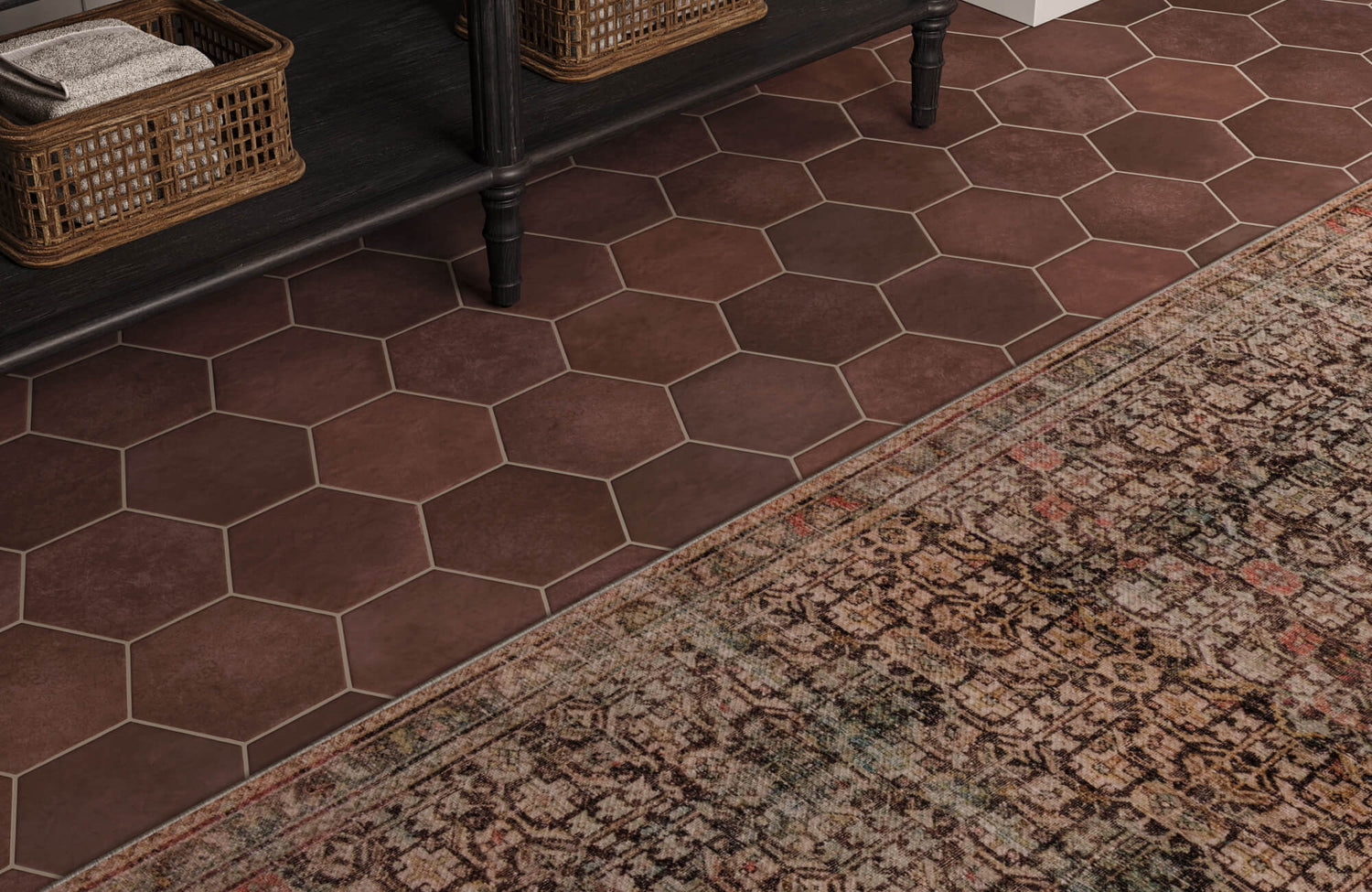
A top rug should bring personality without adding too much volume, exactly what our Hutchinson Polyester Face Rug in Burgundy / Denim delivers. Its ornate, vintage-inspired pattern adds rich detail and warmth to larger neutral rugs beneath. Despite the intricate look, the pile is sleek and low enough to keep layers practical and well-balanced. This makes it a great solution if you want texture without making the stack feel too tall. The colors also lean into warm reds and subtle blues, offering easy pairing with leathers or natural woods.
This rug is especially helpful in creating visual anchors in lounge spaces or reading corners. If your base rug feels too plain or out of scale, this adds charm without the need for a complete overhaul. The distressed finish helps it blend easily into layered styles that feel lived-in but refined. You can layer it over jute, sisal, or even tonal wool rugs with excellent results. It’s a statement rug that doesn’t overpower, just adds depth and detail.
Soft Neutrals for Seamless Pairing
Our Broderick Polypropylene Pile Rug in Natural / Bone is perfect when you want a rug that goes with everything. Its soft checkerboard effect adds subtle movement while keeping the palette light and versatile. Thanks to the short pile and tonal design, it sits well either on its own or as the top layer in a stacked rug setup. It pairs beautifully with deeper bases or helps soften vibrant pieces without dulling the overall palette. If you're layering in a bedroom or calming lounge area, it brings warmth without visual weight.
This rug is also great for renters or seasonal decorators who want an easygoing style. Its neutral tones mean you won’t need to rethink your furniture or color scheme. Layer it over a textured jute or under a round accent rug for a bit of shape contrast. The polypropylene material is low-maintenance too, ideal for busy households. It’s that quiet backdrop that lets the rest of your styling do the talking.

Common Layering Mistakes to Avoid
Layering rugs can instantly add character, but if the basics aren’t right, the result can look more chaotic than curated. Issues like slipping surfaces, mismatched palettes, or over-layering can make even the best rugs feel out of place. In this section, we’ll go over a few of the most common missteps so you can get the look and function just right.
Forgetting a Rug Pad or Grip Layer
One of the most overlooked essentials in rug layering is a proper rug pad. Without it, especially on slick surfaces like wood or tile, your rugs can shift, wrinkle, or slide—posing both a safety issue and a visual problem. A non-slip pad or grip layer underneath your base rug adds stability, keeping the whole setup in place. It also prevents wear and tear from friction over time.
If your top rug is lightweight or especially textured, a small pad or corner grip under just that layer can help hold it steady. This is especially important in high-movement zones like entryways, kitchens, or hallways. A slipping rug quickly becomes a tripping hazard and can ruin the layered look you’ve worked to create. Taking the time to secure your rugs upfront makes a big difference in long-term comfort and appearance.
Clashing Styles or Colors That Disrupt the Room
Layered rugs should complement, not compete with, each other or the room’s overall color story. Too many bold patterns, high-contrast colors, or conflicting textures can draw attention for the wrong reasons. Instead of making the space feel grounded, it may feel visually noisy or unfinished. The goal is cohesion with enough variation to keep things interesting.
For best results, start with a more neutral or textural base rug and let the top layer bring in subtle color or pattern. This keeps the eye moving while allowing furniture and decor to stay the focus. If you’re mixing patterns, stay within the same color family or balance one graphic element with a simpler one. Rug layering should feel like a natural extension of your style, not a design experiment gone too far.
Overcrowding With Too Many Layers or Sizes
More rugs don’t always mean better results; too many layers can overwhelm the room and reduce functionality. If the rugs aren’t sized or placed thoughtfully, they can interrupt walking paths or crowd furniture layouts. A heavy or thick top rug may bunch or create tripping points if the layer underneath isn’t supportive. Rug combinations should feel considered, not just stacked.
Stick to one dominant rug and one accent layer unless you’re working with a large, open space that can handle more visual weight. Each layer should have a purpose, whether it’s anchoring furniture, adding warmth, or defining a specific zone. It helps to leave some flooring exposed around the edges for balance. A well-edited layout creates harmony, while an overloaded one risks feeling cluttered and disconnected.
Still Struggling With Size or Placement?
Sometimes, even with great layering tips, figuring out the right size or placement can still feel frustrating. Maybe the proportions still look off, or you’re unsure which textures actually work together in your space. That’s where a second opinion can make all the difference, especially when your layout isn’t playing by the usual rules.
If you’re feeling stuck, our team is here to help. Through our personalized design consultation, we can walk you through pairing rugs from the Edward Martin catalog that work with your room’s layout, furniture, and goals. Whether you’re layering to solve a scale issue or to introduce new texture, we’ll guide you toward the combinations that bring balance and warmth to your space.