A beautifully designed home is often defined by its ambiance, and at the heart of that ambiance lies effective lighting. The interplay between the sun's natural radiance and thoughtfully placed artificial illumination can transform a space, influencing mood, enhancing functionality, and elevating aesthetics. Achieving this delicate balance, however, can feel like a complex puzzle.
This article will demystify the process, offering actionable insights and expert strategies to help you seamlessly blend natural and artificial light sources. From understanding your home's unique light patterns to selecting the perfect fixtures and embracing smart technology, you'll discover how to create a luminous and inviting environment in every room.

Decoding Your Home's Natural Light Potential
Before introducing any artificial sources, it’s important to understand how natural light moves through your home. By evaluating orientation, layout, and architectural features, you can uncover your space’s true daylighting potential.
Assessing Directional Light
A room’s orientation strongly influences the quality and timing of light it receives. In the Northern Hemisphere, south-facing windows offer the most consistent daylight, making them ideal for frequently used spaces like living rooms, kitchens, or home offices. By contrast, north-facing windows provide soft, indirect light with minimal glare, which works well in studios or reading areas. East-facing rooms benefit from crisp morning light, while west-facing rooms take on warmer hues in the afternoon and evening.
Understanding this sun path not only helps determine how best to use each room but also highlights where artificial lighting will be necessary to support comfort and function throughout the day.
Maximizing Daylight Penetration
Once you’ve identified your home’s light exposure, the next step is to help that light reach as far as possible. Architectural choices, like open layouts, higher ceilings, and reflective surfaces, can dramatically increase the depth and quality of daylight. Elements such as clerestory windows, transoms, and skylights also draw light deeper into interiors, particularly in areas with limited access to exterior walls.
Window glazing matters, too. Pay attention to the Visible Transmittance (VT) and Solar Heat Gain Coefficient (SHGC) of your glass; higher VT ratings let in more visible light, while SHGC helps control heat gain without sacrificing brightness. Lastly, avoid blocking light with bulky furniture or dark, heavy finishes near windows. A clear path helps sunlight flow naturally into the heart of your home.
Strategic Window Treatments
To fine-tune daylight control, your window treatments should work with, not against, your natural light. Materials and opacity are key. Sheer drapes, light-filtering shades, and slatted blinds soften incoming sunlight while maintaining privacy and minimizing glare.
For even greater control, consider layered treatments that pair solar shades with blackout curtains, perfect for rooms that transition from bright activity zones by day to restful retreats at night. Motorized and smart systems, especially those programmed around circadian rhythms, can automatically adjust to the time of day. When choosing any treatment, look for options that include UV protection to help prevent long-term fading of rugs, furniture, and art.

Exploring the Spectrum of Artificial Lighting
Once you’ve mapped out your home’s natural light patterns, the next step is selecting the right artificial lighting to complement them. From color temperature to fixture types, each element contributes to enhancing your space.
The Three Layers of Light
A strong artificial lighting plan begins with layering. The three core types, ambient, task, and accent lighting, each serve a distinct purpose but should work in harmony to support the function and feel of a space.
Ambient lighting provides general illumination. This foundational layer often comes from ceiling-mounted fixtures, recessed downlights, or statement pendants and ensures consistent visibility throughout the room.
Task lighting focuses on activity zones, delivering higher intensity light to areas like kitchen counters or reading nooks. Under-cabinet lighting and desk lamps are common examples.
Accent lighting adds depth and draws attention to architectural features, artwork, or textures. Directional spotlights, picture lights, and wall sconces fit this category. In the bathroom setting illustrated above, Edward Martin’s Fenton Wall Sconce in Iridescent Acid Wash highlights how well-placed accent lighting can blend sculptural interest with soft, directional glow, enhancing both form and function. Layering these elements not only improves visual comfort but also reduces harsh contrasts and prevents eye fatigue throughout the day.
Choosing the Right Fixtures and Bulbs
With your lighting layers defined, choosing the right fixtures and bulbs becomes a matter of aligning light quality with use and aesthetic.
The Kelvin scale is essential when selecting bulbs. Warm white light (2700K–3000K) promotes relaxation, making it ideal for bedrooms and lounges. Cooler temperatures (4000K–5000K) enhance clarity and concentration, suited for kitchens, bathrooms, or work areas.
Lumens measure brightness; for example, task lighting typically needs 500–1000 lumens per fixture, while ambient sources can be slightly lower depending on the room’s size and function.
Fixture choice also affects both performance and style. Recessed lighting provides clean, unobtrusive coverage. For instance, pendants and chandeliers offer visual impact and central light. On the other hand, sconces contribute soft, directional illumination, often acting as both decorative and functional elements.
Choosing LED bulbs is a smart long-term investment. Compared to incandescent or halogen options, LEDs provide higher energy efficiency, reduced heat output, and significantly longer lifespans, benefits that align well with both sustainability goals and everyday practicality.
Smart Lighting and Controls
To enhance flexibility and efficiency, smart lighting systems are becoming an integral part of modern home design. Brands like Lutron, Philips Hue, and Leviton allow for wireless control of brightness, temperature, and even color through apps or voice assistants.
Beyond basic remote access, features like dimmers, occupancy sensors, and automated timers personalize light levels throughout the day, supporting energy conservation and better alignment with your circadian rhythm.
For homes with advanced automation needs, systems like DMX or DALI offer sophisticated scene control and zoning capabilities. These can synchronize lighting with natural daylight patterns or respond to movement, creating seamless transitions and elevated functionality across every room.

Seamless Blending Techniques for Optimal Illumination
With a solid grasp of both natural and artificial lighting, the key is to integrate them smoothly. Strategic blending ensures your lighting feels cohesive throughout the day, no matter the time or weather.
Daylighting and Artificial Light Integration
At the core of blending strategies is aligning artificial illumination with natural light behavior. Systems such as photosensors or daylight harvesting automatically adjust electric light output based on available sunlight, maintaining even brightness while reducing energy consumption.
Placement matters, too. Aligning recessed or linear fixtures parallel to windows prevents stark contrasts and helps artificial light feel like an extension of daylight. Matching color temperature throughout the day further enhances this illusion, for example, using cooler LEDs (4000–5000K) to echo bright midday light, then shifting to warmer tones (2700–3000K) as natural light fades.
In the kitchen design featured above, Edward Martin’s McAvoy 24" Picture Light in Aged Brass exemplifies this principle. Its placement above open shelving mimics the direction and warmth of sunlight, creating cohesion between natural and artificial light sources.
Creating Zoned Lighting
To refine control and flexibility, consider dividing your space into zones, each with its own lighting plan tailored to specific activities or moods. This approach allows areas like kitchen prep zones, dining nooks, or reading corners to function independently, adjusted manually or through automation.
Within each zone, you can customize a mix of ambient, task, and accent lighting to suit the function. Smart dimmers and scene-control systems add further nuance, enabling presets like “Relax,” “Focus,” or “Evening” at the tap of a button. Not only does this enhance comfort and efficiency, but it also minimizes visual clutter by ensuring light levels are always appropriate for the moment.
Leveraging Reflective and Transparent Elements
Beyond fixtures, your home’s surfaces and materials significantly influence how light behaves. Glossy finishes, such as polished stone, metallic accents, or mirrors, bounce light deeper into rooms, amplifying brightness without increasing output.
Meanwhile, matte finishes in lighter hues can diffuse light softly, helping reduce harsh shadows. Transparent and translucent elements like glass partitions or sheer curtains allow both natural and artificial light to move freely through a space, creating a sense of openness and depth.
Strategically placing mirrors opposite windows or light sources is a simple but effective way to reflect and redistribute light, maximizing its impact while maintaining visual harmony.

Room by Room Lighting Strategies
Seamless integration works best when tailored to the unique needs of each room. By breaking lighting design down by space, you can fine-tune function, mood, and control in a way that supports daily life.
Living Rooms and Family Spaces
As multifunctional zones, living areas require a layered lighting approach that can adapt throughout the day. Start with ambient lighting, recessed fixtures, ceiling-mounted luminaires, or a central chandelier to establish a warm, even base.
From there, add task lighting like floor lamps beside seating or wall-mounted reading sconces, ideally offering 400–600 lumens per fixture. These focused sources support activities like reading or conversation without introducing glare.
To complete the scene, use accent lighting, such as picture lights, directional spotlights, or cove lighting, to highlight architectural details, artwork, or millwork. A Color Rendering Index (CRI) of 90+ is recommended in these spaces to ensure accurate color perception, especially when mixing materials and textiles.
Kitchens and Dining Areas
Lighting in kitchens must prioritize clarity and function. Begin with bright, evenly distributed ambient lighting, such as grid-based recessed LEDs with a lumen output between 700–1,200 per fixture. To reduce shadows and improve visibility on work surfaces, integrate under-cabinet task lighting using 3000K LEDs with a high CRI.
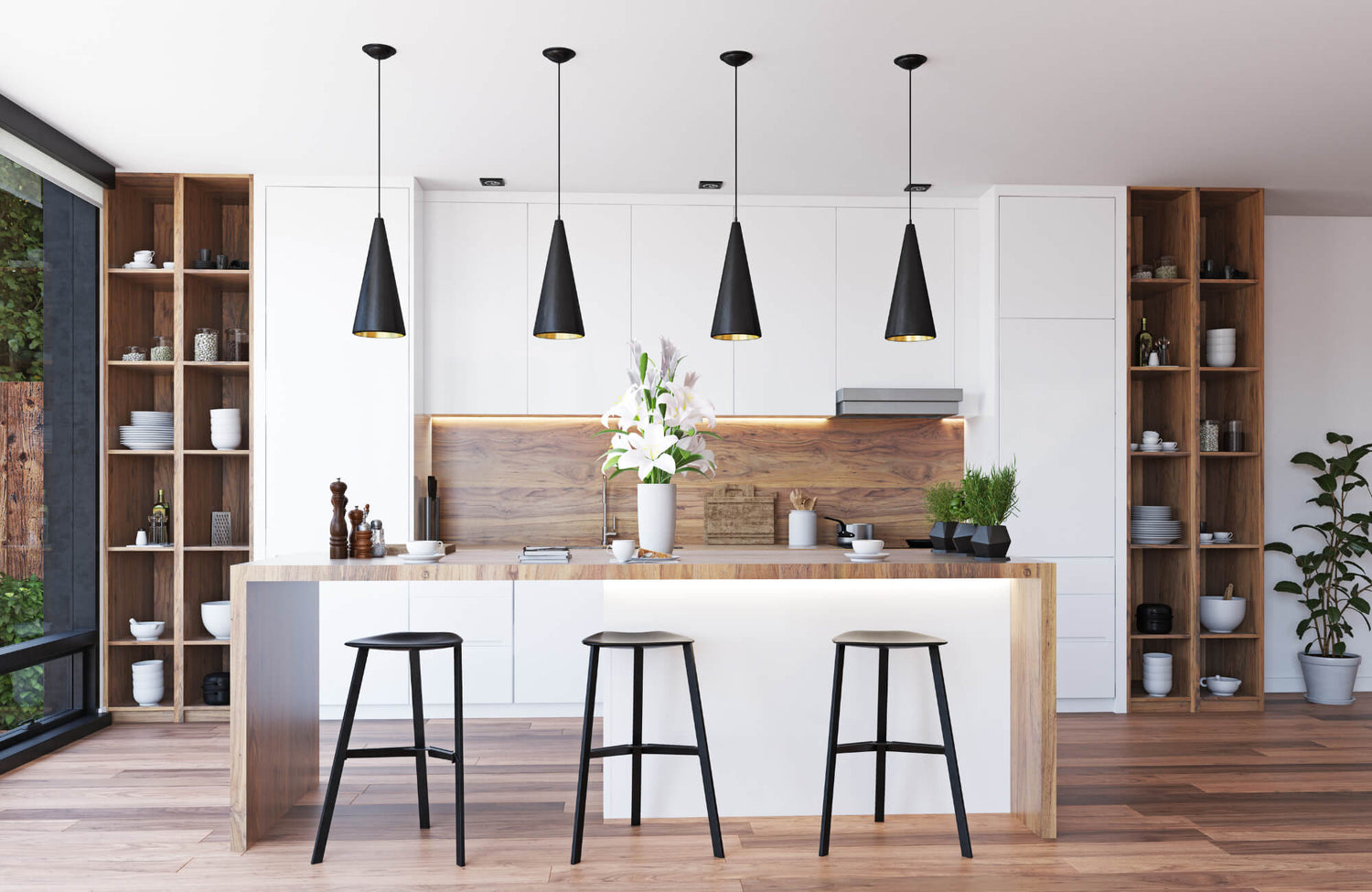
Over islands or peninsulas, pendant fixtures provide both visual interest and practical illumination. Be mindful of spacing and height to avoid glare and ensure even coverage.
In the dining area, the emphasis shifts toward mood. Dimmable chandeliers or linear suspension lights, placed 30–36 inches above the table, create a welcoming focal point. Warmer tones (2700K–3000K) enhance food presentation and encourage relaxation. Add layered accent lighting, such as wall washers or sconces, to build dimension and atmosphere.
Bedrooms and Bathrooms
Lighting in bedrooms should support rest and softness. Use ambient lighting from ceiling fixtures or dimmable recessed LEDs in the 2700K–3000K range to encourage relaxation. Pair with task lighting, bedside lamps, swing-arm sconces, or integrated reading lights that offer directional control and individual switching for flexibility.
For a subtle, restful effect, consider indirect lighting tucked into crown molding or beneath bed platforms to gently guide nighttime movement without disrupting sleep patterns.
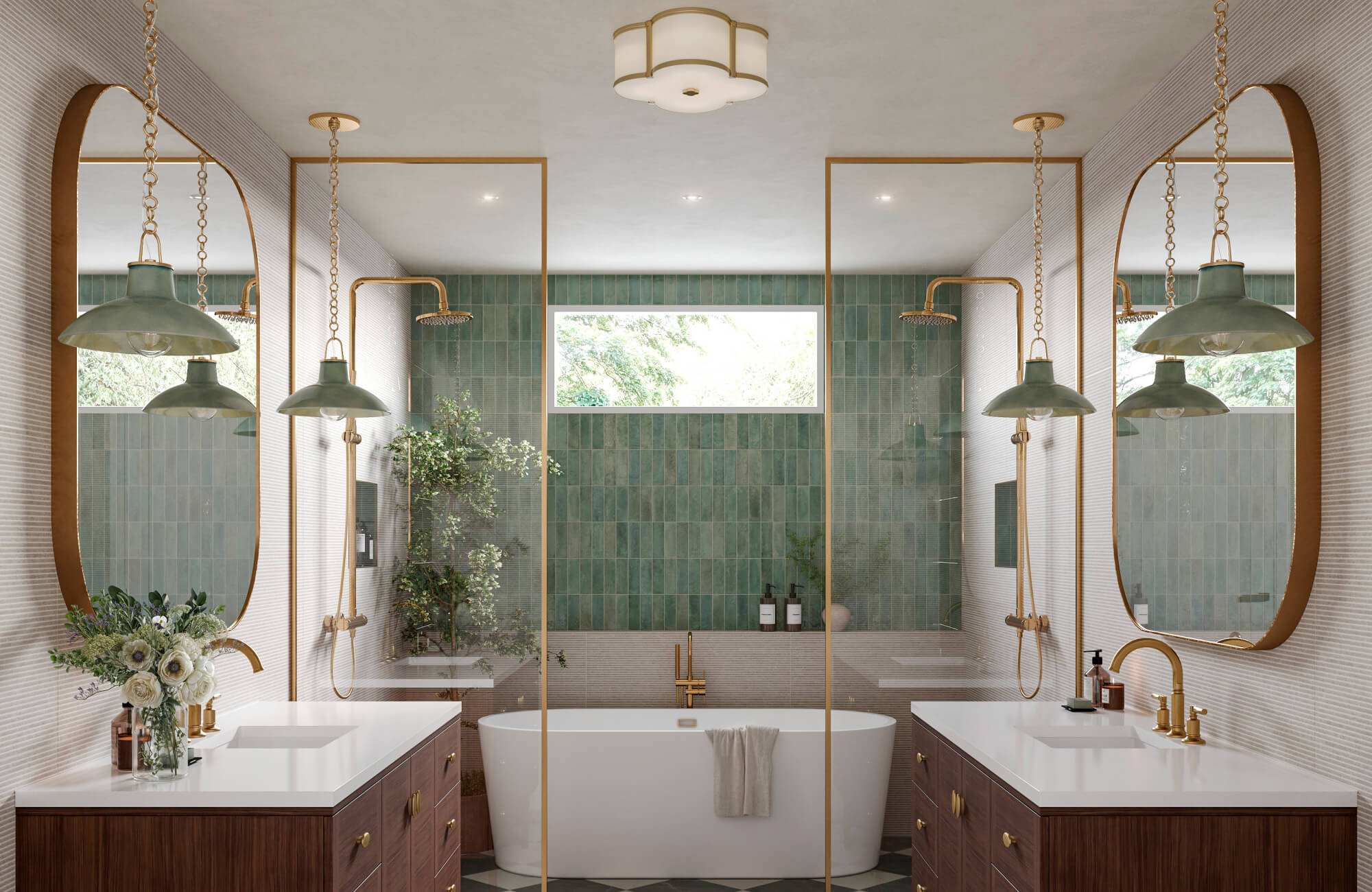
Bathrooms, on the other hand, require a more precise balance between utility and spa-like ambiance. Vertical lighting on both sides of the mirror, like sconces placed at eye level, minimizes facial shadows, ideal for grooming tasks. Choose fixtures with CRI 90+ and 3000K for accurate skin tone rendering. Overhead, use moisture-rated recessed lighting for general illumination, particularly in showers or above tubs. Dimmers add another layer of control for early mornings or winding down in the evening.
As illustrated in the bathroom featured above, Edward Martin’s Garnet Wall Sconce in Vintage Brass offers a sculptural solution that brings both elegance and functional luminance to the space, reinforcing the idea that lighting can, and should, be both practical and beautiful.

Advanced Considerations for a Luminous Home
Building on foundational techniques, it’s worth exploring innovations that support health, efficiency, and long-term value. These advanced strategies can future-proof your lighting design and elevate your home’s overall performance.
Circadian Lighting and Well-being
Lighting that supports the body’s natural rhythms can significantly improve daily life. Circadian lighting is designed to mirror the 24-hour biological clock, helping to regulate sleep, mood, and cognitive performance. Exposure to cool, blue-enriched light (5000–6500K) in the morning stimulates alertness, while warmer tones (2700–3000K) in the evening encourage melatonin production and restfulness.
Tunable white LED systems make this dynamic adjustment possible, shifting both intensity and temperature throughout the day. When automated through biophilic controls or human-centric lighting (HCL) platforms, these systems are especially effective in bedrooms, home offices, and wellness spaces, transforming light from a utility into a tool for health and productivity.
Energy Efficiency and Sustainability
In tandem with wellness, sustainability is a key driver in modern lighting design. LEDs remain the gold standard, using up to 80% less energy than traditional incandescent bulbs and lasting tens of thousands of hours. Look for options with high efficacy ratings (lumens per watt) and low Total Harmonic Distortion (THD) for optimal performance.
To further reduce consumption, consider occupancy sensors, daylight-responsive dimmers, and smart scheduling that only activate lights when needed. Material choices matter, too; fixtures made from recyclable materials, coated with low-VOC finishes, and certified by ENERGY STAR® or DesignLights Consortium (DLC) programs contribute to a lower environmental footprint.
In the living room shown above, Edward Martin’s Vicente Picture Light in Aged Old Bronze offers a perfect example, combining LED efficiency with a timeless form crafted from durable, sustainable materials. For broader improvements, whole-home lighting audits can help identify retrofit opportunities aligned with both energy goals and aesthetic vision.
Professional Consultation and Future Trends
As lighting systems become more integrated and technically advanced, involving a lighting designer or electrical engineer can streamline the process and ensure long-term success. Using software such as DIALux or AGi32, professionals can simulate and fine-tune everything from illuminance levels to glare control, well before installation begins.
Looking ahead, Li-Fi (Light Fidelity), which uses LED light for high-speed wireless communication, is poised to revolutionize smart home connectivity. Other innovations, like Organic LEDs (OLEDs) and laser-based lighting, promise ultra-slim profiles, low heat output, and new form factors. Meanwhile, the rise of IoT-enabled lighting continues to unlock new levels of automation, from adaptive color scenes and predictive maintenance to integration with HVAC, shading, and security systems. Lighting is no longer just a layer of design; it’s becoming a responsive part of the home’s ecosystem.
Illuminating with Intention
Ultimately, achieving well-balanced lighting is about more than mixing sources; it’s about creating synergy between natural light, color temperature, intensity, and surface reflectivity. When these elements are thoughtfully coordinated, your home becomes a space that feels cohesive, adaptable, and deeply personal.
Whether you're building from scratch or refining an existing setup, taking the time to evaluate your lighting approach pays off. An Edward Martin design consultation can provide expert guidance tailored to your space, helping you make confident choices that align with your project goals. For personalized recommendations, product insights, or support with tile, rug, or furniture selections, don’t hesitate to contact us. We’re here to help you shape a home that shines with purpose.