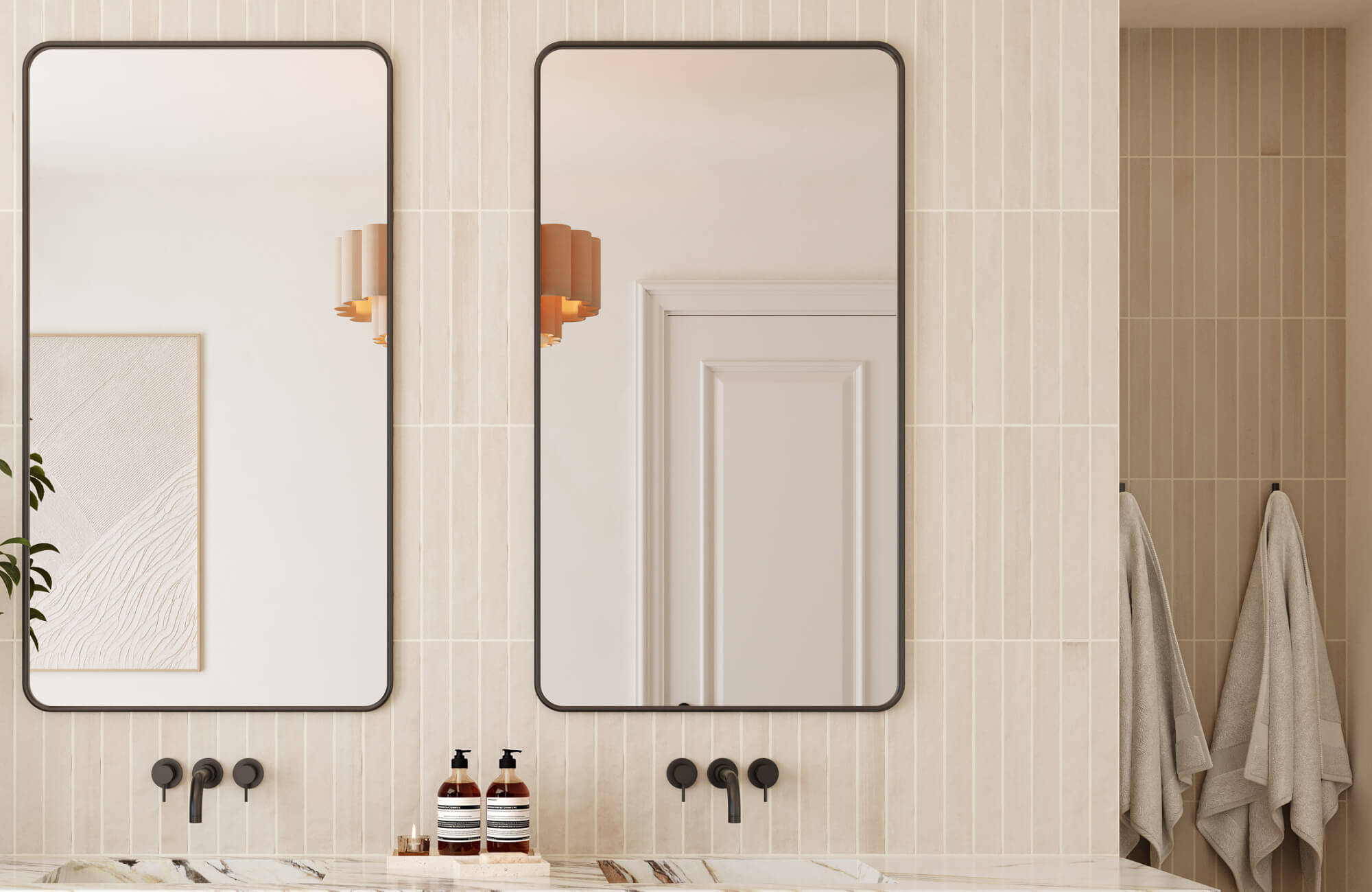
A mirror might seem like a simple item, but it plays a bigger role in your space than you might think. The right mirror can brighten a room, improve how you see yourself, and even make a space feel larger and more put-together. On the flip side, a poor-quality mirror can quietly fall short—distorting reflections, wearing down over time, or clashing with your decor. With so many choices out there, varying in price, materials, and features, it’s not always easy to tell which mirrors are worth your investment and which just look good on the surface.
This article breaks down everything you need to know to make a confident, informed choice. From the clarity of the reflection to the durability of the backing and frame, each section provides practical tips to help you spot quality quickly. Whether you're upgrading a bathroom, styling a studio, or choosing a mirror for a bright entryway, knowing these essentials also ensures you pick one that fits your space and lasts for years.

Evaluate Reflective Clarity and Surface Integrity
When judging the quality of a mirror, the first and most important factor is how well it reflects. A good mirror should deliver a sharp, accurate, and distortion-free image from every angle and distance. One simple way to test this is by using the line test: place your finger or pen tip directly against the glass. If the reflection meets the object precisely, the mirror likely has a front-surface or high-precision coating. But if there’s a visible gap, it suggests the reflective layer is placed behind the glass, which causes subtle visual distortion due to parallax. Although this may be fine for decorative use, it quickly becomes frustrating in areas where accuracy is essential, like bathrooms, dressing rooms, or any space where lighting and depth perception matter.
Beyond that, you should observe how the mirror performs under different lighting and viewing angles. A high-quality mirror maintains crisp reflections whether you're standing up close or across the room. If you notice ghosting, blurriness, or hazy reflections, the mirror likely suffers from poor coating or uneven glass thickness. Additionally, using both natural and artificial light can help reveal surface flaws like ripples, cloudiness, or yellow tints, which are signs of oxidation or low-grade silvering. These defects might seem minor at first, but often worsen over time, especially in humid environments. Choosing a well-constructed mirror like our Rory Mirror in Antique Brass Iron, as shown in the image above, can make a significant difference. Not only does its warm brass tone complement soft green or natural wood finishes beautifully, but its refined, organic shape also offers a clean and accurate reflection suited for everyday use.

Analyze Glass Type, Backing, and Build
What lies beneath the surface of a mirror plays a crucial role in how well it performs and how long it lasts. The type of glass, the quality of the reflective coating, and how the edges are finished all contribute to whether a mirror is a reliable investment or one that deteriorates far too quickly.
Checking for Float Glass vs. Sheet Glass
The foundation of any good mirror is its glass, and not all glass is made equal. Float glass is considered the gold standard. It’s produced by floating molten glass on a bed of molten tin, which creates a perfectly flat, even surface. This results in a smooth, distortion-free reflection that’s consistent across the entire pane. When you look into a mirror made with float glass, the image should appear stable and true, with no waviness or bending at the edges.
In contrast, mirrors made from sheet glass, often found in budget options, tend to have slight inconsistencies in thickness. These subtle irregularities can lead to warped reflections or bending lines, especially when viewed from an angle. Over time, these flaws can become increasingly noticeable and frustrating. If you want a mirror that delivers accuracy and maintains its integrity long-term, float glass is the material to look for.
Examining the Backing and Silvering Layers
The part of a mirror that actually reflects your image isn’t the glass. It’s the reflective layer bonded to the back. High-quality mirrors use pure silver or aluminum for this layer, which is then protected by multiple coatings that prevent oxidation and damage. These protective layers matter more than you might think, especially if the mirror is exposed to moisture, fluctuating temperatures, or frequent cleaning.
When the backing isn’t adequately sealed, the silvering can also begin to corrode. This shows up as black spots, edge deterioration, or patchy reflections. To avoid this, ask about the number and type of protective coatings, especially if the product description doesn’t clearly state it. The more thorough the backing, the longer your mirror will retain its clarity and appearance, particularly in humid spaces like bathrooms. Our Everdale Small Mirror in Gunmetal, featured in the photo above, is a great example of both form and function. Its crisp reflection and gunmetal frame work beautifully in a bathroom setting, underscoring the importance of choosing mirrors built to withstand daily moisture without compromising on style.
Inspecting the Edge Finishing and Beveling
Edge finishing is a sign of how much care went into the mirror’s construction. High-quality mirrors often feature beveled or polished edges that not only enhance their aesthetic appeal but also protect against chipping and moisture intrusion. These edges are smoothed and sealed to minimize the chance of cracks forming or water creeping into the backing.
For a refined example of this craftsmanship, our Tristan Square Mirror in Polished Brass combines modern geometry with a sleek, polished edge that adds both elegance and resilience. Its crisp lines and rich brass tone make it well-suited for contemporary or transitional interiors, where both form and finish are equally important.
In contrast, mirrors with sharp, raw, or unfinished edges are more vulnerable to damage and degradation. They may feel rough to the touch and are more likely to develop flaws over time. If you’re choosing a mirror for an area that sees regular use, like a hallway or dressing space, polished or beveled edges will add both safety and longevity to your purchase.

Consider Purpose, Placement, and Design Harmony
The best mirrors serve a clear purpose while fitting naturally into the environment around them. Whether you're placing one in a bathroom, hallway, bedroom, or studio, both function and aesthetics should guide your decision. Where the mirror will live, along with how it will be used, determines the features that matter most, from moisture resistance and safety to proportion and style compatibility.
In humid rooms like bathrooms or kitchens, ordinary mirrors tend to break down quickly. Over time, moisture seeps into the silvering, causing cloudiness, black spots, or peeling edges. That’s why it’s crucial to choose mirrors specifically labeled as moisture-resistant, with sealed backings and corrosion-resistant coatings that protect the reflective layer beneath. In busy or high-risk areas like gyms, entryways, or children’s rooms, opt for tempered glass or safety-backed mirrors that reduce injury risk if broken. And when it comes to daily tasks, the right features can elevate your experience, whether it’s magnification for grooming, lighting for makeup, or full-body views for dressing. A mirror should support your routine, not just look good while doing it.
Beyond performance, the mirror’s design must enhance your space visually. A well-constructed frame in wood, metal, or resin adds both durability and style, while the size and placement can influence how light moves through the room. A mirror that’s too small can feel insignificant, while one that’s oversized may dominate the space awkwardly. Shapes also contribute to the mood—arched mirrors can soften a room’s lines and add a classic touch, while round mirrors often lend a clean, balanced feel in both modern and transitional spaces. Our Fitz Mirror in Antique Silver, seen in the picture above, is one example of how a timeless round shape paired with a warm-toned silver finish can bring subtle elegance and symmetry to a double vanity setup, effortlessly complementing both tilework and natural wood tones.
Moreover, take note of the glass itself. If you want a reflection that stays true in color and tone, especially in fashion-focused spaces, look for low-iron glass that avoids the green tint found in standard mirrors. When all of these elements align, purpose, proportion, and presentation, your mirror becomes more than a fixture; it becomes an intentional part of your environment.

Test Durability, Maintenance, and Brand Support
Even the most beautiful mirror won’t stand the test of time if it scratches easily, becomes difficult to clean, or lacks reliable backing from the manufacturer. This section helps you evaluate a mirror’s long-term resilience and the support you can expect after purchase.
Assessing Scratch and Impact Resistance
Before committing to a mirror, it’s worth checking how well it holds up to everyday use. Gently run a fingernail or soft object across a corner to feel the surface resistance. Although this won’t mimic extreme conditions, it can help you detect flimsy coatings or surfaces that scuff too easily. High-quality mirrors are also designed to resist minor abrasions from cleaning or occasional bumps.
For spaces where impact is more likely, like hallways, home gyms, or children’s areas, consider mirrors that are laminated or safety-backed. These mirrors are built to minimize the risks of shattering. Laminated versions hold together even when cracked, while safety film prevents sharp shards from spreading. Not only does this increase safety, but it also extends the mirror’s lifespan by adding structural strength.
Checking Ease of Cleaning and Smudge Resistance
Daily fingerprints, splashes, and dust are inevitable, especially in bathrooms or busy living areas. A good mirror shouldn’t require constant maintenance to look clean. Some modern mirrors include oleophobic or hydrophobic coatings that repel oils, water, and smudges, making them much easier to wipe down.
You’ll be able to tell just by doing a quick spot-clean test. If a soft cloth leaves behind streaks or the residue clings to the surface, the coating may be insufficient or missing altogether. A quality mirror allows you to maintain a polished look with minimal effort, which not only saves time but also keeps the glass from wearing out due to excessive scrubbing or harsh cleaners.
Investigating Warranty and Manufacturer Support
The mirror’s warranty often reveals just how much confidence the manufacturer has in its product. A mirror backed by a three-year (or longer) warranty is more likely to be built with better materials and workmanship. Beyond the warranty period itself, pay attention to the brand’s reputation for service—are they responsive, helpful, and easy to reach if problems arise?
Reliable support can make all the difference if you receive a damaged mirror, need a replacement part, or have a quality concern down the line. A company that stands behind its product also gives you peace of mind and makes the entire ownership experience smoother and more secure.

Use Certifications and Tools to Confirm Quality
Visual inspections can tell you a lot, but the most reliable mirrors are backed by something more: standards and science. When you're comparing products, third-party certifications can offer assurance that a mirror has passed rigorous testing for durability, corrosion resistance, and coating stability. Certifications like ISO 9211 and ASTM C1503 verify that a mirror can perform reliably over time, especially in environments where moisture or daily cleaning is a factor. Even in residential spaces, these quality benchmarks help you choose mirrors that won't degrade prematurely. If the product description includes labels like GREENGUARD or RoHS, it also means the mirror meets health and safety requirements, with low emissions and no harmful materials, which are essential for bedrooms, nurseries, or compact rooms where indoor air quality matters.
In addition to documentation, a few simple tools can help you assess craftsmanship firsthand. A basic laser pointer, for instance, is surprisingly effective at detecting surface uniformity. When the beam reflects as a clean, stable dot, you’re likely dealing with flat, well-manufactured glass. But if the dot scatters or shifts shape, that’s a red flag for surface distortion or waviness that could affect your reflection. This test is especially useful on larger mirrors, where flaws are more likely to develop and more noticeable when in use. By combining hands-on checks with recognized certifications, you can confidently choose a mirror that meets high standards in both construction and safety, giving you a product that looks good, lasts long, and performs reliably wherever you install it.
Final Considerations for a Smart Mirror Purchase
Choosing a good mirror involves understanding how the reflection behaves under light, how the materials hold up in different environments, and how well the design supports your lifestyle. When you combine simple visual tests with knowledge of construction, coatings, and certifications, you gain the confidence to select a mirror that meets both aesthetic and functional needs. Ultimately, a truly great mirror enhances your space, supports your daily routines, and stands the test of time, all while reflecting your attention to quality and detail.
If you’re ready to explore mirrors that meet these standards or need guidance selecting the right piece for your space, our team is here to help. Whether you have questions about materials or finishes, reaching out is the first step toward finding a mirror that truly fits your needs!