Checkerboard tile, a design classic with centuries of history, remains a beloved choice for adding timeless elegance to interiors. Their distinctive pattern effortlessly bridges traditional and modern styles, making them a versatile option for a wide range of spaces. As this iconic look continues to grow in popularity, however, it has also become easier to encounter mass-produced imitations that lack the quality and authenticity of well-crafted tiles.
Understanding what distinguishes high-quality checkerboard tiles, from their materials and craftsmanship to their visual consistency, can help you make a more confident and informed choice. By recognizing these key indicators, you can ensure your space is enhanced with tiles that are not only visually striking but also durable and true to their design heritage.

Evaluating Tile Materials and Quality
Choosing the right checkerboard tiles is more than just a matter of aesthetics; it’s a decision that impacts durability, functionality, and long-term satisfaction. Understanding material properties and how they influence performance and maintenance needs is essential to selecting suitable checkerboard tiles for your space.
Material Properties
Porcelain checkerboard tiles, like Edward Martin’s Leona 24x24 Checkerboard Matte Porcelain Tile in Calacatta and Nero Marquina, as displayed in the photo above, are widely valued for their exceptional density and strength, which result from being fired at very high temperatures during manufacturing. This process produces a compact tile body that resists moisture penetration, surface scratches, and temperature fluctuations, making porcelain a reliable choice for areas exposed to frequent use or humidity. Its durability also allows porcelain to maintain its appearance over time, even in busy spaces like kitchens, entryways, or bathrooms. In addition, modern production techniques enable porcelain tiles to convincingly replicate natural materials such as marble, allowing you to achieve a refined checkerboard aesthetic while benefiting from a more resilient and low-maintenance surface.
Ceramic checkerboard tiles offer a lighter and more accessible option while still providing versatility for many interior applications. Made from natural clay and kiln-fired at lower temperatures than porcelain, ceramic tiles are generally easier to cut and install, making them a practical choice for walls, backsplashes, or moderately used floors. Their wide range of glazes and finishes also allows for a variety of color combinations that work well with classic checkerboard layouts. While ceramic tiles are typically less dense than porcelain and may be more susceptible to chipping under heavy impact, they remain a dependable option for spaces where durability demands are lower.
Natural stone checkerboard tiles bring a level of authenticity and character that manufactured materials often aim to replicate. Materials such as marble, limestone, and travertine introduce distinctive textures, mineral variations, and organic veining that make every tile unique. Marble, in particular, is closely associated with classic checkerboard flooring because of its elegant veining and polished appearance, while limestone and travertine offer a softer aesthetic with subtle texture. For those who appreciate this timeless look but prefer a more practical alternative, marble look checkerboard tiles provide a compelling option. These porcelain or ceramic tiles are designed to replicate the veining and depth of natural marble while offering greater resistance to stains, moisture, and daily wear, making them easier to maintain in busy interiors.
Durability and Maintenance
Durability and ease of maintenance are critical factors when selecting your checkerboard tiles. As previously highlighted, porcelain and ceramic checkerboard tiles are inherently water-resistant and scratch-resistant, making them a low-maintenance choice for busy or moisture-prone areas. These materials are easy to clean with mild detergent and water, making them ideal for busy households.
Natural stone checkerboard tiles, while durable, demand more specialized care to maintain their beauty. Regular sealing protects against stains and water absorption, while pH-neutral cleaners help prevent surface etching or discoloration. For the best results, always follow the manufacturer’s care recommendations for both tiles and grout, as these guidelines ensure proper upkeep and longevity.

Design and Aesthetic Considerations
In determining the quality and authenticity of checkerboard tiles, their design and aesthetic details are just as important as their durability and composition. Elements such as surface texture, finish, color consistency, tile size, and grout definition all influence how the checkerboard pattern appears within a space. Paying attention to these factors helps ensure the tiles create a balanced, cohesive look that enhances the overall style of your interior.
Texture and Surface Examination
The texture and surface quality of your checkerboard tiles significantly impact their practicality and aesthetic appeal. High-quality checkerboard tiles should have a smooth, uniform surface free from imperfections like pits or bumps. To detect inconsistencies and reveal flaws that might otherwise go unnoticed, you can run your hand over the tile’s surface while examining it under various lighting conditions.
High-quality checkerboard tiles should also feel solid and well-constructed, with no weak spots or uneven thickness. These attributes ensure visual appeal and enhance durability and reliability, making them a dependable choice for long-term use.
Color and Pattern Consistency
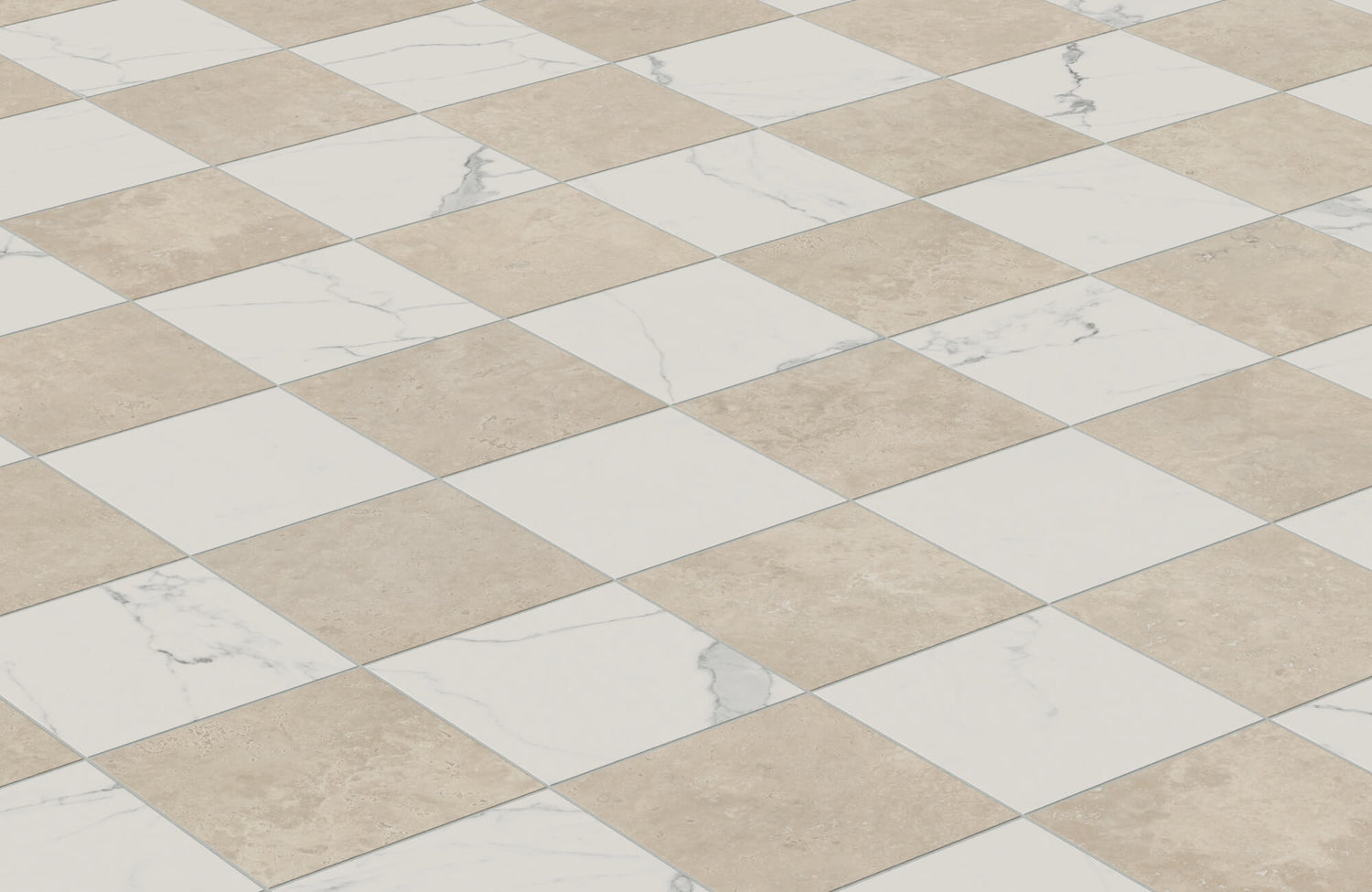
The color and pattern consistency of checkerboard tiles is essential to achieving a cohesive and authentic look. For solid-colored checkerboard tiles, high-quality options should display uniform tones without noticeable fading or blotches. This is particularly important for the striking contrast of checkerboard designs, where clarity between light and dark tones defines the aesthetic. A good example is the Brody 24x24 Checkerboard Matte Porcelain Tile in Sand and Sienna, as displayed in the picture above, where the warm sand and soft sienna tones create a balanced contrast that feels refined yet natural within the overall checkerboard layout.
If the tiles feature marble or other natural stone-inspired patterns, the quality lies in the balance between variation and harmony. Marble look checkerboard tiles should also exhibit naturalistic veining and patterns that mimic genuine stone without appearing repetitive or overly uniform. Moreover, ensure the veining flows naturally and complements the overall design, avoiding abrupt or artificial-looking transitions between tiles.
To evaluate consistency, lay out a few tiles side by side to observe their interaction. For marble look or patterned checkerboard tiles, check that the variations enhance the design rather than disrupt it, ensuring the final installation maintains the elegance and sophistication of the checkerboard style.
Tile Size and Pattern Scale
The size of checkerboard tiles plays an important role in shaping the overall visual impact of the pattern. Larger tiles tend to create a more open and contemporary appearance because fewer grout lines allow the checkerboard layout to appear cleaner and more continuous across the surface. This effect works particularly well in spacious kitchens, entryways, or living areas where the pattern can be appreciated from a distance without overwhelming the room.
Smaller tiles, by contrast, often evoke a more traditional or vintage aesthetic that reflects the historic origins of checkerboard flooring. Their tighter pattern introduces additional visual rhythm and detail, which can bring character to compact spaces such as laundry rooms, mudrooms, or powder rooms. When selecting tile size, considering the proportions of the room helps ensure the checkerboard design feels balanced and enhances the surrounding interior rather than dominating it.
Finish and Light Reflection
The finish of checkerboard tiles also influences how the pattern is perceived within a space. Polished or glossy surfaces reflect light more readily, which can intensify the contrast between light and dark tiles and give the floor a refined, luminous appearance. This reflective quality often works well in rooms where natural light is abundant, as it can brighten the space and emphasize the elegance of the checkerboard design.
Matte finishes, on the other hand, offer a softer and more understated look that reduces glare and highlights the natural character of the tile surface. This finish can also create a relaxed, contemporary feel while still preserving the visual structure of the checkerboard pattern. Choosing between polished and matte finishes ultimately depends on the atmosphere you want to achieve and how the surrounding lighting interacts with the tiles.
Grout Color and Visual Definition
Grout color is another subtle yet influential factor in the overall appearance of checkerboard tiles. A grout tone that closely matches the tile colors can create a more seamless surface, allowing the checkerboard pattern itself to remain the primary visual feature. This approach often produces a refined and cohesive look that works well in modern interiors.
Alternatively, selecting a slightly contrasting grout color can highlight the geometry of the layout by defining the edges of each tile. This technique can also emphasize the structured nature of the checkerboard pattern and introduce additional visual depth to the installation. By carefully considering grout color alongside tile selection, you can further refine how the checkerboard design integrates with the rest of the space.

Installation Considerations for Checkerboard Tiles
Even the highest-quality checkerboard tiles can lose their visual impact if they are not installed with precision. Because the checkerboard pattern relies on clean alignment and balanced spacing, careful planning and accurate placement are essential to achieving the structured look that defines this classic design. Proper installation also ensures that the contrast between tiles appears intentional and cohesive rather than uneven or misaligned.
Preparing the surface before installation is equally important. A stable, level subfloor helps prevent shifting, uneven grout lines, or visible height differences between tiles, all of which can disrupt the symmetry of the checkerboard pattern. In addition, careful layout planning allows installers to position tiles in a way that keeps the pattern centered and visually balanced throughout the room.
For the best results, hiring a professional installer is often recommended. Experienced tile professionals understand how to align the pattern correctly, maintain consistent spacing, and address potential challenges that may arise during installation. Their expertise helps ensure the checkerboard layout appears clean and refined, allowing the tiles to deliver the timeless elegance and lasting quality they are known for.

Spotting and Avoiding Counterfeit Tiles
Spotting authentic checkerboard tiles is critical to ensuring both durability and aesthetic quality. Homes with genuine, high-quality tiles can attract buyers more easily and often contribute to stronger home resale values, as well-crafted flooring is viewed as a lasting design investment. As previously highlighted, authentic checkerboard tiles typically feature smooth finishes, consistent colors, and well-defined patterns that maintain the visual integrity of the design.
Counterfeit or lower-grade tiles, in contrast, may reveal subtle irregularities that become more noticeable once installed. These can include uneven glazing, blurred patterns, inconsistent coloring, or slight variations in tile size that disrupt the precision of the checkerboard layout. Examining tile samples under different lighting conditions can also help reveal these inconsistencies, allowing you to identify flaws that might not be immediately visible in a showroom or product photo.
Another important step is reviewing the manufacturer’s product specifications. Reputable tile manufacturers provide clear technical information such as material composition, water absorption ratings, and recommended installation areas. These details also offer valuable insight into how the tile was produced and whether it meets recognized quality standards, helping you distinguish authentic tiles from imitations that often lack proper documentation.
Using visualization tools can also help confirm that the tiles align with your design expectations before purchasing. For example, Edward Martin’s AR tool allows you to preview checkerboard tiles directly in your space, making it easier to evaluate how the pattern, scale, and colors will appear in your interior!
Creating a Lasting Impression
Selecting the perfect checkerboard tiles is about more than just appearance—it's about ensuring quality, authenticity, and longevity in your design. By carefully evaluating factors such as texture, surface quality, color consistency, and pattern alignment, you can confidently choose tiles that not only meet your practical needs but also deliver a stunning visual impact. For a more personalized approach, consider utilizing our design services. These tailored solutions help bring your vision to life, ensuring every detail aligns with your unique preferences and style.