Laundry rooms are often treated as purely practical spaces, yet they play a significant role in your daily rhythm. When thoughtfully designed, this room can simplify routines, reduce stress, and quietly elevate the way your space functions. Rather than feeling tucked away or overlooked, a well-planned laundry room becomes an extension of your living space, blending efficiency with comfort and visual appeal.
As you move through this article, you will discover how smart layouts, durable surfaces, strategic lighting, and intentional details work together to create a laundry room that truly supports you. With the right design choices, this once utilitarian area can feel organized, inviting, and surprisingly satisfying to use, encouraging you to rethink what a hardworking space can be.

Layout And Workflow Planning
A functional laundry room works best when it supports how you actually move, reach, and complete tasks. By planning the layout around workflow rather than appearance alone, you can reduce unnecessary steps and make even routine laundry feel more efficient and comfortable.
Appliance Placement
The way you position your washer, dryer, and sink has a direct impact on how smoothly your laundry routine flows. When these key elements follow a natural sequence, you can move from washing to drying to finishing tasks without doubling back or lifting laundry awkwardly. This intentional placement also helps reduce physical strain while keeping everything you need within easy reach.
Whenever space allows, arranging appliances side by side with a continuous counter above creates an ideal surface for sorting, folding, and temporary staging. However, if your laundry room is compact, stacking appliances vertically can still feel efficient when paired with pull-out shelves or nearby counters. These additions give you a momentary landing spot for baskets and garments, ensuring the room stays functional without feeling cramped.
Zoning The Room By Task
Beyond appliance placement, dividing your laundry room into defined zones allows each task to have its own purpose and rhythm. When washing, drying, folding, and organizing all have designated areas, you can move through chores with fewer interruptions and less visual clutter. This separation also makes it easier to keep the space tidy, even during busy laundry days.
Moreover, placing a sink near the washer creates a practical wet zone for pre-treating stains and handwashing delicate items, while a nearby counter transitions the process into a dry zone for folding and pressing. To complete the flow, incorporating bins or cubbies for clean clothes gives you a natural endpoint for each load. As a result, zoning transforms the laundry room into an intuitive workspace that feels calm, efficient, and surprisingly satisfying to use.

Durable Surfaces That Withstand Daily Wear
Laundry rooms demand surfaces that can handle constant exposure to moisture, cleaning agents, and heavy use without losing their appeal. Choosing the right tile ensures your space stays protected, easy to maintain, and visually polished over time.
Wall Tiles
Wall tiles play a critical role in shielding your laundry room from splashes, steam, and heat generated by appliances. Areas around sinks and washing machines are especially vulnerable, which is why non-porous materials perform best. Alongside porcelain, ceramic tiles are an excellent choice for walls because they resist moisture, detergent residue, and harsh cleaning agents while remaining budget-friendly and versatile. Glazed finishes further enhance protection by preventing absorption and making routine wipe-downs effortless.
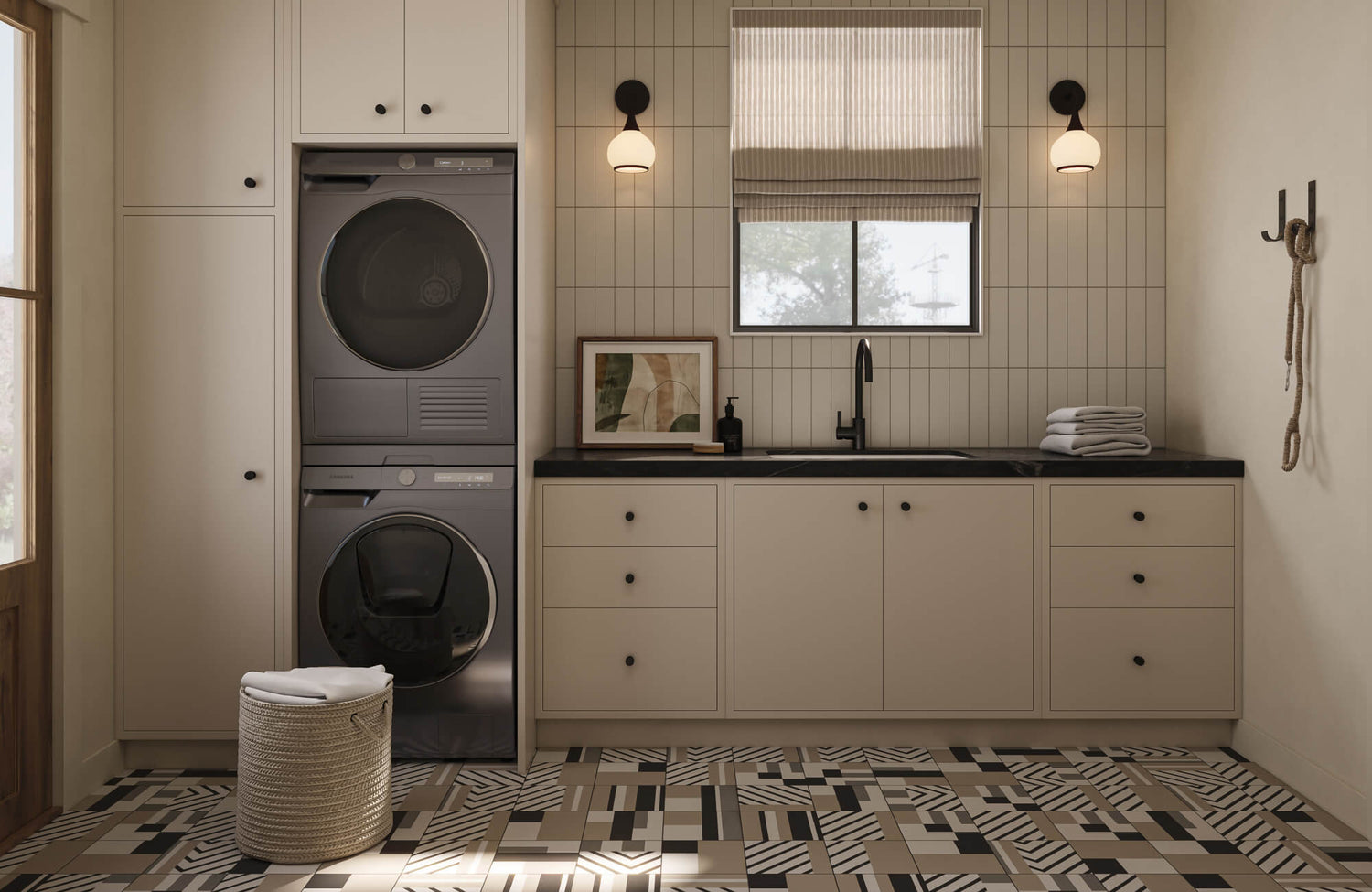
Beyond durability, wall tiles strongly influence the mood and visual depth of the space. Glossy or lightly reflective ceramic and porcelain tiles help bounce light around the room, creating a brighter and more open atmosphere, especially when natural light is limited. A vertically stacked green tile, such as our Mariel 1x12 Glossy Porcelain Tile in Forest, shown in the image above, introduces color in a refined, timeless way while adding subtle texture and height to the walls. Extending tile beyond a standard backsplash further protects surrounding surfaces and transforms a practical solution into a polished design feature that feels intentional and elevated.
Floor Tiles
Flooring in a laundry room must withstand constant use, appliance vibration, and the occasional spill without becoming slippery or difficult to maintain. Porcelain tile is the best choice for this environment due to its density, non-porous body, and exceptional durability. It handles moisture with ease and maintains its integrity even under heavy appliances, making it ideal for long-term performance.
Practical considerations like tile size and finish further enhance usability and visual balance. Larger format porcelain tiles reduce grout lines, which means less cleaning and fewer areas for dirt to settle. A matte multicolor option, such as our Leighton 35x35 Matte Porcelain Tile in Multicolor, seen in the same image photo, adds subtle variation that helps conceal lint and dust while bringing depth and character to the floor. When paired with stain-resistant grout and a lightly textured finish, this type of tile improves traction, simplifies maintenance, and grounds the laundry room with a durable yet thoughtfully designed surface.
Seeing how wall and floor tiles work together is just as important as choosing durable materials. Because lighting, layout, and surrounding finishes can dramatically affect how tile looks in your laundry room, visualizing your selections ahead of time helps you make confident decisions. Using an interactive tool like our augmented reality (AR) tool allows you to preview both wall and floor tile options directly in your own space, making it easier to coordinate finishes, balance contrast, and ensure everything feels cohesive before installation.

Storage Solutions That Reduce Visual Clutter
An organized laundry room feels calmer and easier to use, especially when every item has a clear place. By blending concealed storage with thoughtfully styled open elements, you can keep necessities close at hand without overwhelming the space visually.
Closed Storage
Closed storage forms the backbone of a clutter-free laundry room, allowing you to tuck away items you use often but don’t want on display. Cabinets with full-extension drawers make it easier to see and reach detergents, cleaning tools, and accessories without digging through deep shelves. When everything slides out smoothly, your workflow stays uninterrupted and frustration-free.
Built-in solutions can also make laundry tasks feel more seamless. Concealed hampers integrated into base cabinets help you sort loads while keeping dirty laundry out of sight. In tighter layouts, narrow pull-out compartments between appliances offer a smart space for smaller items like stain removers or lint rollers, preserving counter space and maintaining a clean, streamlined look.
Open Storage
Although closed cabinetry hides the mess, open storage adds accessibility and personality when used intentionally. Shelves positioned at eye level keep everyday items within reach, which helps speed up routine tasks and reduces unnecessary movement. When you rely on a few well-chosen containers, open shelves stay orderly instead of chaotic.
Consistency is key to keeping these areas visually balanced. Using matching baskets or jars creates cohesion while still allowing you to see what you need at a glance. Leaving some empty space between items also prevents shelves from feeling overcrowded, allowing the room to breathe. This thoughtful balance ensures open storage enhances both function and style rather than competing with it.

Lighting That Works and Wows
The right lighting transforms your laundry room from a purely utilitarian space into one that feels bright, welcoming, and easy to work in. By layering different types of lighting, you can support detailed tasks while also enhancing the room’s overall atmosphere.
Task Lighting
Task lighting is essential in areas where precision matters, such as sorting colors or treating stains. Under-cabinet lighting placed near the front edge of shelves and cabinets, for instance, helps eliminate shadows on countertops, allowing you to clearly see fabric details and product labels. Choosing LED bulbs with a high color rendering index also improves accuracy, ensuring colors appear true and stains don’t go unnoticed.
For stations that require focused attention, adjustable fixtures add both flexibility and visual interest. Wall-mounted sconces near ironing or folding areas allow you to direct light exactly where it is needed, reducing eye strain during longer tasks. A warm, refined option like our Miriam Wall Sconce in Aged Brass, displayed above, brings targeted illumination while adding a touch of elegance that complements cabinetry and hardware finishes. This combination of function and style helps the laundry room feel efficient, comfortable, and thoughtfully designed.
Ambient And Accent Lighting
Although task lighting handles the details, ambient lighting sets the tone for the entire space. Ceiling-mounted fixtures provide consistent, even illumination that keeps the room feeling open rather than dim or enclosed. Selecting a neutral color temperature further creates a clean, energized environment without feeling harsh.
Accent lighting then adds warmth and personality that elevates the overall design. Subtle lighting inside cabinets or a decorative pendant above a central island introduces visual interest and depth, helping the room feel intentionally styled rather than purely utilitarian. A statement fixture like our Grady Pendant in Patina Brass and Soft Sand, featured in the same picture above, brings soft illumination while complementing surrounding finishes with a warm, elegant glow. This layered approach enhances visual balance and depth, ensuring the laundry room feels thoughtfully designed while maintaining comfortable, consistent illumination throughout the day.

Color And Material Coordination
A well-chosen mix of colors and materials can shift a laundry room from purely practical to thoughtfully designed. When tones and textures work together, the space feels connected to the rest of your space while still meeting the demands of daily use.
Choosing Colors That Improve Visibility
Color plays a quiet but powerful role in how functional your laundry room feels. Lighter, high-reflectance shades help bounce light around the space, making it easier for you to sort fabrics, spot stains, and notice color transfer before it becomes a problem. These tones also visually expand the room, which is especially helpful in smaller layouts.
To keep the space from feeling washed out, layering contrast adds depth and clarity. A light foundation balanced with grounding neutrals and a controlled accent introduces visual interest without overwhelming the eye. This variation helps define surfaces and edges, allowing you to move through tasks with better focus and fewer mistakes.
Lighter tile selections on both walls and floors can further reinforce brightness while introducing subtle character. A white wall tile like our Maisie 2.5x16 Glossy Ceramic Tile in Canvas reflects light effectively, helping vertical surfaces feel clean and open without appearing stark. On the floor, a balanced pattern such as our Leona 12x12 Checkerboard Matte Porcelain Tile in Calacatta and Marfil uses gentle contrast to define zones and edges, making it easier to see dropped items, lint, or spills. As shown in the laundry room image above, these choices enhance visibility while maintaining a calm, refined palette that supports both function and visual comfort.
Mixing Durable Materials With Style
Performance-driven materials don’t have to look industrial or cold when paired thoughtfully. Durable countertops and cabinetry finishes provide the resilience a laundry room needs, while natural elements introduce warmth and texture. This balance softens the overall look and keeps the room from feeling overly utilitarian.
Texture contrast further enhances the design. When smooth, glossy surfaces are offset by matte finishes or subtle wood grain, the space gains visual richness without sacrificing practicality. Small details like hardware finishes or shelving materials tie everything together, proving that a laundry room can be both hardworking and visually refined.

Small Design Details That Improve Usability
Although layout and finishes set the foundation, it’s often the subtle design choices that shape how comfortable and efficient your laundry routine feels. Thoughtful details can quietly remove friction from everyday tasks, making the space easier to use even when square footage is limited.
Built-In Features That Save Time
Integrated features help your laundry room work smarter without adding visual clutter. A pull-out ironing board hidden inside cabinetry keeps the surface accessible while freeing up valuable wall space. When it’s tucked away, the room instantly feels cleaner and more organized, allowing you to move seamlessly between tasks.
Retractable drying solutions offer similar benefits. Drying racks or discreet lines that fold back into cabinets provide flexibility for air-drying without permanently occupying the room. Built-in hampers with smooth gliding mechanisms further streamline the process, allowing you to sort, transport, and load laundry with minimal effort and fewer steps.
Comfort-Focused Enhancements
Usability depends on how the space supports your body during repetitive tasks. Counters set at a comfortable height reduce bending during folding and sorting, helping you maintain better posture throughout the process. Strategic placement of cushioned floor mats adds relief where you tend to stand the longest, turning longer sessions into a more manageable experience.
Air quality plays an equally important role in comfort. Proper ventilation helps regulate heat and humidity, keeping the room cooler and preventing moisture from lingering on surfaces. When these enhancements work together, the laundry room becomes a space that feels less like a chore zone and more like a well-considered part of your space.
Rugs That Add Comfort And Control
Rugs play a quiet but important role in improving how your laundry room feels underfoot while also enhancing safety. Placing a low-profile, non-slip rug in front of busy areas like the washer, sink, or folding counter helps absorb impact during long standing periods and reduces fatigue. This added cushioning makes everyday tasks feel less demanding without interfering with door swings or appliance clearance.
Material choice is key to keeping rugs practical in a laundry setting. Moisture-resistant options such as polypropylene and polyester stand up well to spills and humidity while remaining easy to clean and quick to dry. When chosen in tones or patterns that complement your wall and floor finishes, these rugs also help visually anchor the space, adding warmth and cohesion without overwhelming a hardworking room.
A well-chosen rug can also reinforce the overall design of the laundry room while maintaining practicality. A standout option like our Hutchinson Rug in Graphite / Olive, featured above, introduces a subtle pattern and a deeper tone, which helps ground lighter floors and conceal everyday wear. Its polyester construction also supports durability and easy care, making it a smart choice for busy areas while adding a finished, intentional look that ties the room together.
Designing With Purpose
Designing a functional and stylish laundry room comes down to aligning thoughtful choices with how you live and move through the space. When layout supports workflow, materials withstand daily wear, lighting enhances visibility, and small details improve comfort, the room naturally works better and feels better. By approaching each decision with intention, you create a laundry room that not only handles the demands of everyday use but also adds lasting value and ease to your space, proving that even the most practical spaces deserve great design.
If you want expert guidance to bring all of these elements together, professional support can make the process more seamless and confident. Our design services help you refine layout decisions, select materials that balance durability with style, and ensure every detail works cohesively within your space. With personalized recommendations tailored to how you use your laundry room, you can move from inspiration to execution with clarity, creating a purposeful design that feels both functional and distinctly your own.