A large wall mirror can instantly change how a room feels, sometimes for the better, sometimes for the worse. When the scale is off or the placement feels random, it can dominate the wall and throw everything out of balance. But when it’s thoughtfully chosen and styled, it reflects light beautifully, reinforces architectural details, and makes the entire space feel more open and intentional. In this blog, we’ll walk through how to decorate with a large wall mirror without overwhelming the room, so it feels confident, balanced, and naturally integrated into your space.

Start With The Right Size For The Room’s Scale
Choosing the right mirror size is what keeps a large wall mirror feeling intentional instead of overwhelming. The width of your wall, ceiling height, and the scale of nearby furniture should all guide your decision so everything feels proportionate. In this section, we’ll break down how different mirror sizes work in different types of rooms and how to choose one that supports the space naturally.
Oversized Mirrors for Open Living Areas
Oversized mirrors that span a large portion of the wall can feel striking in open living rooms, especially when ceilings are high, and the layout is generous. In spaces like these, a larger scale doesn’t automatically feel excessive because the room can visually carry that weight. The mirror reflects light across a wider surface, which helps expansive areas feel more unified and connected. Still, even bold pieces need grounding. Placing an oversized mirror above a substantial sofa, fireplace, or console gives it a visual anchor, so it doesn’t appear to float awkwardly on the wall. When scale and furniture are working together, the mirror feels intentional and architectural rather than overpowering.
Medium-Large Mirrors for Dining Rooms and Bedrooms
In dining rooms and bedrooms, medium-large mirrors often feel more appropriate, particularly when they’re positioned above dressers, buffets, or consoles. A practical guideline is to keep the mirror roughly two-thirds the width of the furniture beneath it, which creates balance without feeling overly calculated. This proportion gives the mirror presence while still allowing negative space on either side. It feels noticeable, yet it doesn’t crowd the wall or overwhelm the furniture below. Because these rooms tend to prioritize comfort and calm, a slightly moderated scale keeps everything feeling composed. Instead of demanding attention, the mirror quietly complements the room’s overall layout.
Tall Vertical Mirrors for Narrow Walls
Tall vertical mirrors work especially well on narrow walls where there isn’t much horizontal space to play with, but there’s plenty of height to highlight. Because they draw the eye upward, they naturally make ceilings feel taller, and the room feel more open. This makes them a smart choice for entryways, between windows, or along compact wall sections that need a bit more presence. Instead of spreading outward, the mirror stretches the visual line vertically, which keeps the space from feeling cramped. It adds depth without adding width, so the wall still feels balanced. In tighter layouts, that upward emphasis brings in airiness while still delivering a confident design statement.
Wide Horizontal Mirrors to Expand Visual Width
If a room feels slightly narrow, a wide horizontal mirror can subtly shift how it’s perceived. When placed above a sofa, sideboard, or long console, it echoes the shape of the furniture below, which reinforces balance across the wall. Its extended width allows light to travel more evenly from one side of the room to the other, helping everything feel connected. This orientation visually stretches the space outward rather than upward. Because it aligns with the proportions of nearby furnishings, it creates continuity instead of contrast. When sized carefully, a wide mirror broadens the room’s feel without overwhelming the wall.
Leaning Floor Mirrors vs Mounted Wall Mirrors
Leaning floor mirrors tend to feel relaxed and flexible, which makes them especially inviting in bedrooms or casual living spaces. Their full height adds impact, yet because they rest against the wall rather than being fixed in place, they often feel softer and less formal. Mounted wall mirrors, by contrast, introduce a more structured and refined presence. They feel intentional and composed, particularly in dining rooms, entryways, or more formal settings. The decision often comes down to ceiling height and the overall mood you’re trying to create. Taller rooms can support a mounted mirror that emphasizes clean lines, while layered or lower-ceiling spaces may benefit from the easy, slightly informal feel of a leaning piece.

Choose A Frame Finish That Supports The Room’s Design
Once the size feels right, the frame finish is what shapes the mirror’s personality. The material, thickness, and color all influence whether the mirror quietly blends in or becomes a defining feature on the wall. In here, we’ll look at how different frame finishes shift the mood of a room and how to choose one that feels aligned with your overall design.
Thin Black Frames for Modern Contrast
Thin black frames introduce clean lines and a subtle architectural edge without adding visual heaviness. They outline the mirror in a way that feels intentional, which helps anchor the wall while keeping the overall look sharp. In minimalist or contemporary interiors, that slight contrast brings definition without overwhelming softer elements nearby. Because the frame is slim, it supports the mirror rather than competing with it. It allows furniture, lighting, and textures to remain part of the conversation. If your space leans modern and structured, a thin black frame often feels like a seamless extension of that design language.
Warm Wood Frames for Softness and Texture
If the room feels sleek or slightly cool, a warm wood frame can shift the atmosphere almost instantly. The natural grain introduces texture, and that organic detail helps balance harder finishes like glass, metal, or stone. Wood frames feel especially at home in transitional or nature-inspired interiors where comfort and warmth matter just as much as clean lines. They soften the reflective surface of the mirror without diminishing its presence. Depending on the stain, you can keep things light and airy or lean into deeper, richer tones for added depth. Either way, the frame adds character while helping the mirror settle comfortably into the space.
Brushed Brass and Metallic Finishes for Subtle Glamour
Metallic finishes, especially brushed brass, introduce a refined layer without feeling overdone. Because they catch light softly rather than sharply, they add dimension in a way that feels warm and considered. In rooms with layered lighting, whether from sconces, table lamps, or overhead fixtures, that gentle sheen helps everything feel more connected. The key is leaning toward muted or brushed options instead of highly polished surfaces, since softer finishes feel more grounded. This keeps the mirror from becoming too flashy or dominant. When chosen carefully, a metallic frame adds elegance while still allowing the rest of the room to breathe.
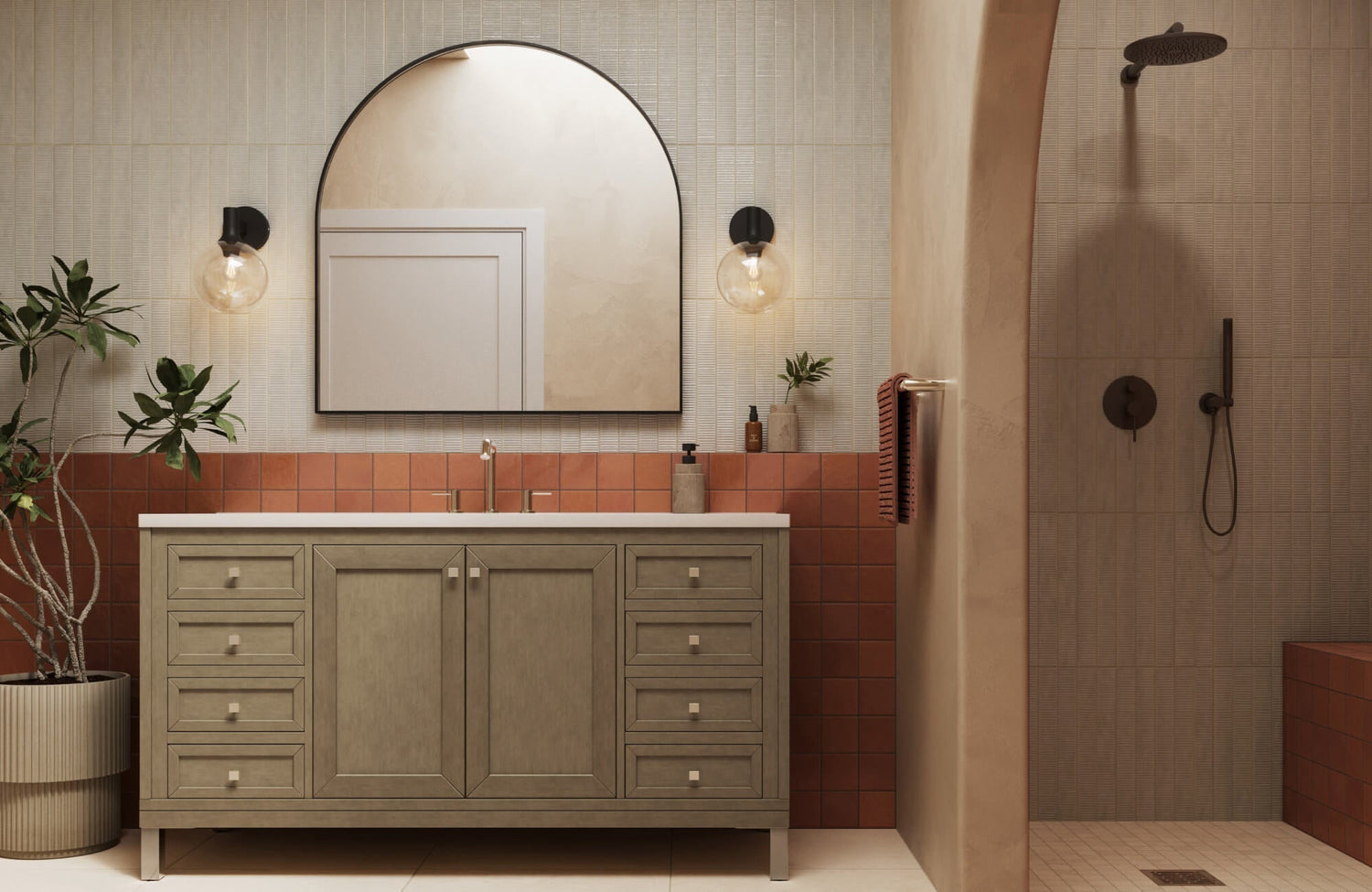
A beautiful example of this balance is our Shirley Small Mirror in Antique Brass Iron above. Its warm, brushed antique brass tone introduces just enough sheen to catch the light from nearby sconces without overpowering the wall. The hand-forged iron frame feels substantial yet refined, which keeps the metallic finish grounded rather than flashy. In layered spaces with mixed materials, it adds warmth and cohesion while still allowing tile, stone, and wood finishes to remain part of the overall composition.
Frameless Designs for Minimal Visual Weight
Frameless mirrors are ideal when you want the reflection to take center stage without extra detailing around it. Without a visible border, the mirror blends almost seamlessly into the wall, which keeps the overall look light and open. This approach works particularly well in smaller rooms or in spaces that already feature strong architectural lines. Because there’s no added frame thickness, the mirror doesn’t introduce additional visual weight. It quietly expands the space without competing with the surrounding décor. If you’re aiming for a clean, understated atmosphere, a frameless design often feels effortless and intentional.
Distressed or Textured Frames for Character
Distressed or textured frames bring in personality while still keeping the room balanced. Subtle imperfections, carved details, or layered finishes add depth that feels authentic rather than overly styled. In rustic, eclectic, or collected interiors, this type of frame can ground the wall with a sense of history and warmth. It adds interest without overshadowing the mirror’s primary function. As long as the proportions are thoughtful, texture introduces richness without unnecessary bulk. When used well, these finishes allow a large mirror to feel expressive while remaining harmonious with the rest of the space.

Position The Mirror To Reflect Light, Not Clutter
A large wall mirror does more than fill empty space; it actively shapes how the room looks and feels. Because it doubles whatever sits in front of it, placement matters just as much as size or finish. Below, we’ll focus on how to position your mirror so it reflects light, highlights the right features, and supports the room instead of amplifying visual noise.
Reflecting Natural Light for Brightness
One of the smartest ways to use a large mirror is to place it where it can catch natural light. When positioned across from or near a window, the mirror helps bounce daylight deeper into the room, which instantly makes the space feel brighter and more open. This approach works especially well in living rooms, dining areas, or bedrooms that benefit from steady daylight throughout the day. Instead of simply adding shine, the mirror redistributes light more evenly across the walls and ceiling. It can soften shadows and lighten darker corners that might otherwise feel heavy. By thinking carefully about what the mirror reflects, you transform it from a decorative piece into a functional design element.
Avoiding Direct Reflection of Busy Areas
Just as mirrors can enhance brightness, they can also intensify clutter. If a large mirror directly faces open shelving, packed countertops, or heavily patterned surfaces, it can double that visual activity. In a space that already has a lot going on, this reflection may make the room feel more crowded than it actually is. Before securing the mirror in place, it helps to stand back and study the wall from different angles to see what will be reflected at eye level. Even shifting the mirror slightly can reduce unnecessary visual noise. Being intentional about this step ensures the mirror adds clarity and balance rather than contributing to overwhelm.
Mirroring Artwork or Architectural Details
Another thoughtful strategy is positioning your mirror so it reflects something already worth noticing. When placed intentionally, it can echo a favorite artwork, a fireplace surround, exposed ceiling beams, or even a statement light fixture. Instead of introducing a new focal point, the mirror reinforces what’s already working in the room. This repetition adds depth because shapes, textures, and colors are carried across the space in a subtle way. Since the eye naturally follows reflections, you can gently guide attention toward the features you want to highlight. When done well, the mirror feels integrated into the overall design rather than acting as a separate decorative element.
Centering Above Furniture for Balance
Centering a mirror above furniture instantly introduces structure. Whether it’s placed over a console, sofa, buffet, or dresser, aligning it with the piece below creates a clear visual relationship. That alignment makes the mirror feel grounded, even when it’s generously sized. It prevents the wall from looking disconnected or scattered because everything has a clear point of reference. Instead of appearing like it’s floating, the mirror feels anchored and purposeful. This simple positioning choice often brings a sense of calm and cohesion to the entire wall.
Using Symmetry to Reduce Visual Chaos
Symmetry can be incredibly helpful when working with a large mirror because it naturally creates order. Placing matching sconces, lamps, or decorative accents on either side frames the mirror and gives the wall a steady rhythm. That balanced layout reduces visual tension and helps the mirror settle comfortably into the room. Even in spaces that lean relaxed or eclectic, a touch of symmetry can keep things from feeling scattered. The repetition of shapes or lighting on both sides makes the arrangement feel deliberate. When approached thoughtfully, symmetry allows a bold mirror to feel composed and harmonious rather than overwhelming.

Balance The Mirror With Surrounding Decor
A large wall mirror should feel intentionally styled, not simply placed and left alone. Even when the size and finish are right, it still benefits from visual support, so it doesn’t feel isolated on the wall. In this section, we’ll look at how thoughtful layering through furniture, lighting, and texture helps the mirror feel integrated and naturally balanced within the room.
Pairing Mirrors With Console Styling
Styling the surface beneath a mirror is one of the most effective ways to make it feel connected to the space. A console table, sideboard, or dresser provides a visual foundation, and the objects placed on it help complete the story. Mixing pieces of varying heights, such as a tall vase, stacked books, or a sculptural accent, introduces dimension without crowding the reflection. It’s often helpful to avoid making everything perfectly symmetrical, since a slightly relaxed arrangement feels more natural. At the same time, leaving intentional gaps keeps the surface from looking cluttered. When styled with care, the mirror and the furniture below it read as one cohesive focal point.
A beautiful example of this layered approach is our Meliora Mirror in Cream, shown above. Its round bamboo frame, detailed with fine concentric grooves, introduces a quiet texture that echoes the organic lines of sculptural décor and natural wood furniture below. When paired with a substantial console and earthy ceramic accents, the mirror feels anchored rather than floating. The soft beige finish also reflects light gently, allowing stone surfaces and warm wood tones to stay part of the conversation instead of being overshadowed.
Layering With Wall Sconces
Wall sconces placed on either side of a large mirror can instantly elevate the entire wall. Their vertical presence frames the mirror and softens its width, which adds structure without heaviness. Because light reflects gently across the glass, the combination often creates a warm glow that feels inviting. This approach also strengthens the mirror’s presence without relying on an oversized or dramatic frame. Careful spacing is important, since even small shifts can affect balance. When everything is aligned thoughtfully, the mirror feels layered and dimensional while still maintaining visual harmony.
Adding Greenery for Soft Contrast
Greenery has a natural way of softening the crisp surface of a large mirror. Whether you place a tall plant beside it or a smaller arrangement on the console below, organic shapes introduce movement and texture that glass alone can’t provide. The contrast between leafy forms and reflective surfaces keeps the mirror from feeling too stark or rigid. When plants are reflected, they also create a layered effect that adds depth without extra décor. Even something simple, like a branch in a ceramic vase, can change the tone of the wall. Bringing in greenery is an easy, subtle way to make the mirror feel more connected to the room’s overall atmosphere.
Using Rugs and Textiles to Anchor the Space
Large mirrors can sometimes read as visually cool, especially in rooms with stone, metal, or other hard finishes. Incorporating rugs, curtains, or upholstered pieces introduces softness that balances that reflective quality. A textured rug beneath a console, for instance, helps anchor the entire wall so it doesn’t feel top-heavy. Textiles absorb light differently from glass, which creates a pleasing contrast and keeps the space from feeling overly sharp. This mix of soft and reflective elements adds dimension in a way that feels comfortable. When layered thoughtfully, fabrics help ground the mirror and make the room feel more inviting and cohesive.
Creating Breathing Room Around the Mirror
Layering matters, but so does knowing when to stop. Leaving adequate space around a large mirror allows it to stand out without competing with too many surrounding elements. Because mirrors double whatever they reflect, overcrowding the wall can quickly make the space feel busier than intended. A bit of open space acts as a visual pause, giving the eye room to rest. This restraint keeps the arrangement clear and balanced. Often, stepping back and removing one or two pieces is what brings everything together in a way that feels polished and intentional.
Bring Harmony to Your Space With the Right Mirror
Decorating with a large wall mirror doesn’t have to feel intimidating. When you think through the size, frame finish, placement, and surrounding décor together, the mirror naturally settles into the space instead of overpowering it. It begins to reflect light more beautifully, highlights what you already love in the room, and supports the overall layout. With a little intention, a large mirror shifts from feeling bold for the sake of it to feeling purposeful and well considered.
If you’re still weighing options or second-guessing proportions, that’s completely normal. Our design consultation service is here to help you sort through scale, finishes, and layout details so everything feels aligned. Whether you’re styling a narrow entryway or an open living area, we’ll guide you toward choices that feel balanced and personal to your space. Schedule a personalized design consultation today and move forward with clarity and confidence.