Choosing the right wall art for a living room involves more than simply filling an empty wall. It requires a thoughtful approach that considers how each piece relates to the layout, furniture, and overall space atmosphere. In this article, we’ll explore how wall art can influence visual balance and enhance the room's character. The aim is to help you make informed choices that result in a living room that feels cohesive, intentional, and personally meaningful.

The Role Of Wall Art In Your Space
Wall art does more than occupy a blank surface. It influences how furniture, lighting, and spatial flow come together, helping the living room feel cohesive and thoughtfully arranged.
Defining The Focal Point
A good starting point is identifying where the eye naturally settles when entering the room. This is often above the sofa or fireplace, where placing artwork helps anchor the overall layout and structure to the space. From there, the choice lies in how the piece functions within the space. A more prominent artwork can draw attention and define the room, while a quieter piece can support existing architectural features without competing with them.
Supporting The Room’s Mood
Another important consideration is how the room is meant to feel during everyday use. Wall art plays a key role in shaping that atmosphere, influencing whether the space feels relaxed, energetic, or somewhere in between. For a calm setting, pieces with softer tones or subtle movement can create a more restful environment. In contrast, artwork with stronger contrasts or more dynamic compositions can introduce energy and make the space feel more engaging without altering the existing furniture.
Balancing Visual Weight
Another key aspect is how wall art contributes to the room’s visual balance. Larger or darker pieces tend to carry more visual weight, while smaller or lighter works appear less dominant. Placing these elements thoughtfully helps maintain a sense of stability throughout the space. For instance, if one side of the room is anchored by a large sofa, introducing a similarly substantial artwork nearby can prevent that area from feeling disproportionately heavy compared to the rest of the room.

Matching Wall Art With Interior Style
Once the role of the artwork is established, the next step is considering how it relates to the overall interior style. This ensures that each piece feels naturally integrated into the space rather than appearing as an afterthought.
Modern And Minimal Spaces
In modern interiors, the focus often leans toward clarity and restraint. Artwork with simple forms or abstract compositions works well, as it complements the clean lines and space’s structured nature. Instead of filling multiple walls, choosing one or two well-placed pieces can be more effective. This approach maintains a sense of openness while allowing each element in the room to stand out without visual competition.
Traditional And Classic Interiors
In more traditional settings, wall art often reinforces a sense of history and structure. Framed paintings, portraits, or detailed compositions tend to align well with this style and contribute to a more established visual character. Placement also becomes especially important in these interiors. Symmetrical arrangements help maintain a composed and balanced appearance, allowing the artwork to integrate seamlessly with the room’s overall design.
Eclectic And Layered Rooms
In living rooms that combine different styles, wall art can help unify the overall look and bring cohesion to the space. A varied selection of pieces can work well when a clear element ties them together. Repeating elements such as color, subject, or frame style can create that connection across different artworks. This approach allows for flexibility and variety while still preserving a cohesive and intentional overall look.

Choosing The Right Size And Placement
Even thoughtfully chosen artwork can feel out of place if its size or placement is not carefully considered. Taking a more measured approach helps ensure each piece fits naturally within the layout and relates well to the surrounding furniture.
Scaling To Furniture
A practical starting point is to compare the wall art size to the furniture beneath it. A commonly used guideline is to choose pieces that span about two-thirds to three-quarters of the furniture width. This proportion helps the wall art feel visually connected rather than floating above the piece. For instance, a wide sofa is often better complemented by a larger piece of wall art or a grouped arrangement that reflects its scale.
Hanging At The Right Height
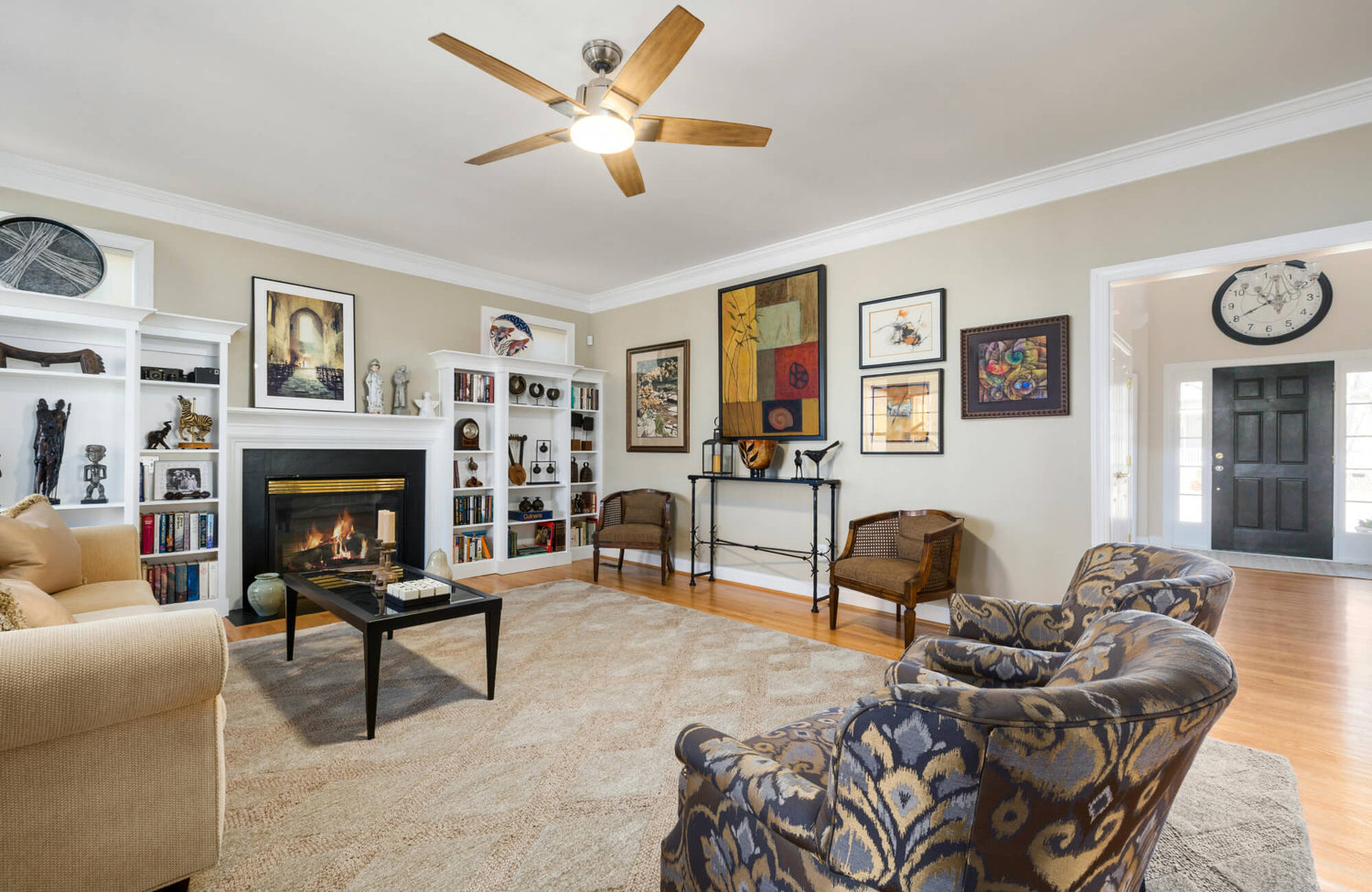
Another important factor is the height at which the artwork is placed. A common approach is to position the center of the piece near eye level, while adjusting slightly based on ceiling height and seating arrangement. This becomes especially clear when observing how Edward Martin’s Quiet Study Wall Art is positioned within the living room, as shown in the photo featured above. It sits comfortably within the natural line of sight, allowing it to relate well to both the fireplace and surrounding seating without feeling too high or disconnected.
In rooms with lower seating, lowering the wall art can also create a more comfortable and grounded feel. In taller spaces, placing it slightly higher helps maintain proportion and ensures the piece aligns naturally with the room’s overall scale.
Creating Gallery Arrangements
When working with multiple pieces, it helps to approach the arrangement as a cohesive composition rather than a collection of individual frames. Thinking of it as a single visual unit allows the layout to feel more organized and intentional. Before placing anything on the wall, arranging the pieces on the floor can make the process more manageable. This allows you to adjust spacing, alignment, and relationships between each piece, making it easier to achieve a balanced result before final installation.

Selecting Colors And Visual Harmony
Color is one of the most immediate ways wall art connects with the rest of the living room. When used thoughtfully, it helps create a cohesive look while still allowing the space to feel layered and visually engaging.
Echoing Existing Colors
A useful starting point is observing the colors already present in the room. Drawing tones from elements such as rugs, cushions, or upholstery into the artwork helps create a sense of continuity.
This approach is illustrated clearly in the photo featured above, where Edward Martin’s Borrowed Dawn Wall Art picks up the warm, earthy tones found in the Fleurin Walnut Oval Dining Table in Matte, 96" and the Davies Rug in Graphite / Fog. Rather than matching each tone exactly, the palette shifts subtly across the artwork, wood finish, and textile surface, which adds depth while keeping the overall composition cohesive and refined.
Using Contrast Intentionally
In some cases, introducing contrast can bring energy to a space that feels too uniform. Artwork that stands apart can add visual interest while still contributing to the overall composition. For example, a bold piece can serve as a focal point in a more neutral room. To maintain cohesion, it helps to ensure that at least one element, such as tone or subject, connects back to the surrounding space.
Working With Neutrals
For a more understated look, neutral wall art can still provide depth and visual interest. Variation can be introduced through texture and subtle shifts in tone rather than relying on strong color contrasts. This approach allows the space to feel layered while maintaining a calm and cohesive atmosphere. It also makes it easier to integrate artwork with existing elements without disrupting the room’s overall balance.

Mixing Mediums And Textures
Wall art becomes more engaging when it extends beyond flat surfaces. Incorporating a range of materials and finishes can add depth and dimension, helping the living room feel more layered and visually balanced.
Incorporating Dimensional Pieces
Introducing pieces that extend slightly from the wall, such as woven works or sculptural elements, can add a new layer of interest to the space. These types of artwork bring a tactile quality that flat pieces alone cannot achieve. When placed with intention, they create variation and help the wall feel more dynamic. At the same time, keeping the selection balanced ensures the overall look remains cohesive rather than overwhelming.
Blending Photography And Painting
Combining different types of artwork can introduce variety while maintaining a cohesive overall look. Pairing photography with paintings can feel balanced when there is a clear sense of intention behind the selection. Consistency in elements such as framing or color palette helps unify the pieces. Even when the subjects or styles differ, these shared details allow the arrangement to feel connected rather than disjointed.
Considering Frame Styles
Frames play a subtle yet important role in how artwork is perceived within a space. Choosing frame styles that align with the overall design helps the artwork feel more integrated into the room. For example, wood frames can add warmth, while metal frames can create a more structured and refined look. Mixing frame styles can also be effective when done intentionally, allowing for variation without disrupting the overall cohesion.

Reflecting Personality Through Art Choices
The most successful living rooms tend to feel personal rather than overly styled. Choosing wall art that reflects individual preferences helps the space feel authentic and naturally lived-in.
Choosing Meaningful Subjects
Selecting artwork that reflects personal experiences or interests can add depth to a living room. This might include places of significance, themes that resonate, or imagery that holds personal meaning. When wall art carries this kind of relevance, it often becomes a natural focal point within the space. It also helps create a stronger connection between the room and the people who spend time in it.
Avoiding Trend Dependence
While trends can provide useful inspiration, they tend to shift over time. Relying too heavily on them may result in choices that feel dated sooner than expected. Focusing on personal preference helps ensure that the artwork remains relevant, even as styles continue to change. This approach helps maintain a living room that feels consistent, authentic, and reflective of long-term taste.
Rotating And Refreshing Art
Over time, preferences and tastes naturally evolve. Rotating artwork occasionally can help keep the living room feeling current without requiring significant changes to the overall design. This approach allows for subtle updates that reflect shifting interests or seasonal adjustments. At the same time, it maintains the space’s existing structure while introducing a renewed sense of variation.
Choosing the Right Wall Art for Your Living Room
To choose the right wall art for a living room, it helps to consider how each piece relates to the space in terms of purpose, proportion, style, and personal meaning. When these elements are approached thoughtfully, the wall art becomes part of a cohesive arrangement rather than a separate addition. Taking the time to align art with the living room’s layout and overall character allows the space to feel more balanced and intentional. In the end, the right choices are those that not only fit the room visually but also reflect how the space is meant to be used and experienced.
If you’re unsure where to begin or want a more tailored approach, reaching out for guidance can make the process more straightforward. A design service can help refine your selections and ensure everything works together seamlessly. For more personalized support, feel free to contact us to explore options that suit your space and preferences.